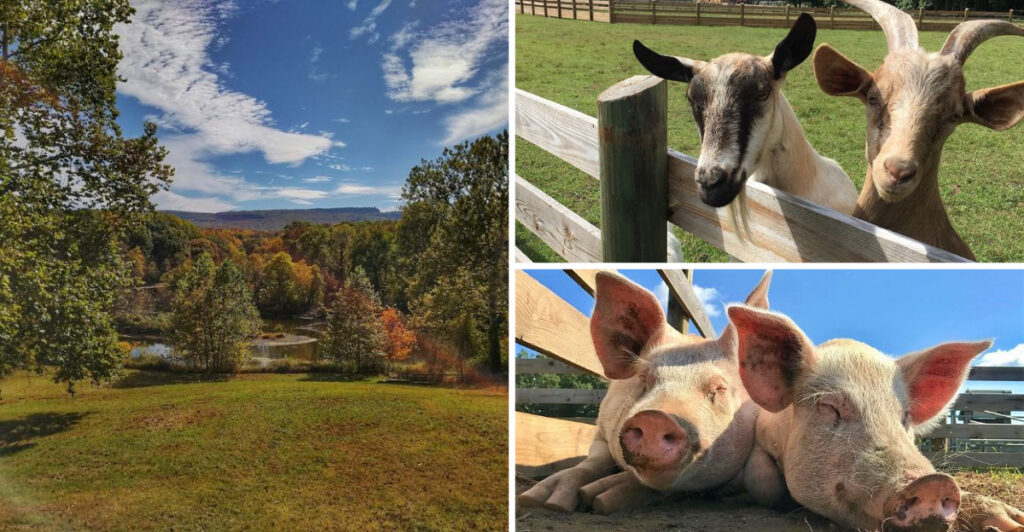
The quiet hits first at Woodstock Farm Sanctuary. Instead of crowded attractions or noisy petting-zoo energy, this peaceful High Falls property gives rescued animals room to roam, rest, and simply exist without pressure or performance. Visitors move slowly through open pastures and barns, meeting cows, pigs, goats, and other residents in a setting that feels calm, thoughtful, and deeply personal.
What stays with people afterward is not one dramatic moment, but the overall atmosphere of care and stillness surrounding the place. For anyone looking for a New York day trip with genuine emotional impact, Woodstock Farm Sanctuary offers an experience that lingers well beyond the drive home.
Where the Road Opens Into Relief
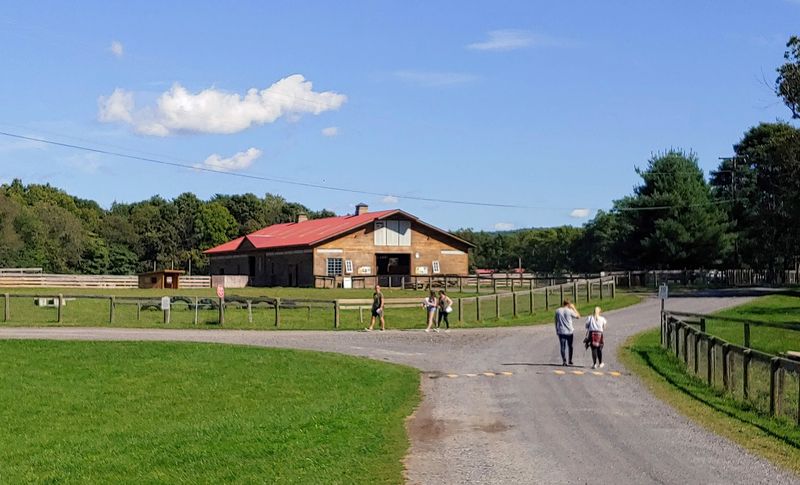
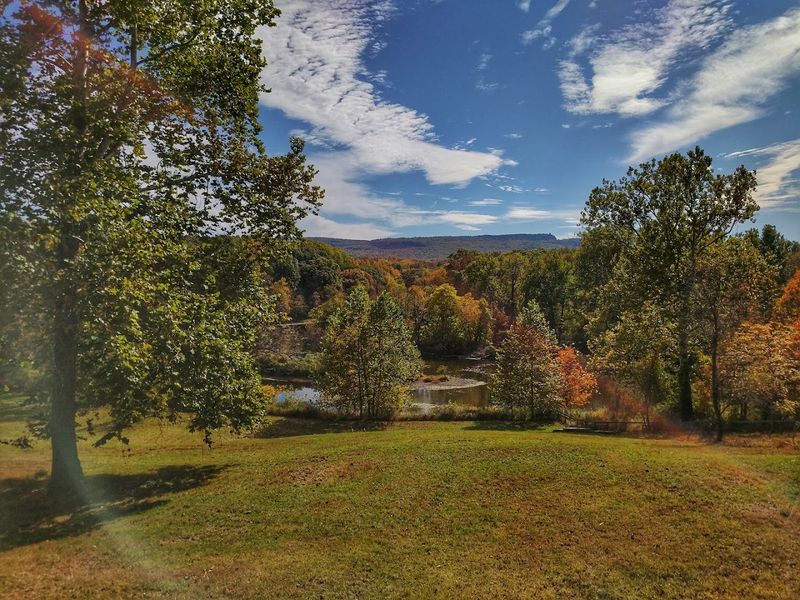
The approach to Woodstock Farm Sanctuary sets the tone before you meet a single resident. Roads narrow, the scenery softens, and the property opens into broad pastureland that looks deliberately unhurried.
Instead of polished entertainment energy, you get working farmland, weathered fencing, sturdy barns, and the kind of quiet that makes every movement stand out.
That visual simplicity matters because it tells you exactly what this place prioritizes. Space comes first. Safety comes first. The animals are not arranged as attractions, and that difference is obvious in the layout, where fields stretch wide and groups rest, graze, wander, or ignore visitors entirely if that is what they choose.
High Falls is already a beautiful part of Ulster County, but this address has a distinct character even by local standards. The land feels open without being empty, and the sanctuary uses that openness well.
You notice paths, enclosures, and buildings designed around daily care rather than crowd pleasing shortcuts. There is also a striking contrast between the sanctuary’s mission and the peaceful appearance of the grounds.
Many residents arrived after neglect, abandonment, or exploitation, yet the place you see now is calm, orderly, and deeply practical. Nothing is overly staged, which gives the experience a rare kind of credibility.
If you are expecting a petting zoo setup, the first sweep of the property immediately corrects that idea. This is a refuge, not a performance space.
The result is more powerful than anything louder or flashier, because the landscape itself communicates the central promise – these animals finally have room to settle into ordinary, safe days.
Meet the Residents, Not a Display
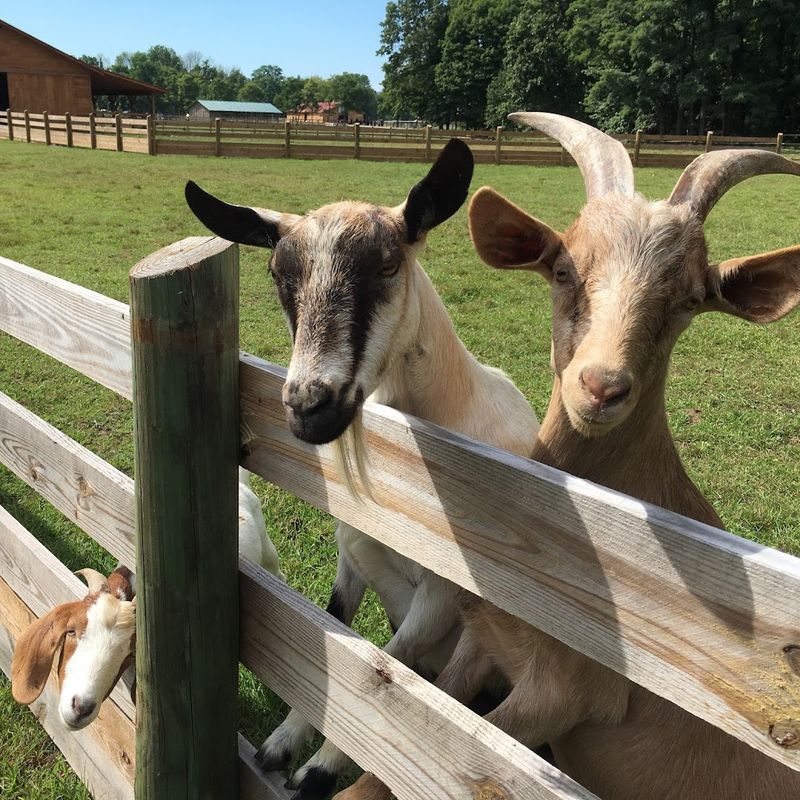
The core experience at Woodstock Farm Sanctuary is meeting animals as individuals rather than as a category called livestock.
That shift lands quickly when a guide introduces a pig by name, points out a goat’s quirks, or explains which residents enjoy attention and which prefer more distance. You are not pushed past pens collecting cute moments. You are invited to notice personality.
That invitation changes the pace of a visit in the best way. A turkey pecking through grass stops being scenery and becomes a specific animal making specific choices.
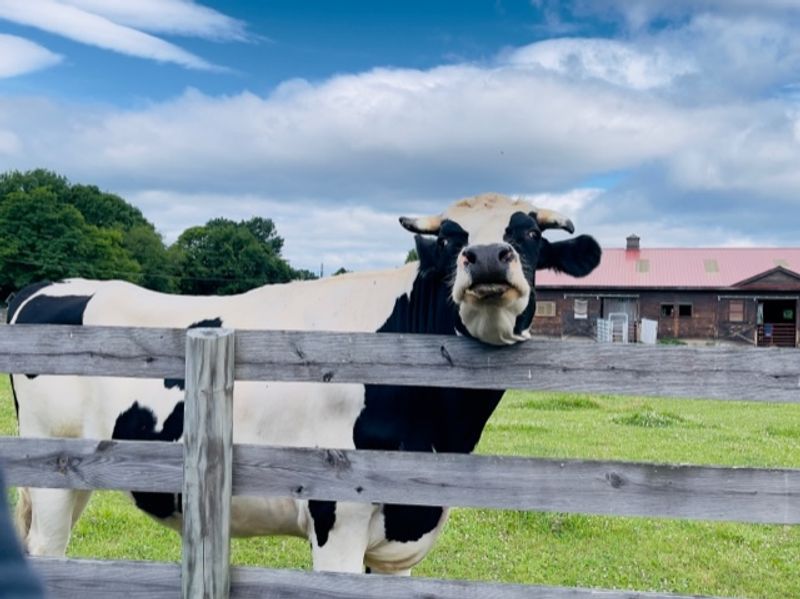
A cow standing close to the fence looks less like a symbol and more like a giant social creature with habits, preferences, and boundaries.
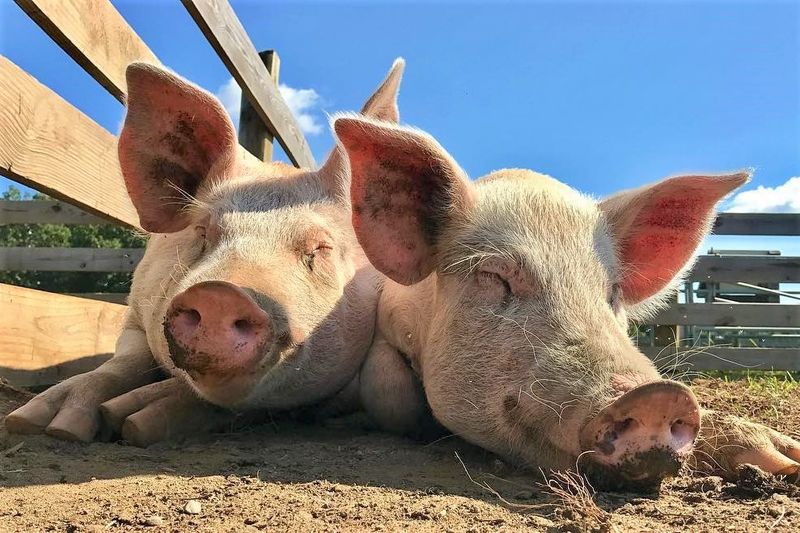
Visitors often talk about pigs because pigs tend to leave an impression here. Their size, intelligence, and eagerness for scratches can reset every cartoonish assumption people carry in.
The same goes for goats, who are often the social spark plugs of any sanctuary visit, approaching with confidence and adding a little comic timing without needing any encouragement.
Just as important, interaction is not treated like a guaranteed product. Animals come closer if they want to.
If they do not, the experience still works because the sanctuary frames respect as part of the lesson, not a consolation prize. That approach gives every encounter more meaning.
By the time you have stood near a cow at full scale or watched a chicken move with total self-possession, the old mental hierarchy between companion animals and farmed animals starts to wobble.
Woodstock Farm Sanctuary does not force that realization. It simply lets the residents make the case themselves, one calm, memorable encounter at a time.
The Stories Behind the Quiet
One reason Woodstock Farm Sanctuary stays with people is that the visit is not built only around adorable encounters. The educational side is woven in carefully, often through the histories of individual residents.
Guides connect each animal’s present life on the farm with the larger systems that put vulnerable animals at risk in the first place.
That structure gives the sanctuary unusual depth. You are not hearing abstract messaging detached from real lives.
You are hearing why a particular resident arrived, what recovery can look like, and how daily care, patience, and stability help an animal settle into a safer routine.
The tone matters here. Information is presented clearly and respectfully, without turning trauma into spectacle. That balance is hard to pull off, but it works because the setting constantly brings the story back to the animal standing in front of you, alive, visible, and no longer reduced to a number or a use.
For families, first-time sanctuary visitors, or anyone rethinking food choices, this makes the experience more than a scenic outing. Kids can connect quickly with the personalities.
Adults often connect just as strongly with the context, especially when familiar assumptions about intelligence, emotion, and social behavior start falling apart in real time.
There is also an honesty to the sanctuary’s educational mission that gives the day substance. You leave with names, faces, and details instead of slogans.
Woodstock Farm Sanctuary succeeds because it does not separate compassion from information. It treats both as necessary, and that combination turns a visit into something sharper, more grounded, and much harder to forget than a standard farm tour.
A Different Kind of New York Day Trip
If you are planning a day trip in New York and want something more grounding than a busy attraction, Woodstock Farm Sanctuary offers a very specific rhythm. You are outdoors, moving at walking speed, paying attention to details most places train you to skip.
The reward is not constant stimulation. It is the chance to slow down and actually observe. The sanctuary works especially well for people who like experiences with a clear sense of purpose. You are not wandering a vague open farm hoping to figure it out as you go.
Tours and visits are shaped around learning, respectful access, and the daily reality of a rescue organization that also welcomes the public into that work.
That makes timing and mindset important. This is a better outing for conversation than for rushing. Good shoes, weather awareness, and a willingness to stand still for a few extra minutes can make the day noticeably richer, especially when an animal decides to approach on its own schedule.
It also helps to treat the sanctuary as its own destination rather than an add-on squeezed between other Hudson Valley stops. The emotional pace is different here.
A quick visit can still be meaningful, but the place reveals more when you allow enough room for stories, pauses, and the simple pleasure of watching animals move through ordinary moments.
For couples, families, solo visitors, and small groups, that slower structure can be a relief. There is no need to chase highlights because the highlights are often small and unscripted: a pig angling for scratches, a goat inserting itself into the scene, a quiet look across the pasture. In a state full of high-energy itineraries, this one earns its place by doing the opposite exceptionally well.
Gray Barn Stays and the Overnight Angle
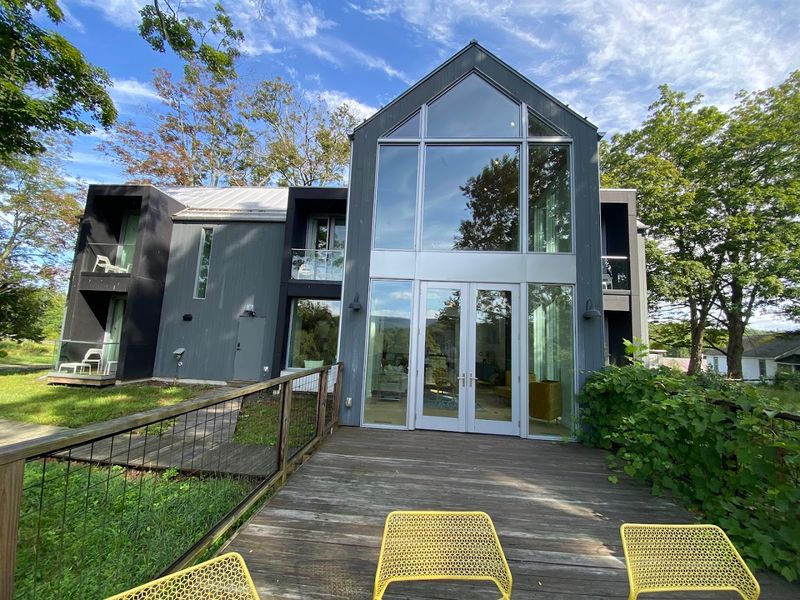
For some visitors, the sanctuary experience does not end when the tour wraps up. Woodstock Farm Sanctuary is also connected to nearby lodging through Gray Barn stays, giving guests the option to stretch the visit beyond a single afternoon.
That changes the rhythm completely because the sanctuary stops feeling like a scheduled attraction and starts becoming part of the wider Hudson Valley experience itself. The overnight angle matters because places like this reveal more when you are not watching the clock.
Early mornings over the fields, quieter evening hours, and the slower pace of the surrounding countryside all give the visit a more immersive feeling without needing extra programming or entertainment layered on top. Instead of rushing through a tour and heading back to traffic, you get time to settle into the atmosphere the sanctuary is built around.
The plant-based food approach connected to the stay also fits naturally with the property’s larger mission. It does not come across as forced or decorative.
Instead, it reinforces the idea that the sanctuary’s values extend into everyday routines, from meals to hospitality to the overall tone of the experience. That consistency helps the visit feel cohesive rather than divided into separate pieces.
Even for people who do not plan to stay overnight, the lodging connection says something important about the sanctuary itself. Woodstock Farm Sanctuary is not designed as a quick roadside stop or novelty attraction.
It works best for visitors who want a quieter, more reflective kind of outing where the setting has room to unfold gradually. In practical terms, the overnight option suits travelers looking for countryside calm with a stronger emotional center than a standard weekend escape.
The scenery is beautiful, but the deeper appeal comes from spending time near a place organized around patience, care, and recovery rather than entertainment alone.
How to Get the Most Out of a Visit
The best way to experience Woodstock Farm Sanctuary is to arrive ready for a walk, a conversation, and a little unpredictability. Animals do not hit marks on cue, and that is exactly the point.
Your day gets better when you trade expectations of nonstop interaction for curiosity about whatever the residents are doing naturally.
Guided tours are especially useful because they provide context you would miss on your own. A field full of animals is lovely to look at, but a guide can explain group dynamics, rescue backgrounds, behavioral quirks, and why certain boundaries exist.
Those details turn passive looking into active understanding very quickly. It is also smart to dress for changing conditions. This is a real farm environment with dirt paths, grass, weather, and open land, not an indoor exhibit.
Comfortable shoes, layers, and a willingness to be outdoors for the duration will make the experience smoother and help you focus on the residents rather than your feet.
If you are visiting with children, the sanctuary tends to work best when the day is framed as respectful observation rather than animal access on demand.
Kids often respond surprisingly well to that approach because the personalities are so clear. Seeing that a goat may stroll over while another animal keeps its distance becomes part of the lesson.
One final tip is to leave a little margin before and after your visit. Rushing in late or sprinting off immediately can flatten the experience.
Woodstock Farm Sanctuary is strongest when you let the day breathe, ask questions, and pay attention to the smaller moments that are easy to miss at faster attractions. This is a place where patience consistently improves what you notice.
Why This Sanctuary Lingers After You Leave
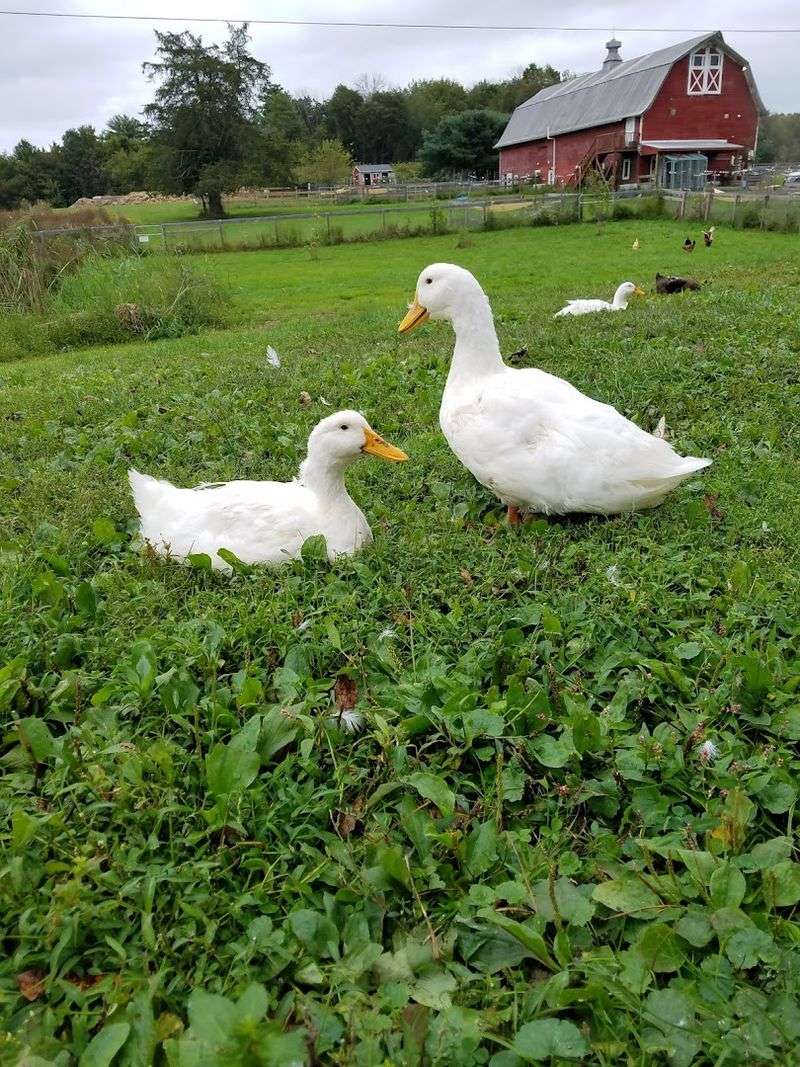
Some places impress you with size, novelty, or spectacle. Woodstock Farm Sanctuary lingers for a quieter reason – it offers a clear picture of what safety can look like when it is built into everyday life.
Not dramatic safety or symbolic safety, but ordinary comfort shaped through space, routine, patience, and consistent care. That atmosphere settles over the property almost immediately and stays with you long after the visit ends.
That is why the strongest memories here are often the simplest ones. A pig relaxing into a belly rub. A cow wandering across a pasture without urgency. A goat angling for attention while another animal keeps a comfortable distance.
None of these moments are staged for effect, which is exactly what gives them weight. The sanctuary does not need spectacle because the calm itself becomes the experience.
Woodstock Farm Sanctuary also avoids turning the visit into something overly sentimental or performative. The place leaves room for humor, curiosity, reflection, and difficult context to exist together naturally.
That balance keeps the experience grounded. Instead of feeling like a lecture or a carefully packaged attraction, the sanctuary feels honest about both the animals’ pasts and the quieter reality of what recovery actually looks like day to day.
In travel terms, that emotional clarity is what makes the sanctuary stand apart. The visit slows people down enough to notice animals differently, not as background scenery or abstract symbols, but as individuals with visible personalities, preferences, and social lives.
For anyone looking for a New York day trip rooted in compassion, fresh air, and a genuine sense of peace, Woodstock Farm Sanctuary delivers something rare. Long after the fields disappear in the rearview mirror, that calm remains the part you carry home.