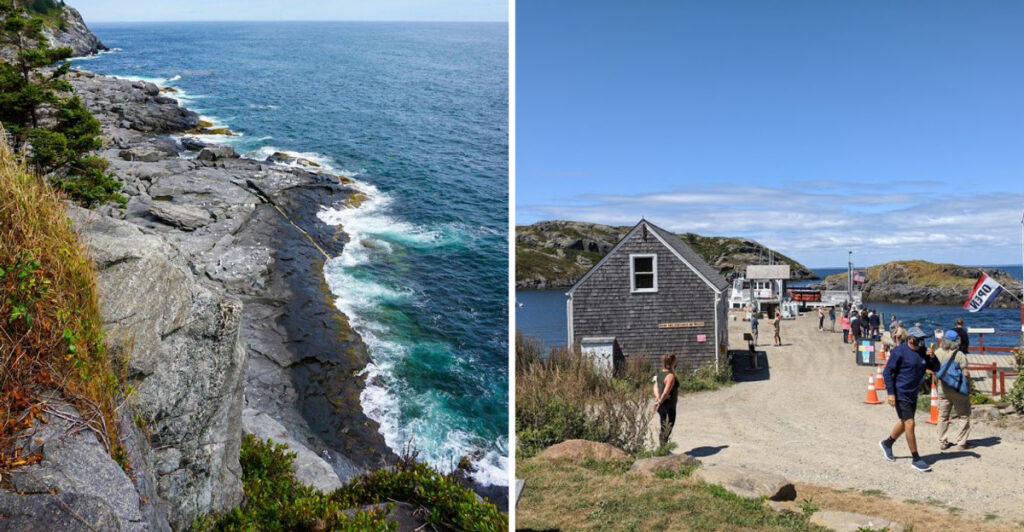
Twelve nautical miles off the Maine coast, Monhegan moves at the pace of tides, footpaths, and weather rolling across the water. Cars barely factor into daily life here, leaving cliff trails, lobster boats, weathered cottages, and artists’ studios to shape the rhythm instead.
The island feels rugged in a way many coastal destinations no longer do, with rocky edges and quiet stretches that seem determined to stay untouched. What makes Monhegan memorable is not flashy attractions, but the rare sense that the place still belongs fully to itself. For travelers craving a New England island with real character and hard-earned atmosphere, Monhegan delivers exactly that.
Where the Mainland Drops Away
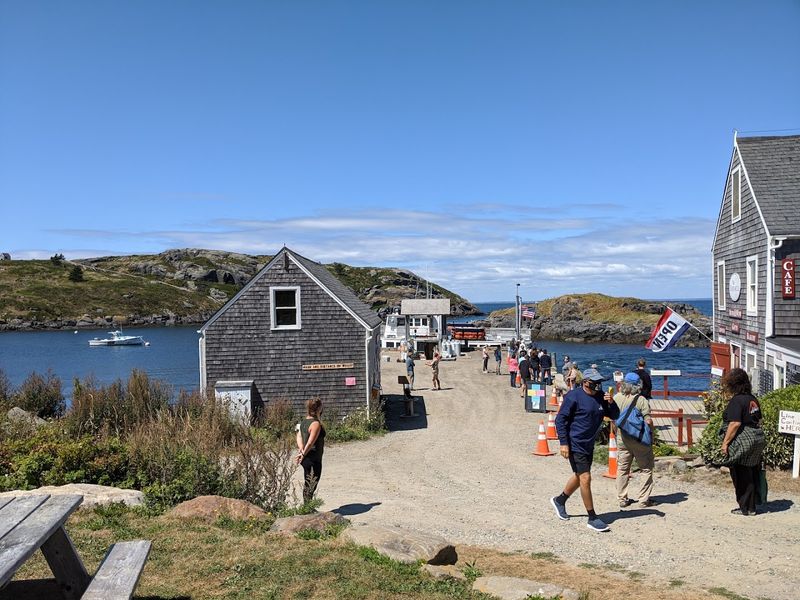
The approach to Monhegan does most of the talking before you even step onto the dock. The mainland has already faded into a pale strip behind you, and the island rises ahead in a compact stack of spruce, granite, and white houses facing the harbor.
Nothing looks staged, oversized, or newly polished for visitors, which is part of the immediate jolt. You notice the scale first. Buildings sit close to the working waterfront, paths replace traffic lanes, and the whole village appears arranged by weather and necessity rather than modern convenience.
On a coast full of pretty stops, Monhegan lands differently because it still reads as a place that must function through fog, wind, and winter, not just through summer afternoons.
The lack of cars changes your attention in subtle ways. Instead of scanning for parking, you hear rigging knock against masts, gulls cut across the harbor, and boots thump on wooden ramps.
Small freight movements, handcarts, and the slow shuffle of arriving passengers make the landing area lively without ever turning chaotic.
Then the details start collecting. Fish houses sit near cottage porches, narrow lanes climb uphill quickly, and gardens soften the edges of weathered buildings without smoothing away their toughness.
Even the harbor has a practical beauty, with lobster boats and excursion craft sharing water that can look steel gray one hour and bright blue the next.
That first arrival tells you exactly what kind of destination this is. Monhegan does not try to overwhelm you with options; it narrows the frame and sharpens what matters.
By the time your feet hit the dock, the island has already made its strongest argument: life here still moves by boat schedules, foot traffic, and the Atlantic itself.
Cliff Walks That Steal the Whole Day
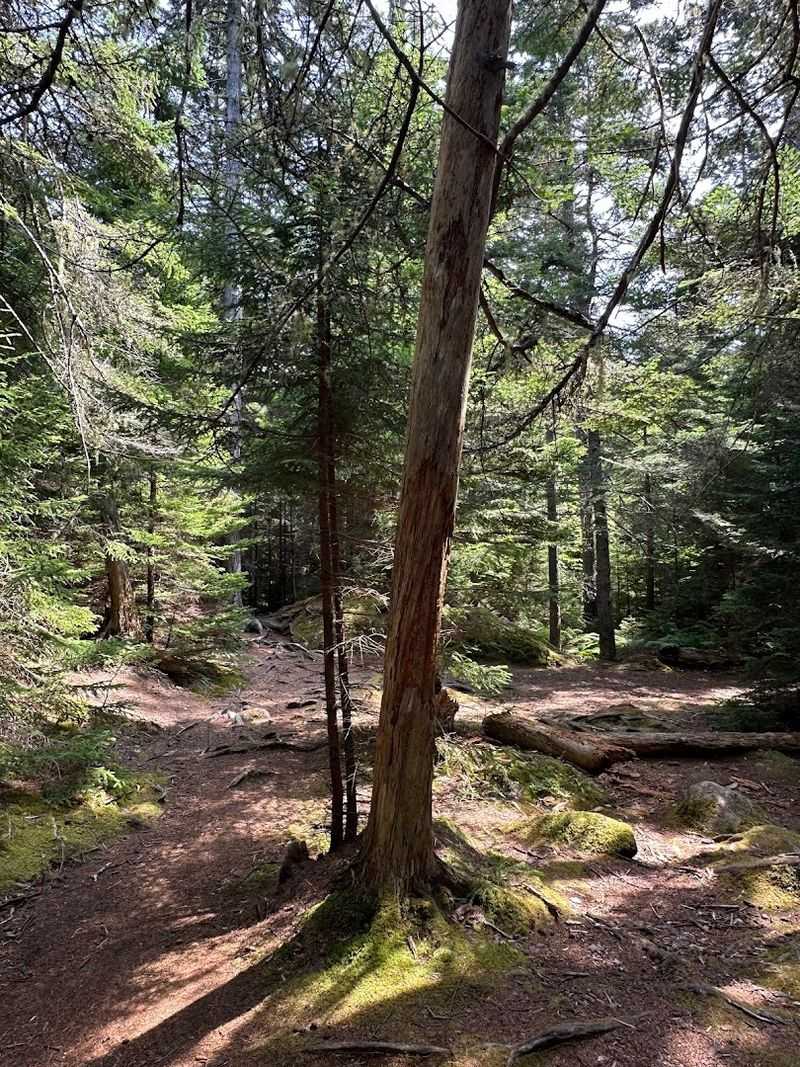
Monhegan’s headline attraction is not a single building or landmark. It is the trail system wrapping around an island small enough to explore on foot yet varied enough to keep changing its mood every half hour.
You move from enclosed woods to open ledges, from gentle harbor views to cliff edges where the Atlantic suddenly looks immense and busy.
The eastern shore delivers the boldest scenery. Here, the land breaks sharply toward the water, and the path often runs close enough to the edge to make you instinctively slow down and look longer.
On clear days, the horizon looks hard and bright; in rougher weather, the sea throws up white motion that makes the cliffs seem even darker.
Monhegan works especially well for travelers who like movement built into sightseeing. Instead of driving from overlook to overlook, you earn each dramatic view through a short climb, a muddy stretch, or a turn through spruce shade that opens all at once.
That rhythm makes the scenery hit harder because it arrives in sequences rather than snapshots. There are quieter moments too. Inland stretches carry birdsong, damp earth, and the smell of needles warming in the sun, while side paths reveal coves and ledges that can seem almost private between ferry crowds.
The island keeps giving you excuses to pause, not because every stop is monumental, but because the landscape keeps changing its texture.
If your schedule allows only one big Monhegan experience, make it a long walk. Bring water, sturdy shoes, and enough time to let the island unfold at walking pace.
The cliffs, woods, and open water do not compete with one another here; together, they build the clearest picture of why this small island leaves such a large visual imprint.
An Artist Colony Written Into the Landscape
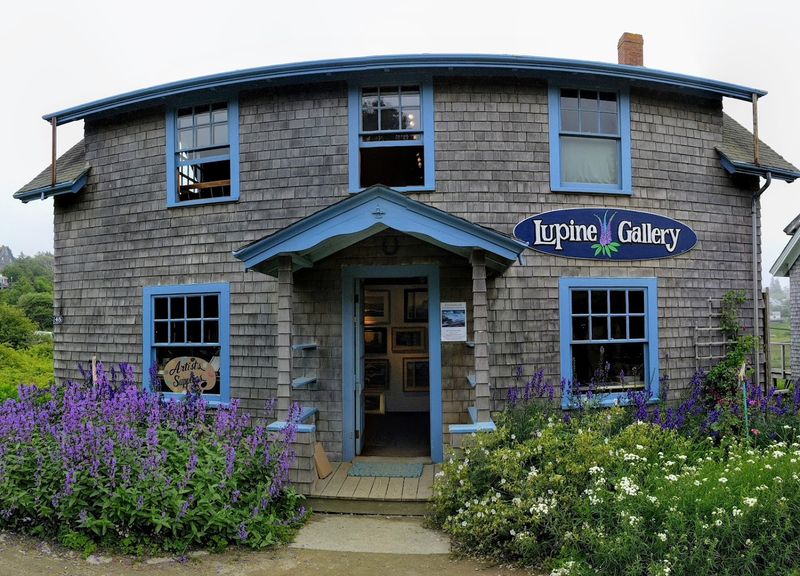
Monhegan has long drawn painters, and that history makes sense the second you start noticing the light. It changes quickly across the harbor, slides over weathered shingles, and turns ordinary corners into compositions that look arranged by instinct rather than design.
The island’s scale helps too, compressing boats, houses, paths, and cliffs into scenes with strong lines and clear contrasts.
This is not an art connection pasted onto a destination later for marketing purposes. The visual pull is embedded in daily life, from laundry moving in sea wind to lobster gear stacked beside old buildings and gardens.
Even when you are not stepping into a gallery or studio, you can see why artists kept returning and why that tradition took hold here so early.
Monhegan’s artistic legacy also deepens the way you look at the place. Instead of treating the island as scenery alone, you start noticing patterns of color, shadow, and distance.
Morning fog softens the village into muted layers, while afternoon sun can sharpen every roofline and tree edge until the harbor looks almost exaggerated.
That history never overwhelms the island’s practical identity. Boats still work, paths still connect the essentials, and homes still appear built to handle weather first and charm second.
The balance matters because it keeps Monhegan from becoming a museum set for nostalgia; the creative energy exists alongside a real community and a demanding environment.
For visitors, the result is unusually rich. You can spend part of a day looking at art and the rest noticing the same island with slightly more attention than before.
Monhegan rewards that slower, more observant pace, offering a rare combination of raw coastal scenery and a cultural story that grew directly from the land, light, and working harbor below.
The Village Core Still Runs on Island Logic
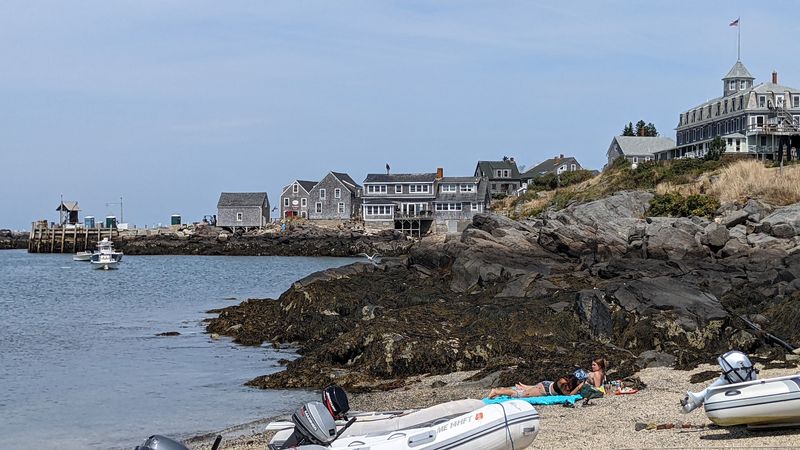
SSpend a little time in Monhegan’s village center and one thing becomes obvious: convenience here is shaped by geography, not by modern habit.
Supplies arrive by boat, distances are covered on foot, and everyday activity concentrates around the waterfront in a way that would have disappeared long ago in most coastal towns. That compression gives the island a distinct rhythm you can actually see. The car-free setting is only part of the story.
What stands out more is how naturally the place functions without cars, as if the village never had any interest in widening itself for faster movement.
Narrow lanes, steep little climbs, and close-set buildings encourage short encounters, slower errands, and a much stronger sense of where working life ends and home life begins.
Because of that layout, practical details become memorable. A hand truck moving goods up a slope, lobster gear stacked beside a path, and people adjusting their day around ferry arrivals all reveal how closely island life still follows the waterfront.
Nothing appears ornamental when you look closely; even the picturesque parts usually have a job behind them. Monhegan’s older character survives partly because this compact pattern still makes sense.
Expansion is limited, traffic pressure never takes over, and the village remains scaled to walking rather than rushing. For a visitor, that means every short errand or uphill detour doubles as sightseeing, not because the island is trying to entertain you, but because daily life is visible.
That visibility is one of Monhegan’s strongest qualities. You are not insulated from the place by parking lots, long commercial strips, or sprawling development.
Instead, you move through a living village where the physical layout still reflects older coastal routines, and that continuity may be the clearest reason the island seems to have held onto itself so firmly.
A Maine Island Shaped by Weather and Work
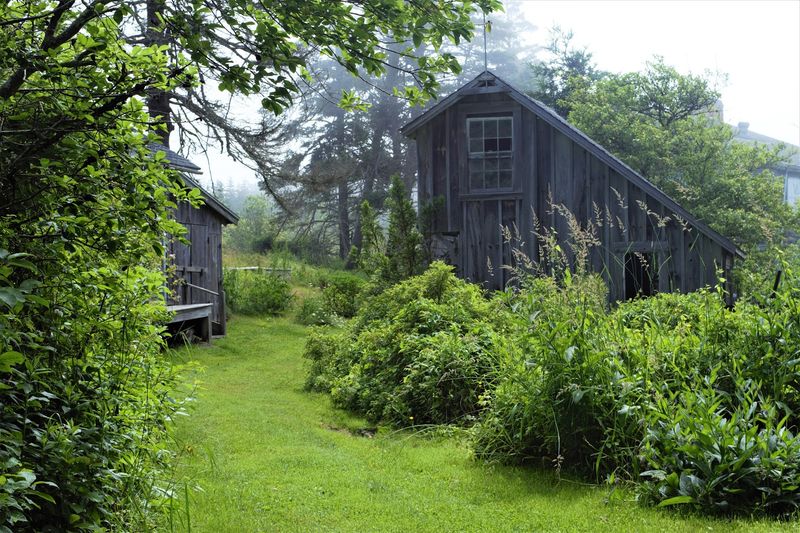
Monhegan can look gentle from the harbor, especially when the water is calm and the cottages catch warm light. But the island’s character has been shaped by exposure, distance, and the realities of living off the coast of Maine.
That harder edge explains why so much of the landscape still feels rooted in function rather than performance. Nothing here seems designed purely for appearance, even when the scenery turns striking.
Weather is not background scenery on Monhegan. Fog can compress the world to a few muted outlines, wind can completely change the feel of a trail, and rough seas remind you that every arrival still depends on conditions beyond anyone’s control.
Even on clear days, the Atlantic remains an active presence rather than a decorative backdrop. You feel it in the salt air, the exposed cliffs, and the constant awareness that the island sits far beyond the mainland’s daily rhythm.
The harbor reinforces that sense of realism. Lobster boats, freight deliveries, and dock activity keep Monhegan connected to practical routines that continue regardless of who arrives on the ferry.
That working presence prevents the island from slipping into a polished version of coastal nostalgia. Instead, the beauty feels tied directly to usefulness, with boats, ramps, sheds, and stacked gear blending naturally into the scenery rather than interrupting it.
You notice the same quality across the island itself. Buildings wear storms instead of hiding them, paths follow the terrain instead of forcing it into neat lines, and many of the most memorable views come from ordinary intersections between land, weather, and daily life.
If Monhegan feels unusually unchanged, it is because the same forces still shape it now as they did generations ago. Distance, exposure, and dependence on the sea continue to define how the island looks, moves, and endures.
How to Experience Monhegan Without Rushing It
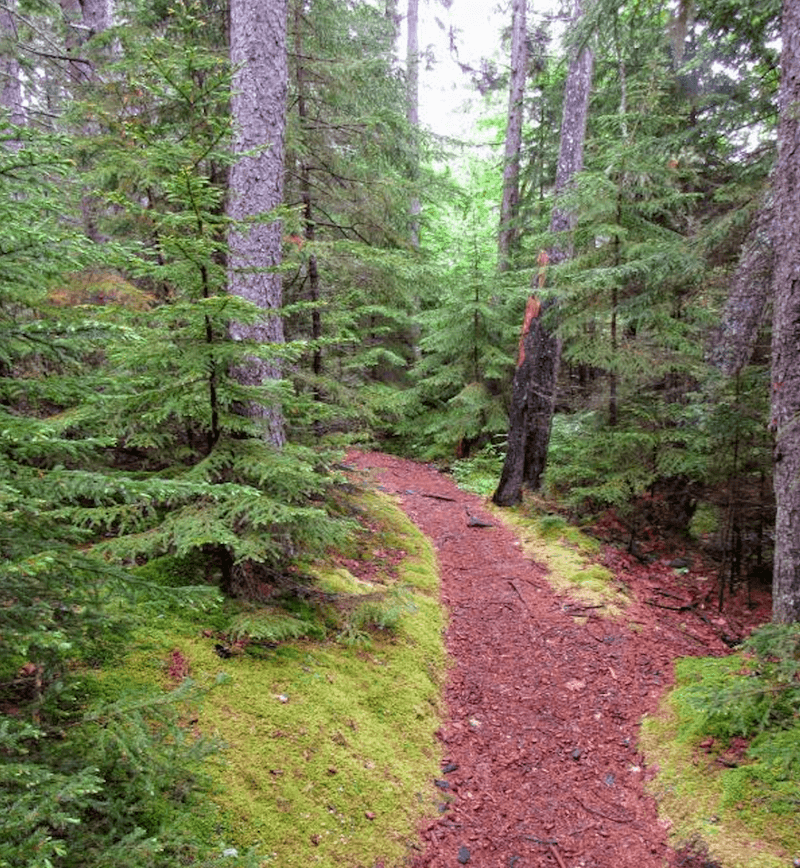
Monhegan is best handled as a place to settle into, not conquer. The island is small, but trying to race from the dock to every trail, gallery, and viewpoint in a single burst can flatten the very quality that makes it memorable.
A better approach is to let one part of the day belong to the village and another belong to the outer edges. Start near the harbor and give yourself time to notice how the island operates. Watch the boat activity, walk the rising lanes, and get a sense of the compact layout before heading into the trail network.
That short orientation changes the rest of the day because the village stops being a blur and becomes part of the island’s larger story.
Once you head out, keep the schedule loose. Monhegan’s paths invite detours, pauses, and long looks, especially where woods break open to ocean ledges.
If you are checking the clock every fifteen minutes, you will miss one of the island’s biggest pleasures: the way walking here naturally resets your pace.
Staying overnight gives Monhegan another dimension entirely. Day visitors see the island at its busiest points, but early morning and evening reveal a quieter rhythm around the harbor and paths.
Light shifts, foot traffic thins, and the village begins to show its everyday calm rather than its arrival-and-departure pulse.
Practical planning is simple but important. Wear shoes with grip, carry layers for changing conditions, and remember that island logistics are never quite as flexible as mainland travel.
The reward for that little bit of preparation is a visit that feels less like a checklist and more like a true encounter with a place built for walking, watching, and adjusting to the sea.
Why Monhegan Still Hits So Differently
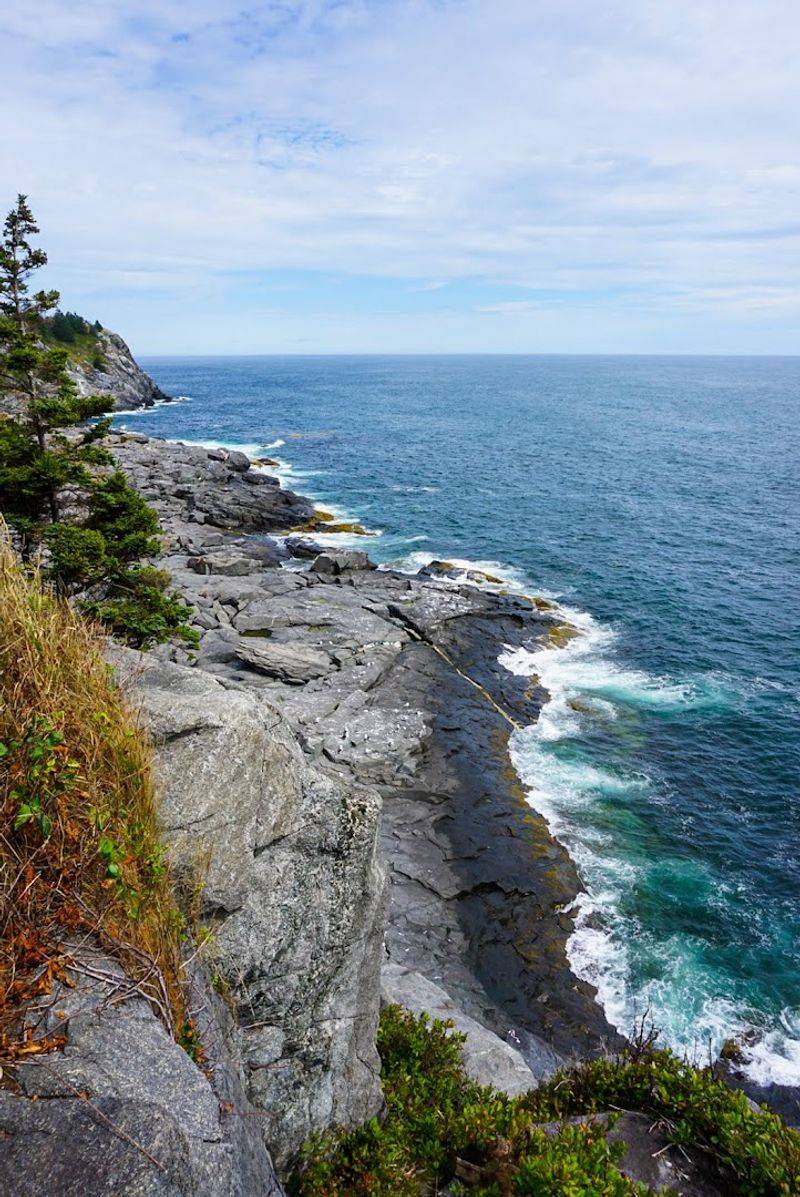
Plenty of coastal destinations promise escape, but Monhegan offers something narrower and more unusual: a genuine reduction of modern noise. The island is not empty, sleepy, or frozen in time in a simplistic way.
Instead, it operates with a level of restraint that lets the essentials stay visible – harbor, paths, weather, work, and the long continuity of a community shaped by all four.
That is why Monhegan can leave such a strong impression without relying on grand scale. The island is relatively small, yet it manages to hold cliffs, woods, a compact village, a working waterfront, and a deep artistic legacy without any one piece swallowing the others.
Every element supports the next, creating a place that reads clearly the longer you spend with it. There is also a rarity to its texture. On much of the New England coast, development has widened roads, separated visitors from daily life, or polished away the friction that once defined maritime places.
Monhegan still allows you to see how a harbor settlement functions when the sea remains central and moving around on foot remains normal.
That does not mean the island belongs only to history-minded travelers. It also suits hikers, painters, photographers, and anyone whose attention perks up around changing light and rugged shorelines.
Monhegan gives each of those visitors something strong to work with, while never losing the coherence that keeps the island from feeling pieced together.
In the end, Monhegan stands out because it has not traded away its constraints. The boat ride, the steep lanes, the exposed coast, and the absence of cars all limit certain conveniences, but they also protect the island’s shape and tempo. For you, that translates into a rare kind of destination: one that still knows exactly what it is.