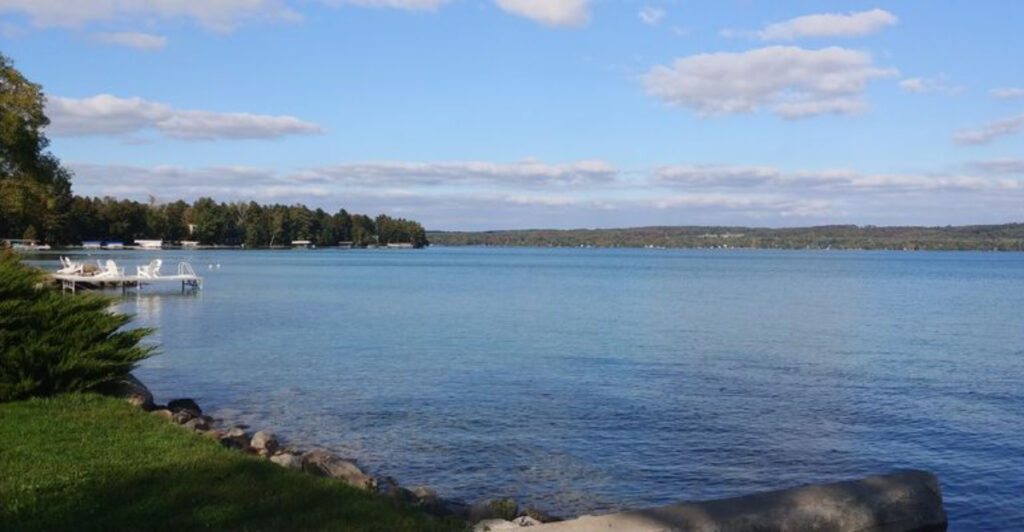
Tucked into the northwest corner of Michigan’s Lower Peninsula, Torch Lake is the kind of place that makes you stop mid-sentence and just stare. The water runs so clear and so blue that first-time visitors often wonder if someone photoshopped the sky into the lake.
Stretching nearly 18 miles long, it holds a reputation as one of the most beautiful lakes in the entire country. Once you see it in person, you understand why people keep coming back every summer.
The Water Color That Stops People Cold
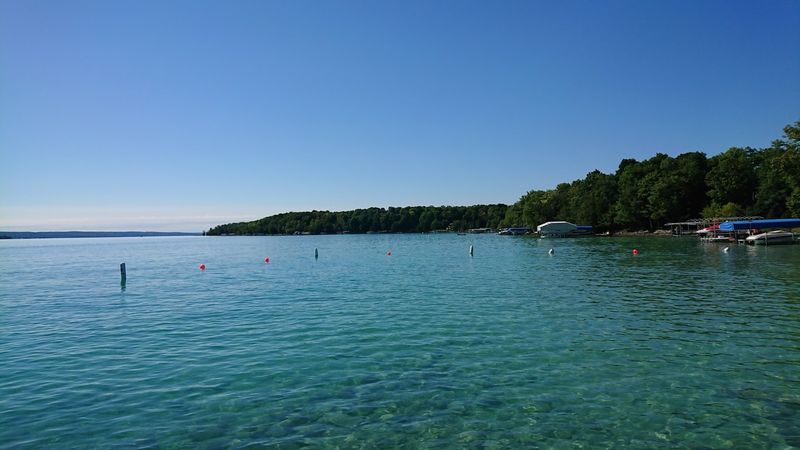
Nobody warns you about the color. You drive through the trees, round a bend, and suddenly the water is right there — this wild, Caribbean-blue that looks completely out of place in the Midwest.
It is the kind of blue that makes your brain pause for a second, trying to decide if what you are seeing is real.
The color comes from a combination of the lake’s exceptional depth, its white sandy bottom in the shallows, and the way sunlight filters through water that carries almost no sediment. In the shallows near the sandbars, the water shifts from a pale aqua to a deeper cobalt as the bottom drops away.
You can actually watch the color change beneath your feet as you wade out.
Summer afternoons are when the color really performs. The sun hits the surface at an angle that makes the entire lake glow from within.
Locals who have spent decades on the water still mention it. It never quite gets old, even when you see it every year.
Photographers drive hours just to catch it during the golden hour, when the blue deepens and the light turns the distant shoreline amber.
What makes it stranger is that Torch Lake sits in northern Michigan, not the tropics. There are pine trees and birch forests all around it.
The contrast between that northern landscape and the tropical-looking water creates something that feels genuinely rare. Even on overcast days, the lake holds its color better than you might expect, keeping that signature teal glow even when the sky turns gray.
Sandbar Culture and the Floating Party Scene
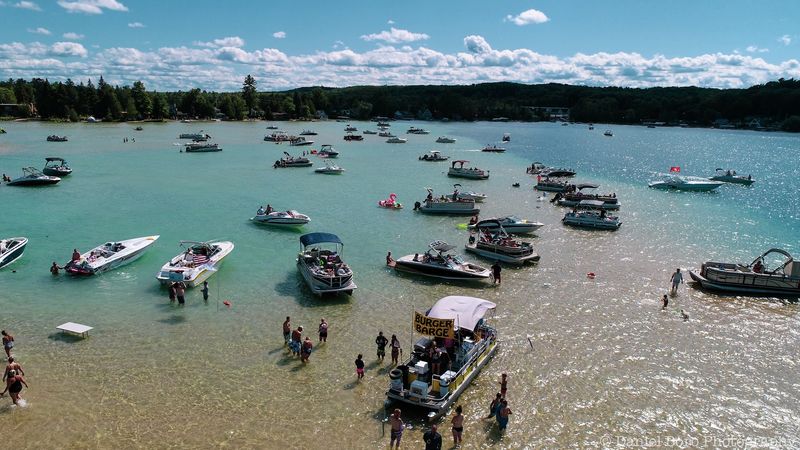
On a warm Saturday in July, the Torch Lake sandbar turns into something you have to see to believe. Boats of every size anchor just offshore, people wade between them in knee-deep water, and music drifts across the surface from a dozen different directions at once.
It is loud, casual, and completely Michigan.
The sandbar sits near the southern end of the lake and becomes the social hub of summer weekends. Pontoon boats pull up alongside ski boats, kayakers weave through the crowd, and people set up folding chairs directly in the water.
There is no formal organization to any of it. Everyone just shows up and figures it out, which somehow works perfectly.
The water at the sandbar is shallow enough for kids to splash around safely but clear enough that you can see every detail of the sandy bottom beneath your feet. On busy weekends, the scene can feel like a floating neighborhood block party.
Regulars know each other by boat name. Newcomers get welcomed without much ceremony.
What surprises most first-timers is how relaxed the whole thing feels despite the crowd. People are not competing for space or showing off.
They are just enjoying the water, the sun, and the fact that they found a lake that looks this good in northern Michigan. Some boats arrive early in the morning to claim a spot and stay until the sun drops behind the tree line.
If you want the sandbar experience without the weekend chaos, weekday mornings offer a quieter version of the same thing. The water is just as clear, the color just as vivid, and you might have the whole sandbar to yourself for a while.
What It Feels Like to Kayak the Full Length
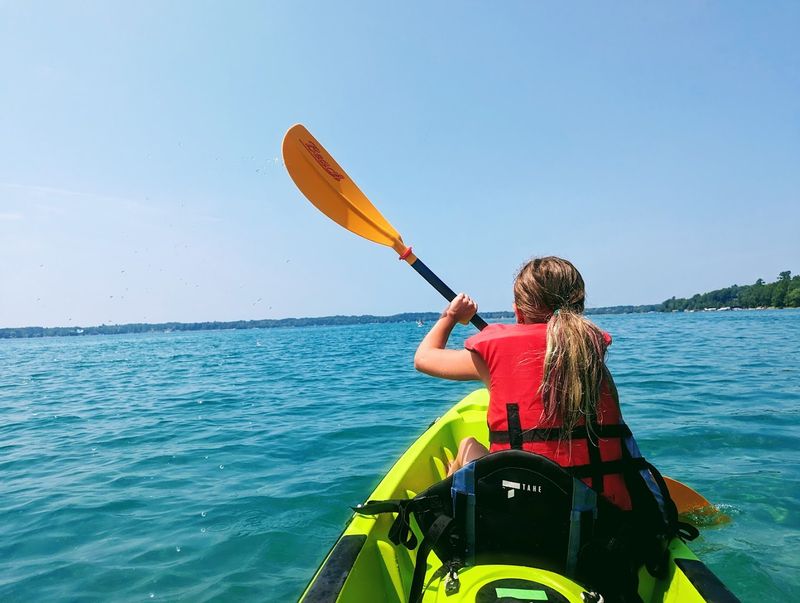
Eighteen miles is a long paddle, and most people do not attempt the full length in a single day. But even covering a few miles by kayak gives you a completely different relationship with the lake.
From water level, the scale of Torch Lake becomes obvious in a way that looking from shore never quite captures.
The shoreline shifts character as you move north. Near the southern access points, you pass cottages and docks with boats tied up and lawn chairs facing the water.
Further north, the development thins out and the tree line comes closer to the water. There are stretches where the only sounds are your paddle, the occasional loon, and wind moving through the pines.
The clarity of the water is something you notice constantly from a kayak. You can see the bottom in depths that would be completely opaque in most Michigan lakes.
Sandy patches glow pale green through the surface. Darker areas mark where the bottom drops away fast.
It gives paddling here a slightly surreal quality, like floating over a very large aquarium.
Early morning is the best time to be out on the water. The surface goes glassy before the wind picks up, and the color of the lake shifts through shades of silver and blue as the sun climbs.
Mist sometimes sits low over the northern end of the lake. Loons call from somewhere you cannot see.
It is the kind of quiet that feels earned after a long drive north.
Rental options exist near the lake for those who do not bring their own gear. A half-day paddle covering the southern section gives you a solid feel for what makes Torch Lake different from the dozens of other lakes scattered across this part of Michigan.
How the Surrounding Towns Frame the Lake
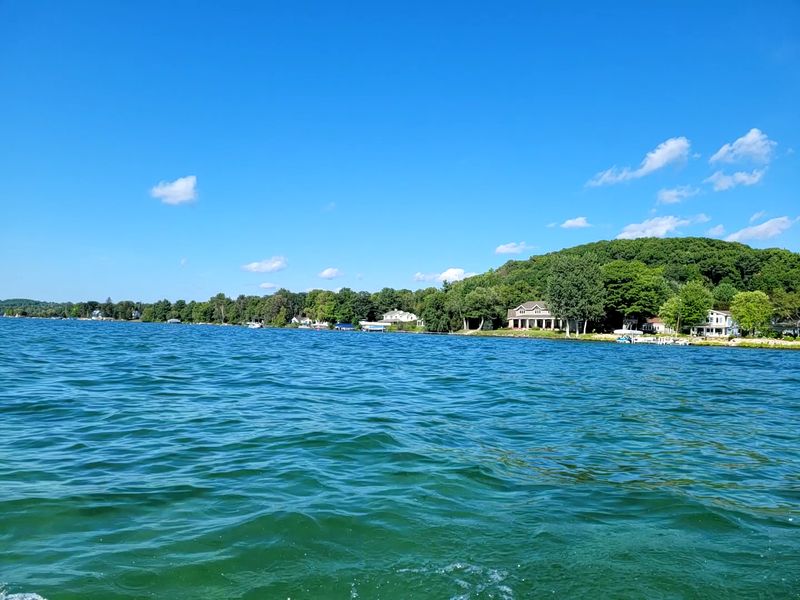
Torch Lake does not exist in isolation. The small towns around it are part of what makes spending time here feel complete rather than just a beach stop.
Elk Rapids sits at the southern end where Torch Lake connects to Elk Lake and eventually Grand Traverse Bay. It is a walkable little town with a harbor, a handful of good restaurants, and the kind of main street that still has an actual hardware store.
Central Lake and Alden sit further north along the lake’s eastern shoreline. Alden in particular has a quiet, unhurried quality that suits the northern Michigan pace well.
There is a small park with direct lake access, and the village itself feels like it has not been over-developed or turned into a tourist trap. The lake is right there, visible from the road, and the whole place feels like it belongs to the people who actually live there.
Bellaire, a short drive east, serves as a practical hub for the area. It has grocery stores, gas stations, and a growing number of places to eat and drink.
The Short’s Brewing taproom there draws people from across the region and gives the town a slightly livelier energy than its size might suggest.
What ties all of these places together is the lake itself. People move between them by boat as naturally as by car.
The connection between water and community is real and visible here, not just a marketing line. On summer evenings, the docks in Elk Rapids fill with people watching the sunset over the bay while boats return from a day on Torch Lake.
It is a rhythm that has been repeating here for a long time.
The Depth That Makes the Blue Possible
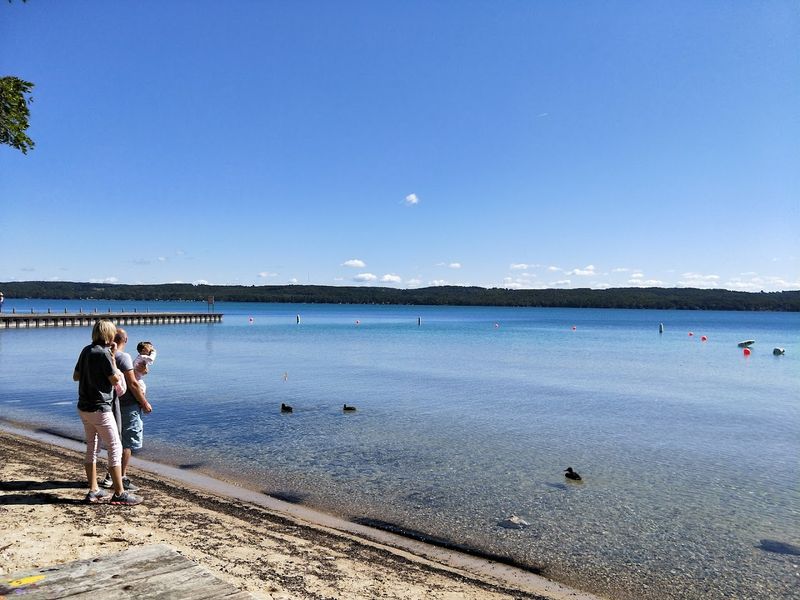
Most people do not think about what is underneath a lake when they are floating on top of it. With Torch Lake, the depth is actually central to everything that makes it visually remarkable.
The lake reaches depths that dwarf most inland lakes in Michigan, and that depth is a big part of why the water holds that distinctive blue rather than the greenish tint you see in shallower lakes.
Deep water absorbs red and yellow wavelengths of light and scatters blue, which is the same reason the ocean looks blue from above. Torch Lake’s depth, combined with its low sediment content and naturally clear water, creates conditions where that effect plays out in a dramatic and visible way.
The shallows near the sandbars look turquoise because you are seeing the sandy bottom through clear water. The deeper sections look cobalt because you are essentially seeing the water itself.
The transition between shallow and deep happens quickly in some areas, which adds to the visual drama. You can stand waist-deep near a sandbar and look out to where the bottom disappears into dark blue water just a few yards away.
It is an abrupt shift that gives the lake a sense of scale and depth that is hard to ignore.
For swimmers, the deep water stays noticeably cooler than the shallows, even on the hottest summer days. The shallows warm up quickly under the sun and become the preferred zone for kids and casual waders.
Serious swimmers and divers head further out, where the temperature drops and the water takes on that darker, more serious blue. Both versions of the lake are worth knowing.
Sunsets on the Western Shore
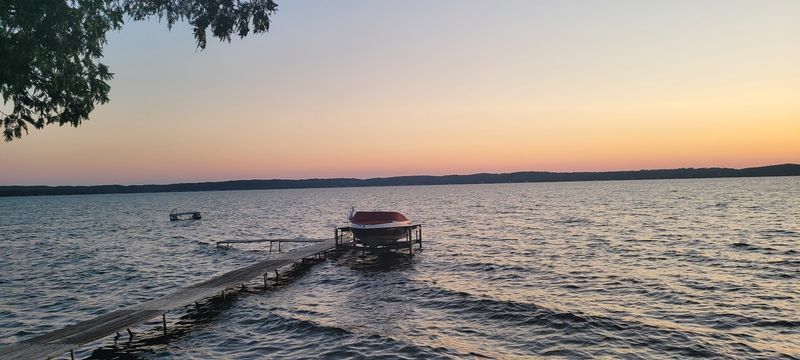
The western shore of Torch Lake faces east, which means it catches the morning light beautifully. But the eastern shore faces west, and that is where you want to be when the sun starts dropping.
On a clear evening, the sunset over Torch Lake is the kind of thing that pulls everyone outside without any planning or coordination. It just happens.
The sky starts changing color well before the sun actually hits the tree line. Pale orange bleeds into pink, then deeper red, and the lake picks up every shift and reflects it back.
The water acts like a second sky down here, doubling the color and spreading it across the surface in a way that makes the whole lake feel lit from below.
Dock sitting is the preferred viewing method for most locals. You bring something to drink, maybe a light jacket because the air cools fast after the sun drops, and you just watch.
Conversation tends to slow down during the best part of the show. People stop mid-sentence and just look.
Boats often drift or anchor offshore during the peak sunset window, their occupants turned toward the horizon. From the water, the view includes the silhouette of the eastern shore tree line against the fading sky, which adds a layer of depth that you miss from the dock.
Both perspectives are worth trying on different evenings.
After the sun disappears, there is usually a short window where the sky holds color for another ten or fifteen minutes. The lake goes dark blue, then black, and the first stars appear.
On nights without much wind, the surface stays calm long enough to reflect them. It is a quiet ending to a loud summer day.
Planning a Trip Without Overdoing It
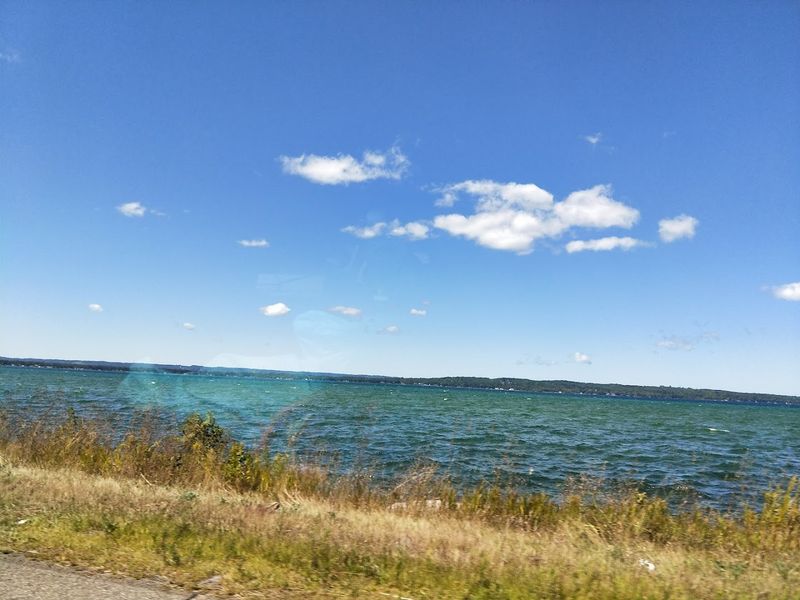
Torch Lake rewards a slower approach more than most destinations. The temptation is to pack every day with activities, boat rentals, and restaurant reservations.
But the lake itself is the main event, and the best moments tend to happen when you have left some unscheduled time to just be near the water.
Renting a cottage or cabin with direct lake access changes the whole trip. Having a dock of your own means you can be on the water at six in the morning when it is still and quiet, or sit outside after dinner watching the sky change.
The difference between a lake-access rental and a nearby motel is significant here. The lake is the point.
Summer weekends get crowded, particularly around the sandbar and the southern access areas. If your schedule allows any flexibility, arriving mid-week or staying into early September gives you the same beautiful water with noticeably less boat traffic.
The color does not change with the crowds. The quiet does.
Antrim County, where Torch Lake sits, has enough to fill a few days beyond the lake itself. Cycling trails, small-town farmers markets, and the broader Chain of Lakes waterway all offer easy diversions.
The Chain of Lakes connects Torch Lake to several neighboring lakes via navigable channels, which means a single boat rental can open up a much larger area to explore.
Pack layers regardless of when you visit. Northern Michigan mornings can be cool even in peak summer, and the lake creates its own microclimate along the shore.
A light jacket for evenings is not optional — it is just part of being up north. The cold air after sunset is part of what makes the whole thing feel distinctly Michigan.