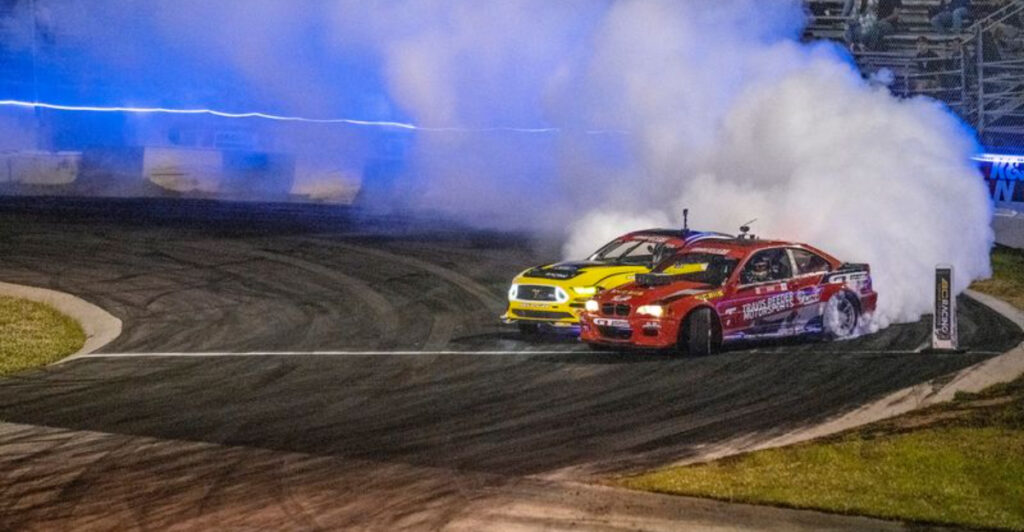
A cloud of tire smoke hanging over Pension Road feels different now than it did 20 years ago. Back then, the big noise at Raceway Park came in a straight line, with Top Fuel thunder rattling the grandstands and kids pressing their fingers into their ears like that would help.
Today, the drama is sideways. Cars snap into corners, rear ends swing wide, and the crowd waits for that perfect moment when speed, control, and chaos all decide to get along for half a second.
This is Old Bridge Township Raceway Park, the Englishtown-area motorsports landmark that somehow feels both retired and very much alive. The quarter-mile glory days are gone, and yes, longtime drag fans still feel that one.
But the place did not fade into a dusty memory. It changed lanes, threw the wheel, and found a second life in drifting.
The Englishtown Track That Became a Jersey Legend
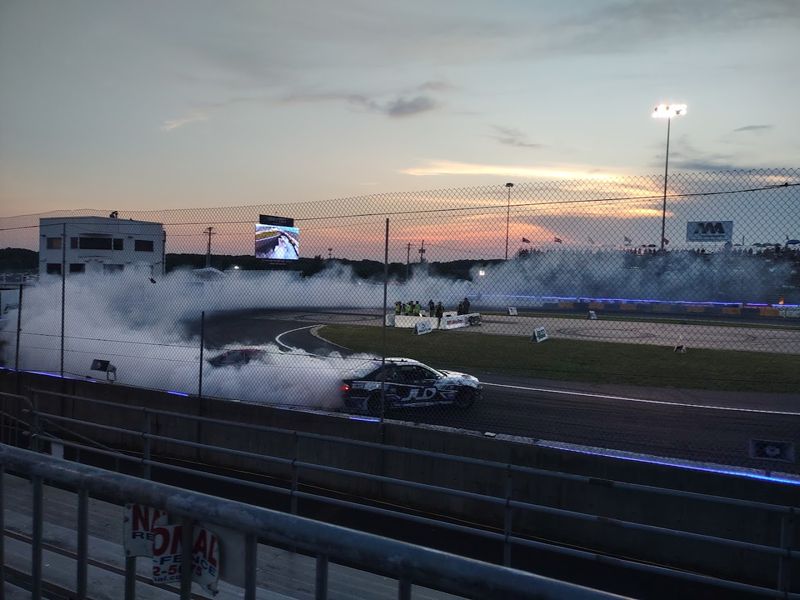
Locals still call it Englishtown, even though the facility sits in Old Bridge Township with an Englishtown mailing address. That little Central Jersey naming wrinkle fits the place perfectly, because Raceway Park has always lived in more than one world at once.
It was rural Middlesex County and national racing fame. It was a hometown hangout and a serious motorsports destination.
It was a family-run track that somehow became one of the most recognizable racing names on the East Coast. The address, 230 Pension Road, puts it on the kind of Jersey stretch where farms, warehouses, back roads, and car trailers all seem to share the same landscape.
Raceway Park opened in 1965, founded by Vincent Napoliello and Louis Napoliello, and it started with a quarter-mile drag strip on a property that would grow into a full motorsports complex.
Over the years, the facility expanded far beyond one straight strip of asphalt, adding motocross tracks, road-course space, karting areas, autocross layouts, and event grounds that made the place feel less like a single track and more like a car-culture village.
That is part of why it became so beloved. Raceway Park was not polished in a corporate-arena way, and nobody wanted it to be.
It had sun-baked bleachers, loudspeakers, food lines, dust, race fuel, lawn chairs, and people who could identify an engine before the car even rolled into view. For New Jersey, that mattered.
This is a state that likes its legends a little loud and a little stubborn, and Raceway Park was both. It became local history not because it was perfect, but because it was unmistakable.
How Raceway Park Built Its Name on Quarter-Mile Thunder
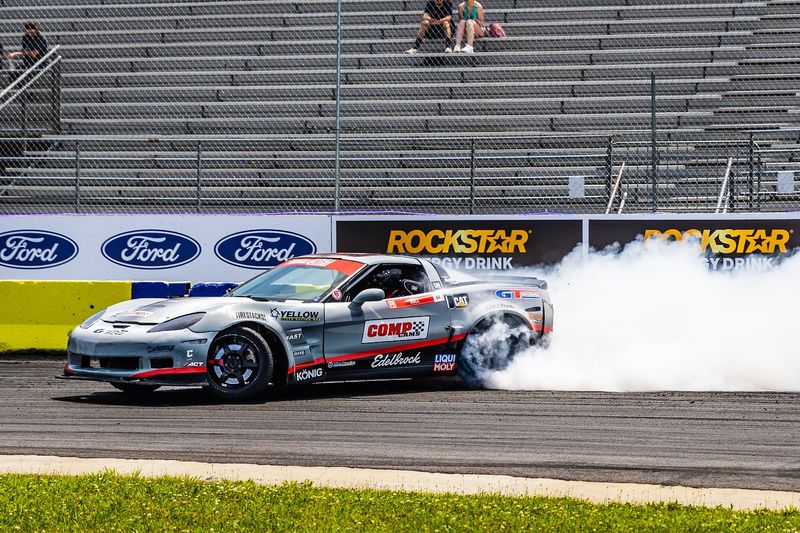
The straightaway was the heartbeat. Raceway Park had plenty going on around the property, but the quarter-mile drag strip was what made Englishtown famous far beyond Middlesex County.
Drag racing is beautifully simple from the stands: two cars, one starting line, one finish line, and nowhere to hide. When the serious machines arrived, though, that simplicity turned into violent theater.
Raceway Park hosted its first NHRA national event, the Springnationals, in 1968, and by 1971 it had become home to the NHRA Summernationals, a relationship that helped define the track for generations of racing fans. For nearly half a century, Englishtown was one of those stops that felt circled in red on the drag racing calendar.
Part of the magic was location. Raceway Park sat in a dense, car-loving corridor between New York and Philadelphia, close enough for fans from North Jersey, Staten Island, the Shore, and eastern Pennsylvania to pile into a car and make a day of it.
You did not need a plane ticket or a cross-country trip to see the big leagues. You could take Route 9, the Turnpike, or whatever back-road shortcut your uncle swore by, and suddenly there were Top Fuel dragsters shaking the ground in Central Jersey.
And yes, they really did shake it. Top Fuel cars are not loud in the normal concert-speaker sense.
They hit you in the chest. Funny Cars brought their own wild personality, Pro Stock had its polished intensity, and Sportsman racers gave regular fans someone a little closer to home to cheer for.
That mix made Raceway Park special. It was elite without feeling untouchable.
National champions and weekend racers shared the same mythology, and the strip carried both professional glory and personal bests.
The Day Drag Racing Went Quiet in Old Bridge
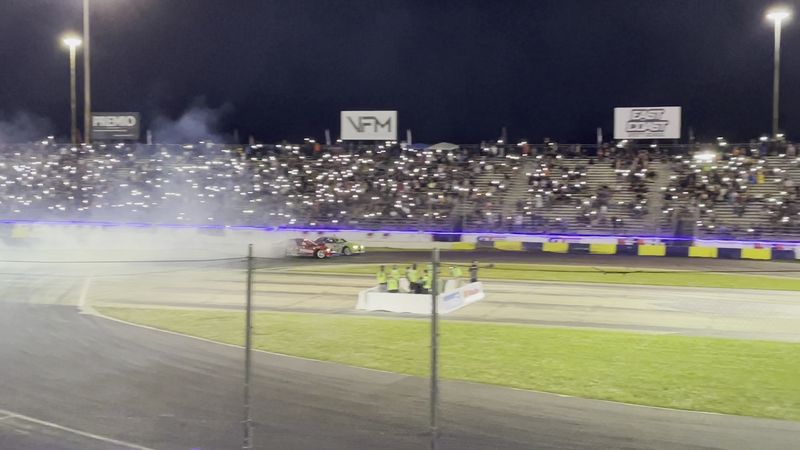
In January 2018, the news landed like somebody had cut the ignition mid-run. Old Bridge Township Raceway Park announced it would no longer host drag racing events, ending both quarter-mile and eighth-mile drag racing at the facility.
For casual observers, it may have sounded like a schedule change. For longtime fans, it felt like losing a family tradition.
The NHRA Summernationals had been tied to Englishtown for decades, and generations of New Jersey racing fans had built summer memories around that sound, that heat, and that unmistakable feeling of standing near the strip when the staging lanes started to fill. Raceway Park was where parents took kids who later brought kids of their own.
It was where people remembered specific drivers, specific crashes, specific record runs, specific heat waves, and specific burgers eaten on metal bleachers while cars warmed up nearby. You do not spend decades building rituals around a place and then shrug when they vanish.
The important thing, though, is that Raceway Park itself did not close. That detail sometimes gets lost.
The property continued operating with other motorsports events and activities, but the drag strip that had defined its identity was no longer the center of the story. That made the place feel complicated for a while.
It was not abandoned, but one of its most famous chapters had ended. Around here, people were not just mourning the loss of a race.
They were mourning the loss of a sound: the bark of a burnout, the rising idle before a launch, the strange little pause before the tree dropped, and the blast that followed. Even if you lived miles away, you knew when Raceway Park was awake.
After 2018, the venue still had noise. It just started speaking a different motorsports language.
Why Drifting Gave the Historic Track a Second Life
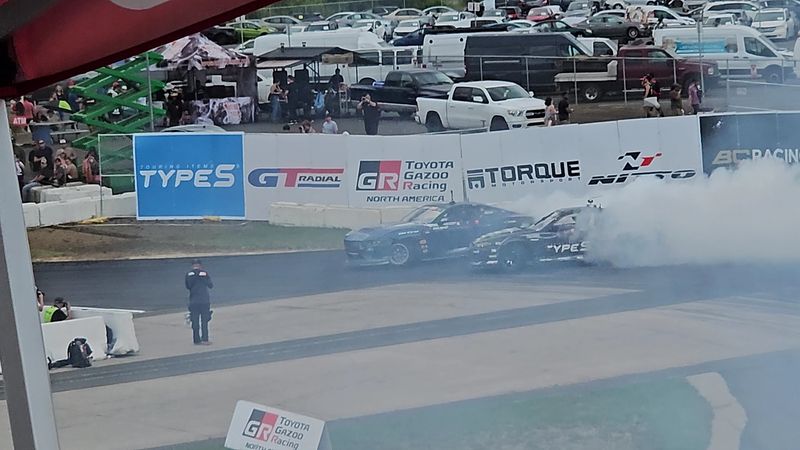
Drifting did not arrive at Raceway Park as some random replacement with fresh decals and no roots. The facility had already been home to a serious drift scene for years, especially through Club Loose, which helped turn Englishtown into one of the East Coast’s most recognizable drifting hubs.
Where drag racing is about launching straight, staying planted, and reaching the finish as quickly as possible, drifting is about making a car look like it is misbehaving while the driver is actually in control. It is smoke, angle, timing, speed, and nerve all mashed together in a way that feels half motorsport and half magic trick.
That shift fits Raceway Park better than it might sound. The venue had grown beyond one strip long before drag racing stopped, with road-course areas, kart-track layouts, and enough room for different types of car culture to exist side by side.
Drifting did not erase the old Raceway Park. It moved into the parts of the property that still had room to get loud.
On a busy drift day, the paddock can feel like a rolling car meet with helmets. You see cars with zip-tied bumpers, serious builds, spare wheels stacked like furniture, and drivers swapping advice between runs.
The crowd is different from the old NHRA days, but not as different as people think. There are still families.
There are still people leaning over fences, pointing at lines, arguing about cars, and saying, “No, wait, watch this guy.” You still smell tires, hot brakes, and whatever someone brought for lunch. You still get that little jolt when a driver sends it harder than expected and somehow makes it stick.
Drifting gave Raceway Park something every historic venue needs if it wants to survive: a reason for younger fans to build their own memories there.
From Burnouts to Car Shows, the Culture Never Left
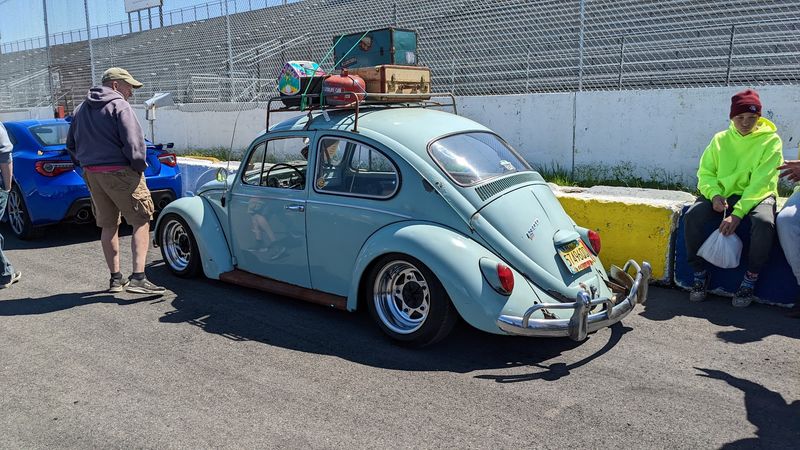
Even after the drag strip went quiet, the car people did not pack up and disappear. That would be very un-Jersey of them.
Raceway Park’s culture has always been bigger than one discipline, and the current version of the venue still proves it. Car shows, swap meets, motocross, karting, drifting, and special driving events all keep the property from feeling like a memorial to what used to be.
The Englishtown Swap Meet & Auto Show is a perfect example.
It is the kind of event where one person is hunting for a hard-to-find trim piece, another is trying not to buy a second project car, and somebody nearby is explaining why his build is “almost done,” which in car-person language can mean anywhere from two weeks to nine years.
That matters because car culture is not only about racing. Sometimes it is about walking a field with coffee, digging through boxes of parts, admiring a paint job, or overhearing two strangers become best friends because they both know exactly why a certain carburetor is annoying.
The racing is the loud part, but the community is the glue. Motocross brings a totally different rhythm to the property, with dirt bikes, regular riders, and a soundtrack that has nothing to do with old drag racing but still feels right at home.
Then there are modern performance experiences, where visitors can drive or ride in high-end cars with instructors, giving the facility yet another way to keep people connected to speed. None of this replaces the old quarter-mile days, and longtime fans are allowed to miss them.
Nostalgia has teeth here. But the bigger truth is hard to ignore: people are still coming through the gates because cars still matter at Raceway Park.
What Keeps Fans Coming Back to Raceway Park Today
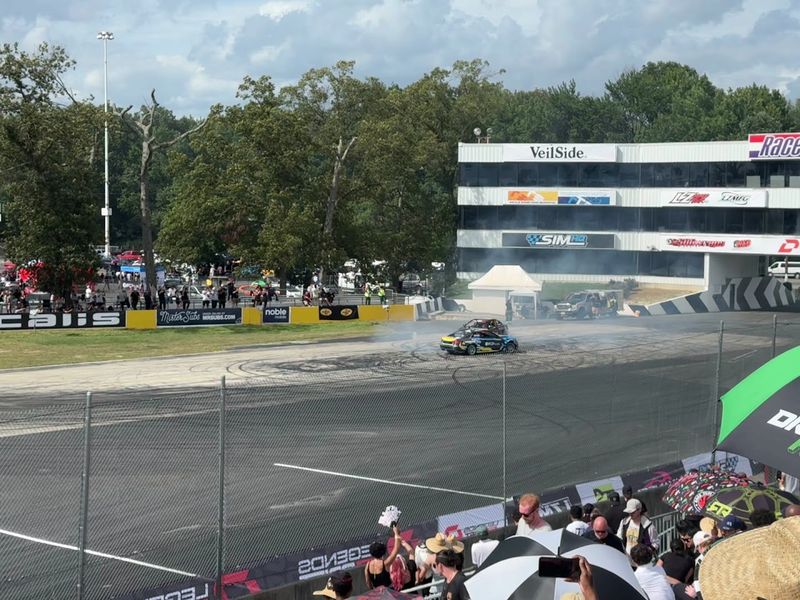
The reason Raceway Park still works is that it does not feel preserved behind glass. It feels used, scuffed, loud, and occasionally smoky in a way that makes your clothes tell on you later.
That is exactly what a place like this should be. Today’s fans come for different reasons.
Some show up for drift events and want tandem runs, wall taps, and tire smoke pouring off rear tires. Some come for swap meets and spend the day hunting parts they swear they are not buying unless the price is right.
Some bring kids to motocross or car shows because they remember being the kid on the other side of that same equation. Others come for modern driving experiences, where exotic cars and instructor-led laps bring a totally different crowd onto the same historic property.
That variety is what gives the venue staying power. If Raceway Park had tried to survive on nostalgia alone, it would be a sadder story.
Instead, it became a place where the past and present have to share the same asphalt. One fan may be thinking about NHRA Summernationals history.
Another may be filming a drift run for social media. Another may be pushing a stroller past a row of old Camaros.
Somehow, it all belongs. There is still a little ache in the place, especially for people who remember the full-force drag racing years.
You can respect that without pretending the current version is second-rate. Raceway Park is not the same as it was, and that is the point.
Historic places either adapt or become stories people tell in parking lots somewhere else. At Englishtown, the stories are still being made.
They just arrive sideways now.