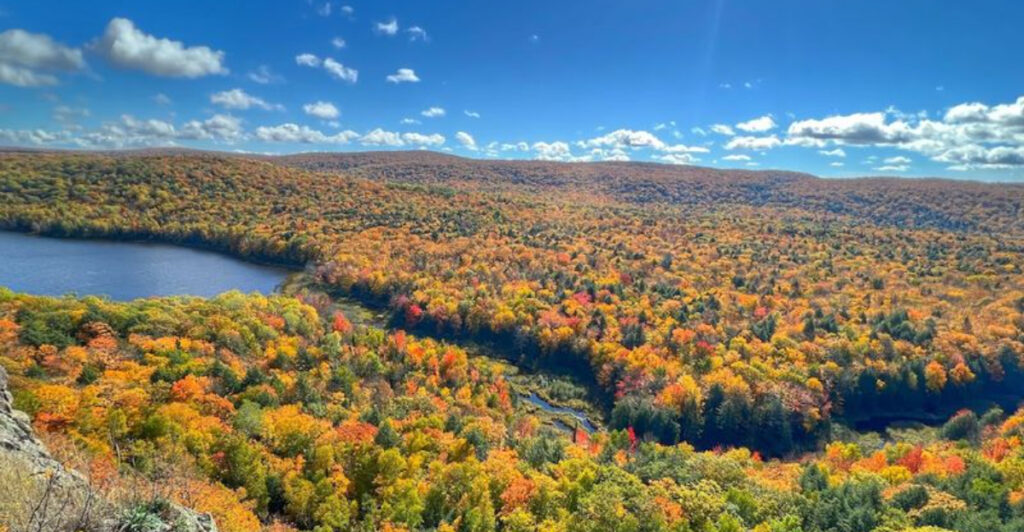
Tucked away in Michigan’s Upper Peninsula, the Porcupine Mountains Wilderness State Park is one of the Midwest’s most jaw-dropping natural treasures. Spanning roughly 60,000 acres along the shore of Lake Superior, this park packs in ancient forests, roaring waterfalls, and some of the best stargazing in the Great Lakes region.
Most people don’t even know it exists, which makes it feel like a true secret waiting to be discovered. Whether you’re a hardcore hiker or just someone who loves a good scenic drive, the Porcupines have something that will absolutely blow your mind.
Lake of the Clouds
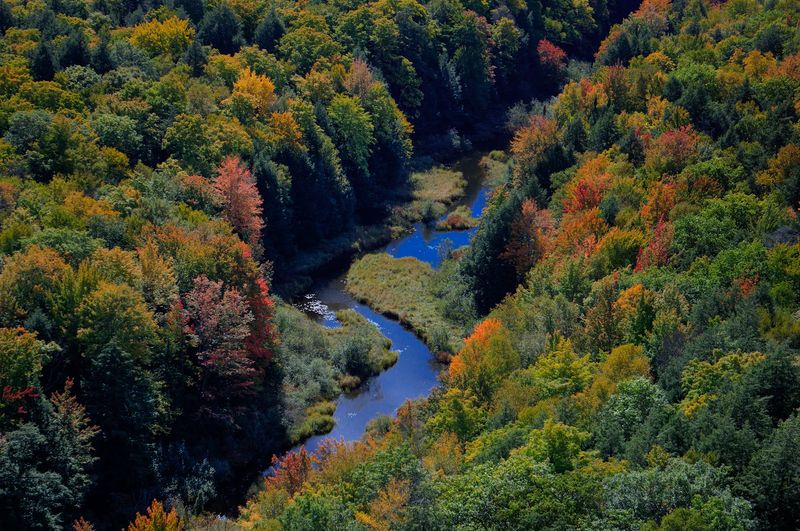
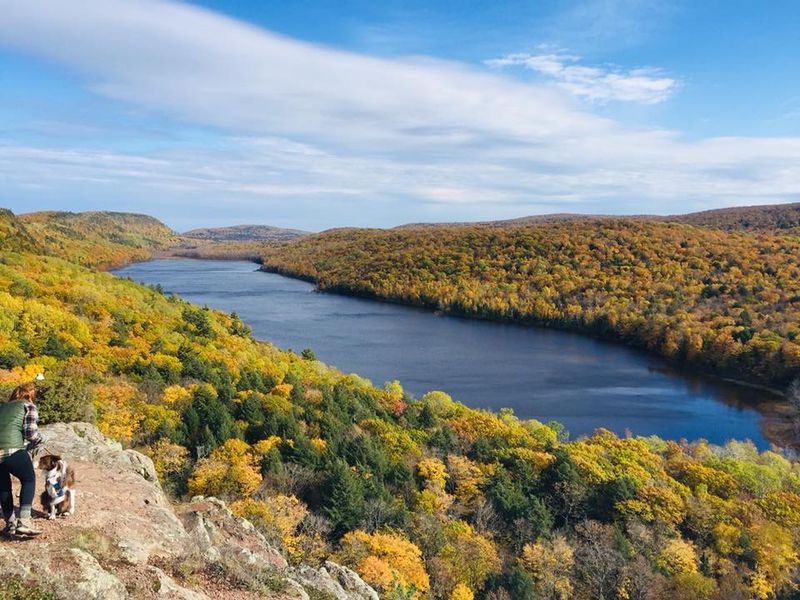
Few views in the entire Midwest can stop you in your tracks the way Lake of the Clouds does. Perched high above the surrounding forest on the Escarpment, this stunning glacial lake sits nestled between ridgelines covered in centuries-old trees.
It’s the kind of scene that makes you forget you’re still in Michigan.
Reaching the lake is surprisingly flexible depending on your energy level. You can drive directly to the paved observation deck off M-107 for a quick, breathtaking look — no hiking required.
Or, if you want to earn the view, tackle the Escarpment Trail, an 8-plus-mile route that rewards every step with panoramic overlooks stretching across the treetops and the shimmering water below.
The lake looks different every single season. Spring brings misty mornings and fresh green canopies.
Summer gives you deep blue skies and calm, glassy water. Fall is when things get truly legendary — the surrounding hardwoods explode into blazing reds, oranges, and golds that reflect off the lake’s surface like a painting.
Even winter visits, though cold, offer a serene frozen landscape that feels otherworldly.
Sunset is the magic hour here. Locals and repeat visitors will tell you that timing your visit to the observation deck around dusk transforms the experience entirely.
The light shifts, the colors deepen, and the whole valley seems to glow. Photographers regularly camp out at the overlook just to capture that moment.
One practical tip: arrive early on weekends during peak fall season, because the parking lot fills up fast. Weekday mornings are your best bet for a quieter, more personal experience.
Lake of the Clouds isn’t just a highlight of the Porcupines — it’s one of the most unforgettable sights in all of Michigan.
Old-Growth Hemlock Forest
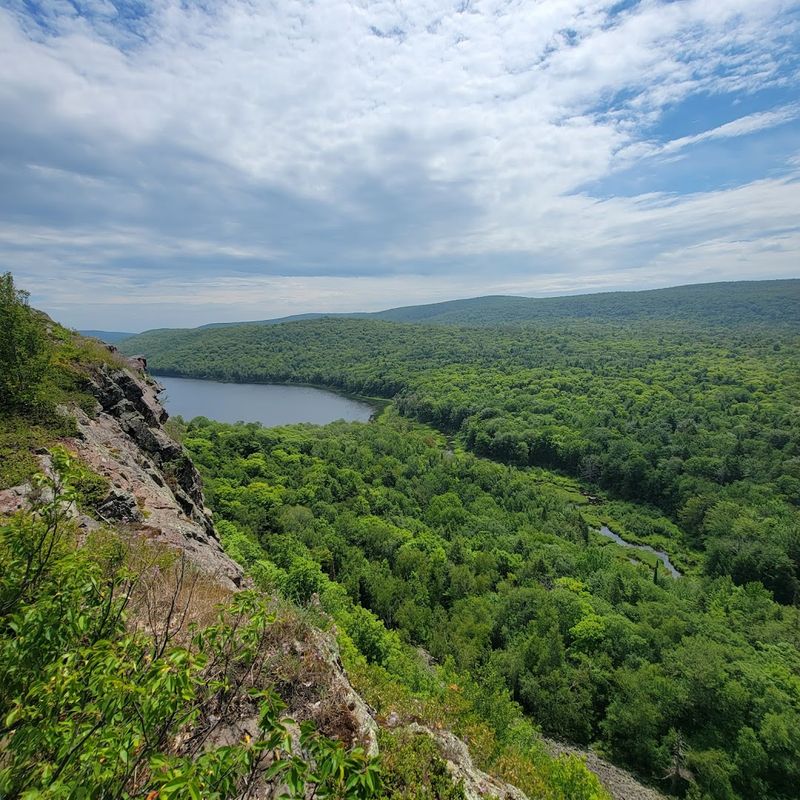
Walking into the old-growth hemlock forest at Porcupine Mountains feels like stepping into a world that time completely forgot. These trees aren’t just old — some of the hemlocks and maples here have been standing for several hundred years, making this one of the largest remaining tracts of old-growth forest in the eastern United States.
The trunks are massive, the canopy is dense, and the forest floor has a dark, cathedral-like stillness that you simply can’t find anywhere else in the Midwest.
What makes old-growth forests so special is what hasn’t happened to them. These trees were never logged during Michigan’s timber boom era, which is remarkable given how thoroughly most of the state’s forests were cleared in the 1800s.
Because of that, the ecosystem here is layered and complex in ways that younger forests just haven’t had time to develop. Fallen logs become nurse trees for new growth, and the biodiversity is off the charts compared to managed woodlands.
Hikers who venture deep into the backcountry on trails like the Big Carp River Trail or the North Mirror Lake Trail get the most immersive experience. You can spend hours moving through these primeval woods without seeing another person, which feels increasingly rare in today’s world.
The sounds change too — fewer birds, more wind through the canopy, the occasional crack of a distant branch.
Bring your camera, but don’t be surprised if photos never fully capture the scale. Standing next to a hemlock with a trunk wider than your arm span is a humbling, grounding experience.
This forest is the soul of the Porcupines, and spending real time inside it — not just passing through — is what separates a good trip from a truly transformative one.
Presque Isle River Waterfalls
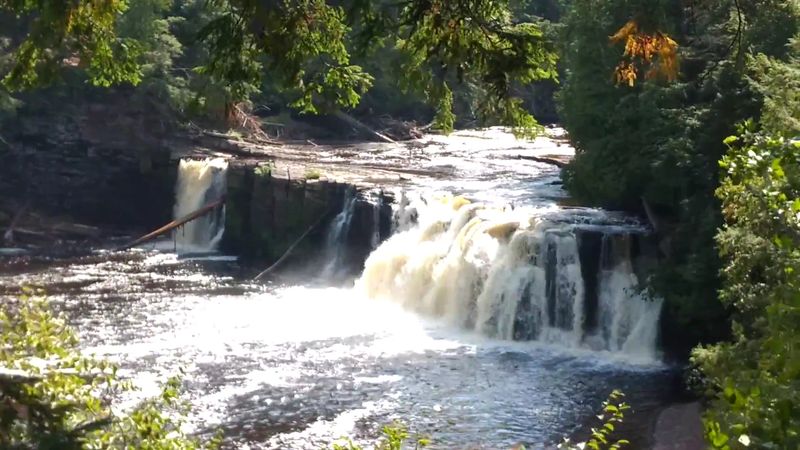
There’s something almost theatrical about the Presque Isle River Scenic Area. Within just a short stretch of trail, you get not one, not two, but multiple waterfalls tumbling over ancient bedrock as the river charges toward Lake Superior.
The whole loop around the river takes only a couple of hours, making it one of the most rewarding easy hikes in the entire park.
The waterfalls here aren’t towering vertical drops — they’re wide, powerful cascades that sprawl across the dark volcanic rock in dramatic sheets of white water. Manido Falls, Manabezho Falls, and Nawadaha Falls each have their own personality, and the trail connects them in a satisfying sequence.
Suspension bridges over the gorge give you heart-pounding views straight down into the churning water below, which kids absolutely love and honestly so do most adults.
Start at the parking lot near the ranger station entrance off County Road 519. The loop trail is well-marked and follows both sides of the river, so you get different perspectives on each waterfall depending on which bank you’re walking.
Near the end of the loop, the river flattens out into a wide, rocky delta where it meets Lake Superior, and there’s a small beach area perfect for sitting and listening to the waves roll in.
Spring and early summer are peak waterfall season when snowmelt keeps the river running high and fast. But even late summer visits are worth it — the forest stays lush and green, and the falls still put on a solid show.
Pack a picnic, wear shoes with good grip on wet rock, and plan for at least two hours to enjoy this area properly. The Presque Isle River is proof that you don’t need to go far or hike hard to find something genuinely spectacular inside the Porcupines.
Northern Lights Viewing
Not many people realize that the Porcupine Mountains sit in one of the best aurora-viewing corridors in the continental United States. Thanks to its remote location in the Upper Peninsula, minimal light pollution, and clear northern horizon over Lake Superior, the park gives visitors a legitimate shot at seeing the northern lights — and when conditions align, the show is absolutely stunning.
The Porcupines sit at a high enough latitude that during periods of strong geomagnetic activity, the aurora can appear as vivid curtains of green, sometimes edged with purple and pink, rippling across the entire sky. The Lake Superior shoreline provides an unobstructed northern view, which is exactly what you want for aurora hunting.
Watching the lights reflect off the lake’s surface doubles the visual impact in a way that’s hard to put into words.
Timing matters a lot. Late August through early April offers the longest periods of true darkness, and clear skies are more common in fall before winter storms roll in.
Apps like SpaceWeatherLive and My Aurora Forecast can help you track KP index levels and get alerts when activity is expected. A KP level of 4 or higher gives you a reasonable chance of seeing something from the Porcupines, while a KP of 6 or above can produce a full-sky display even at lower latitudes.
The Summit Peak observation tower and the Lake Superior shoreline near the Union Spring area are popular spots for aurora watching. Dress in warm layers even in summer — nights get cold fast in the UP.
Bring a tripod if you want to photograph the lights, since long-exposure shots are the only way to truly capture what your eyes are seeing. Witnessing the northern lights over the Porcupines is one of those rare Michigan experiences that stays with you forever.
The Escarpment Trail
Ask any experienced hiker who has visited the Porcupines which trail left the biggest impression, and a huge percentage will say the Escarpment Trail without hesitation. Stretching roughly 4 miles one way along a dramatic ridgeline, this trail delivers continuous panoramic views that feel more like something from a national park out west than a state park in the Midwest.
The terrain is rugged, the elevation changes are real, and the payoff at every viewpoint is enormous.
The trail runs along the top of a long rocky ridge above the Lake of the Clouds basin, offering elevated views of the lake, the surrounding forest canopy, and on clear days, glimpses of Lake Superior in the distance. The rock underfoot is ancient — part of a volcanic formation that gives the ridge its dramatic, jagged character.
Footing can be tricky in spots, especially on wet rock or after rain, so trail runners or sturdy hiking boots are a must.
Most hikers tackle the Escarpment as part of a longer loop, combining it with the Government Peak Trail, the Big Carp River Trail, and the Connector Trail for a full-day adventure that covers some of the park’s most diverse terrain. That full loop runs around 16 miles and is genuinely challenging — plan for 7 to 9 hours depending on your pace and how many times you stop to stare at the views.
Fall is peak season on this trail for good reason. The entire ridgeline becomes a front-row seat to one of Michigan’s most explosive foliage displays, with color stretching as far as you can see in every direction.
Arrive at the Cloud Peak trailhead early to snag parking, bring plenty of water and snacks, and pace yourself on the climbs. The Escarpment Trail earns its reputation every single time.
Fall Foliage

Every autumn, something almost magical happens in the Porcupine Mountains. The park’s massive canopy of sugar maples, yellow birches, aspens, and red maples ignites into a color display that locals describe as undefeated — and it’s hard to argue with them.
Because the forest here is largely old-growth and untouched, the density and variety of tree species creates a richer, more layered color palette than you’d find in younger managed forests.
Peak color typically arrives somewhere between late September and mid-October, though the exact timing shifts a bit year to year depending on temperature swings and rainfall. The higher elevations inside the park tend to turn first, so the ridgelines and summit areas often show peak color a few days before the valleys below.
That staggered timing actually extends the overall viewing window, giving visitors more flexibility to catch the show at its best.
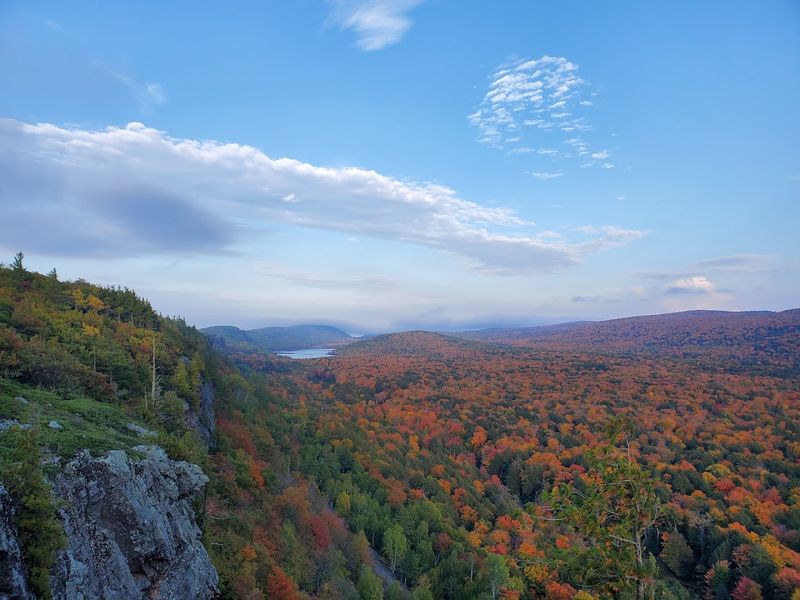
Driving M-107 through the heart of the park is one of the easiest ways to soak in the fall colors without breaking a sweat. The road winds through dense forest and opens up to the Lake of the Clouds overlook, where the entire basin below transforms into a carpet of orange and red.
For hikers, the Summit Peak Tower offers a 360-degree perspective on the color-covered mountains that is genuinely hard to match anywhere in Michigan.
Weekends in October get crowded — not overwhelming, but busy enough that parking fills up at popular spots by mid-morning. Going on a Tuesday or Wednesday gives you a noticeably quieter experience.
Pack layers because temperatures swing wildly in October, from warm afternoons to near-freezing nights. The Porcupines in fall aren’t just worth the long drive from anywhere in Michigan — they’re worth planning an entire trip around.
This is peak Michigan at its absolute finest.
Backcountry Camping and Cabins
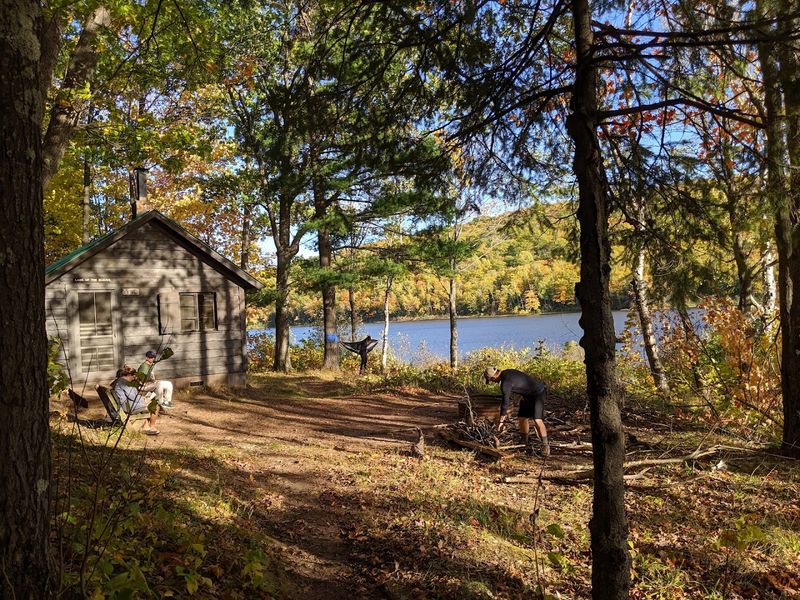
Spending a night — or several — inside the Porcupines changes the experience completely. The park offers a range of overnight options that go well beyond a standard campground, from primitive backcountry campsites scattered throughout the wilderness to a collection of rustic rental cabins that put you right in the middle of the forest or along a remote lakeshore.
It’s the kind of camping that feels genuinely adventurous without requiring expert-level gear or skills.
The backcountry campsites are reservable in advance through the Michigan DNR, which is important because they fill up fast, especially during summer and fall. Sites are spread across the park’s trail network, so choosing your campsite strategically lets you build a multi-day itinerary that hits multiple highlights — a waterfall on day one, old-growth forest on day two, Lake of the Clouds on day three.
Water sources exist throughout the park, but always treat or filter water from streams and lakes before drinking.
The rental cabins deserve special attention. Several of these rustic structures sit in locations that you simply cannot access by car — you have to hike in, which means you earn the solitude completely.
Lake of the Clouds cabin, Lily Pond cabin, and several others along the Big Carp River offer basic amenities like wood stoves and bunks, creating a cozy basecamp feel that tent camping can’t quite replicate on a cold October night.
The main campground near the park headquarters splits into two loops: one generator-friendly for those who need the convenience, and one generator-free for people who actually want to hear the forest at night. Both loops are well-maintained and reasonably priced.
Reserving cabins or backcountry sites months ahead is strongly recommended — these spots are genuinely beloved by repeat visitors who come back year after year without fail.