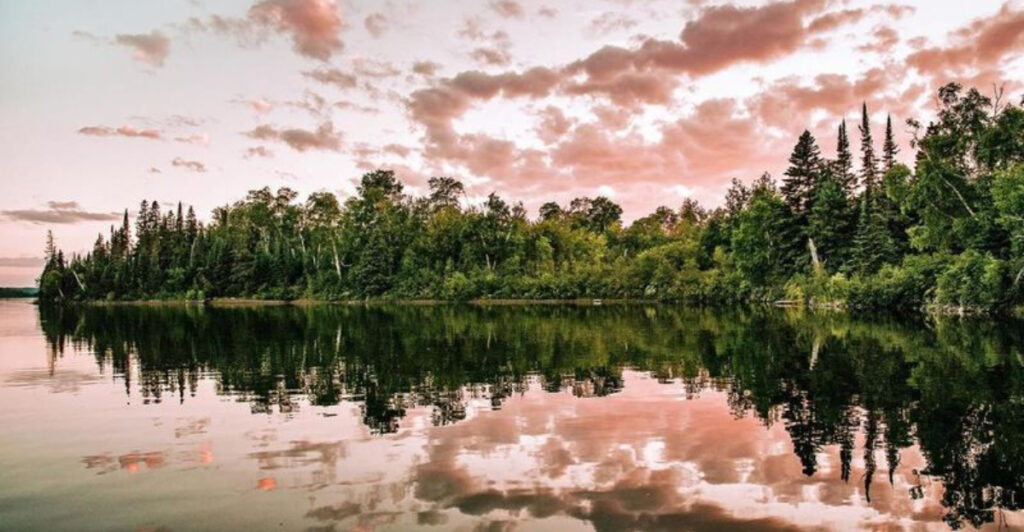
Michigan doesn’t always get the credit it deserves when people talk about breathtaking scenery and jaw-dropping natural beauty. While some travelers head straight to national parks out west, Michigan quietly holds its own with towering sand dunes, crystal-clear springs, ancient forests, and roaring waterfalls.
From the Upper Peninsula’s wild backcountry to the Lower Peninsula’s sandy shorelines, this state is packed with places that genuinely stop you in your tracks. If you’ve been sleeping on Michigan, these 12 natural wonders are about to change your mind completely.
1. Chapel Rock
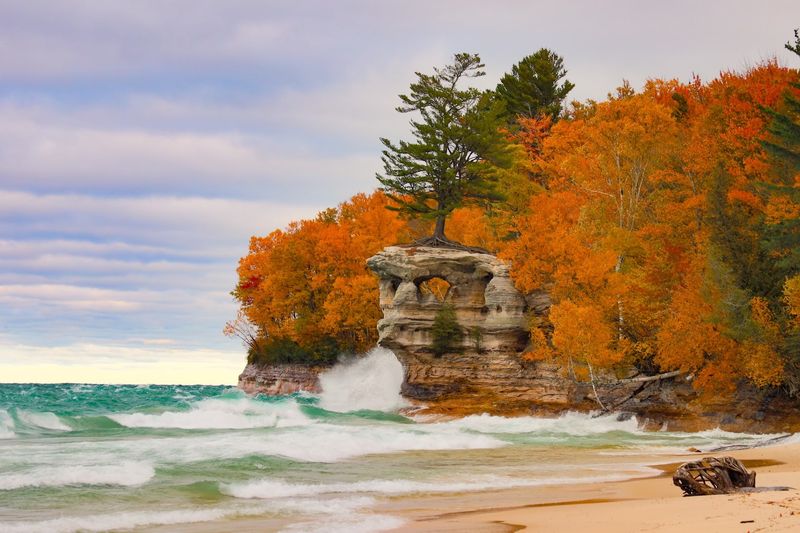
Perched above the electric-blue waters of Lake Superior, Chapel Rock is the kind of place that makes you stop mid-sentence and just stare. This striking sandstone pillar stands alone near Chapel Falls in Pictured Rocks National Lakeshore, and it has become one of the most photographed spots in all of Michigan.
What makes it even more remarkable is the single scraggly pine tree clinging to its top, somehow surviving up there with roots that stretch across a narrow rock bridge to the mainland.
Getting to Chapel Rock requires a hike, and honestly, that’s part of what makes it feel so rewarding. The trail winds through dense forest before opening up to dramatic coastal views that feel almost cinematic.
You’ll pass Chapel Falls along the way, which is worth every step on its own. The full loop is around 10 miles, so wear comfortable shoes and pack water and snacks.
The colors here are genuinely unreal. The sandstone cliffs glow in shades of orange, red, and brown, while the lake shifts between shades of teal and deep navy depending on the light.
Sunrise visits are particularly stunning, when soft morning light hits the rock face and turns everything golden. Fall is another incredible time to visit, when the surrounding maple and birch trees light up in fiery autumn colors.
Chapel Rock sits within Pictured Rocks National Lakeshore, which stretches for 42 miles along Lake Superior’s southern shore. A recreation pass is required for entry, and it’s very affordable for the experience you get.
Camping nearby is available if you want to spend more than a day exploring this corner of Michigan’s Upper Peninsula. Few places in the Midwest deliver this level of raw, dramatic scenery.
2. Tahquamenon Falls
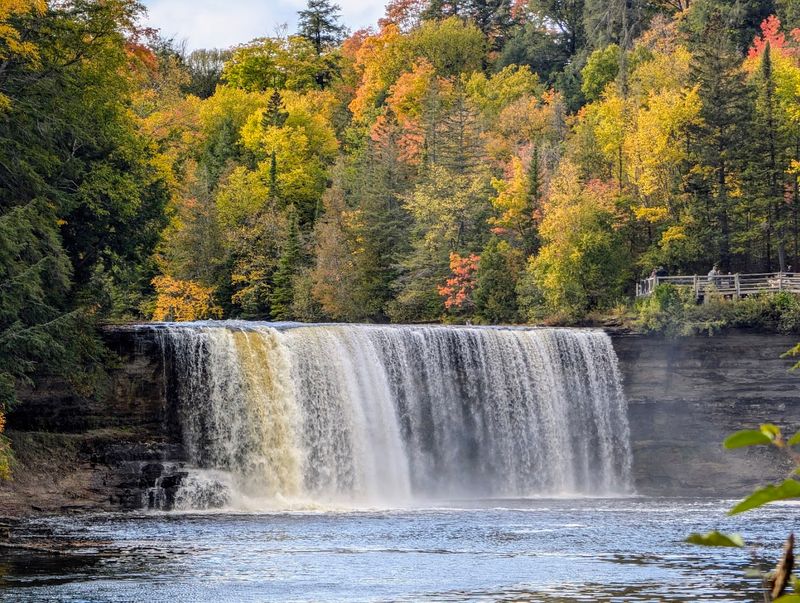
Nicknamed the “Root Beer Falls” by locals, Tahquamenon Falls earns that quirky title from the tannins that leach into the river from surrounding cedar and spruce forests, giving the water a rich amber color that looks almost like a dark ale. Located in the Upper Peninsula near Paradise, Michigan, this is one of the largest waterfalls east of the Mississippi River.
The upper falls stretch more than 200 feet wide and drop nearly 50 feet, creating a thunderous roar you can hear long before you see it.
Tahquamenon Falls State Park surrounds the falls and offers a well-maintained trail system connecting the upper and lower falls. The lower falls are a different experience entirely — a series of smaller cascades wrapping around a forested island that you can explore by renting a rowboat on-site.
It feels surprisingly adventurous, paddling out to the island and picking your way across the rocks while mist swirls around you.
Wildlife sightings here are common. Black bears, bald eagles, and great blue herons all call this area home, so keep your camera ready at all times.
The park also has a brewpub right near the upper falls, which makes for a very satisfying end to a day of hiking. Few natural attractions come with that kind of bonus.
Fall is widely considered the best time to visit, when the forest canopy transforms into a blaze of red, orange, and gold that frames the amber water in spectacular fashion. Summer visits are also popular, and the park tends to stay less crowded than you might expect for a place this beautiful.
Whether you’re a serious hiker or just someone who wants an easy walk to something genuinely impressive, Tahquamenon Falls delivers without question.
3. Sleeping Bear Dunes National Lakeshore
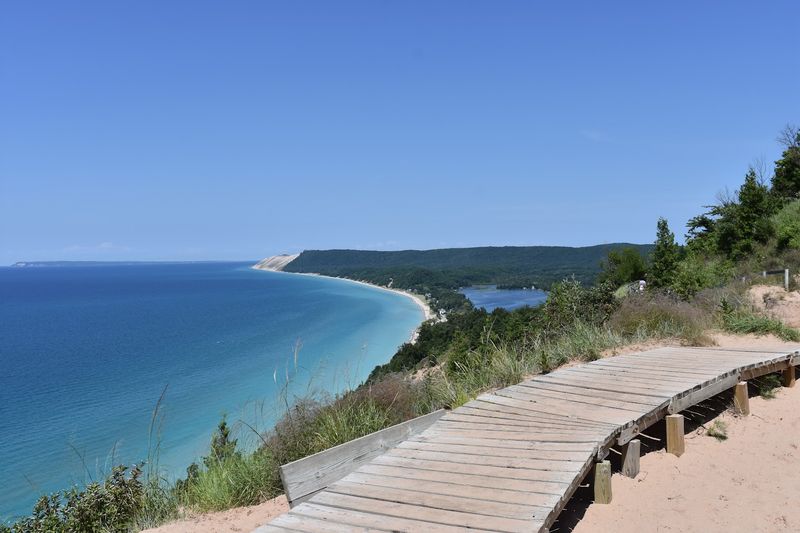
Standing at the top of the Dune Climb and looking out over Lake Michigan feels like being on top of the world — or at least somewhere far more exotic than the Midwest. Sleeping Bear Dunes National Lakeshore stretches along 35 miles of Lake Michigan shoreline in the northern Lower Peninsula, and it has been called one of the most beautiful places in America for very good reason.
The dunes themselves rise up to 450 feet above the lake, which makes the climb feel genuinely challenging and the view completely worth it.
The park is named after an Ojibwe legend about a mother bear who swam across Lake Michigan with her two cubs. The cubs didn’t make it, and the Great Spirit turned them into the North and South Manitou Islands, which you can still see from the shore today.
Knowing that story while standing on the beach adds a layer of meaning that sticks with you long after you’ve left.
Beyond the dunes, the park offers some of the clearest freshwater you’ll ever swim in. Glen Lake, tucked just inland, is especially gorgeous — calm, warm, and brilliantly blue.
The Sleeping Bear Heritage Trail runs through the park for cyclists and hikers who want to explore at a slower pace. Glen Arbor, the small town at the park’s edge, is perfect for grabbing a meal or picking up local fudge after a long day outside.
Crowds do pick up in July and August, so visiting in late May, early June, or September gives you more breathing room. Entry fees are modest, and a national parks pass covers access all year.
Camping spots inside the park book up fast, so plan ahead if an overnight stay is on your list. This is genuinely one of Michigan’s crown jewels.
4. Mackinac Island
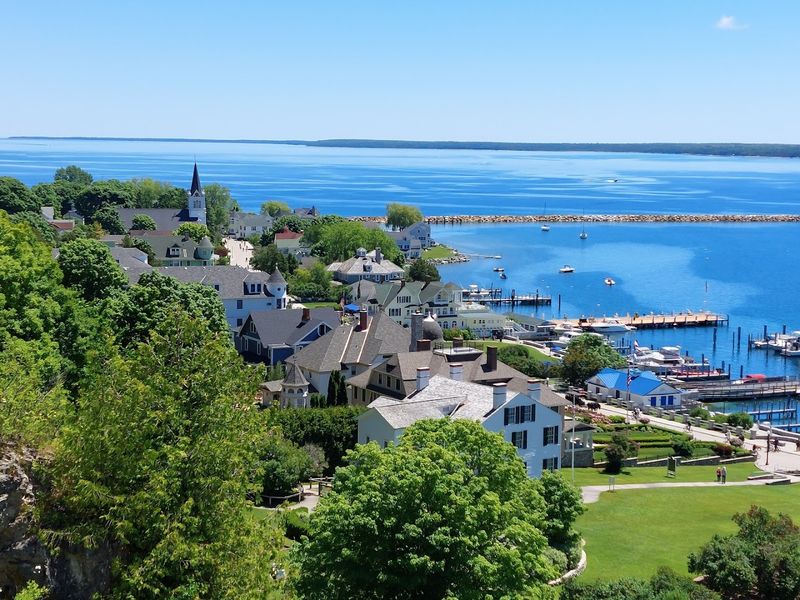
No cars. No traffic lights.
No exhaust fumes. Mackinac Island operates on its own terms, and honestly, the world should take notes.
Sitting in the Straits of Mackinac between Michigan’s two peninsulas, this small island has banned motor vehicles since 1898, meaning horses, bicycles, and your own two feet are the only ways to get around. That single rule changes everything about the experience — the pace slows down, the air smells cleaner, and you actually notice things.
The island’s history runs deep. Fort Mackinac, built by the British in 1780, still stands on the bluff above downtown and offers sweeping views of the harbor.
The Grand Hotel, with its famous 660-foot front porch, has been welcoming guests since 1887 and remains one of the most iconic buildings in the entire Midwest. Walking past it on a summer afternoon, with fudge in hand and horse hooves clip-clopping nearby, feels like stepping into a completely different century.
Speaking of fudge — Mackinac Island is legendary for it. Dozens of shops line Main Street, and watching the candy makers stretch and fold the fudge on marble slabs is oddly hypnotic.
Original Murdick’s Fudge has been operating on the island since 1887, making it one of the oldest fudge shops in the country. Picking a flavor is genuinely difficult when everything smells that good.
Getting to the island requires a ferry ride from either Mackinaw City or St. Ignace, and both crossings take about 15 to 20 minutes. The island is busiest in summer but also stunning in early fall when the leaf colors peak and the crowds thin out considerably.
Overnight stays at one of the island’s many bed-and-breakfasts let you experience the quiet magic that day-trippers always miss.
5. Kitch-iti-kipi (The Big Spring)
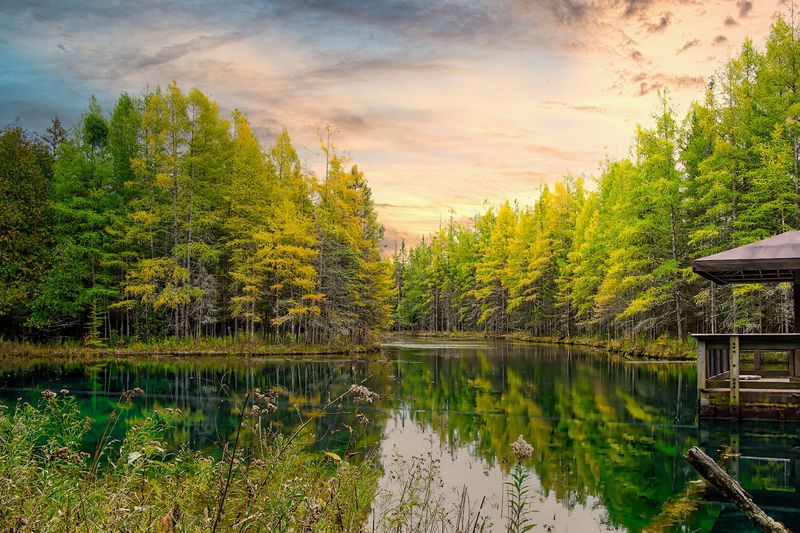
Michigan’s largest natural freshwater spring doesn’t just impress — it genuinely looks like something out of a fantasy novel. Kitch-iti-kipi, which translates roughly to “big cold water” in Ojibwe, sits in Palms Book State Park near Manistique in the Upper Peninsula.
The spring is 200 feet across and 40 feet deep, and the water is so impossibly clear that you can see every detail on the bottom from the surface. Ancient logs, giant trout, and thousands of bubbles rising from the sandy floor make it feel alive in a way that’s hard to put into words.
The spring pumps out about 10,000 gallons of crystal-clear water every single minute, maintaining a constant temperature of 45 degrees year-round. That consistency means the spring never freezes, even in the brutal Upper Peninsula winters, which makes it a surreal sight when snow covers the surrounding trees but the water stays perfectly open.
Visiting in winter, when steam rises off the surface and the forest is draped in white, is one of Michigan’s most underappreciated experiences.
Access to the spring is simple and completely free to enjoy once you’re inside the state park. A hand-operated observation raft floats visitors out over the center of the spring, and pulling yourself along the cable while peering down into that emerald-green water is the kind of activity that never gets old, no matter how many times you’ve done it.
Kids absolutely love it, and adults are just as mesmerized.
The state park is small and focused entirely on the spring, so plan to spend an hour or two and then explore the surrounding area. Indian Lake State Park and the Manistique area offer additional activities nearby.
Parking is easy, the trail to the spring is short and flat, and the whole experience is incredibly accessible for visitors of all ages and fitness levels.
6. Porcupine Mountains
Old-growth forest doesn’t exist in many places east of the Rockies anymore, which makes the Porcupine Mountains something genuinely rare. Located in Michigan’s western Upper Peninsula, “the Porkies” protect one of the largest remaining old-growth northern hardwood forests in North America.
Trees here have been growing undisturbed for centuries, and walking beneath their canopy feels completely different from any other forest experience — quieter, denser, and somehow more alive.
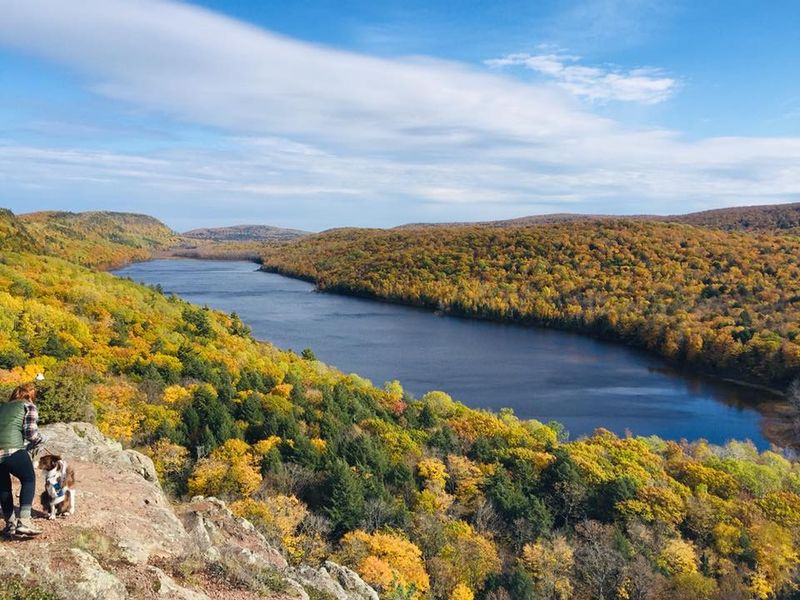
The crown jewel of the park is the Lake of the Clouds overlook, and it earns every bit of its reputation. From the parking area, a short walk leads to a rocky ledge where the lake stretches out below, framed by forested ridges that roll toward the horizon.
In fall, the surrounding sugar maples, yellow birches, and aspens explode into color, turning the view into something that looks almost painted. Photographers start lining up at the overlook before sunrise during peak foliage season.
The park covers nearly 60,000 acres and offers more than 90 miles of backcountry trails for serious hikers. Rustic cabins and modern campsites are available throughout the park, and booking a remote lakeshore cabin for a night or two is a bucket-list-worthy experience that fills up months in advance.
The Presque Isle River runs through the park’s western edge and drops through a series of beautiful cascades before emptying into Lake Superior.
Winter transforms the Porkies into a completely different kind of destination. Cross-country skiing, snowshoeing, and downhill skiing on the park’s small ski hill keep outdoor lovers busy even when temperatures drop well below freezing.
The park’s remote location means light pollution is minimal, making it one of the best spots in Michigan for stargazing and watching the northern lights on clear winter nights.
7. Isle Royale National Park
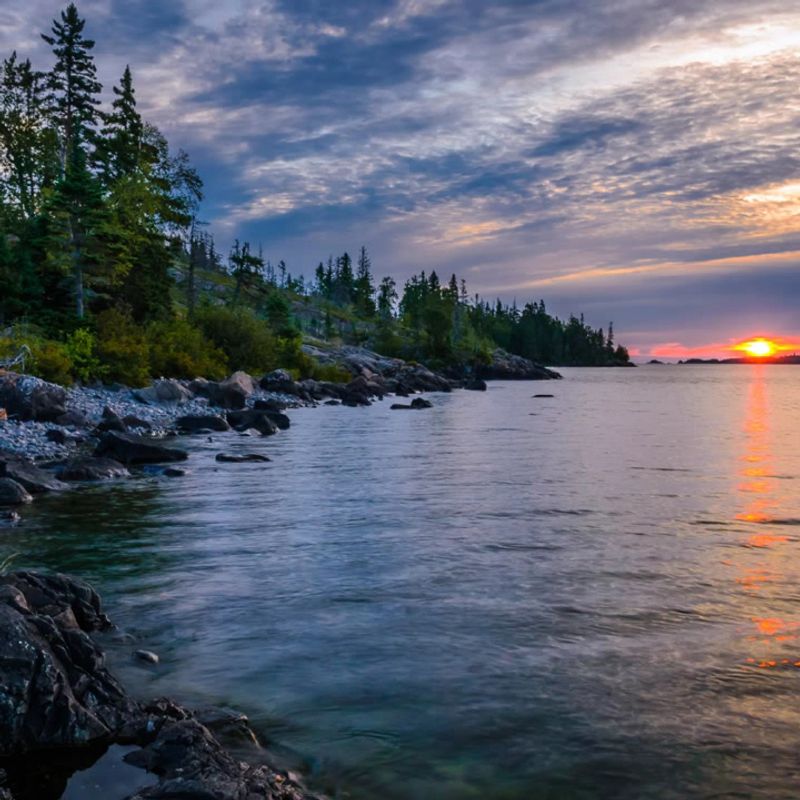
Getting to Isle Royale requires effort, and that’s exactly why it stays wild. Accessible only by ferry or floatplane from Houghton, Copper Harbor, or Grand Portage, Minnesota, this remote island in Lake Superior sees fewer annual visitors than almost any other national park in the country.
No roads connect it to the mainland. No fast food.
No cell service in most areas. Just 571,790 acres of boreal forest, inland lakes, rocky ridgelines, and an ecosystem that operates entirely on its own schedule.
The island is famous for its wolf and moose population, which has been studied by researchers since the late 1950s in one of the longest-running predator-prey studies in the world. Spotting a moose wading through a marshy cove or a wolf crossing a ridge trail is a real possibility here, and those encounters are the kind of thing people talk about for the rest of their lives.
The island’s isolation has kept its wildlife unusually bold and relatively unafraid of humans.
Backpacking is the primary way to explore, with more than 165 miles of trails crossing the island’s length. Lightweight camping gear, bear canisters, and a solid map are essentials.
Campsite reservations are required and fill up quickly, especially for popular spots like Feldtmann Lake and Moskey Basin. The park is open from mid-April through October, then completely closes for winter.
Kayaking the island’s rugged coastline is another way to experience it, with sea caves, hidden coves, and shipwrecks lying just below the surface in several areas. The water is cold year-round, so a dry suit or wetsuit is strongly recommended for paddlers.
Isle Royale is the kind of place that rewards those who plan carefully and go in ready to disconnect completely from everything familiar.
8. Silver Lake Sand Dunes
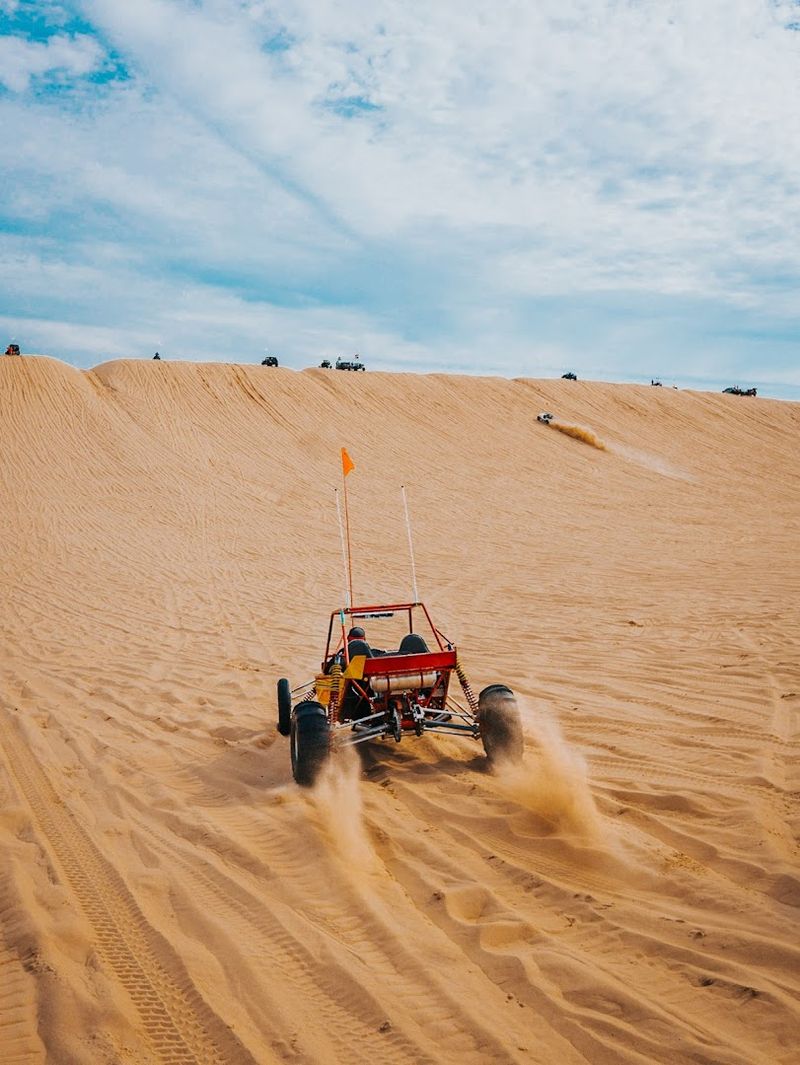
Silver Lake Sand Dunes are what happens when Michigan decides to get a little wild and loud. Unlike the serene, hike-only experience at Sleeping Bear, the Silver Lake area welcomes off-road vehicles onto a designated section of open dunes, creating one of the most exhilarating outdoor playgrounds in the entire Midwest.
Located near Mears in Oceana County, the dunes stretch for miles between Silver Lake and Lake Michigan, and the landscape looks more like a desert than anything you’d expect to find in Michigan.
The ORV area is managed by the state and requires a permit, but the process is straightforward and affordable. Dune buggy and ATV rentals are available right at the dune entrance, so you don’t need to haul your own equipment.
Watching first-timers crest a dune and see Lake Michigan appear suddenly on the other side is a genuinely priceless moment — the contrast between the dry, golden sand and the shimmering blue water is absolutely stunning.
For those who prefer a quieter visit, the non-motorized areas of the dunes offer excellent hiking and a much more peaceful atmosphere. Mac Wood’s Dune Rides has been taking visitors on guided tours through the dunes since 1930, and the narrated trips are both entertaining and educational.
It’s a great option for families with younger kids who aren’t quite ready for the ORV experience.
Silver Lake itself is warm and shallow, making it ideal for swimming, kayaking, and paddleboarding during the summer months. The surrounding town of Mears has campgrounds, restaurants, and small shops that give the area a laid-back resort-town feel.
Weekends in July and August fill up fast, so booking campsites and rentals well in advance is a smart move if you want to avoid stress on arrival day.
9. Bond Falls
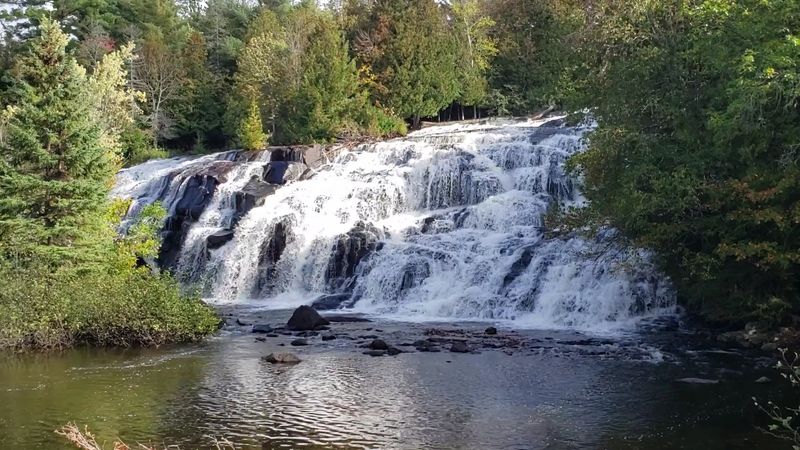
Some waterfalls are impressive because of their sheer size. Bond Falls earns its reputation through pure, photogenic elegance.
Located near Paulding in the western Upper Peninsula, this tiered cascade fans out across a wide wall of rock and moss, spreading into dozens of individual ribbons of water before crashing into the pool below. The result is a waterfall that looks almost deliberately artistic — symmetrical, layered, and impossibly photogenic from almost every angle.
A paved parking area and a well-maintained boardwalk make Bond Falls one of the most accessible waterfalls in the Upper Peninsula, which is saying something in a region that’s absolutely stacked with competition. The main viewing platform puts you right at eye level with the falls, close enough to feel the mist on your face on a warm afternoon.
A longer trail loops around the upper portion of the falls and offers elevated views that show off the full spread of the cascade from above.
Bond Falls is part of the Bond Falls Flowage, a reservoir created by a small dam upstream. The surrounding area is managed for recreation, and fishing for walleye, bass, and northern pike in the flowage is popular with anglers who know the region well.
The forest surrounding the falls is a mix of hardwoods and conifers that creates spectacular color in late September and early October.
Photographers tend to visit early in the morning when the light is soft and the crowds are minimal. A tripod and a neutral density filter help capture the silky, flowing water effect that makes waterfall photography so rewarding.
Even without camera equipment, Bond Falls is a deeply satisfying stop on any Upper Peninsula road trip. It’s the kind of place that quietly becomes a favorite the moment you see it in person, and you’ll find yourself recommending it to everyone you know.
10. The Ledges in Grand Ledge
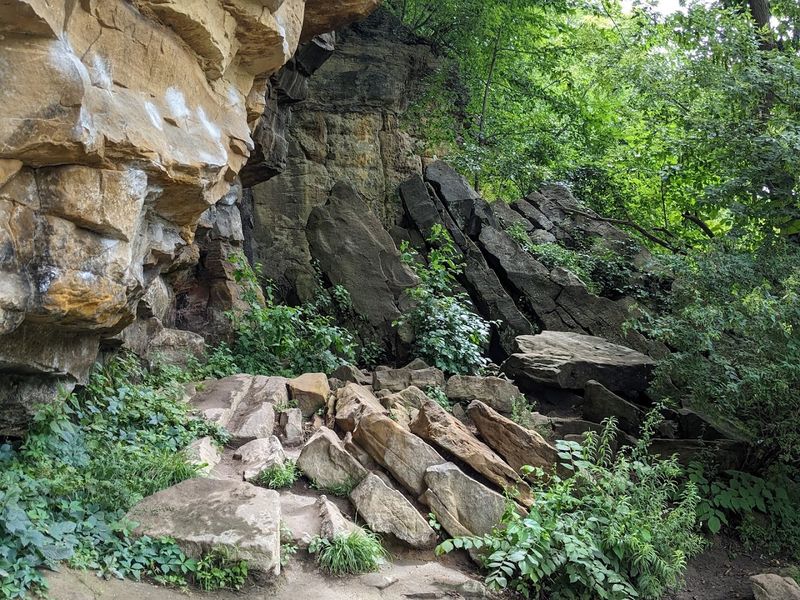
Grand Ledge isn’t a name that usually comes up in conversations about Michigan’s most dramatic landscapes, but the people who know about the Ledges tend to be fiercely enthusiastic about them. These ancient sandstone rock formations rise up to 60 feet above the Grand River right in the heart of Eaton County, making them one of the most surprising geological features in the Lower Peninsula.
The rocks are estimated to be around 270 million years old, which puts them in a completely different category from anything else in the region.
Oak Park and Fitzgerald Park are the two main access points for exploring the Ledges, and both offer well-kept trails that wind along the riverbank and up onto the rock formations themselves. Rock climbing and bouldering are popular here, and the area has a dedicated local climbing community that has been working these routes for decades.
The routes range from beginner-friendly to legitimately challenging, making the Ledges a solid option for climbers of all skill levels.
Even if climbing isn’t your thing, walking the base trails and looking up at the layered sandstone walls is worth the trip on its own. Ferns and mosses cling to the rock faces, and the river below reflects the surrounding forest in a way that makes the whole scene feel lush and almost tropical in midsummer.
The Ledges tend to be especially beautiful right after rain, when everything turns a richer shade of green.
The town of Grand Ledge itself is charming and easy to navigate, with local restaurants and small shops within walking distance of the parks. The Island Park area near downtown hosts events throughout the summer, and the combination of the river, the rocks, and the small-town atmosphere makes Grand Ledge feel like a hidden gem that the rest of Michigan hasn’t fully discovered yet.
It’s an easy day trip from Lansing that consistently surprises first-time visitors.
11. Miner’s Castle
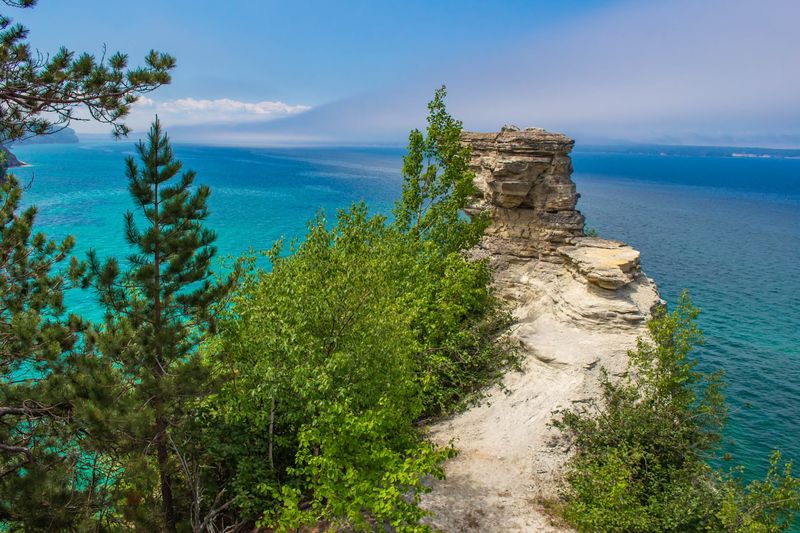
Miner’s Castle is the rock formation that ends up on more Michigan postcards than almost anything else, and seeing it in person makes it immediately obvious why. Located within Pictured Rocks National Lakeshore near Munising, this dramatic sandstone outcropping juts out over Lake Superior like the prow of a ship, with two distinct turret-shaped columns that give it a medieval, fortress-like silhouette.
The mineral streaks running down the rock face — orange, red, black, and white — are what give Pictured Rocks its name, and Miner’s Castle shows them off in full glory.
The overlook is accessible by a short, paved trail from the parking area, making it one of the most easily reached dramatic viewpoints in the entire Upper Peninsula. Two separate viewing platforms offer different perspectives on the formation, and both are worth the few extra steps to reach.
The water directly below is a color that seems almost digitally enhanced — a mix of turquoise, teal, and deep blue that shifts depending on the angle of the sun and the depth of the lake floor beneath.
Miner’s Beach, located just below the castle via a longer trail, is one of the most beautiful stretches of sand on Lake Superior’s southern shore. The beach is backed by towering cliffs and offers an incredible upward view of Miner’s Castle from below — a completely different and equally stunning perspective.
Swimming is allowed, though the water stays cold even in August, hovering around 60 degrees on a warm day.
Kayaking tours that paddle beneath the cliffs are offered by several outfitters in Munising, and getting water-level views of Miner’s Castle is an experience that’s hard to top. The formations look even more imposing from a kayak, and the colorful mineral streaks are more vivid up close than they appear from the overlook.
Munising makes a great base camp for exploring this entire stretch of shoreline over multiple days.
12. Fisherman’s Island State Park
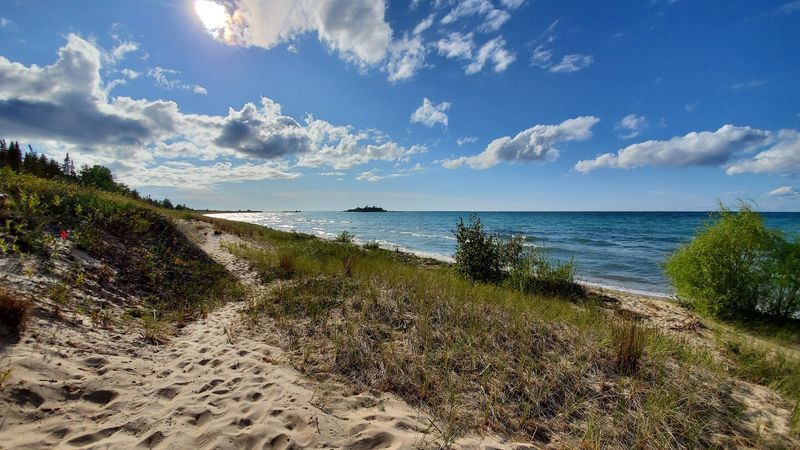
Fisherman’s Island State Park is the kind of place that regulars keep quietly to themselves, and honestly, it’s hard to blame them. Located just south of Charlevoix along the Lake Michigan shoreline, this 2,678-acre park offers five miles of mostly undeveloped beach that stretches between forested dunes and the open lake.
There’s no boardwalk, no concession stand, and no lifeguard — just clean sand, smooth Petoskey stones, and the sound of waves doing what waves do best.
Petoskey stone hunting is one of the park’s biggest draws, and this shoreline is one of the best places in Michigan to find them. These fossilized coral stones are Michigan’s state stone, and their distinctive honeycomb pattern makes them instantly recognizable once you know what you’re looking for.
Wet the stones in the lake to make the pattern pop, and you’ll suddenly see them everywhere once your eyes adjust. Kids and adults alike get completely absorbed in the search.
The park’s campground sits back in the forest near the shoreline, offering shaded sites that feel worlds away from the crowded resort towns just up the road. Sites fill up quickly in summer, especially on holiday weekends, so reservations through Michigan’s state park system are essential.
The park also has a boat launch, and kayaking or canoeing along the shoreline offers a perspective of the dunes and forest that you simply can’t get from land.
Sunrise visits are particularly special here, when the lake is often glassy calm and the light turns everything a warm shade of amber. The park sits far enough from Charlevoix’s busy marina district that it maintains a genuinely peaceful atmosphere even on the busiest summer days.
For anyone who loves Michigan’s shoreline but wants to skip the crowds, Fisherman’s Island delivers that rare combination of accessibility and solitude that’s getting harder to find every year.