
Michigan is famous for its Great Lakes and outdoor adventures, but the state has a whole other side that most people never get to see. Tucked into small towns, dense forests, and quiet neighborhoods are some of the most wonderfully weird and genuinely fascinating places you can visit anywhere in the country.
From gravity-defying shacks to underwater springs that look like something from another planet, these spots are proof that Michigan plays by its own rules. Pack your curiosity and get ready to explore 14 surprisingly great attractions that make Michigan one of the most interesting states to road-trip through.
1. Kitch-iti-kipi — Manistique / Palms Book State Park
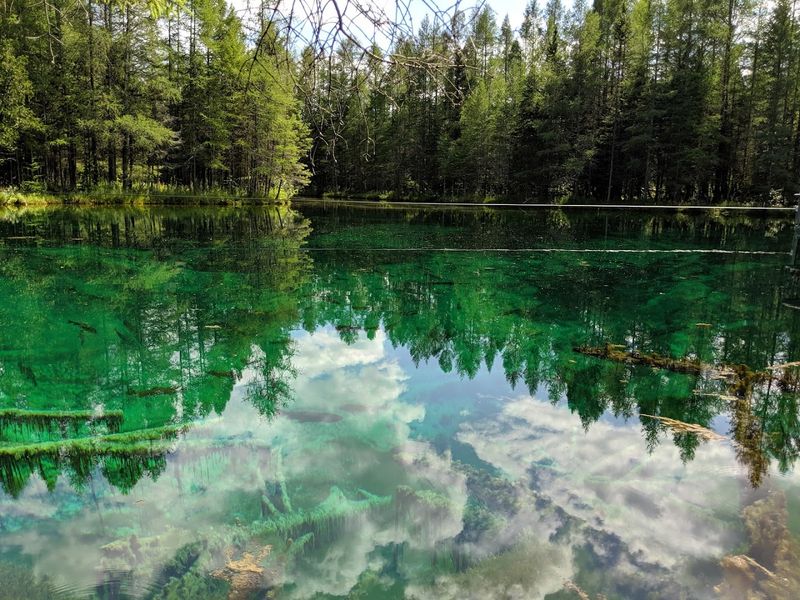
There is something almost surreal about standing on a wooden raft, pulling yourself hand-over-hand across a pool of water so clear you can see every pebble 40 feet below. Kitch-iti-kipi, also called “The Big Spring,” is Michigan’s largest natural freshwater spring, and it pumps out around 10,000 gallons of water every single minute.
The water stays at a constant 45 degrees year-round, which means it never freezes and always stays that perfectly eerie shade of turquoise-green.
Located inside Palms Book State Park near Manistique in the Upper Peninsula, this spot is entirely free to visit once you pay the standard Michigan state park fee. The raft that carries you across the spring is self-operated — you pull a cable to move it — which adds a surprisingly fun, hands-on element to the experience.
Trout and other fish drift lazily beneath you, and the clarity of the water makes them look close enough to touch even when they’re many feet down.
Families with kids tend to go absolutely wide-eyed the first time they peer over the edge of that raft. The spring sits surrounded by tall northern pines, so the whole scene feels like something out of a fantasy novel.
Visiting in the fall, when the surrounding trees turn gold and orange, makes it even more dramatic. Early morning visits are especially peaceful since crowds tend to build up by midday during summer.
Whether you’re a seasoned Michigan traveler or visiting the Upper Peninsula for the first time, Kitch-iti-kipi has a way of stopping people in their tracks and reminding them that nature doesn’t need to be loud to be absolutely breathtaking.
2. Da Yoopers Tourist Trap and Rock Shop — Ishpeming
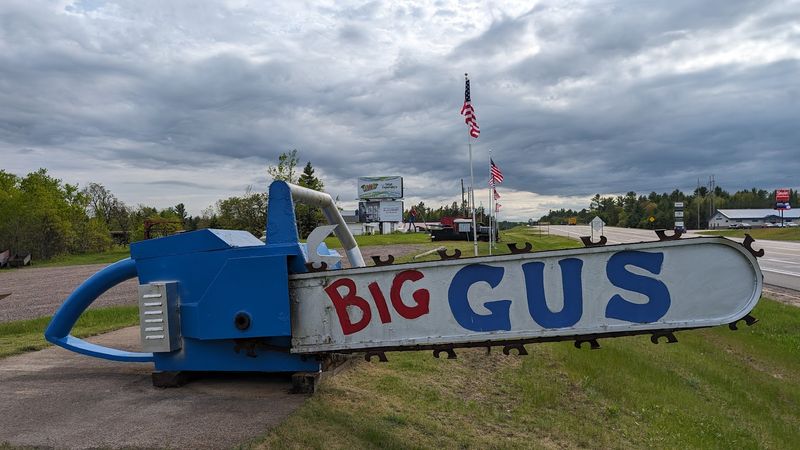
Pull off the highway in Ishpeming and you’ll spot something that makes you slam on the brakes: a giant rifle, a massive chainsaw, and an outhouse the size of a small house. Welcome to Da Yoopers Tourist Trap and Rock Shop, one of the most lovably absurd roadside stops in the entire Upper Peninsula.
This place was created by Da Yoopers, a comedy music group known for songs that poke fun at Yooper life, and the property is basically their sense of humor made physical.
The outdoor displays alone are worth slowing down for, but walking inside takes the experience to a completely different level. You’ll find handmade gifts, local souvenirs, rocks and minerals native to the U.P., and novelty items that lean hard into that classic Yooper self-awareness.
The humor is sharp, self-deprecating, and genuinely funny — nothing here feels mean-spirited. It’s the kind of place where everyone in your group ends up laughing at something different.
The giant rifle display out front has become something of an iconic photo stop along US-41, and the rotating seasonal displays keep things fresh for repeat visitors. Kids love the oversized props, and adults who grew up with Da Yoopers music get hit with a wave of nostalgia the moment they step out of the car.
There’s no admission fee to wander the grounds, and the shop inside has affordable prices that make it easy to pick up a few things without guilt. Road-tripping through the Upper Peninsula without stopping here feels like skipping the best chapter of a really good book.
It’s weird, warm, and completely one-of-a-kind.
3. Mushroom Houses — Charlevoix
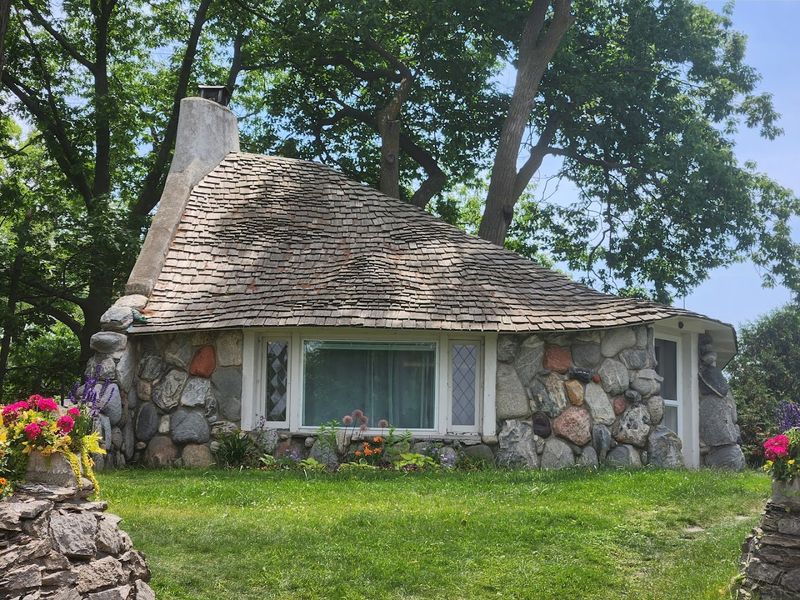
Charlevoix is already a gorgeous northern Michigan lakeside town, but walk a few blocks away from the main drag and you might feel like you’ve accidentally stepped into a storybook. The Mushroom Houses are a collection of unusual stone cottages built by self-taught architect Earl Young in the mid-20th century, and they look like something a hobbit would happily call home.
Young used uncut boulders, wavy rooflines, and flowing organic shapes to create structures that seem to grow out of the ground rather than sit on top of it.
There are roughly 30 of these homes scattered around Charlevoix, and most of them are still privately owned and lived in today. That means you can’t go inside, but walking or slowly driving the neighborhood to take in the exteriors is absolutely worth your time.
The mushroom-cap roofs, thick stone walls, and tiny rounded windows create a visual experience unlike anything else in Michigan architecture. Each home has its own personality, and no two look exactly alike.
Young had no formal architectural training, which makes his work even more remarkable. He sourced many of the boulders from local fields and lake shores, and he built most of the homes between the 1930s and 1960s.
The Charlevoix Historical Society offers a self-guided walking tour map that helps visitors find the most notable examples without getting lost. Fall and spring are especially pleasant times to visit since foot traffic is lower than in the peak summer season.
Bringing a camera is basically mandatory — these homes photograph beautifully from almost any angle, and each one offers a slightly different surprise the longer you look at it.
4. Air Zoo Aerospace & Science Center — Portage

Most aviation museums let you look at planes from a respectful distance. The Air Zoo in Portage doesn’t believe in that approach.
This place lets you climb into cockpits, ride flight simulators, watch full-motion 4D movies, and stand close enough to rare aircraft that you can practically feel the history radiating off the metal. It’s one of the most interactive science and aerospace museums in the Midwest, and it consistently surprises people who expect something much smaller.
The collection includes aircraft from World War I through the space age, with a particularly strong focus on WWII-era planes. Many of them have been meticulously restored and still carry their original nose art and markings.
The museum also holds a Space Shuttle training shuttle and various NASA artifacts that tie the aviation story directly to space exploration. Indoor amusement rides with aviation themes make it a genuinely exciting destination for younger visitors who might otherwise lose interest in a traditional exhibit-style museum.
The Air Zoo is split across two campuses in the Portage and Kalamazoo area, with the main facility offering the bulk of the interactive experiences. Admission is priced reasonably for the sheer amount of content packed inside, and the staff are known for being enthusiastic and knowledgeable without being overwhelming.
Plan to spend at least half a day here — most families end up staying longer than they expected because there’s always one more thing to try. Whether your interest is military history, science education, or just the pure spectacle of being surrounded by machines that broke speed records and crossed oceans, the Air Zoo delivers on every front without feeling like homework.
5. Castle Rock — St. Ignace
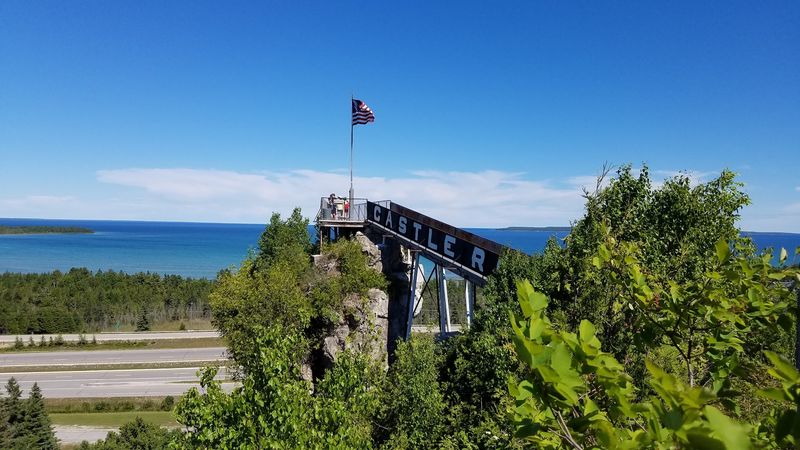
For a dollar or two, you can climb a tall wooden staircase up the side of a 200-foot natural limestone rock formation and get one of the best views in the entire Straits of Mackinac region. Castle Rock in St. Ignace has been a roadside attraction since the 1920s, and there’s a reason it’s still drawing visitors nearly a hundred years later — the view from the top is genuinely spectacular.
On a clear day, you can see Mackinac Island, the Mackinac Bridge, and miles of Lake Huron stretching out in every direction.
The climb itself is manageable for most ages, though the steps are steep in places and handrails are your best friend on the way back down. At the base, a small gift shop and Paul Bunyan statue have become beloved photo stops in their own right.
The Bunyan statue has been there for decades, and getting a picture with it has turned into something of a local tradition for families who pass through St. Ignace regularly.
Castle Rock is one of those places that looks a little kitschy from the road but completely wins you over once you’re standing at the summit. The rock itself has cultural significance to the Indigenous peoples of the region, who used it as a lookout point long before it became a tourist attraction.
Visiting in the early morning gives you the best chance of having the summit mostly to yourself, and the light on the water at that hour is something worth setting an alarm for. It’s a quick stop — maybe 30 to 45 minutes total — but the payoff in views and atmosphere makes it one of the most worthwhile pulls-off along I-75 in the Upper Peninsula.
6. American Museum of Magic — Marshall
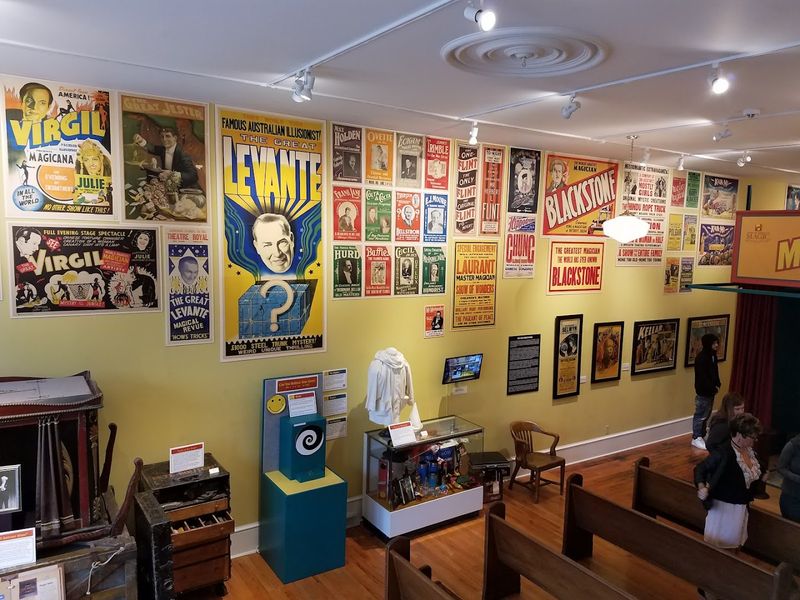
Marshall, Michigan is already one of the most architecturally interesting small towns in the state, but tucked along its historic main street is something genuinely rare: a museum entirely dedicated to the art and history of magic. The American Museum of Magic holds one of the largest private collections of magic memorabilia in the world, assembled over decades by collector Robert Lund.
Posters, props, letters, photographs, and artifacts from legendary magicians like Houdini, Blackstone, and Thurston fill the space in a way that feels more like a treasure vault than a typical exhibit hall.
The museum is not open every day, so checking the schedule before visiting is essential. When it is open, the experience is intimate and personal in a way that larger institutions rarely manage.
Guides walk you through the collection with real enthusiasm, and the stories behind individual pieces — a pair of escape cuffs, a hand-painted illusion poster, a letter signed by Houdini himself — are told with the kind of detail that only comes from genuine passion for the subject.
Magic as an art form has a surprisingly rich history, and this museum does an excellent job of connecting the showmanship of 19th-century stage magic to the broader cultural moments of each era. Kids who are into magic will be absolutely riveted, but adults with no particular interest in the subject tend to walk out converted.
Marshall itself is worth a longer visit — the town has incredible Victorian and Italianate architecture, good restaurants, and a walkable downtown that rewards slow exploration. Pairing the museum with a stroll through Marshall’s streets makes for one of the most satisfying day trips in southwest Michigan, full stop.
7. The Heidelberg Project — Detroit

Artist Tyree Guyton started painting the houses and sidewalks of his childhood block on Heidelberg Street in Detroit back in 1986, and what began as one man’s response to urban blight has grown into one of the most talked-about outdoor art environments in the United States. The Heidelberg Project covers an entire city block with large-scale installations made from found objects, discarded furniture, painted surfaces, and thousands of items that people have left or donated over the years.
It’s chaotic, colorful, and deeply intentional all at once.
Walking through the project feels different every time you visit because the work is constantly evolving. Some original structures have burned down over the years — a few of them deliberately, in acts of vandalism — and Guyton has rebuilt and reimagined rather than simply replicated.
That resilience is woven directly into the project’s meaning: it’s about community, survival, transformation, and the power of creativity to reclaim space. The polka-dot house is probably the most photographed element, but every corner of the block has something worth slowing down to study.
Admission is free, and the project welcomes visitors year-round. Guided tours are available if you want deeper context, and the on-site gift shop supports the nonprofit organization that keeps the project running.
The surrounding neighborhood is an important part of the experience — this isn’t an art gallery tucked safely inside a white-walled building, it’s art living in the middle of a real Detroit street. Visiting on a weekday morning tends to be quieter and allows for more thoughtful exploration.
The Heidelberg Project is the kind of place that stays with you long after you’ve driven away, and that’s entirely the point.
8. Legs Inn — Cross Village

The name alone raises questions, and the building answers them immediately. Legs Inn in Cross Village gets its name from the row of inverted cast-iron stove legs that line the roofline of the structure — a quirky design choice by founder Stanley Smolak, a Polish immigrant who built the place entirely by hand starting in the 1920s.
The exterior looks like something assembled by a very talented, very creative person who had no interest whatsoever in following conventional architectural rules.
Inside, the hand-carved wooden furniture, driftwood sculptures, and stone fireplace create an atmosphere that is genuinely unlike any other restaurant in Michigan. The menu leans heavily into Polish cuisine — pierogi, bigos, golabki — served alongside American classics, and the food has earned the place a devoted following that stretches far beyond northern Michigan.
Eating here while looking out at the cedar forest and Lake Michigan in the distance is an experience that combines great food with an environment you simply can’t replicate anywhere else.
Cross Village itself is a small, quiet community on the northern Lake Michigan shoreline, and getting there via M-119 — known as the Tunnel of Trees — is one of the most scenic drives in the entire state. The road winds through dense hardwood forest with canopy so thick it blocks the sky in summer, and in fall the color show is extraordinary.
Legs Inn is seasonal, typically open from May through October, so timing your visit matters. Reservations are strongly recommended during peak summer weekends because word has spread far and wide.
If you make the drive and sit down with a plate of pierogi while the fireplace crackles nearby, you’ll understand immediately why people keep coming back year after year.
9. Stahls Motors and Music Experience — Chesterfield / New Baltimore GPS area
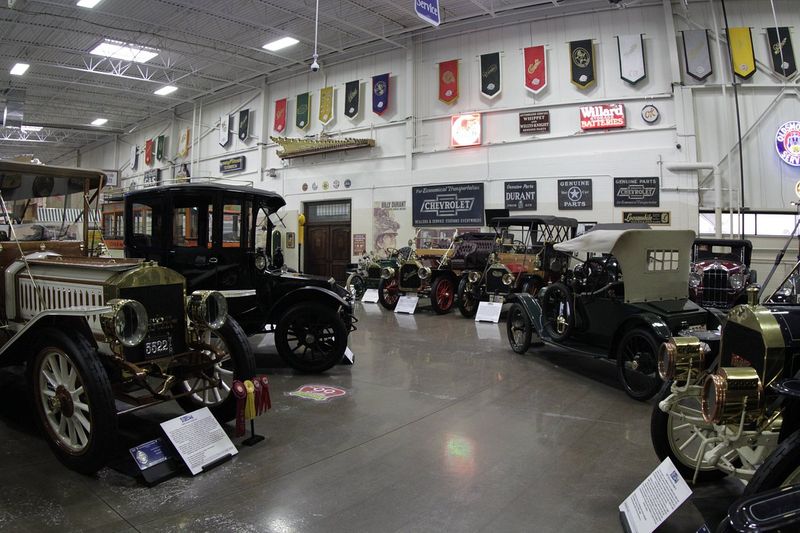
Car culture and American music grew up together, and Stahls Motors and Music Experience in the Chesterfield area captures that connection better than almost any museum in Michigan. The collection spans dozens of meticulously preserved vintage automobiles alongside an impressive array of antique jukeboxes, neon signs, and music memorabilia from the same eras.
Walking through the space feels like time-traveling through the golden age of American pop culture, with the cars and the music telling parallel stories about the same decades.
The vehicles on display represent some of the most iconic models ever produced by American automakers, and the condition of each one suggests obsessive care rather than casual collecting. This isn’t a dusty barn find situation — everything here is presented with intention and pride.
The jukeboxes are particularly impressive, with some of them still operational and capable of filling the room with the kind of sound that defined a generation of American teenagers.
Stahls is a private collection that operates more like a curated experience than a traditional public museum, so checking their current visiting hours and tour availability before making the trip is a smart move. The staff are passionate and deeply knowledgeable, and a guided walkthrough adds enormous context to what you’re seeing.
Located in Macomb County southeast of Detroit, it’s an easy add-on to a broader metro Detroit road trip. Automotive enthusiasts will obviously love every second, but even visitors who don’t consider themselves car people tend to get swept up in the nostalgia and craftsmanship on display.
It’s a celebration of a very specific slice of American identity, and it’s executed with real care and genuine heart.
10. Dinosaur Gardens — Ossineke
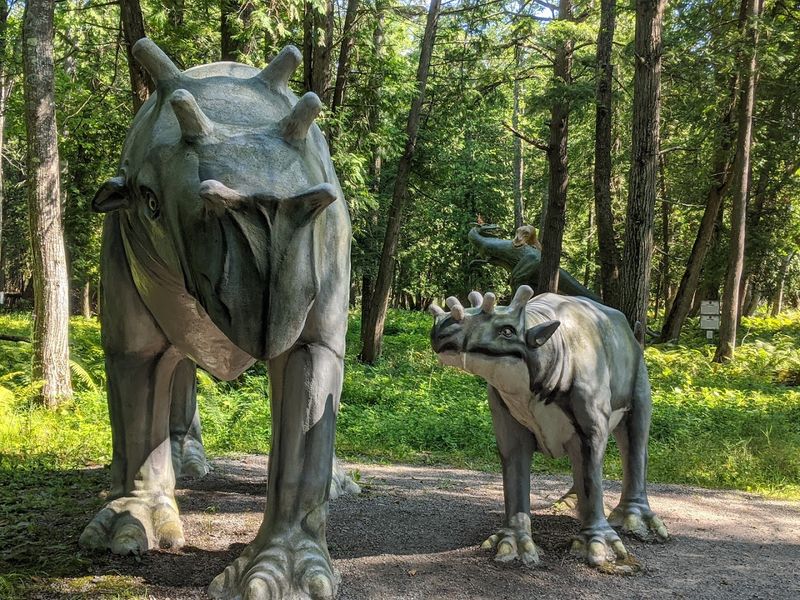
Somewhere between Alpena and Rogers City along US-23, a roadside sign announces something that sounds like it belongs in a dream: life-size dinosaur sculptures arranged in a forest setting, open to the public. Dinosaur Gardens in Ossineke has been drawing curious travelers since 1935, when Paul Domke began constructing massive concrete prehistoric creatures and placing them among the pines along the Thunder Bay River.
The park fell into disrepair for a stretch but has been restored and reopened, and it carries that wonderful patina of a place that has genuinely been around for generations.
The sculptures are not the hyper-accurate, scientifically updated figures you’d find in a modern natural history museum. They’re folk-art interpretations — big, bold, and painted in vivid colors — and that’s exactly what makes them so charming.
Each one sits in a natural clearing or along a winding forest trail, creating a series of surprise encounters as you walk the path. The T-Rex, the Brontosaurus, and the other prehistoric residents have a personality to them that slick modern replicas simply don’t have.
The park also includes a large statue of Jesus at the center of the grounds, a reflection of Domke’s religious faith and his belief that the dinosaurs coexisted with humans — which adds a fascinating layer of cultural and historical context to the visit. The setting along the river is genuinely beautiful, and the combination of forest, water, and giant concrete dinosaurs creates an atmosphere that is equal parts peaceful and wonderfully absurd.
Admission is affordable, and kids absolutely lose their minds in the best possible way when they spot their first sculpture through the trees. It’s one of those places that earns its place in the Michigan road-trip canon simply by being completely, unapologetically itself.
11. Arcadia Scenic Turnout / Arcadia Overlook — Arcadia
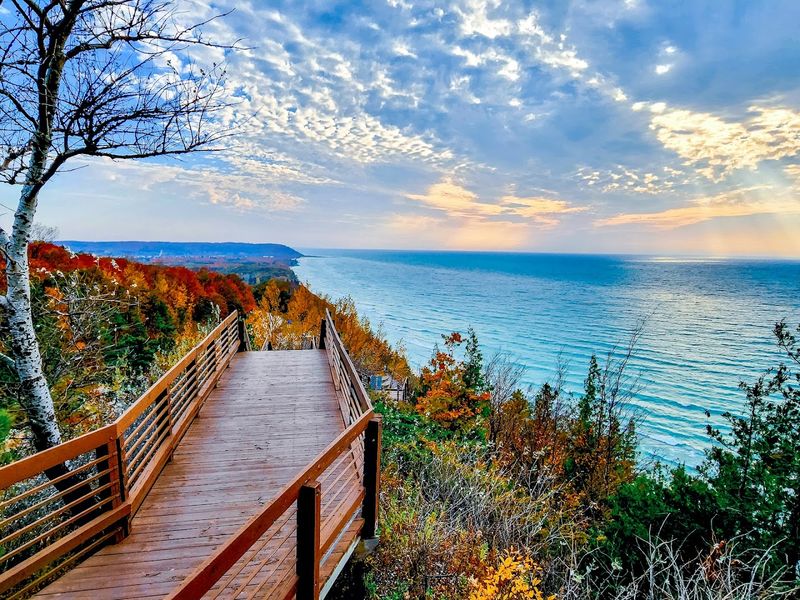
You don’t need to hike miles into the backcountry to get a view that makes your jaw drop in Michigan. The Arcadia Overlook — sometimes called the Arcadia Scenic Turnout — sits right off M-22 in Manistee County, and the view it offers of Lake Michigan from roughly 300 feet above the water is one of the most dramatic in the entire Lower Peninsula.
On a clear day the water shifts from aquamarine near the shore to a deep, almost oceanic blue further out, and the scale of the lake becomes suddenly, powerfully real.
The overlook is part of the Lake Michigan Overlook area and includes a short, accessible path to the main viewing platform. There are informational signs that explain the geology of the bluffs — these high dunes and clay banks were shaped by glacial activity thousands of years ago — and on calm days you can hear the waves far below.
Sunsets from this spot are legitimately world-class, and photographers make special trips just to catch the light hitting the water in the late afternoon.
M-22 itself is one of Michigan’s most celebrated scenic drives, and the Arcadia Overlook sits roughly in the middle of the most dramatic stretch of the route. Combining a stop here with a drive along the full M-22 loop makes for one of the finest day trips in the state.
The turnout has enough parking for a reasonable number of vehicles, but summer weekends get busy around golden hour. Arriving an hour before sunset and staying to watch the sky change color over the lake is the kind of experience that costs nothing and leaves you feeling genuinely grateful you made the detour.
Simple, stunning, and completely free.
12. Marvin’s Marvelous Mechanical Museum — West Bloomfield Township
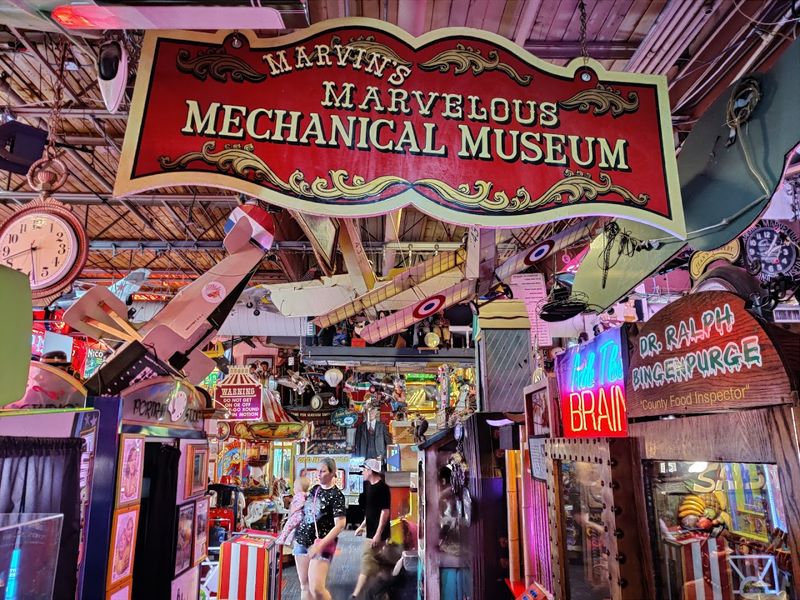
Walking into Marvin’s Marvelous Mechanical Museum is like stepping inside the mind of someone who loved coin-operated machines, carnival memorabilia, and vintage Americana so much that they just kept collecting until there was no wall space left. Founded by Marvin Yagoda, this West Bloomfield institution packs an almost impossible density of working antique machines, fortune tellers, penny arcades, and mechanical oddities into a strip mall space that somehow contains multitudes.
The sensory overload is immediate and completely joyful.
Many of the machines are operational and cost just a quarter or a few coins to run, which means you can easily spend an hour feeding machines and getting your fortune told, watching mechanical clowns perform, or trying your hand at vintage pinball. The collection spans over a century of coin-operated entertainment history, from early 20th-century peep shows to mid-century arcade games to more recent novelties.
Every corner reveals something new, and the sheer variety of what’s crammed into the space is genuinely staggering.
Marvin himself was known for being present and enthusiastic, and the spirit he built into the place lives on in the staff and the atmosphere. It’s not a quiet, contemplative museum — it’s loud, bright, and filled with the sounds of mechanical things doing exactly what they were designed to do.
Children are absolutely captivated, but adults who grew up with arcades get hit with a wave of nostalgia so strong it’s almost physical. There’s no formal admission charge — you pay per machine — which makes the experience flexible and accessible.
It’s one of those only-in-Michigan places that has no real equivalent anywhere else, and the fact that it’s been operating for decades is proof that pure, uncomplicated delight never really goes out of style.
13. Mystery Spot — St. Ignace
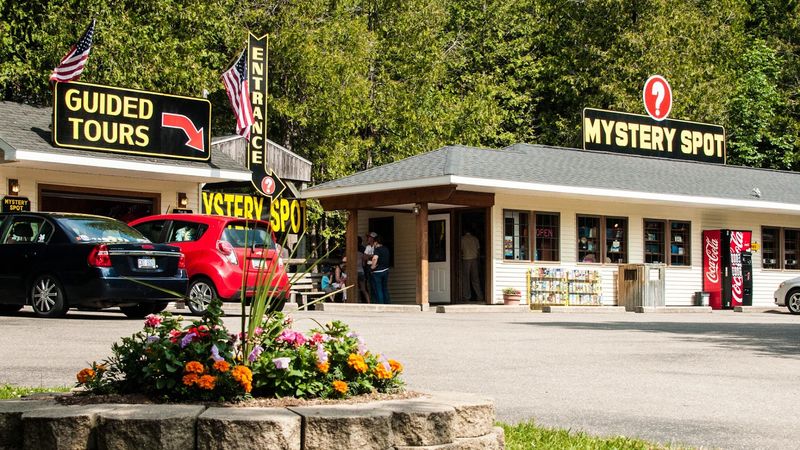
Gravity doesn’t work the way it’s supposed to inside the Mystery Spot — or at least that’s how it feels. Located just outside St. Ignace near the Mackinac Bridge, this classic roadside attraction has been confusing and delighting visitors since 1953.
The tilted cabin at the center of the experience creates optical illusions so convincing that adults who fully understand what’s happening still can’t quite make their brains accept it. Balls roll uphill, people appear to shrink and grow, and standing upright feels like a genuine physical challenge.
The guided tour lasts about 30 minutes and is led by staff who deliver their explanations with practiced timing and just the right amount of theatrical flair. The humor is self-aware — no one is seriously claiming this spot defies the laws of physics — but the illusions are genuinely effective and the experience is consistently entertaining for all ages.
The tilted building is the main event, but the wooded setting and the novelty of the whole operation add to the old-school roadside charm.
Mystery Spot souvenirs, particularly the bumper stickers, have been spotted on cars across the country for decades, giving the place a cultural footprint that goes well beyond its physical size. It sits close to Castle Rock, making it easy to combine both stops into a single afternoon in St. Ignace.
Admission is modest, and the whole experience wraps up quickly enough that it never overstays its welcome. For families road-tripping through the Upper Peninsula, this kind of classic, unpretentious fun is exactly the sort of thing that becomes a favorite memory.
It’s not trying to be anything other than what it is, and what it is happens to be a really good time.
14. Cross in the Woods Catholic Shrine — Indian River
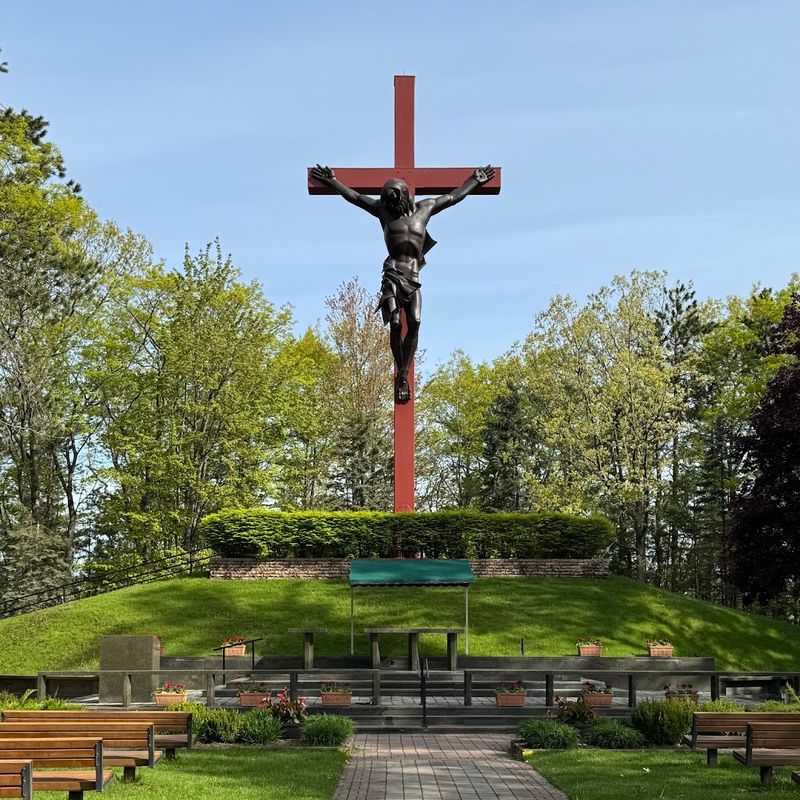
Standing in a quiet clearing in the northern Lower Peninsula, a crucifix rises more than 55 feet into the sky — one of the largest in the world. The Cross in the Woods Catholic Shrine in Indian River draws hundreds of thousands of visitors each year, and it’s the kind of place that carries a palpable sense of stillness the moment you step onto the grounds.
Whether you’re visiting for religious reasons, out of curiosity, or simply because you heard there was a 55-foot cross in the middle of a Michigan forest, the experience tends to leave people quieter and more reflective than when they arrived.
The shrine was established in 1947 and has been expanded significantly over the decades. Beyond the famous cross, the grounds include a beautiful outdoor amphitheater used for masses and special services, a museum dedicated to religious art and artifacts, and a remarkable doll collection — one of the largest collections of religious dolls in the country — that surprises almost every visitor who walks through its doors.
The doll collection alone is worth a separate conversation: thousands of dolls dressed in traditional religious attire from countries around the world, donated over many years by visitors and communities.
The grounds are open year-round, and visiting in any season offers a different kind of beauty. Winter brings a hushed, snow-covered serenity; summer fills the outdoor chapel with warm light filtering through the surrounding trees.
Indian River is located conveniently along I-75 between Gaylord and Petoskey, making it an easy stop on a northern Michigan road trip. There’s no admission fee to walk the grounds, and the overall atmosphere is welcoming regardless of religious background.
It’s a genuinely moving place, and that’s true for a much wider audience than you might expect.