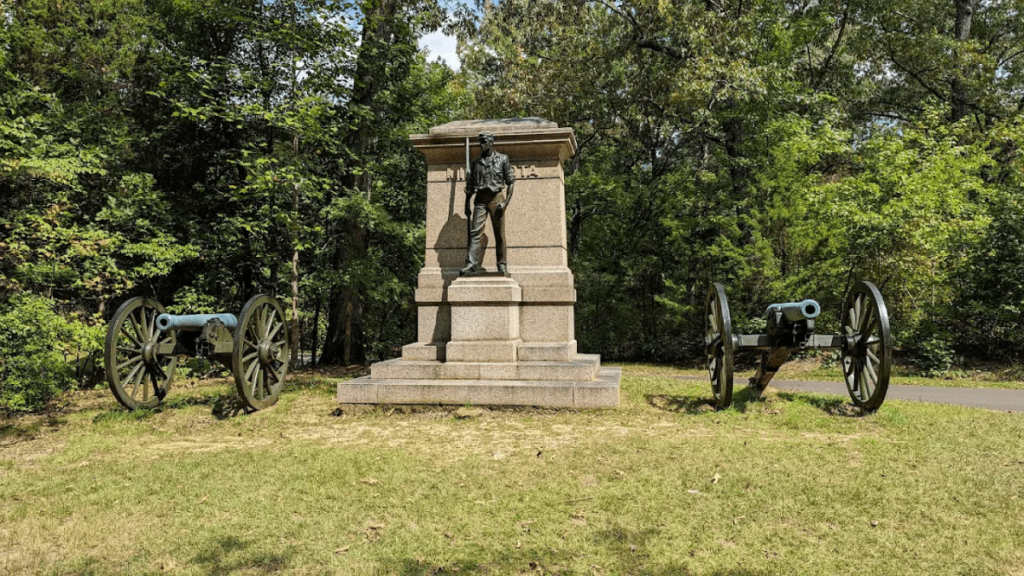
Tennessee’s landscape holds memories that stretch back centuries, from ancient Indigenous mounds to Revolutionary War mustering grounds and bloody Civil War battlefields. These historic parks aren’t just pretty places to visit—they’re windows into the people, struggles, and turning points that shaped the South and the nation.
Whether you’re walking where soldiers fell, exploring reconstructed forts, or standing where entire communities once thrived, these nine parks offer stories that stick with you long after you leave.
1. Shiloh National Military Park
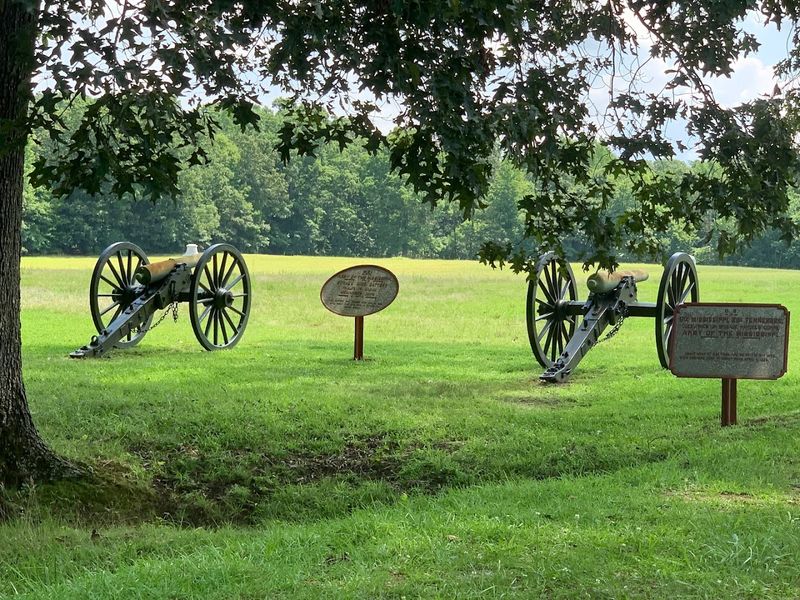
Shiloh is where the Civil War’s Western Theater exploded into one of the most staggering clashes of the entire conflict. Nearly 110,000 troops met here in April 1862, and when the smoke cleared, more than 23,000 men were dead, wounded, or missing. Walking these fields today, you can still feel the weight of what happened—rows of monuments, silent cannons, and markers that tell you exactly where regiments stood and fell.
The park sprawls across thousands of acres, so plan to spend a few hours if you want to really absorb it. Start at the visitor center to get oriented, then follow the driving tour or hike the trails that wind through the battlefield. You’ll pass spots like the Hornet’s Nest, where Union soldiers held out for hours under relentless fire, and Bloody Pond, where wounded men crawled to drink and wash their wounds.
There’s also a national cemetery on-site with nearly 4,000 graves, most of them unknown soldiers. It’s a sobering reminder of the scale and anonymity of war. The interpretive signs do a solid job of breaking down troop movements and decisions, so even if you’re not a history buff, you’ll walk away with a clearer picture of what went down.
Spring and fall are ideal times to visit—the weather’s comfortable, and the landscape looks much as it did in 1862. Shiloh isn’t flashy, but it’s one of the most powerful places in Tennessee to confront the human cost of the Civil War.
Bring water, good shoes, and maybe a little patience for the emotional heaviness that comes with standing on the ground where so many lives ended.
2. Stones River National Battlefield
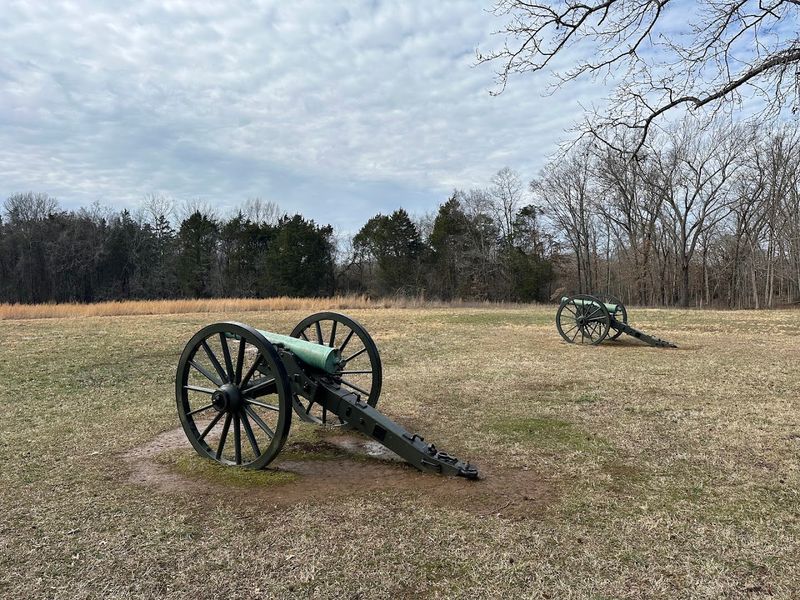
Just outside Murfreesboro, Stones River marks the site of one of the Civil War’s grisliest New Year’s battles. From December 31, 1862, to January 2, 1863, Union and Confederate forces tore into each other with a ferocity that left nearly 13,000 Union and 10,000 Confederate casualties. The battle ended in a narrow Union victory, but the cost was staggering—one of the highest casualty rates of any Civil War engagement.
The park preserves the battlefield, a national cemetery, and several key landmarks that help you piece together the chaos of those three days. The Hazen Brigade Monument, erected in 1863, is the oldest intact Civil War monument in the country. It’s a simple limestone structure, but it carries serious weight when you realize it was built by survivors while the war was still raging.
You can explore the park via a driving tour with audio stops, or get out and walk the trails that cross the battlefield. The interpretive signs are detailed without being overwhelming, and they do a good job of explaining troop movements, strategy, and the brutal reality of fighting in winter conditions. The national cemetery is especially moving—row after row of white headstones, many marked “Unknown.”
Stones River doesn’t get the attention Shiloh does, but it’s just as important for understanding the war’s Western Campaign. The landscape is peaceful now, but the stories etched into the ground are anything but. If you’re in Middle Tennessee and want to grasp the human toll of the Civil War, this is a must-stop.
3. Fort Pillow State Historic Park
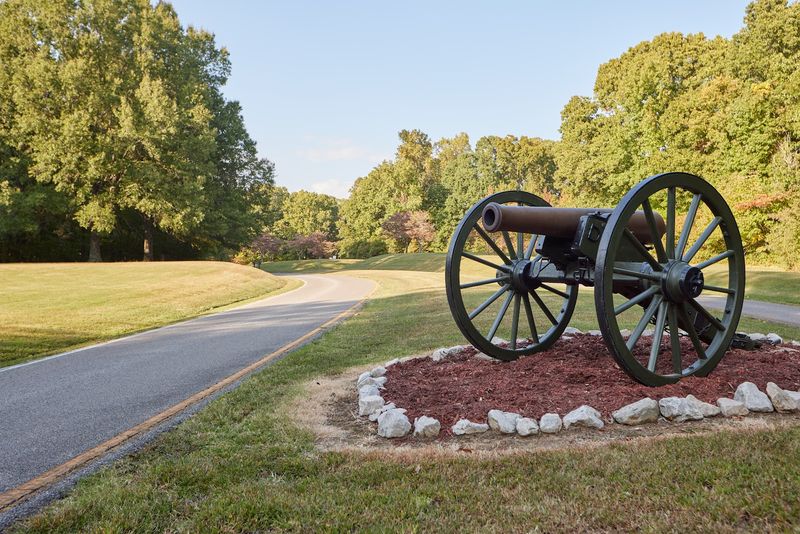
Perched on the Chickasaw Bluffs above the Mississippi River, Fort Pillow is one of Tennessee’s most haunting Civil War sites. The fort itself was strategically important—whoever controlled it controlled river traffic—but what happened here on April 12, 1864, is what makes it unforgettable. Confederate forces under Nathan Bedford Forrest attacked the Union garrison, which included a significant number of U.S. Colored Troops.
What followed became known as the Fort Pillow Massacre, a brutal episode where many Black soldiers were killed after surrender.
Today, the park preserves the earthworks, a small museum, and miles of trails that offer sweeping views of the river. The museum does a solid job of presenting the history without shying away from the ugly parts. You’ll see artifacts, maps, and interpretive panels that walk you through the fort’s construction, the battle, and the aftermath.
It’s not a comfortable story, but it’s an essential one.
Beyond the Civil War history, the park is also a beautiful place to hike and camp. The bluffs offer dramatic overlooks, and the trails wind through wooded areas that feel remote and peaceful. But even as you enjoy the scenery, the weight of what happened here lingers.
If you’re interested in the full, unvarnished story of the Civil War in Tennessee, this park is essential. Plan to spend a couple of hours exploring, and come prepared to sit with some difficult truths.
4. Pinson Mounds State Archaeological Park
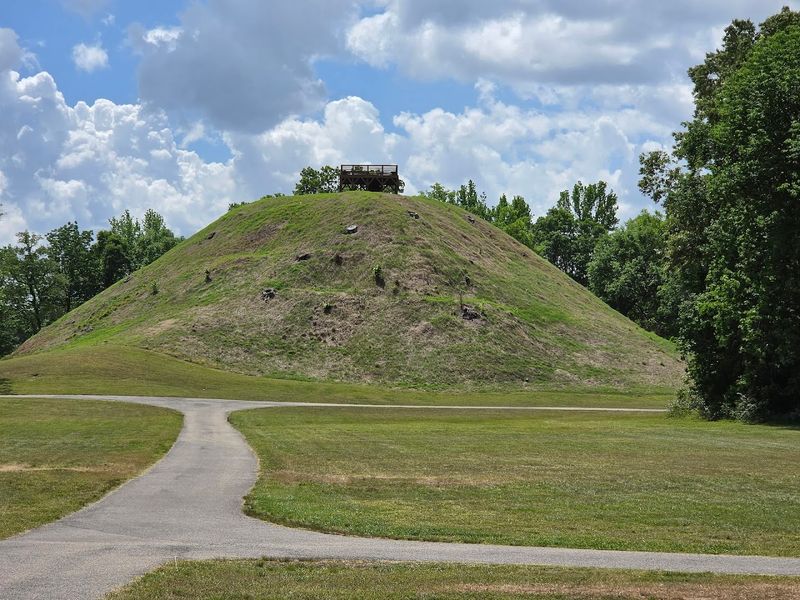
Long before European settlers arrived, Indigenous peoples built one of the most significant ceremonial and burial complexes in the Southeast right here in West Tennessee. Pinson Mounds preserves at least 17 earthen mounds, some dating back over 2,000 years to the Middle Woodland period. The largest, Sauls Mound, rises 72 feet and is the second-tallest surviving Indigenous mound in the United States.
It’s a powerful reminder that Tennessee’s history didn’t start with colonization.
The park’s museum is small but packed with information. You’ll see artifacts like pottery, tools, and ceremonial objects that help paint a picture of the people who built and used these mounds. The exhibits explain the engineering and labor involved in moving thousands of tons of earth without modern tools—a feat that still impresses archaeologists today.
There’s also a replica of a platform mound and interpretive panels that connect the dots between ancient practices and modern Indigenous communities.
Once you’ve explored the museum, head out on the trails. The park has several miles of paths that wind past different mounds and through the surrounding forest. It’s a quiet, contemplative walk, and the mounds themselves are striking—grassy, rounded hills that rise unexpectedly from the flat landscape.
Some are open for climbing, others are protected, but all of them carry a sense of reverence.
Pinson Mounds is a great stop for families, history lovers, or anyone curious about Tennessee’s deep past. It’s not flashy or commercialized, which actually makes it more powerful. You’re walking through a landscape that’s been sacred for millennia, and that weight is palpable.
5. Fort Loudoun State Historic Park
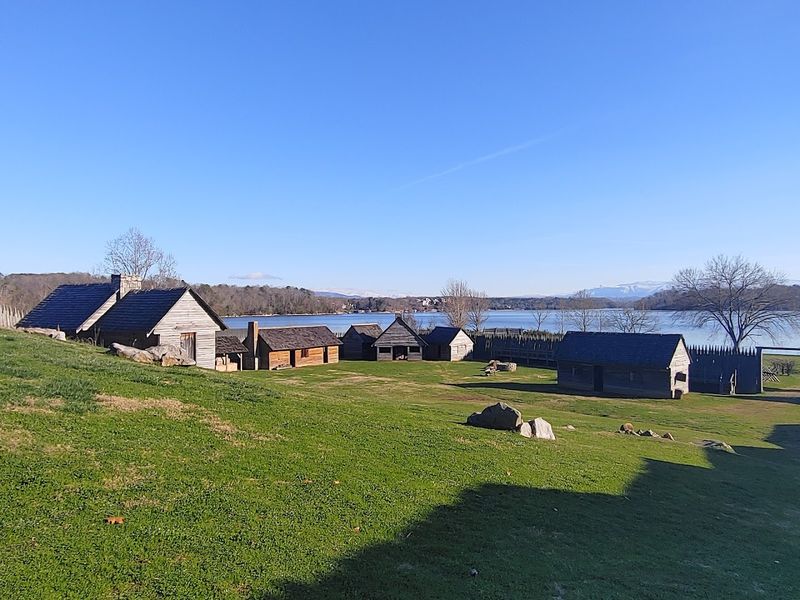
Fort Loudoun takes you back to the 1750s, when Britain was trying to secure alliances with the Cherokee and protect its interests against the French. Built in 1756, the fort was the westernmost British outpost at the time, deep in Cherokee territory near what’s now Vonore. It didn’t last long—by 1760, tensions with the Cherokee boiled over, and the fort was besieged and eventually surrendered.
Most of the garrison was killed shortly after leaving the fort, making it one of the most dramatic failures of British frontier policy.
Today, the park features a full-scale reconstruction of the fort, complete with wooden palisades, barracks, officers’ quarters, and a powder magazine. You can walk through the buildings, peek into the cramped living spaces, and get a sense of what life was like for soldiers stationed in the middle of nowhere. The ramparts offer views over Tellico Lake, and it’s easy to imagine how isolated and vulnerable the garrison must have felt.
There’s also a museum on-site with artifacts, maps, and exhibits that explain the French and Indian War, Cherokee diplomacy, and the fort’s short, turbulent history. Nearby, you can visit the Tellico Blockhouse, a later structure from the 1790s that served as a trading post and military outpost. The combination of both sites gives you a fuller picture of East Tennessee’s colonial and early American history.
Fort Loudoun is a great stop for families and anyone interested in pre-Revolutionary War history. The reconstruction is well done, and the setting on the lake is beautiful. It’s not a huge park, so you can see everything in a couple of hours, but it’s worth the trip if you’re in the area.
6. Sycamore Shoals State Historic Park
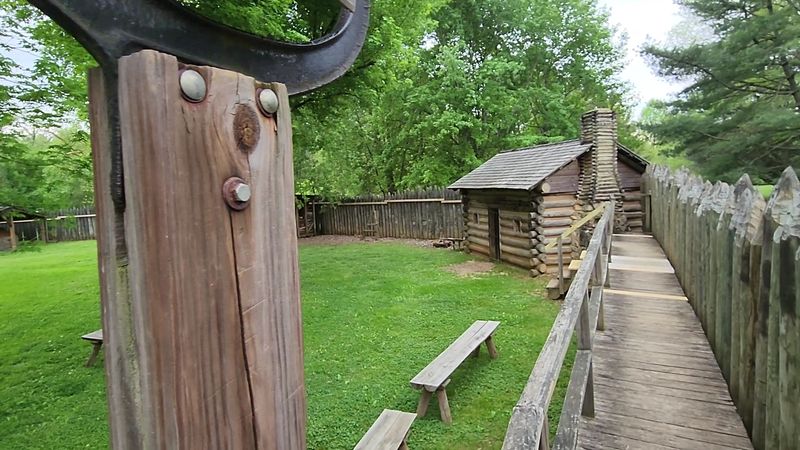
Sycamore Shoals sits along the Watauga River in Elizabethton, and it’s one of the most important sites in early Tennessee history. This is where settlers built Fort Watauga in the 1770s, one of the first permanent European settlements west of the Appalachians. It’s also where the Transylvania Purchase was negotiated—a controversial land deal with the Cherokee that opened up huge swaths of land for settlement, often against Cherokee wishes.
The park doesn’t sugarcoat the complexity of that history.
The reconstructed fort is the centerpiece, and it’s impressive. You can walk through the log cabins, see how families lived on the frontier, and imagine what it was like to be on the edge of known territory. The park also tells the story of the Overmountain Men, a group of frontiersmen who mustered at Sycamore Shoals in 1780 before marching to the Battle of Kings Mountain, a pivotal Revolutionary War victory.
There’s a visitor center with exhibits on Cherokee history, frontier life, and the Revolutionary War. The outdoor amphitheater hosts a summer drama called “The Wataugans,” which dramatizes the settlement story—it’s a bit old-school, but locals love it. The park also has walking trails along the river, and the scenery is especially pretty in fall when the leaves turn.
Sycamore Shoals is a must-visit if you’re interested in Tennessee’s frontier roots or Revolutionary War history. It’s a place where big national stories intersect with local grit and survival. The park does a good job of presenting multiple perspectives, including the Cherokee experience.
7. Port Royal State Historic Park
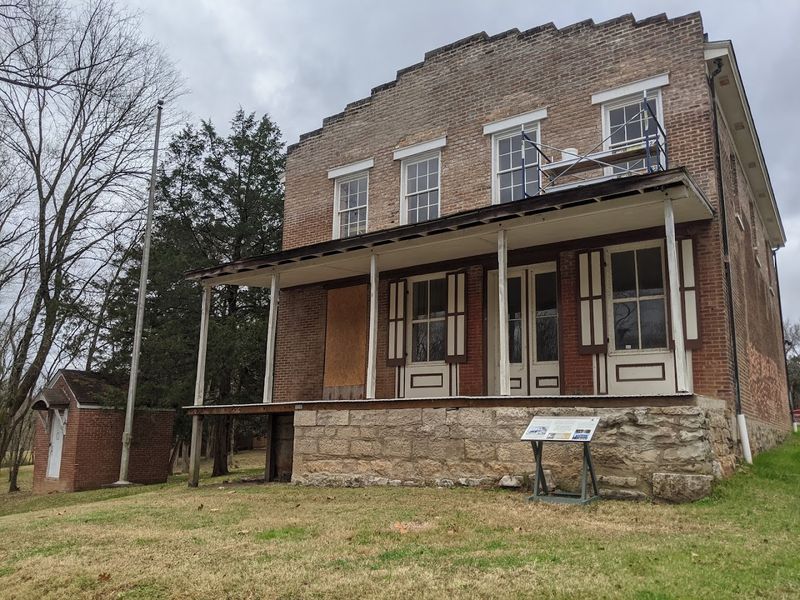
Port Royal started as a river town in 1797, and for a while, it thrived as a tobacco inspection station and trade hub along the Red River. But the story that defines this place is much darker. In the winter of 1838-1839, more than 10,000 Cherokee people passed through Port Royal on the northern route of the Trail of Tears.
They were forcibly removed from their homelands and marched west to Oklahoma, and many died along the way from cold, hunger, and disease. Port Royal is one of the few places in Tennessee that specifically preserves and honors that history.
The park itself is small but meaningful. There’s a covered bridge, some historic buildings, and interpretive signs that explain both the town’s early years and its connection to the Trail of Tears. The signs don’t gloss over the brutality of forced removal—they lay it out plainly, with quotes from survivors and details about the conditions people endured.
It’s a sobering place to visit, and that’s exactly the point.
You can walk along the river, explore the old town site, and reflect on the layers of history here. The park also has picnic areas and a small campground, so it’s a peaceful spot despite the heavy history. There’s something important about preserving places like this—where tragic events happened but aren’t widely known or remembered.
Port Royal makes sure that story doesn’t disappear.
If you’re traveling through Middle Tennessee and want to understand the full scope of the region’s past, including the parts that are hard to hear, Port Royal is worth a stop. It’s not a big destination, but it’s a powerful one. Bring a willingness to listen and learn, and take your time reading the interpretive materials.
This is history that deserves attention and respect.
8. Johnsonville State Historic Park
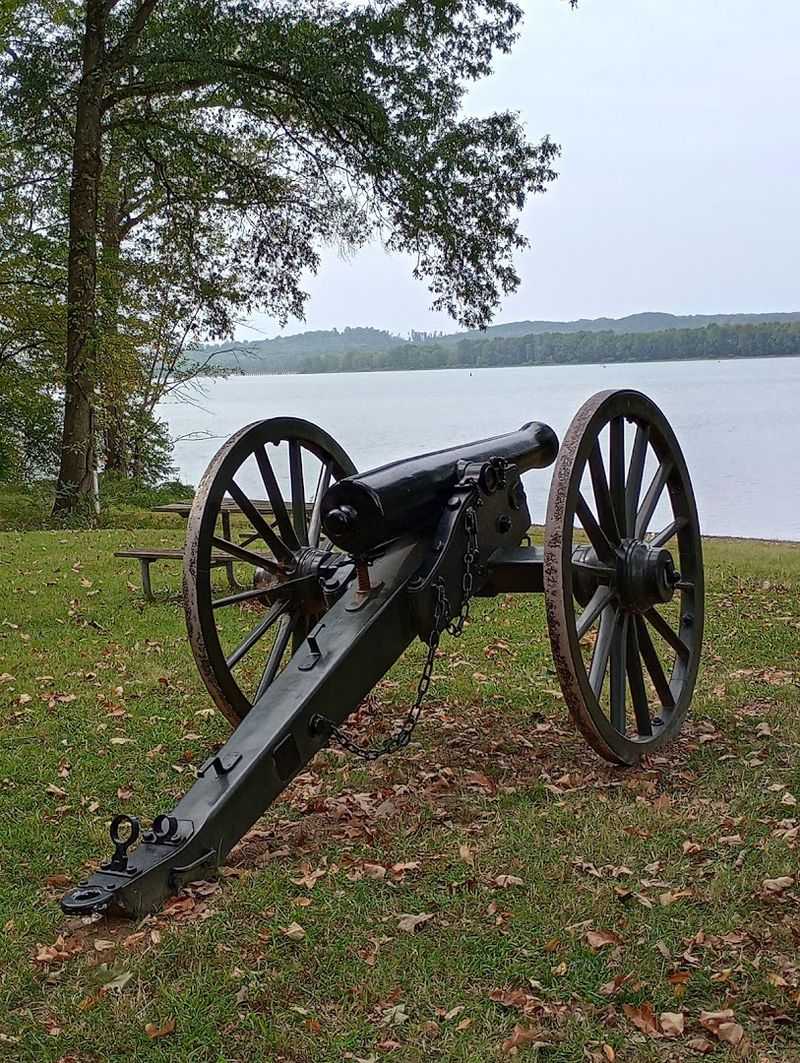
Johnsonville was once a bustling Civil War-era supply depot and river town along the Tennessee River. Union forces used it as a critical staging point, with a rail line, docks, and warehouses that kept troops and supplies moving through the region. In November 1864, Confederate cavalry under Nathan Bedford Forrest raided the town, destroying millions of dollars worth of Union supplies and basically erasing Johnsonville from the map.
Later, when the Tennessee Valley Authority built Kentucky Lake, what was left of the town disappeared underwater.
Today, the park preserves what remains—earthworks from Fort Johnson, scattered ruins, and interpretive trails that tell the story of the raid and the town’s brief, chaotic life. There’s a visitor center with artifacts, maps, and exhibits that explain the logistics of river warfare and the importance of supply lines during the Civil War. You’ll also learn about the town’s post-war decline and eventual abandonment.
The park has several miles of trails that wind through the woods and along the river. You’ll pass old foundations, remnants of the rail line, and spots where buildings once stood. It’s a quiet, almost eerie place—evidence of a community that came and went in the span of a few decades.
The views of Kentucky Lake are beautiful, and there’s a campground if you want to stay overnight.
Johnsonville isn’t as famous as other Civil War sites, but it’s fascinating if you’re into lesser-known stories and the logistics of war. It’s also a great spot for hiking and birdwatching, so you can combine history with nature. Bring insect repellent in warmer months, and plan for a couple of hours to explore the trails and museum.
9. Great Smoky Mountains National Park — Cades Cove
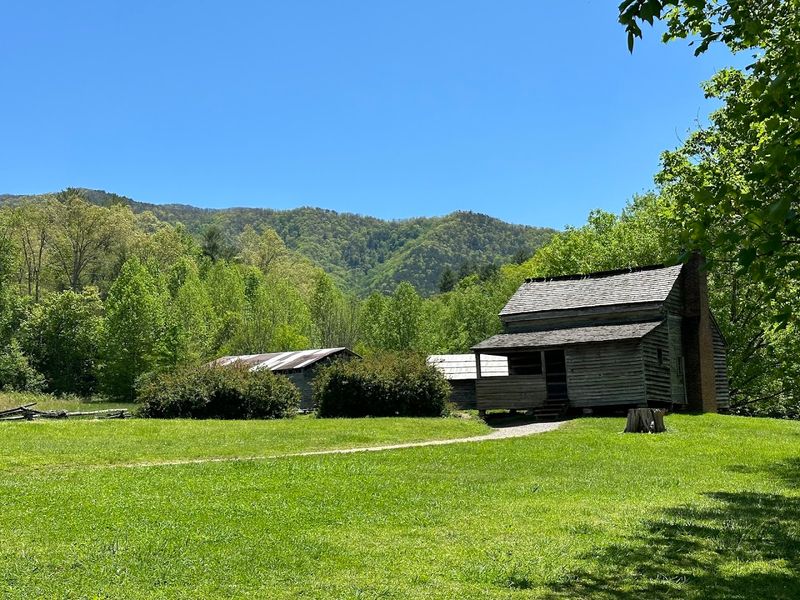
Cades Cove is famous for its wildlife and mountain views, but it’s also one of the best places in Tennessee to step back into the past. This broad valley was home to a thriving mountain community from the early 1800s until the 1930s, when the land was purchased to create the national park. The families who lived here left behind cabins, churches, barns, and a working grist mill—all preserved and open for exploration today.
The 11-mile loop road is the main way to see Cades Cove, and it’s packed with historic structures. You can stop and walk through the John Oliver Cabin, one of the oldest in the cove, or visit the Primitive Baptist Church, where families gathered for worship and community events. The Cable Mill area is a highlight—there’s a working water-powered mill, a cantilever barn, and several other buildings that show what daily life was like for mountain folks.
Rangers sometimes give demonstrations of corn grinding and blacksmithing.
Beyond the buildings, Cades Cove offers a glimpse into the rhythms of rural Appalachian life—farming, hunting, raising families in isolation, and building tight-knit communities. The cemeteries scattered around the cove are especially moving, with weathered stones marking generations of families who called this valley home. It’s a reminder that before the park, real people lived, worked, and died here.
Cades Cove gets crowded, especially in summer and fall, so go early or late in the day if you want to avoid traffic. Wednesday and Saturday mornings, the loop is closed to cars until 10 a.m., making it perfect for biking or walking. Bring snacks, water, and patience—the loop can take a few hours if you stop at all the sites.