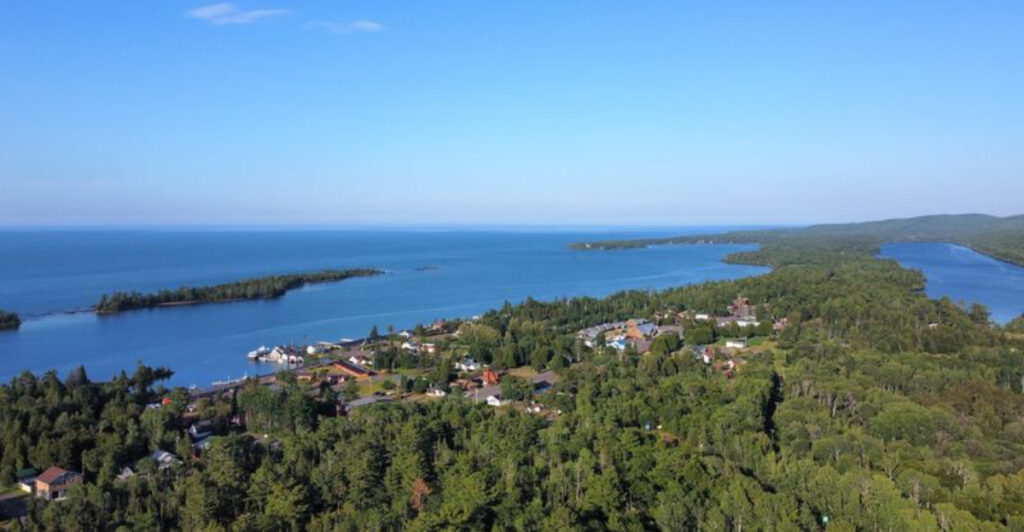
Drive far enough north on US-41 and the road stops trying to take you anywhere else. Copper Harbor, Michigan sits right there at the tip of the Keweenaw Peninsula, a small community of just over a hundred people surrounded by Lake Superior on three sides.
It feels less like a destination and more like a discovery, the kind of place that rewards anyone willing to make the long haul up through the copper-colored forests and winding two-lane roads. Once you get there, the question stops being why you came and starts being why you ever leave.
The Drive Up US-41: Where the Road Becomes the Point
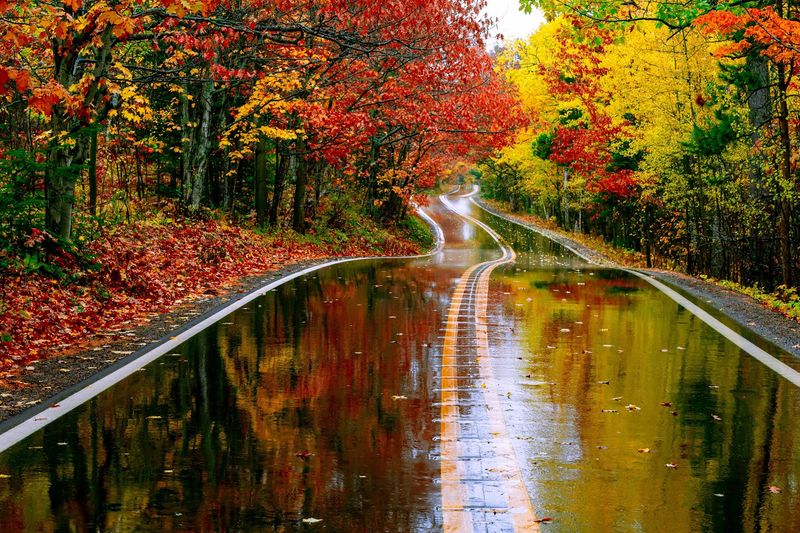
Most people think of the drive as something to survive before the real trip begins. On the way to Copper Harbor, the drive is the real trip.
US-41 narrows and quiets as you push north through the Keweenaw Peninsula, and somewhere around mile forty, the trees close in tighter and the radio stations start dropping out one by one.
The forest up here has a particular color in late summer and fall. It is not just green.
There are copper tones bleeding into birch stands, and the light through the canopy has a warmth to it that feels almost amber. You start noticing things you would normally scroll past: a rusted ore cart sitting in a field, a hand-painted sign for pasties, a gas station that doubles as the last real option for supplies before the road ends.
The speed limit stays low. Locals seem to prefer it that way, and after a while you do too.
There is no reason to rush when every curve reveals something worth a second look. Waterfalls appear roadside without warning.
Pulloffs lead to overlooks above Lake Superior that stretch so far you lose the horizon line.
By the time the tree line opens up and the lake flashes into full view, something has shifted. The urgency that follows most road trips has dissolved somewhere back on the highway.
You are not in a hurry anymore, and the town ahead seems to know that about every person who finally arrives.
Copper Harbor does not announce itself with a billboard or a welcome arch. The road just ends, quietly, right at the water.
And somehow that feels exactly right.
Fort Wilkins State Park: History Sitting Right Next to the Water
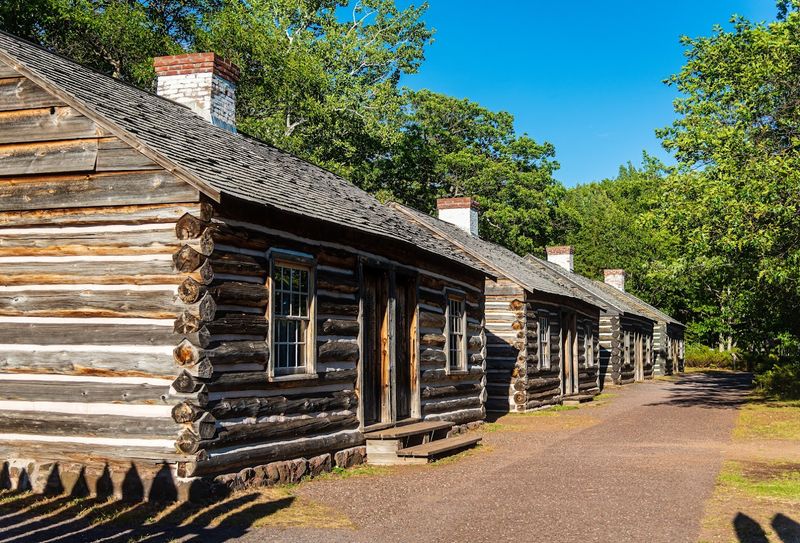
Fort Wilkins looks almost too tidy to be real. The white-painted buildings sit along the shore of Lake Fanny Hooe like a small village frozen in the 1840s, which is more or less what it is.
The U.S. Army built this post to keep order during the copper mining rush, though by most accounts the soldiers spent a lot of time dealing with boredom rather than conflict.
Walking through the restored buildings gives you a clear picture of how isolated life was here. The officers quarters, the mess hall, the hospital, the barracks — all of it reconstructed and furnished with period pieces that make the rooms feel occupied rather than staged.
Someone left a tin cup on a table. A pair of boots sits near a doorway.
The details are small but they stick.
The park stretches beyond the fort itself. There are campsites tucked into the pines along both Lake Superior and Lake Fanny Hooe, and the trails that branch off from the campground connect to the wider network of paths running through the Keweenaw.
Campers here tend to be the low-key type, people reading on camp chairs at noon and watching the stars after dinner.
In the evening, when the tour groups have cleared out and the light goes sideways across the water, the fort feels genuinely quiet. The lake behind it barely moves.
The pines hold the sound. It is the kind of place where you stand still longer than you planned to, not because there is a lot to look at but because the stillness itself has texture.
Few state parks in Michigan carry this combination of history and physical setting. Fort Wilkins earns both without overselling either one.
Lake Superior From the Shore: Big Water With No Apologies
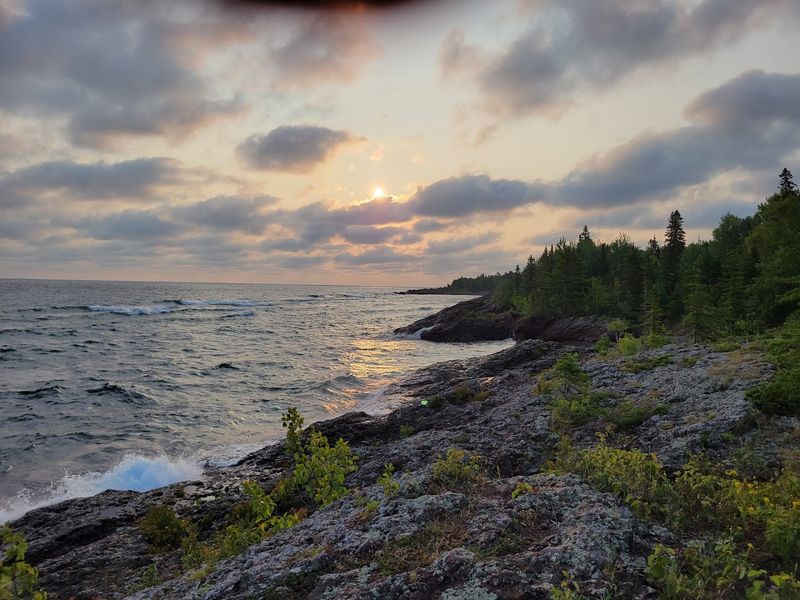
Nothing quite prepares you for how large Lake Superior feels when you are standing at its edge. Maps show it as a body of water.
Being there shows it as something closer to an inland sea. The horizon is clean and unbroken.
Cargo ships appear as tiny dark shapes miles out and take forever to cross your field of vision.
The water at Copper Harbor runs cold even in August. That is not a complaint, just a fact that shapes how people use the shoreline.
Swimmers exist, and they are either extremely determined or have grown up here. Most visitors end up sitting on the rocks, watching the surface shift color with the clouds, or picking through the smooth stones looking for agates and bits of native copper worn round by decades of wave action.
The light on Superior changes constantly. Morning brings a pewter flatness that turns sharp and blue by midday.
Late afternoon throws orange and pink across the water in ways that feel overdone until you are watching them happen in real time. Photographers set up at the rocky points north of the harbor and wait, sometimes for hours, for the conditions to line up.
Storms come in fast here. A clear morning can turn into whitecaps and spray by early afternoon, and watching a Superior squall roll in from the northwest is one of those things that reminds you how small a shoreline really is.
The lake is not threatening, exactly, but it is not gentle either.
Standing at the water’s edge in Copper Harbor, you get the distinct sense that the lake has been here long before anyone named it and will be here long after the last road sign rusts away.
Mountain Biking the Keweenaw Trail System: Dirt, Roots, and Real Elevation
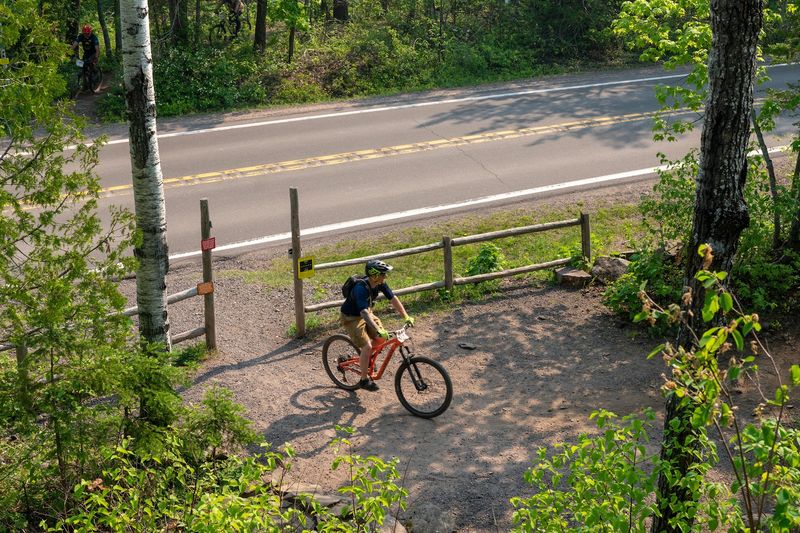
Copper Harbor has developed a reputation among serious mountain bikers that stretches well beyond Michigan. The trail network built into the hills above town offers terrain that surprises people expecting flat Midwestern riding.
There is real elevation here, rocky technical sections, root-laced climbs, and descents that demand your full attention from top to bottom.
The trails range from wide cross-country paths accessible to intermediate riders all the way up to lines that would make experienced downhillers think twice. Signage is clear, and the trail conditions tend to be well-maintained by a dedicated local volunteer community that clearly takes pride in what has been built here.
On a good day in late summer, the dirt is fast and the lines through the trees open up in ways that feel almost designed.
The town itself has organized itself around the biking culture in a way that feels organic rather than forced. You can rent bikes, get repairs done, and find people at the local spots who will happily tell you which trails are running best after recent rain.
The community around the riding scene is one of the more welcoming you will find at any trail town in the Midwest.
Even if you are not a rider, the trails serve as hiking paths that give access to viewpoints above Lake Superior that you simply cannot reach by car. The climb is real, but the views from the ridgelines reward every step.
There is something about riding or hiking through these particular woods, the smell of pine and damp earth, the occasional glimpse of blue water between the trees, that makes the Copper Harbor trail system feel like a different category of outdoor space than what most of the country offers.
Brockway Mountain Drive: The View That Stops Conversation
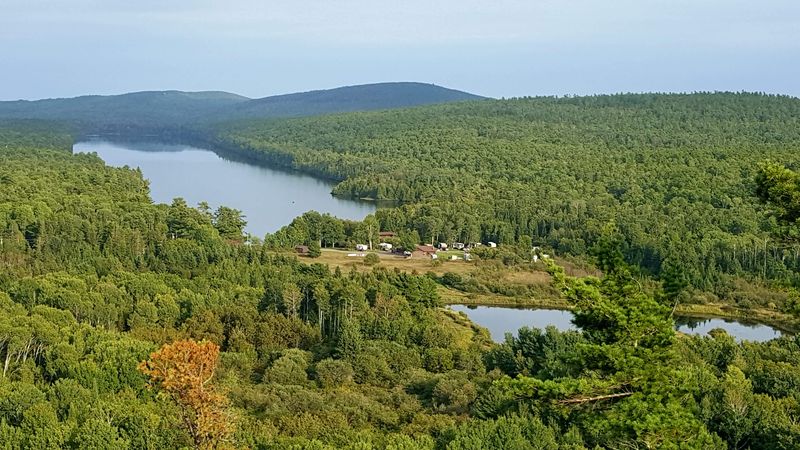
Brockway Mountain Drive climbs out of Copper Harbor on a road that feels like it belongs somewhere in the Rockies, not the Upper Peninsula. The pavement curves upward through the trees and then, at the top, releases you onto an open ridge with a 360-degree view that is genuinely hard to process at first.
Lake Superior spreads out to the north and west. The Keweenaw Peninsula rolls away to the south in a green and copper patchwork of forest.
The overlook at the summit has a small stone shelter and a few parking spots that fill up fast on clear days. People pull over, get out of their cars, and go quiet.
That happens consistently enough that it starts to feel like a pattern. Something about the scale of the view interrupts whatever conversation was happening on the way up.
Spring migration brings birders to Brockway in numbers. The ridge acts as a natural funnel for raptors and songbirds moving north, and on the right morning in May, the variety can be remarkable.
Serious birders with spotting scopes set up early and stay late. Even casual observers tend to spot something they have never seen before.
In fall, the color spread below the ridge turns the drive into something else entirely. The birches go gold, the maples run orange and red, and the contrast against the deep blue of Superior on a clear October day creates the kind of scene that makes people reconsider their camera settings.
The road itself is only a few miles long, but driving it slowly, stopping at the pulloffs, watching the light change across the water below, it can take an entire afternoon if you let it. Most people do not regret letting it.
The Local Food Scene: Small Town, Surprisingly Satisfying
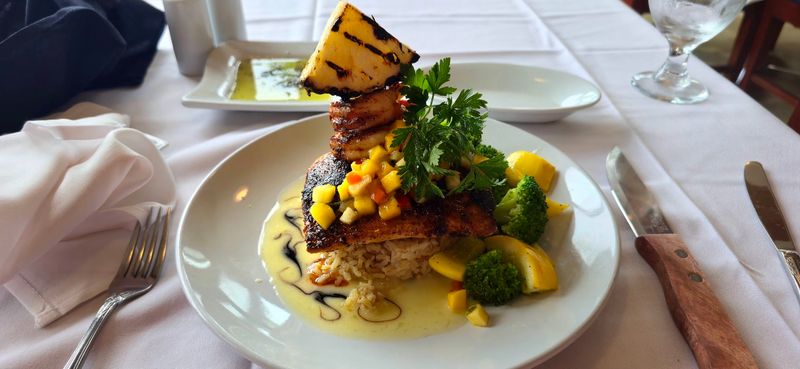
A town of 136 people should not have food worth talking about. Copper Harbor ignores that logic.
The options are few, but what exists here has a character that chains and franchises never quite manage. Menus are short, ingredients are local where possible, and the people behind the counter tend to know the area well enough to answer questions about trails and weather right alongside your order.
Pasties show up everywhere, as they should in the UP. The traditional hand-held meat-and-vegetable pies brought over by Cornish miners have stuck around long after the mines closed, and in Copper Harbor you can find versions ranging from the classic rutabaga-and-beef filling to updated takes that swap in different proteins.
They are filling, portable, and exactly right after a long morning on the trails or a cold walk along the shore.
The bar food situation is better than expected. A cold beer and a burger after a day of riding or hiking hits differently when the view out the window is Lake Superior and the room is full of people who spent their day outside doing something real.
The vibe in these spots is relaxed and unpretentious, the kind of place where nobody is performing and everyone just seems glad to be there.
Breakfast is worth planning around. Whether it is a simple egg plate or something more elaborate, the morning meal in a small UP town has a particular slowness to it.
Tables fill gradually. Coffee gets refilled without asking.
People linger.
Copper Harbor does not have a food scene in the trendy sense. What it has is honest food made by people who live here year-round, which turns out to be the better version of the thing.
The Off-Season Quiet: What Copper Harbor Looks Like When Nobody Is Watching
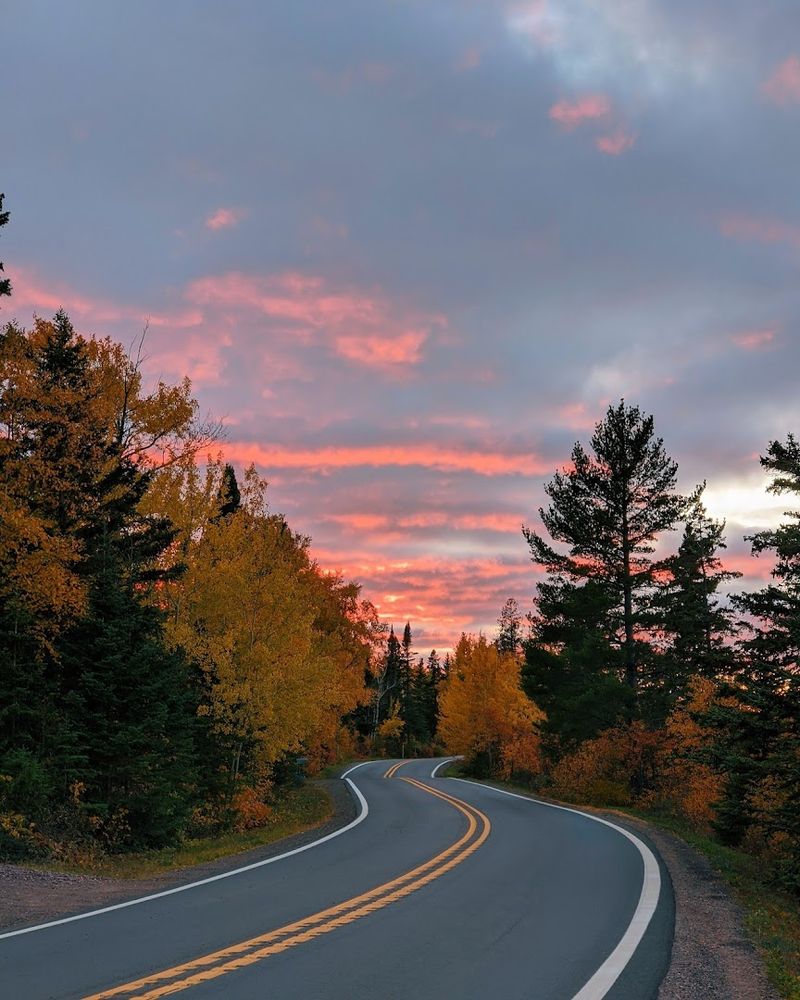
Most people visit Copper Harbor between June and October. After that, the town exhales.
Businesses close for the season, the campground empties out, and the population contracts back to its year-round core. What is left is something that feels less like an off-season and more like the town’s natural state.
Winter in Copper Harbor is serious. Lake-effect snow piles up in quantities that would paralyze most Midwestern cities, and the roads that were busy with cyclists and tourists become quiet corridors through a white and grey landscape.
Snowmobilers arrive, trading the summer trail maps for groomed routes that run through the same forests under a completely different set of conditions.
The light in winter up here has a quality that photographers and painters talk about in specific terms. Low sun angles, long shadows, the way the snow on the lake ice catches the afternoon gold.
It is cold and stripped-down and visually unlike any other season. A few people come specifically for it, and they tend to be the type who appreciate having the place almost entirely to themselves.
Spring arrives slowly and without much ceremony. The ice on Lake Superior breaks up in stages.
The first green shows in the birch trees before anything else changes. There is a particular morning in late April or early May when the birds come back in numbers and the smell of the woods shifts from frozen to alive, and if you happen to be in Copper Harbor for that morning, it registers as something.
The people who live here year-round often say the town is most itself in the quiet months. That is probably true of most places where the summer crowds define the public version.
The real version takes more effort to find.