Michigan has over 100 state parks, but most road-trippers keep hitting the same handful of spots everyone already knows about. The real magic is hiding in the places that don’t make it onto the tourist brochures.
From remote Upper Peninsula forests to quiet Lake Erie shorelines, these parks offer something way better than a crowded parking lot and a postcard view. Pack your cooler, gas up the car, and get ready to discover the Michigan state parks that actually deserve a detour.
1. Negwegon State Park
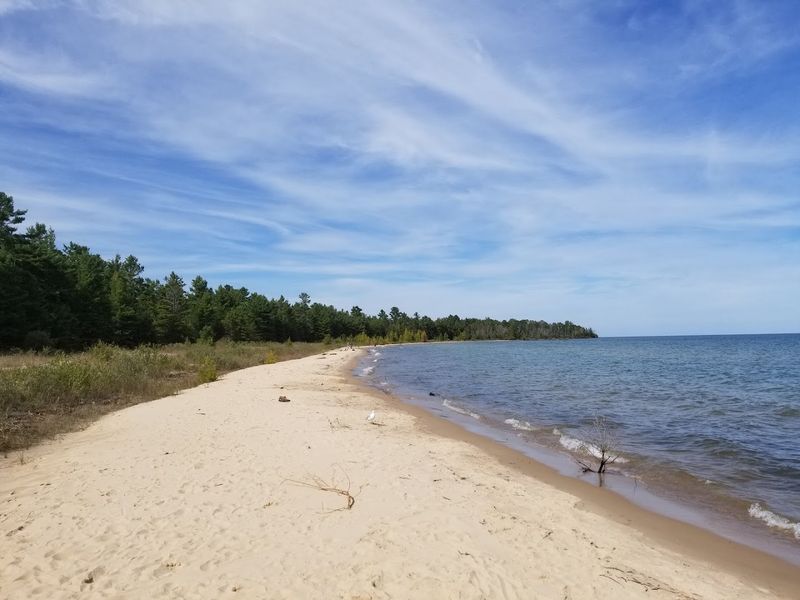
Some parks make you work for the reward, and Negwegon State Park is exactly that kind of place. Tucked along the Lake Huron shoreline in Alcona County, this park is one of Michigan’s most intentionally undeveloped state parks.
There are no modern amenities, no paved roads into the main area, and that is entirely the point.
Getting here requires a short hike or a slow drive down a rough two-track trail, but once you arrive at the shoreline, you are standing in front of some of the clearest water Lake Huron has to offer. The beach stretches wide and quiet, framed by cedar and birch trees that lean toward the water like they are listening for something.
On a calm day, the lake looks almost tropical in color.
Wildlife sightings are common here. Bald eagles, great blue herons, and white-tailed deer have all been spotted along the trails.
The park has several named hiking paths, including the Sandy Hook Nature Trail, which loops through diverse forest habitats and offers multiple access points to the lake.
Primitive camping is available, which means stargazing here is genuinely impressive without light pollution ruining the view. Bring everything you need because the nearest town is a real drive away.
There are no concession stands, no rangers stationed at the gate, and no crowds competing for your favorite rock to sit on.
Negwegon rewards patience and preparation. If your idea of a great road trip stop includes solitude, wild shoreline, and the kind of quiet that makes you forget what day it is, this park belongs near the top of your list.
Roads less traveled tend to lead somewhere worth remembering.
2. Warren Dunes State Park
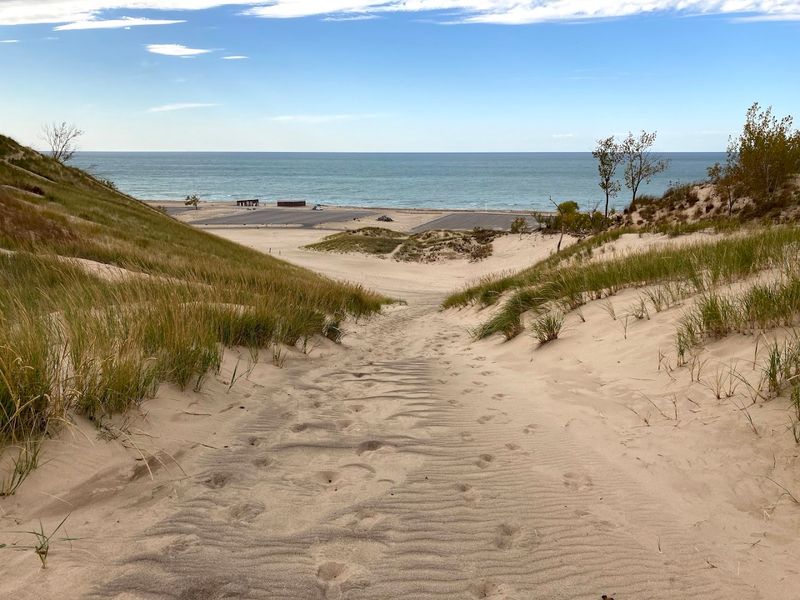
Standing at the base of Tower Hill and looking straight up at 240 feet of pure sand is one of those Michigan moments that never gets old. Warren Dunes State Park sits in the southwestern corner of the Lower Peninsula near Sawyer, and it delivers some of the most dramatic dune landscapes in the entire state.
The park draws big crowds during summer weekends, but that popularity is earned. The beach along Lake Michigan here is wide, clean, and backed by massive dune formations that beg to be climbed.
Running down from the top of Tower Hill is a rite of passage for first-timers, and it is just as fun the second and third time around. Your legs will remind you about the climb back up, though.
Beyond the beach scene, Warren Dunes has over six miles of hiking trails that wind through dune ridges, open meadows, and wooded lowlands. The variety of terrain in a single park is genuinely surprising.
Wildflowers bloom along the trail edges in spring, and fall color here is spectacular when the maples and oaks take over.
Camping options range from modern sites with electricity to rustic spots that feel more removed from the action. The park also has a large picnic area and a seasonal concession stand, making it a solid choice for families who want convenience without sacrificing scenery.
Warren Dunes is technically a well-known park, but it earns its spot on this list because it keeps delivering no matter how many times you visit. The dunes shift and change with every season, so the experience never feels identical.
Southwestern Michigan road trips simply hit different when this park is on the route.
3. Baraga State Park
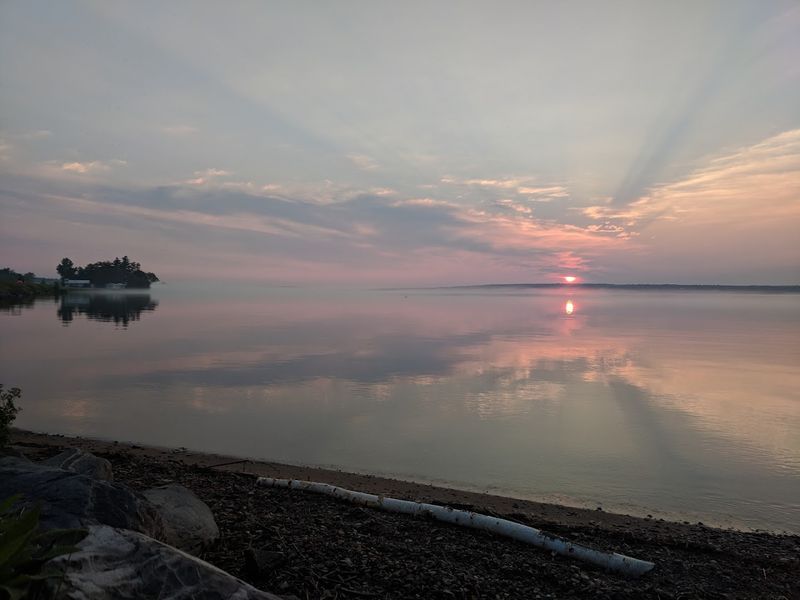
Keweenaw Bay has a way of slowing people down, and Baraga State Park leans into that energy completely. Located just south of the town of Baraga in the Upper Peninsula, this small park sits right along the bay’s edge and offers one of the most laid-back waterfront camping experiences in the UP.
The park is compact compared to some of Michigan’s larger recreation areas, but size has nothing to do with the quality of a stay here. Campsites sit close to the water, and waking up to the sound of waves lapping against the shore while surrounded by towering pines is a genuinely refreshing way to start a road trip morning.
Sunsets over Keweenaw Bay are the kind that make people stop mid-sentence.
Baraga is an excellent base camp for exploring the surrounding region. The Keweenaw Peninsula, with its copper mining history and scenic byways, is within easy driving distance.
L’Anse is just up the road and offers local dining and small-town charm that feels authentic rather than tourist-polished.
Fishing is popular along the bay, and the park has boat launch access for those who want to get out on the water. Swimming is available, though the UP’s water temperatures keep things refreshing rather than warm.
Kayaking the calm bay at dawn is a particularly good call if you have the gear.
Baraga State Park does not try to be everything to everyone. It is a quiet, honest waterfront park that gives you exactly what you need and nothing extra.
For anyone driving across the Upper Peninsula, it is the kind of overnight stop that ends up being the most-talked-about part of the whole trip.
4. Thompson’s Harbor State Park
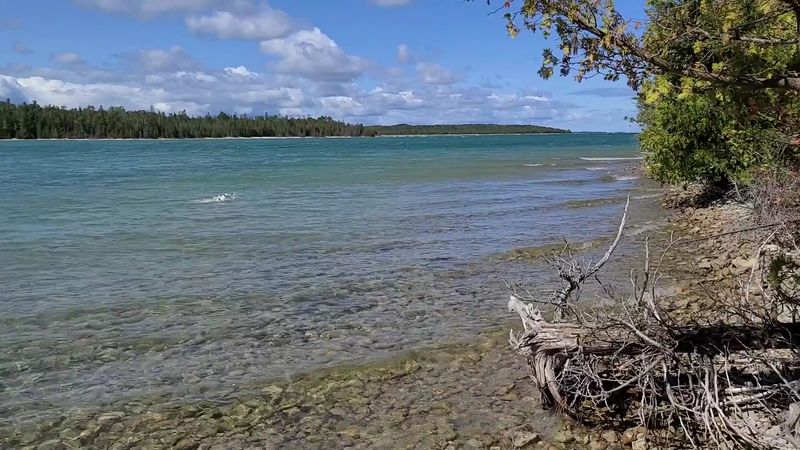
Rocky cobblestone beaches, rare coastal wetlands, and almost no development in sight — Thompson’s Harbor State Park is the kind of place that reminds you why Michigan’s natural coastline deserves serious protection. Located in Presque Isle County along Lake Huron, this park covers nearly 5,000 acres of wild northern Michigan landscape.
The shoreline here is dramatically different from the sandy beaches most people picture when they think of Michigan. Smooth, rounded stones cover the water’s edge, shaped by thousands of years of wave action.
The sound of waves rolling over those rocks is oddly satisfying, almost musical. Coastal wetlands behind the shoreline support rare plant species and make this park a legitimate destination for anyone who pays attention to ecosystems.
Hiking is the main activity, and the trail system winds through a mix of forest types, open meadows, and along the water’s edge. The trails are not heavily maintained, which adds to the sense of genuine exploration.
Bring a trail map and good footwear because the terrain varies more than you might expect.
No modern facilities exist within the park, which keeps visitation low and the atmosphere serene. Primitive camping is permitted in designated areas for those who want to spend the night under a sky that genuinely goes dark.
The Presque Isle area has a lighthouse and some charming small communities nearby that pair well with a visit here.
Thompson’s Harbor attracts naturalists, photographers, and anyone who appreciates a shoreline that has not been softened for casual tourism. It is not a park that hands you a great experience — you earn it by showing up curious and ready to pay attention.
That trade feels more than fair.
5. Fayette Historic State Park
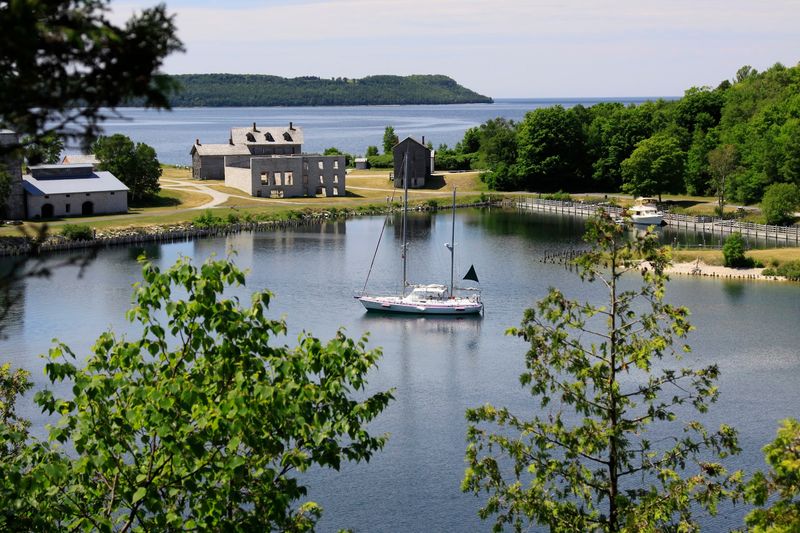
Most state parks offer nature. Fayette Historic State Park offers a ghost town on a cliff above a harbor, and that combination is hard to beat.
Situated on the Garden Peninsula along the Upper Peninsula’s southern shore, Fayette is a genuine historic site wrapped inside a beautiful natural setting.
The town of Fayette was a bustling iron-smelting operation in the late 1800s, producing pig iron using the surrounding hardwood forests and locally quarried limestone. When the operation became economically unviable, the entire town was simply abandoned.
Today, over 20 historic structures remain in various states of preservation, and visitors can walk through them, read interpretive signage, and get a tangible sense of what industrial life looked like in the UP more than a century ago.
Snail Shell Harbor, which the town wraps around, is one of the most photogenic spots in all of Michigan. The limestone bluffs rising above clear green water, with the old industrial buildings in the foreground, create a scene that looks almost too composed to be real.
Kayakers frequently paddle the harbor for a water-level perspective of the bluffs.
The park has a modern campground, a visitor center with exhibits, and access to hiking trails that run along the bluff edge and through the surrounding forest. Birding is excellent here, particularly during spring and fall migration when the peninsula acts as a natural funnel for species crossing the lake.
Fayette does not get the same attention as Pictured Rocks or Tahquamenon Falls, but it arguably offers a richer variety of experiences in a single stop. History, geology, ecology, and outstanding scenery all in one place — that is a road trip stop worth building your whole route around.
6. Lake Hudson Recreation Area
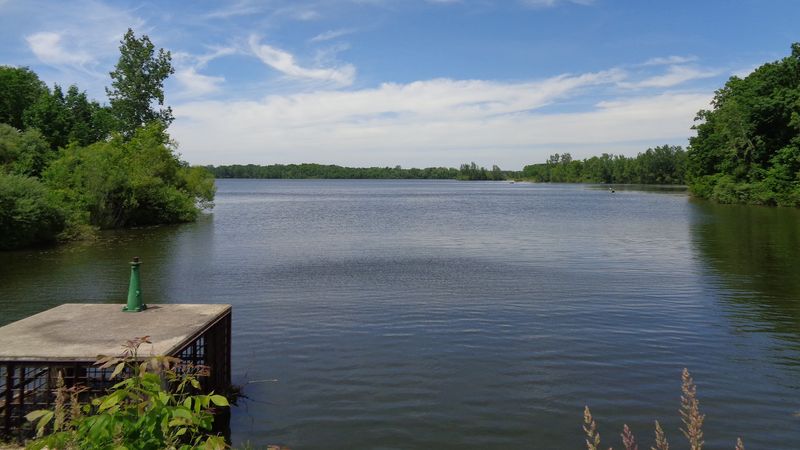
Southeastern Michigan does not always get credit for its wild spaces, but Lake Hudson Recreation Area makes a strong argument for paying more attention to the lower corner of the state. Located in Lenawee County near Clayton, this recreation area surrounds a 640-acre lake and protects one of the least-visited natural areas in the Lower Peninsula.
The park is known among birders and wildlife watchers for a very specific reason: the sandhill crane. Lake Hudson hosts a notable crane population, and during fall migration, the numbers can be genuinely impressive.
Watching hundreds of cranes lift off from the lake at dawn is the kind of wildlife experience most people associate with nature documentaries, not a state park an hour from Toledo.
Hiking trails loop through upland forest and wetland edges, offering consistent wildlife viewing opportunities beyond just the cranes. White-tailed deer, wild turkeys, and various waterfowl species are common sightings throughout the year.
The terrain is gentle, making the trails accessible for a wide range of hikers without sacrificing the feeling of being somewhere genuinely remote.
Primitive camping is available, and the low visitation means you can often secure a spot without planning months in advance. The lake allows non-motorized boating, which keeps the water calm and the atmosphere quiet.
Fishing for bass, bluegill, and pike draws anglers who appreciate a lake that has not been heavily pressured.
Lake Hudson Recreation Area is the kind of spot that regulars keep quietly to themselves. Once you spend a morning watching cranes rise over the mist on that lake, the temptation to tell everyone about it is very real.
Go in fall for the full effect.
7. Tawas Point State Park
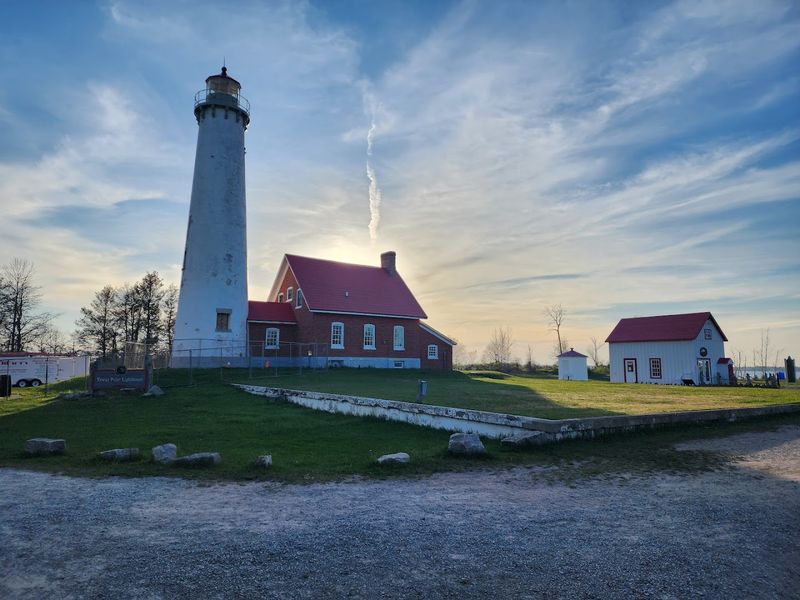
Birders call it the “Cape May of the Midwest,” and that nickname is not an exaggeration. Tawas Point State Park juts out into Lake Huron like a natural funnel for migrating birds, and during spring migration, the diversity and density of species here is extraordinary.
Located near East Tawas in Iosco County, this park earns its reputation every May.
The park sits on a sandy peninsula that extends into the lake, with a historic lighthouse at its tip. The Tawas Point Lighthouse has been operating since 1876 and remains an active aid to navigation.
Walking the sandy path toward the lighthouse with Lake Huron on both sides and the possibility of spotting a rare warbler in every bush is a genuinely memorable experience.
Outside of migration season, the park still delivers. The beach along the inner bay side is calm and shallow, making it ideal for swimming and wading.
The outer shore faces open water and offers a more dramatic wave experience depending on the wind. Sunsets from the point, with the lighthouse silhouetted against an orange sky, are reliably excellent.
Camping is available in a modern campground that books up quickly during peak birding weekends in May. Reserving early is not optional if you want a spot during migration.
The East Tawas area has good local restaurants and a charming marina district that makes a post-hike dinner feel like a proper reward.
Tawas Point punches well above its size. It is a small park in terms of acreage, but the combination of lighthouse history, world-class birding, and accessible beach makes it one of the most well-rounded single stops on any Lake Huron road trip itinerary.
Plan to stay longer than you think you need to.
8. Craig Lake State Park
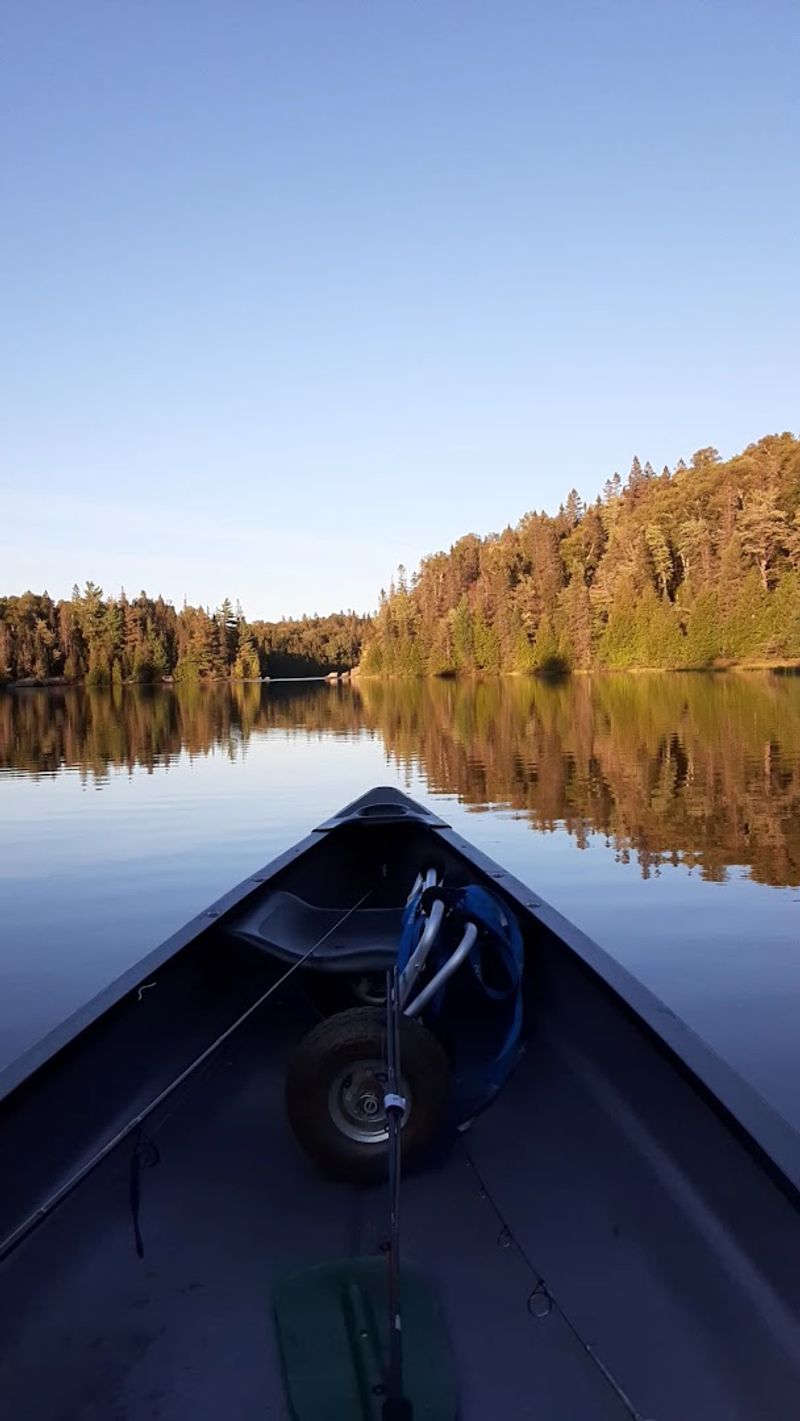
Craig Lake State Park is not trying to impress you with facilities or convenience. It is one of the most remote state parks in Michigan, sitting deep in the Upper Peninsula’s Marquette County backcountry, and reaching it requires navigating miles of rough dirt roads that most rental cars have no business attempting.
That barrier is a feature, not a bug.
The park protects a chain of six lakes connected by portage routes, surrounded by old-growth forest and classic UP bog and wetland habitat. Moose live here.
Not in a zoo enclosure or a wildlife management area — just living their lives in the forest, occasionally appearing at lake edges at dusk. Spotting one is not guaranteed, but the possibility alone changes how you walk through the woods.
Backcountry camping on the lake shores requires a permit and some planning, but the payoff is extraordinary. Falling asleep in a tent on the edge of Craig Lake with no road noise, no light pollution, and no cell service is a reset that modern life rarely allows.
The fishing for walleye, bass, and northern pike is excellent and largely unpressured.
Canoe and kayak access is the primary way to explore the lake chain, and paddlers who commit to a multi-day trip through the connected waterways get a perspective on the UP that most visitors never experience. The portages are manageable but require genuine effort, which keeps the interior lakes genuinely quiet.
Craig Lake is not for everyone, and it knows it. If you need hookups, hot showers, and a camp store, this is not your park.
But if you want the Upper Peninsula to feel genuinely wild and untamed, Craig Lake delivers that experience without compromise or apology.
9. Laughing Whitefish Falls State Park
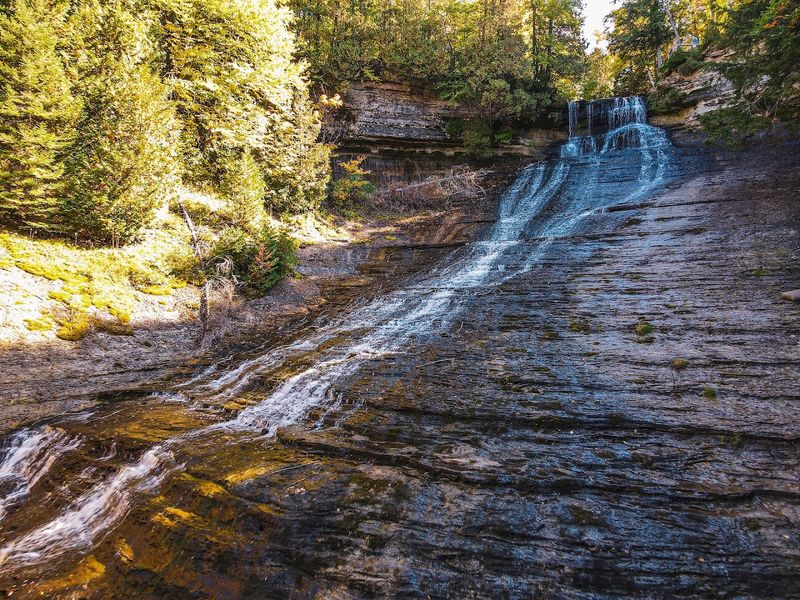
The name alone is enough to make you want to find it on a map. Laughing Whitefish Falls State Park sits in Alger County in the Upper Peninsula, and it protects one of Michigan’s most striking waterfall sequences.
The Laughing Whitefish River drops over a series of ancient Precambrian rock ledges, creating a multi-tiered cascade that looks genuinely ancient because it is.
Getting to the falls involves a moderate hike through classic UP forest — hemlock, yellow birch, and maple closing in around a trail that follows the river upstream. The anticipation builds gradually as the sound of falling water grows louder before the falls come into view.
That first glimpse through the trees is a proper payoff for the walk.
The geology here is remarkable. The Precambrian bedrock exposed by the river is among the oldest rock formations visible at the surface anywhere in Michigan.
Standing at the base of the falls and looking up at those layered ancient rocks while cold mist settles on your face is one of those moments that makes the UP feel genuinely epic rather than just scenic.
The park itself is small and undeveloped, which means no crowded parking lots or vendor carts selling overpriced water. Pack your own snacks, wear waterproof footwear if you plan to get close to the water, and bring a camera because no phone photo fully captures the scale and texture of the falls in person.
Fall is arguably the best season to visit, when the surrounding forest turns and the contrast between orange and gold leaves against dark wet rock and white water is stunning. Laughing Whitefish Falls is a short detour off US-41 that earns every minute of the time you give it.
10. Wilson State Park
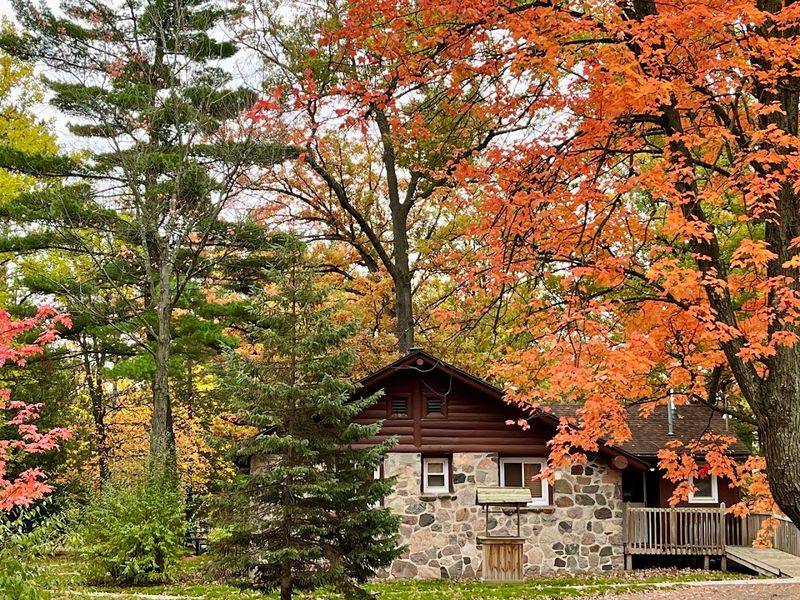
Right in the middle of the Lower Peninsula, where I-75 cuts through Clare County, Wilson State Park sits on the edge of Budd Lake and quietly offers one of the best inland lake camping experiences in the state. It is the kind of park that road-trippers tend to pass without stopping, which is a mistake worth correcting.
Budd Lake is a warm, clear inland lake that heats up nicely by midsummer, making it ideal for swimming without the cold shock of a Great Lakes dip. The park’s beach is sandy and well-maintained, with a gradual entry that works well for younger swimmers.
Paddleboats, kayaks, and canoes are common sights on the water, and the lake is calm enough for beginners to feel comfortable.
The campground is modern with electric hookups available, which makes Wilson a practical choice for families who want comfort without sacrificing the outdoor experience. Sites are reasonably spaced with decent tree cover, and the sound of the lake at night does a lot of work toward making the place feel removed from the highway noise just a short distance away.
Clare is a small city with a handful of good local restaurants and a few shops worth browsing, making Wilson a solid base for a night or two while exploring central Michigan. The Consumers Energy Canoe Livery on the Muskegon River is a short drive away for those who want to add a float trip to the itinerary.
Wilson State Park does not have the dramatic scenery of the UP parks on this list, but it nails the fundamentals of a good road trip stop. Clean water, a comfortable campsite, and a genuinely relaxed atmosphere make it the kind of place you actually look forward to returning to rather than just passing through.