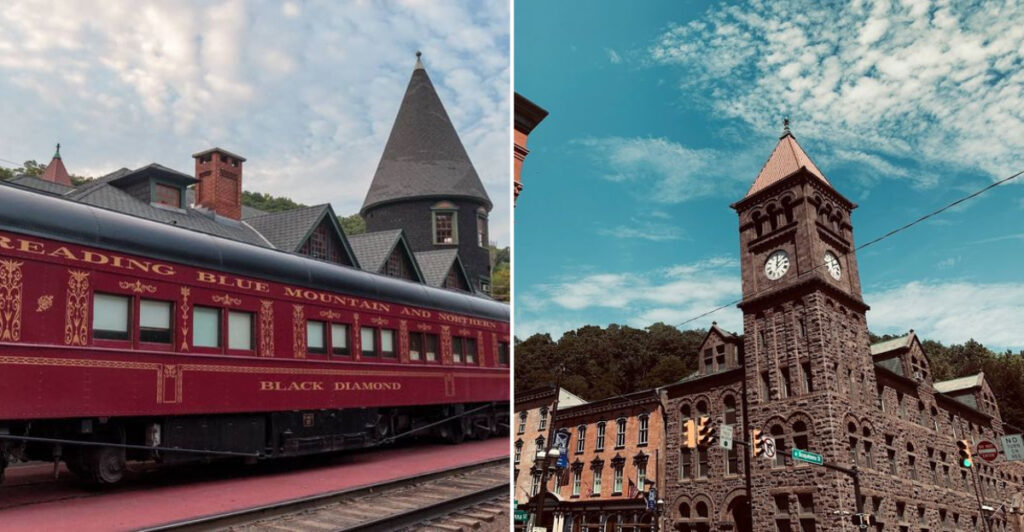
If you have ever wanted to walk into a mountain town that still looks touched by another century, Jim Thorpe, Pennsylvania delivers that feeling almost instantly. Tucked between steep green hills and the Lehigh River, its narrow streets, stone buildings, church steeples, and grand Victorian facades create the kind of setting that makes you slow down and look twice.
You are not just visiting a pretty destination here – you are stepping into a place shaped by coal, railroads, old money, and the stubborn charm of a community that never let its history slip away. From hilltop views to mansion interiors and train rides through dramatic scenery, this town makes the past feel close enough to reach.
1. Broadway and the Historic Downtown
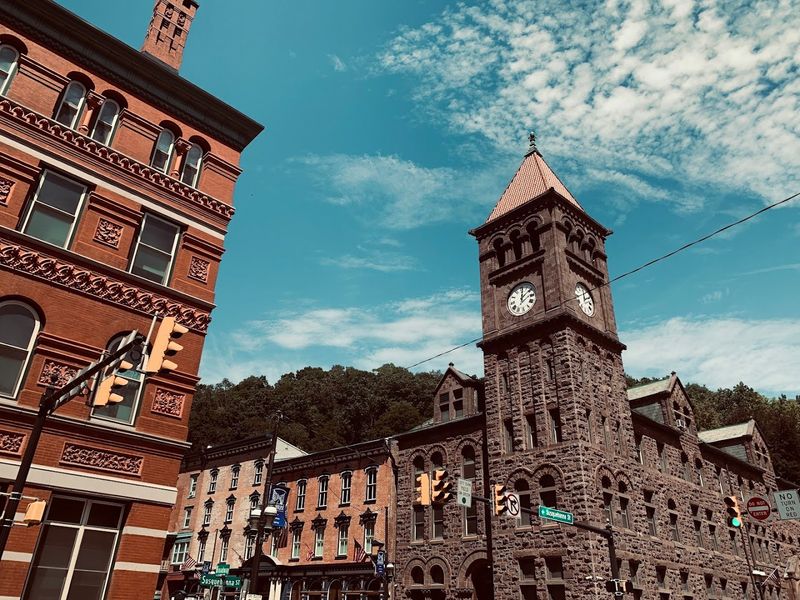
Broadway is the kind of main street that makes you put your phone away for a minute and simply look up.
In Jim Thorpe, this downtown corridor is lined with richly detailed Victorian buildings, old storefronts, balconies, and church spires that seem framed by the surrounding mountains.
You can feel how the town’s prosperity once flowed through these blocks, yet it never feels frozen or artificial.
What makes the street so memorable is the way everyday life mixes with architecture that still carries real age and weight.
Cafes, shops, galleries, and old facades sit shoulder to shoulder, giving you reasons to wander slowly and notice carved stone, painted signs, and steep side streets climbing uphill.
If you want your first impression of Jim Thorpe to feel like a time shift, this is where that feeling begins and lasts well beyond a single stroll.
2. Asa Packer Mansion
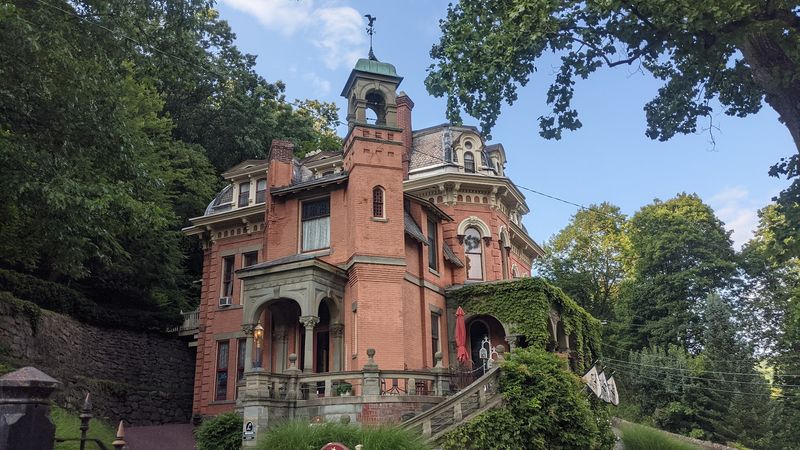
The Asa Packer Mansion gives you one of the clearest windows into the town’s gilded past.
Built high above Jim Thorpe, this striking Victorian home reflects the wealth and influence of Asa Packer, the railroad magnate and philanthropist whose name is tied deeply to the region’s development.
From the outside alone, the mansion feels commanding, elegant, and perfectly placed to watch over the town below.
Inside, the house reveals an impressive sense of preservation, with furnishings, decorative details, and room layouts that help you imagine daily life in another era.
Rather than feeling distant, the mansion makes the story of power, industry, and ambition feel personal and tangible.
If you enjoy places where architecture does more than look beautiful, this stop delivers a layered experience that connects Jim Thorpe’s dramatic streetscape to the people who once shaped its identity.
3. Harry Packer Mansion
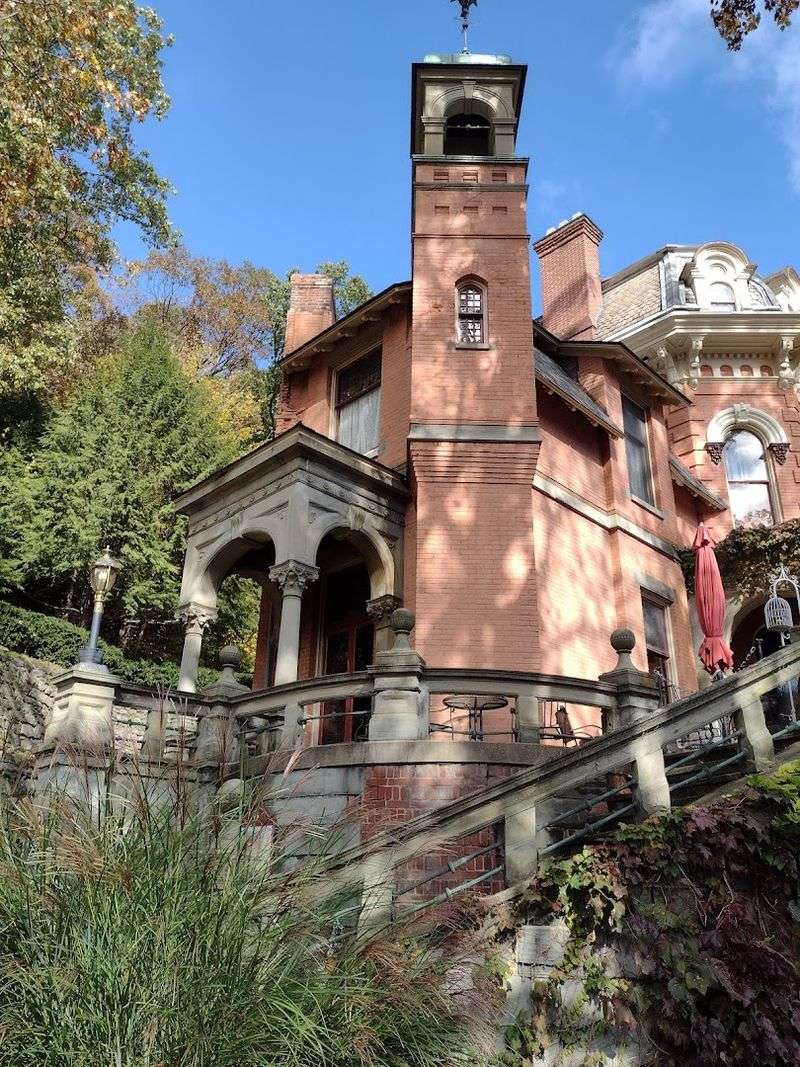
The Harry Packer Mansion adds a darker, more dramatic note to Jim Thorpe’s historic character.
While the Asa Packer Mansion speaks in polished Victorian confidence, this home leans into Gothic Revival style, with a look that feels theatrical, eccentric, and a little mysterious against the mountain backdrop.
It stands out immediately, giving you another side of the town’s nineteenth-century wealth and personality.
What makes it worth your attention is not only its architecture but also the atmosphere it creates.
The mansion feels like a place built to impress visitors, spark conversation, and leave a lasting image in your mind long after you leave town.
When you move through Jim Thorpe and notice how one grand residence can feel stately while another feels almost haunted by imagination, you begin to appreciate how varied and visually rich this compact town really is.
4. Mauch Chunk Museum and Cultural Center
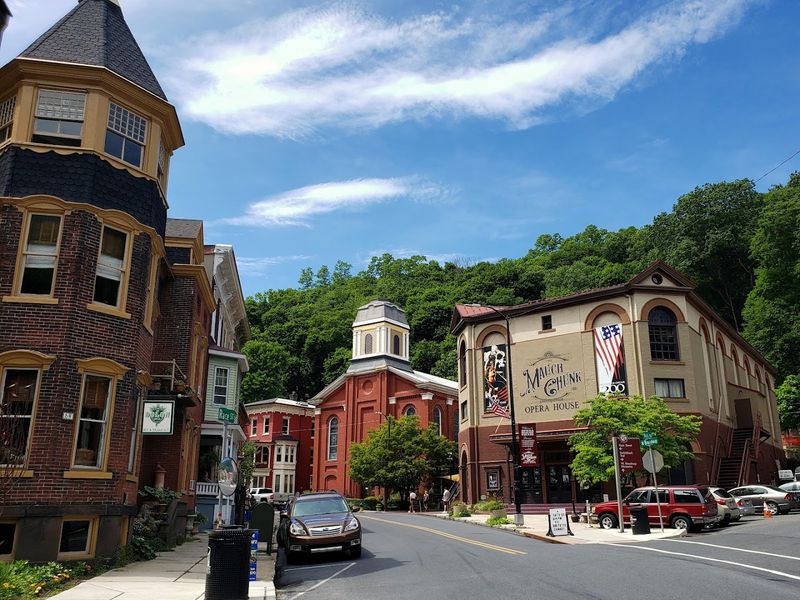
If you want to understand why Jim Thorpe looks and feels the way it does, the Mauch Chunk Museum and Cultural Center is an essential stop.
The exhibits help connect the elegant facades outside with the harder realities of coal, labor, transportation, and local ambition that built the town.
You also get a stronger sense of the place’s original name, Mauch Chunk, and how history here is layered rather than simple.
The museum does more than present dates and artifacts behind glass.
It gives context to the people, industries, and shifting identity of a town that reinvented itself while still carrying its past in plain sight.
After spending time here, you are likely to notice downtown buildings, rail lines, and hillside streets with sharper eyes.
It turns a scenic visit into something richer, grounding the beauty of Jim Thorpe in the stories that made it possible.
5. Lehigh Gorge Scenic Railway
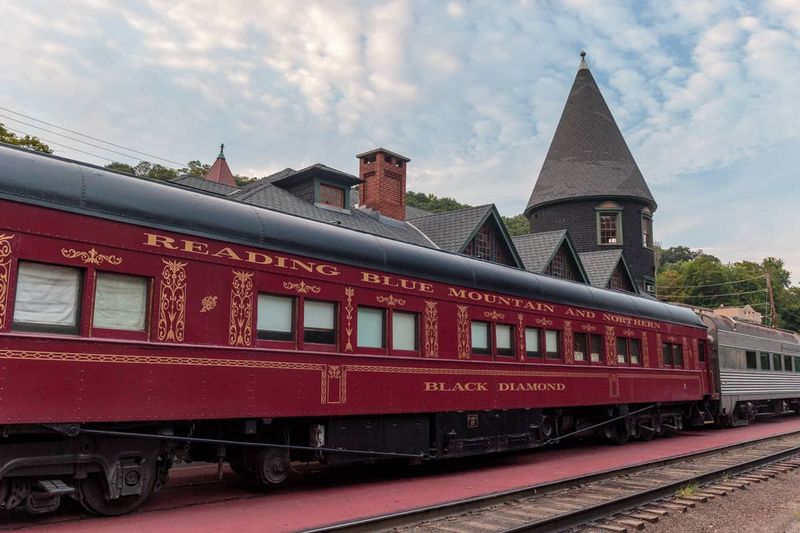
The Lehigh Gorge Scenic Railway lets you experience Jim Thorpe from a perspective that matches the town’s railroad heritage beautifully.
Departing from the historic station, the ride combines vintage atmosphere with sweeping views of the river, forested slopes, rocky cliffs, and changing seasonal color.
It feels relaxing, but it also reminds you that transportation helped define this town’s rise and enduring identity.
What I like most is how the excursion deepens the sense of place without pulling you away from the town’s story.
You are still connected to Jim Thorpe the entire time, because the station, the rail history, and the surrounding terrain all speak the same visual language.
If you want a break from walking steep streets while still soaking in the area’s character, this is an easy choice.
Few experiences here blend scenery, history, and atmosphere as seamlessly as this one.
6. Old Jail Museum
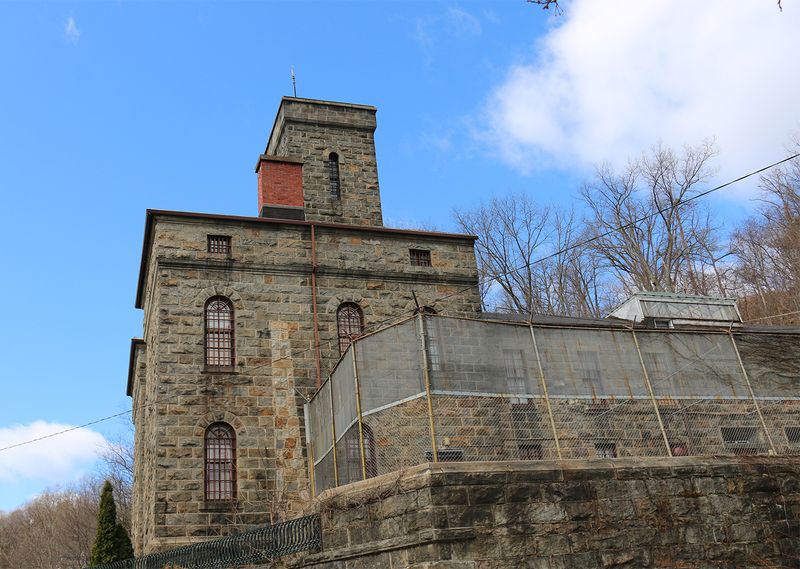
The Old Jail Museum brings a more somber and intriguing edge to your time in Jim Thorpe.
This former prison stands as a reminder that behind the polished architecture and scenic views, the town’s history also includes conflict, law, punishment, and the famous story associated with the Molly Maguires.
Its heavy stone walls and preserved cells make the past feel uncomfortably close in the best possible way.
Even if you are not usually drawn to jail museums, this one has a gravity that is hard to ignore.
The building itself carries the mood, and the stories told here deepen your understanding of the region’s social tensions during the coal era.
Visiting adds contrast to the rest of town, showing that Jim Thorpe’s nineteenth-century legacy was not only elegant and prosperous.
It was also difficult, contested, and shaped by human drama that still echoes in these rooms.
7. The Hilltop Views Over Town
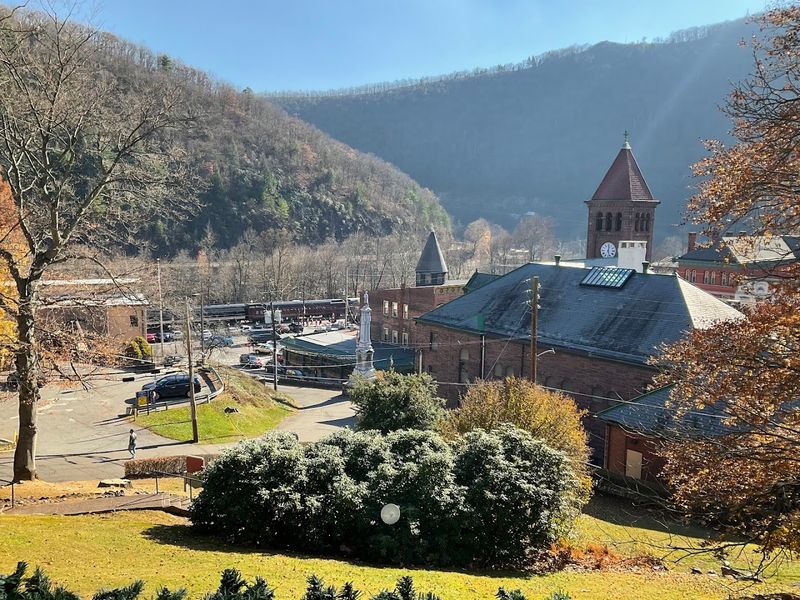
One of the best things you can do in Jim Thorpe is climb a little and look back.
From higher vantage points around town, you see rooftops packed tightly along the valley floor, church towers rising above brick blocks, and the river curling through a landscape that feels almost too dramatic for a small Pennsylvania town.
The setting explains instantly why Jim Thorpe leaves such a strong impression on first-time visitors.
Those elevated views also reveal how unusual the town’s layout really is.
Streets seem squeezed between water and mountains, while buildings appear stacked into the terrain in ways that make the whole place feel older, denser, and more cinematic.
If downtown gives you the intimate details, the hillsides provide the full composition.
Standing above it all, you understand why people compare Jim Thorpe to another era, because the view still resists the flattened look of modern development.
8. St. Mark’s and the Town’s Church Architecture
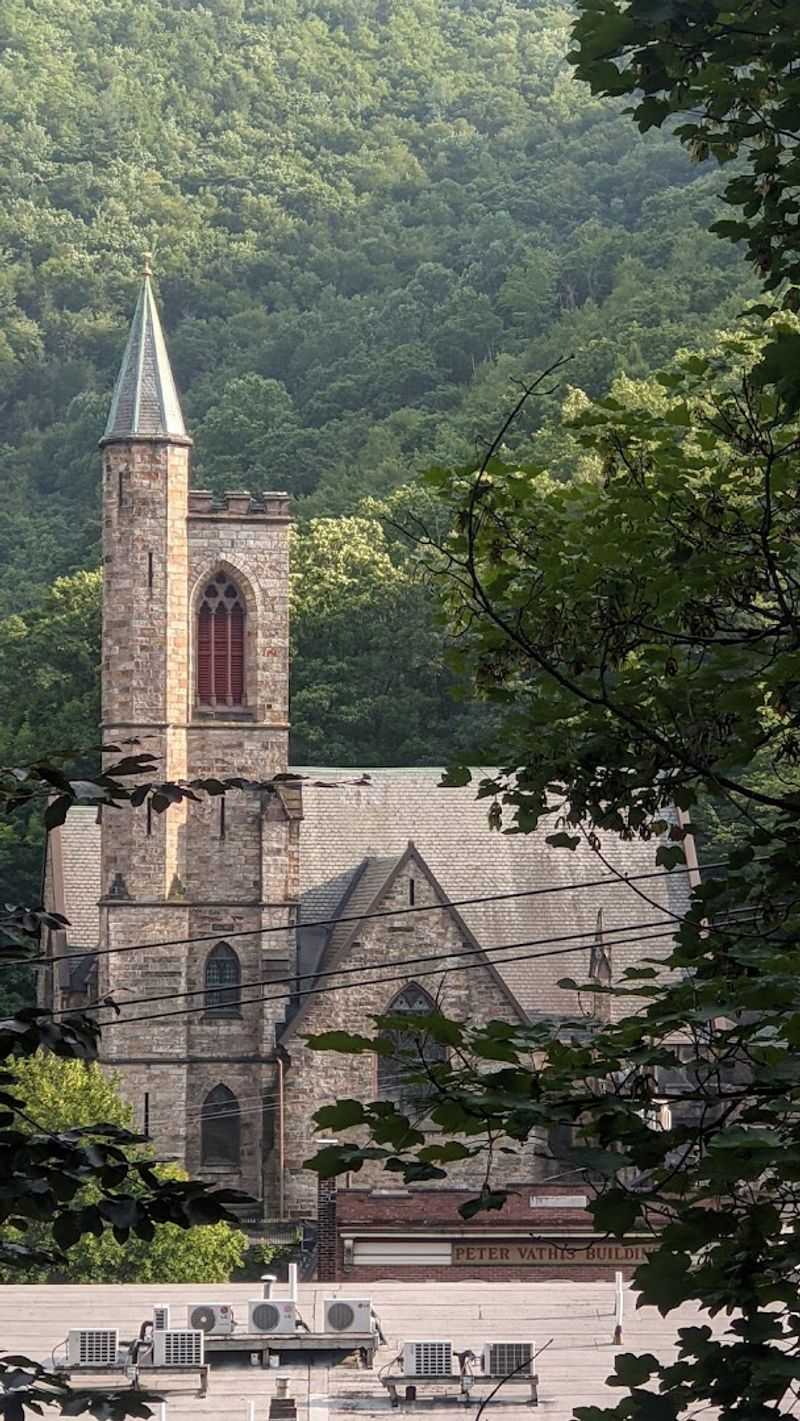
Jim Thorpe’s churches are part of what gives the town its unmistakable skyline and old-world atmosphere.
St. Mark’s Episcopal Church, in particular, adds Gothic character and a sense of permanence that fits naturally with the steep streets and nineteenth-century facades nearby.
When you notice these religious buildings woven into the downtown landscape, the town begins to feel even more rooted in another century.
These churches are not just background scenery.
They anchor the visual rhythm of Jim Thorpe, breaking up rows of commercial buildings with stone towers, pointed arches, and quiet corners that invite a slower pace.
Even if you only admire them from outside, they contribute immensely to the feeling that this is a place where architecture still shapes emotional experience.
In a town already rich with mansions and museums, the church buildings add dignity, texture, and a deep sense of continuity.
9. The Riverfront and Train Station Area
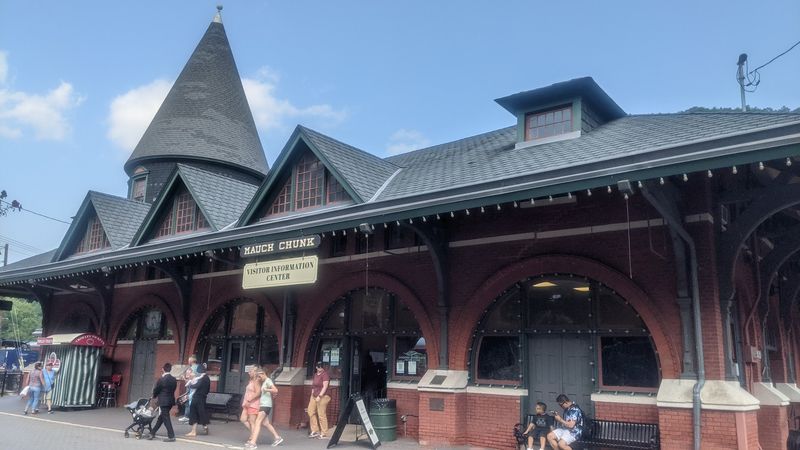
The area around the train station and riverfront brings together many of the elements that define Jim Thorpe so well.
Here, you can see the relationship between the rail line, the Lehigh River, the mountains, and the historic downtown in one compact stretch that feels both scenic and deeply functional.
It is the kind of place where a short walk can tell you a lot about how geography shaped the town’s identity.
I find this area especially rewarding because it balances postcard beauty with historical meaning.
Watching trains, standing near the water, and looking back toward the clustered buildings helps you grasp why transportation and terrain mattered so much here.
The station itself reinforces that sense of continuity, connecting modern visitors to the era when rail travel helped drive commerce, movement, and status.
If you want a final scene that captures Jim Thorpe in one glance, this is a strong contender.