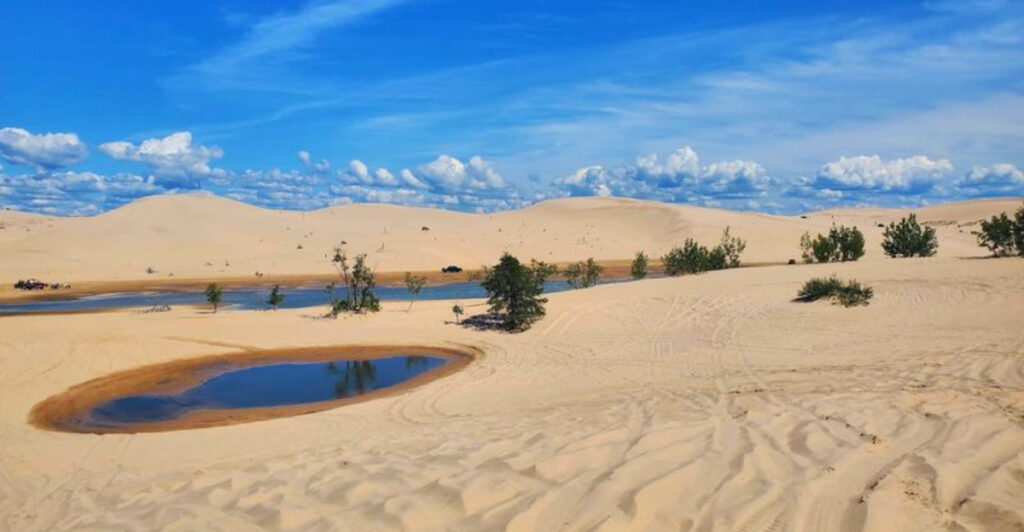
Michigan has a way of surprising even the people who grew up here. From crystal-clear springs that bubble up from the earth to towering sand dunes that feel like they belong on another planet, the Great Lakes State plays by its own rules.
These seven spots prove that nature didn’t follow any blueprint when it shaped this place. Get ready to rethink everything you thought you knew about the Midwest.
1. Kitch-iti-kipi — Manistique
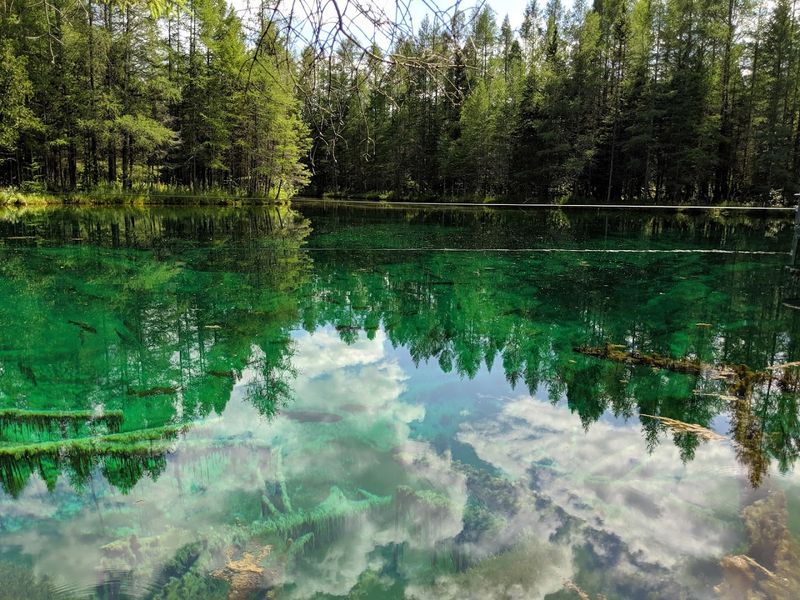
There’s something almost unreal about looking down through 45 feet of perfectly clear water and seeing every pebble, every fish, and every ancient log resting on the bottom. Kitch-iti-kipi — nicknamed “The Big Spring” — is Michigan’s largest natural freshwater spring, pumping out around 10,000 gallons of water per minute.
The water stays a steady 45 degrees year-round, which means it never freezes and always looks like liquid glass.
Located in Palms Book State Park near Manistique in the Upper Peninsula, this spot has been wowing visitors for generations. You get out to the center of the spring on a self-operated observation raft — basically a flat platform you pull across using a cable.
It’s low-tech, a little old-fashioned, and completely perfect. Standing over that glowing turquoise pool while trout glide beneath you is genuinely one of the most surreal experiences Michigan offers.
The name comes from an Ojibwe phrase that roughly translates to “big cold water,” and honestly, no description fits better. The spring sits tucked inside a forest, which adds to the feeling that you’ve stumbled onto something secret.
There’s no swimming allowed, which actually helps preserve the magic — the water stays pristine and the fish stay unbothered.
Admission into Palms Book State Park requires a Recreation Passport, so make sure your Michigan license plate is up to date before heading out. The parking area fills up fast on summer weekends, so arriving early in the morning gives you the best experience.
Fall visits are especially underrated here — the surrounding trees turn gold and orange, and the spring’s turquoise color pops even harder against all that autumn color. Few places in the state feel quite this otherworldly.
2. Turnip Rock — Port Austin
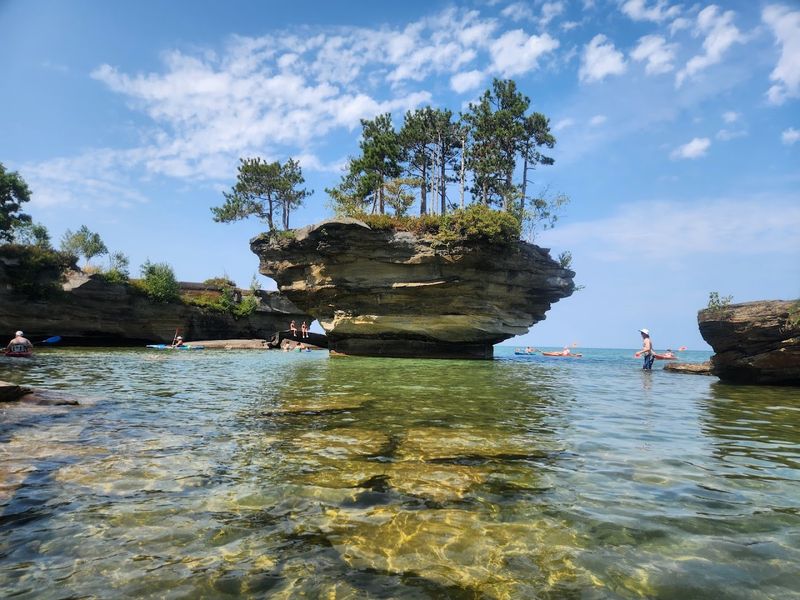
Picture a giant rock shaped like a turnip, balancing in the middle of Lake Huron with a cluster of trees somehow growing out of its top. That’s Turnip Rock, and yes, it’s exactly as wonderfully strange as it sounds.
Located near Port Austin on the tip of Michigan’s Thumb, this quirky rock formation has become one of the most photographed natural landmarks in the entire state — and for good reason.
The catch? You can only reach it by water.
There’s no trail, no road, no shortcut. You’ll need a kayak or canoe to paddle out and see it up close, which is part of what makes the whole trip feel like a real adventure.
Several outfitters in Port Austin rent kayaks and can point you toward the best launch spots. The paddle is manageable for most people with basic paddling experience, though it’s smart to check wind and wave conditions before heading out on Lake Huron.
The rock itself sits in a stretch of shoreline that’s dotted with other interesting formations and sea caves, so the whole paddle route is worth exploring slowly. Early morning is the sweet spot — the water tends to be calmer, the light hits the rock at a beautiful angle, and you’ll likely have the place mostly to yourself.
By midday in summer, it can get crowded with kayakers.
Turnip Rock is a reminder that Michigan’s coastline is far more dramatic than most people expect. The Thumb region often gets overlooked in favor of the UP or the Lake Michigan side, but spots like this prove it absolutely holds its own.
Bring a waterproof phone case, pack some snacks, and give yourself a full half-day to enjoy the whole experience without rushing.
3. Silver Lake Sand Dunes — Mears
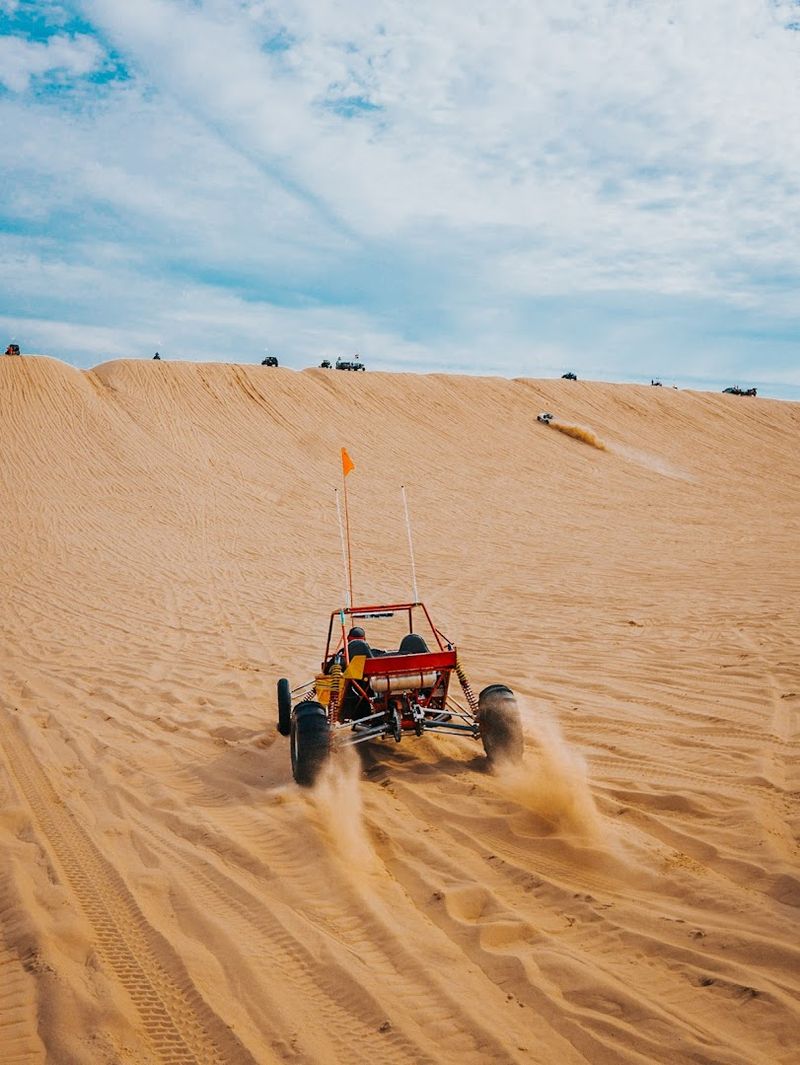
Most sand dunes ask you to admire them from a respectful distance. Silver Lake Sand Dunes near Mears, Michigan, basically dares you to climb on them, race across them, and fling yourself down their steep faces.
Stretching across nearly 2,000 acres along the Lake Michigan shoreline, this is one of the few places in the country where you can legally drive an off-road vehicle directly on open sand dunes — and the energy here is unlike anything else in the state.
The dunes themselves rise dramatically between Silver Lake and Lake Michigan, creating this wild corridor of sand that shifts and reshapes with the wind. Some dunes top out at over 100 feet, and standing at the crest of one with Lake Michigan glitching blue in the distance is a genuinely jaw-dropping moment.
Even if off-roading isn’t your thing, hiking through the dune area or just walking to the water’s edge delivers serious scenery.
Mac Wood’s Dune Rides has been running guided tours here since 1930, making it one of Michigan’s oldest tourist attractions. Their open-air vehicles take groups on wild rides through the dunes with drivers who clearly love their job.
It’s loud, sandy, and a total blast — kids absolutely lose their minds on these tours, and adults usually do too.
Beyond the dunes themselves, the Silver Lake area has a classic small-town Michigan beach vibe, with ice cream shops, mini golf, and lakeside cottages. Visiting in late summer is especially good because the crowds thin out slightly after Labor Day but the weather often stays warm.
The dunes have an almost desert-like quality at sunset, when the sand glows amber and the shadows stretch long across the ridges. It’s the kind of place that feels completely out of place in the Midwest — in the best possible way.
4. Eben Ice Caves — near Eben Junction
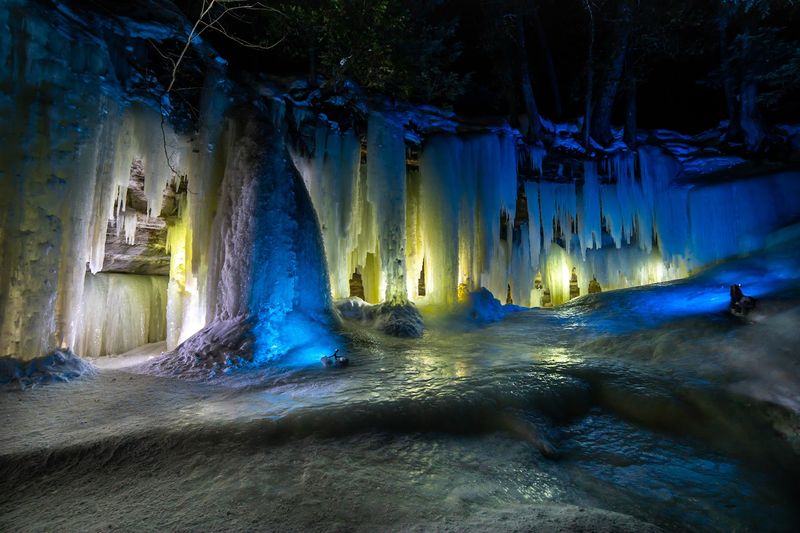
Every winter, a stretch of rocky cliffs in Michigan’s Upper Peninsula transforms into something that looks straight out of a fantasy novel. The Eben Ice Caves — located near Eben Junction in Alger County — are formed when groundwater seeps through sandstone bluffs and freezes on contact with the cold air.
The result is a jaw-dropping wall of icicles, frozen waterfalls, and blue-tinted ice formations that can stretch for hundreds of feet along the cliff face.
No two winters look exactly the same here. The formations change constantly depending on temperature swings, snowfall, and how long the cold snap has held.
Some years the ice builds into thick, cathedral-like curtains. Other years it’s more jagged and dramatic, with icicles jutting out at wild angles.
That unpredictability is honestly part of the appeal — you never quite know what you’re going to find.
Getting there requires a winter hike of roughly two miles round trip through snow-covered forest. Microspikes or crampons are a smart call because the trail can get icy, and the area around the cliff base gets slippery fast.
Layers are non-negotiable — even on a sunny winter day, the temperature near the ice stays biting cold. That said, the hike itself is beautiful, and the payoff at the end is absolutely worth the effort.
The caves sit on private land managed for public access, so always check current conditions and access status before heading out — trail closures do happen. Weekday visits tend to be quieter, which lets you take in the silence of the frozen forest without the weekend crowd.
Photographers especially love the blue hour just after sunrise when the light filters through the ice at a low angle and the whole cliff seems to glow from the inside. Michigan winters rarely get more magical than this.
5. Grand Sable Dunes — Pictured Rocks National Lakeshore / Grand Marais
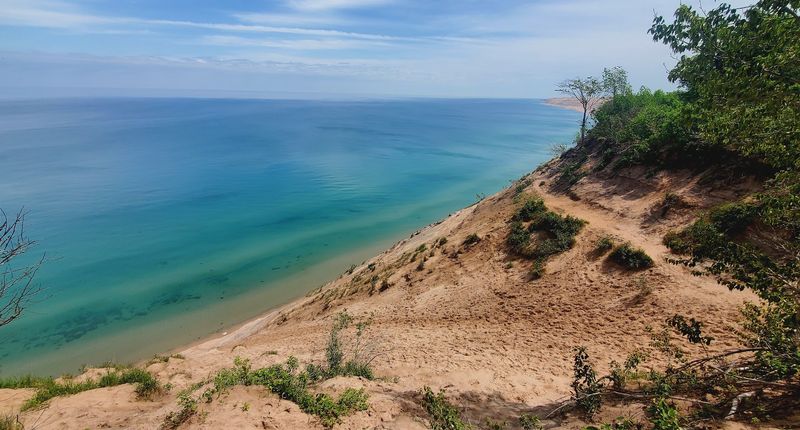
Somewhere between Grand Marais and the Pictured Rocks shoreline, a stretch of sand dunes rises out of the forest like it got lost on the way to the Sahara. The Grand Sable Dunes are perched high above Lake Superior, with some sections of the dune face dropping nearly 300 feet straight down to the water.
That combination — ancient dunes, dense boreal forest, and the raw expanse of Lake Superior — creates a landscape that feels genuinely prehistoric.
Unlike the more touristy dune areas in the Lower Peninsula, Grand Sable has a wilder, more remote energy. Getting here means driving to the eastern end of Pictured Rocks National Lakeshore and hiking in from the Log Slide Overlook or the Grand Sable Visitor Center near Grand Marais.
The Log Slide is one of the most dramatic viewpoints in the entire park — you stand at the top of a massive dune drop-off with Lake Superior stretching endlessly below you. Sliding down is tempting and possible, but climbing back up is a serious workout.
The dunes themselves are made of sand that was deposited by glaciers thousands of years ago, and they’ve been slowly migrating toward the forest ever since. You can actually see trees being swallowed at the dune’s edge — a slow-motion takeover that’s been happening for centuries.
It’s eerie and fascinating in equal measure.
Spring and fall are underrated seasons to visit. Summer brings crowds to Pictured Rocks, but the Grand Sable section stays relatively quieter.
The colors in October are extraordinary — the hardwoods around the dune perimeter turn deep red and gold while the sand stays warm-toned, and the whole scene looks like a painting someone went overboard on. Pack water, wear sturdy shoes, and give yourself at least a half-day to really absorb what this place is doing.
6. Grand Island Ice Curtains — Munising
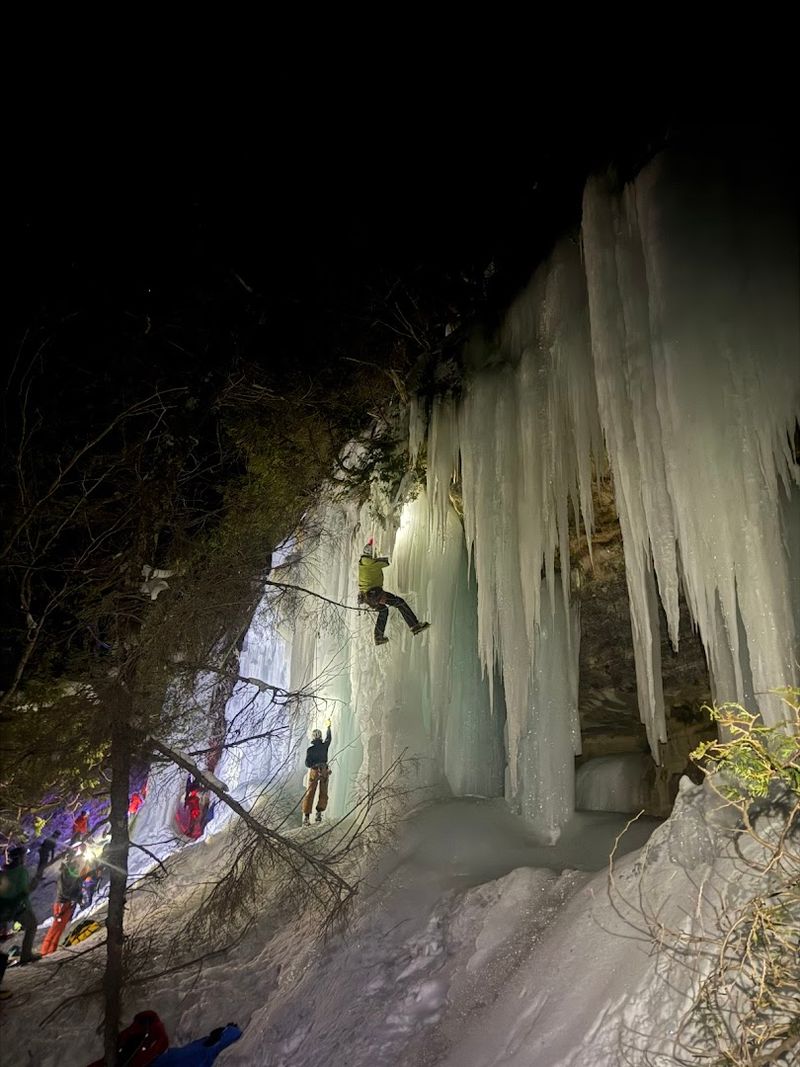
Winter in Munising operates on a completely different level than winter anywhere else in Michigan. When the temperatures drop hard and the winds off Lake Superior do their thing, the sandstone cliffs of Grand Island develop what locals call ice curtains — enormous sheets of frozen water that drape across the cliff faces like nature decided to redecorate.
These formations are massive, vivid, and almost architectural in the way they build up layer by layer.
Grand Island sits just offshore from Munising in Lake Superior, and reaching the ice curtains in winter typically means a guided snowmobile trip or a trek across the frozen lake when conditions allow. This is not a casual day trip — you need the right gear, the right guide, and a solid weather window.
Several outfitters in Munising run winter tours specifically to see the ice formations, and going with someone who knows the lake and the island is genuinely the smart move here.
What makes the Grand Island ice curtains stand out from other frozen formations in the UP is the sheer scale. The sandstone cliffs rise dramatically from the lake, and when the ice builds up across them, the visual effect is somewhere between a natural ice palace and a frozen waterfall that forgot to stop.
Blues, whites, and occasional greens flash through the ice depending on the light and the thickness of the formations.
Munising is already famous for the Pictured Rocks ice caves that draw big crowds in winter, but Grand Island tends to attract a smaller, more adventurous crowd. That’s part of its charm — you earn the view.
Dress in serious layers, bring hand warmers, and don’t underestimate how cold the lake wind gets out there. The reward is a winter landscape so dramatic it genuinely doesn’t look like it belongs in the United States.
7. Sleeping Bear Dunes National Lakeshore — Empire / Glen Arbor area
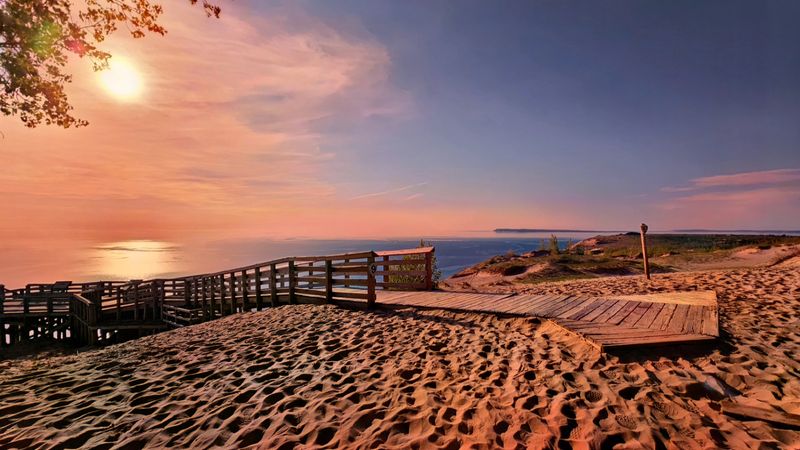
Good Morning America once called it the most beautiful place in America, and while that kind of title usually comes with an asterisk, Sleeping Bear Dunes National Lakeshore near Empire and Glen Arbor is genuinely hard to argue with. The dunes here rise up to 450 feet above Lake Michigan, creating one of the most dramatic shoreline landscapes on the entire continent.
Standing at the top and looking out over those impossible shades of blue and green stretching toward North and South Manitou Islands feels like standing at the edge of something ancient.
The Dune Climb on M-109 is the most popular entry point, and for good reason — it’s accessible, well-marked, and delivers a massive payoff at the top. What the signs don’t fully prepare you for is how far it actually is to reach the water from the top of the dune.
Many hikers underestimate the distance and turnaround time, so bring more water than you think you need and be honest with yourself about your fitness level before committing to the full trek to the lake.
Beyond the main dune climb, the park has miles of hiking trails, quiet inland lakes, historic farmsteads, and some of the best sunsets in the state. The Pierce Stocking Scenic Drive winds through the park and hits multiple overlooks that rival the main dune area for sheer beauty.
Glen Haven and Glen Arbor nearby have that perfect northern Michigan small-town energy with good food and local shops worth exploring.
Fall is peak season for a reason — the hardwood forests inside the park turn brilliant shades of red, orange, and yellow while the dunes stay sandy gold and the lake stays impossibly blue. Shoulder season crowds are lighter, the air is crisp, and the whole park takes on a quieter, more reflective mood that honestly suits it perfectly.
Michigan doesn’t get much better than this.