Michigan is home to some of the most incredible camping destinations in the entire country, and locals know it better than anyone. From dense Upper Peninsula forests to sandy Lake Michigan shorelines, every season brings something new to discover.
Whether you love snowshoeing in January or swimming in July, these 16 spots deliver unforgettable experiences all year long. Pack your gear and get ready, because Michigan campers have spoken.
1. Craig Lake State Park – Baraga and Marquette Counties, MI
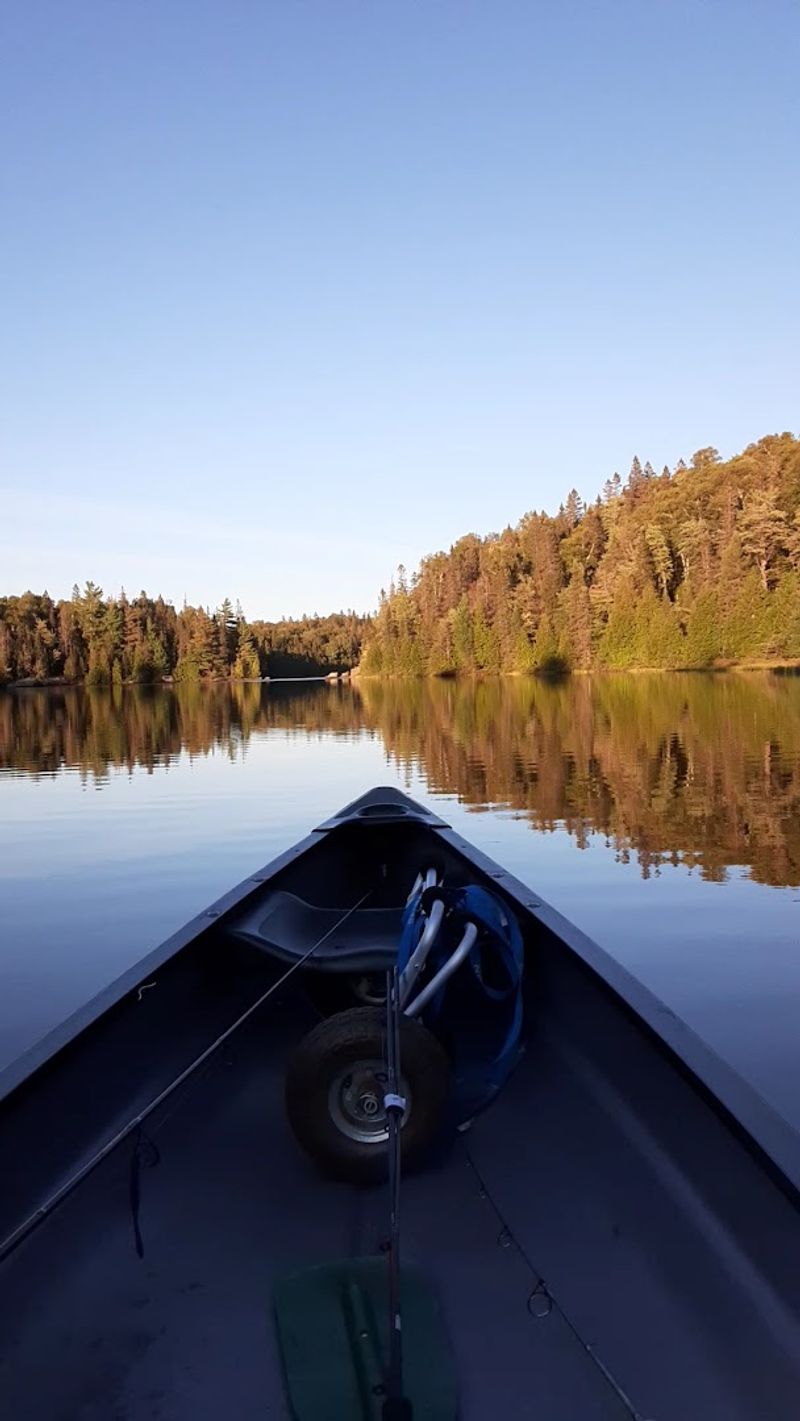
Getting to Craig Lake State Park feels like earning a badge of honor. The access road is rough, long, and not exactly friendly to low-clearance vehicles, but that ruggedness is exactly what keeps the crowds away.
Once you arrive, you’re rewarded with one of the most remote and unspoiled camping experiences in all of Michigan.
Spread across more than 6,000 acres, Craig Lake is the largest roadless state park in the Lower 48 states east of the Mississippi River. That fact alone should tell you something special is waiting here.
Six lakes dot the landscape, and the fishing — especially for walleye, bass, and pike — is the kind that makes anglers cancel their weekend plans just to stay one more day.
Trails wind through old-growth forest, and moose sightings are genuinely possible, not just wishful thinking. Wildlife here is abundant because the habitat is largely undisturbed.
Bald eagles, loons, and black bears share this wilderness, making every hike feel like a real expedition.
Winter camping at Craig Lake is for the bold. Snowmobilers use the access road when snow covers the ground, and the frozen lakes become quiet, glassy playgrounds for ice fishing.
The silence out here in February is the kind that resets your entire nervous system.
Summer brings lush greenery and long daylight hours perfect for paddling between the interconnected lakes. Fall turns the forest into a fiery mosaic of orange, red, and gold that photographers travel hours to capture.
No matter the season, Craig Lake rewards those willing to make the journey with a wild Michigan experience that feels completely off the grid.
2. Holland State Park – Holland, MI
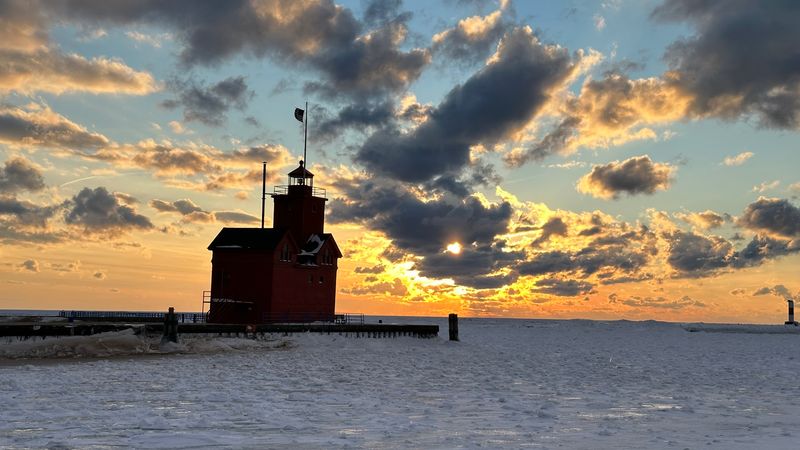
Few campgrounds in Michigan come with a view as iconic as Holland State Park. Positioned right on the shores of Lake Michigan, this park offers front-row seats to some of the most jaw-dropping sunsets you’ll ever witness.
The famous Big Red lighthouse stands just across the channel, and it photographs beautifully in every season.
Summer is obviously the busiest time, and for good reason. The sandy beach here is wide, clean, and perfect for swimming, volleyball, or simply planting a chair and watching the waves roll in.
Lake Michigan’s water temperature warms up enough by July to make splashing around genuinely enjoyable rather than just brave.
Spring and fall bring a completely different energy. The crowds thin out, the light gets softer and more dramatic, and the park takes on a peaceful quality that summer visitors rarely get to experience.
Birding is excellent during migration season, and the tulip fields blooming nearby in Holland during May make a campsite here feel almost magical.
Winter camping at Holland State Park is surprisingly popular among hardcore outdoor enthusiasts. Snow-dusted dunes and ice formations along the lakeshore create a stark, dramatic landscape unlike anything you’d see in warmer months.
The lighthouse against a gray winter sky is genuinely stunning.
The campground itself offers both modern and semi-modern sites, and the proximity to downtown Holland means you’re never far from a hot meal or a locally brewed coffee. Bike paths connect the park to the city, making it easy to explore without moving your campsite.
Holland State Park proves that a busy, well-loved park can still feel personal and worth every return visit.
3. Camp Dearborn – Milford, MI
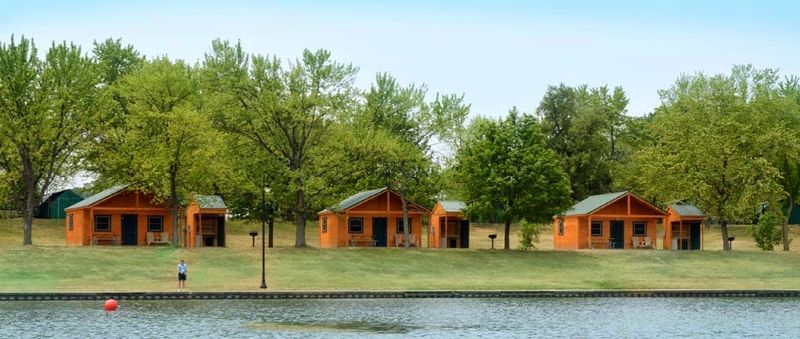
Camp Dearborn holds a special place in the hearts of Metro Detroit families who grew up spending summer weekends here. Run by the City of Dearborn, this 626-acre recreation area in Milford has been welcoming campers for decades, and it still delivers the kind of wholesome outdoor fun that never gets old.
The campground sits around an inland lake, giving families direct access to swimming beaches, paddleboats, and fishing docks. Kids can literally walk from their campsite to the water in minutes, which makes Camp Dearborn one of the most convenient family camping setups in Southeast Michigan.
Parents appreciate that setup almost as much as the kids do.
Beyond the water, the park offers miniature golf, volleyball courts, playgrounds, and miles of trails that wind through second-growth forest. There’s always something to do here, which makes it a reliable choice for families with restless energy.
Weekend activities and organized events during summer months add an extra layer of fun for younger campers.
Fall brings a quieter, more reflective atmosphere to Camp Dearborn. The hardwood forest surrounding the campground turns vivid shades of amber and crimson, and the air carries that crisp, smoky quality that makes sitting around a campfire feel deeply satisfying.
It’s genuinely one of the most underrated autumn camping spots in the lower part of the state.
Reservations are strongly recommended during peak summer months because sites fill up fast — locals know this place well and book early. The combination of accessibility from the Detroit metro area, solid amenities, and genuine natural beauty makes Camp Dearborn a year-round winner that earns its loyal following every single season.
4. Tahquamenon Falls State Park – Paradise, MI
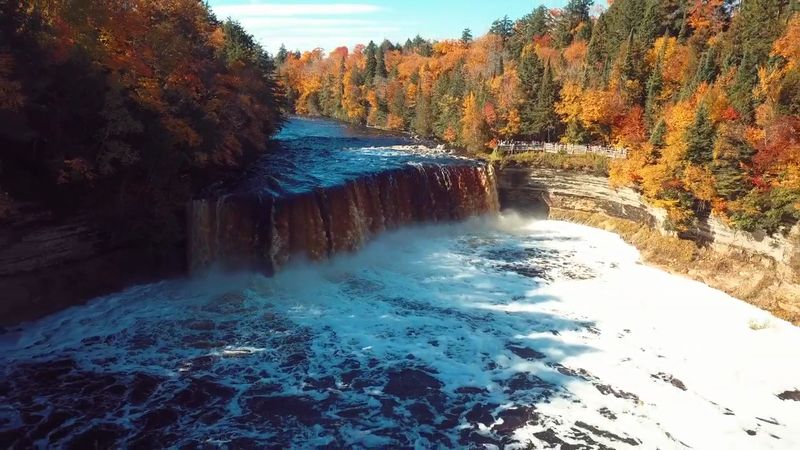
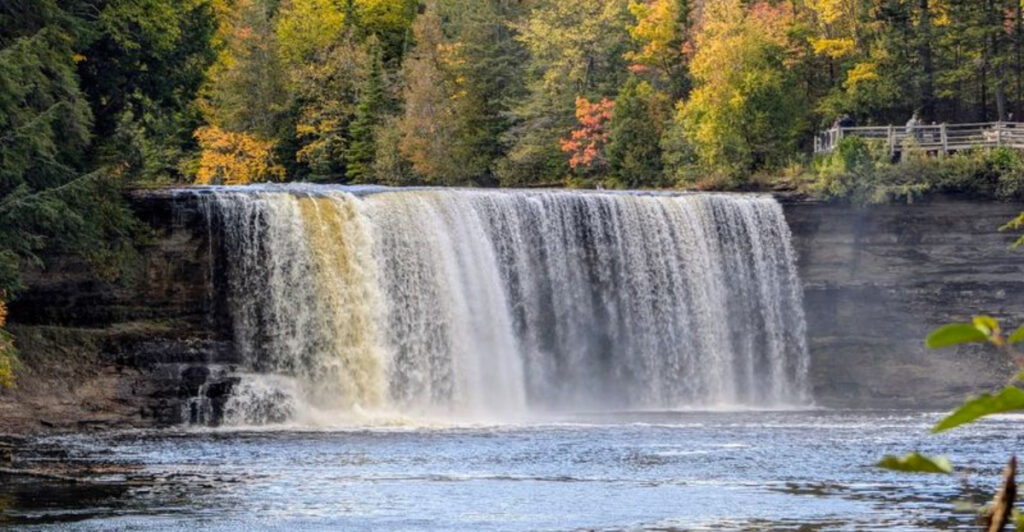
Tahquamenon Falls is one of those places that genuinely stops people in their tracks. The Upper Falls is one of the largest waterfalls east of the Mississippi, and the amber color of the water — caused by tannins from the surrounding cedar swamps — makes it look almost otherworldly.
Camping here means waking up within walking distance of something truly spectacular.
The state park covers nearly 50,000 acres, which means the crowds at the falls don’t translate into a crowded campground experience. Multiple campgrounds are scattered throughout the park, offering a range of options from modern electric sites to rustic backcountry spots for those who want maximum solitude.
Choosing the right one depends entirely on what kind of trip you’re after.
Summer hiking along the river trail between the Upper and Lower Falls is a rite of passage for Michigan outdoor lovers. The rowboat rental at the Lower Falls — where you can paddle to a small island between two sets of cascading water — is charming, affordable, and completely unforgettable.
It’s the kind of experience that turns a good camping trip into a legendary one.
Autumn is arguably when Tahquamenon hits its absolute peak. The surrounding hardwood forest erupts in color, and the contrast between the golden-orange water and the blazing foliage is genuinely breathtaking.
Photographers plan entire road trips around this park in October.
Winter transforms the park into a serene snowscape where the falls partially freeze into dramatic ice formations. Snowshoeing and cross-country skiing trails keep the park active even in January and February.
Year-round access and the sheer scale of natural beauty here make Tahquamenon Falls a spot that campers return to season after season without ever feeling like they’ve seen it all.
5. Pinckney Recreation Area – Pinckney/Gregory, MI
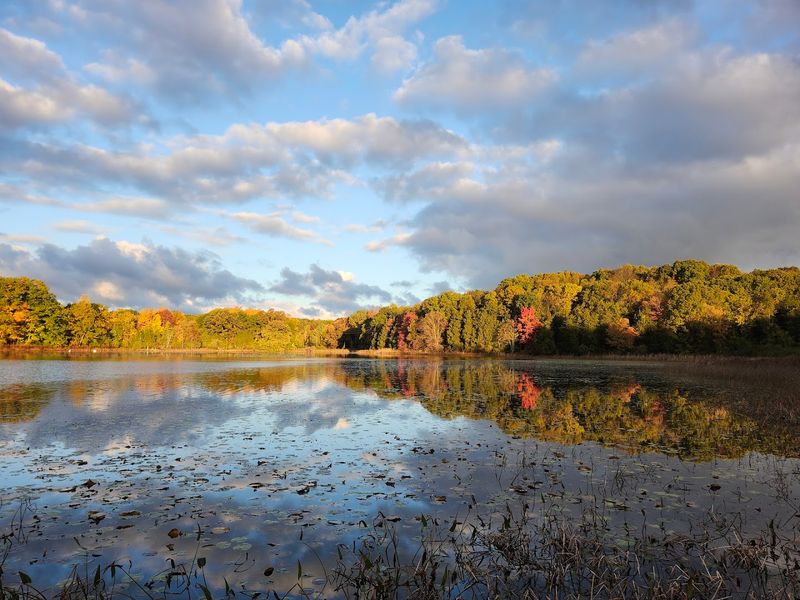
Paddlers in Southeast Michigan treat Pinckney Recreation Area like a hometown treasure. The park is built around a chain of interconnected inland lakes, and the paddling routes here are genuinely some of the best in the Lower Peninsula.
Canoeists and kayakers can spend an entire day hopping from lake to lake without ever getting bored of the scenery.
The Pinckney-Losee Lake Pathway and the Potawatomi Trail give hikers serious options as well. The Potawatomi in particular is a challenging 17-mile loop that backpackers use for multi-day trips, with designated rustic campsites along the route.
It’s one of the few places in Southeast Michigan where you can genuinely feel like you’re deep in the backcountry without driving four hours north.
Mountain biking has grown significantly popular here in recent years. The trail system offers varied terrain that keeps both beginners and experienced riders engaged, and the forested singletrack sections are particularly satisfying in late spring when everything is green and lush.
Cyclists often combine a riding day with a night at one of the campgrounds for a perfect weekend package.
Fall at Pinckney is stunning in a quiet, understated way. The hardwood forest surrounding the lakes turns gold and copper, and the reflections on the water make every photo look like it belongs in a travel magazine.
The campgrounds are less crowded than in summer, but the experience is arguably richer.
Winter brings cross-country skiing and snowshoeing to the trail system, and the frozen lakes attract ice fishermen looking for a relaxed outing close to home. Pinckney Recreation Area earns its reputation as a four-season destination by consistently delivering outdoor quality that punches well above its size.
6. Muskegon State Park – Muskegon, MI
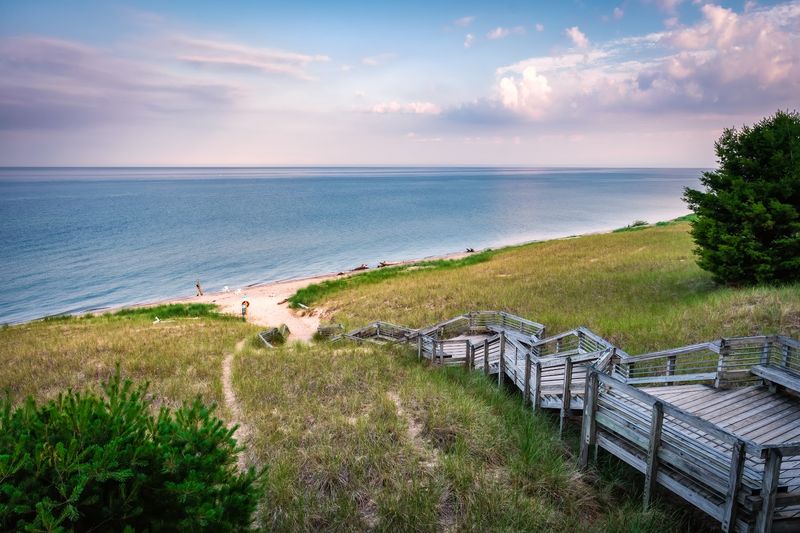
Sand dunes, Lake Michigan shoreline, and an inland lake all in one park — Muskegon State Park is the kind of place that makes you wonder why you ever paid for a resort vacation. The dunes here are tall and dramatic, and the views from the top looking out over Lake Michigan on one side and Muskegon Lake on the other are genuinely jaw-dropping.
The campground at Muskegon State Park is large and well-maintained, offering sites ranging from modern electric hookups to more rustic options nestled closer to the dunes. Even during peak summer weekends, the park is big enough that you can find a corner of beach or trail that feels relatively uncrowded.
The two distinct water bodies mean there’s always somewhere to swim, fish, or paddle regardless of wind conditions.
Winter is where Muskegon really surprises people. The park is home to one of the few luge tracks in the United States, operated by the Muskegon Winter Sports Complex just adjacent to the park.
Cross-country ski trails wind through the park itself, and the snow-covered dunes create an eerie, beautiful landscape that looks nothing like its summer version.
Spring wildflowers bloom along the forested trails, and the birding during migration is exceptional given the park’s position along the Lake Michigan flyway. Warblers and shorebirds pass through in impressive numbers, making April and May genuinely exciting for anyone with a pair of binoculars.
Sunset from the top of the dunes in any season is the kind of moment that stays with you. The combination of natural variety, solid facilities, and that unmistakable Lake Michigan energy makes Muskegon State Park a camping destination that delivers something meaningful every single time you show up.
7. Interlochen State Park – Interlochen, MI
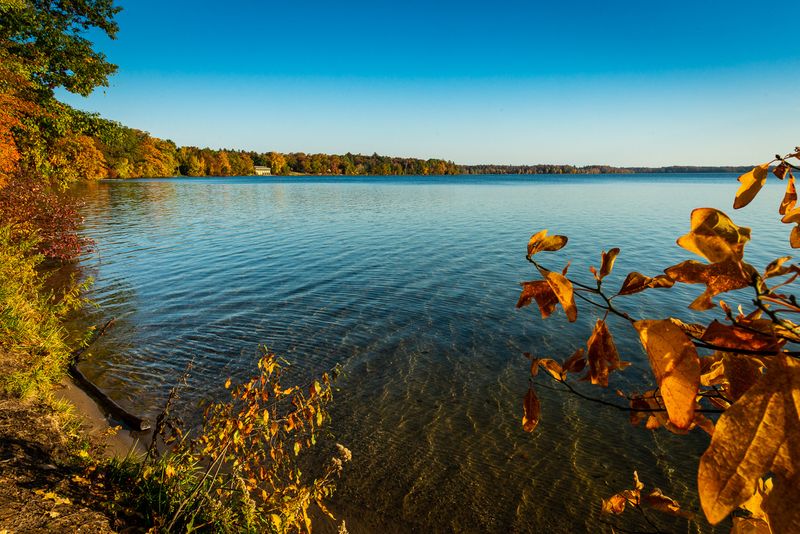
Ancient white pines tower over the campground at Interlochen State Park like living cathedral columns, and the effect is immediate. You pull in, step out of your car, tilt your head back, and suddenly feel very small in the best possible way.
These trees have been growing here for centuries, and camping beneath them feels like a genuine privilege.
Interlochen sits between Duck Lake and Green Lake, giving campers access to two distinct water experiences. Duck Lake is calmer and ideal for kayaking or fishing, while Green Lake offers more open water and a sandy swimming beach that families love during summer months.
The short distance between the two lakes means you can easily experience both in a single day without rushing.
The proximity to the Interlochen Center for the Arts adds a cultural layer that most campgrounds simply can’t offer. Summer concerts and performances happen regularly at the nearby arts campus, and campers have been known to clean up after a day on the lake and walk over for an evening of live music under the stars.
It’s an oddly perfect combination.
Fall at Interlochen is quietly spectacular. The pines stay green while the surrounding hardwoods turn gold and orange, creating a layered color palette that photographers find irresistible.
The campground thins out significantly after Labor Day, and the park takes on a serene, contemplative quality that long-time visitors treasure.
Winter camping is available and surprisingly popular among enthusiasts who appreciate having ancient forest essentially to themselves. Snowshoeing through the pine groves on a still winter morning, with snow weighing down the branches and absolute silence surrounding you, is the kind of experience that redefines what a camping trip can be.
8. Proud Lake Recreation Area – Commerce Township, MI
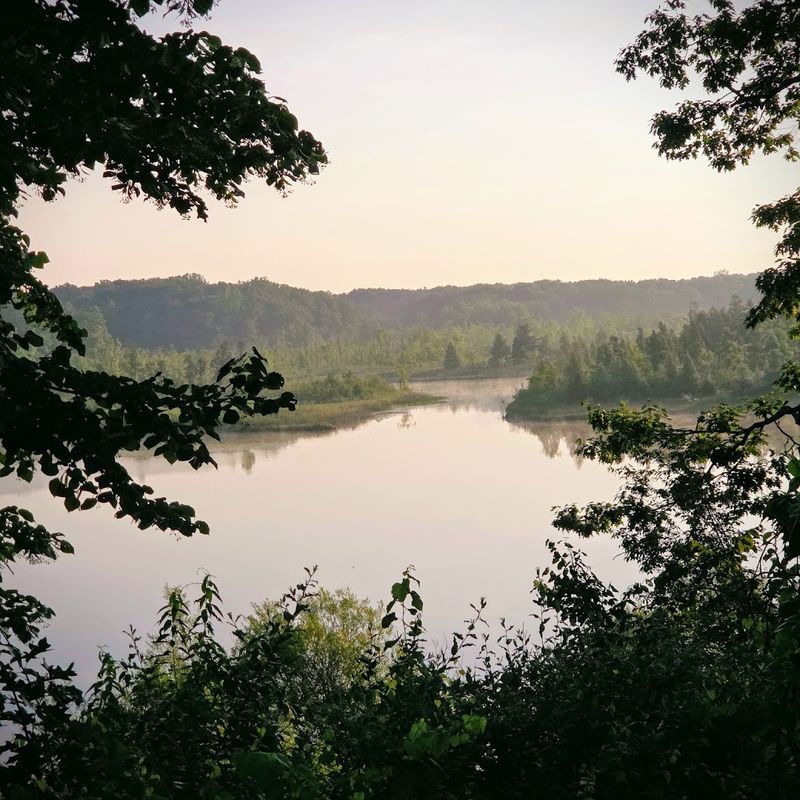
Tucked into Oakland County just northwest of Detroit, Proud Lake Recreation Area is the kind of spot that suburban campers stumble onto and then quietly keep to themselves. The park centers around the Huron River, which winds through the property in long, lazy curves perfect for canoeing and kayaking.
Rentals are available nearby, making this accessible even for first-timers who don’t own their own gear.
The campground is wooded and well-maintained, with sites that offer a reasonable amount of privacy given the park’s proximity to the metro area. Waking up to birdsong and the sound of the river rather than highway noise is genuinely restorative, even when you know the suburbs are just a few miles away.
That mental separation is part of what makes Proud Lake so valuable to Southeast Michigan residents.
Hiking trails loop through a mix of wetlands, upland forest, and meadows, offering excellent wildlife viewing opportunities throughout the year. Great blue herons are practically permanent residents, and white-tailed deer are spotted so regularly they barely cause a second glance.
The variety of habitats packed into a relatively compact area keeps every walk feeling fresh and interesting.
Fall color here is underrated. The mix of oak, maple, and ash trees creates a rich warm palette, and the river adds a reflective quality to the landscape that makes the whole park glow on clear October afternoons.
It’s the kind of scene that makes you stop mid-hike just to take it in.
Winter brings cross-country skiing and snowshoeing to the trail network, and the frozen river creates photogenic ice formations worth braving the cold to see. For Metro Detroit campers who want quality outdoor time without a long drive, Proud Lake consistently delivers more than expected.
9. Porcupine Mountains Wilderness State Park – Ontonagon, MI
The Porcupine Mountains are the real deal. Michigan’s largest state park covers nearly 60,000 acres of old-growth forest, wild rivers, waterfalls, and rugged ridgelines that feel genuinely remote even by Upper Peninsula standards.
Campers who make the trek to the Porkies — as locals call them — tend to come back year after year, pulled in by a wildness that’s hard to find anywhere else in the Midwest.
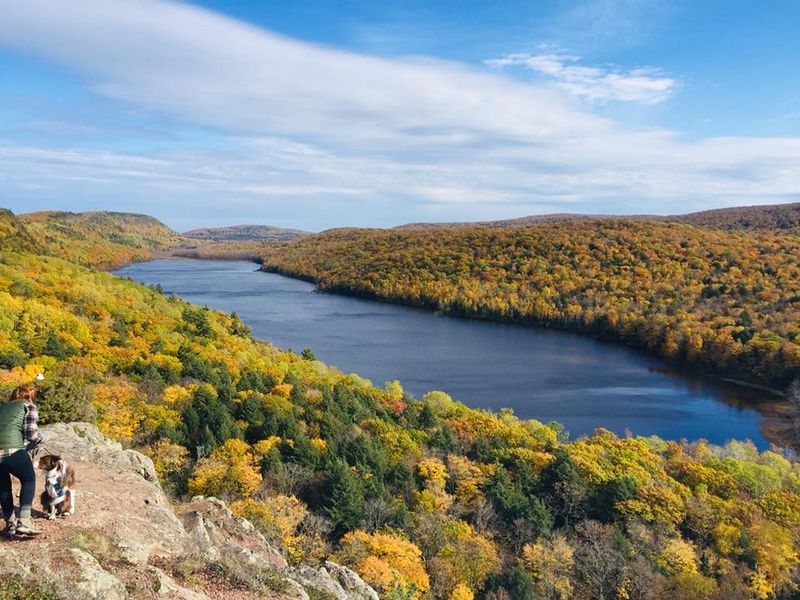
The Lake of the Clouds overlook is the park’s signature view, and it earns every bit of its reputation. Standing on that escarpment looking down at the mirror-still lake surrounded by an unbroken canopy of old-growth forest is one of those experiences that makes you understand why conservation matters.
The view in autumn, when the forest turns every shade of gold and red, is legitimately world-class.
Camping options range from modern cabins and rustic cabins to backcountry sites accessible only by trail. The backcountry here is serious — trails can be rugged, river crossings are real, and weather in the Porkies can change fast.
That challenge is part of the appeal for experienced backpackers who want terrain that demands respect and rewards preparation.
Lake Superior borders the park to the north, and the shoreline here is raw and powerful. Agates can be found along the rocky beach, and watching a storm roll across Superior from a rocky overlook is one of the most humbling natural experiences Michigan has to offer.
Winter transforms the park into a premier destination for downhill skiing, snowshoeing, and backcountry ski touring. The ski area within the park is small but charming, with runs that offer genuine vertical drop and views that no resort in the lower Midwest can match.
Every season here feels like a different park entirely.
10. South Higgins Lake State Park – Roscommon, MI
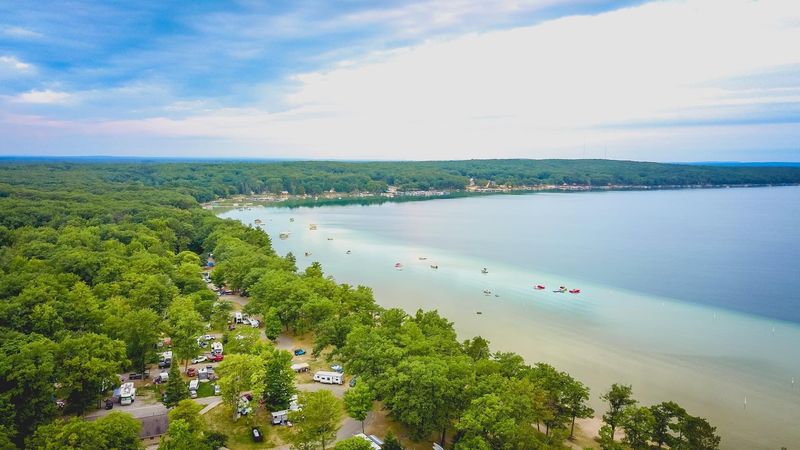
Higgins Lake has a reputation among Michigan campers that borders on legendary. The water is so clear and blue-green that first-time visitors often do a double take, wondering if they’ve accidentally stumbled into the Caribbean.
South Higgins Lake State Park puts you right on the southern shore of this stunning inland lake, and the campground is one of the most beloved in the entire state park system.
Swimming here is genuinely exceptional. The sandy bottom, clear visibility, and relatively calm conditions make it ideal for families with young kids who want a safe and beautiful water experience.
The beach is wide and well-maintained, and the water temperature warms up nicely by mid-July, making long afternoon swims easy to justify.
Fishing on Higgins Lake is a serious pursuit for many campers who return each season. The lake supports healthy populations of lake trout, walleye, and smallmouth bass, and the clarity of the water adds an almost meditative quality to the experience of fishing here.
Ice fishing in winter draws dedicated anglers who drill holes in the frozen surface and settle in for hours of quiet patience.
The campground itself is large and popular, so reservations well in advance are essentially mandatory during summer months. The sites closest to the water go first, but even the interior sites offer easy access to the beach and boat launch.
The park fills up because it deserves to — the quality here is consistent year after year.
Autumn brings a dramatic slowdown in visitors and a dramatic uptick in beauty. The pines stay evergreen while the surrounding hardwoods burst into color, and the lake reflects it all in extraordinary detail.
South Higgins Lake is proof that some Michigan camping classics earn their reputation honestly.
11. Holly State Recreation Area – Holly, MI
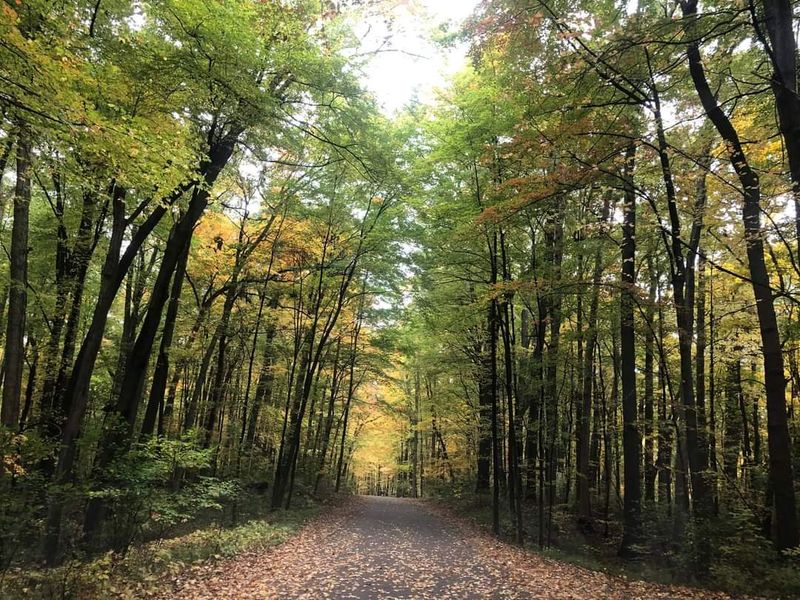
Holly State Recreation Area doesn’t get as much attention as some of Michigan’s flashier parks, and that’s honestly a gift for the people who know about it. Located in Oakland County, Holly offers a surprisingly rugged and varied landscape for a park this close to Metro Detroit.
Rolling hills, multiple lakes, and dense hardwood forest combine to create a setting that feels considerably wilder than its suburban zip code suggests.
The campground at Holly is comfortable and well-situated, with sites spread across wooded terrain that provides natural privacy between neighbors. The park encompasses several lakes, and fishing is popular throughout the warmer months.
McGinnis Lake and Heron Lake both offer solid opportunities for bass, bluegill, and perch fishing without requiring a boat large enough to navigate big water.
Hiking and mountain biking trails wind through the park’s hilly terrain, offering genuine elevation changes that make for more interesting workouts than the flat trails found in many Southeast Michigan parks. The Wilderness Trail loop is particularly enjoyable in spring when wildflowers carpet the forest floor and migrating songbirds fill the canopy with noise.
Autumn is when Holly truly shines. The dense hardwood forest transforms into a stunning display of orange, red, and yellow, and the hilly topography means you get sweeping elevated views of the color that flat parks simply can’t offer.
October weekends here feel festive and alive in a way that makes you want to linger long past checkout time.
Winter brings cross-country skiing and snowshoeing to the trail network, and the park maintains a quiet, uncrowded character even when snow is deep. Holly State Recreation Area is the kind of place that rewards loyalty — the more time you spend here, the more it reveals about itself.
12. Baraga State Park – Baraga, MI
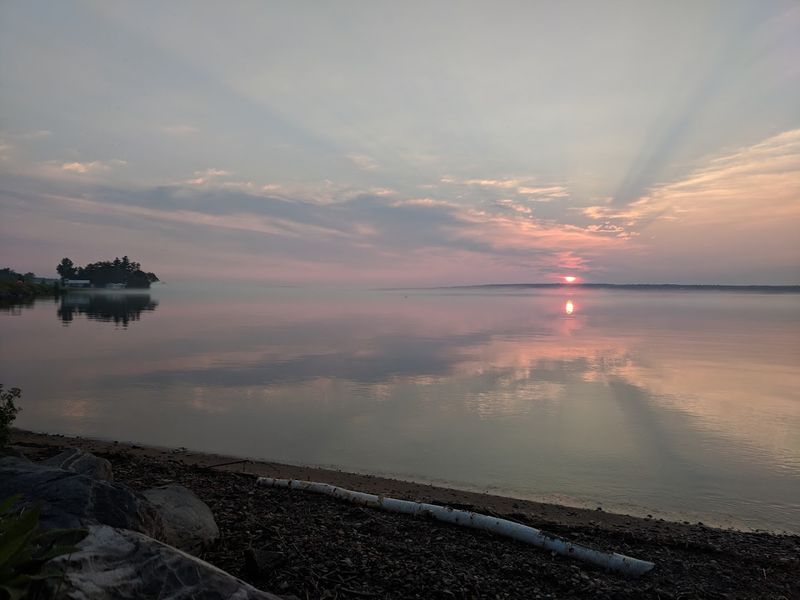
Baraga State Park sits right on the shores of Keweenaw Bay, a protected arm of Lake Superior that offers calmer water than the open lake while still delivering that unmistakable Great Lakes grandeur. The park is small and often overlooked in favor of bigger Upper Peninsula destinations, but that’s precisely why campers who discover it tend to become fiercely loyal regulars.
The campground is compact and intimate, with sites positioned close enough to the bay that the sound of water is a constant companion. Sunrises over Keweenaw Bay are extraordinary — the bay’s orientation means the light comes up golden over the water in a way that rewards early risers with a genuinely moving natural display.
A cup of camp coffee and that view is hard to beat anywhere in the state.
Fishing in Keweenaw Bay is a major draw. Lake trout, whitefish, and salmon are all present, and the bay’s protected waters make fishing accessible even when Lake Superior itself is too rough for small boats.
The nearby Baraga community has a rich Ojibwe cultural heritage, and visiting the local museum or cultural center adds meaningful context to a camping trip here.
The surrounding area is full of exploration potential. Waterfalls, copper country heritage sites, and the Keweenaw Peninsula are all within reasonable driving distance, making Baraga an excellent base camp for multi-day Upper Peninsula adventures.
The park itself may be small, but its location is genuinely strategic.
Winter camping at Baraga is for the committed. Lake Superior’s influence keeps temperatures cold and snowfall heavy, but the landscape it creates — ice formations along the bay, snow-laden pines, and absolute stillness — is the kind of scene that makes winter campers feel like they’ve found something most people will never experience.
13. Sleepy Hollow State Park – Laingsburg, MI
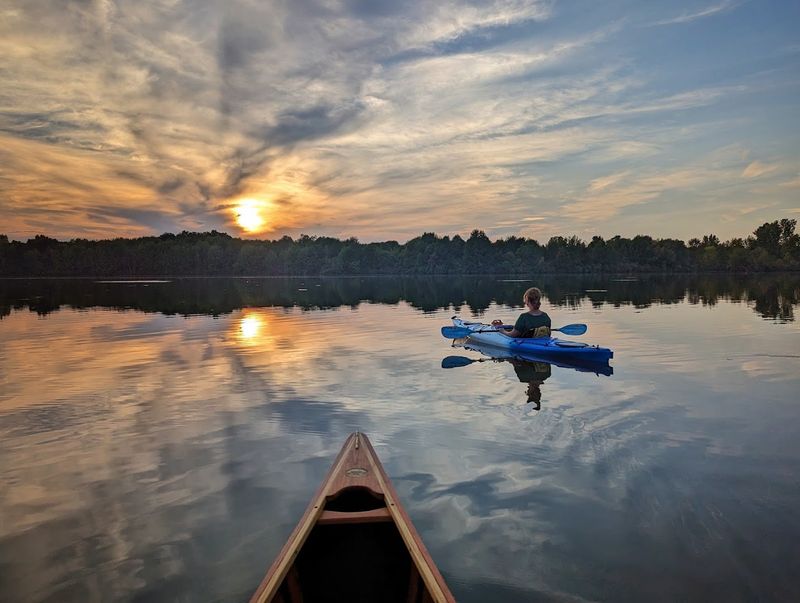
Sleepy Hollow State Park in mid-Michigan is one of those reliably satisfying camping destinations that never overpromises and never underdelivers. Built around Price Lake, a 410-acre reservoir, the park offers a well-rounded outdoor experience that works beautifully for families, anglers, hikers, and cyclists who want quality time outdoors without the chaos of a more famous destination.
The campground is spacious and thoughtfully laid out, with sites ranging from modern electric hookups to rustic spots for those who prefer fewer amenities. The lake is the centerpiece of the park experience, and boat rentals make it accessible even for visitors who arrive without their own watercraft.
Fishing for bass, pike, and panfish keeps anglers busy from spring through fall, and the lake’s modest size means it never feels too crowded or competitive.
A paved trail loops around much of the lake, making it one of the better cycling campgrounds in the mid-Michigan region. Families with kids who want to bike without worrying about traffic find this trail genuinely useful, and the flat-to-gently-rolling terrain keeps it accessible for riders of all fitness levels.
The trail is also excellent for morning jogs with a water view.
Fall brings a warm palette of color to the hardwood forest surrounding the lake, and the reflection of autumn foliage on the water creates a painterly quality that makes even casual photographers reach for their cameras. The campground quiets down significantly after Labor Day, and the off-season atmosphere here is genuinely peaceful.
Winter use includes cross-country skiing and ice fishing, and the park maintains a welcoming character even in the coldest months. Sleepy Hollow may not make every top-ten list, but campers who know it understand that consistency and quality of experience are worth more than hype.
14. Wilderness State Park – Carp Lake, MI
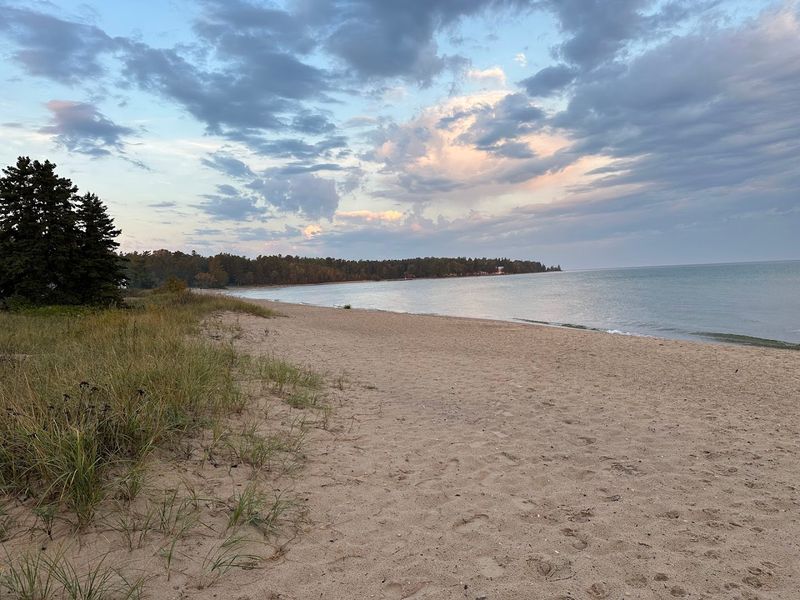
The name is not an exaggeration. Wilderness State Park on the northern tip of Michigan’s Lower Peninsula offers one of the most genuinely wild camping experiences south of the Straits of Mackinac.
With over 26 miles of Lake Michigan shoreline and more than 8,000 acres of forest, this park has the scale and the character to back up its bold name.
The shoreline here is a mix of sandy beach, rocky stretches, and cobblestone flats that look entirely different depending on where you walk. Driftwood piles up in artistic tangles, and the water clarity in this part of Lake Michigan is exceptional.
Swimming is excellent in summer, and the sunsets over the lake from the beach are the kind that make people go completely quiet.
Backcountry camping is one of the real highlights at Wilderness State Park. The park maintains several rustic backcountry sites accessible only by trail or boat, giving experienced campers the chance to spend nights in genuine solitude along the lakeshore or deep in the boreal forest.
The experience is as close to true wilderness camping as you’ll find anywhere in the Lower Peninsula.
The park sits on a major migration corridor, and birding during spring and fall is exceptional. Raptors, waterfowl, and warblers move through in impressive numbers, and the park’s position on the tip of the Lower Peninsula creates a natural funnel effect that concentrates birds in ways that make every walk through the trees feel like a discovery.
Winter transforms this remote corner of Michigan into a snow-covered, wind-swept landscape that feels almost arctic. The park is accessible year-round, and those willing to brave the cold are rewarded with a solitude and rawness that summer simply cannot provide.
Wilderness State Park earns every letter of its name.
15. North Higgins Lake State Park – Roscommon, MI
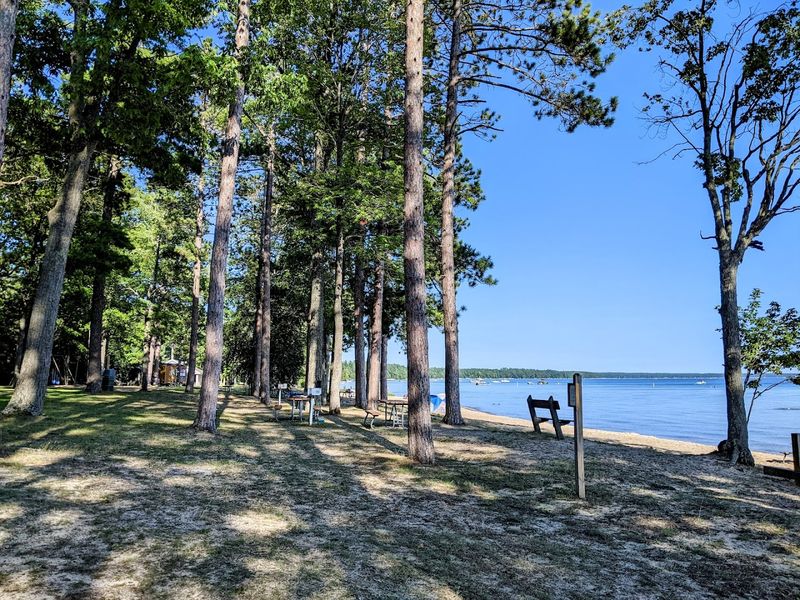
Higgins Lake is famous for a reason, and the northern shore is where North Higgins Lake State Park makes its case as the better-kept sibling to the more well-known South Higgins. The water is just as stunningly clear and blue-green as it is on the south shore — because it’s the same extraordinary lake — but the atmosphere at the northern campground has its own distinct personality worth experiencing.
The campground here is surrounded by classic northern Michigan white pine forest, and the scent of pine in warm summer air is one of those sensory experiences that immediately puts people at ease. Sites are spread across a wooded landscape that provides natural shade and a sense of seclusion, even when the campground is operating at capacity.
The beach access is excellent, and the water quality at Higgins Lake is consistently among the best of any inland lake in Michigan.
A significant piece of history adds depth to a visit here. The Civilian Conservation Corps (CCC) Museum is located within the park, honoring the young men who built much of Michigan’s state park infrastructure during the 1930s.
It’s a genuinely interesting stop that adds context to the park experience and reminds visitors that these beautiful spaces didn’t create themselves.
Boating and fishing are popular pursuits on Higgins Lake, and the boat launch at North Higgins provides convenient access to the full lake. Lake trout fishing in particular is taken seriously here, and the deep, cold, clear water provides ideal habitat for trophy fish that draw serious anglers from across the state.
Autumn visits reveal a softer, quieter side of North Higgins Lake. The summer energy fades, the pines hold their color, and the lake reflects the surrounding foliage in breathtaking detail.
It’s a reminder that Michigan’s best camping spots reward visitors in every season.
16. Waterloo Recreation Area – Chelsea, MI
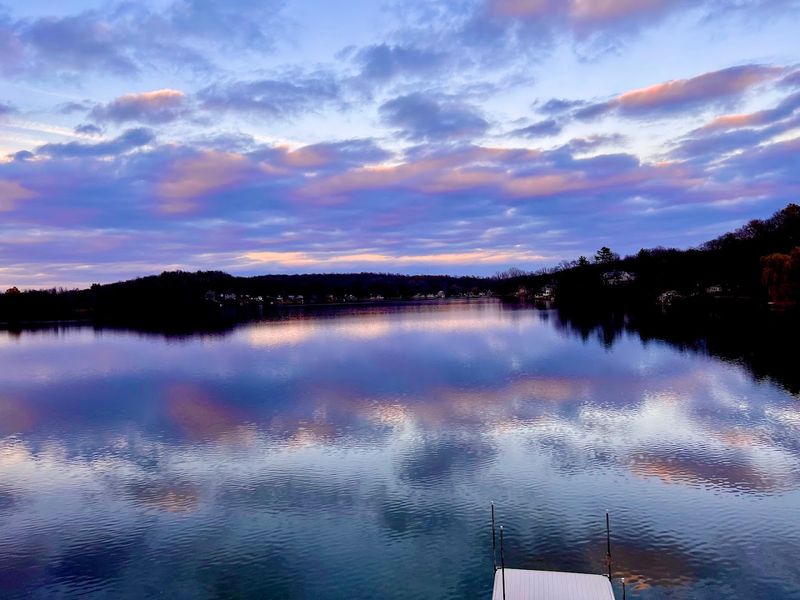
Waterloo Recreation Area is the largest state recreation area in Michigan’s Lower Peninsula, covering roughly 20,000 acres of lakes, forests, wetlands, and rolling glacial terrain. That scale gives it a range of experiences that smaller parks simply cannot match, and campers who take the time to explore beyond their site discover a genuinely layered outdoor destination just a short drive from Ann Arbor and Lansing.
The park contains multiple lakes, and each one has its own character. Some are popular for motorized boating and water skiing, while others are designated non-motorized, creating calm, quiet paddling environments that feel completely separate from the busier parts of the park.
Picking the right lake for your camping style makes a significant difference in the overall experience here.
Hiking trails wind through a landscape shaped by glaciers thousands of years ago, creating rolling hills, kettle lakes, and oak savannas that are genuinely interesting to walk through. The Gerald Eddy Discovery Center within the park offers educational programming about Michigan’s natural history and geology, making it a worthwhile stop especially for families with curious kids who want to understand what they’re walking through.
Equestrian trails and mountain biking routes add to Waterloo’s impressive recreational menu, and the park’s size means these user groups rarely conflict with each other. There’s a real sense here that the park was designed to accommodate many different types of outdoor enthusiasts without any one group dominating the experience.
Fall at Waterloo is spectacular in a broad, sweeping way. The mix of oak, maple, and hickory forest across the park’s rolling terrain creates an enormous canvas of autumn color that rewards driving the back roads as much as hiking the trails.
Waterloo Recreation Area is the kind of place where you need multiple trips across multiple seasons to feel like you’ve actually seen it.