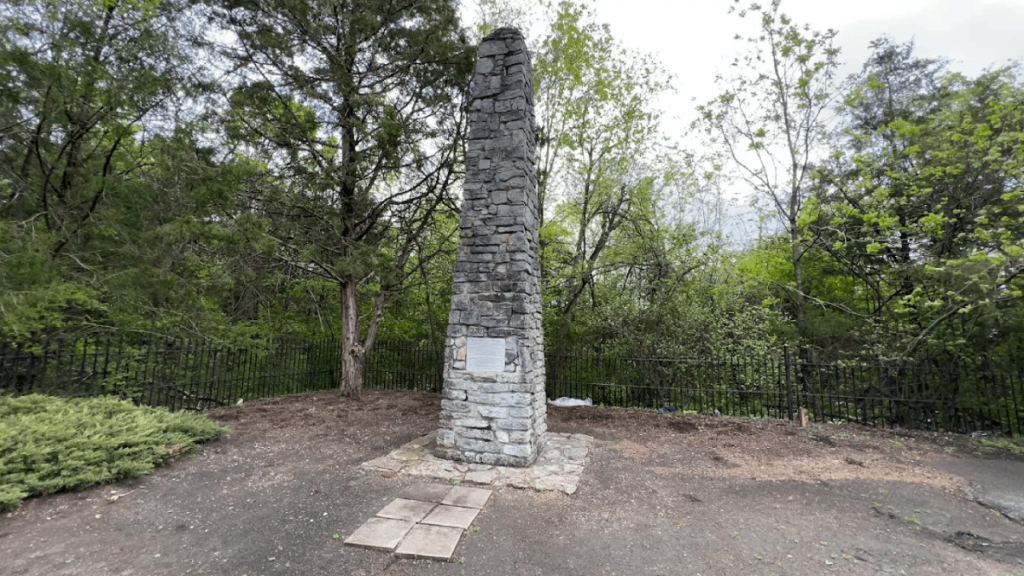
Every day, thousands of drivers zip through Murfreesboro without realizing they’re passing one of Tennessee’s most overlooked landmarks. Tucked away on Old Lascassas Road sits a small monument that marks the geographic center of the entire state.
While most people know Murfreesboro for its Civil War history or Middle Tennessee State University, this quiet little obelisk holds a secret that changes how you see the whole Volunteer State.
Tennessee Has a Center Point, But Most People Have No Idea Where It Is
Ask someone what makes Murfreesboro special and you’ll hear about Stones River battlefield, the bustling shopping districts, or the energy of MTSU campus life. What you probably won’t hear is that this city holds a geographic distinction that puts it literally at the heart of Tennessee. Most locals drive past it daily without a second glance.
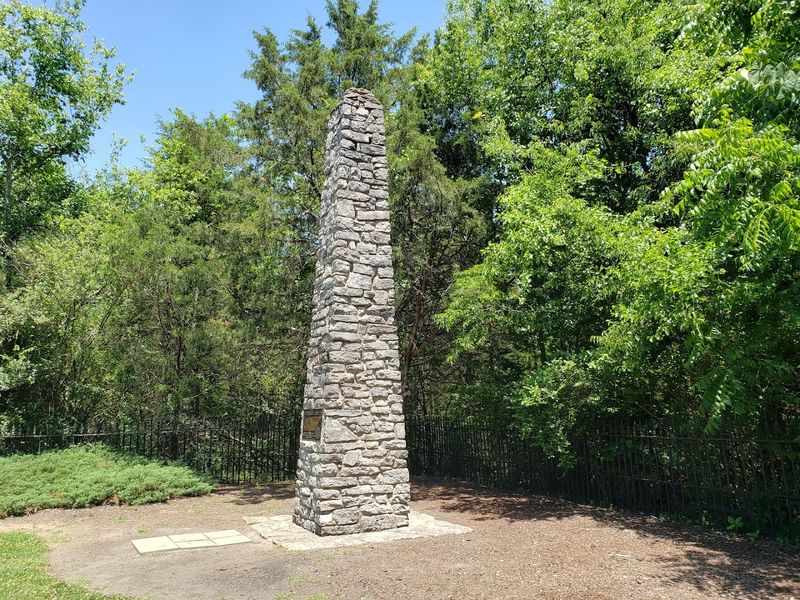
The geographic center of Tennessee sits right here in Rutherford County, marked by a monument that’s been standing since the mid-20th century. It’s not advertised with billboards or flashy signs. There’s no gift shop or visitor center drawing crowds.
Instead, this landmark exists in that strange space between completely unknown and quietly beloved by those who seek it out. Road trippers hunting for quirky stops know about it. Geography enthusiasts make pilgrimages to stand in the exact middle of the state. History buffs appreciate its connection to Tennessee’s identity.
The location isn’t a random chance. Murfreesboro’s central position has shaped its role in state history for generations. During the Civil War, controlling this area meant controlling access to much of Middle Tennessee.
Today, that central location makes it a natural hub for commerce and education. But the monument itself represents something simpler and more profound. It’s a reminder that every state has a geographic heart, a balancing point where all the borders and boundaries find their equilibrium.
Most people rush past, chasing bigger destinations. They’re headed to Nashville’s neon lights or Memphis’s barbecue joints. Meanwhile, the true center of Tennessee waits patiently on a quiet roadside, marking the spot where the state perfectly balances itself.
The Marker Is Easy to Miss If You Don’t Know What You’re Looking For
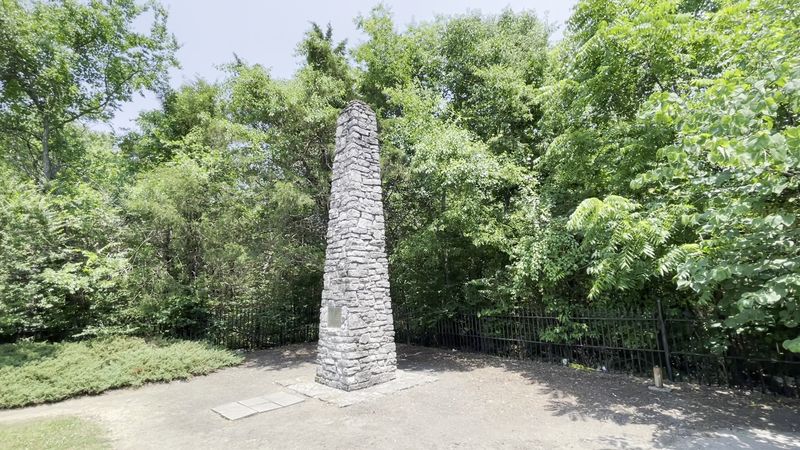
Picture this: you’re driving down Old Lascassas Road near the MTSU campus, probably thinking about where to grab lunch or whether you’ll hit traffic. A small fenced area flashes by your passenger window. Did you just pass something important? Most people never even register it’s there.
The site occupies maybe enough space for four cars to park, tucked so close to the road that it blends into the landscape. There’s no towering sign announcing “GEOGRAPHIC CENTER OF TENNESSEE” in bold letters. No flashing lights or tourist trap gimmicks.
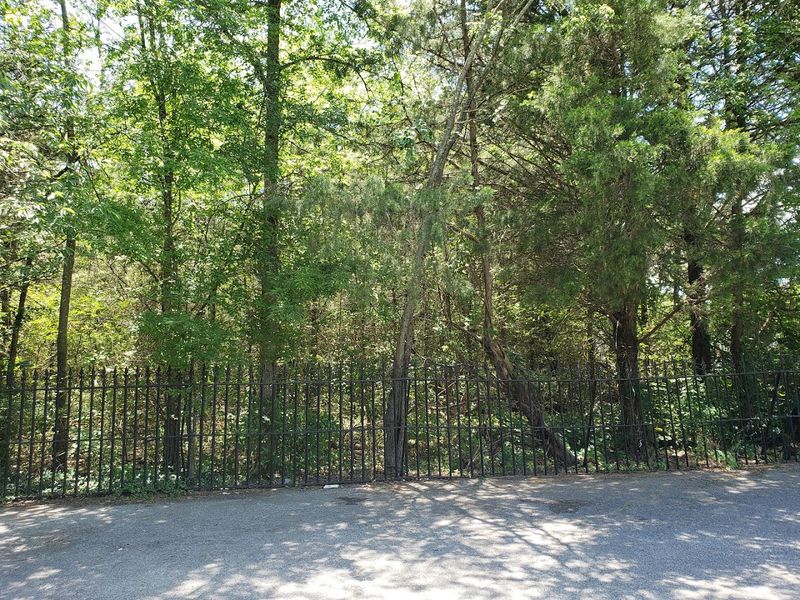
The monument sits behind a wrought iron fence with trees providing shade and a bit of screening from the street. If you’re not actively looking for it, your brain categorizes it as just another small roadside feature and moves on. Even GPS can be tricky about pinpointing the exact pull-off.
Reviews mention this challenge constantly. Visitors write about driving past it twice before finally spotting the entrance. Others describe using their phone’s map feature while crawling along at fifteen miles per hour, searching for the turnoff that seems to appear out of nowhere.
The modest nature isn’t a bug, it’s actually part of the charm. This isn’t some manufactured tourist attraction designed to extract money from visitors. It’s an authentic historical marker that serves its purpose without fanfare or fuss.
Once you know it’s there, finding it becomes easier. The address is 307 Old Lascassas Road, open twenty-four hours because it’s just a monument in a small fenced lot. But that first visit requires patience, attention, and usually a U-turn or two before you successfully pull into the tiny parking area.
Why This Spot in Murfreesboro Matters More Than It Looks
Stand next to this unassuming obelisk and you’re occupying a mathematically significant point. This isn’t just someone’s best guess or a rough approximation. The geographic center represents the precise balance point of Tennessee’s entire land mass, calculated through surveying and geometric analysis.
Every state has one of these centers, but not every state bothers to mark it with a permanent monument. Tennessee chose to commemorate this spot, recognizing that geographic identity matters. The center point tells a story about the state’s shape, its borders, and how its territory spreads across three distinct regions.
The mountains of East Tennessee balance against the Mississippi River flatlands in the west. The Kentucky border up north finds its counterweight in the Georgia and Alabama lines to the south.
The monument transforms an abstract concept into something tangible you can touch and photograph. It gives physical form to the idea of Tennessee’s geographic identity. Visitors leave pennies and small tokens, creating an informal tradition around this official landmark.
Beyond the math and surveying, the location reinforces Murfreesboro’s historical importance. The city has always occupied a strategic position in Tennessee, and the geographic center marker makes that position official and permanent. It’s why the city became such a contested prize during the Civil War.
The simple marker carries weight beyond its size. It represents state pride, geographic curiosity, and the human need to mark significant points on the landscape. That modest obelisk behind its iron fence holds meaning that resonates with everyone from schoolkids on field trips to retirees checking items off their Tennessee bucket list.
The Little Obelisk With a Big Claim
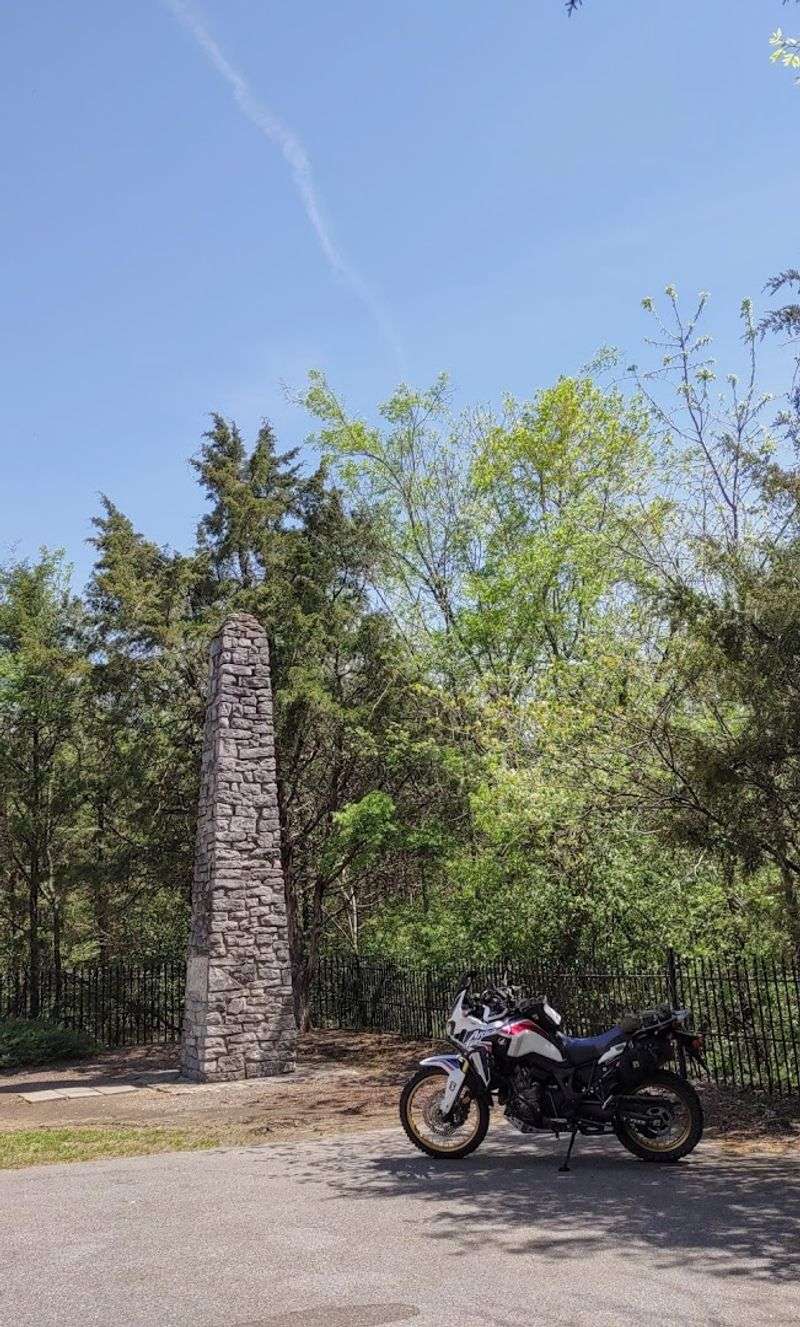
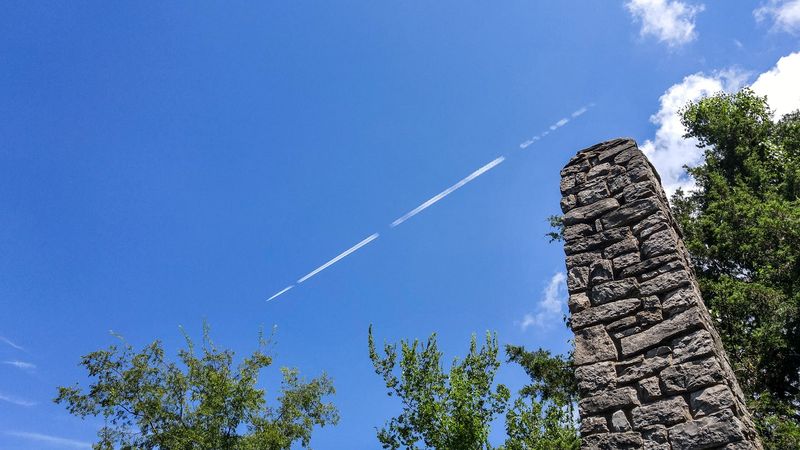
The monument itself stands maybe fifteen feet tall, constructed of stone in the classic obelisk shape that tapers toward the top. It’s surrounded by a well-maintained wrought iron fence that creates a boundary around the small plot.
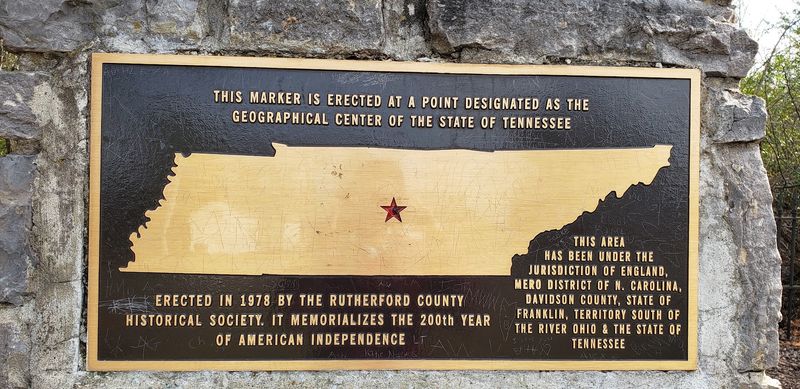
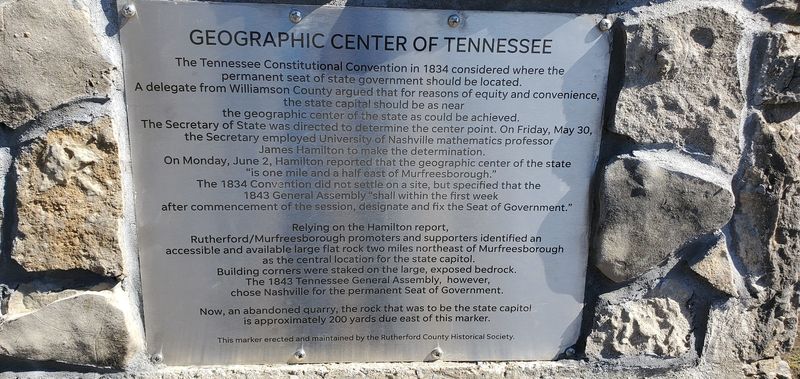
Plaques on the monument explain its purpose, though vandalism has been an ongoing challenge. Multiple reviews mention defaced markers or missing informational plates. The local community and cultural arts department work to restore and maintain the site, but it’s an uphill battle against those who see historical markers as canvases.
What surprises most first-time visitors is how modest the whole setup feels. This isn’t Mount Rushmore or the Gateway Arch. There’s no parking lot attendant, no admission fee, no souvenir stand selling “I Found the Center of Tennessee” t-shirts.
The obelisk simply stands in its small fenced enclosure, doing its job without fanfare. Trees provide shade and a bit of natural beauty. The grass is generally kept trimmed, creating a peaceful little pocket of maintained space along the roadside.
Here’s an interesting detail many visitors discover: the actual geographic center point sits about two hundred yards away in a rock quarry through the woods. The monument marks the approximate location in an accessible spot rather than the mathematically precise point that happens to fall on private industrial property. It’s close enough to count.
The site’s simplicity actually enhances its appeal for many visitors. There’s something refreshing about a landmark that doesn’t try to be more than it is. It’s just a stone marker saying “you’re standing in the middle of Tennessee” without any commercial exploitation or tourist trap nonsense cluttering up the experience.
How Tennessee’s Center Was Actually Determined
Geographic centers aren’t determined by someone eyeballing a map and taking their best guess. The process involves actual mathematical calculation using surveying data and geometric principles. Imagine cutting out the shape of Tennessee from a piece of uniform cardboard, then finding the exact point where it would balance on a pin.
That balance point is the geographic center, also called the centroid. Surveyors use coordinate geometry to calculate this point by analyzing all the state’s boundary lines and determining where the mathematical center of that irregular shape falls. It’s the same principle whether you’re finding the center of a triangle or a state with complex borders.
Tennessee’s shape makes this calculation particularly interesting. The state stretches roughly 440 miles from east to west but only about 120 miles north to south at its widest point. That long, narrow profile pushes the center point firmly into Middle Tennessee rather than favoring the eastern mountains or western river valleys.
The calculation doesn’t account for elevation or population, just pure geographic area. Mountains and valleys count the same as flat farmland. Memphis and Nashville don’t pull the center toward them through population gravity.
It’s strictly about the state’s two-dimensional footprint on a map.
Once calculated, surveyors identified the precise coordinates where Tennessee’s geographic center falls. Those coordinates pointed to a spot in Rutherford County near Murfreesboro. The monument was placed at an accessible location very close to the actual point, since the true center sits in that quarry two hundred yards away.
Understanding this process adds appreciation for the monument. It’s not arbitrary or approximate. Real surveying work and mathematical precision determined this spot as Tennessee’s balancing point.
That little obelisk represents genuine geographic science made accessible to anyone curious enough to pull over and take a look.
Why People Still Seek Out This Quiet Murfreesboro Landmark
Road trip enthusiasts love finding these quirky geographic landmarks scattered across America. There’s something satisfying about standing in the exact middle of a state, checking off a unique destination that most people overlook.
Geography nerds make actual pilgrimages to visit geographic centers, high points, and border corners. For them, this monument represents a tangible connection to the maps and coordinates they study. It transforms abstract geographic concepts into real places they can visit and experience firsthand.
Local history buffs appreciate the monument’s connection to Murfreesboro’s strategic importance throughout Tennessee history. The city’s central location isn’t coincidence, it’s geography that shaped events from the Civil War through modern commercial development. The marker makes that geographic significance official and permanent.
Families looking for educational outings find the site perfect for teaching kids about geography, state boundaries, and mathematical concepts like centroids. It’s a quick stop that sparks conversations about how states are shaped and why locations matter. Plus, kids enjoy the novelty of standing in the middle of Tennessee.
Even casual visitors who stumble across it in reviews or local guides often add it to their Murfreesboro itinerary. It takes maybe ten minutes to park, read the plaques, snap some photos, and reflect on Tennessee’s geography. That’s an easy addition to any trip through the area.
The emotional draw is real too. There’s something poignant about finding meaning in ordinary places. This isn’t a grand natural wonder or an impressive architectural achievement. It’s just a simple monument marking a mathematical point.
Yet people keep coming, keep taking pictures, keep leaving pennies and tokens as their way of saying “I was here, at the heart of Tennessee.”
The Small Marker That Changes How You See the Whole State
After visiting this monument, something shifts in how you think about Tennessee. The state stops being an abstract shape on a map and becomes a real geographic entity with measurable dimensions and a definable center.
Driving to Memphis, you realize you’re heading away from the center toward the western edge. Trips to the Smokies become journeys from the middle to the eastern mountains. Nashville’s proximity to Murfreesboro takes on new meaning when you consider both cities’ relationship to Tennessee’s geographic heart.
The monument also highlights how overlooked gems exist everywhere if you’re willing to look for them. Thousands of people drive past this spot daily, completely unaware of what it represents. How many other meaningful places hide in plain sight, waiting for someone to notice and appreciate them?
There’s beauty in the monument’s modesty. Tennessee didn’t build a theme park around its geographic center or try to commercialize this mathematical oddity. Instead, the state placed a dignified marker and let it speak for itself.
That restraint feels very Tennessee, honoring significance without showboating.
The site connects you to everyone else who’s made the pilgrimage. All those reviews from visitors over the years create a community of people who cared enough to seek out this quiet landmark. You’re part of that tradition when you pull over, step out of your car, and stand at Tennessee’s balancing point.
Ultimately, this little obelisk on Old Lascassas Road does something remarkable. It takes an invisible mathematical point and makes it real, accessible, and meaningful. It transforms Murfreesboro from just another Tennessee city into the literal center of the state.
And it reminds you that sometimes the most interesting destinations are the ones most people drive right past without ever knowing what they’re missing.