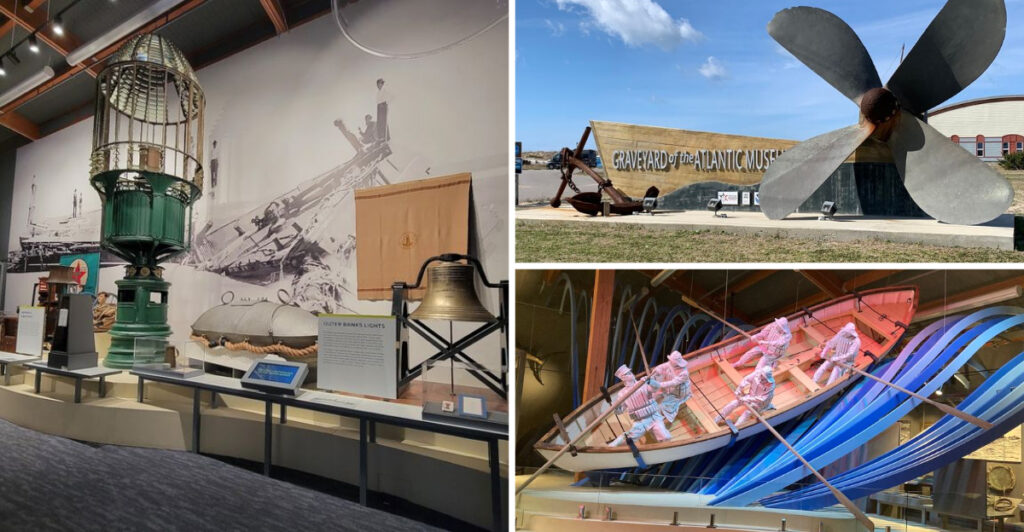
Some museums display history behind glass. The Graveyard of the Atlantic Museum tells it like a mystery unfolding just offshore. Perched at the southern end of Hatteras Island, the museum sits beside waters infamous for shipwrecks, violent storms, and shifting shoals that have challenged sailors for centuries.
Inside, recovered artifacts, maps, photographs, and maritime stories bring those dangers into sharper focus. Every exhibit adds another layer of intrigue, from dramatic rescues to vanished vessels and near-disasters. It is the rare attraction that can pull you away from the beach and make you forget about the ocean outside—at least until you step back out and see it differently.
Where the Island Starts Telling on Itself
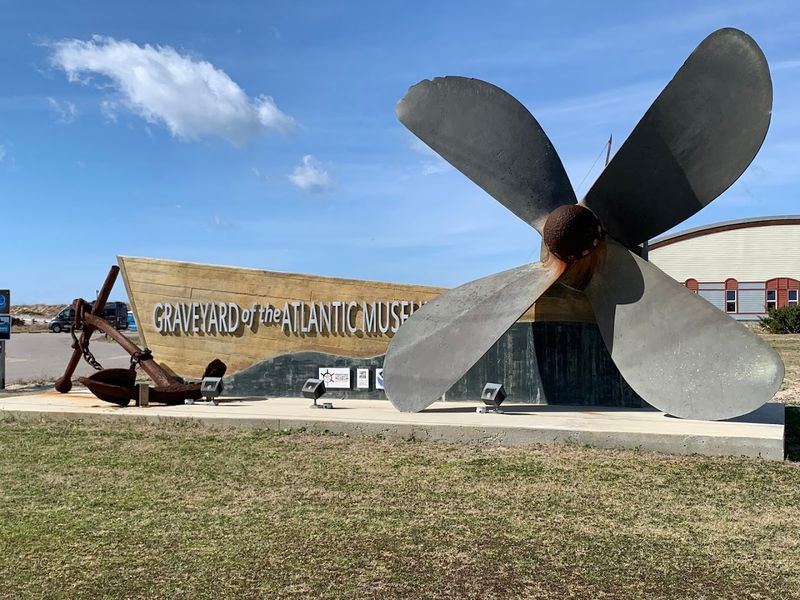
Long before the first exhibit label comes into view, the museum’s location does a remarkable amount of narrative work. You are already at the far reach of Hatteras, where the land narrows, the wind has room to gather speed, and the Atlantic seems less decorative than forceful.
That geographic reality is essential here, because the Graveyard of the Atlantic Museum is not floating in isolation from its subject – it is planted beside the very coast that made the stories inside possible.
The building itself looks crisp and contemporary, but the mood around it is all movement, weather, and exposed shoreline. Nearby ferry traffic, open sky, and the general sense of being at the edge of something larger create an immediate awareness that this is a place shaped by routes, crossings, and risk.
Even before you begin reading, the landscape quietly explains why ships met trouble in these waters and why the Outer Banks earned such a haunting maritime reputation.
That setting gives the museum an advantage many history spaces never get. Instead of asking you to imagine a distant event in a disconnected room, it places the subject almost directly outside the door.
A visit here starts with orientation as much as education, and that distinction matters because the museum is strongest when it connects artifacts and interpretation back to physical place.
There is also a practical pleasure in that approach. The museum is easy to fit into a Hatteras day, yet it does not feel like filler between beach stops.
It opens the region up, turning the surrounding water from pretty scenery into a field of layered, dangerous, deeply human stories.
The Shipwreck Map That Changes the Whole Scale
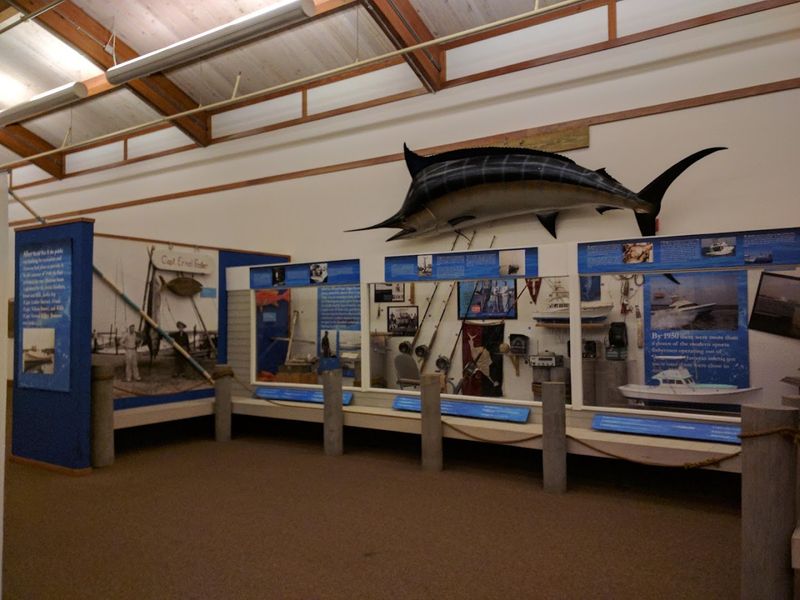
One of the museum’s smartest moves is showing scale before drowning you in trivia. Instead of treating wrecks as isolated tragedies, it frames the coast as a dense corridor of hazards, routes, currents, wartime pressure, and bad luck.
The effect is immediate when you encounter the visual material that plots wrecks and maritime incidents across the region, because the pattern is not occasional or scattered – it is overwhelming.
That broad view changes the way every later object is understood. A single artifact behind glass could seem merely old, even decorative, in another museum.
Here, once you grasp how many vessels came to grief off this coastline, each recovered item carries weight as evidence from a much bigger, more relentless story unfolding over centuries in nearby water.
The museum reportedly works especially well when you push the buttons, tap the screens, and give the media installations time to do their job. Interactive displays are not just there to entertain restless kids or fill wall space.
They provide the geography and sequencing that make the collection legible, helping you connect storms, shoals, shipping lanes, rescue efforts, and wartime events into a coherent mental map rather than a jumble of dramatic episodes.
That is where the place earns its title in the most persuasive way. “Graveyard of the Atlantic” can sound theatrical if you arrive cold, maybe even like a piece of regional branding. After a few minutes with the museum’s visual interpretation, the phrase lands differently.
It starts sounding less like poetry and more like a blunt summary of what these waters have done, again and again, just off North Carolina’s coast.
Artifacts With Salt, Weight, and Consequence
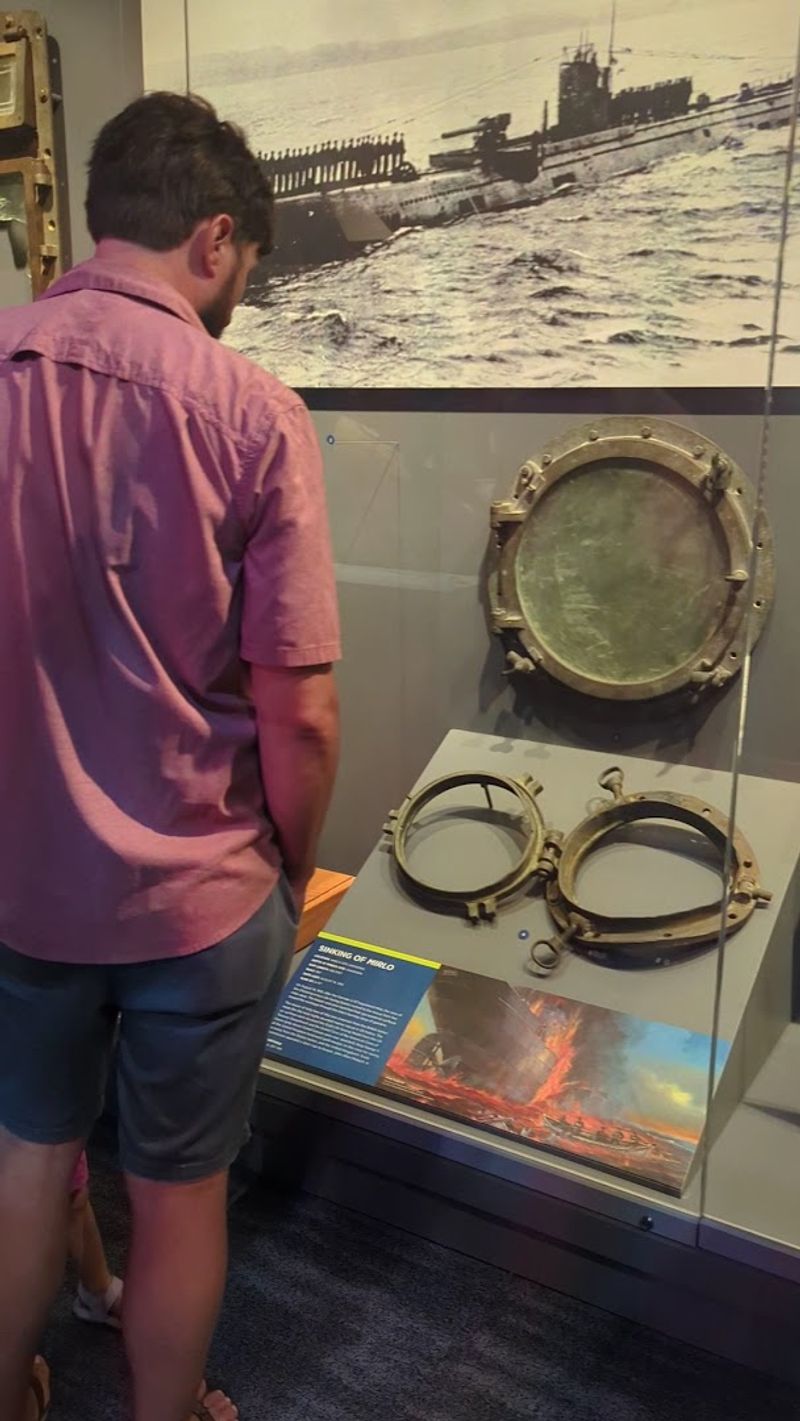
The most effective objects here are not necessarily the biggest ones. A maritime museum can easily lean into spectacle, but this one gains power from material that looks intimate, practical, and hard used.
Recovered pieces, tools, fragments, and interpretive displays carry a stubborn physicality that keeps the history grounded in labor, weather, and survival rather than romantic shipwreck mythology.
That grounding matters because the subject invites exaggeration. Shipwreck stories naturally tempt people toward melodrama, treasure language, and cinematic fantasy.
The museum steers in a better direction by showing the ordinary parts of maritime life alongside the catastrophic ones, so you start thinking not only about vessels going down, but about crews working, navigating, loading, waiting, repairing, and trying to get through dangerous water in the first place.
When that context is in place, the artifacts gain texture. They stop functioning as isolated curiosities and start reading like interrupted routines.
You can sense how quickly the sea turns objects into remnants, and how much effort is required to recover, preserve, and explain them once they leave their original setting and enter a gallery case.
The presentation style helps, too. This is not a cluttered room stuffed with unlabeled nautical leftovers, nor is it a slick maze that values mood over information.
The displays are generally described as clear, attractive, and easy to follow, which suits the material. You move at a pace that allows details to register without fatigue.
By the time you finish a section, the mystery is still there, but it has been sharpened by evidence instead of blurred by nostalgia.
North Carolina Storms, War, and a Coast That Never Sat Still
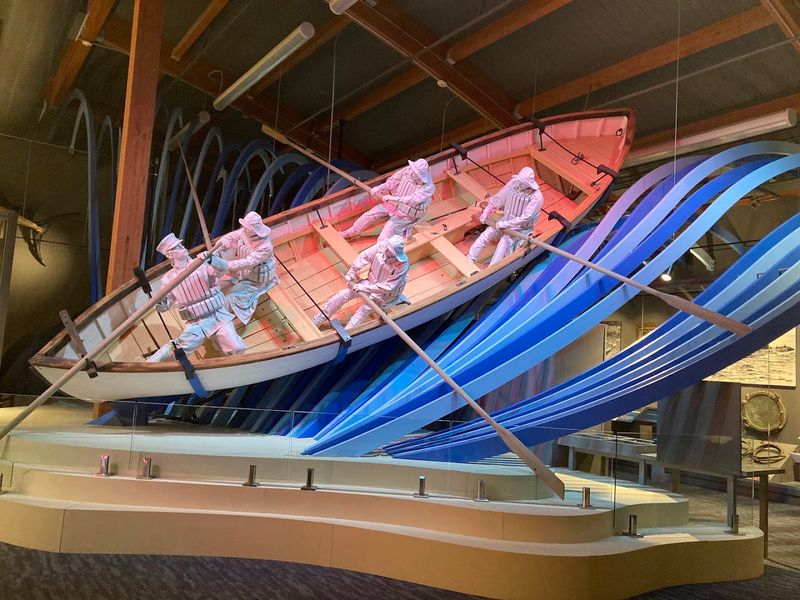
The museum does more than tell disaster stories one by one. It places wrecks within larger coastal pressures that shaped North Carolina for generations, including storms, changing inlets, navigation challenges, and wartime danger offshore.
That wider framing gives the museum real editorial muscle, because it explains that these losses were not random oddities but part of life along a volatile edge of the state.
Hurricane interpretation appears to be especially effective. A surge display and related visual material help translate abstract weather language into bodily scale, which is exactly what many coastal exhibits struggle to do.
Reading that a storm pushed water inland is one thing; standing before a display that helps you gauge height and force is another, and it instantly connects maritime history to the lived vulnerability of barrier islands.
The wartime dimension adds another layer that many casual visitors may not expect. The Outer Banks are often marketed through beaches, lighthouses, and vacation imagery, yet these waters also connect to global conflict and strategic shipping history.
When the museum ties local geography to broader world events, the coast stops feeling remote. Hatteras becomes part of a larger network of commerce, patrol, danger, and consequence.
That expansion in scale is one of the museum’s most satisfying qualities. It starts local, with shoreline and wrecks you can almost picture offshore, then keeps widening the frame until the region reads as a serious historical crossroads.
By doing that, it avoids becoming a niche stop for ship buffs only. Even if you arrive simply wanting an indoor break, you leave with a more complex understanding of how this slender stretch of North Carolina has long sat in the path of powerful forces.
Why the Small Size Actually Works in Hatteras
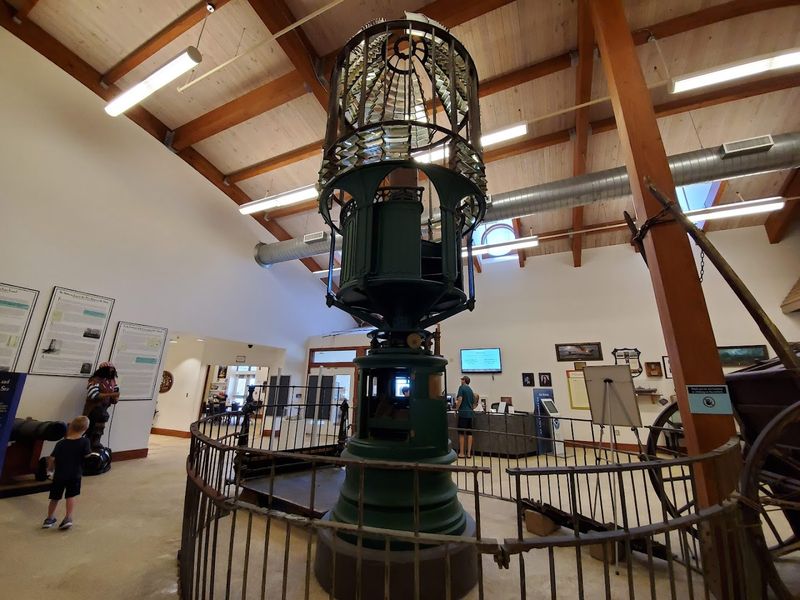
For a museum with a dramatic title, this one is notably manageable, and that turns out to be one of its strongest qualities. You can move through it in about an hour if you read selectively, or stay longer if the media stations pull you in.
Either way, the layout appears designed for concentration rather than exhaustion, which is a smart fit for a vacation setting where attention spans are competing with sun, surf, and ferry schedules.
That compactness creates a cleaner encounter with the material. Instead of wandering through endless galleries hoping the highlights eventually appear, you are in contact with the core themes quickly and consistently.
The exhibits do not need acres of floor space to make the point. In fact, the tighter footprint seems to help the museum maintain momentum, letting one topic feed naturally into the next without long dead zones.
Families especially seem to benefit from that pacing. Interactive elements and scavenger hunt options give younger visitors a reason to engage actively rather than drift behind the adults.
That matters in a history museum, because shipwrecks, storms, and rescue narratives are naturally vivid topics, but the structure still needs to translate that interest into motion. Here, the museum seems aware that curiosity rises when people are invited to look, tap, compare, and search.
The smaller scale also lowers the commitment barrier for travelers who are unsure whether maritime history is their thing. You do not have to dedicate an entire day or build a big itinerary around it.
You can simply go, learn a lot, and continue on. In Hatteras, where weather can change plans fast, that flexibility makes the museum not a backup option, but one of the area’s more efficient and rewarding stops.
A Smart Rainy-Day Stop With Free Admission
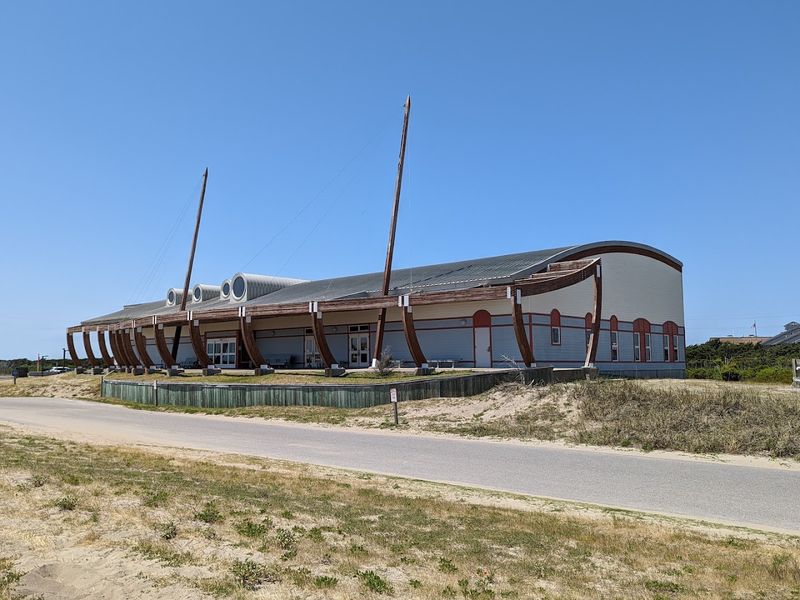
There is a practical brilliance to this museum that deserves its own section. Admission is free, parking is easy, and the hours are straightforward, with the museum generally operating Tuesday through Saturday from late morning into the afternoon.
In a beach destination where weather swings and travel timing can get awkward, that combination makes it unusually convenient without making it feel throwaway.
It is especially useful on days when the Outer Banks stop cooperating. Rain rolls in, wind picks up, a ferry wait opens unexpectedly, or the beach simply loses its charm for a few hours.
This museum slides neatly into those gaps, but it never reads like a consolation prize. The setting, exhibits, and polished interpretive style give it enough substance to anchor part of the day on purpose, not just by necessity.
There is also a nice social ease to the experience. The museum has a reputation for friendly staff, and that tone matters in a space where people arrive with very different levels of background knowledge.
Maritime history can get technical fast, yet the museum seems to keep the threshold welcoming. You do not need expertise in naval architecture, Civil War chronology, or coastal geology to follow the story and enjoy the details.
Because there is no admission fee, the museum also avoids the pressure to maximize every minute simply to justify a ticket cost. You can browse briskly, linger at one screen, double back to an object case, or let kids pursue a scavenger hunt without feeling rushed.
That freedom changes the pace in a good way. It turns the visit into exploration rather than obligation, which is exactly the right mood for a museum built around mystery, chance, and the sea.
The Best Way to Pair It With the Coast Outside
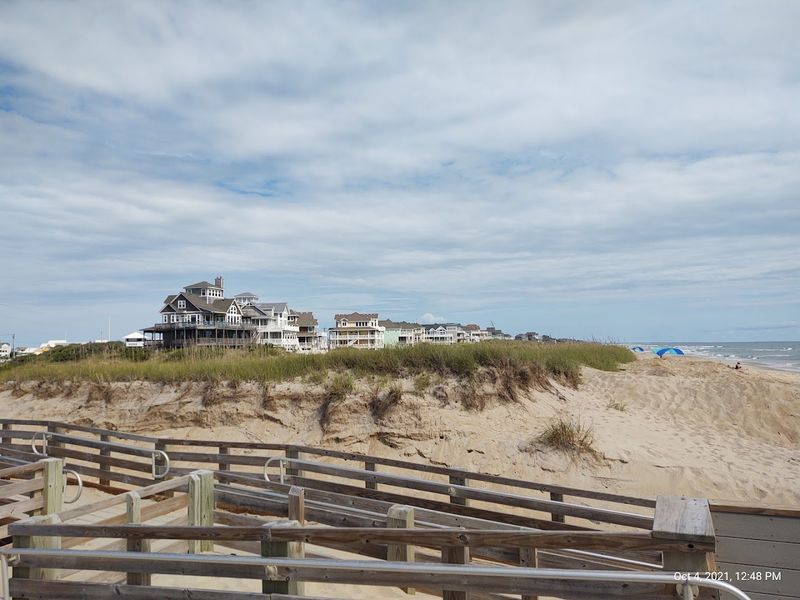
The strongest way to experience the museum is not to treat it as sealed off from the island around it. Go in with enough time to look carefully, then step back outside and reconnect the exhibits to the surrounding coast.
That sequence sharpens everything. After maps, surge visuals, and wreck narratives, the open water nearby no longer reads as passive scenery. It looks active, strategic, and occasionally unforgiving.
This museum benefits from being part of a larger Hatteras rhythm. You might visit before or after the beach, between drives, or while timing a ferry, but the subject gains extra force when the day still includes wind, sand, and horizon lines.
The barrier island setting is not background decoration. It is the environmental evidence that supports the whole institution, turning historical interpretation into a spatial experience you can continue reading outdoors.
That pairing also helps explain why the museum stands out among small regional history stops. Many local museums present useful information, then send you back into a town that bears only faint traces of the story. Here, the context remains fully present. The ocean is near.
The weather remains part of the conversation. Even the practical realities of distance and exposure remind you that maritime life on this edge of North Carolina was never abstract.
If you are planning a visit, aim for enough time to move slowly through the interactives instead of racing past them. The museum is compact, but it rewards attention.
Then give yourself a few minutes outside before driving away. That final glance across Hatteras changes the whole article of evidence you just saw indoors. The coast stops being a postcard and starts reading like a witness.
Why This Museum Lingers Longer Than Bigger Attractions
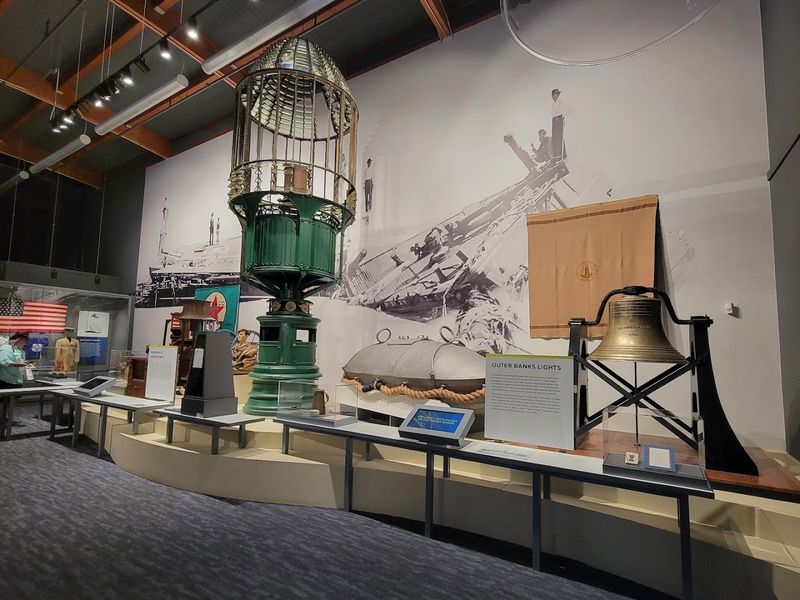
Some museums win through scale, blockbuster artifacts, or architectural drama. The Graveyard of the Atlantic Museum wins by tightening its focus until the subject becomes hard to shake.
It takes one coastline, one maritime corridor, and one concentration of wreck history, then builds a clear, absorbing case for why that narrow strip of North Carolina matters far beyond its modest footprint.
The achievement is not that every display is enormous or that the collection tries to be encyclopedic. It is that the museum understands narrative proportion.
It gives enough context to orient you, enough interactivity to hold attention, and enough material evidence to keep the history from floating away into legend. The balance is especially effective for travelers who want substance without spending an entire day indoors.
There is also a pleasing seriousness beneath the museum’s accessibility. The space is approachable for families, easy to navigate, and friendly to casual visitors, yet the underlying subject is never reduced to gimmick.
Loss, survival, weather, navigation, conflict, and coastal labor all remain visible in the telling. That tonal discipline gives the museum credibility and keeps the stories from slipping into shallow entertainment.
In the end, the place stands out because it changes how you read the Outer Banks. After a visit, the surrounding water carries more history, more danger, and more human effort than it did an hour earlier.
That shift is substantial. A beach town attraction rarely rearranges the landscape around it, but this one does. By the time you leave Hatteras, the museum has likely done its best work: it has made the coast look annotated, crowded with unseen wrecks and unfinished stories just offshore.