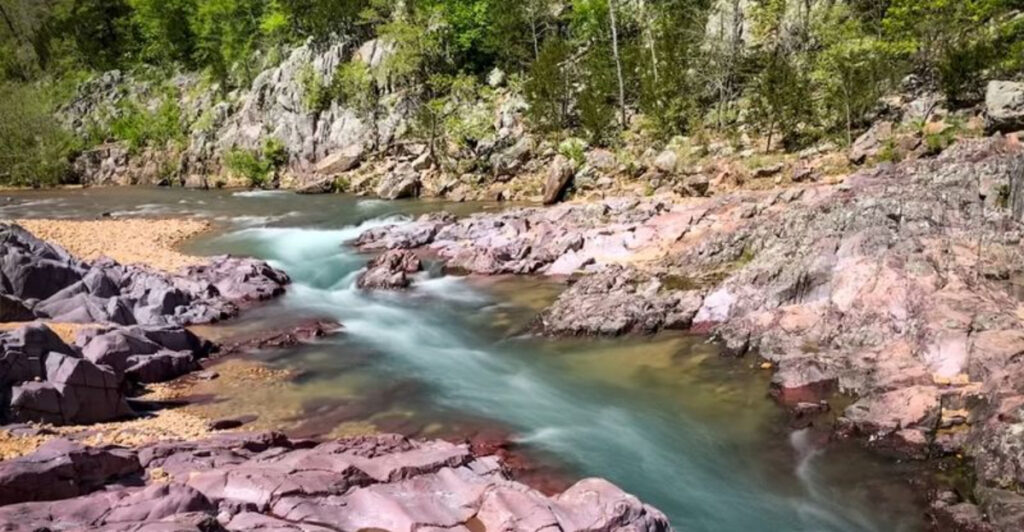
A paved walk through rugged Ozark terrain does not usually end at a natural water playground, but that is exactly the surprise waiting at Johnson’s Shut-Ins State Park. Here, the Black River squeezes through ancient volcanic rock and turns into a maze of clear pools, rushing chutes, and smooth stone shelves.
The trail is easy, the scenery gets dramatic fast, and the payoff is one of Missouri’s most unusual places to cool off. Families spread out across the rocks, swimmers slip into crystal-clear water, and the sound of rushing rapids fills the air. It is a landscape that feels both wild and unexpectedly inviting.
The short walk with a big reveal
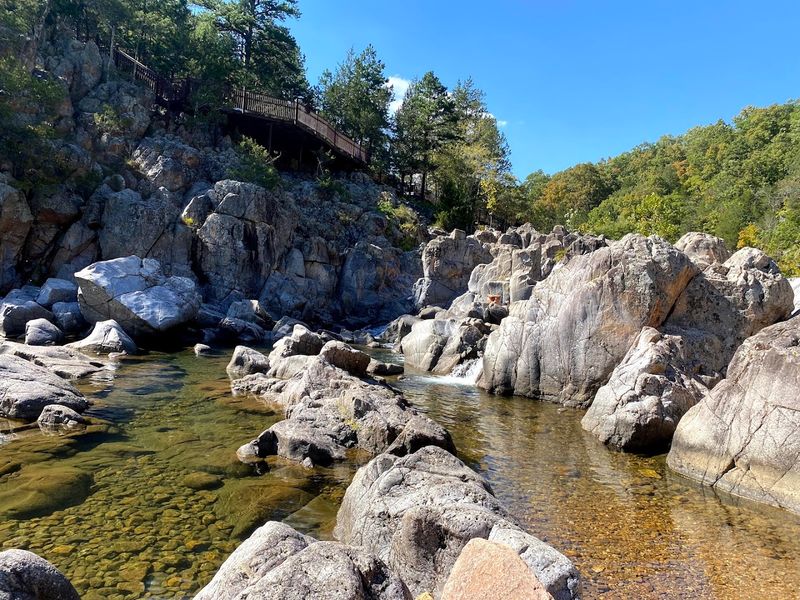
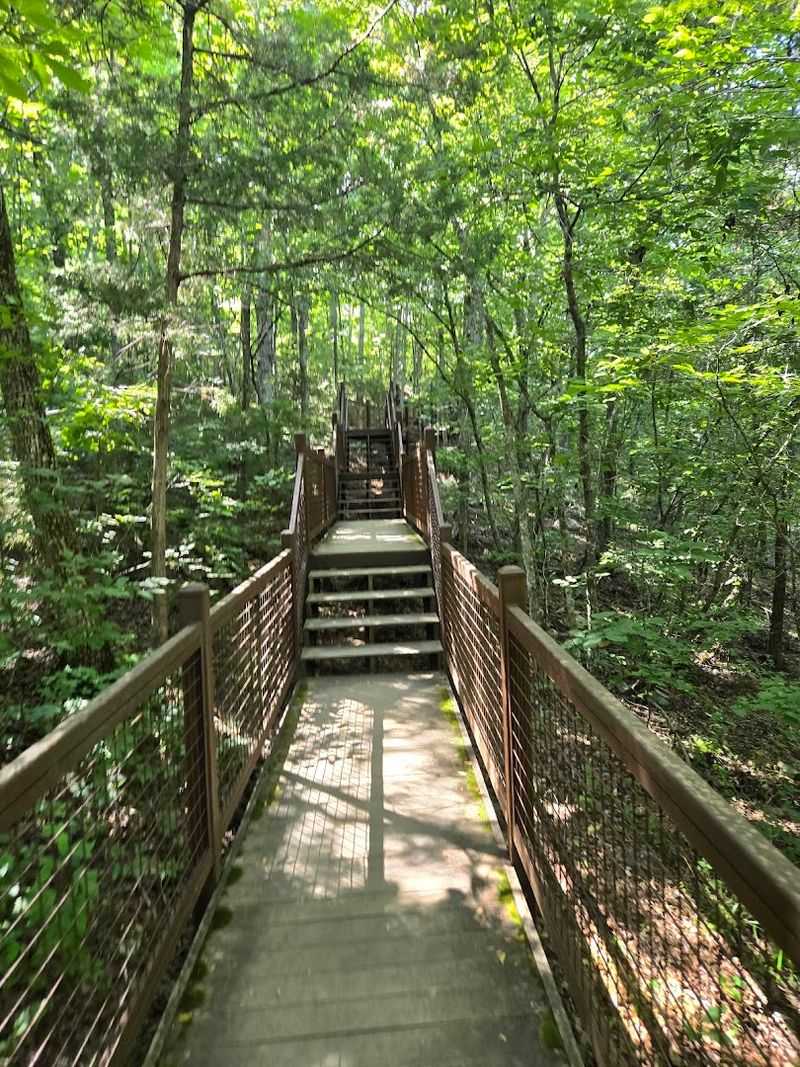
The approach at Johnson’s Shut-Ins plays its hand slowly, which is part of the fun. You park, gather water shoes and towels, and start down a paved path that feels manageable for almost anyone.
Trees frame the route, benches break up the distance, and the sound of moving water starts to sharpen long before the main attraction comes fully into view.
That easy access changes the mood of the outing right away. This is not one of those places where a demanding hike guards the scenery like a private club for hardcore trekkers.
The trail gives families, casual walkers, and first-time visitors a comfortable runway into a landscape that suddenly looks much wilder than the walk suggested.
As the river corridor opens, the terrain shifts from calm woodland edges to a jumble of pinkish and gray rock shaped by rushing water. The contrast is the hook.
One minute you are on smooth pavement with railings and shade, and the next you are staring at a natural obstacle course of channels, pools, and polished stone that looks designed for adventure rather than built by it.
That reveal lands especially well in Missouri, where many swimming spots are either lakefront, creekside, or pool-based. Johnson’s Shut-Ins has a different visual language.
It is geometric and chaotic at once, with rock walls, narrow sluices, and pockets of water tucked between giant formations, all arranged by the Black River in ways that look almost architectural from a distance.
Even before anyone steps into the water, the place announces itself as more than a quick scenic stop. The trail is easy enough to invite you in, but the final scene carries real drama.
That balance is why the park grabs attention so quickly and why the first glimpse tends to reset expectations for the rest of the day.
Where the Black River turns into a stone waterpark
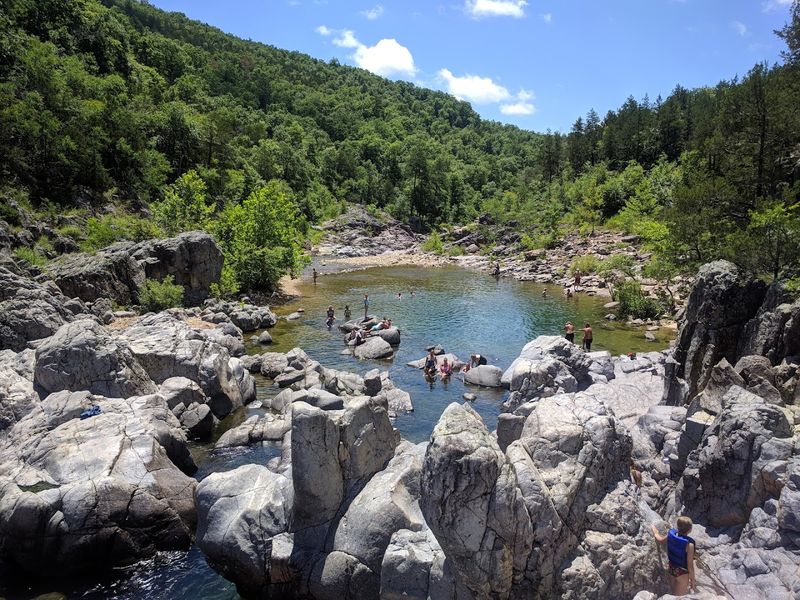
The signature scene here is the shut-ins themselves, where the Black River narrows and surges through hard ancient rock instead of spreading lazily across a broad channel.
That squeeze creates a landscape of slides, pockets, ripples, and deeper basins that looks part canyon and part playground. In hot weather, it becomes one of the most unusual swimming settings in the state.
What makes the area so visually striking is the shape of the water. It does not simply flow past you in one calm sheet.
It twists around boulders, funnels into chutes, swirls beside ledges, and collects in clearer pools where small fish are often visible below the surface, giving the whole place motion even when you are standing still on the rocks.
That movement also explains why this is not a lazy float spot. The terrain is uneven, the rocks can be slick, and the current varies from gentle shallows to stronger, more energetic sections.
Families can still enjoy it, but the park rewards attention, good footwear, and a willingness to treat the river with respect instead of assuming every access point behaves the same way.
The payoff is variety packed into one compact zone. Some people perch on warm rock shelves with their feet in the water, others wade through calmer areas, and stronger swimmers seek out deeper pockets and faster channels.
You are not locked into one style of river day, which makes the experience feel more exploratory than a standard designated swim beach.
Few places offer such a clear reminder that geology can shape recreation as much as any built facility. Johnson’s Shut-Ins is memorable because the attraction is not a manmade feature added to the landscape.
The river itself is the design, carving a place where cooling off comes with texture, sound, movement, and a little bit of edge.
Missouri rock, clear water, and all the little details
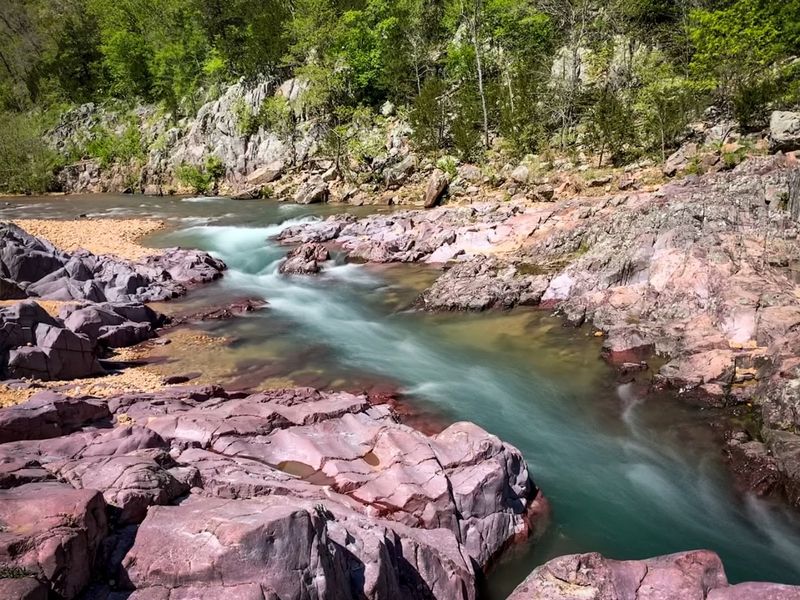
Up close, Johnson’s Shut-Ins gets even better because the smaller details do real work. The water can be strikingly clear, enough to catch flashes of fish and the contours of stone below the surface.
Sunlight bounces off wet rock in sharp highlights, while pockets of shade cool the edges and make the brighter channels look almost glassy by comparison.
The rock itself adds texture to every step of the visit. Some sections are broad and smooth enough for sitting, while others break into ridges, cracks, and irregular shelves that require slow footing.
Water shoes are not an optional nice-to-have here. They are the difference between confidently exploring the edges and spending the day tiptoeing over sharp pebbles and slippery patches.
There is also more structure to the access than first-time visitors may expect. Boardwalks and paved sections help guide people toward the river, and benches offer places to pause if not everyone in the group wants to scramble across stone.
That mix of developed access and raw terrain keeps the park approachable without sanding away its rugged character.
Another smart detail is how the area gives different energy levels room to coexist. One person can sit back and watch water curl around the rocks, while another hops carefully from ledge to ledge looking for a better entry point.
Children can enjoy calmer sections under close supervision, and more adventurous swimmers can seek out areas with greater depth or movement.
Even practical features matter here because they support a long day outdoors. Restrooms, changing areas, parking, and nearby concessions help the stop function beyond a quick photo op.
Instead of feeling like a scenic oddity with no staying power, the park is set up so you can actually settle in, explore deliberately, and make the most of the river’s unusual design.
The story written into the landscape
Johnson’s Shut-Ins is easy to enjoy as pure scenery, but the place gains extra depth when you remember that the landscape is the headline.
The river is cutting through exceptionally old, hard rock, and that durability is why the channel narrows into such dramatic formations instead of wearing down into something softer and less distinct. The result is a swimming area shaped by geology first, recreation second.
The visitor center helps connect those dots without slowing the day into homework. Exhibits and short interpretive material give context to the Black River, the surrounding St. Francois Mountains region, and the park’s rugged character.
If you stop there before heading to the water, the rock formations start to read less like random chaos and more like a long natural process displayed in real time.
There is also a quieter story in how the park functions today. This is not a flashy resort destination trying to manufacture an outdoor vibe.
It is a Missouri state park with an infrastructure that supports real use, from parking and trails to picnic areas and campgrounds, while still letting the river remain the unmistakable center of gravity.
That grounded identity matters because it changes the pace of a visit. People are not funneled toward a single viewpoint and then back to the car.
They move between trail segments, river access points, rest areas, and the visitor center, building their own version of the day depending on energy, weather, and comfort around the water.
Seen that way, Johnson’s Shut-Ins is more than a photogenic swimming hole. It is a place where natural history, public access, and outdoor culture overlap cleanly.
The park works because the educational side never overwhelms the fun, and the fun never erases the fact that this remarkable setting was formed by forces much older and more powerful than the trail leading in.
How to do Johnson’s Shut-Ins without fighting the crowd
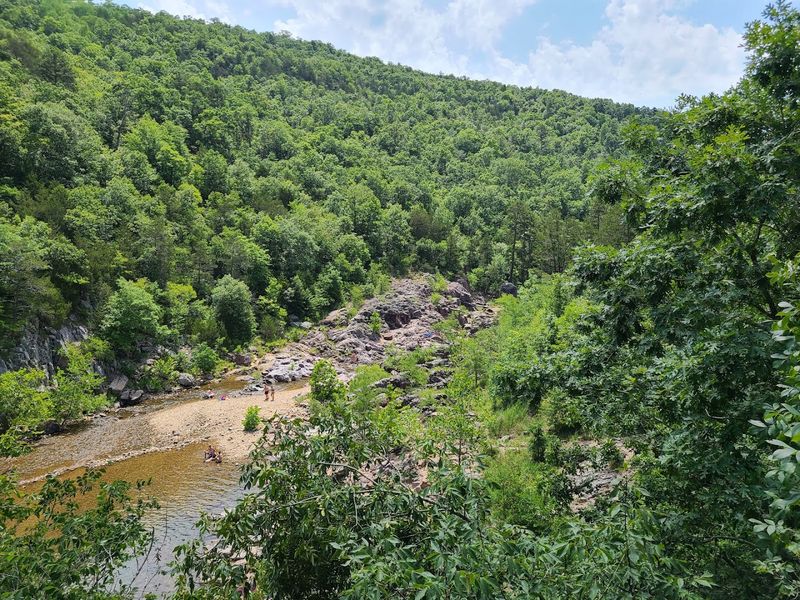
Timing changes the entire experience at Johnson’s Shut-Ins, maybe more than any single thing you pack. On busy summer weekends, this is a known destination, and the popularity is easy to understand once you see the water.
Getting there early is the simplest move you can make if you want easier parking, quieter trail time, and first pick of calmer places to settle near the river.
Morning also suits the landscape. The paved walk feels cooler, the rock has not been baking in midday sun for hours, and the whole area looks sharper before the busiest churn of the day begins.
If your goal is swimming, photos, or simply moving through the shut-ins without weaving around large groups, an earlier arrival gives you a better shot at all three.
That does not mean off-season visits are second best. Cooler months shift the park into a different mode, with more emphasis on scenery, hiking, and the sound of water moving through stone.
You may not be there to swim for long, but the visual payoff remains strong, especially when trees begin to change color or when the crowds thin to a whisper.
The best plan depends on the kind of day you want. Families with younger kids may prefer arriving early, claiming a manageable area, and treating the shut-ins as a half-day base.
More active visitors can pair the swim area with additional trail time, stretching the outing into something that balances river play with a broader look at the park.
Weather matters too, because exposed rock and limited shade in some sections can make the area feel hotter than the parking lot suggests. Bring sun protection, expect slippery surfaces, and assume the most popular periods will fill fast.
Johnson’s Shut-Ins is more enjoyable when the logistics are handled before the first step on the trail, not improvised once the lot gets crowded.
Beyond the water: trails, camping, and a full day outdoors
The shut-ins may be the star, but the rest of the park keeps the trip from feeling one-note. Johnson’s Shut-Ins covers a broad stretch of rugged country, so a visit can expand beyond the swim area into hiking, picnicking, camping, and a slower look at the surrounding Ozark landscape.
That flexibility is a big reason the park works for more than one type of traveler. If the river is your main event, the extra amenities still matter.
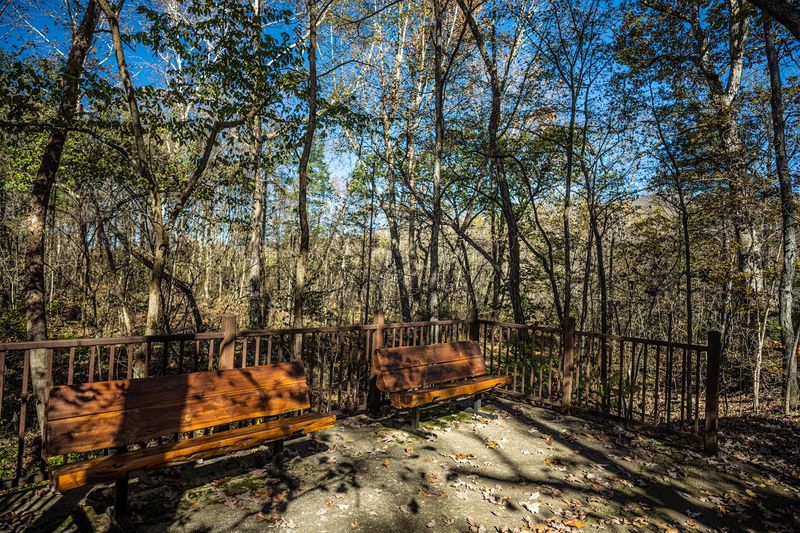
Picnic areas and seating make it easier to pause between swims, and the camp store adds practical backup when you forgot snacks, drinks, or a small comfort item.
Those details help the park function as a real day-trip destination rather than a quick stop where everyone leaves after an hour.
For people staying longer, the camping side changes the rhythm entirely. Instead of rushing in and out around the busiest part of the day, campers can build in early and late visits to the river when the light is softer and the crowds are thinner. That makes the shut-ins feel less like a single attraction and more like one piece of a larger outdoor weekend.
The trail network also gives non-swimmers or mixed-interest groups something meaningful to do. Not everyone wants to spend hours climbing over rocks, and this park does not force that choice.
A group can split its time between scenic walking, short hikes, interpretive stops, and river access without anyone feeling stranded in the wrong kind of outing.
That breadth matters because memorable parks usually offer more than one speed. Johnson’s Shut-Ins can be energetic, with scrambling, wading, and cooling off in moving water, but it can also be restful when the plan is a bench, a picnic table, or a quiet stretch of trail under the trees.
The park gives you several ways to use the day, which keeps the visit from flattening into a single headline feature.
Why this Missouri swim spot stands apart
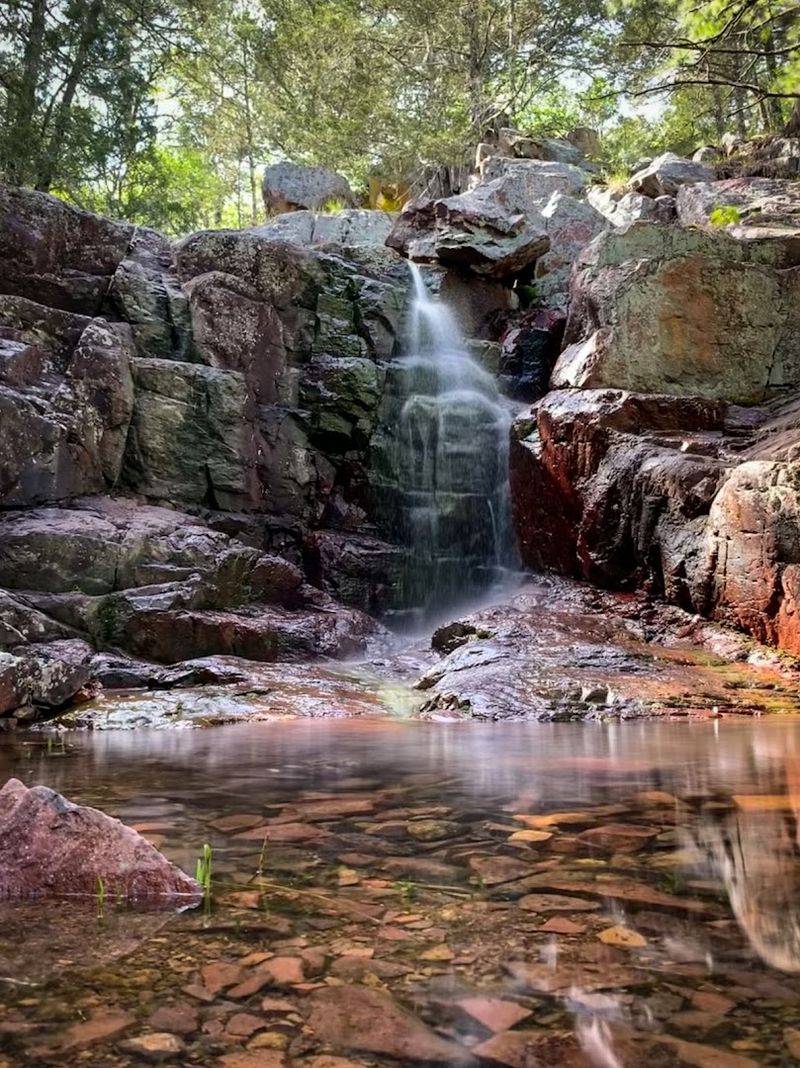
Some swimming spots are memorable because the water is cold, the beach is wide, or the drive is easy. Johnson’s Shut-Ins stands apart because the entire setting behaves differently from what most people picture when they hear natural swimming area.
You are not arriving at a flat shoreline. You are walking into a sculpted river corridor where rock and current shape nearly every choice you make.
That difference starts with the visuals but does not end there. The park gives you a rare combination of approachable access and genuinely rugged terrain, so the outing can begin on a paved path and end with your feet in clear water between ancient stone walls.
Few places compress that much contrast into such a short, manageable approach. It also helps that the experience is active without requiring expert-level outdoor skills. You can keep things simple and stay near easier access points, or you can carefully explore further among the rocks and channels.
Either way, the shut-ins do not ask you to admire nature from a distance only. They invite movement, attention, and a little curiosity about where the next pool or ledge might lead.
Missouri has no shortage of parks, rivers, and summer cool-down spots, but this one delivers a more distinct sense of place than most. The geology is visible, the water has personality, and the layout encourages exploration instead of passive lounging.
Even practical upgrades such as trails, parking, and visitor facilities support the experience without softening the river’s wild-looking edge.
If you want a destination that feels specific to its landscape rather than interchangeable with dozens of other parks, this is it.
Johnson’s Shut-Ins offers an easy walk, a dramatic payoff, and a natural swimming area shaped by forces you can actually see under your feet. That combination gives the park its own category, not just a place on a summer itinerary.
Share this story