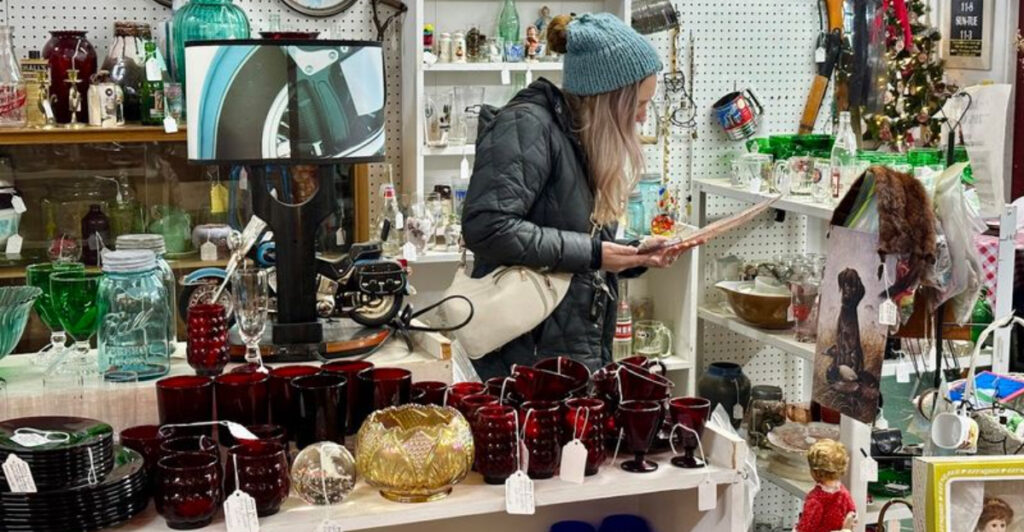
Tucked along the old stretch of US Route 12 in Hillsdale County, Allen, Michigan is a small village with a big reputation among antique hunters. With a population of just over 200 people, it punches well above its weight when it comes to vintage finds, quirky shops, and that slow-down-and-look energy that serious collectors crave.
The junction of US-12 and M-49 puts Allen right in the path of road-trippers passing through southern Michigan, and once you stop, it’s hard to leave empty-handed. If you love old things, odd things, and the thrill of not knowing what you’ll find next, Allen has a way of pulling you in.
The Antique Capital of Michigan Reputation
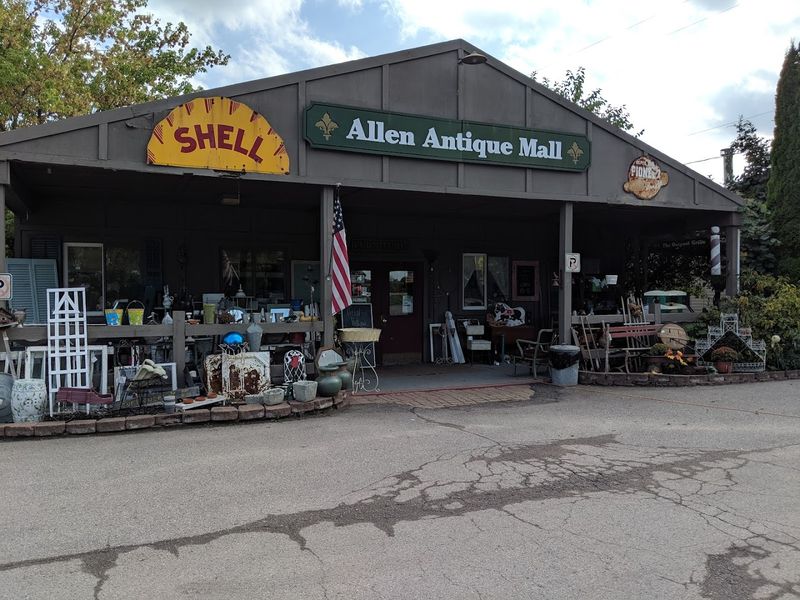
Some towns earn a nickname and then spend decades trying to live up to it. Allen seems to have worked the other way around, building a quiet but steady reputation as one of Michigan’s top destinations for antique hunters before most people outside the region even knew the name.
The village sits at the crossroads of US Route 12 and M-49, which sounds like a modest detail until you realize that US-12 is one of the oldest travel corridors in the Midwest. Travelers have been stopping along this road for generations, and Allen figured out early on that antiques were its thing.
Walk the main stretch and you’ll notice how the shops blend right into the old buildings. Nothing feels staged or artificially quaint.
The storefronts have real age on them, and the merchandise inside reflects that same honest patina. There are no chain stores here trying to look rustic.
What makes Allen’s reputation stick is the density. For a village this small, the concentration of dealers and booths per square mile is genuinely surprising.
You can spend a full afternoon moving from one building to the next without retracing your steps.
Regulars tend to show up on weekends when dealers rotate stock and fresh pieces appear. Timing your visit for a Saturday morning, when the light is good and the crowds are still thin, gives you first look at whatever came in that week.
The reputation also draws sellers, not just buyers. Estate families from surrounding Hillsdale County and beyond bring their pieces to Allen because they know serious collectors will find them.
That pipeline keeps the inventory moving and the quality honest.
Wandering the Antique Shops Along US-12
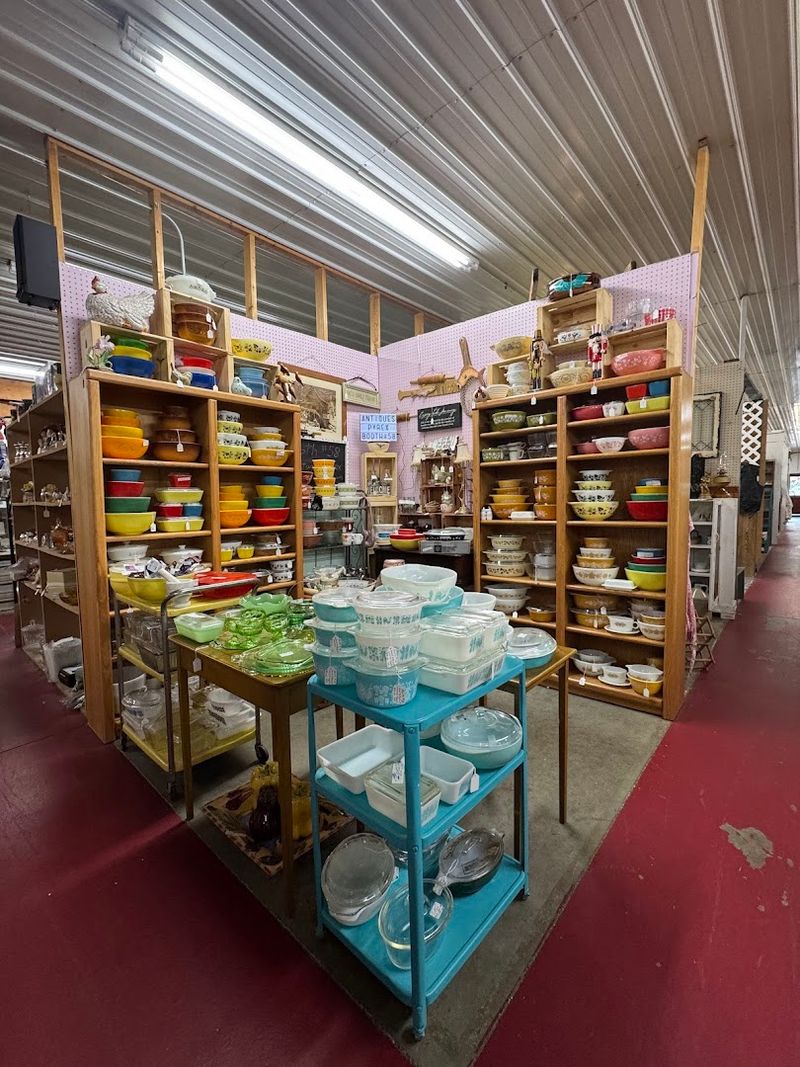
There is a particular kind of quiet inside a well-stocked antique shop that you do not find anywhere else. It is part library, part attic, part archaeological dig.
In Allen, that feeling multiplies across several buildings clustered close enough together that you can walk between them without moving your car.
The shops along US-12 range from large barn-style spaces with dozens of dealer booths to smaller storefronts where one or two sellers curate their own collections with obvious personal taste. Each one has its own rhythm.
Some feel like a yard sale that never ended in the best possible way. Others feel almost like galleries, with pieces arranged to show off their age and craft.
You will find furniture, naturally. Old oak dressers, cast iron beds, farmhouse tables with the kind of wear that takes a century to develop honestly.
But furniture is just the beginning. Dealers bring in advertising tins, Depression-era glassware, military collectibles, vintage toys, cast iron cookware, old maps, and things you cannot immediately name but cannot stop looking at.
Pricing is refreshingly direct. Allen is not a place where vintage gets marked up to boutique levels just because it has been polished.
Dealers here tend to price for collectors who know the market, which means if you know what you are looking at, you can find real value.
The shop layouts reward slow walking. Rushing through Allen is like skimming a book.
The good stuff tends to surface when you pause, crouch down to check a lower shelf, or flip through a stack of old prints leaning against a wall. Plan for more time than you think you need.
The Small-Town Character of Allen Village
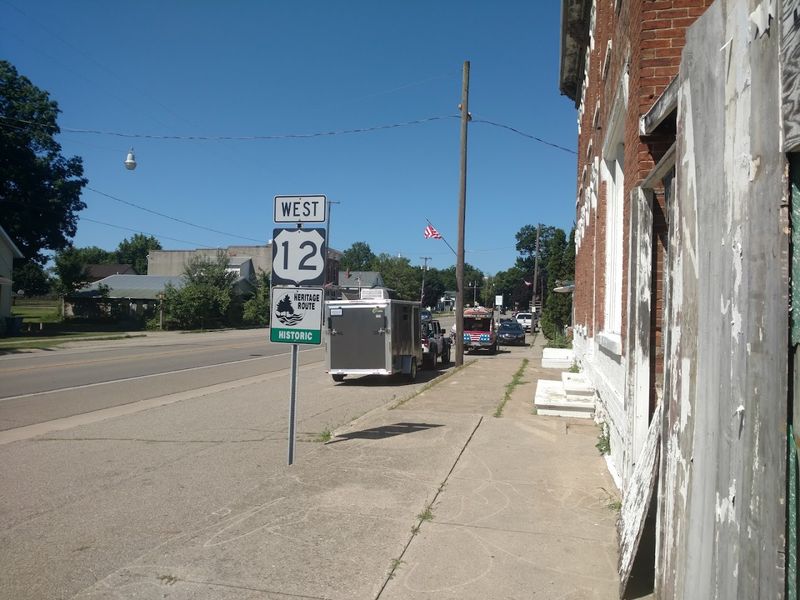
Two hundred people is not many. Allen’s population hovers right around that number, which means the village operates at a pace that most Americans have forgotten exists.
There are no traffic lights. There is no hurry.
The roads are quiet enough that you notice birdsong between conversations.
That smallness is not a limitation here. It is the whole point.
Visitors who come from larger Michigan cities like Lansing or Ann Arbor often describe Allen as a reset button. The scale of everything shifts.
Problems that felt urgent on the highway start to seem manageable after twenty minutes of wandering through old things at no particular speed.
The village has the kind of character that develops slowly and cannot be manufactured. Old buildings that have been repurposed rather than replaced.
Signage that has not been updated in years and is better for it. A general sense that the people who live here made a choice to be here and are not especially interested in changing things.
Local residents and shop owners tend to be knowledgeable and low-key. Ask a dealer about a piece and you get a real answer, not a sales pitch.
That directness is part of what brings collectors back repeatedly. Nobody is trying to create urgency or pressure a purchase.
The surrounding landscape adds to the feeling. Hillsdale County rolls gently through farmland and woodlots, and Allen sits within that rural context naturally.
Coming in from the highway, you pass fields before you reach the village, which gives the arrival a certain quiet drama.
Even if you never buy a single thing, spending time in Allen has a way of slowing your internal clock down by several notches. That alone feels like something.
Vintage Furniture Hunting in Southern Michigan
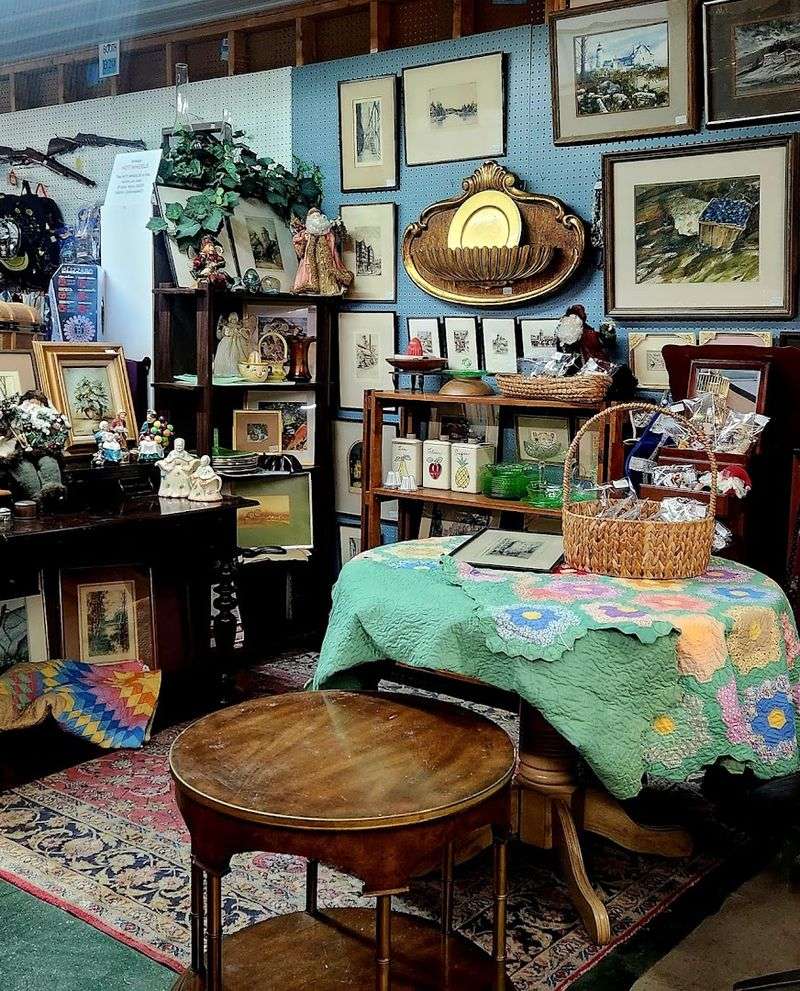
Furniture hunting in Allen is a different sport from browsing a flea market. The pieces here have often traveled from nearby farmsteads, old Michigan homes, and estate sales across Hillsdale and Branch counties.
That regional sourcing gives the inventory a particular character, heavy on American country and Midwest farmhouse styles, with occasional surprises from further afield.
Cast iron beds show up regularly, often with original paint intact. Oak library tables from the early twentieth century appear with enough frequency that dealers price them competitively.
Windsor chairs, pressed-back rockers, hoosier cabinets, and dry sinks tend to cycle through the booths with satisfying regularity if you visit more than once.
What is worth knowing before you start loading things into your vehicle is that many Allen dealers are flexible on larger pieces. Negotiation is not rude here.
It is expected. Dealers who specialize in furniture understand that a piece sitting in a booth costs them money over time, and a reasonable offer from a serious buyer is often met with a reasonable response.
Condition varies, and that is part of the appeal. Some collectors want pristine pieces.
Others specifically seek furniture that shows honest use, the kind of wear that documents decades of real life. Allen has both ends of that spectrum and everything between.
Shipping and hauling is a practical consideration. If you fall for something large and you drove a sedan, most dealers can hold a piece for a short period while you arrange pickup.
It is worth asking. Plenty of people have driven back to Allen with a trailer specifically for a chair or table they spotted on an earlier visit.
The furniture selection alone justifies a dedicated trip for anyone who takes old wood seriously.
Glassware, Pottery, and the Smaller Finds
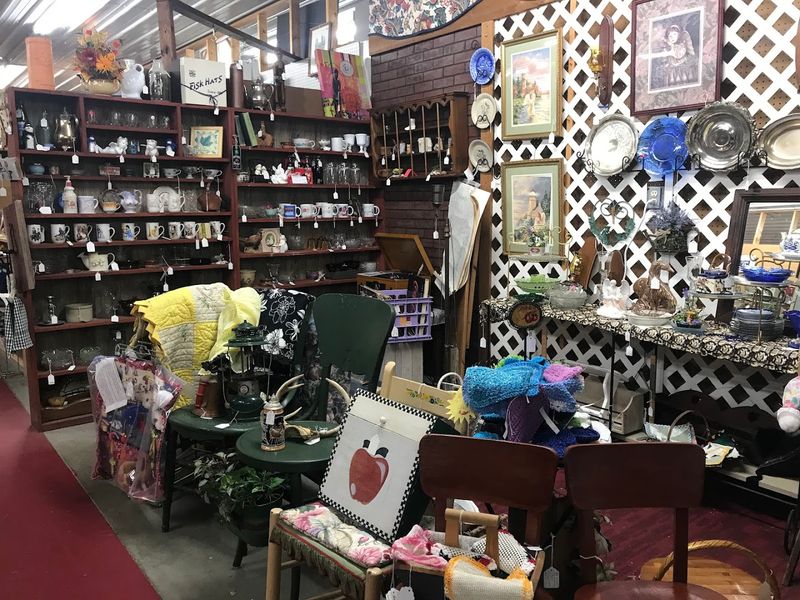
Not every great antique find requires a pickup truck. Some of the most satisfying discoveries in Allen fit in a coat pocket or a small tote bag.
The village’s dealers stock an impressive range of smaller collectibles, and for buyers who travel light, that category often delivers the most memorable scores.
Depression-era glassware is consistently present. The pink, green, amber, and clear pieces from that period appear in booth after booth, priced across a wide range depending on pattern rarity and condition.
Collectors who specialize in specific patterns often make Allen a regular stop precisely because the turnover keeps bringing new pieces to the surface.
Pottery is another strong category. American art pottery from Ohio and Michigan producers shows up with some regularity, alongside more common pieces that are simply pleasing to look at and reasonable to buy.
Stoneware crocks, redware, and mid-century ceramic pieces tend to cluster together in booths run by dealers who clearly enjoy the category.
Old advertising tins deserve their own mention. The graphics on early to mid-twentieth century tins for everything from tobacco to coffee to motor oil represent a kind of commercial folk art that holds up well on modern walls.
Allen dealers seem to understand their appeal and stock them accordingly.
Vintage linens, old postcards, pressed glass, early electrical fixtures, and farm-related tools also surface regularly. The range is wide enough that even collectors with very specific interests tend to find something relevant.
One practical note: bring cash. Not every dealer in a small village has a reliable card reader, and some prefer cash outright.
Having a mix of both keeps you from missing out on a piece simply because the technology decided not to cooperate that day.
The Road Trip Appeal of US Route 12 Through Allen

US Route 12 is one of those roads that rewards the people who choose it over the interstate. Running across southern Michigan from the Indiana border toward Detroit, it connects a string of small towns that never quite made it onto the fast-travel map, and that obscurity is exactly what makes them worth stopping in.
Allen sits right on that route, which means it is genuinely easy to include in a longer road trip without any significant detour. You do not have to plan Allen as a destination to end up there.
Plenty of visitors first notice it through a car window and pull over on instinct.
The junction with M-49 gives the village a slightly more prominent position than its size would suggest. Traffic from multiple directions passes through, which historically meant more customers for the antique trade and more exposure for a village that might otherwise be easy to miss entirely.
Driving US-12 through this part of Hillsdale County has a certain visual rhythm. Farmland, small woodlots, the occasional grain elevator, and then a cluster of old buildings that signals a village.
Allen fits that pattern but rewards the stop more than most.
The road itself has a slower feel than the interstates nearby. Speed limits are lower, there are actual intersections with stop signs, and you pass close enough to buildings to read their signs and notice their details.
That proximity is part of what makes old highway travel different from freeway travel.
If you are planning a route across southern Michigan and you have not specifically included Allen, it is worth pulling it up on a map and seeing how close it already is to wherever you are going. The answer is usually closer than expected.
What to Expect on Your First Visit to Allen
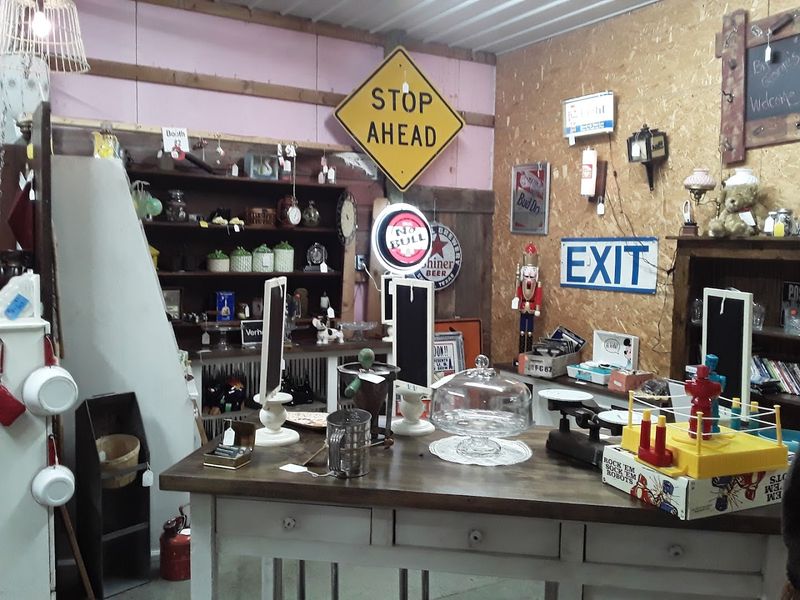
First-timers to Allen sometimes arrive expecting a polished antique district and leave surprised by how unpretentious the whole thing is. That is meant as a compliment.
There is no curated experience here, no admission fee, no map handed to you at an information kiosk. You just show up and start looking.
Parking is simple. The village is small enough that you can leave your car in one spot and cover most of the main area on foot.
Wear comfortable shoes because you will be standing, crouching, and maneuvering around furniture for longer than you planned.
Weekends bring more activity than weekdays, which can be good or neutral depending on what you prefer. More activity means more dealers present and sometimes more fresh inventory.
It also means other collectors are moving through the same spaces, which creates a low-level competitive energy that some people find motivating.
Bring something to carry small purchases in. A canvas tote or a small backpack keeps your hands free for handling pieces and makes it easier to carry delicate items safely between shops.
If you have questions about a piece, ask. Dealers in Allen tend to be knowledgeable and willing to talk about provenance, condition, and history when they know it.
That conversation is often part of what makes a purchase feel meaningful rather than transactional.
Budget more time than you think you need and less money than you think you will spend, then reverse both of those once you actually arrive. Allen has a reliable way of expanding both the clock and the wallet in ways that feel entirely reasonable in the moment.
Come with an open list rather than a fixed one, and the village tends to deliver something you did not know you were looking for.
Share this story