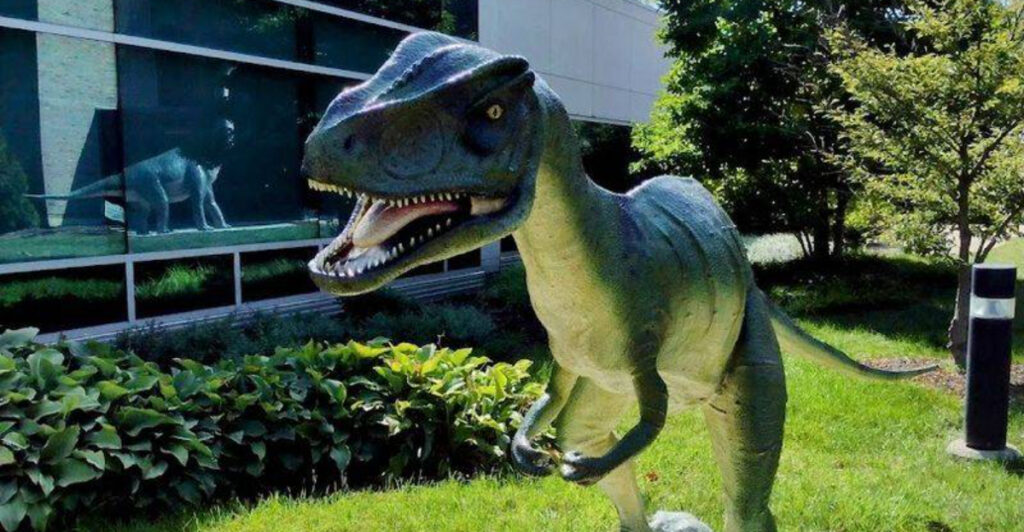
Michigan might not be the first place you think of when dinosaurs come to mind, but the Great Lakes State is packed with prehistoric surprises waiting to be discovered. From life-size dinosaur sculptures hidden in the woods to museum halls filled with ancient fossils, there is something seriously cool happening all across the state.
Whether you are a curious kid, a family planning a weekend adventure, or just someone who never outgrew their love of T. rexes, Michigan has you covered. Grab your explorer hat and get ready to roam — the Age of Dinosaurs is closer than you think.
1. Cranbrook Institute of Science, Bloomfield Hills
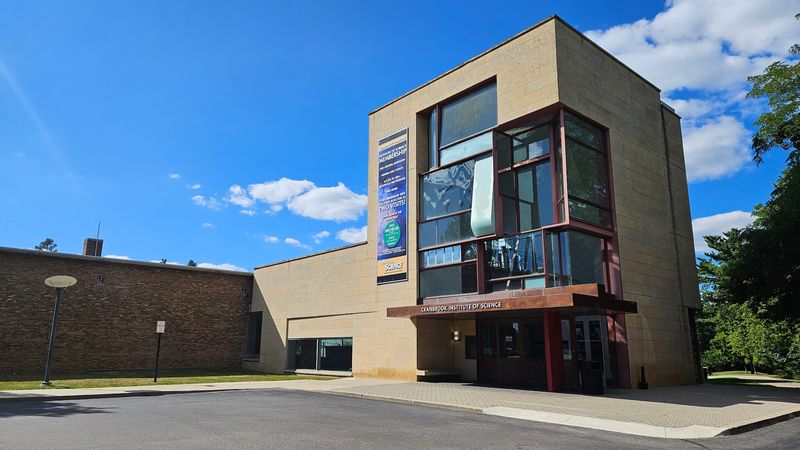
Walking into Cranbrook Institute of Science feels a little like stepping into a different era entirely. Tucked inside a stunning campus in Bloomfield Hills, this museum has been sparking curiosity about the natural world since 1930.
The architecture alone is worth the trip, but the science and natural history exhibits inside are where things get genuinely exciting.
The museum features an impressive collection of geological specimens, fossils, and natural history displays that bring prehistoric life into sharp focus. Kids and adults alike tend to slow down and stare when they encounter the ancient specimens on display — there is something about holding your gaze on something millions of years old that puts modern life in perspective.
The exhibits are thoughtfully designed so they feel approachable rather than overwhelming.
Cranbrook does not just show you old bones — it builds context around them. You learn how ancient creatures lived, what environments they thrived in, and how scientists piece together stories from fragments of stone.
The hands-on elements sprinkled throughout the museum make learning feel less like school and more like discovery. Even repeat visitors tend to notice something new each time.
The surrounding campus is a bonus that many visitors overlook. The Cranbrook grounds include gardens, art museums, and walking paths that make for a genuinely full-day outing.
Pairing the science museum with a stroll through the beautifully landscaped property turns a simple museum visit into a memorable Michigan experience. Bloomfield Hills is easy to reach from Detroit, making this one of the most accessible dinosaur-adjacent destinations in the Lower Peninsula.
If you have not been yet, this one deserves a spot near the top of your list.
2. Dinosaur Gardens, Ossineke
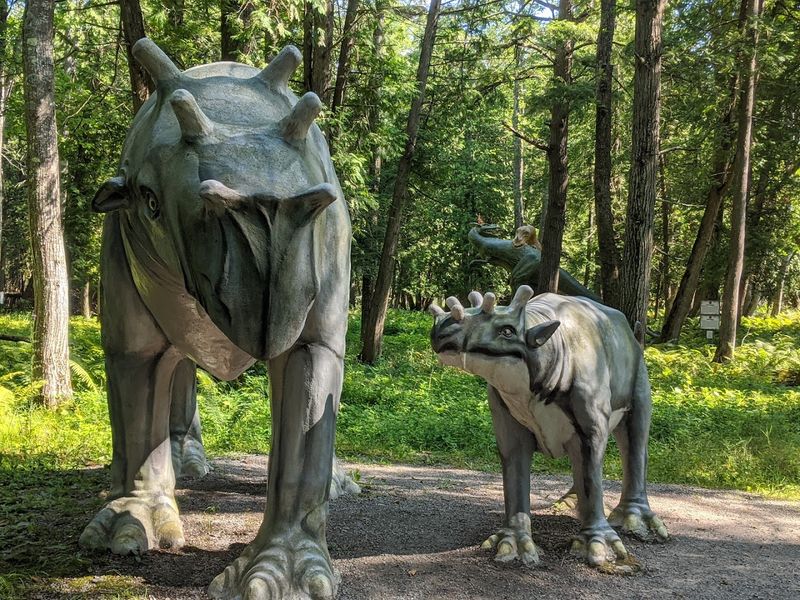
Somewhere between roadside attraction and genuine outdoor adventure, Dinosaur Gardens in Ossineke is one of those places that feels like it was built specifically for people who love unexpected discoveries. Nestled along the Thunder Bay River in the northern Lower Peninsula, this quirky park features life-size concrete dinosaur sculptures scattered through a forested trail.
It is weird, wonderful, and completely unforgettable.
The sculptures were originally created starting in the 1930s by Paul Domke, a self-taught artist with a serious passion for prehistoric creatures. Some of the figures are enormous — think full-scale Brachiosaurus and T. rex models looming through the trees.
The weathered, old-school aesthetic of the sculptures gives the whole place a retro charm that newer, shinier attractions simply cannot replicate. Walking the trail feels like stumbling onto a forgotten movie set.
Families with younger kids tend to go absolutely wild here. The combination of a nature walk and giant dinosaurs hits a sweet spot that keeps children engaged from start to finish.
There is enough ground to cover that it feels like a real adventure, not just a quick photo stop. The wooded setting along the river adds a genuinely peaceful quality to the whole experience.
Dinosaur Gardens is located in Alpena County, making it a natural stop if you are already exploring the Sunrise Side of Michigan. The park is seasonal, so checking ahead before visiting is a smart move.
Admission is affordable, and the overall vibe is refreshingly low-key — no crowds, no noise, just you and some very large prehistoric reptiles hanging out in the Michigan woods. Honestly, it does not get much more Michigan than that.
3. Dow Gardens, Midland
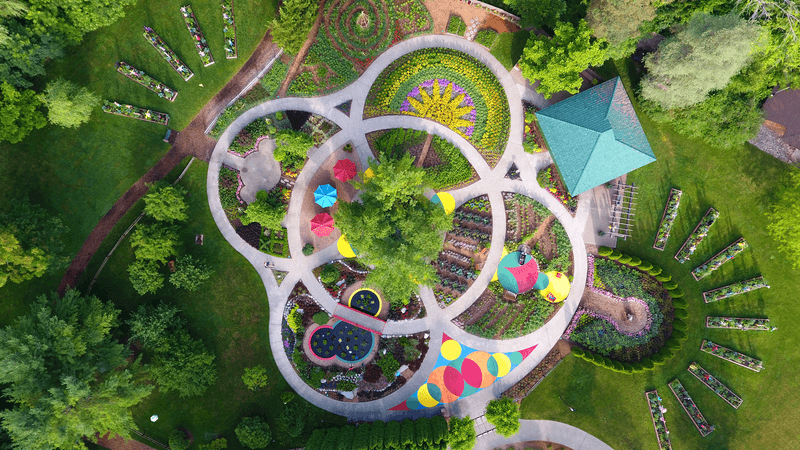
Dow Gardens in Midland might not have a T. rex standing at the entrance, but its deep connection to ancient plant life makes it a surprisingly relevant stop for anyone fascinated by prehistoric Earth. Plants are, after all, the original survivors — many of the species found in botanical gardens today have lineages stretching back hundreds of millions of years.
Walking through Dow Gardens is a quiet reminder of just how long life has been thriving on this planet.
Spread across 110 acres, the gardens feature an extraordinary range of plant collections, including ferns, mosses, and other ancient plant families that would have looked right at home alongside dinosaurs. The Children’s Garden section is especially well-designed, with interactive elements that make the natural world feel exciting rather than academic.
It is the kind of place where kids end up asking genuinely good questions without being prompted.
The Whiting Forest canopy walk is one of the most talked-about features in recent years. Stretching through the treetops, this elevated walkway gives visitors a perspective on forest life that is hard to find anywhere else in Michigan.
Looking down at the ancient ferns and towering trees from above creates a surprisingly primal feeling — like you are surveying a landscape that has barely changed in eons.
Midland itself is a charming city worth exploring, and Dow Gardens pairs beautifully with other local attractions for a full weekend trip. The gardens are open year-round, though the experience changes dramatically with the seasons.
Spring and summer bring the most dramatic plant displays, but even a winter visit has its own stripped-down beauty. For plant nerds and prehistoric enthusiasts alike, Dow Gardens earns its place on this list without question.
4. Rockport State Recreation Area, Alpena
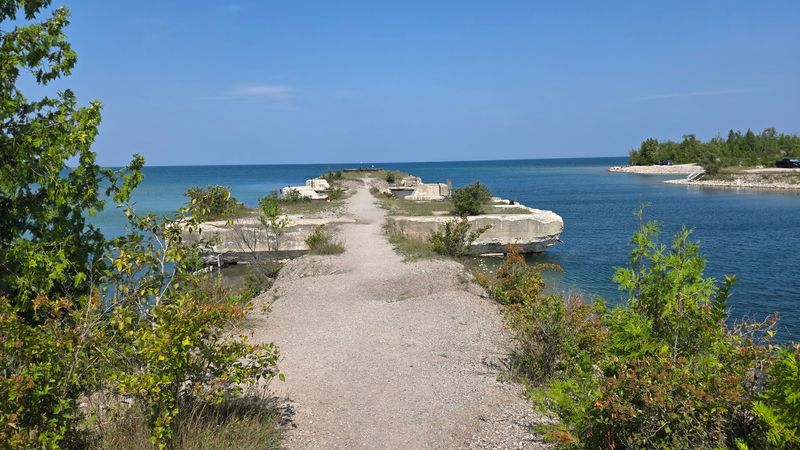
Not every dinosaur destination involves bones in a display case. Rockport State Recreation Area near Alpena offers something far more hands-on — a chance to walk across an ancient reef that formed roughly 350 million years ago.
The exposed limestone bedrock along the Lake Huron shoreline is packed with fossilized coral, shells, and other marine creatures from the Devonian period. You are literally walking on prehistoric life.
The area was once a working quarry, and the exposed rock layers tell a geological story that spans deep time. Fossil hunting here is a real activity, not just a metaphor.
Visitors regularly spot fossilized rugose coral, brachiopods, and crinoid stems embedded right in the rock. You do not need any special equipment — just a sharp eye, some patience, and a genuine curiosity about what the world looked like long before humans showed up.
Beyond the fossils, Rockport is a genuinely beautiful place to spend a day outdoors. The recreation area includes hiking trails, a boat launch, and stunning views of Lake Huron.
The combination of natural beauty and geological significance makes it feel like two trips in one. Alpena is already known as a hub for outdoor adventure, and Rockport fits perfectly into a broader exploration of the region.
One important note for fossil hunters: collecting fossils from state recreation areas in Michigan is generally not permitted, so the goal here is observation and photography rather than pocketing souvenirs. That said, simply seeing these ancient formations up close is its own reward.
Few places in the Midwest offer this kind of direct, unfiltered contact with deep geological history. Rockport is a must-visit for anyone who wants their prehistoric fix served outdoors.
5. University of Michigan Museum of Natural History, Ann Arbor
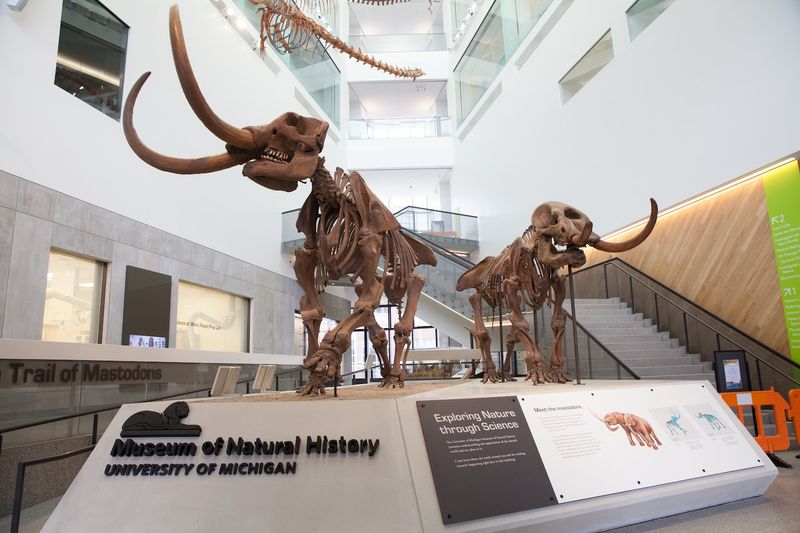
Few museums in the Midwest can match the University of Michigan Museum of Natural History when it comes to sheer dinosaur firepower. Located inside the Biological Sciences Building on the U of M campus in Ann Arbor, this museum underwent a major renovation and reopened in 2019 with a dramatically upgraded experience.
The result is one of the most impressive natural history collections in the entire region.
The dinosaur gallery is the obvious centerpiece. Full skeletal mounts of iconic species greet visitors almost immediately, and the exhibit design does a great job of giving each specimen room to breathe and be appreciated.
The Ruthven Collection, which includes specimens gathered over more than a century of university research, adds serious scientific weight to everything on display. This is not just a crowd-pleaser — it is a research institution with public access.
What sets this museum apart from many others is the way it connects deep time to current science. Exhibits explain how paleontologists work, what questions are still being debated, and how our understanding of dinosaurs has shifted dramatically over the past few decades.
Spoiler: feathers were a much bigger part of the story than old-school movies suggested. That kind of updated, honest storytelling keeps the content feeling fresh and relevant.
Ann Arbor is already a fantastic destination on its own — great food, a vibrant downtown, and the energy of a major university town. Adding a museum visit to a day in Ann Arbor is an easy decision.
Admission to the museum is free, which makes it an even more accessible option for families, students, and curious solo visitors. The U of M Museum of Natural History is genuinely world-class, and Michigan residents should feel proud to have it in their backyard.
6. Detroit Zoo Dinosauria, Royal Oak
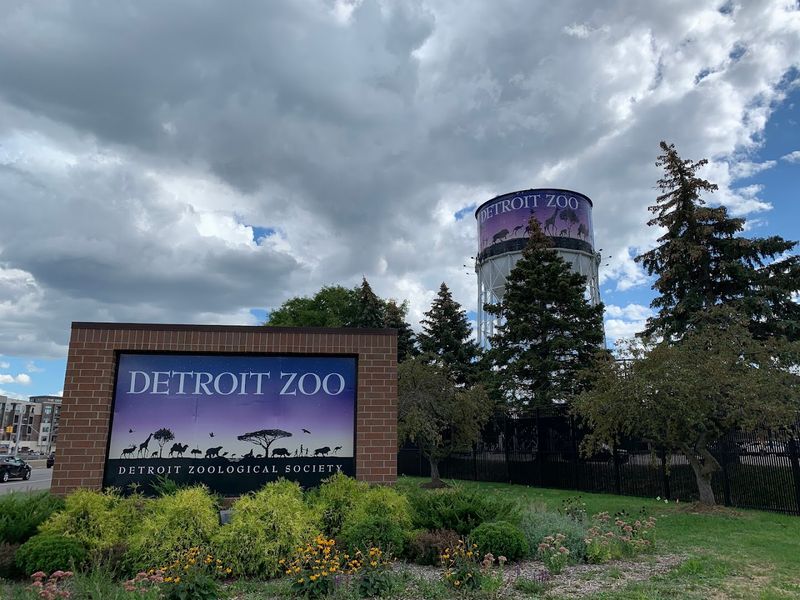
The Detroit Zoo is already one of Michigan’s most beloved institutions, but when the Dinosauria exhibit rolls into town, the energy on the grounds shifts into a completely different gear. Animatronic dinosaurs stationed throughout the zoo grounds bring prehistoric giants back to life in a way that is equal parts thrilling and hilarious — especially when a roaring Spinosaurus startles an unsuspecting toddler near the path.
It is loud, it is dramatic, and it is absolutely worth it.
The animatronic models used in Dinosauria exhibits are remarkably detailed. Skin textures, movement patterns, and sound effects combine to create something that genuinely feels alive in the moment.
For younger visitors especially, the experience crosses from educational into something closer to magical. Watching a child’s face when a dinosaur neck slowly swings toward them is a moment parents tend to remember for a long time.
What makes the Detroit Zoo version of this experience particularly strong is the setting. The zoo’s naturalistic habitats and mature tree canopy create a backdrop that makes the dinosaur installations feel less like props and more like genuine inhabitants.
Moving from a giraffe exhibit to a life-size Triceratops without missing a beat is a uniquely surreal afternoon. The zoo does a solid job of weaving educational content into the exhibit so that the fun has real substance behind it.
The Dinosauria exhibit at the Detroit Zoo is a seasonal feature, so timing your visit matters. Checking the zoo’s website for current exhibit schedules before planning a trip is always a good idea.
Royal Oak is conveniently located just north of Detroit, making it easy to combine with other metro area activities. For families looking for a high-energy, high-fun dinosaur experience, the Detroit Zoo consistently delivers.
7. Besser Museum for Northeast Michigan, Alpena

Alpena shows up twice on this list, and that is not a coincidence. The northeast Michigan city has a remarkable connection to prehistoric life, and the Besser Museum for Northeast Michigan is one of the clearest expressions of that connection.
Small in footprint but big in personality, this regional museum packs a serious amount of geological and natural history content into a space that feels genuinely welcoming rather than overwhelming.
The museum’s natural history collection includes fossils, minerals, and geological specimens that reflect the ancient story of the Great Lakes region. The Devonian reef system that once stretched across northern Michigan left behind an extraordinary fossil record, and Besser does a commendable job of making that story accessible to visitors of all ages.
The exhibits feel curated with real care — like someone who genuinely loves this material put it together.
Beyond the prehistoric content, Besser Museum covers regional history, Native American heritage, and local art. That breadth might seem like it would dilute the prehistoric focus, but it actually strengthens it by placing ancient life within a broader narrative of the land and the people who have called it home.
Context always makes a story better, and Besser understands that principle well.
The museum is free to visit, which makes it an incredibly easy addition to any Alpena itinerary. Combine it with a stop at Rockport State Recreation Area and Dinosaur Gardens in nearby Ossineke, and you have a full day of prehistoric exploration mapped out without spending much at all.
Alpena deserves more recognition as a destination for nature and history enthusiasts, and the Besser Museum is a significant reason why. If you are headed to the Sunrise Side, do not skip this one.
8. Stage Nature Center, Troy
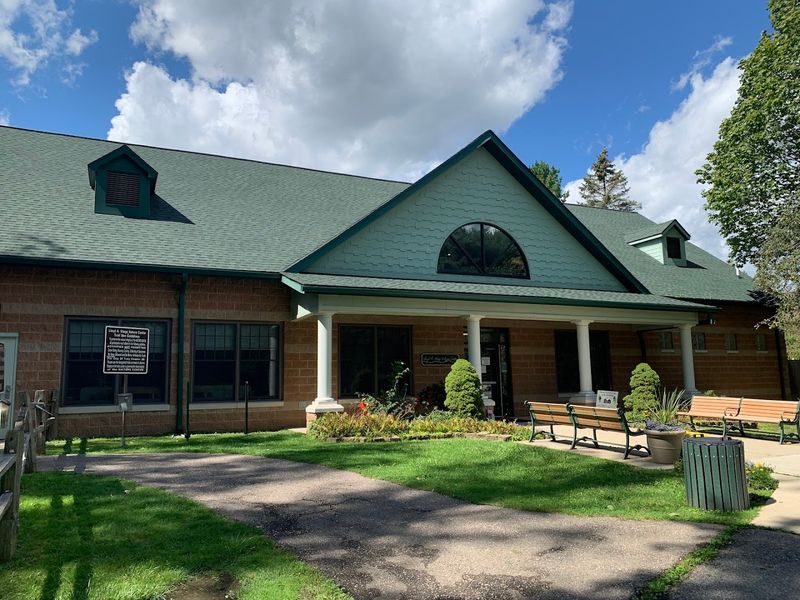
Stage Nature Center in Troy operates on a philosophy that the natural world is best understood when you are standing in the middle of it. Tucked into a surprisingly wild patch of land inside one of metro Detroit’s busiest suburbs, this nature center uses its trails, programs, and educational exhibits to connect visitors — especially kids — to the living systems that have been operating on Earth long before humans arrived.
That prehistoric thread runs quietly through everything Stage does.
The center’s programming often touches on deep time, evolution, and the ecological relationships that have shaped Michigan’s landscape over millions of years. While you will not find a T. rex mount in the lobby, the interpretive content throughout the trails and indoor exhibits consistently frames nature within a long geological timeline.
Learning that Michigan was once covered by a shallow tropical sea tends to rewire how you look at the landscape around you.
What Stage Nature Center does exceptionally well is make science feel personal. The staff and naturalists who lead programs here are enthusiastic in a way that is contagious.
Whether it is a school group discovering animal tracks or a family joining a guided walk through the forest, the energy is always engaged and curious. That atmosphere is hard to manufacture — Stage has cultivated it genuinely over decades of community programming.
Troy is not a place most people associate with wild nature, which makes Stage Nature Center feel like a discovery every time you visit. The trails are accessible, the programs are affordable, and the experience of finding genuine wilderness inside a busy suburb is quietly extraordinary.
For families in the metro Detroit area looking for a low-key but genuinely enriching outdoor outing, Stage Nature Center consistently over-delivers. It is a local gem that deserves far more recognition than it typically gets.
9. Grand Rapids Public Museum, Grand Rapids
Grand Rapids Public Museum has been one of West Michigan’s cultural anchors for well over a century, and its natural history collection is a big reason why. The museum’s prehistoric exhibits give visitors a grounded, well-researched look at the ancient world, with fossil specimens and geological displays that hold up to serious scrutiny.
It is the kind of place that satisfies both the casual visitor and the person who comes in with a list of questions.
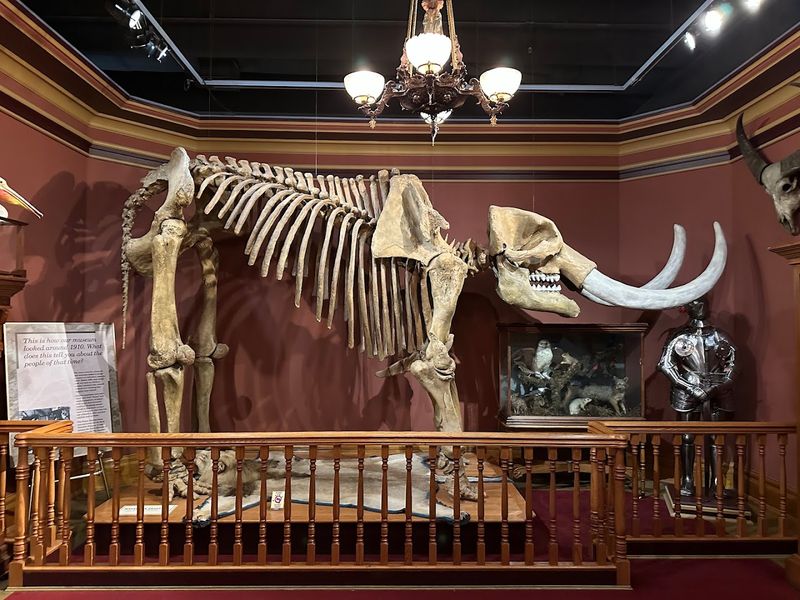
The museum’s mastodon exhibit is particularly worth calling out. Michigan has a strong mastodon legacy — the state fossil is, in fact, the American mastodon — and Grand Rapids Public Museum does an excellent job of telling that story.
Seeing a mastodon skeleton up close has a way of making Ice Age Michigan feel startlingly real. These were not mythological creatures; they were roaming the same land you drive through on the highway.
The broader natural history section covers geology, ecology, and regional natural history in ways that complement the prehistoric content nicely. Moving through these exhibits, you get a sense of how the land has changed over time — from ancient seas to glaciers to the Great Lakes landscape we know today.
That kind of long-view storytelling is something Grand Rapids Public Museum handles with real confidence.
The museum is located in downtown Grand Rapids, which means it slots easily into a broader city day. The surrounding area has excellent restaurants, coffee shops, and other cultural institutions that make for a well-rounded outing.
Admission is reasonable, and the museum frequently hosts special events and traveling exhibits that give repeat visitors new reasons to come back. For anyone in West Michigan looking to scratch that prehistoric itch, this is the most obvious starting point.
10. WMU Dinosaur Park and Schmaltz Geology Museum, Kalamazoo
Western Michigan University might be best known for its hockey program, but paleontology enthusiasts have their own reason to make the trip to Kalamazoo. The WMU Dinosaur Park and Schmaltz Geology Museum together create one of the most underrated prehistoric experiences in the state.
Outdoor dinosaur sculptures combined with an indoor geology collection give visitors a genuinely layered experience that covers both the dramatic and the scientific sides of prehistoric life.
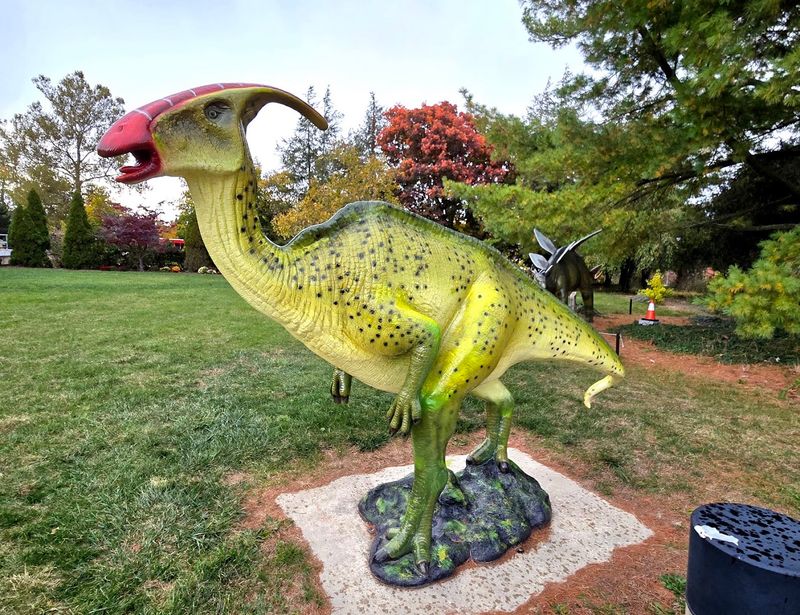
The Dinosaur Park features life-size dinosaur models positioned across the campus grounds, creating the kind of unexpected encounter that makes a regular campus walk feel like something out of a movie. Students heading to class walk past Stegosaurus.
Families visiting campus stumble into Cretaceous territory without warning. It is playful and educational at the same time, which is exactly the right combination for a university setting that wants to make science feel accessible.
Inside the Schmaltz Geology Museum, the tone shifts toward the rigorously academic — but not in a way that excludes curious non-scientists. The mineral and fossil collections are impressive, and the exhibits explain geological processes clearly enough that a motivated middle schooler could follow along without difficulty.
The museum serves both the university community and the general public, and that dual purpose keeps the content grounded in real scientific communication.
Kalamazoo is a city with a lot going on — craft breweries, great restaurants, live music, and a surprisingly vibrant arts scene. Pairing a visit to WMU’s prehistoric attractions with a broader exploration of the city makes for a satisfying weekend.
The campus itself is attractive and easy to navigate. For Michigan residents who have never thought of Kalamazoo as a dinosaur destination, this combination of park and museum is a genuinely pleasant surprise waiting to happen.
11. MSU Museum, East Lansing
Michigan State University’s campus is massive, beautiful, and full of things worth exploring — but the MSU Museum on the south end of campus is one of the most rewarding stops for anyone with an interest in prehistoric life. As Michigan’s first public museum, it carries a sense of institutional weight that you can actually feel when you walk through the doors.
The natural history collections here represent decades of serious scientific work, and that depth shows in the quality of what is on display.
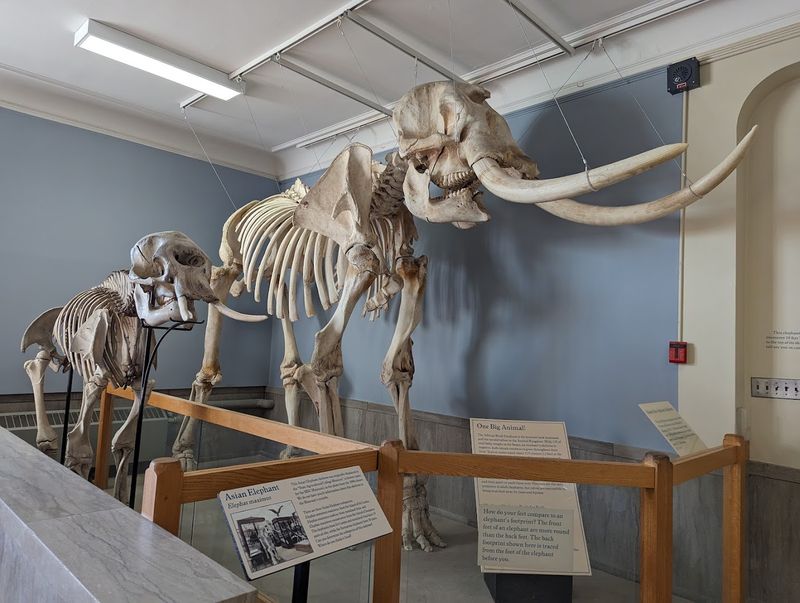
The prehistoric and geological exhibits at MSU Museum cover Michigan’s deep natural history with real thoroughness. Fossil specimens, ancient marine life, and Ice Age megafauna all make appearances, giving visitors a sweeping sense of how dramatically this landscape has changed over geological time.
The mastodon material is especially compelling — Michigan has produced a notable number of mastodon remains, and the museum contextualizes those finds within the broader story of the state’s natural history.
What distinguishes MSU Museum from a purely academic institution is its genuine commitment to public engagement. The exhibits are written and designed for general audiences, not just researchers.
Families, school groups, and solo visitors all find something to connect with, and the museum’s programming calendar frequently includes events that make the content feel current and alive rather than static. Rotating exhibits keep things fresh for repeat visitors.
East Lansing is a fantastic college town with energy, great food, and a welcoming atmosphere year-round. Visiting MSU Museum during a Spartan football weekend, a summer afternoon, or a quiet weekday in the middle of the semester all feel like completely different experiences.
The museum is free to enter, which removes every possible barrier to making it part of your Michigan itinerary. It is a cornerstone of the state’s natural history landscape, full stop.
Share this story