A church can feel completely different after dark. The stained glass fades into shadow, familiar architecture takes on new shapes, and every creak seems to carry a little more weight than it did during the day. Across Georgia, a handful of historic churches have become intertwined with ghost stories, unexplained encounters, and local legends that refuse to disappear no matter how much time passes.
Some are rooted in documented events, others survive through generations of retelling, but all have an atmosphere that lingers. Whether you believe the stories or not, these churches prove that history can feel a lot more mysterious once the sun goes down.
1. First African Baptist Church (Savannah)
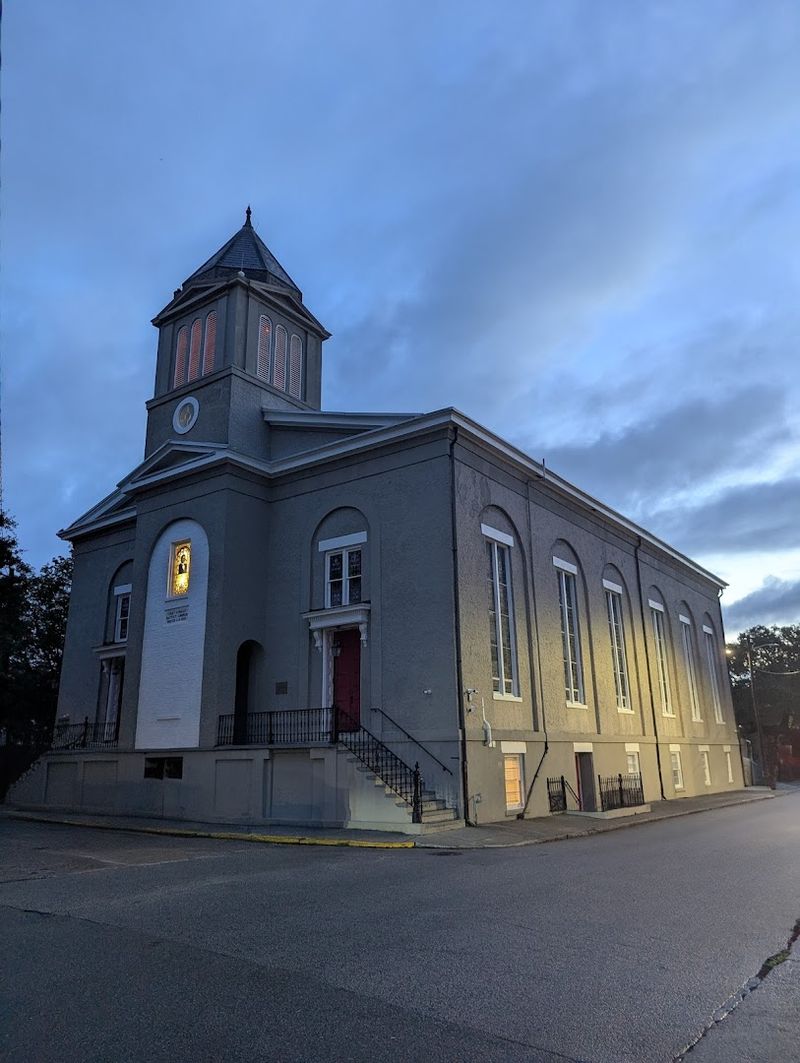
Start in Savannah and the mood shifts quickly. First African Baptist Church carries enormous historical weight, and that alone gives the building a powerful presence after sundown.
Then you hear the stories tied to hidden spaces beneath the floorboards, where escaped slaves were reportedly sheltered, and the silence around the sanctuary lands differently.
By daylight, visitors usually focus on craftsmanship, age, and the church’s place in Black history. At night, local lore takes over.
People talk about footsteps that seem to cross the wood without a visible source, faint movement in peripheral vision, and the strange sense that the building is still guarding secrets it was once forced to keep.
That is the part that makes the legends stick. They are not just spooky for the sake of being spooky. The whispers here are bound to survival, risk, and courage, so even the smallest unexplained sound can feel loaded with memory rather than cheap drama.
Savannah already knows how to stage a haunted reputation, but this church stands apart from the city’s more theatrical ghost talk. Its stories are quieter and more intimate.
Instead of grand scares, you get creaking boards, heavy stillness, and the feeling that history is pressing close from underneath your feet.
If you visit, the church’s mystery works best when you let the details do the talking. Look at the aged brick, the worn wood, and the spaces that once had practical purpose in dangerous times.
Whether every legend is literal matters less than the fact that this is one of those rare places where documented struggle and after-dark folklore naturally share the same room.
2. First Baptist Church of Savannah (Savannah)
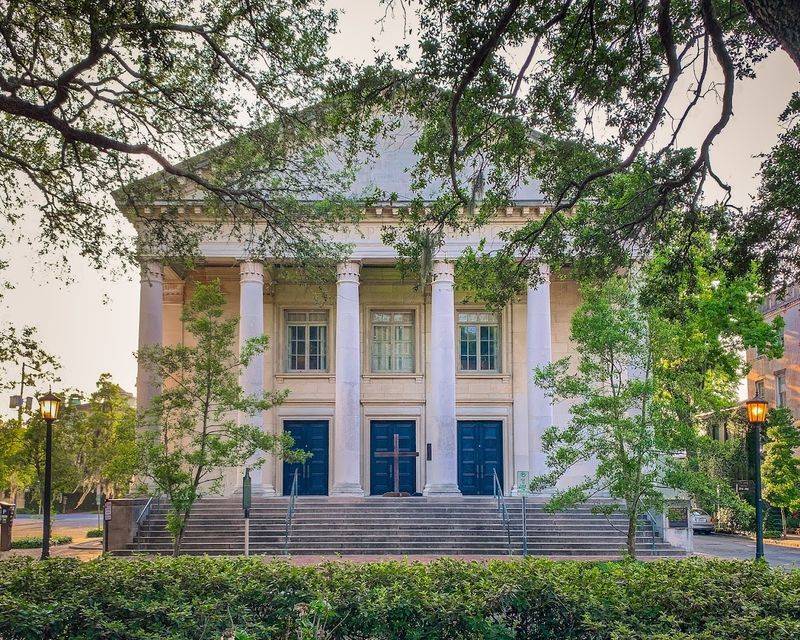
A few blocks and a few centuries can change the tone of a city, and First Baptist Church of Savannah proves it. As one of Georgia’s oldest Baptist congregations, it sits inside a district where every corner already seems ready for a ghost tour.
Add reports of strange sounds and shadowy figures after sunset, and the building slides easily into Savannah’s darker folklore.
What makes this site memorable is how ordinary the unsettling details sound. No dramatic chains, no overproduced haunted-house nonsense.
Just unexplained activity that locals describe in quick, matter-of-fact ways: a figure at the edge of the lot, noises that do not match traffic, or movement near the church when the block looks empty.
That low-key quality gives the stories more staying power. Savannah’s historic center can be busy, but churches like this one hold a different kind of quiet after hours. The older the structure, the more every creak and every change in light seems to ask you to pay attention.
There is also the simple weight of continuity here. A congregation that old has watched generations pass through weddings, funerals, revivals, war years, storms, and citywide change.
Even without leaning too hard into supernatural claims, you can understand why people attach stories to a place that has absorbed so much human emotion over such a long stretch of time.
If you’re wandering the historic district after dinner, this is the kind of stop that lingers in your head longer than flashier attractions. The church does not need gimmicks.
Its age, setting, and steady stream of whispered accounts do the work, leaving you with the distinct impression that some Savannah streets get quieter at night while others only reveal what they have been holding back.
3. Christ Church Frederica (St. Simons Island)
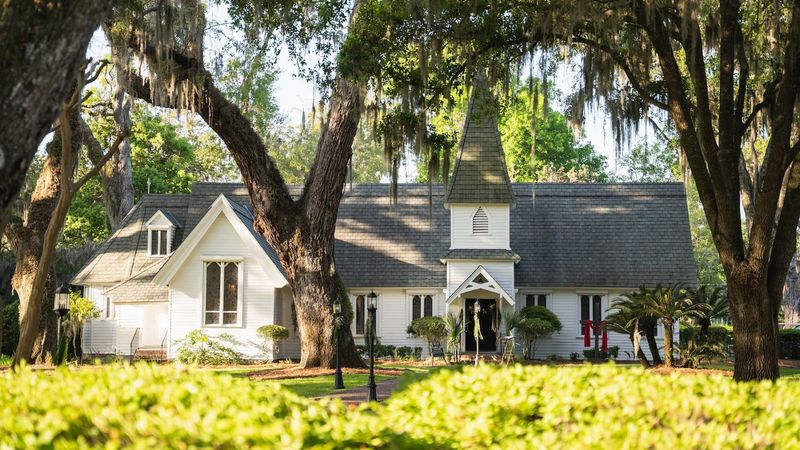
St. Simons Island has no shortage of ghost stories, but few are as enduring as those connected to Christ Church Frederica and its historic cemetery.
Surrounded by towering live oaks draped in Spanish moss, the church grounds already feel suspended between centuries, making it easy to understand why local legends have flourished here for generations.
The most famous tale involves the nearby “ghost lights” and the so-called phantom candle associated with the island’s colonial past. Visitors and residents have long reported mysterious lights appearing after dark, sparking stories that blend tragedy, folklore, and restless spirits.
While the accounts vary, the legends have become a lasting part of St. Simons Island culture. The cemetery contributes to the atmosphere.
Historic graves dating back generations sit beneath twisting oak branches, creating a setting that feels especially haunting once daylight fades. Even skeptics often admit that the combination of age, isolation, and local storytelling can make an evening walk through the grounds surprisingly memorable.
What separates Christ Church Frederica from many haunted locations is the way history and folklore overlap. The church itself is a respected historic landmark, while the surrounding legends have been passed down through decades of retelling.
Whether viewed as supernatural encounters or simply part of the island’s rich storytelling tradition, the tales continue to draw curious visitors after sunset. Its place on this list feels earned because the mystery is woven directly into the landscape.
Between the centuries-old church, the atmospheric cemetery, and one of Georgia’s most famous ghost-light legends, Christ Church Frederica offers exactly the kind of after-dark intrigue that keeps local folklore alive.
4. St. Mark’s Episcopal Church (Brunswick)
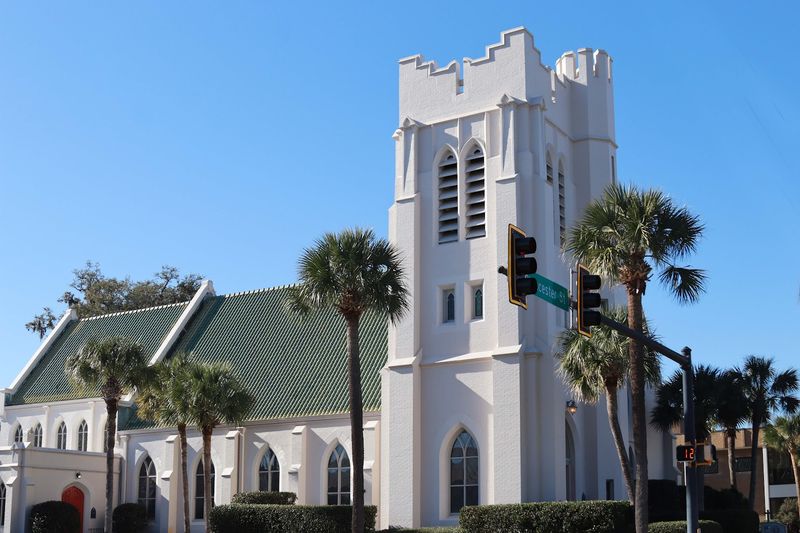
Brunswick’s historic district is filled with stories that seem to grow stronger after sunset, and St. Mark’s Episcopal Church sits comfortably within that tradition.
Established in the 19th century, the church has witnessed generations of local history, making it the kind of place where folklore naturally takes root.
Its Gothic-inspired architecture and quiet surroundings only add to the atmosphere once daylight begins to fade. Local stories often focus on unexplained sounds, fleeting shadows, and strange sensations reported around the church grounds after dark.
While accounts vary from one storyteller to another, the building’s age and prominent place in Brunswick’s history have helped those tales survive for decades. Some visitors describe an unusual stillness around the property, while others claim the church feels markedly different at night than it does during the day.
Part of the mystery comes from the setting itself. Historic churches often become repositories for community memory, and St. Mark’s has stood through wars, economic shifts, hurricanes, and countless personal milestones.
That long history gives even ordinary sounds and movements an added layer of significance, especially when viewed through the lens of local legend. Brunswick’s ghost lore tends to be quieter than Savannah’s more famous paranormal reputation, but that restraint works in the church’s favor.
The stories feel less theatrical and more rooted in community storytelling. Whether visitors interpret the reports as supernatural encounters or simply the effects of a historic setting after dark, the church remains one of the area’s most intriguing places once evening settles over the coast.
The combination of architecture, history, and local folklore earns St. Mark’s a place on this list. It does not rely on dramatic claims to create an impression.
Instead, it offers the kind of mystery that develops gradually, leaving visitors with the feeling that some stories have lingered around these walls longer than anyone can fully explain.
5. Sacred Heart Cultural Center (Augusta)
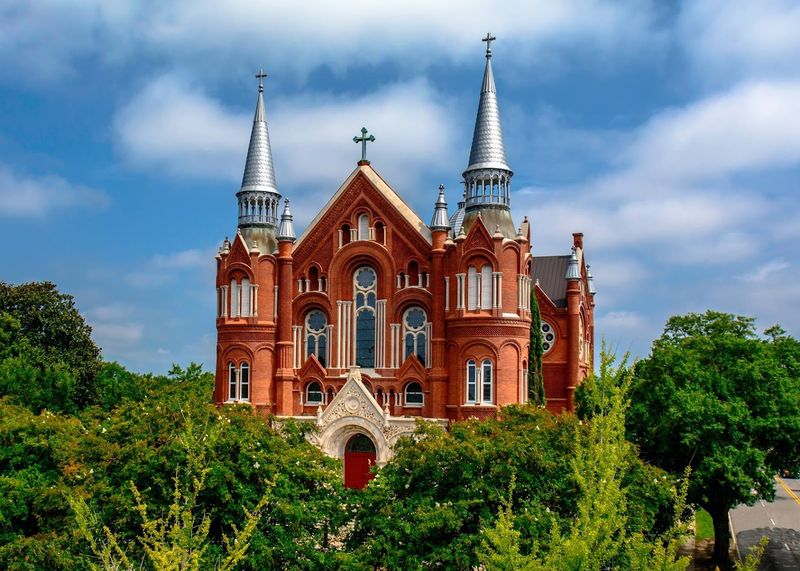
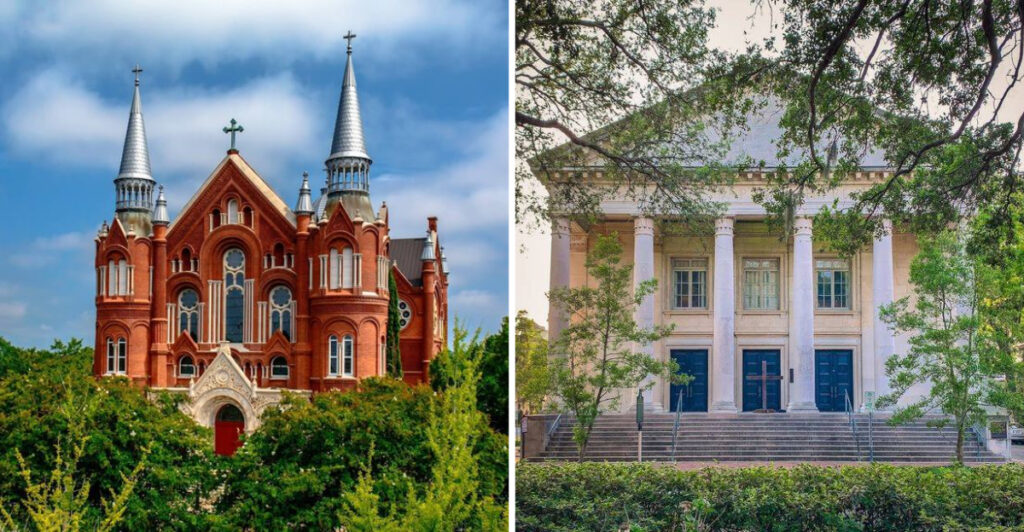
Augusta’s Sacred Heart Cultural Center hardly needs embellishment. The Gothic Revival architecture does plenty on its own, with soaring lines, dramatic windows, and the kind of scale that makes footsteps echo longer than expected.
Once you add local talk of phantom sounds and unexplained sightings, the building takes on a different personality after dark.
Its history as a former Catholic church gives the space another layer of gravity. Even repurposed buildings can hold onto ritual memory in the public imagination.
That is why stories about strange echoes in the halls or fleeting figures inside such an ornate interior have a way of spreading quickly and sticking around for years.
Part of the unease comes from proportion. Large sacred spaces can make a single noise seem distant and immediate at the same time.
A heel tap, door shift, or whisper of air moving through old architectural features can bounce around just enough to leave you wondering whether you heard a building settling or company you did not expect.
There is also the visual side. Gothic details are beautiful, but they are not timid. At night, pointed arches and long shadows can produce their own kind of theater, especially when light falls unevenly across old surfaces. In a place already surrounded by stories, every darkened corner starts looking like a possible witness.
Sacred Heart earns a place here because it combines grandeur with restraint. The legends do not need outrageous claims to work.
A few unexplained footsteps, a strange echo, a shape seen where nobody should be standing, and the architecture takes care of the rest. Augusta has many historic buildings, but few blend elegance and unease as effectively once evening pulls the light out of those towering rooms.
6. Christ Church (Savannah)
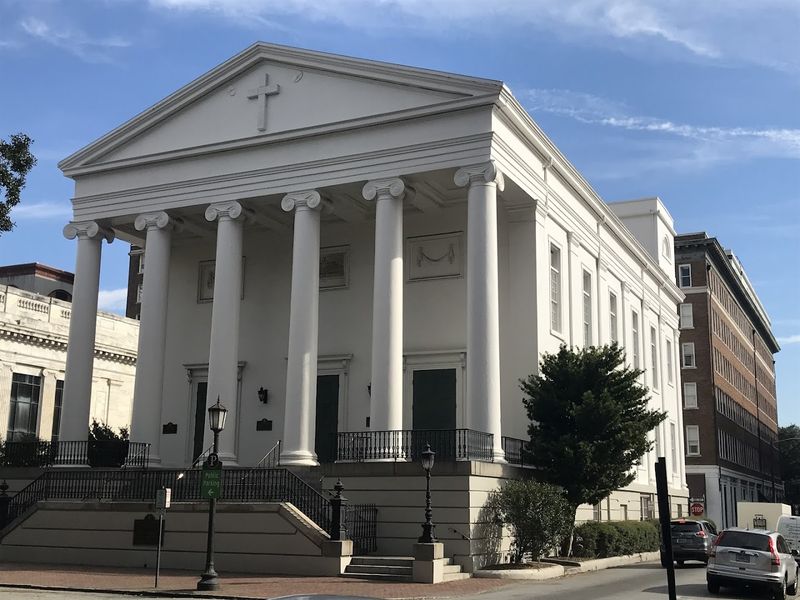
Christ Church brings colonial-era Savannah into the conversation, and that instantly raises the stakes for local folklore. A site with roots reaching back that far has had plenty of time to gather stories, and gather them it has.
Tales of spectral figures, shifting shadows, and unexplained sounds have long hovered around its historic grounds.
There is a different texture to legends attached to very old churches. The building itself becomes part archive, part stage set, part witness.
Even before anyone mentions ghosts, you are looking at a place shaped by generations of worship, grief, celebration, and ordinary passage, which gives every rumor more depth than a simple jump scare.
Savannah’s reputation can make any old landmark seem suspicious after sunset, but Christ Church carries its own weight. People speak of seeing forms where the eye expects empty space, or hearing noises that do not line up with nearby activity.
Those stories are hard to separate from the city around them, yet the church’s age gives them a sharper edge. The grounds matter too. Historic church property at night has a way of compressing time.
The street may still belong to the modern city, but once your attention shifts to old masonry, dark windows, and pathways worn by many decades, the present starts to feel thinner than usual.
That tension is why Christ Church remains one of Savannah’s most intriguing after-hours legends. You do not need to believe every whispered account to understand the appeal.
The church sits at the intersection of faith, history, and a city famous for its nocturnal stories, and that combination keeps the folklore alive. Some places invite explanation, while others simply hold their shadows a little too well for comfort.
7. Ebenezer Baptist Church (Atlanta)
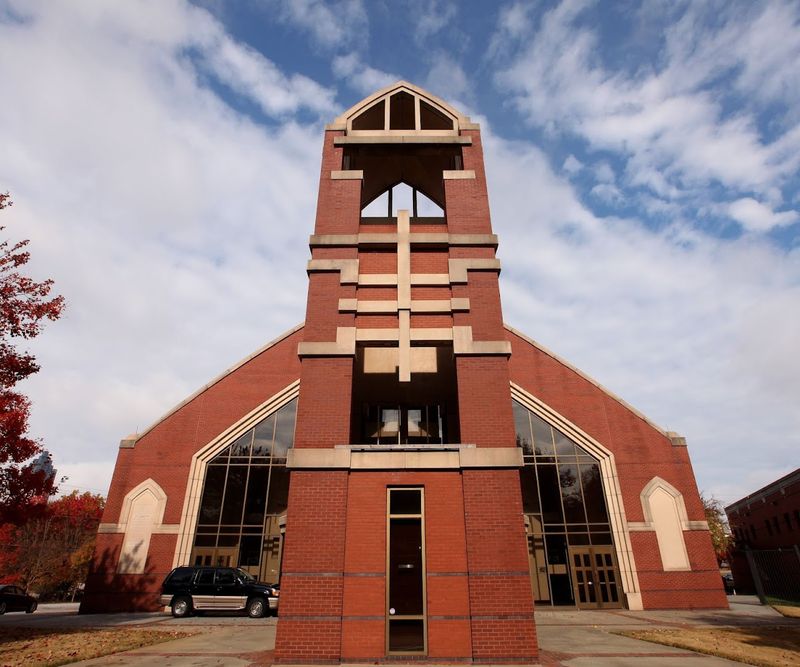
Few churches in Georgia carry as much historical significance as Ebenezer Baptist Church. Located in Atlanta’s Sweet Auburn Historic District, the church is best known for its connection to Dr. Martin Luther King Jr., whose legacy remains deeply woven into the building and the surrounding neighborhood.
By day, visitors often focus on its role in the Civil Rights Movement. After dark, however, the atmosphere takes on a quieter and more reflective character.
The church stands in a part of the city where history feels remarkably close. Generations of worshippers, activists, community leaders, and ordinary residents passed through its doors during some of the most transformative periods in American history.
That accumulated sense of purpose and struggle has inspired countless stories, reflections, and personal experiences tied to the site. Unlike locations known primarily for ghost tales, Ebenezer’s mystery comes from its emotional presence.
Visitors frequently describe feeling a powerful sense of connection to the past while walking nearby after sunset. The surrounding streets grow quieter, the historic buildings seem more prominent, and the weight of the events associated with the area becomes easier to appreciate.
Part of what makes the church memorable after dark is the contrast between its appearance and its legacy. The structure itself is modest compared to some of Georgia’s grander religious landmarks, yet its impact on history is immense.
That combination creates a different kind of mystery, one rooted not in fear but in memory, symbolism, and the feeling that important stories still linger within the neighborhood long after the crowds have gone home.
8. Milledgeville Historic District Churches (Milledgeville)
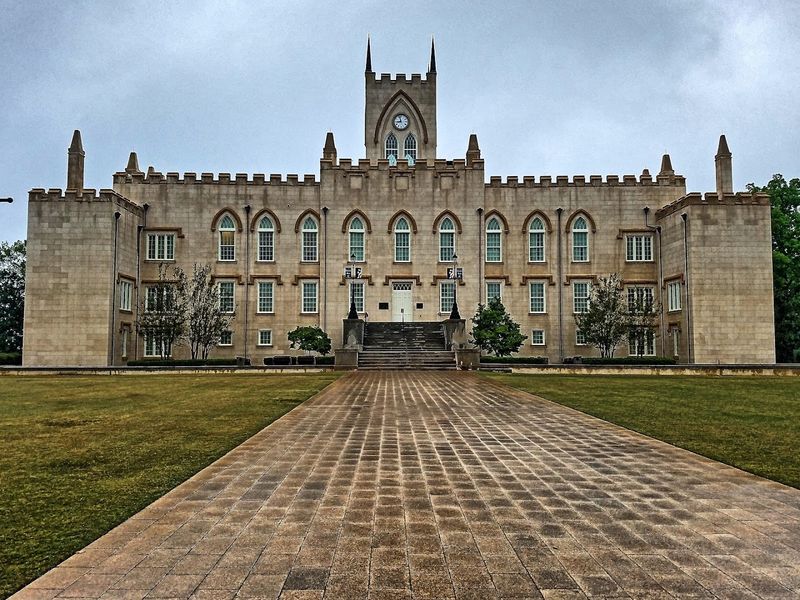
Milledgeville does not pin its reputation on just one church. That is part of the appeal. Several historic district churches stand near sites tied to the Civil War and the city’s turbulent past, creating a whole pocket of downtown where after-dark stories seem to travel from steeple to steeple rather than staying in a single building.
That wider setting gives the legends unusual range. Instead of one famous haunting, you get a network of accounts involving apparitions, strange lights, odd sounds, and moments of sharp unease on otherwise quiet streets.
The result is less like a contained ghost tale and more like a district-wide murmur layered over ordinary architecture.
History is doing plenty of work here. As Georgia’s former capital, Milledgeville carries political, military, and social memory in concentrated form, and churches naturally sit near the center of that memory.
They witnessed upheaval, prayer, fear, relief, and public gathering, which makes them natural anchors for stories that refuse to stay settled.
Walking the district at night, you can see why the folklore persists. Old brick, steeples, and deep-set windows create strong contrasts under streetlights, while quieter blocks leave plenty of room for every footstep to sound more dramatic than it should.
A shadow crossing one corner or an unexplained noise from behind a church can quickly become a story with a second life.
Milledgeville’s churches belong on this list because the mystery is collective. You are not visiting one isolated landmark with a single scripted legend.
You are stepping into a historic area where many buildings seem to share the same restless reputation. That makes the experience broader, a little less predictable, and in some ways more convincing, because the city’s haunted energy appears woven into the landscape instead of attached to just one door.
9. First Presbyterian Church (Augusta)
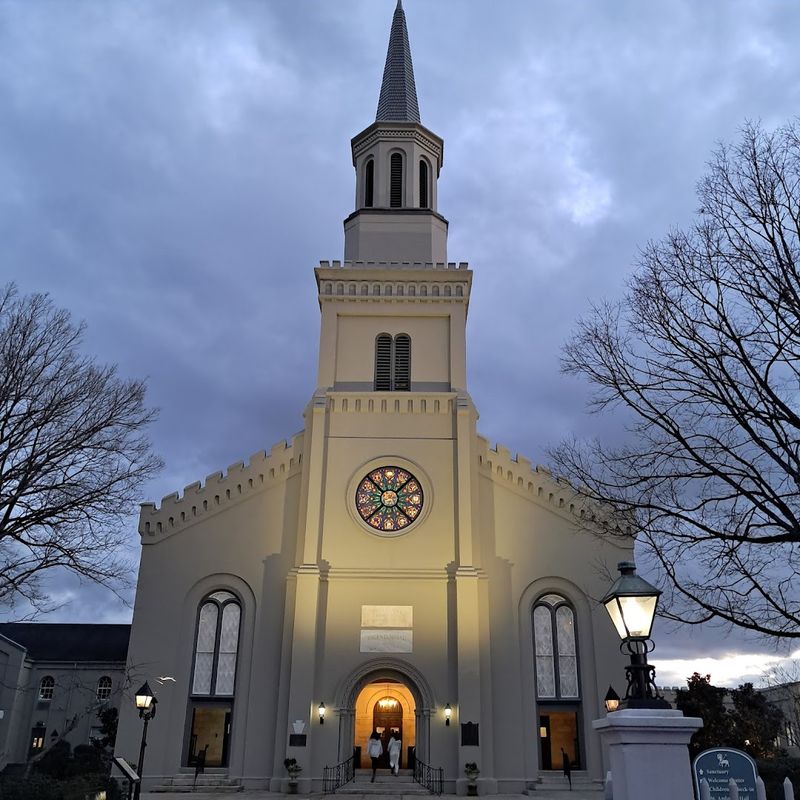
First Presbyterian Church in Augusta carries the kind of wartime history that does not sit lightly on a place. Established in the early 1800s and later used as a Confederate hospital, detention camp, and wartime refuge, it has become a natural magnet for chilling tales.
When a building has witnessed that much suffering and urgency, local legends hardly need much encouragement.
The stories tied to this church tend to carry a heavier tone than playful ghost lore. People connect unexplained sounds and unsettling impressions to the building’s Civil War past, where pain, fear, and uncertainty would have been unavoidable realities.
Even if you set aside the supernatural angle, the historical context alone can make a nighttime visit feel charged. Churches often gather emotional residue in public memory, and wartime uses multiply that effect. A sanctuary turned into a place of medical crisis or confinement is already a startling contrast.
That tension between sacred purpose and emergency function gives the building a layered identity, one that seems ready to produce shadowy stories whether or not anyone intends to believe them.
Augusta has many historic corners, but this church stands out because the haunting narrative grows directly from its known past.
Instead of vague rumors floating free of context, the legends are anchored to a period when the grounds would have seen extreme strain. That connection makes every unexplained creak, late-night echo, or uneasy sensation seem more consequential.
If any church on this list demonstrates how history and folklore can reinforce each other, it is this one. The architecture, the age, and the wartime record all push in the same direction, creating a site that feels solemn first and spooky second.
That order matters. The chill here is not flashy. It comes from the sense that old suffering may be the one visitor some buildings never fully persuade to leave.
Share this story