There’s a lot more to Michigan than its famous Great Lakes, cherry orchards, and postcard-perfect lake towns. Hidden along quiet back roads, small-town streets, and unexpected roadside corners, you’ll find everything from giant tires and towering dinosaur statues to mysterious gravity hills and museums filled with nun dolls.
These are the kinds of places that make you do a double take, pull over, and wonder how they ended up there in the first place. Strange, fun, and full of character, these 11 roadside stops are the perfect detours to add to your next Michigan road trip.
1. Hamtramck Disneyland, Hamtramck
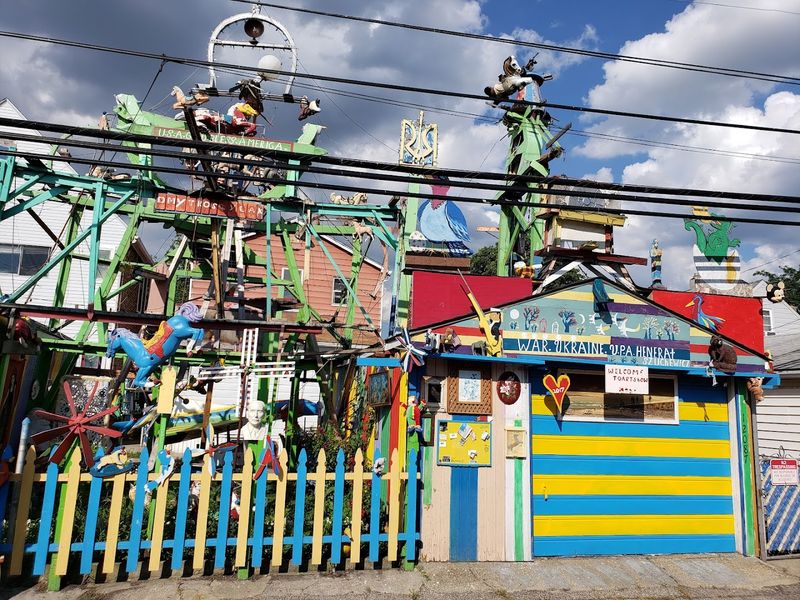
Imagine walking down a quiet city street and suddenly stumbling upon what looks like a fever dream built from salvaged parts and pure imagination. That is exactly what Hamtramck Disneyland delivers.
Created by retired auto worker Dmytro Szylak, this extraordinary folk art installation covers nearly every inch of a residential lot in Hamtramck, a small city completely surrounded by Detroit.
Spinning windmills, painted figurines, mechanical angels, and repurposed industrial scraps crowd every surface. Szylak spent decades building it by hand, turning his property into a living, whirring spectacle that has drawn visitors from around the world.
The name is a playful dig at the famous theme park, suggesting you don’t need a billion-dollar budget to create something genuinely magical.
After Szylak passed away, community members and local organizations stepped in to preserve the installation, recognizing it as a true piece of American outsider art. Visiting feels less like a tourist attraction and more like a personal encounter with one man’s unstoppable creative spirit.
The site sits in a real neighborhood, so be respectful of nearby residents while you’re there.
The best time to visit is during daylight hours when the colors and details are fully visible. Some of the mechanical pieces still move, which adds an almost eerie liveliness to the whole experience.
Kids are usually wide-eyed, and adults tend to stand quietly for a while, just taking it all in.
Hamtramck itself is worth exploring too. The city has one of the most diverse populations in Michigan, with a thriving food scene and a reputation for celebrating creativity.
Plan to grab a meal nearby and make a half-day out of it.
2. Dinosaur Gardens Prehistoric Zoo, Ossineke
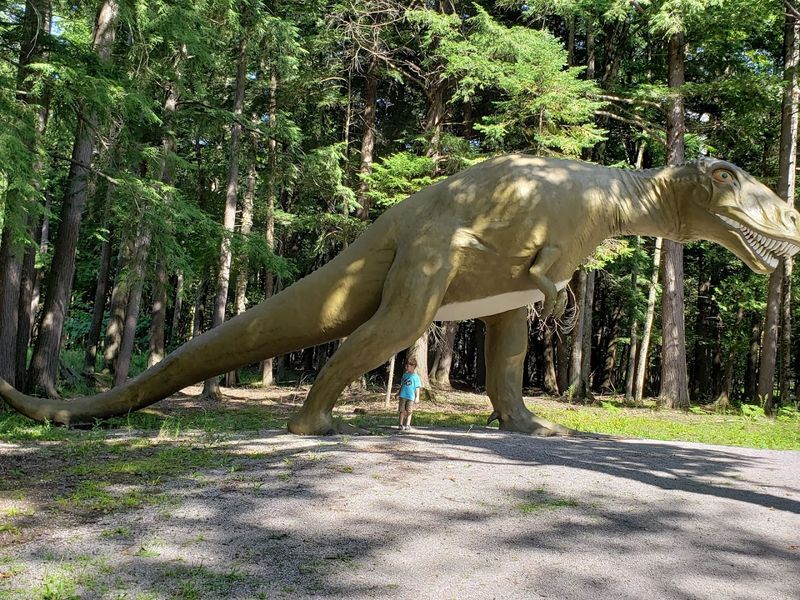
Somewhere between Rogers City and Alpena, a T-rex peeks through the trees along US-23, and that is your cue to pull over immediately. Dinosaur Gardens Prehistoric Zoo is one of those roadside attractions that feels like it was built specifically for people who refuse to grow up.
The park features more than two dozen life-sized concrete dinosaurs and prehistoric creatures scattered through a wooded property along the Thunder Bay River.
Paul Domke, a self-taught sculptor, began building the creatures in the 1930s. His goal was to educate visitors about prehistoric life, but the result ended up being something far more wonderfully strange than any textbook exhibit.
The sculptures are massive, slightly rough around the edges, and completely charming in a way that modern, polished attractions rarely manage to pull off.
Walking through the grounds feels like stepping into a forgotten era of American roadside culture. Giant iguanodons and long-necked plesiosaurs emerge from the brush without warning.
The setting inside the woods makes everything feel more dramatic, like these creatures actually belong there.
There is also a religious element woven into the park, including a large statue of Jesus, which reflects Domke’s personal beliefs and adds another layer of unexpected discovery to the visit. It is a reminder that this place was built with genuine conviction, not just commercial ambition.
Admission is affordable, making it a great stop for families traveling the Lake Huron coastline. The park has been preserved and maintained with care, and it sits on a peaceful stretch of northern Michigan that already feels a little removed from everyday life.
After you visit, the image of a concrete stegosaurus standing in dappled forest light tends to stick with you for a long time.
3. World’s Largest Working Weathervane, Montague
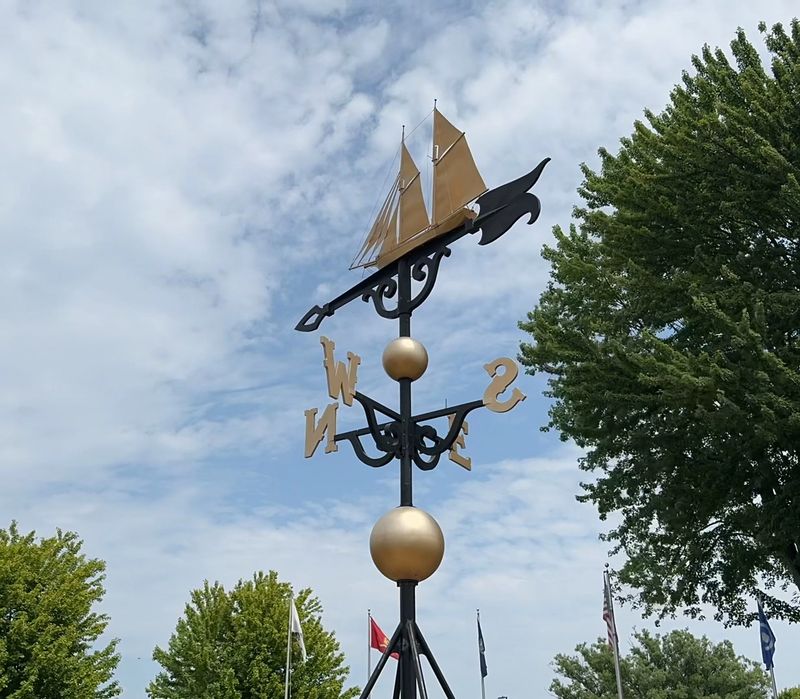
Standing nearly 50 feet tall and weighing over 4,000 pounds, the World’s Largest Working Weathervane in Montague is not something you just drive past without doing a double-take. This is a fully functional weathervane, meaning it actually spins with the wind, which makes it simultaneously a piece of engineering and a roadside spectacle worth celebrating.
Montague sits along White Lake in western Michigan, and the weathervane has become the town’s most recognizable landmark. It was erected to honor the area’s maritime history and its connection to the Great Lakes shipping industry.
The design features a historic schooner mounted atop the spinning arrow, nodding to the sailing vessels that once carried lumber and goods across the lakes.
What makes this stop especially satisfying is how genuinely functional the thing is. A lot of world’s-largest claims involve objects that are purely decorative, but this one does its job every single day.
On a breezy afternoon, watching a four-ton metal ship pivot slowly in the wind is oddly mesmerizing.
The weathervane is located near the White Lake Area Chamber of Commerce, so parking is easy and the surrounding area is pleasant for a short walk. Montague and neighboring Whitehall have a charming small-town feel with local shops and restaurants worth checking out while you’re there.
If you’re road-tripping along the Lake Michigan shoreline, this is a natural stop between Muskegon and Ludington. It takes maybe 15 minutes to see, photograph, and appreciate, but it earns its place on the itinerary with zero competition.
Sometimes the best road trip stops are the ones that make absolutely no sense until you’re standing right in front of them, grinning.
4. The Mystery Spot, St. Ignace
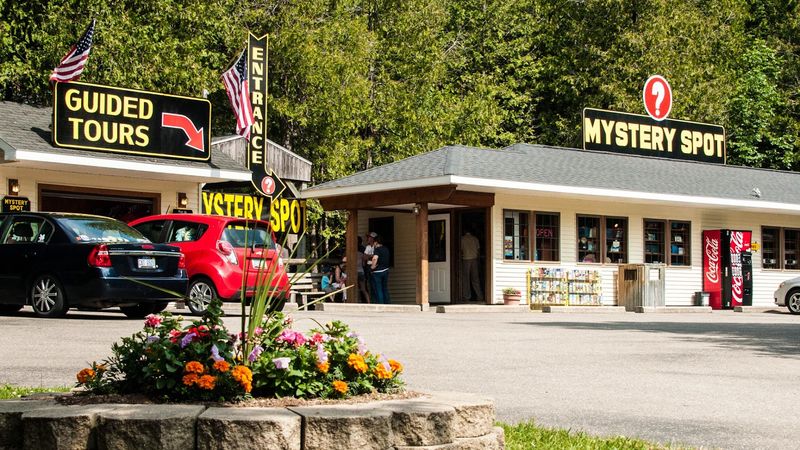
Just a few miles from the Mackinac Bridge, the Mystery Spot has been messing with people’s heads since 1953. It is one of those places where balls roll uphill, people appear to shrink or grow depending on where they stand, and brooms balance on their own without any support.
Whether you believe in genuine gravitational anomalies or prefer the perfectly rational explanation involving optical illusions, the experience is disorienting in the best possible way.
Guided tours run through a small tilted cabin where the visual tricks are most dramatic. The guides are enthusiastic and clearly enjoy watching first-time visitors try to make sense of what their eyes are telling them.
Even skeptics tend to leave a little unsettled, because the illusions are genuinely well-executed and surprisingly convincing.
The Mystery Spot has the full aesthetic of classic mid-century roadside America: bold painted signs, a gift shop loaded with souvenirs, and a parking lot full of license plates from across the country. It is unapologetically nostalgic, and that is a big part of its appeal.
This is not a high-tech interactive museum. It is a lovingly maintained piece of American roadside history.
St. Ignace is already a natural stopping point for anyone crossing the Upper Peninsula via the Mackinac Bridge. Adding the Mystery Spot to your itinerary costs very little and takes under an hour.
Kids absolutely love it, but adults who grew up visiting places like this often get hit with a wave of pure nostalgia that is hard to shake.
The surrounding area offers great views of the Straits of Mackinac and easy access to ferry rides to Mackinac Island. Pair it with a pasty from a local UP diner and you have yourself a genuinely satisfying northern Michigan afternoon.
5. The Pickle Barrel House Museum, Grand Marais
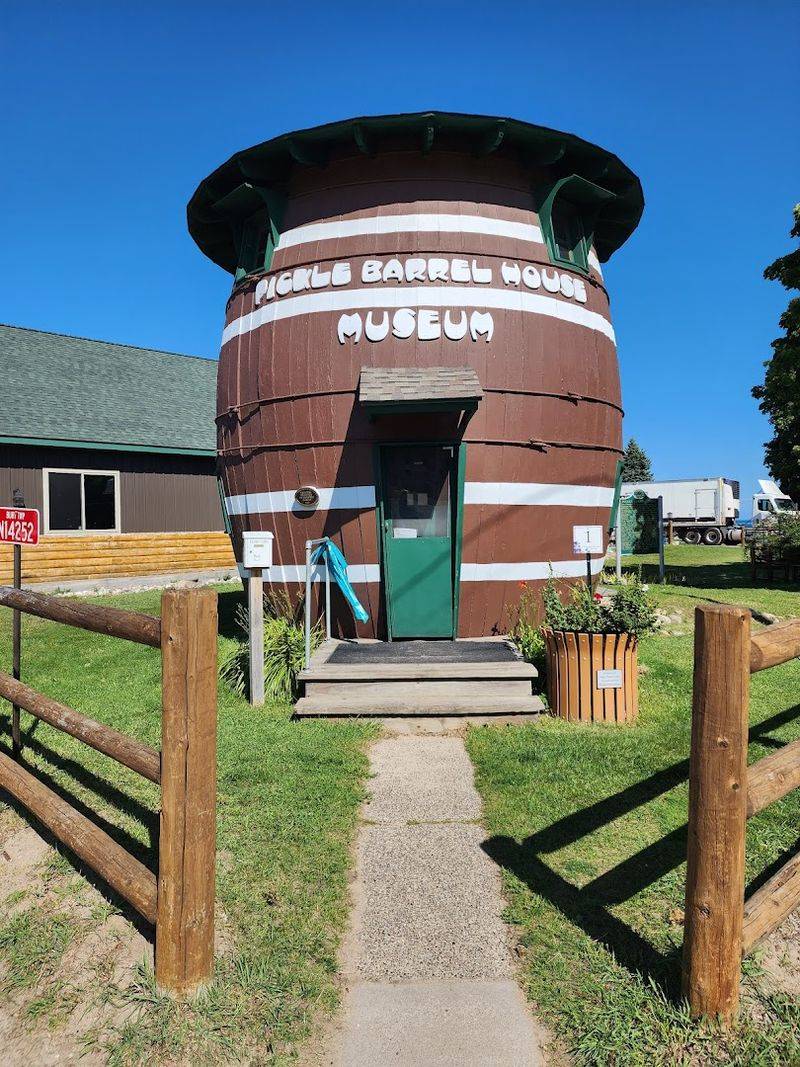
Writer and cartoonist William Donahey, creator of the beloved Teenie Weenie comic strip, had a summer cottage built in the shape of a giant pickle barrel on the shores of Lake Superior near Grand Marais. That sentence alone should be enough to convince you to visit.
The structure dates back to 1926 and has been preserved as a small museum honoring Donahey’s legacy and the whimsical world of his tiny cartoon characters.
The Teenie Weenies were a family of miniature people who lived inside everyday objects, so building a home inside an oversized barrel was a perfectly on-brand choice for their creator. The cottage is small, charming, and genuinely unusual, with rounded walls that give the interior a cozy, slightly surreal feel.
Visiting feels like stepping into one of Donahey’s own comic panels.
Grand Marais itself is one of the most remote and beautiful communities in Michigan’s Upper Peninsula. It sits on the southern shore of Lake Superior and serves as the eastern gateway to Pictured Rocks National Lakeshore.
Most people pass through on their way to the famous colored sandstone cliffs, but the Pickle Barrel House is reason enough to slow down and spend some time in town.
The museum is open seasonally, so check ahead before making it the centerpiece of your trip. The Grand Marais Historical Society manages the property, and admission is typically very affordable.
Inside, you’ll find exhibits about Donahey’s work and the history of the cottage itself.
After your visit, take a walk down to the Lake Superior shoreline. The water is impossibly clear and cold, and the surrounding landscape has a wild, untouched quality that feels rare even by Upper Peninsula standards.
It is a genuinely special corner of Michigan.
6. The Uniroyal Giant Tire, Allen Park
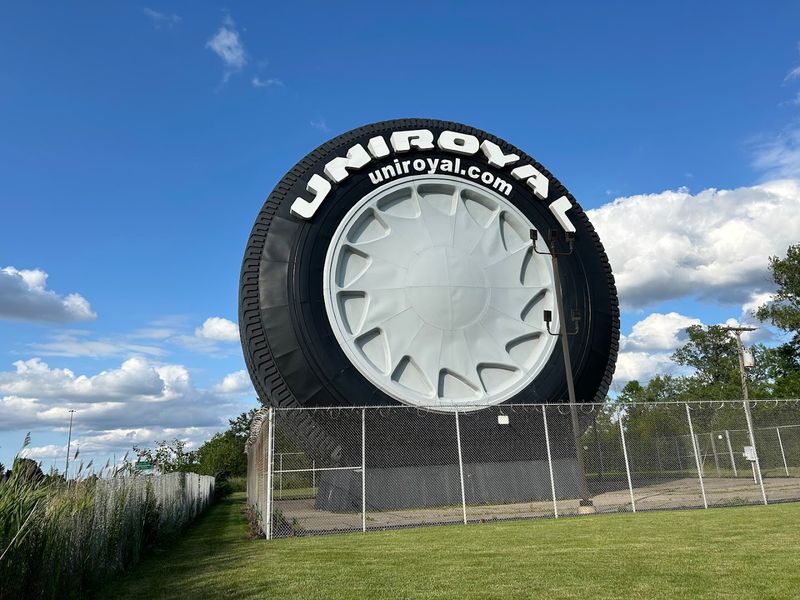
Few things capture the spirit of Detroit’s industrial identity quite like a 12-story-tall tire standing beside a freeway. The Uniroyal Giant Tire in Allen Park measures 80 feet tall and weighs approximately 12 tons, making it one of the most recognizable roadside landmarks in the entire state of Michigan.
It has been greeting drivers along I-94 since 1966, and it shows absolutely no signs of slowing down.
The tire’s origin story is genuinely interesting. It was originally built as a Ferris wheel for the 1964 World’s Fair in New York, carrying passengers inside its enormous rim.
After the fair ended, Uniroyal acquired it and transformed it into an oversized advertisement, eventually relocating it to its current home near Detroit Metropolitan Airport. So technically, this is a Ferris wheel that became a tire, which is already a more fascinating biography than most roadside attractions can claim.
Over the decades, the tire has received at least one highly publicized modification: in 1998, Uniroyal added a giant nail to the tire’s tread as a promotional stunt for a new puncture-resistant product. The nail was later removed, but it generated enormous media attention at the time and cemented the tire’s status as a genuine cultural landmark.
Pulling off the highway to get a closer look is easy and free. The tire sits in a well-maintained area and is clearly visible from the road, making it an effortless addition to any Detroit-area road trip.
It is the kind of thing that locals have driven past a thousand times without stopping, which is a shame, because standing next to it and craning your neck upward is a surprisingly humbling experience.
For anyone fascinated by American manufacturing history or mid-century roadside culture, this is a must-see stop.
7. National Shrine of the Cross in the Woods and Nun Doll Museum, Indian River
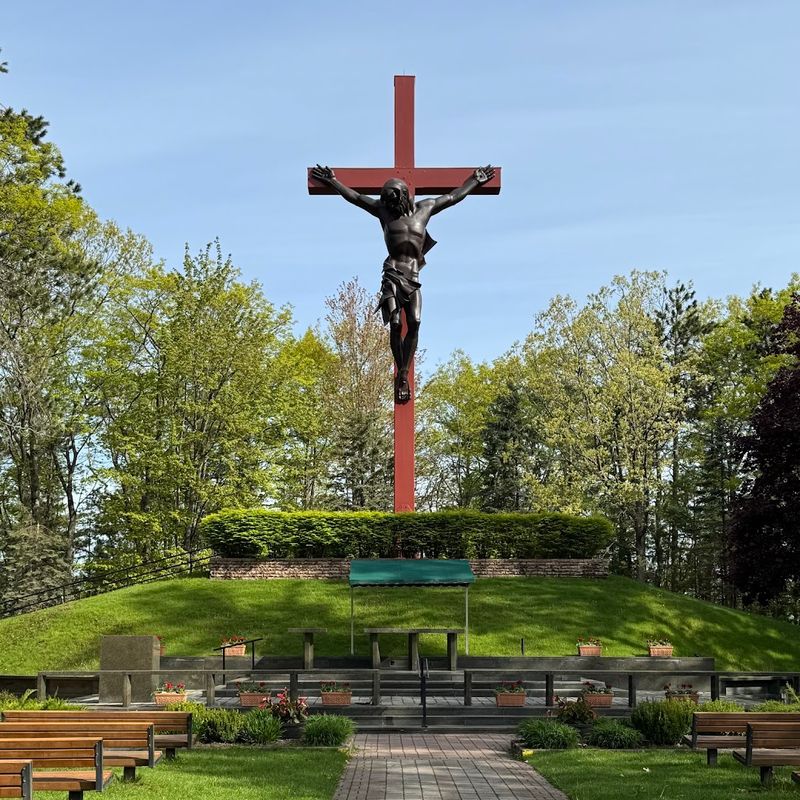
The National Shrine of the Cross in the Woods draws hundreds of thousands of visitors each year to the small northern Michigan town of Indian River. The centerpiece is a massive bronze figure of Christ mounted on a cross made from a single California redwood log, standing nearly 30 feet tall.
It is a genuinely moving sight, whether you visit for religious reasons or simply out of curiosity.
But here is the part that surprises most people: attached to the shrine is the Nun Doll Museum, a collection of over 500 dolls dressed in the habits of different Catholic religious orders from around the world. The museum was assembled to help visitors understand the diversity of religious life within the Catholic Church, and it accomplishes that goal in the most unexpectedly fascinating way imaginable.
Each doll is meticulously dressed in the authentic habit of a specific order, complete with tiny rosaries, veils, and accessories. The sheer variety of styles and colors is remarkable, and the care that went into creating and organizing the collection is obvious.
It is educational, unusual, and oddly beautiful all at once.
Indian River sits in the heart of northern Michigan’s inland lake country, surrounded by forests and small resort communities. The shrine grounds are peaceful and well-maintained, with a gift shop and a small chapel available for quiet reflection.
Many visitors spend an hour or two simply walking the grounds and taking in the natural setting.
Combining a sacred national shrine with a museum full of meticulously dressed miniature figures is about as Michigan as it gets. This is not a place that tries to be quirky.
It simply is, authentically and without apology, and that is exactly why it belongs on this list.
8. Da Yoopers Tourist Trap and Rock Shop, Ishpeming
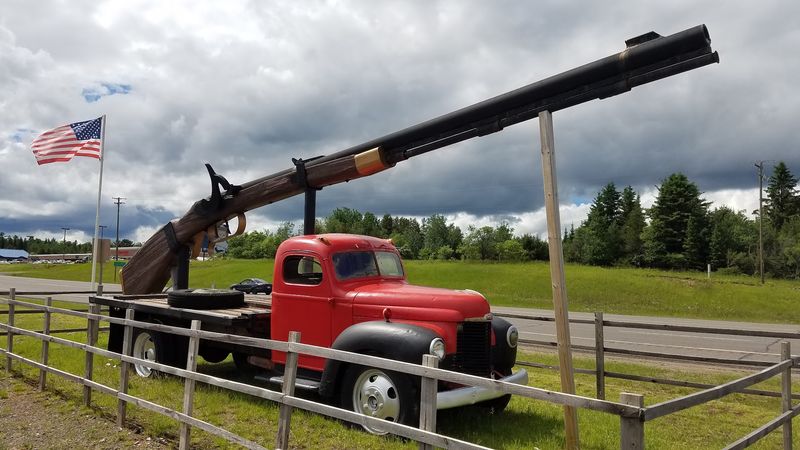
If you have spent any time in Michigan’s Upper Peninsula, you already know that Yoopers take their regional identity seriously and celebrate it loudly. Da Yoopers Tourist Trap and Rock Shop in Ishpeming is the physical embodiment of that pride, wrapped in humor, chainsaw carvings, and an enormous fake gun called Big Ernie that you can climb on for a photo.
Da Yoopers started as a comedy music group from the UP, famous for songs that poke fun at hunting season, winter driving, and the general absurdity of life in the northwoods. Their tourist trap grew into a full-blown roadside destination, complete with a gift shop, outdoor sculptures, and the kind of irreverent humor that makes you snort-laugh before you’ve even gotten out of the car.
The outdoor area features a massive chainsaw named Rusty, Big Ernie the oversized rifle, and various other oversized props that are perfect for photos. Inside the shop, you’ll find locally made crafts, UP-themed merchandise, music from the band, and rock samples from the mineral-rich Upper Peninsula.
The rock shop component is genuinely interesting for geology fans, since the UP sits on some of the oldest and most mineral-diverse terrain in North America.
Ishpeming itself is a proud mining town with deep roots in Michigan’s iron ore history. The town also claims to be the birthplace of organized skiing in the United States, so the surrounding area has more legitimate bragging rights than its modest size might suggest.
Da Yoopers Tourist Trap is free to browse, and the staff are friendly in that no-nonsense, genuinely warm UP way that is hard to find anywhere else. Budget an hour, leave with a bumper sticker, and drive away grinning.
9. World’s Largest Cherry Pie Pans, Traverse City and Charlevoix
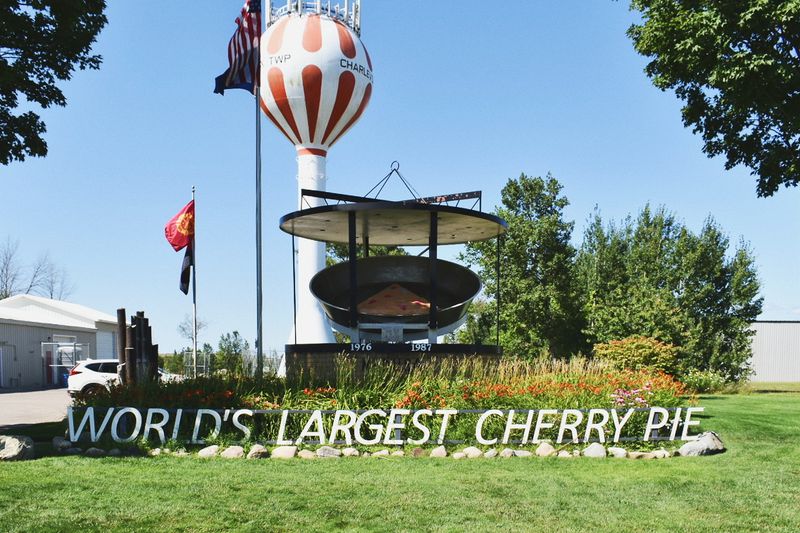
Michigan grows more tart cherries than any other state in the country, and the region around Traverse City takes that distinction extremely seriously. So seriously, in fact, that not one but two enormous cherry pie pans exist in northern Michigan as monuments to the state’s most celebrated fruit.
One lives in Traverse City, home of the National Cherry Festival, and the other sits in nearby Charlevoix.
The pans are the kind of oversized novelty items that feel perfectly calibrated for a road trip selfie. They are big, shiny, and unambiguously proud of what they represent.
Traverse City’s pan was used to bake a record-setting cherry pie during the festival, and the event drew enormous crowds and national media attention when it took place.
Charlevoix, a picturesque resort town about 30 miles north of Traverse City, holds its own cherry pie legacy and its own oversized pan to prove it. The friendly rivalry between the two towns over cherry pie bragging rights is the kind of wholesome regional competition that makes small-town Michigan so endearing.
Visiting both pans on the same trip is completely doable since the towns are connected by US-31 along the Lake Michigan shoreline. The drive between them is genuinely beautiful, passing through orchards, lakeside villages, and some of the most scenic stretches of road in the entire Lower Peninsula.
The National Cherry Festival happens every July in Traverse City and is one of the most popular events in Michigan, drawing hundreds of thousands of visitors. If you time your road trip right, you can see the pans, eat fresh cherry pie, and join a crowd of people who are unreasonably enthusiastic about a fruit.
That is a good day by any measure.
10. Lakenenland Sculpture Park, Marquette
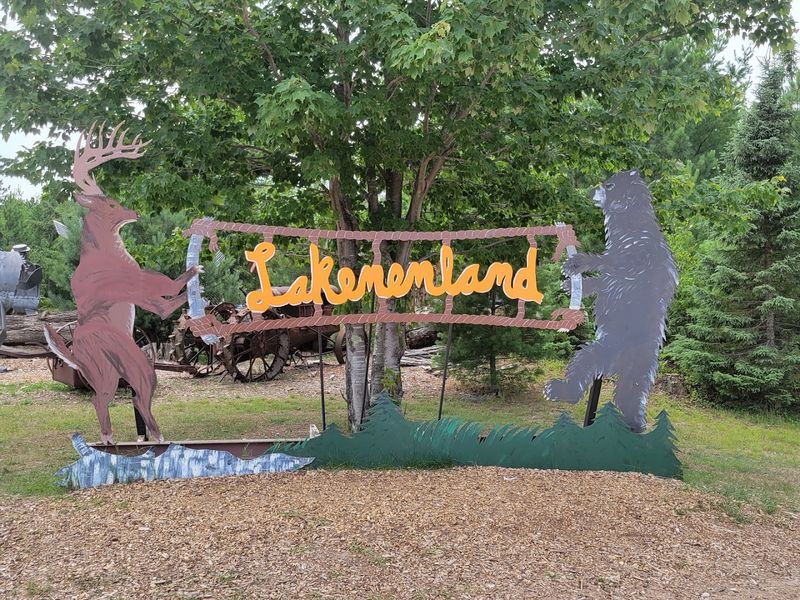
Tom Lakenen has been welding large metal sculptures and placing them along a stretch of road outside Marquette for decades, entirely for free. No admission fee.
No gift shop. No corporate sponsor.
Just a guy with a welder and a serious creative streak who wanted to share his work with anyone willing to pull over and take a walk.
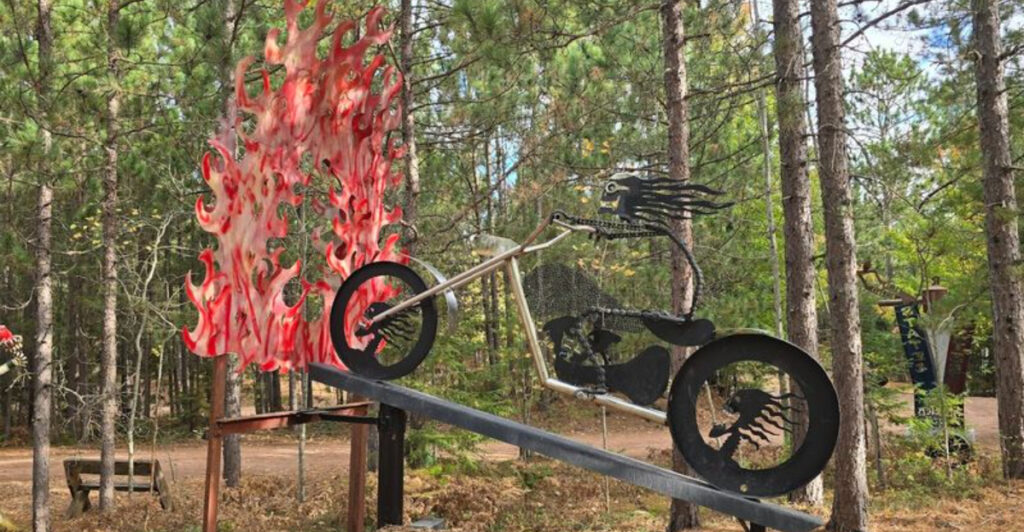
Lakenenland now features dozens of metal sculptures spread across several acres of UP woodland. The pieces range from massive animals and fantastical creatures to commentary on local issues and current events.
Lakenen is not shy about using his art to say something, and several sculptures carry pointed messages delivered with a sense of humor that feels very much at home in the Upper Peninsula.
The park sits along M-28 east of Marquette, and the entrance is easy to spot thanks to the sculptures visible from the road. Trails wind through the property, and new pieces appear regularly as Lakenen continues to add to the collection.
Because the park evolves constantly, repeat visitors often discover something they have never seen before.
What makes Lakenenland genuinely special is its complete lack of pretension. This is not a curated gallery experience with velvet ropes and hushed voices.
It is an outdoor space where you can walk right up to the art, examine the welds, read the messages, and feel like you have stumbled onto something that was made specifically for curious people willing to wander a little.
Marquette is already one of the most vibrant and livable cities in the Upper Peninsula, with great food, trails, and Lake Superior access. Lakenenland fits perfectly into a Marquette day trip and stands as proof that the most memorable art experiences do not always come with a price tag.
11. The Two-Story Outhouse, Cedar Lake
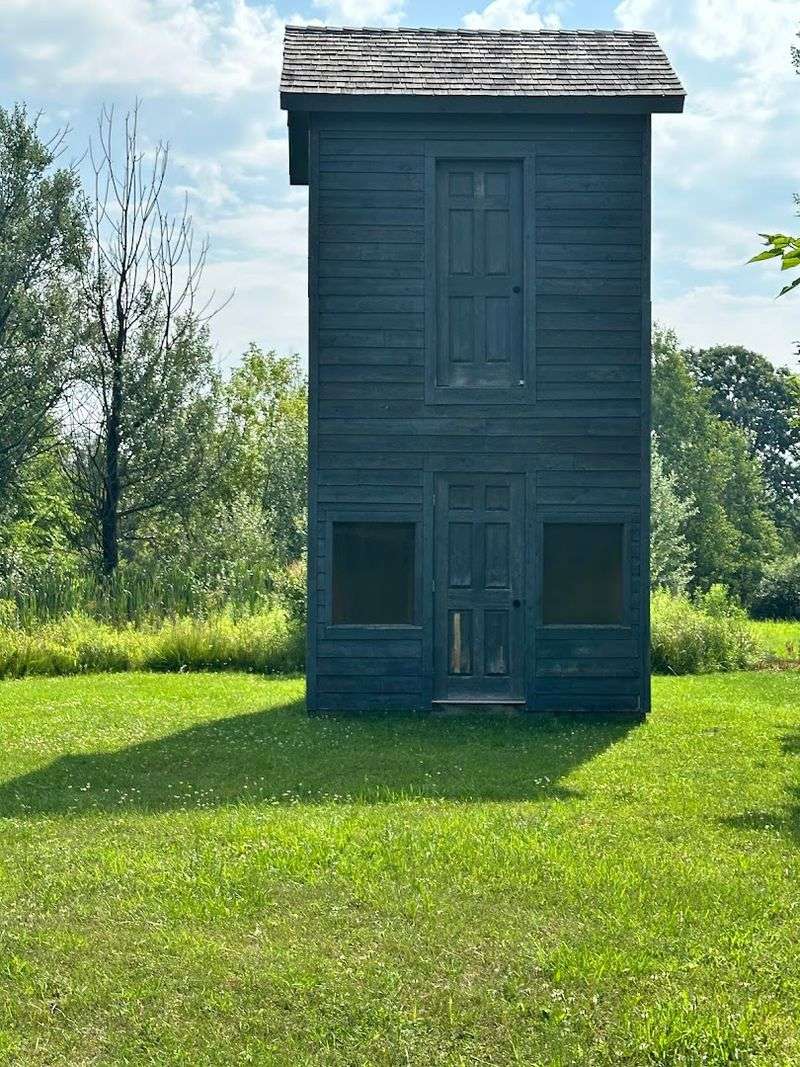
Yes, this is exactly what it sounds like. Located in the small community of Cedar Lake in Michigan’s Lower Peninsula, the Two-Story Outhouse is a genuine historical structure that served a practical purpose in an era before indoor plumbing.
The building features two separate levels, each with its own facilities, which raises an architectural question that visitors tend to spend a surprising amount of time thinking about.
The engineering logic behind a two-story outhouse is more thoughtful than you might expect. The upper level was typically offset from the lower level to avoid any unfortunate vertical alignment issues, which shows that whoever designed it was at least trying to be considerate.
The structure dates back to a time when multi-story buildings needed multi-level sanitation solutions, and the outhouse served workers or residents of a larger building nearby.
Finding the Two-Story Outhouse requires a bit of effort, which is honestly part of the fun. Cedar Lake is a small, quiet community, and the outhouse is not surrounded by flashing neon signs or tour buses.
Stumbling upon it feels like a genuine discovery, the kind of off-the-beaten-path moment that road trips are really built around.
The structure has been preserved and recognized as a quirky piece of local history, and it draws a steady stream of curious visitors who want to see it with their own eyes and confirm that it is real. It absolutely is real.
Bring a camera, because explaining this to people back home without photographic evidence is a losing battle.
Michigan’s rural communities are full of unexpected historical oddities like this one. The Two-Story Outhouse is a reminder that history is not always grand or glamorous, and sometimes the most honest artifacts are the most memorable ones.
Share this story