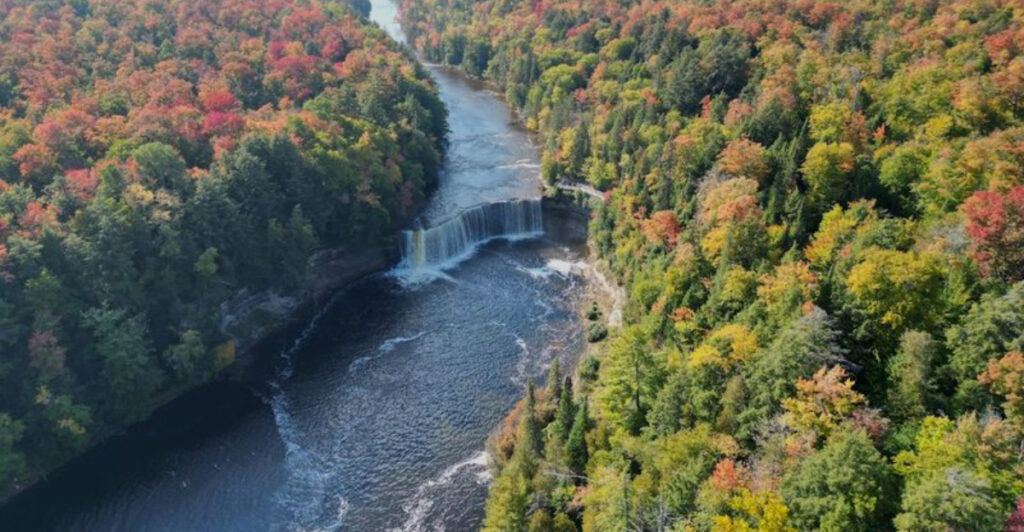
Deep in Michigan’s Upper Peninsula, Tahquamenon Falls State Park is the kind of place that more than lives up to the hype. Its famous Upper Falls are among the largest waterfalls east of the Mississippi River, sending amber-colored water rushing over a 50-foot drop that spans nearly 200 feet across.
But what really sets this park apart from anything else in the Midwest is the Lower Falls, where visitors can rent a rowboat and paddle right up near the cascades. Whether you’re stopping by for an easy day trip or heading out for a longer hike through the woods, Tahquamenon offers the kind of experience most parks simply can’t match.
The Upper Falls: A Wall of Amber Water You Won’t See Coming
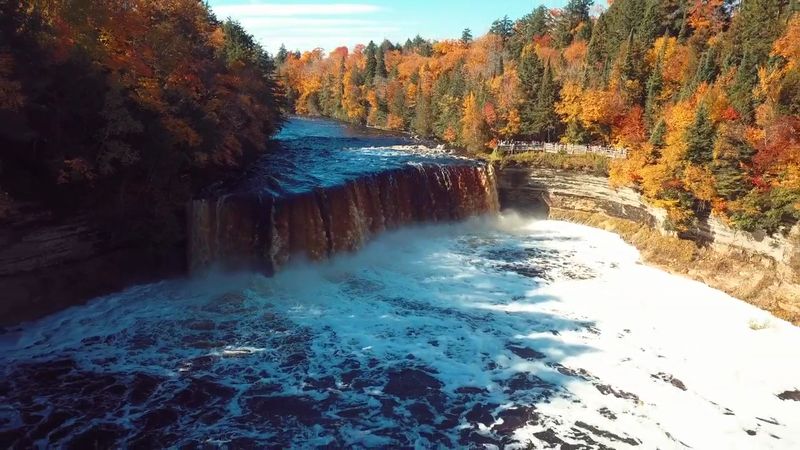
Nothing fully prepares you for the first time the Upper Falls comes into view. The water runs a deep, tea-like amber color — a natural result of tannins leaching from the cedar swamps upstream — and it crashes down with a force that sends mist drifting across the observation platforms.
Standing at the railing, the sheer width of the falls is almost disorienting. This thing is enormous.
The Upper Falls drop roughly 50 feet and stretch close to 200 feet across, making them one of the most voluminous waterfalls in the eastern United States. For context, the flow rate during peak season can exceed 50,000 gallons per second.
That’s not a trickle or a postcard-pretty ribbon of water — it’s a full-on roaring curtain that shakes the ground beneath your feet.
Getting there from the main parking area is straightforward. A paved path leads through towering hemlock and maple trees before opening up to a series of overlook platforms.
For those wanting a closer, lower-angle view, 181 steps descend into the gorge below. The climb back up is a workout, but the perspective from down there — looking up at the falls from the canyon floor — is completely different from anything the upper platforms offer.
The park also has an accessible viewing area near the top, so visitors with mobility concerns don’t have to miss out on the main event. A gift shop and brewery sit near the upper falls parking area, making it easy to grab food or a cold drink after the walk.
Early morning visits tend to offer the best light for photography, and the crowds are noticeably thinner before 10 AM on weekdays.
Grab the Oars: Rowing to the Lower Falls Is the Real Adventure
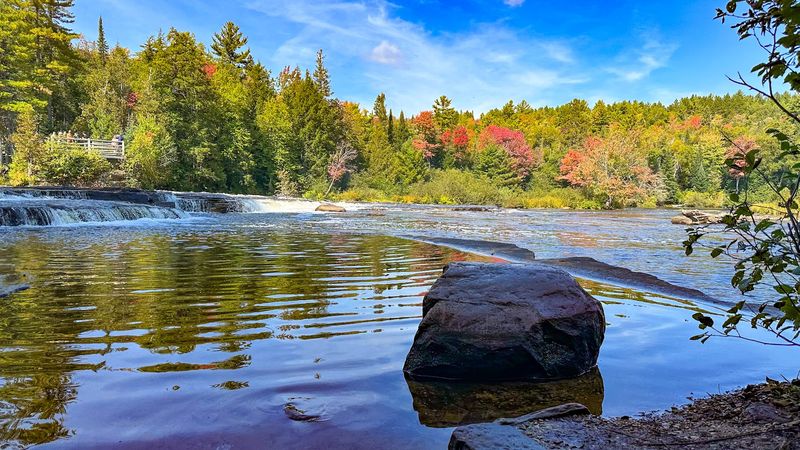
Most waterfalls ask you to stand at a safe distance and look. The Lower Falls at Tahquamenon has a completely different arrangement — you row to it.
A small concession near the lower falls parking area rents rowboats by the hour, and paddlers make their way across the river channel to a small island sitting right in the middle of the cascades. It’s one of the more unusual waterfall experiences anywhere in the country.
The Lower Falls aren’t a single drop like the Upper Falls. They’re actually a collection of four separate cascades wrapping around a wooded island, with swirling currents, rocky outcrops, and shallow channels cutting between them.
People say the sound alone — the constant, layered rush of water coming from multiple directions at once — is worth the boat rental fee. You can also walk around the island once you dock, exploring the cascades from river level with the water just inches away.
For families with kids, this section of the park tends to be the highlight. The rowboats are stable and the crossing is short, but it still feels like a genuine expedition.
The island has trails threading through the trees, and several spots along the shore let you sit right at the water’s edge. Bring water shoes if you want to wade — the riverbed is rocky but not particularly dangerous at normal water levels.
The lower falls area also has a boardwalk trail that loops around the surrounding riverbank for visitors who prefer to stay on land. Multiple observation points along the route frame the cascades from different angles.
Plan to spend at least 90 minutes here, especially if the boat rental line is moving slowly on a busy summer afternoon.
Michigan’s Upper Peninsula Setting: Why the Drive Actually Matters
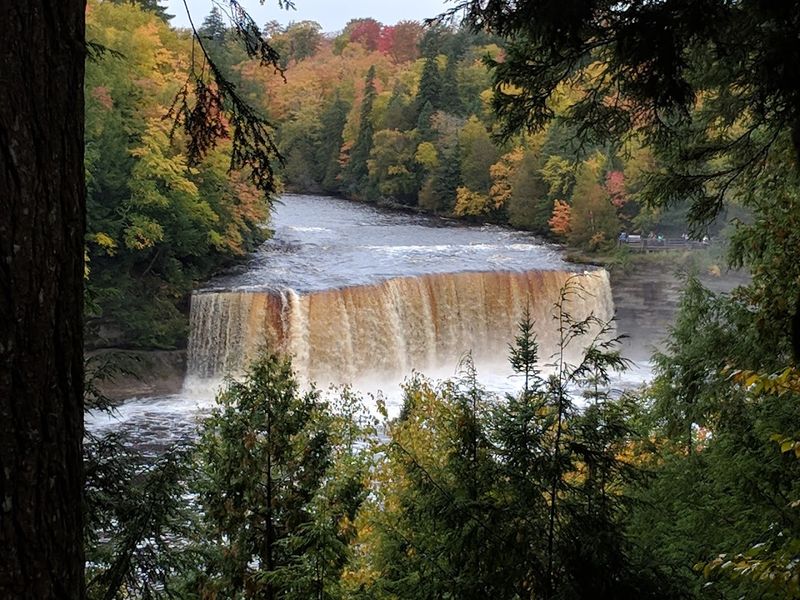
Tahquamenon Falls doesn’t sit near a major city or a well-trafficked highway junction. Getting there requires a deliberate commitment — a drive through the kind of northern Michigan forest that reminds you just how much wild land still exists in the Lower 48.
The park sits just outside the small town of Paradise, Michigan, which has a population of a few hundred people and a name that locals clearly take some pride in.
The approach along M-123 is part of the experience. Dense stands of sugar maple, yellow birch, and white cedar crowd both sides of the road for miles.
In fall, the corridor turns into a tunnel of orange, red, and gold that rivals anything the Upper Peninsula has to offer — and that’s saying something, given the competition. Even in summer, the thick canopy keeps the road shaded and cool, and the occasional glimpse of a bog or stream through the trees adds to the sense of traveling somewhere genuinely remote.
Fuel up before leaving the Newberry or Sault Sainte Marie area. Gas stations near the park are limited, and prices run higher than the state average — sometimes by 35 to 50 cents per gallon.
Cell service also gets spotty on certain stretches of M-123, so downloading offline maps before the trip is a smart move. The nearest large grocery store is a significant drive away, so packing snacks and plenty of water makes the day go much smoother.
The remoteness isn’t a drawback — it’s a feature. Arriving at Tahquamenon after an hour of forest driving makes the falls feel genuinely earned.
That sense of distance from everyday life is exactly what makes the Upper Peninsula one of the most underrated regions in the entire Midwest.
The Hiking Trails: From Easy Boardwalks to a Full 4.5-Mile Push
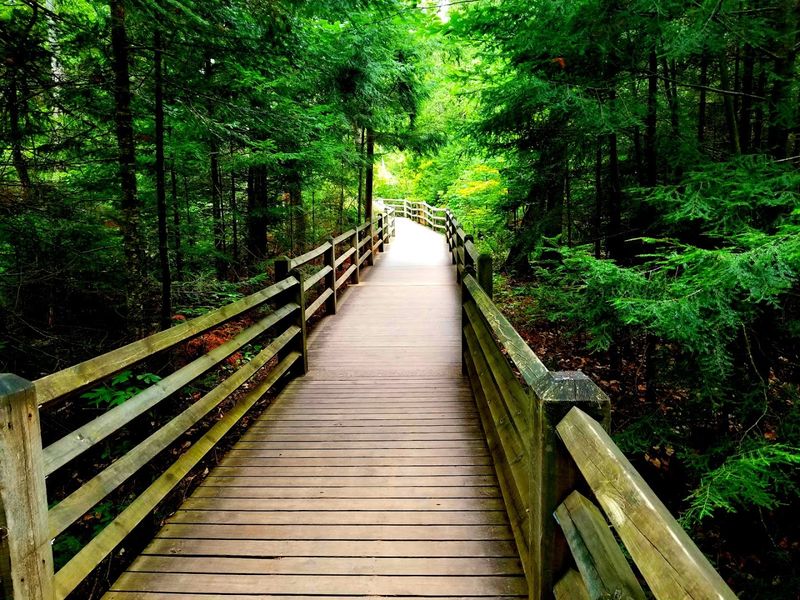
Tahquamenon Falls State Park covers more than 50,000 acres, and the trail network reflects that scale. Visitors who stick to the paved paths and boardwalks near each falls parking area will cover maybe a mile or two total — comfortable for almost any fitness level, including young kids and older adults.
But the park has a lot more to offer for anyone willing to push further into the woods.
The most ambitious option is the 4.5-mile River Trail connecting the Upper and Lower Falls areas. The path runs along the Tahquamenon River through old-growth forest, crossing terrain that includes tree roots, muddy patches, and rolling elevation changes.
People who have done the full route say the round trip — about 9 miles — takes somewhere between four and five hours depending on pace and how long you linger at each end. A private shuttle service operates between the two parking areas for around $20 for the first person and $5 for additional riders, which is a popular option for one-way hikers.
Several shorter loops branch off the main corridor, including trails through hemlock groves so dense the canopy blocks most of the sky. Spring and early summer bring a serious bug presence — black flies and mosquitoes are no joke in this part of Michigan — so long sleeves and insect repellent are worth carrying even on warm days.
Wet leaves in fall make certain sections slippery, and some low-lying areas stay soggy well into June.
Hikers who complete the full River Trail earn a perspective of the park that the parking-lot crowd never sees. The river bends, the quiet forest, and the occasional deer or great blue heron spotted along the bank make the extra miles genuinely worthwhile.
Camping Under the Hemlocks: What an Overnight Stay Actually Looks Like
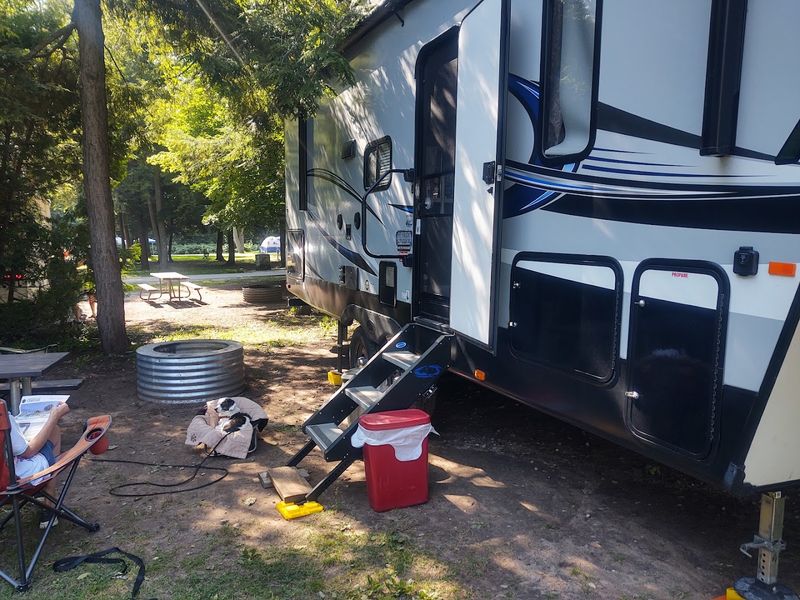
Spending a night at Tahquamenon changes the entire trip. Day visitors see the falls during the busiest hours and then leave.
Campers get the park at dusk, at dawn, and in the quiet middle of the night when the only sound is wind moving through the hemlock canopy. The Hemlock campground is one of the park’s most popular sites, and for good reason — the tree cover is thick, the sites feel private, and the heated bathhouse is a genuine luxury after a full day on the trails.
The park operates year-round, which means winter camping is also on the table. Cold-weather visitors report that lantern-lit trails wind through the snow-covered forest after dark, and the park’s DNR officers are known for being both knowledgeable and approachable — the kind of staff who make solo travelers and first-timers feel comfortable navigating an unfamiliar park in off-season conditions.
Heated facilities make winter stays far more manageable than you might expect.
Summer campsites book up quickly, especially on weekends and during fall color season in late September and early October. Reserving a spot several weeks in advance through the Michigan DNR reservation system is strongly recommended.
The campground has a dump station for RV visitors, and shower pressure gets consistent praise from people who have stayed multiple nights.
Waking up before sunrise and walking to the Upper Falls when the parking lot is completely empty is one of those experiences that sticks. The mist, the amber water catching the early light, and the absolute absence of crowds make the falls feel like a private discovery.
That alone is reason enough to skip the day trip and just stay.
Tannin Water, Ancient Cedar Swamps, and the Science Behind the Color
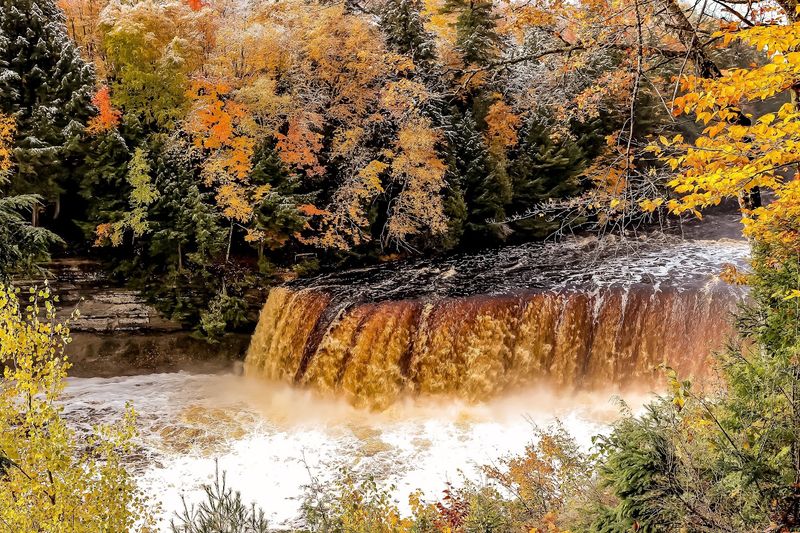
The amber color of the Tahquamenon River is one of the first things people notice, and it tends to generate a lot of questions. The water isn’t polluted or murky — it’s stained by tannins, the same compounds found in tea, red wine, and tree bark.
As the river flows through miles of cedar and spruce swamps upstream, it picks up these organic compounds, which turn the water a rich, root-beer brown by the time it reaches the falls.
The effect is especially dramatic at the Upper Falls, where the wide curtain of amber water crashes into the plunge pool below and whips into bright white foam along the edges. The contrast between the dark water and the foam is striking in photographs, but even more so in person.
Sunlight hitting the falls at midday turns the water almost golden, while overcast days give it a deeper, more dramatic tone.
The cedar swamps feeding the river are part of a larger boreal ecosystem that stretches across the Upper Peninsula and into Canada. These are old, slow-moving wetlands dominated by white cedar, black spruce, and tamarack — trees that thrive in saturated, acidic soil.
The swamps filter runoff, regulate water temperature, and provide critical habitat for species like sandhill cranes, river otters, and various migratory warblers.
Understanding where the water comes from makes the falls more interesting, not less. The color is a direct product of the landscape it travels through — hundreds of square miles of undisturbed boreal forest doing exactly what it’s done for thousands of years.
The falls aren’t just a visual spectacle. They’re a downstream expression of an entire ecosystem functioning at full capacity.
Planning Your Visit: Timing, Entry Fees, and a Few Things to Know Before You Go
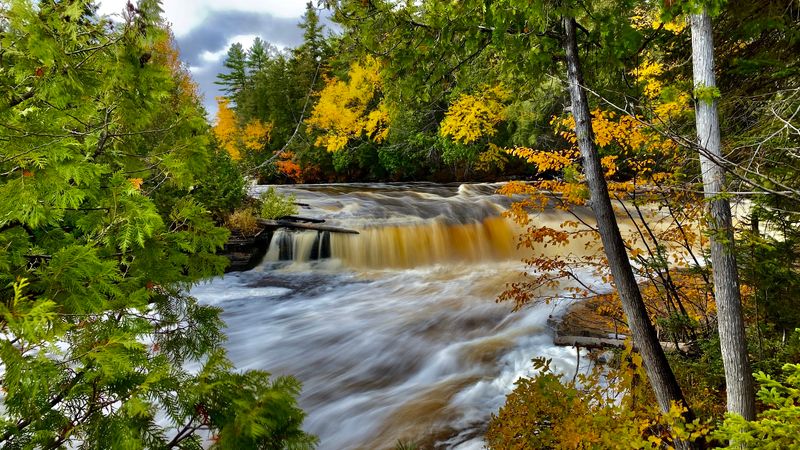
Tahquamenon Falls State Park is open daily from 6 AM to 10 PM. Entry requires a Michigan Recreation Passport, which is available as an annual vehicle sticker or as a daily pass purchased at the park entrance.
If you’re already a Michigan resident who renewed your vehicle registration and opted into the passport program, you’re already covered. Out-of-state visitors can purchase a daily pass at the gate, and the cost is reasonable given the scale of what the park offers.
Peak season runs from late June through Labor Day, with fall color season in late September adding another surge of visitors. Arriving before 10 AM on weekends during these periods makes a real difference — the large parking areas at both the Upper and Lower Falls fill up by midday, and latecomers sometimes end up waiting.
Weekday visits in mid-September offer a strong combination of comfortable temperatures, early fall color, and noticeably smaller crowds.
Both the Upper and Lower Falls areas have gift shops, and the Upper Falls area includes a brewery and restaurant that draw their own crowd. The brewery tends to fill up fast after the lunch hour, so visiting the falls first and eating after — or arriving early for a seat — is the smarter approach.
Restrooms are available at both locations and are well-maintained throughout the operating season.
Winter visits are entirely possible and offer a dramatically different experience. Snow-packed trails, ice formations along the falls edges, and a near-total absence of other visitors make the cold months surprisingly appealing.
The heated bathhouse remains open, and the gift shop and brewery typically stay accessible. Just pack warm layers, waterproof boots, and give yourself extra time on the roads — M-123 can get icy after a storm.