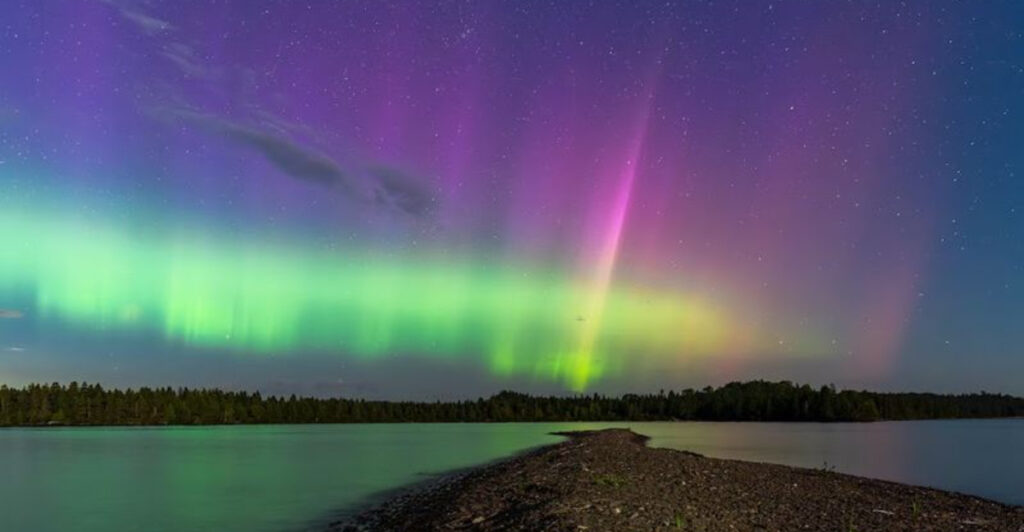
Sitting in the middle of Lake Superior, Isle Royale National Park is one of the most remote places in the entire United States. No roads connect it to the mainland, no bridges span the icy water, and the only way in is by ferry or seaplane.
This Michigan wilderness is made up of one large island plus around 400 smaller ones, creating an archipelago unlike anything most people have ever seen. Whether you are a hardcore backpacker or just someone looking for a truly disconnected adventure, Isle Royale delivers something rare and completely unforgettable.
Getting There Is Half the Adventure
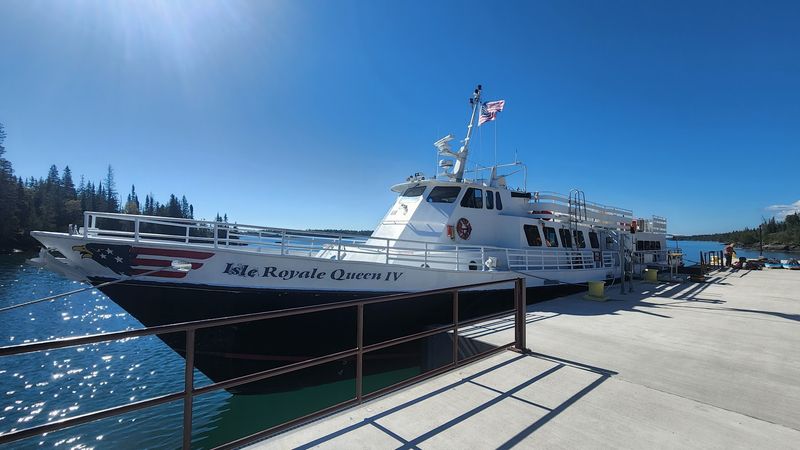
Before you even set foot on Isle Royale, the journey itself will test your commitment. Ferries depart from several Michigan and Minnesota ports, including Copper Harbor, Houghton, and Grand Portage.
Depending on the weather, that ride can range from a smooth cruise to a white-knuckle crossing with 14-foot waves and coffee machines sliding across counters. People who have made the trip describe it as genuinely wild, and not in a metaphorical sense.
The crossing from Copper Harbor to Rock Harbor takes about three and a half hours on calm days. Grand Portage to Windigo runs about an hour and a half.
Seaplane is also an option, and it offers a spectacular aerial view of the archipelago before landing on the water. However, fog and poor visibility can delay or cancel flights, so flexibility matters.
Booking far in advance is strongly recommended, especially for peak summer months. Ferry spots fill up quickly, and some vessels board passengers based on reservation order, meaning latecomers may end up standing on the outer deck in cold, wet conditions.
Layering up with a rain jacket, waterproof boots, and a pack cover is smart regardless of the forecast. Lake Superior does not follow anyone’s travel itinerary, and the weather can shift dramatically within hours.
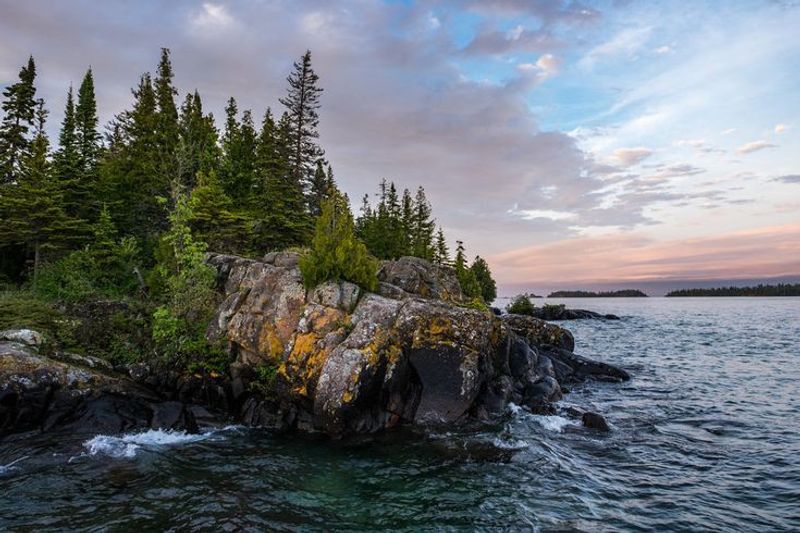
The moment the island comes into view through the mist, something shifts. The dense boreal forest rising from the shoreline, the rocky outcroppings jutting into the lake, and the total absence of development make it immediately clear that this is not an ordinary national park destination.
That first glimpse from the water sets the tone for everything that follows.
400 Islands and a Landscape Built for Exploration
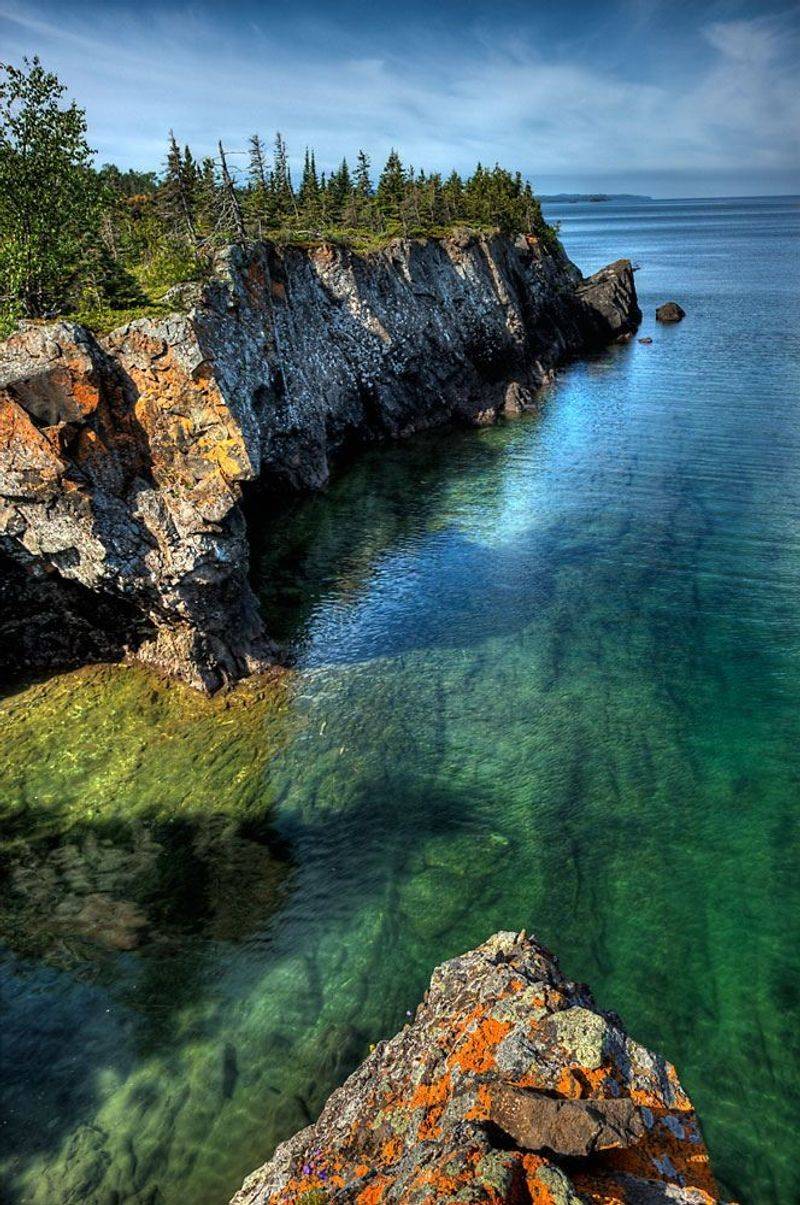
The number 400 sounds impressive until you actually see the archipelago from above or from the water. Dozens of small, forested islands dot the surrounding lake, some barely large enough to hold a few trees, others large enough to have their own inland ponds.
The main island stretches about 45 miles long and 9 miles wide, but the surrounding cluster of smaller landmasses gives the whole park a layered, almost maze-like geography.
What makes this landscape so distinct is the mix of ridgelines, bogs, inland lakes, and rocky coastline packed into a relatively compact area. The Greenstone Ridge runs the spine of the main island like a backbone, and hiking it end to end gives you sweeping views of both the American and Canadian shores of Lake Superior.
On a clear day, the horizon seems to go on forever in every direction.
One of the park’s most quirky geographic features is a lake within a lake within a lake. Siskiwit Lake sits inside the main island, and within Siskiwit Lake is Ryan Island, which contains a small pond called Moose Flats.
It is the largest island in the largest lake on the largest island in the largest freshwater lake in the world by surface area. That chain of superlatives is hard to beat.
Kayakers and canoeists have a particular advantage here because the smaller islands and protected coves are only accessible by water. Paddling between rocky outcroppings while loons call across the surface is the kind of experience that does not translate well into photos.
The scale and silence of it all needs to be felt in person to really land.
Michigan’s Wildest Wildlife Roster
Isle Royale has one of the most closely studied predator-prey relationships in the world. Wolves and moose have shared the island since the 1940s, and researchers have been tracking their population dynamics for decades in what is the longest continuous predator-prey study ever conducted.
The balance between the two species shifts year by year, and visiting during a period of active wolf presence near Lake Desor or the Greenstone Ridge can mean a rare and unforgettable sighting.
Moose are far more commonly spotted than wolves, and the island holds a healthy population. They tend to wade into inland lakes to feed on aquatic plants, so early mornings near Siskiwit Lake, Hatchet Lake, or any marshy cove give you the best odds.
A moose standing chest-deep in still water at sunrise, completely unbothered by your presence, is the kind of moment that sticks with you long after the trip ends.
Beyond the headliners, the park also supports red foxes, river otters, beavers, loons, and a range of raptors. Common loons are especially plentiful, and their haunting calls echo across the water at dusk in a way that feels almost cinematic.
Bald eagles are spotted regularly along the shoreline, and in fall, the park sees impressive bird migration activity.
One thing worth noting: wildlife on Isle Royale has less exposure to humans than animals in more heavily visited parks. That means encounters can feel surprisingly close and unscripted.
Wolves have been reported walking through campsites near Rock Harbor shelters, occasionally eyeing food bags with clear interest. Keeping food properly secured is not just a courtesy here, it is a genuine necessity.
Trails That Range From Scenic to Seriously Demanding
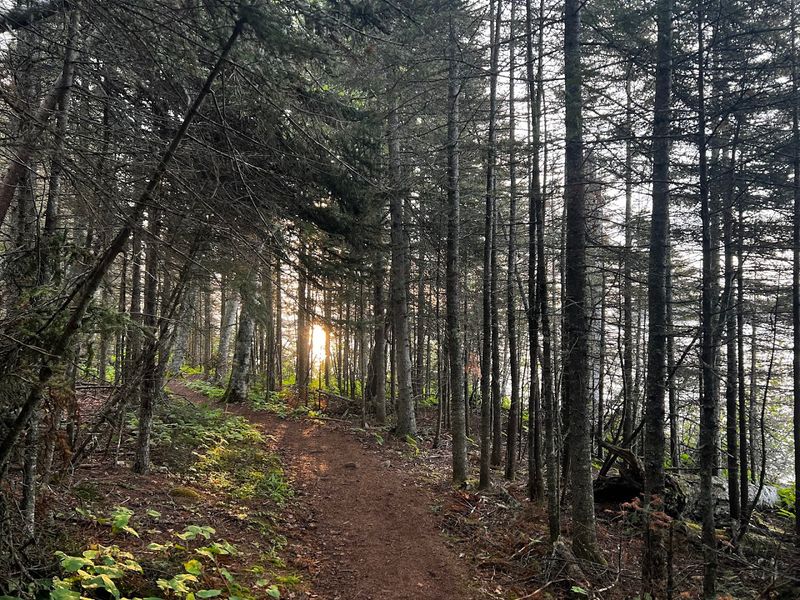
The trail system on Isle Royale covers around 165 miles, and the range of difficulty is genuinely wide. Some paths near the harbors are short, well-marked, and easy enough for day visitors with limited time.
Others, like the full Greenstone Ridge Trail, demand multiple days, solid navigation skills, and legs that can handle rocky, root-covered terrain for hours at a stretch. The island rewards effort, but it also punishes under-preparation.
For day trippers arriving at Windigo, the Grace Creek Overlook trail and the Windigo Nature Trail are the go-to options. Both are manageable within the few hours a ferry layover allows and offer solid views without requiring technical gear.
The Grace Creek area gets muddy near the water, so waterproof footwear makes a real difference. Hiking sandals are not the move here.
Backpackers crossing the island should start from Rock Harbor and hike toward Windigo rather than the reverse. The elevation gain going west to east is far more forgiving, and the trail opens up into longer views the further along you get.
Moskey Basin campground sits right next to a bay where campsites are just steps from Lake Superior’s edge, and people who have stayed there consistently describe it as one of the best nights of sleep they have ever had outdoors.
The terrain shifts constantly across the island. Rocky scrambles give way to soft bog crossings, then open ridge walks, then dense spruce forest.
Ankle-deep mud is a real possibility near the coast, especially in early summer. Trekking poles help significantly on the uneven rock sections, and solid hiking boots with ankle support are strongly advised over trail runners for anyone doing multi-day routes.
Camping Under Skies With Zero Light Pollution
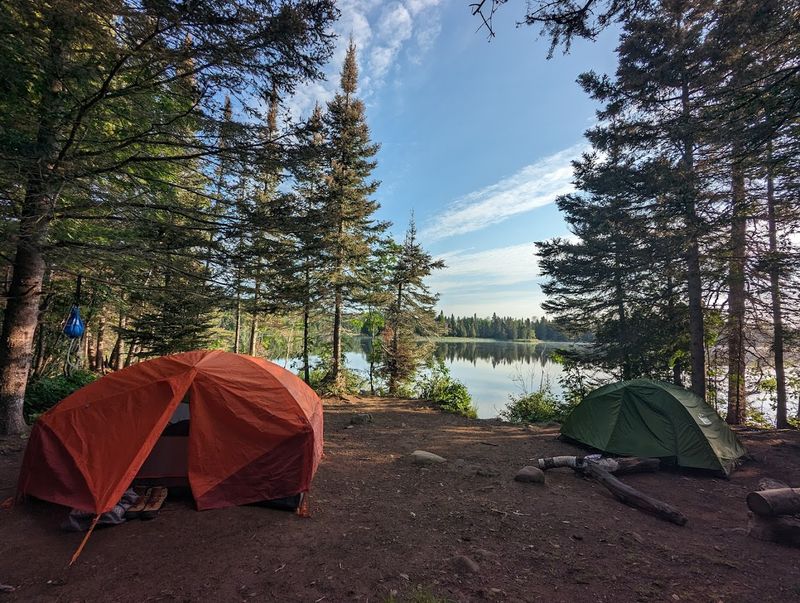
Isle Royale is one of the least visited national parks in the lower 48 states, and that low foot traffic has a direct effect on the night sky. Without nearby cities or major highways, light pollution is essentially nonexistent.
On a clear night, the Milky Way stretches across the sky in full detail, and the stars are dense enough to make familiar constellations harder to pick out. It is the kind of sky that makes people stop mid-sentence and just look up.
Campgrounds are spread across the island in a mix of shelters, tent pads, and group sites. Rock Harbor and Windigo have the most developed facilities, including access to water, restrooms, and in some cases a small camp store.
The more remote sites deeper in the backcountry are primitive but well-maintained by National Park Service staff. Sites near the water, like those at Moskey Basin or Three Mile, are especially popular and should be planned for well in advance.
The best time for bug-free camping is late August through September. Early summer brings black flies and mosquitoes in numbers that experienced hikers describe as relentless.
Bug spray is not optional in June or July, and a head net can save your sanity during peak insect season. By late August, conditions settle into something much more comfortable, with cooler air, fewer bugs, and the first hints of fall color appearing in the birch trees.
Permits are required for overnight camping and must be obtained before or upon arrival. The park closes seasonally, typically from November through mid-April, so planning around those dates is essential.
A permit combined with a well-timed trip in early September might be the single best outdoor decision a person can make.
The History Buried Beneath the Shoreline
Long before Isle Royale became a national park in 1940, the island had a layered human history that stretched back thousands of years. Indigenous peoples, including the Ojibwe, used the island seasonally for fishing and copper mining.
Evidence of ancient copper extraction has been found across the island, with pit mines and hammering stones left behind by people who worked the land more than 4,000 years ago. The copper here was some of the purest naturally occurring deposits ever found in North America.
Commercial fishing also played a significant role in the island’s more recent past. Fishing camps dotted the shoreline in the late 1800s and early 1900s, and remnants of those operations are still visible in a few spots.
The Edisen Fishery near Rock Harbor has been preserved as a historic site and gives visitors a tangible look at what life on the island looked like before the National Park Service took over management.
Below the waterline, the history gets even more dramatic. Lake Superior around Isle Royale holds at least ten known shipwrecks, and the cold, clear water preserves them in remarkable condition.
Scuba divers come specifically to explore vessels like the America and the Emperor, both of which rest at depths accessible to recreational divers. Visibility in Lake Superior is exceptional compared to most inland diving sites, and the wrecks are detailed enough to feel like stepping into a frozen moment in time.
The combination of Indigenous heritage, industrial history, and underwater archaeology makes Isle Royale far more layered than a typical backcountry destination. Spending time at the visitor centers in both Rock Harbor and Windigo helps connect the physical landscape to the human stories that shaped it over millennia.
Why Isle Royale Keeps Pulling People Back
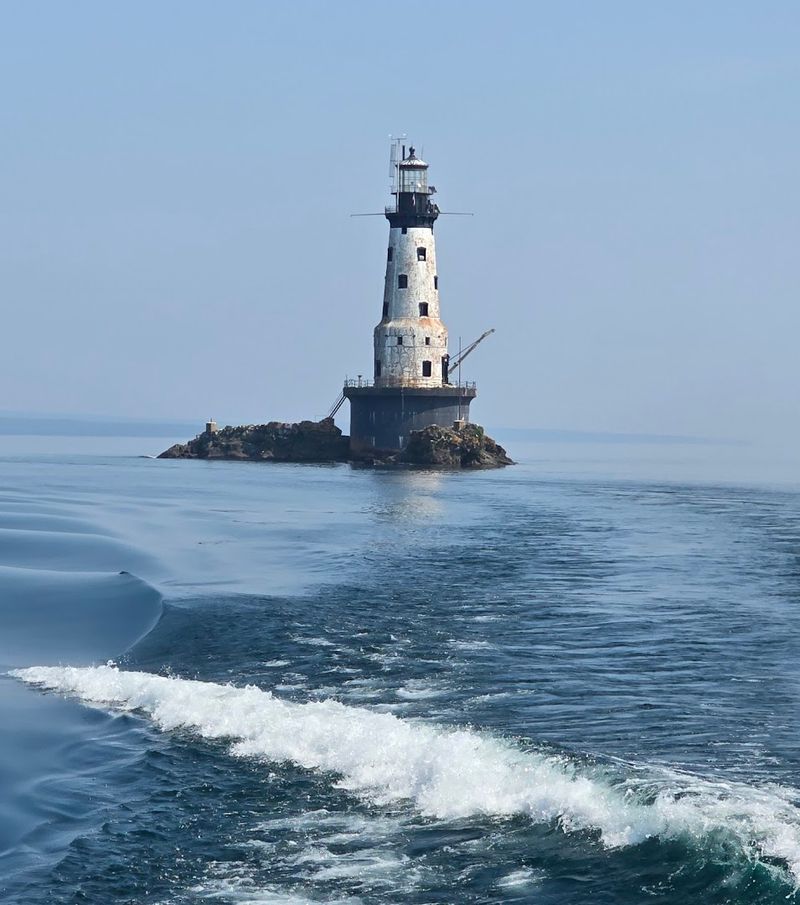
Isle Royale is statistically the least visited national park in the contiguous United States, yet it holds an unusual distinction: it is reportedly the most revisited. That contrast says something important.
The people who make the effort to get here tend to come back, often multiple times, because the island offers something that is genuinely hard to find elsewhere in the country.
Part of it is the isolation. Once the ferry disappears over the horizon, the connection to everyday life goes with it.
No cell service, no road noise, no Wi-Fi, and no option to just drive home if things get uncomfortable. That enforced disconnection creates a mental clarity that people describe in surprisingly similar terms, a sharpened attention to the present moment that is difficult to replicate in more accessible settings.
Part of it is also the sheer variety packed into a relatively small area. A single trip can include backcountry hiking, lake kayaking, wildlife watching, stargazing, historical exploration, and cold-water swimming, all without leaving the park.
Each visit tends to reveal something the previous one missed, whether that is a moose at a new location, a shipwreck dive, or a campsite with a better view of the sunset.
Planning well makes a significant difference. Book ferry tickets four to five months ahead, especially for July and August departures.
Pack layers regardless of season, since Lake Superior creates its own microclimate that ignores mainland forecasts. Arrive with a flexible itinerary and a willingness to adjust based on weather.
The park rewards patience and preparation in equal measure, and the visitors who come back year after year have usually figured out both.