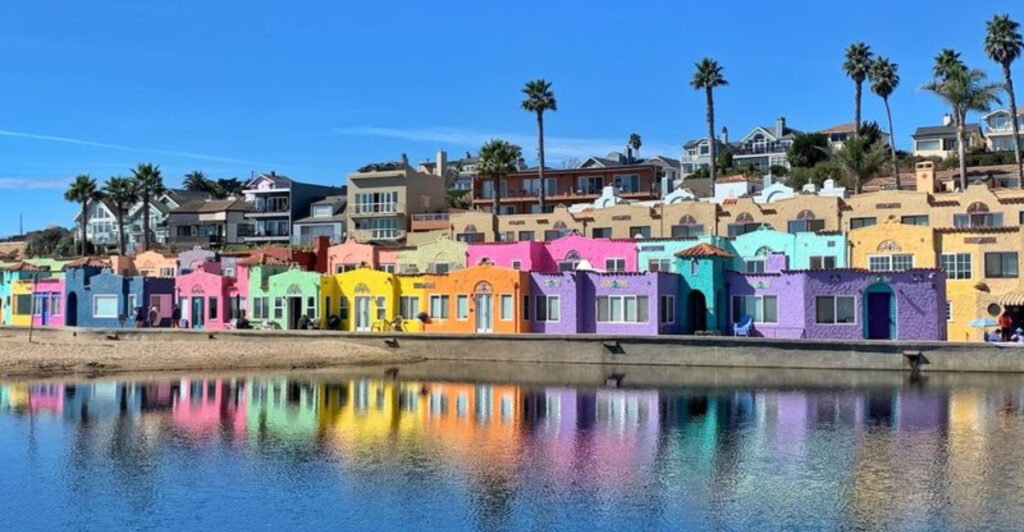
Capitola delivers the kind of waterfront scene that makes you slow down before you even reach the sand. Bright village houses, a curving bay, and low-key energy give this small Central Coast city a sun-washed charm that looks almost improbably cinematic.
But the real draw is not just how pretty it is—it is how easy the experience feels. Instead of fighting for space or racing between attractions, visitors can settle into a waterfront café, wander colorful streets, or watch the waves roll in from the beach. The pace stays relaxed, the scenery does the heavy lifting, and the day somehow feels longer in all the right ways.
The Candy-Colored Waterfront That Changes the Whole Mood
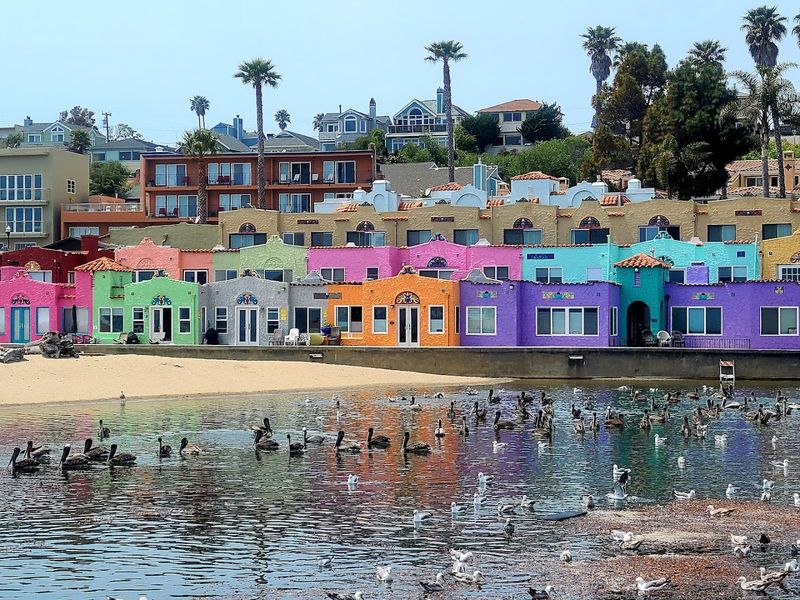
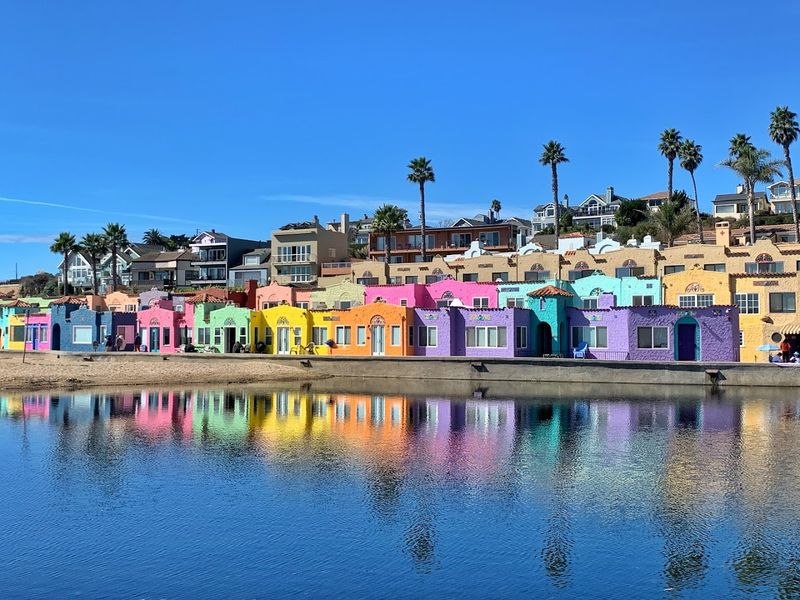
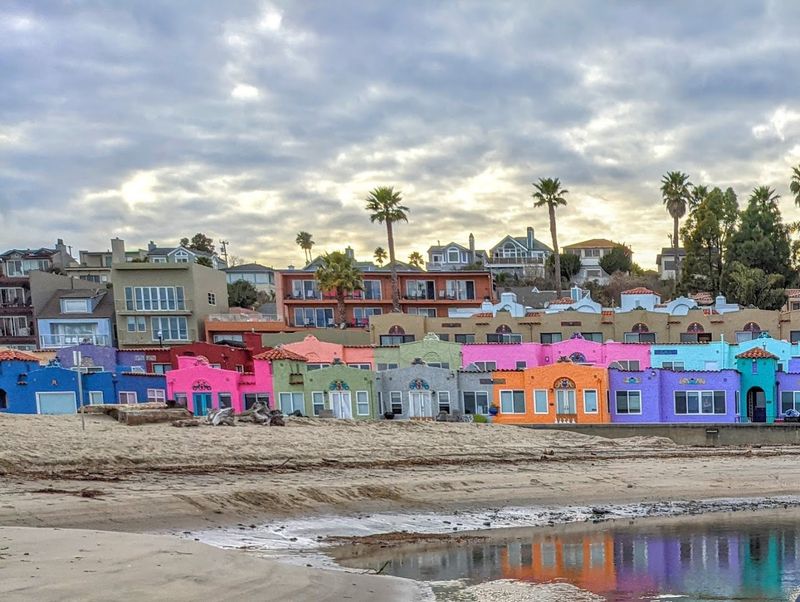
The visual hook in Capitola arrives fast. A row of brightly painted waterfront buildings curves beside the beach and creek, creating one of the most distinctive coastal scenes on California’s Central Coast.
Instead of dramatic cliffs or huge hotel blocks, the setting is intimate, colorful, and unusually gentle on the eye. That softer scale changes how the place reads.
The village sits low against the water, with palms, stucco, tiled roofs, and cheerful facades that give the shoreline a Southern European rhythm without turning stagey.
You are not looking at a polished resort zone built to impress from a distance. You are moving through a compact beach town where the visual payoff keeps happening at walking speed.
Stand near the sand and the composition becomes even better. The curve of the bay frames the waterfront, the creek opens a second line of sight, and small details start doing real work: balconies, awnings, stairways, umbrellas, railings, and boats shifting with the tide.
Even on a busy day, the scenery feels composed rather than chaotic because everything is compressed into a human scale.
That is where Capitola separates itself from prettier-on-paper destinations. It offers color and coastal drama, but without the sense that you need to conquer traffic, parking, and a packed promenade before earning the view.
The village looks photo-ready, yet the stronger pleasure is physical. You can actually settle into it, hear the gulls, catch the salt in the air, and watch sunlight bounce off painted walls while the whole waterfront keeps its easy, unhurried tempo.
At the Center of It All, Capitola Beach Keeps Things Easy
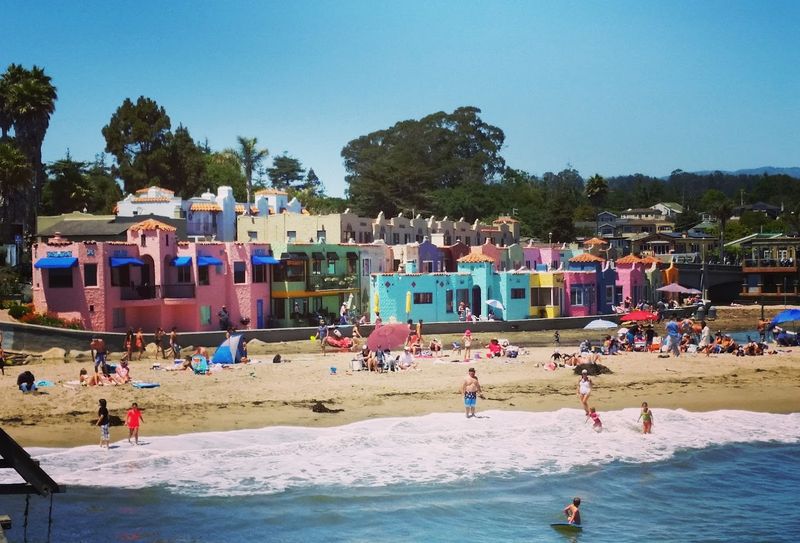
Capitola Beach is the practical heart of the whole experience, and that matters more than it first appears. This is not a beach that asks for a major expedition once you arrive in town.
Sand, food, shops, and waterfront views sit close together, so the day flows naturally instead of breaking into separate errands.
The beach itself tends to read as approachable rather than wild. The bay’s shape softens the scene, and the water activity often mixes casual paddlers, surfers, families, and people simply sitting near the edge with shoes off and coffee in hand.
You get motion and people-watching, but the setting still holds onto a village calm that larger boardwalk destinations often lose.
Because everything is nearby, it is easy to switch gears without overplanning. A beach hour can turn into lunch, then a stroll over the creek, then another stop for dessert, then a return to the sand when the light changes.
That convenience sounds minor until you compare it with beach towns where every shift in mood requires moving the car, re-parking, or committing to a whole new zone.
Capitola works best when you let the layout do the work. You can start with the shoreline, glance back at the painted buildings, and realize the town has already given you a full afternoon framework without demanding much effort.
That low-friction design is a huge part of the appeal. Instead of spending your energy managing logistics, you spend it noticing pelicans offshore, footprints drying in the sun, and the steady coastal rhythm that makes staying longer feel completely reasonable.
Soquel Creek Adds the Quiet Detail Bigger Beach Towns Miss
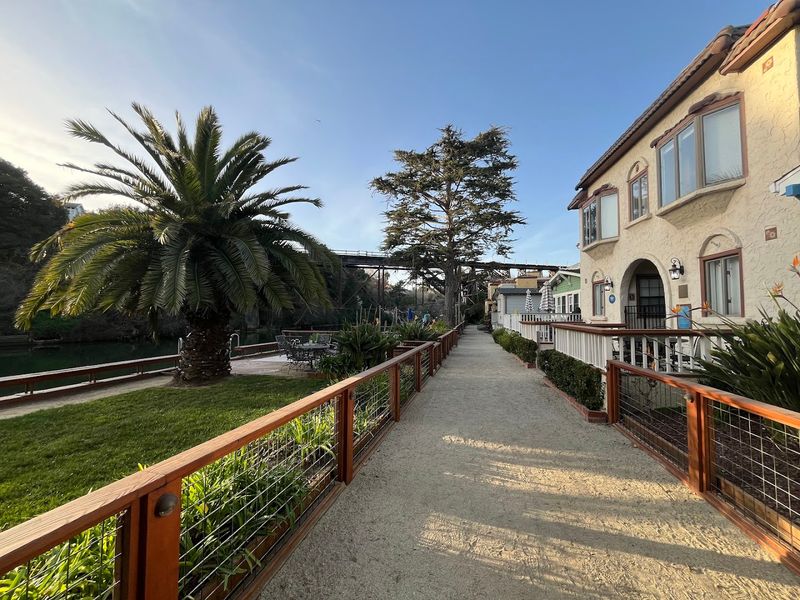
One of Capitola’s smartest visual tricks is that it is not only about the open beach. Soquel Creek threads through the village and gives the whole setting an extra layer of texture, movement, and calm.
That inland ribbon of water breaks up the classic beach-town formula and makes even a short walk feel more varied.
Near the creek, the pace naturally drops. Reflections soften the already colorful architecture, small boats add motion without noise, and bridges create quick vantage points that shift the scene every few steps.
Looking one direction, you get village life and painted facades. Turn slightly, and the water narrows the frame into something quieter and more tucked-in.
This detail matters because it widens the town’s personality. Capitola is not relying on one blockbuster viewpoint and then hoping the rest of the visit coasts on reputation.
The creek introduces pockets of stillness, gives photographers and walkers more to play with, and creates that pleasant sense that the village has corners rather than just a beachfront strip.
It also helps the town hold onto a calmer identity. In many coastal destinations, every good view points at the same surf line, the same restaurants, the same crowd pulse.
Here, the creek becomes a side note with real power. It offers shade, reflections, and small-scale activity that balances the beach energy nicely.
When the light tilts later in the day, water, painted walls, and footbridges start catching warm color together, and the village becomes less about spectacle and more about layered scenery that rewards wandering without any real plan.
Why Capitola, California Looks Sun-Soaked and Distinct
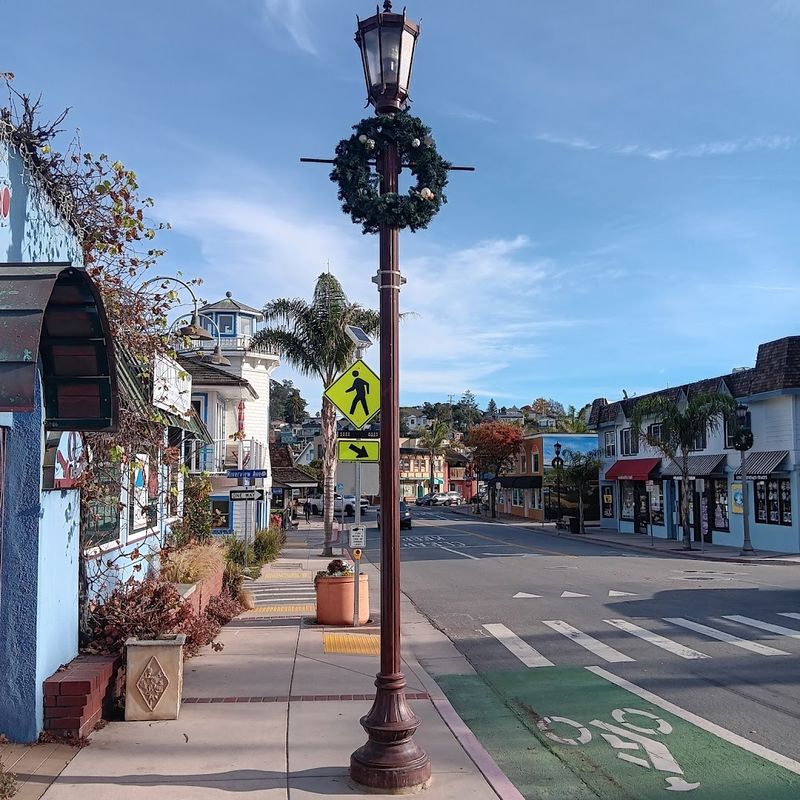
Capitola has a look that separates it quickly from many California beach towns, and the difference is architectural as much as geographic.
Color matters, of course, but so do the forms: low buildings, stucco surfaces, tiled accents, balconies, narrow passages, and storefronts tucked into the slope. Together they create a village scene that is bright and coastal without drifting into generic surf-town sameness.
There is also a useful compactness to the built environment. Streets and walkways feel made for lingering rather than hurrying through, and the scale stays pleasantly personal.
Instead of broad commercial strips, you move through little sequences of doors, windows, patios, corners, staircases, and benches, with the water appearing and disappearing between structures.
That pattern is a big reason the place gets compared to Mediterranean settings. The resemblance is less about imitation and more about proportion, climate, and how daily life meets the waterfront.
Outdoor seating, sun on painted walls, and the easy transition from beach to cafe to side street create a rhythm that reads warmer and older than the average California coastal strip mall layout.
Still, Capitola does not come off as theatrical. The village earns its charm through scale, not excess. You are not surrounded by oversized gates, luxury compounds, or dramatic branding that insists on a mood.
The setting simply works: bright facades near the bay, practical little streets, and enough visual variation to make wandering rewarding even when you are not chasing a specific attraction.
In a state full of famous coastlines, that kind of compact, coherent character is harder to find than it should be.
A Small City With Real History, Not a Manufactured Beach Scene
Capitola’s appeal is stronger once you understand that it is a real small city with layers, not a waterfront backdrop invented to entertain day-trippers.
Its setting on Monterey Bay gives it obvious scenic value, but the town’s identity comes from how long it has functioned as a lived-in coastal community. That helps explain the grounded feeling you get while walking around the village core.
Nothing here suggests a place built all at once around a single commercial idea. The streets, creek, beach access, and clusters of businesses fit together in a way that feels accumulated over time.
You notice practical edges alongside the pretty ones: residential pockets above the water, local routines mixed with visitors, and architecture that reads as adapted to the site rather than imposed on it.
That distinction matters in a state where many coastal destinations can feel over-curated. Capitola is certainly photogenic, but its best quality may be that the photogenic parts are folded into ordinary town life.
Morning coffee runs, beach setups, after-lunch strolls, and sunset pauses all happen in the same compact zone, so the village never turns into a pure stage set.
There is a kind of confidence in that. The city does not need oversized attractions, giant piers, or spectacle-heavy entertainment to justify a visit.
Its draw comes from continuity between local use and visitor experience, which is a harder quality to fake. You are stepping into a place that functions as a community first and a charming destination second, and that order gives the waterfront much of its credibility.
The beauty lands more cleanly when it is attached to a town that still feels inhabited, practical, and specific to its stretch of coast.
The Best Way to Do Capitola Is to Let the Day Unfold Slowly
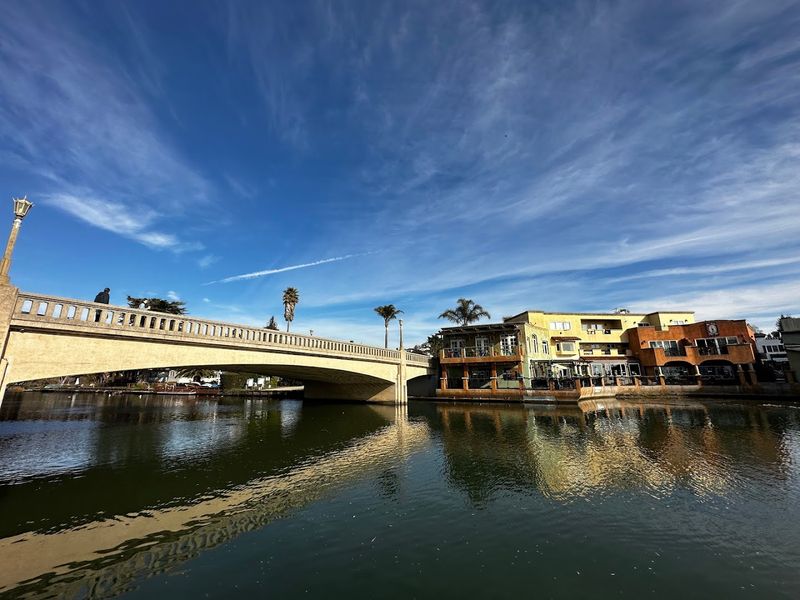
Capitola rewards a looser kind of itinerary. This is the sort of place where a tightly scheduled checklist would actually flatten the experience, because the pleasure comes from shifting between small scenes as the light changes.
Early hours suit coffee and a walk while the village is still stretching awake and the beach looks freshly smoothed.
By late morning, the shoreline becomes the social center. You can settle on the sand, watch beginner surfers work the smaller waves, or drift back toward the village when hunger wins.
Lunch works best without urgency, especially if you can sit outside and keep one eye on the water, the passing foot traffic, and the painted waterfront doing exactly what it came to do.
Afternoon is ideal for wandering the side streets and lingering near Soquel Creek. That is when Capitola starts proving that it has more than one good angle.
You move from bright storefronts to shaded corners, from beach energy to calmer water, and the whole town begins to feel more dimensional than a quick photo stop would suggest.
Then sunset arrives and changes the color story completely. The village softens, the bay picks up warmer tones, and the pace somehow gets even easier.
Rather than trying to cram in one last attraction, this is the moment to stay put and watch the waterfront settle into evening.
Capitola is at its strongest when you stop trying to extract maximum productivity from the day and instead let the town’s compact geography guide you from coffee to sand to creek to dinner with almost no friction at all.
When to Go, Where to Wander, and Why the Village Never Overwhelms
The practical genius of Capitola is that it delivers a destination look without forcing a destination-scale effort. Because the village core is compact, much of the experience happens on foot, and that instantly lowers stress.
You are not spending the day navigating a giant entertainment district or bouncing between neighborhoods that dilute the coastal mood.
Timing, though, can shape the visit. Midday brings the brightest color and the fullest beach scene, which is great if you want energy and a classic sunny-bay postcard.
Earlier and later hours tend to reveal more texture – quieter walkways, softer light on the facades, clearer sightlines near the creek, and a little more room to notice how the town’s layout actually works.
Wandering is simple because the main ingredients sit close together. The beach, village streets, creek views, and waterfront dining zone connect naturally, so it is easy to adjust based on weather, appetite, or crowd level.
That flexibility makes Capitola especially appealing for travelers who want scenery with built-in convenience rather than a long list of attractions spread across a larger coastline.
In the end, the standout quality is proportion. Capitola gives you bold color, a swimmable-looking bay scene, walkable streets, and a strong sense of place, but it never presses into sensory overload.
The village knows when to stop. That restraint is exactly why the Mediterranean comparison lands for so many people: sun, water, color, and an easy social rhythm, all scaled to a day that still feels restful. On a California coast packed with bigger names, that measured charm is not a small thing. It is the whole point.
Share this story