Father’s Day weekend just got a serious upgrade in Dearborn, Michigan. Greenfield Village, the sprawling open-air history museum founded by Henry Ford, transforms into one of the most talked-about car show destinations in the Midwest every June.
Classic automobiles, living history, and the kind of old-school Americana that dads genuinely love all come together on these 80-plus acres. If you have never seen a perfectly restored vintage car parked beside a 19th-century farmhouse, this is your weekend to fix that.
The Car Show That Feels Like Stepping Into Another Era
There is something quietly electric about walking into Greenfield Village during Father’s Day weekend when the car show is in full swing. Rows of meticulously restored classics stretch across the village grounds, each one reflecting decades of craftsmanship and personal obsession.
You catch yourself stopping every few feet because something new keeps pulling your attention.
The combination of vintage automobiles and historic architecture creates a visual contrast you rarely see at a typical car show. A candy-apple red coupe sitting near a hand-hewn timber workshop from the 1800s is not something you forget quickly.
The whole scene has a layered quality, like flipping through different chapters of American history at the same time.
Owners are usually standing nearby, genuinely happy to talk about their vehicles. Ask a question and you might get a twenty-minute conversation about carburetor restoration or the hunt for original chrome trim.
That casual, enthusiast energy is part of what separates this event from a standard fairground show.
The village grounds themselves add a backdrop that no convention center could replicate. Cobblestone paths, working steam engines, and buildings relocated from across America give every photograph a sense of place.
Even if cars are not your primary passion, the sheer density of interesting things happening around you keeps the day moving.
Families tend to spread out naturally here. Kids wander toward the train platform or the carousel while the adults linger near the hoods and engine bays.
It works because the venue is big enough to give everyone room without feeling scattered. Father’s Day weekend at Greenfield Village has a specific rhythm to it, unhurried but never dull.
Model T Rides That Actually Put You Behind (Well, Inside) History
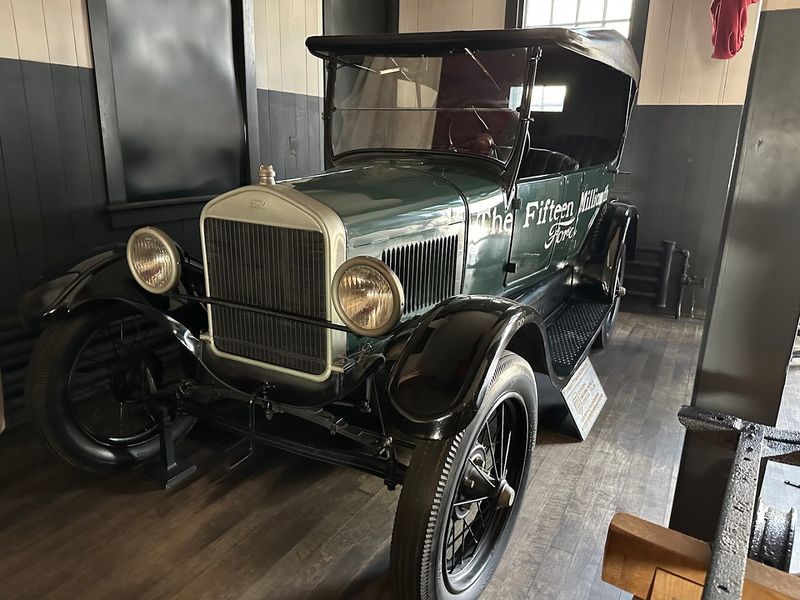
Riding in a Model T is not like riding in any other old car. The thing vibrates, rattles, and lurches forward with a personality that no modern vehicle has even tried to replicate.
Greenfield Village offers rides in original Ford Model Ts, and on Father’s Day weekend, the lines are worth every minute of the wait.
The driver typically knows the vehicle inside and out, sharing details about how the throttle works, why there is no conventional steering feel, and what daily life looked like when these machines were brand new. It is a ten-minute ride, but it lands differently than you expect.
You finish it with a new respect for anyone who drove cross-country in one of these.
What makes this particular ride stand out is the setting around it. The village has preserved the period details carefully, from the style of street lamps to the signage.
Yellow stop signs, which predate the standardized red ones, are placed along the route. Small details like that quietly reinforce just how far back in time the experience reaches.
For dads who grew up hearing stories about Henry Ford or who have spent years watching car restoration shows, sitting inside a running, original Model T carries a different weight. It is tactile history, not just something behind glass.
You feel the road through the floorboards and hear the engine work for every rotation.
Kids find it hilarious at first, then genuinely interesting once the driver starts explaining the mechanics. The ride tends to spark longer conversations between parents and children about how cars evolved.
Few exhibits at any museum pull that off as naturally as a moving vehicle with a real story under the hood.
Thomas Edison’s Menlo Park Lab, Rebuilt Brick by Brick
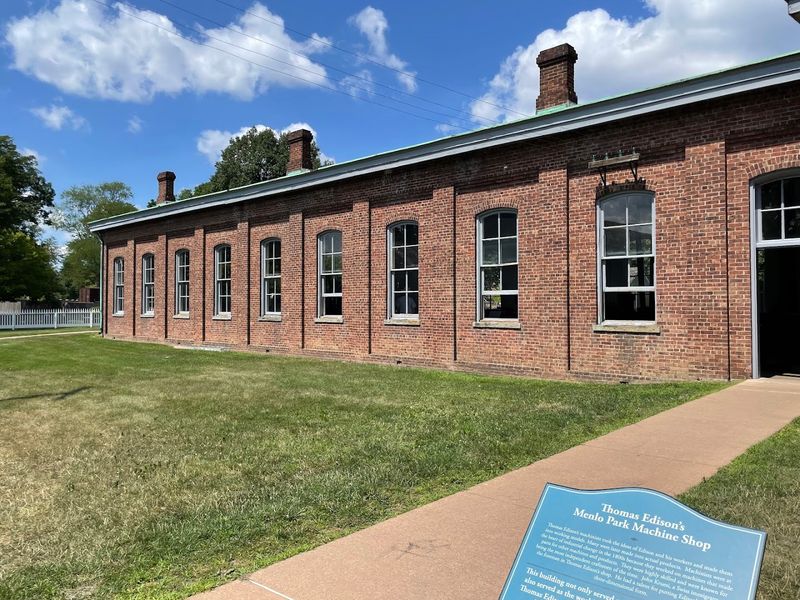
Henry Ford did not just admire Thomas Edison. He moved Edison’s actual laboratory complex from New Jersey to Dearborn, brick by brick, and reassembled it inside Greenfield Village.
Standing in front of the Menlo Park compound, knowing that Edison himself once walked those floors, changes how you look at the whole place.
The lab is where Edison and his team developed the phonograph and refined the incandescent lightbulb, among dozens of other projects. Costumed interpreters inside can walk you through what a typical working day looked like in that building during the late 1800s.
The demonstrations are low-key and conversational, which actually makes them more effective than a formal presentation would be.
On Father’s Day weekend, the foot traffic around Menlo Park tends to pick up because the car show draws a crowd that appreciates invention and engineering. People who came for the automobiles often end up spending an unexpected chunk of time here, making connections between the mechanical ingenuity of the early auto industry and the electrical breakthroughs that happened in that same era.
The building interiors feel deliberately unglamorous, which is exactly right. Cluttered workbenches, hand tools, and early electrical equipment fill the spaces without any attempt to make them look polished.
History museums sometimes over-restore things into something too clean to feel real. This one resists that temptation.
A small detail that visitors often notice: the soil around the Menlo Park buildings was reportedly brought from New Jersey along with the structures, so the ground beneath your feet is technically part of the original site. Whether or not that registers as meaningful depends on the person, but it tends to land with a quiet kind of weight once you hear it.
The Steam Train That Circles the Whole Village
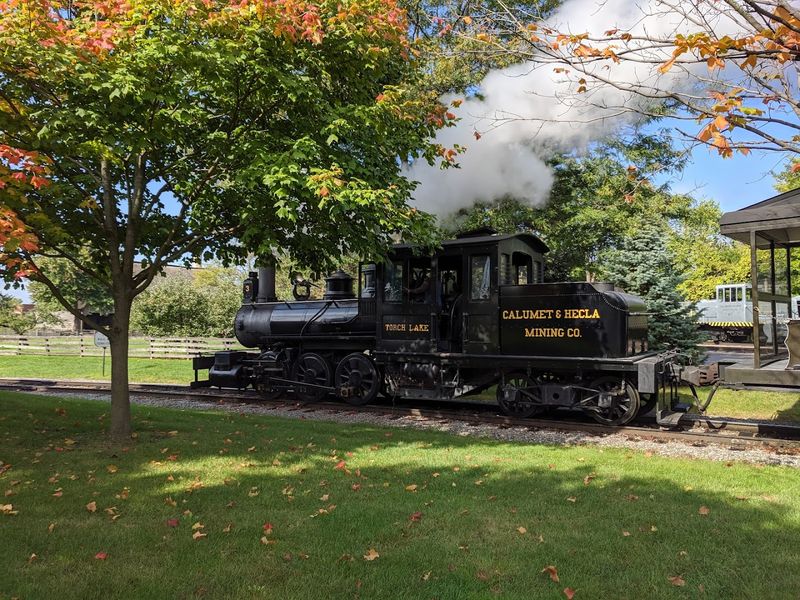
The steam train at Greenfield Village is not a novelty ride bolted onto the edge of the property. It circles the entire village on a route that gives you a slow, elevated view of the grounds, the car show displays, the historic buildings, and the open green spaces between them.
Boarding it early in the day is one of the smarter moves you can make.
The locomotive is over a century old and still runs on steam. You hear it before you see it, a low rhythmic chuffing that carries across the village and gives the whole place a particular kind of ambient soundtrack.
Sitting in one of the passenger cars with the windows open and the Michigan summer air moving through is genuinely pleasant in a way that is hard to manufacture.
During Father’s Day weekend, the train becomes a useful way to get a sense of how the car show is laid out before you commit to walking the whole route. From the elevated vantage point of the rail line, you can spot which areas look most interesting and plan your afternoon accordingly.
It doubles as both transportation and orientation.
The narration on board covers the history of the village and points out landmarks as they pass. Some of the information is familiar to regular visitors, but first-timers tend to find it useful for building context before they start exploring on foot.
The ride runs roughly thirty minutes for a full loop.
Families with younger kids use the train as a reset point when energy starts to flag. It is a seated, shaded break that still feels like part of the visit rather than a pause from it.
That is a harder balance to strike than it sounds, and the train pulls it off without any effort.
Eagle Tavern: Eating Lunch in the 1850s (Kind Of)
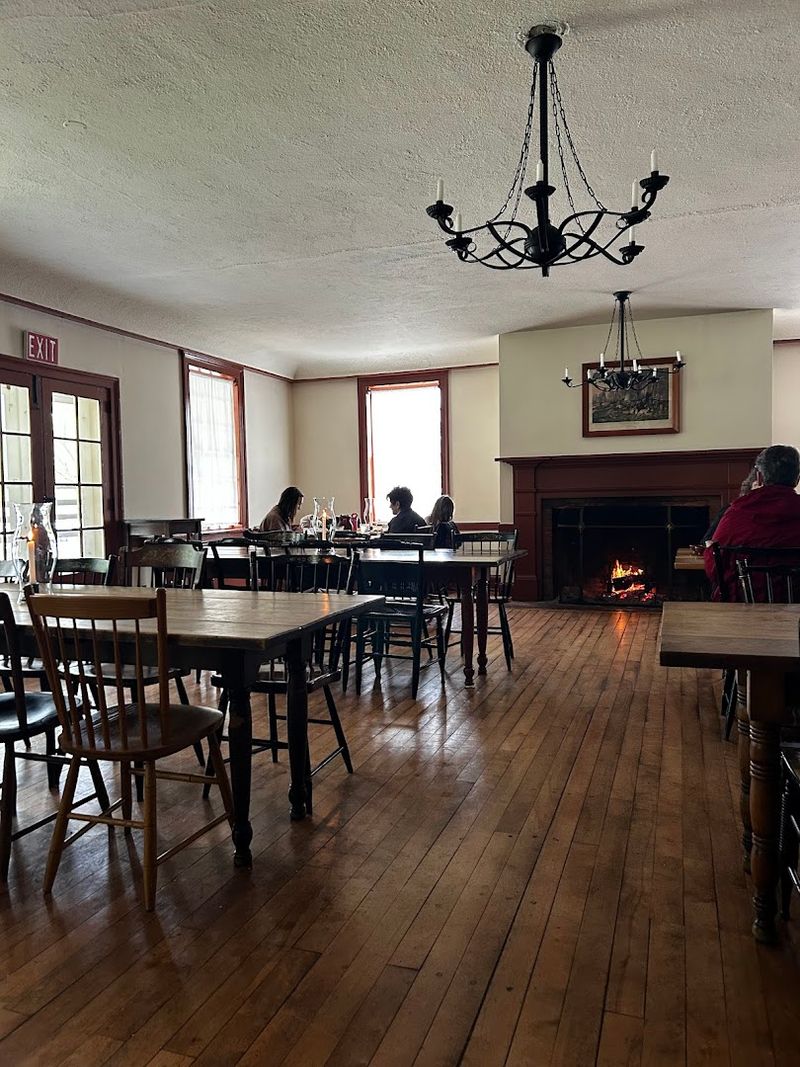
Eagle Tavern serves food from recipes rooted in the 1850s, presented in a dining room that looks the part. Servers in period dress bring out dishes like squash soup, glazed sweet potatoes, and pork with new potatoes, all plated in pottery and accompanied by breads, butter, and blackberry jam.
It sounds like a gimmick until you actually sit down and eat.
The food is surprisingly good. Not in a theme-park-trying-hard way, but in a genuinely well-prepared, interesting-flavor-profile way.
The whisky cocktails available at the bar are a nice touch for adults who want to commit to the period setting. Lunch here on Father’s Day weekend feels like a deliberate slowdown in the middle of a busy day.
The interior is dim and warm, with candles and natural light doing most of the work. Long communal tables encourage conversation between strangers, which either sounds appealing or mildly uncomfortable depending on your personality.
Most people seem to lean into it once they are actually seated.
Reservations are a smart idea for a holiday weekend. Walk-ins are sometimes possible, but Eagle Tavern has developed a reputation that fills tables faster than you might expect for a museum restaurant.
Planning ahead takes maybe five minutes and saves a frustrating wait.
What lingers after the meal is not just the food but the whole texture of the room. The sounds are different in there, quieter and more contained than the open village outside.
You come back out into the summer air and the car show noise and it takes a moment to reorient. That brief disorientation is actually part of what makes the stop worthwhile.
Blacksmith Demonstrations That Draw a Surprisingly Big Crowd
Most people walk past the blacksmith shop expecting a quick glance and move on. Then the hammer hits the glowing metal, sparks scatter, and the sound rings out across the path, and suddenly nobody is walking anymore.
The blacksmithing demonstrations at Greenfield Village have a way of stopping foot traffic that no sign or announcement could replicate.
The smiths working the forge are knowledgeable and comfortable with an audience. They explain what they are making, why certain techniques work the way they do, and how long it took apprentices historically to develop the skill.
The conversation flows naturally while their hands keep moving. Watching someone shape iron with nothing but heat and force is hypnotic in a way that is hard to explain until you have seen it.
During the Father’s Day car show weekend, there is an interesting overlap between the crowd drawn to the automobiles and the crowd that ends up at the blacksmith shop. Both involve an appreciation for hand-built things made to last.
The connection is not always stated out loud, but you notice people making it on their own as they watch.
Kids tend to press forward at the front of the crowd, fascinated by the fire and the noise. Parents hang back slightly but rarely look away.
The demonstration area is set up so that everyone gets a clear view without crowding the workspace, which helps the whole thing feel accessible rather than performative.
The finished pieces sometimes go on display or get explained as examples of period craftsmanship. Occasionally visitors ask what happens to the items made during demonstrations.
The answer varies, but the question itself shows how engaged people get after just a few minutes of watching. That kind of spontaneous curiosity is what living history museums are built for.
The Wright Brothers’ Home and Bike Shop, Relocated From Dayton
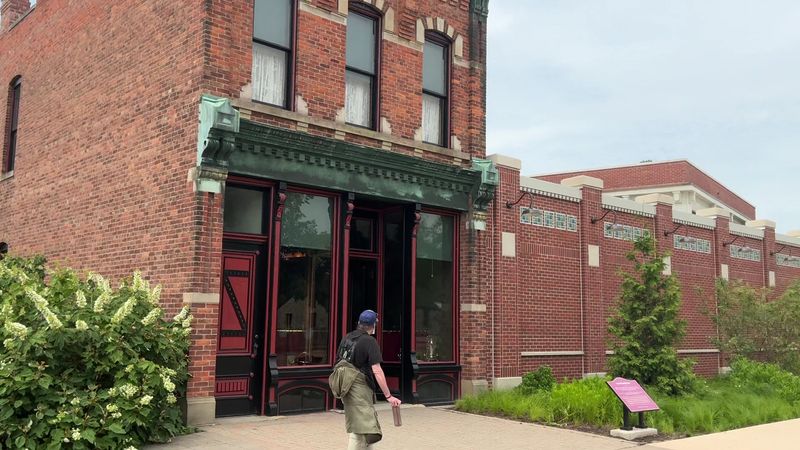
The Wright Brothers’ home and their bicycle shop were moved from Dayton, Ohio to Greenfield Village as part of Henry Ford’s broader effort to preserve the physical spaces where American innovation actually happened. Walking through the bike shop, where Orville and Wilbur built and repaired bicycles while quietly developing ideas that would eventually produce powered flight, has a specific quality to it that is hard to categorize.
The shop is small. That is the first thing most visitors notice.
The room where two brothers worked out the mechanical principles of lift and control is not much bigger than a generous garage. Somehow that smallness makes the achievement feel more real rather than less.
Big things started in a very modest space.
Interpreters in the area are prepared to talk about the brothers’ working methods, their approach to problem-solving, and the timeline of their experiments. The detail level adjusts naturally based on how much interest visitors show.
A casual passerby gets the highlights. Someone who pulls out a follow-up question gets a much deeper conversation.
On Father’s Day weekend, this section of the village tends to attract a mix of aviation enthusiasts, engineering-minded visitors, and people who simply appreciate the backstory. The car show energy is still audible from here, a distant hum of engines and conversation, but the bike shop has its own quieter pull.
The house next door, the family home where the brothers grew up, adds personal dimension to what might otherwise feel like a purely mechanical story. Furniture, photographs, and everyday objects fill the rooms with the texture of actual lives rather than just accomplishments.
You leave with a clearer sense of who they were before they became a chapter in every history book.