Some landscapes make an impression immediately. Others reveal themselves slowly, one unexpected turn at a time. Wyoming excels at the second kind. Leave the well-known routes behind and the state starts offering up wind-carved dunes, steaming mineral springs, lonely rock formations, alpine lakes, and vast stretches of open country where silence becomes part of the experience.
These places are not competing for attention, which is exactly what makes them memorable. The scenery feels bigger, the pace feels slower, and the sense of discovery lasts longer. For travelers willing to wander a little farther, Wyoming rewards curiosity with some of its most remarkable views.
1. Periodic Spring (Afton)
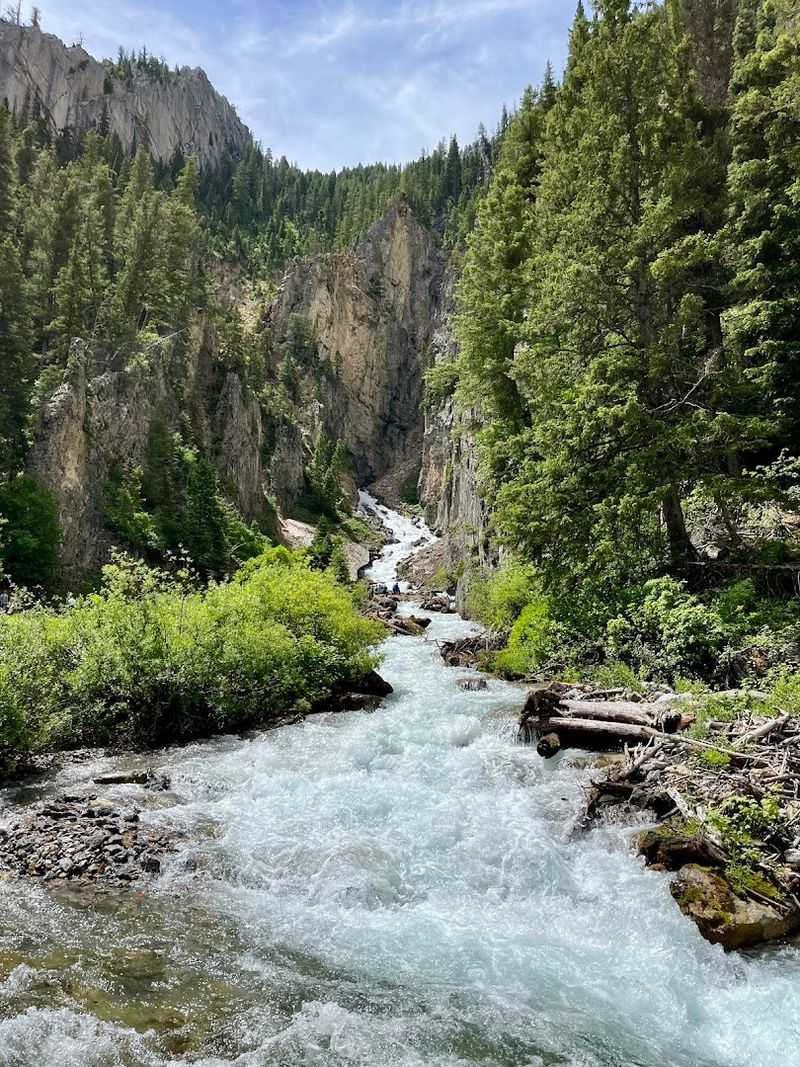
Periodic Spring is the kind of place that makes a short hike feel unusually rewarding. Tucked into Swift Creek Canyon near Afton, it sits in a cool mountain setting where forested slopes, clear air, and the sound of water set the tone before you even reach the main attraction.
Then the spring starts doing its strange trick, pulsing on and off in a way that catches visitors off guard. That stop-and-start rhythm is the whole draw, but the surrounding scene matters just as much. You are not standing at a crowded boardwalk with railings and traffic noise nearby.
Instead, the experience stays quiet and a little curious, with rock, trees, and moving water creating a backdrop that encourages you to linger longer than expected.
The walk in is approachable, which makes this a great detour when you want a natural wonder without turning the day into a major expedition. Good shoes help, especially if the trail is damp, and a patient pace makes the outing better because the spring rewards waiting.
You get a better sense of the place when you stop trying to rush the phenomenon and simply watch the canyon around it.
What stands out most here is how modest the setting seems at first glance compared with the strange behavior of the water. Wyoming has plenty of dramatic scenery, but this spot leans into mystery instead of scale.
If your favorite travel memories come from places that leave you slightly puzzled in the best way, Periodic Spring earns a solid place on the route.
2. Killpecker Sand Dunes (Sweetwater County)
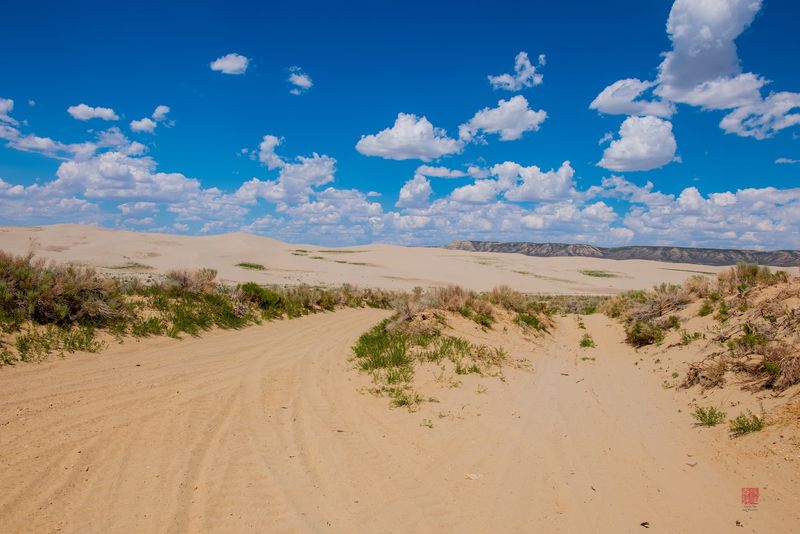
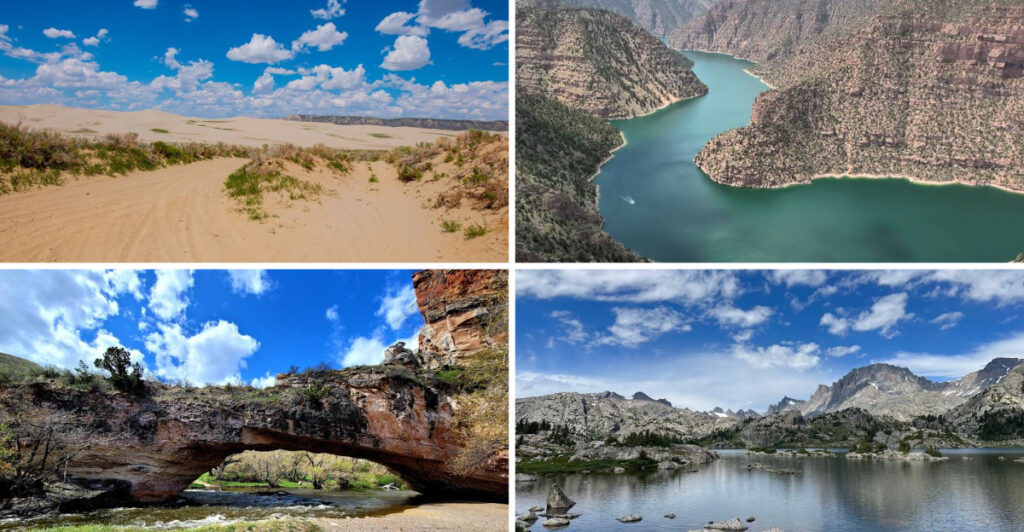
Killpecker Sand Dunes completely reset your idea of Wyoming scenery. Instead of peaks, forests, and rushing rivers, you get an immense spread of moving sand in the Red Desert, shaped by wind into long ridges and steep faces that change with the light.
The scale is the first surprise, and the silence is the second. Out here, the landscape strips itself down to texture, sky, and distance. Ripple patterns tighten across the sand, darker desert tones frame the edges, and the horizon seems to keep backing away as you look.
Depending on conditions, you may spot wildlife or even wild horses, which adds another layer of improbability to a place that already looks half borrowed from another continent.
This is a strong pick for travelers who enjoy open country without much human noise. You will want water, sun protection, and a good sense of direction, because the terrain can feel deceptively simple while still being very exposed.
The best approach is to embrace the slowness, walk a little, stop often, and let the shapes of the dunes do the work.
Killpecker stands out because it offers drama without needing a classic mountain backdrop. The color palette is spare, the terrain is restless, and every shift in weather can redraw the scene.
If Wyoming’s better-known sights deliver postcard grandeur, this place offers something drier, stranger, and far less polished, which is exactly why it stays with you long after the sand leaves your shoes.
3. Boar’s Tusk (Red Desert)
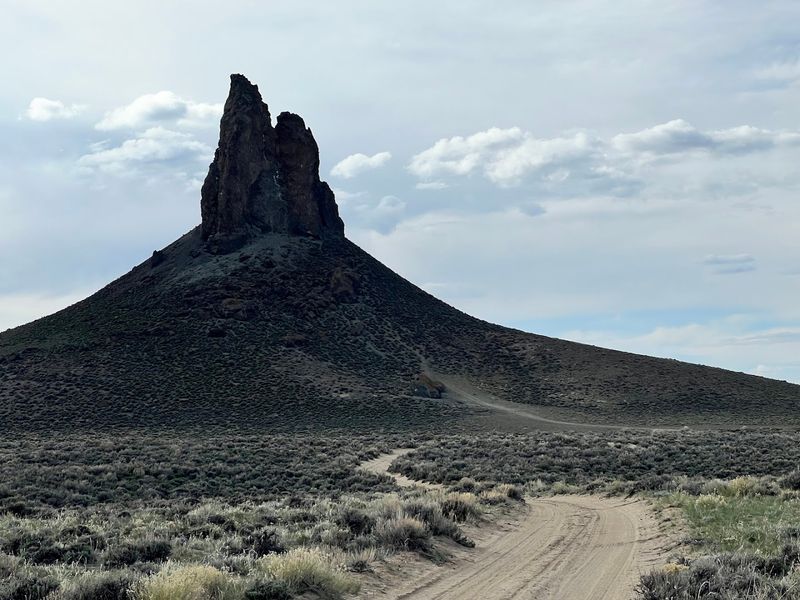
Boar’s Tusk looks almost too dramatic to be real when it first appears above the Red Desert floor. Rising alone from an otherwise broad, open landscape, the dark volcanic core commands attention without needing any surrounding peaks to help it out.
It is stark, odd, and photogenic in a way that makes you slow down immediately. The power of this place comes from contrast.
You have flat stretches of desert, low vegetation, huge sky, and then this sudden vertical landmark that seems placed there for emphasis.
As light moves across the day, the formation shifts from severe to sculptural, and even a small change in cloud cover can make the whole scene look newly arranged.
Getting close adds another level of appreciation because the texture starts to matter as much as the outline. Jagged surfaces, weathered edges, and the emptiness around the formation make it easier to picture ancient forces at work without needing a full geology lecture on the spot.
You just look at it and understand that Wyoming can do strange and beautiful at the same time. This is not a place that overwhelms you with amenities, and that is exactly the point. Bring the basics, check conditions, and treat the desert with respect, because remoteness is part of the experience here.
Boar’s Tusk delivers one of those clean, memorable images that stays in your head for years: a single improbable tower rising from a sea of space, silence, and wind.
4. Sinks Canyon State Park (Near Lander)
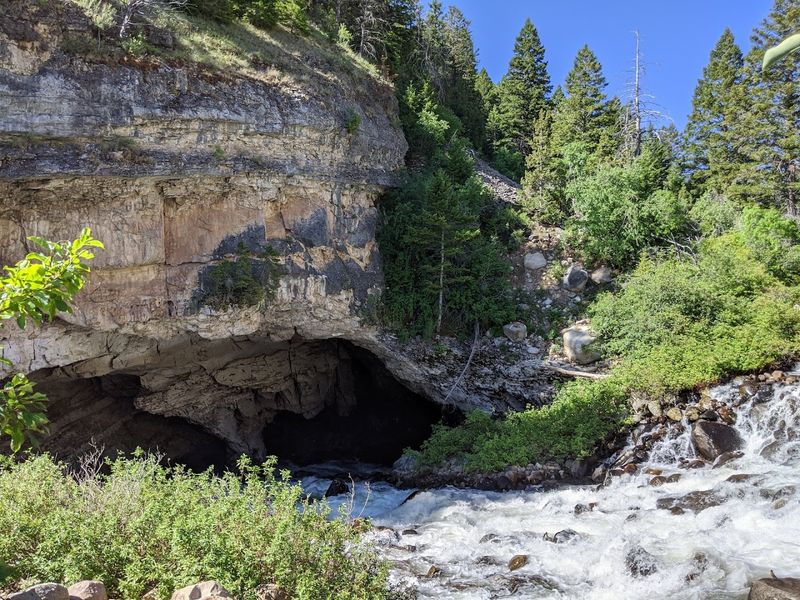
Sinks Canyon State Park has one of those natural setups that sounds made up until you watch it yourself. Near Lander, the Popo Agie River rushes through the canyon, then suddenly disappears underground at The Sinks before reappearing downstream at The Rise.
That alone would make the park memorable, but the surrounding mountain scenery turns the stop into a full outing.
The canyon has strong visual variety packed into a relatively accessible area. Water, cliffs, forest, and open overlooks all compete for attention, so the park never feels one-note.
You can spend time watching the river’s strange behavior, then shift your focus to the broader views and wildlife possibilities without needing to drive far between them.
It is also a great example of a place that works for different travel styles. Maybe you want a quick scenic break with minimal effort, or maybe you want to stretch the visit into a longer day outdoors.
Either way, the geology gives the park a hook, while the setting keeps the experience grounded in something more than a roadside curiosity.
What lands especially well here is the mix of mystery and clarity. The river vanishes, the canyon opens, and the entire place invites closer attention without becoming complicated to enjoy.
In a state full of oversized scenery, Sinks Canyon succeeds by giving you a specific phenomenon to remember and enough surrounding beauty to make the memory stick.
5. Heart Mountain (Near Cody)
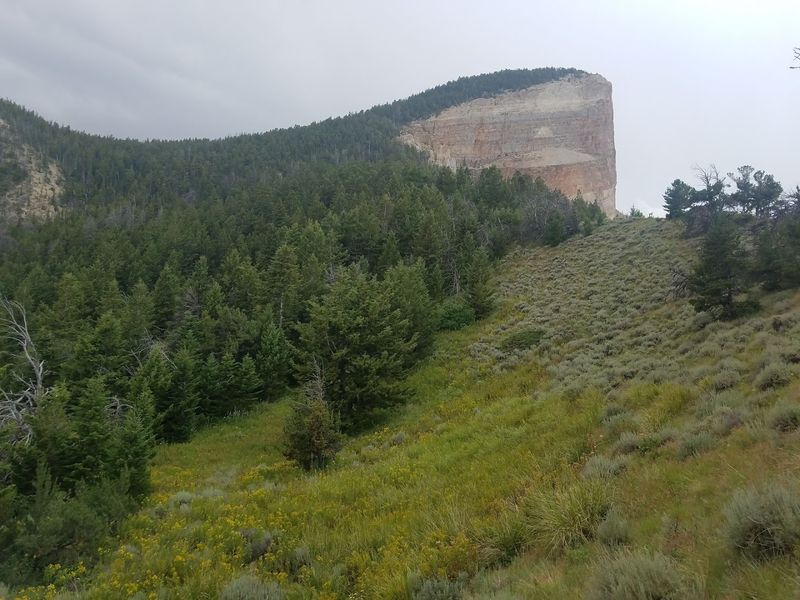
Heart Mountain has a profile that grabs your attention long before you get close. Near Cody, it rises with a shape that stands apart from the surrounding terrain, creating one of those landmarks you keep checking as the road shifts and the angle changes.
It looks solid and self-possessed, the kind of mountain that does not need a dramatic introduction. The bigger appeal, though, is how much space surrounds it. You are not funneled into a congested viewpoint with a dozen people waiting for the same photo.
Instead, the mountain sits within a broad Wyoming landscape that lets you appreciate scale, weather, and distance, whether you are hiking nearby or simply taking time to pull over and study the view.
For travelers who want mountain scenery without the constant bustle of headline destinations, this is a smart choice.
Trails and routes in the area can give you a more active experience, but even a simpler visit works because the visual character of the mountain does plenty on its own. The slopes look rugged, the views stretch wide, and the whole setting encourages a slower pace.
Heart Mountain leaves an impression because it blends recognizable form with a quieter setting. It has enough personality to stand out, yet it still feels tied to the larger landscape rather than isolated from it.
When you want a Wyoming mountain with presence, breathing room, and a little less competition for your attention, this one quietly handles the assignment.
6. Devil’s Kitchen (Bighorn Canyon Area)
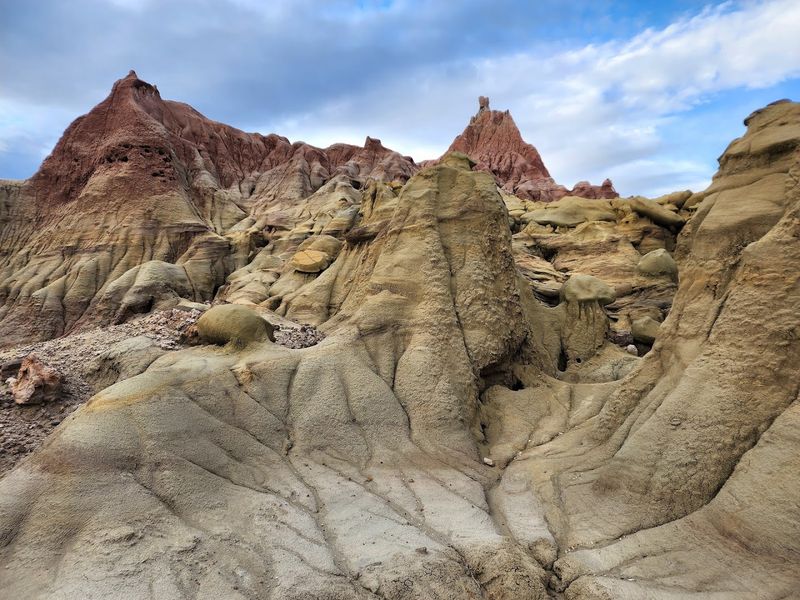
Devil’s Kitchen brings a different side of Wyoming into view, one that trades alpine polish for raw geothermal energy.
In the Bighorn Canyon area, this lesser-known spot features steaming vents, bubbling ground activity, and bright mineral staining that turns the earth into a rough patchwork of strange color. It is the sort of place that looks busy even when no people are around.
Part of the appeal is the contrast with the state’s more famous thermal areas. You still get steam, texture, and the unmistakable sense that the ground has its own agenda, but the setting stays far quieter.
That extra solitude changes the mood completely, letting you pay attention to little details like shifting vapor, damp soil, and the sharp smell that often comes with geothermal terrain.
A visit here works best when you treat it with curiosity and caution in equal measure. Conditions can vary, surfaces may be delicate, and the surrounding landscape rewards careful observation more than rushed movement.
Instead of racing for the next viewpoint, you are better off scanning the ground, the color bands, and the steam itself as it drifts through the scene.
Devil’s Kitchen stands out because it offers a wilder, less managed version of geothermal Wyoming. The visuals are vivid, the activity is tangible, and the relative lack of crowd noise gives the place a stronger edge.
If you want a stop that swaps postcard familiarity for something more sulfur-scented, remote, and unexpectedly memorable, this one does the job with almost no fanfare.
7. Lake Alice (Bridger-Teton National Forest)
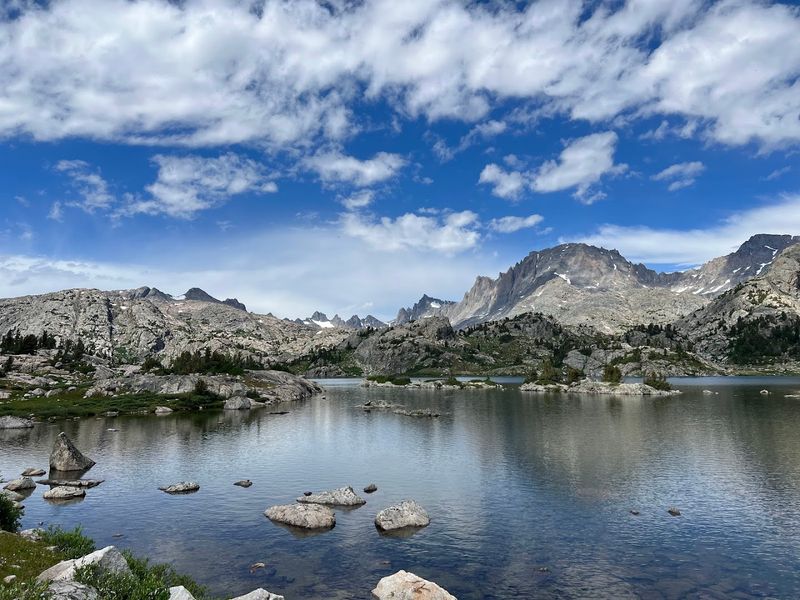
Lake Alice is the kind of alpine destination that earns its calm the old-fashioned way. Set deep in the Bridger-Teton backcountry, it rewards the hike with clear water, rugged peaks, and a level of quiet that can make your normal pace seem unnecessarily loud.
By the time the lake comes into view, the setting has already done most of the work. The scenery here leans classic western alpine, but without the constant churn that can flatten a famous place.
Wildflower meadows soften the approach in season, rocky slopes tighten around the basin, and the water often picks up the surrounding colors with impressive clarity.
Instead of one single dramatic reveal, Lake Alice builds its appeal through layers that sharpen as you get closer. This is a strong pick for hikers who want scenery with some effort attached, not because difficulty adds prestige, but because the extra distance usually trims down the noise.
You can settle near the shore, watch the light shift across the peaks, and actually hear the landscape working through breeze, water, and birds rather than nearby conversation. That alone changes the quality of the visit.
Lake Alice succeeds by keeping things simple and precise. There is cold water, open sky, mountain structure, and enough solitude to let the place register properly.
If your ideal Wyoming outing involves a trail, an alpine lake, and the satisfying sense that modern distractions got left behind a few miles earlier, this is an easy place to remember and a hard one to rush.
8. Bighorn Medicine Wheel (Bighorn Mountains)
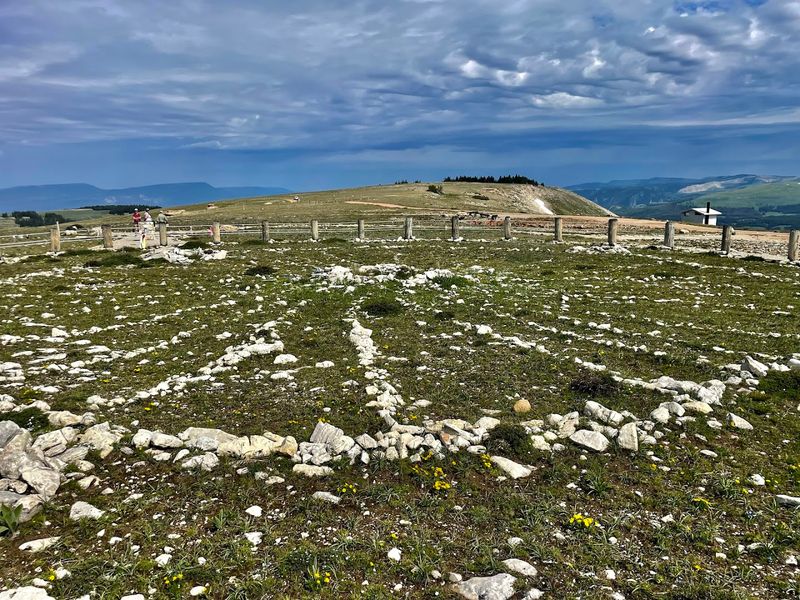
The Bighorn Medicine Wheel combines big scenery with a strong sense of place, and that pairing gives it unusual depth.
Set high in the Bighorn Mountains at nearly 10,000 feet, the stone structure rests on an alpine ridge where the views spread wide in every direction.
Even before you focus on the wheel itself, the setting encourages you to lower your voice and pay attention. This is not just a scenic stop, and that matters. The site carries cultural and spiritual significance, so the experience works best when approached with respect rather than checklist energy.
The surrounding landscape helps reinforce that tone, with open sky, crisp mountain air, and the kind of elevation that naturally slows your steps and sharpens your focus.
Visually, the contrast is striking. The carefully arranged stones sit against a broad, rugged mountain backdrop, making the site feel both intimate and expansive at once.
You can take in the wheel as a human-made presence within a natural high country setting, which creates a visit that lands differently from a standard overlook or trail viewpoint.
The Bighorn Medicine Wheel remains memorable because it offers more than one layer without trying too hard to announce any of them. You get history, landscape, and a quiet ridge-top setting that asks for a little patience.
In a state full of dramatic natural features, this place stands apart by joining scenery with meaning, and the combination tends to stay with you long after the drive back down.
9. Wind River Range (Western Wyoming)
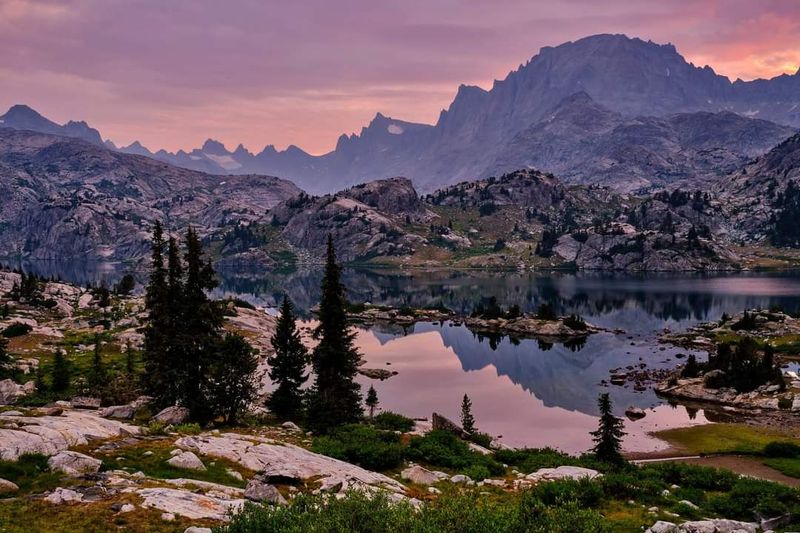
The Wind River Range is where Wyoming stops being polite and starts showing off. In western Wyoming, this sprawling mountain wilderness delivers jagged granite peaks, glacier-fed lakes, and backcountry terrain that can make even seasoned travelers pause for a second look.
It is dramatic, yes, but the bigger gift is how much room there still is to experience that drama without a crowd pressing in.
Compared with the state’s more famous mountain destinations, the Winds often ask a little more from you. That extra effort pays off in quieter trails, bigger stretches of unbroken landscape, and a stronger sense that you are moving through a place that has not been overly staged for convenience.
Even shorter hikes can open onto serious views, while longer routes pull you into lake basins and granite country that look almost unreal.
The range works for different goals, but it especially shines when you want immersion. You can build a trip around backpacking, fishing, photography, or simply walking until the outside world starts fading from the front of your mind.
Cold water, changing weather, and serious elevation keep the experience grounded, so preparation matters as much as enthusiasm.
What makes the Wind River Range so compelling is its blend of scale and texture. You get huge mountain architecture, but also smaller details like polished stone, mirrored lakes, and scattered wildflowers tucked into hard country.
If Grand Teton grabs attention with instant icons, the Winds reward you with deeper, longer, and often quieter contact with Wyoming at its most untamed.
10. Flaming Gorge – Wyoming Side (Southwestern Wyoming)
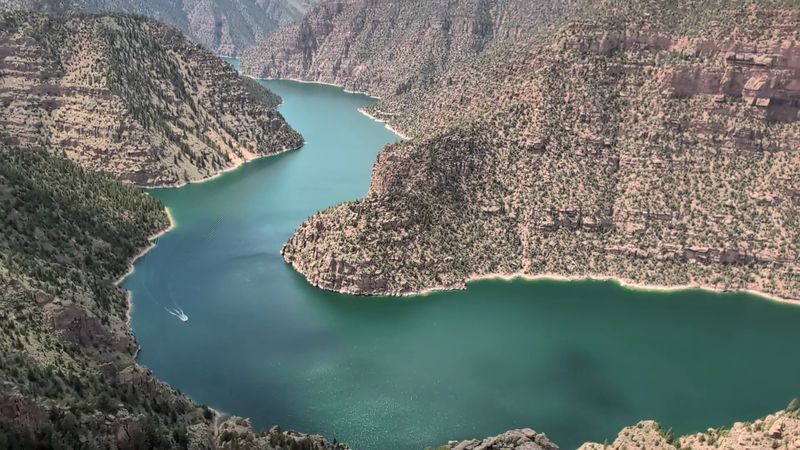
Flaming Gorge usually gets filed under Utah in casual travel talk, which leaves the Wyoming side pleasantly underplayed.
That is good news for anyone who wants the same striking combination of red canyon walls and bright blue water without as much attention focused on every overlook. Southwestern Wyoming brings the color, the scale, and a little more breathing room.
The visual contrast here does most of the heavy lifting. Rust-red rock drops toward turquoise water, long views stretch across the canyon, and the shoreline shifts between dramatic walls and calmer pockets suited to slower exploration.
Depending on where you stop, the experience can tilt toward scenic driving, quiet hiking, fishing, boating, or simply standing still and letting the colors sort themselves out.
There is also a nice balance between access and remoteness. You do not need a major expedition mindset to appreciate Flaming Gorge, but the landscape still feels expansive enough to shake off routine.
Wildlife watching can be part of the day, and the changing angle of sun on the canyon creates different moods from one overlook to the next, so it rewards a little unhurried wandering.
The Wyoming side stands out because it offers a famous-looking scene with less fanfare attached. You still get the sweep, the vivid palette, and the recreational options, but the overall experience can feel calmer and less choreographed.
When you want a canyon-and-water landscape that looks bold on camera and even better in person, this stretch deserves a lot more attention than it usually gets.
11. Ayres Natural Bridge (Near Douglas)
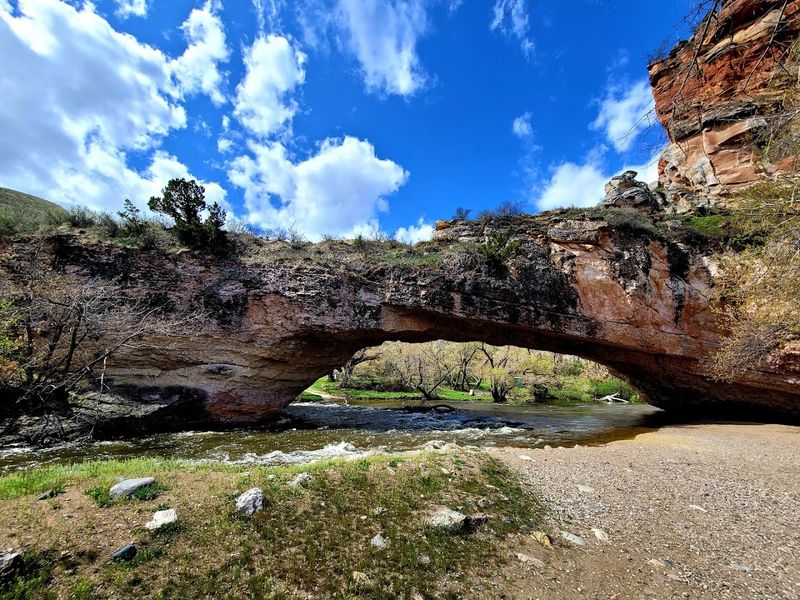
Ayres Natural Bridge proves that a natural wonder does not need huge scale to hold your attention. Near Douglas, LaPrele Creek passes beneath a graceful rock arch carved over time, creating a scene that is more intimate than overwhelming.
The combination of flowing water, sandstone, and cottonwoods gives the whole place a grounded, easygoing character that many travelers miss.
This is one of the better stops for when you want scenery without turning the day into a logistical project. Access is relatively simple, the setting is calm, and the payoff arrives quickly, which makes it ideal for road trippers who still want something memorable between longer drives.
The creek adds movement and sound, while the arch itself frames the view with clean, sculpted lines. What helps Ayres stand out is the contrast between its understated reputation and its visual charm.
Instead of a giant canyon or towering mountain, you get a smaller composition that holds together beautifully when you are actually there.
Shade from the trees, the soft rush of water, and the warm tones of the rock make it easy to slow down and appreciate details that bigger attractions often bury under sheer scale.
Ayres Natural Bridge works because it stays simple and specific. You arrive, the scene makes immediate sense, and the setting invites a little extra time rather than a quick photo and dash.
For travelers looking to trade hype for a quieter stop with real character, this arch over a living creek delivers exactly the right kind of Wyoming surprise.
Share this story