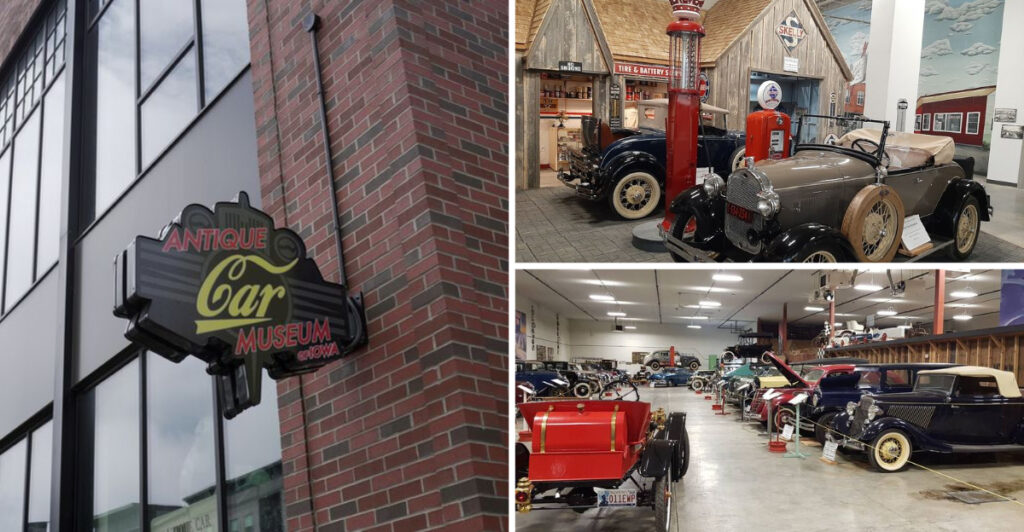
At a glance, this Coralville museum might sound like a niche stop for dedicated gearheads. Step inside, though, and the Antique Car Museum of Iowa opens up into a sharply curated walk through changing design, engineering, and everyday American life.
The collection is packed with early vehicles, thoughtful interpretation, and enough visual oddities to keep even casual visitors locked in. Shiny fenders and polished chrome may grab attention first, but the real appeal comes from seeing how transportation evolved alongside the country itself. It is the kind of museum that turns a passing interest into a surprisingly engaging afternoon.
A Showroom Packed Tighter Than You Expect
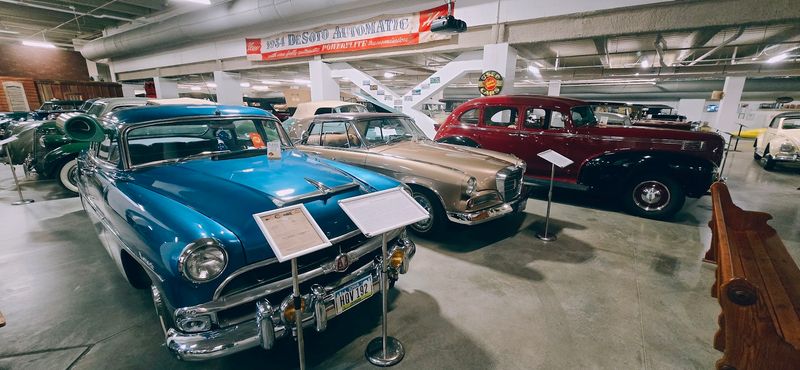
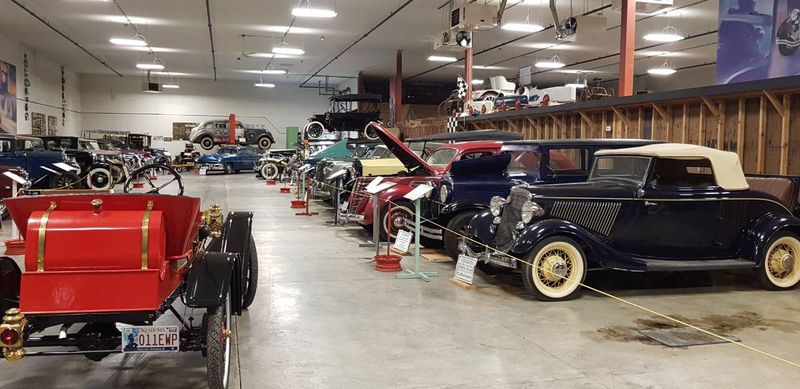
The first surprise at the Antique Car Museum of Iowa is scale. From the outside, you may expect a modest local museum, but the gallery opens into a dense lineup of vehicles that immediately changes the mood.
Rows of antique automobiles sit close enough to compare fenders, lamps, wheels, and body shapes in one sweeping glance.
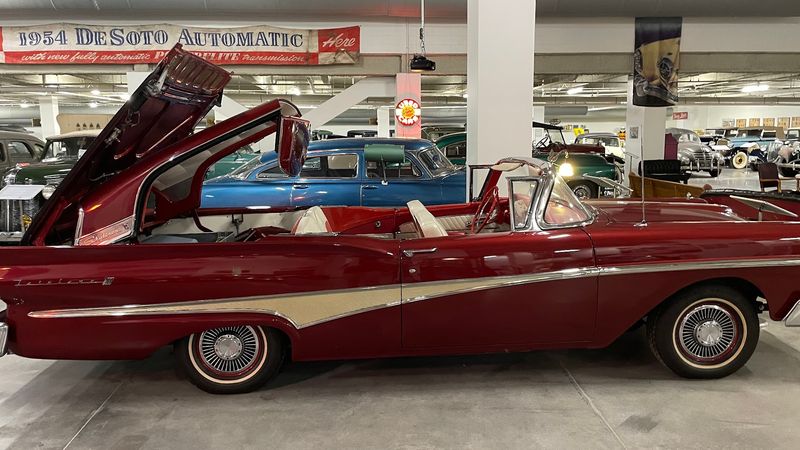
That compressed layout actually works in the museum’s favor. Instead of isolating each car like a luxury object, the arrangement turns the room into a visual timeline, where brass era curves, upright cabins, and later streamlined bodies can be read almost at once.
You are not staring at one artifact in a vacuum. You are watching a century of experimentation jostle for space. The collection includes polished showpieces, but one of the smartest choices here is the presence of cars that still wear age.
Patina, unrestored finishes, and surfaces that look closer to discovery than perfection give the museum texture. That contrast keeps the gallery from becoming too glossy or predictable.
Lighting and signage help steady the experience. Even with many vehicles sharing the floor, the room does not collapse into clutter because labels, numbered references, and supporting displays provide structure.
Your eye keeps landing on a new detail, from delicate steering hardware to tall, narrow tires and bodywork that looks half carriage, half machine.
There is also a simple thrill in seeing so many uncommon forms gathered under one roof in Coralville. This is not a museum built around one celebrity car or one blockbuster display.
Its power comes from accumulation, comparison, and surprise, which makes the opening minutes especially strong. Before you have read a full placard, the room has already made its case.
Where the Earliest Automobile Years Steal the Show
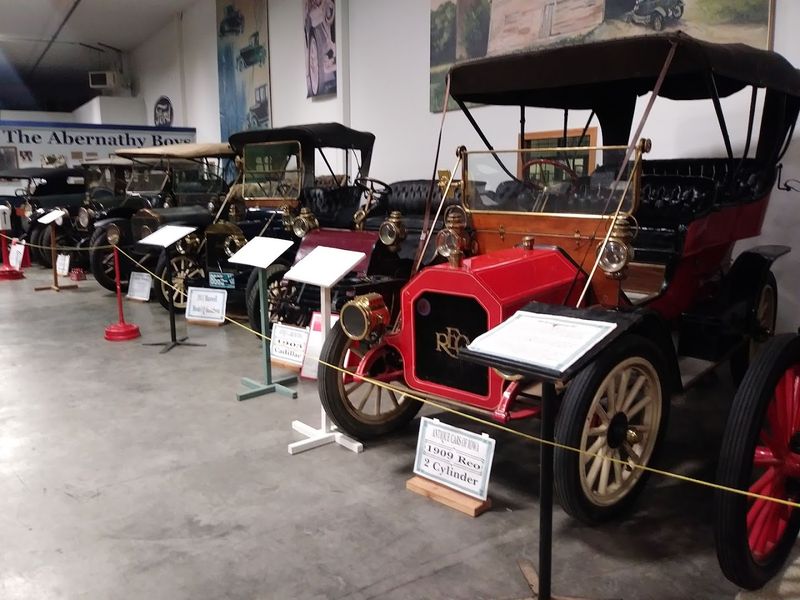
Plenty of car museums lean hard on chrome, muscle, or celebrity nameplates. This one takes a more unusual route by giving serious space to the earliest decades of motoring, when nobody had fully agreed on what an automobile should look like or how it should work.
That decision gives the museum its strongest identity. The oldest vehicles are fascinating because they still carry the logic of horse drawn travel.
High seating positions, carriage influenced proportions, exposed mechanical parts, and spindly wheels make these cars look experimental rather than settled. You can see an industry inventing itself in real time, one body style and drivetrain idea at a time.
That matters for visitors who usually think old cars begin in the 1950s. Here, the real drama starts much earlier, with machines from the 1890s and turn of the century that feel almost improbable in person.
They are not just older versions of modern vehicles. They belong to a moment when steam, gasoline, electric power, and hybrid concepts all competed for relevance.
The museum’s labels and reference materials deepen that story without overwhelming the room. Instead of asking you to admire paint alone, the interpretation helps explain why these strange looking machines existed and how quickly design conventions changed.
Seemingly odd details start making practical sense once you place them in their era. By centering these formative years, the Antique Car Museum of Iowa distinguishes itself from bigger institutions that may spread attention across broader themes. The result is a sharper editorial focus and a more memorable visit.
You leave with a clearer picture of how uncertain, inventive, and visually eccentric the birth of the automobile really was.
The Old Gas Station Corner Adds Stagecraft
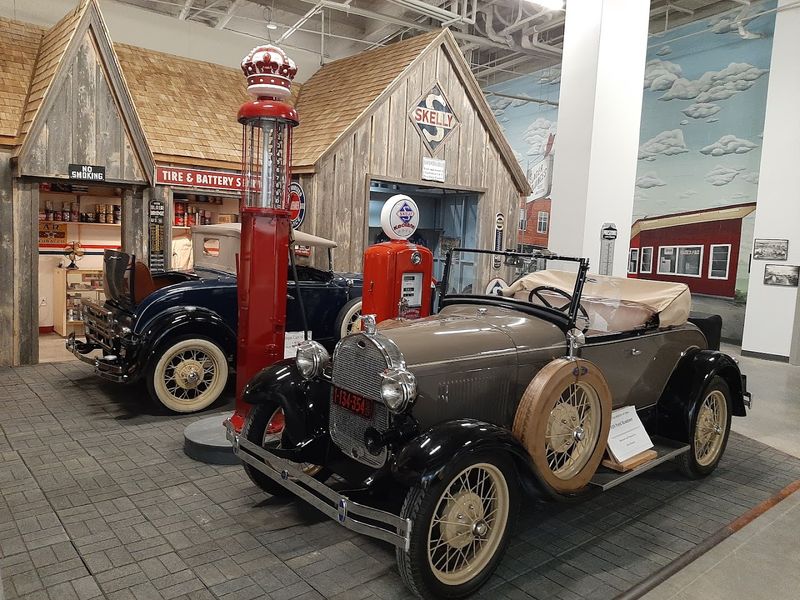
Not every memorable moment here comes from a rare vehicle. One of the museum’s smartest touches is the period atmosphere created by transportation related displays and the recreated gas station setting, which gives the collection a lived in backdrop instead of a purely showroom presentation.
It breaks up the rows of cars with a scene you can read instantly. The old station vignette does more than add nostalgia.
It reminds you that automobiles reshaped not only engineering but roadside business, signage, maintenance culture, and the look of American commercial space.
A fuel pump, a service station detail, or an advertising piece can tell you as much about the driving era as a hood ornament can.
This is where the museum gets particularly accessible for visitors who are not deeply invested in mechanical specifications. You do not need to know engine codes to enjoy the visual storytelling of tools, décor, and accessories surrounding the cars.
The supporting objects give the vehicles social context and help the room feel less technical. That wider frame also changes the pace of your visit. Instead of moving from placard to placard in a straight line, you pause for scene building details that suggest how people actually encountered these machines in daily life.
The exhibit design encourages small detours, and those side glances keep the experience lively. In a museum of this size, thoughtful extras matter. The gas station area and related memorabilia act like punctuation marks between dense stretches of automobiles, refreshing your attention at the right moment.
It is a reminder that transportation history is not only about the cars themselves, but about the businesses, habits, and visual culture that grew around them.
Why Iowa Makes Sense for This Collection
The location matters more than you might think. Seeing this museum in Iowa adds regional weight to the collection because the story of the automobile was never just a big city narrative.
It changed small towns, rural mobility, local manufacturing dreams, and the relationship between distance and daily life across the Midwest.
Inside the museum, that broader regional context surfaces through interpretation tied to transportation history rather than celebrity culture.
The emphasis is on development, access, and the remarkable number of companies and ideas that once competed in the early years of American motoring. That makes the collection feel connected to real geography, not floating above it.
Coralville is also an effective setting because the museum sits in an area many travelers could easily pass through without expecting a specialized collection of this depth. The surprise sharpens the experience.
You are not walking into a massive tourist district with giant banners and themed fanfare. You are discovering a place that lets the objects do the work.
That quieter context suits antique automobiles especially well. Early cars reward close looking, comparison, and patience more than spectacle, and the museum’s pace supports that kind of attention.
Instead of pushing you through a greatest hits narrative, the space invites curiosity about overlooked manufacturers, evolving technologies, and practical design shifts.
For SEO minded travelers searching museums in Iowa, this is the angle that sets it apart. The Antique Car Museum of Iowa is not merely a room full of old vehicles in Coralville.
It is a concentrated regional window into how Americans experimented with movement, machinery, and modern life. The state name belongs in the conversation because the setting strengthens the story.
Read the Placards or Miss Half the Experience
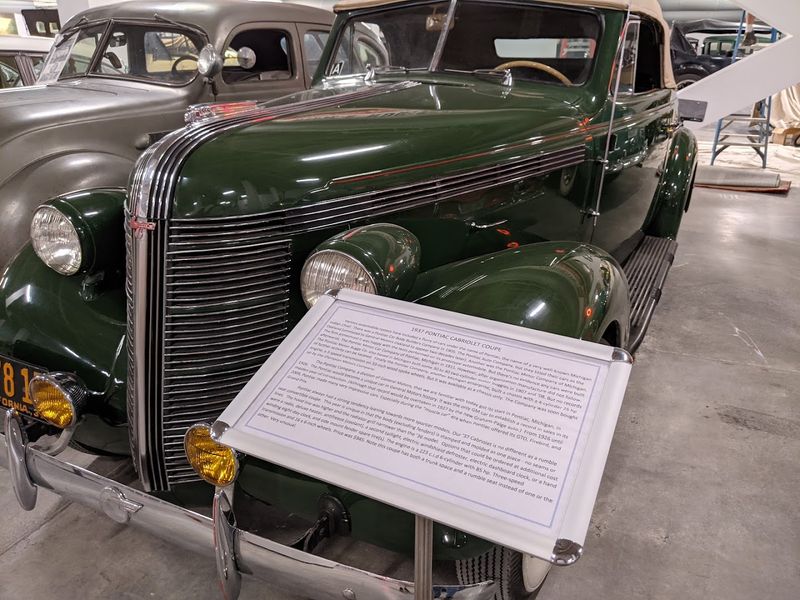
This is not a museum built for a rushed lap and a few phone photos. The cars have immediate visual punch, but the interpretation is where the visit deepens, especially if you slow down for the placards and numbered information sheets.
Those details transform the room from a lineup of interesting machines into a clear, evolving story. Many museums struggle to balance readability with expertise. Here, the supporting text adds context without burying the visitor under jargon, which is a harder editorial trick than it sounds.
You can move at your own pace, skim when you want the big picture, or linger when a specific vehicle sends you down a rabbit hole.
This matters because antique automobiles can otherwise blur together for non specialists. A body shape may look charming, but without context you might miss why a design mattered, what problem it addressed, or how unusual a certain manufacturer was.
The written material supplies that missing framework and turns visual curiosity into actual understanding. There is also a practical benefit to the museum’s educational style.
Mixed groups tend to do well here because one person can admire craftsmanship while another studies industrial history, and both are engaging with the same exhibit from different angles.
That flexibility gives the museum a wider reach than the topic might suggest. If you are deciding how much time to budget, the answer depends almost entirely on whether you plan to read. A quick circuit can be done fairly fast, but the place rewards attention far beyond a casual stroll.
The smartest approach is to leave enough room for the labels, because they unlock the collection’s most interesting layers and sharpen nearly every display on the floor.
A Small Museum That Benefits From Conversation
One of the museum’s less obvious strengths is how well it supports human scale interaction. In a giant institution, staff knowledge can feel distant or scheduled, but here the setting makes casual conversation possible.
When questions come up about a vehicle, era, or quirky feature, the answer can become part of the visit rather than an interruption to it.
That changes the rhythm of the room. Instead of following a rigid scripted path, you move through the gallery with the sense that expertise is available when needed and unobtrusive when not.
It is a subtle advantage, yet it fits the collection perfectly because antique cars raise unusual questions modern vehicles rarely do.
The museum’s intimate footprint helps. Since the space is compact enough to stay navigable, a short exchange about a car’s provenance, design, or place in automotive history can immediately send your attention back across the floor to compare related examples.
Information lands better when the object is right in front of you, close enough to study again. This is also why the museum works for people who arrive skeptical.
A smaller venue devoted entirely to old cars may sound narrow on paper, but the combination of approachable scale and knowledgeable guidance keeps the topic open rather than exclusive. You do not need a collector’s vocabulary to get oriented here.
There is a practical upside too. Because the museum is manageable, families, casual travelers, and serious enthusiasts can all shape the experience to fit their pace without feeling trapped in an all day commitment.
If conversation happens, great. If you prefer to wander quietly and read, that works just as well. The place gives you room to choose your own level of immersion.
How to Time Your Visit for the Best Payoff
Good planning improves this stop more than you might expect. The Antique Car Museum of Iowa keeps consistent daytime hours through most of the week, opens later on Sunday, and is closed on Monday, so checking your route against that schedule is the first smart move.
Because the museum is compact, timing affects the feel of the visit more than total logistics. Arriving earlier in the day gives you the best chance to settle in without rushing.
This is especially useful if you want to watch any introductory material, read deeply, or spend time comparing the earliest vehicles instead of treating the collection like a pass through attraction.
The museum can work as a focused hour, but it becomes richer when you allow breathing room. If you are traveling with mixed interests, set expectations correctly. This is not an interactive children’s science center or a giant entertainment complex.
It is a traditional museum with a strong visual collection, solid interpretation, and enough unusual design history to hold attention if everyone comes in ready to look closely.
Its Coralville location also makes it easy to fold into a broader day without turning the entire schedule upside down. You can use it as a purposeful stop rather than a time consuming expedition, which may explain why it surprises so many passing travelers.
The museum is accessible in the best sense of the word: straightforward, concentrated, and easy to slot into a real itinerary.
The sharpest strategy is simple. Show up with enough energy to read, enough time to wander twice, and enough curiosity to notice the odd details that separate a brass era machine from a later classic.
Do that, and this museum stops being a side trip and starts reading like one of Coralville’s most rewarding cultural stops.
Share this story