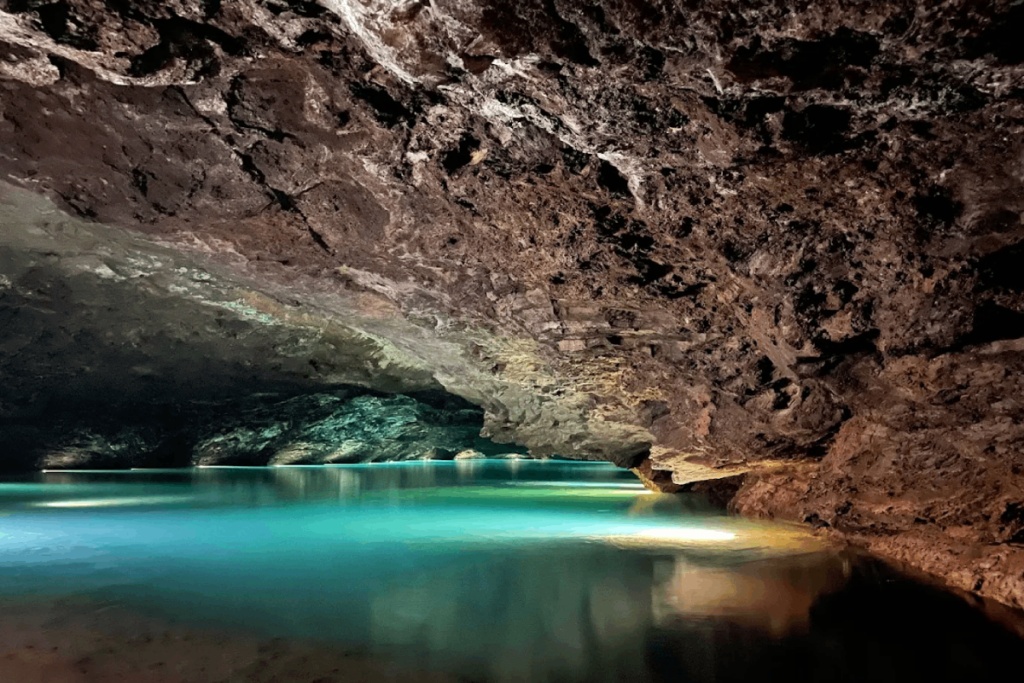
Tennessee is packed with jaw-dropping natural beauty that rivals any state in America. From thundering waterfalls to underground lakes, misty mountain peaks to ancient cypress swamps, the Volunteer State offers scenery that will leave you speechless.
Whether you’re a serious hiker or just someone who loves a good road trip with incredible views, these natural wonders showcase why Tennessee deserves a spot on every nature lover’s bucket list.
1. Great Smoky Mountains National Park
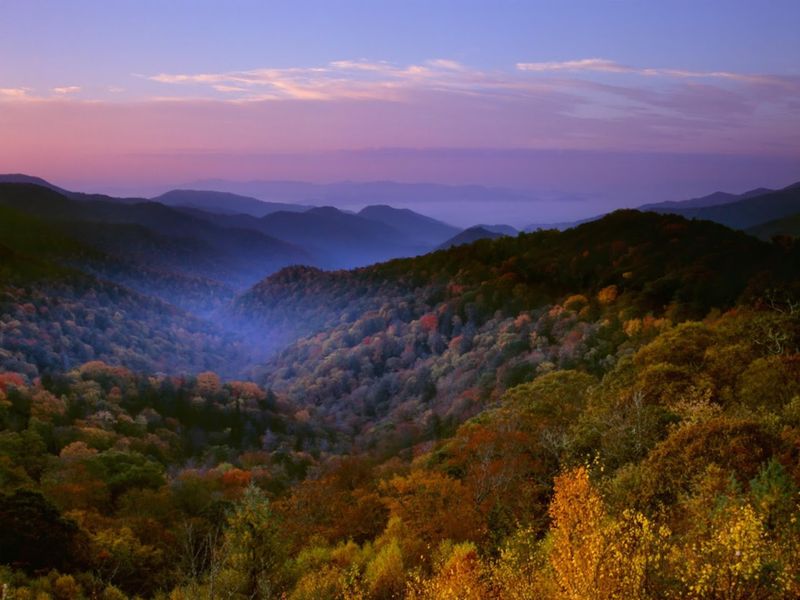
America’s most visited national park sits right on Tennessee’s eastern border, and once you see those signature blue-hazed ridges rolling into the distance, you’ll understand why millions of people make the pilgrimage every year. The park protects over half a million acres of ancient Appalachian wilderness, where black bears still roam and salamanders outnumber people in the cool mountain streams.
What makes the Smokies truly special is the incredible diversity packed into this landscape. You’ll find more tree species here than in all of Europe, wildflowers that carpet the forest floor each spring, and synchronous fireflies that put on light shows you won’t believe until you see them. The park straddles the Tennessee-North Carolina border, offering everything from easy waterfall walks to challenging backcountry trails that test even experienced hikers.
Morning fog rolls through the valleys like slow-moving rivers, creating those dreamy scenes that fill Instagram feeds and inspire oil paintings. Elk have been reintroduced to Cataloochee Valley, and white-tailed deer are so common you’ll likely spot several on any visit. Historic log cabins and churches dot the landscape, reminders that people called these mountains home long before the park existed.
The best part? No entrance fee. That’s right—you can explore one of America’s greatest natural treasures without paying a dime to get in.
Just be prepared for crowds during peak seasons, especially around Cades Cove and popular waterfall trails.
2. Kuwohi Observation Deck
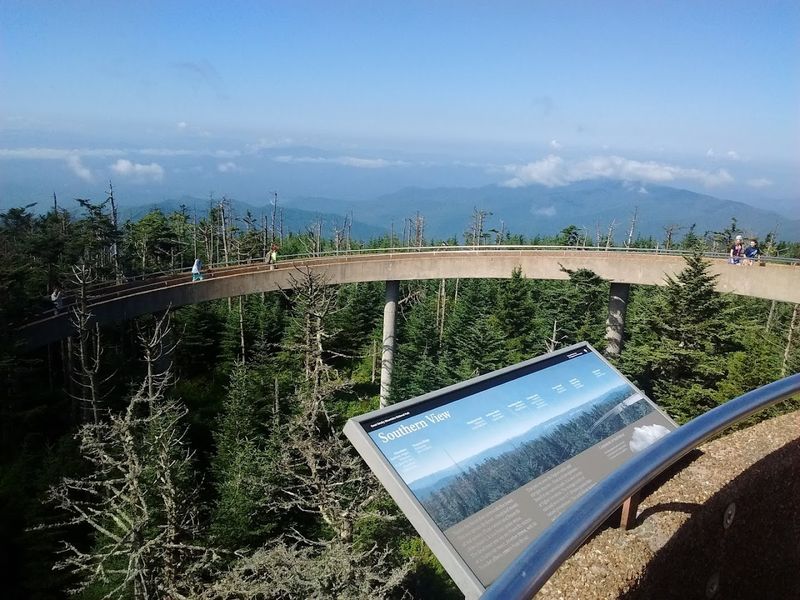
Standing at 6,643 feet, Kuwohi—formerly known as Clingmans Dome—claims the title of highest point in the Great Smoky Mountains and the third-highest mountain east of the Mississippi River. The observation tower perched on top looks like something from a science fiction movie, a concrete spiral ramp that climbs 54 feet into the sky for views that stretch across Tennessee, North Carolina, and into several neighboring states on clear days.
Getting there requires a half-mile paved walk that’s steeper than it looks on the map. Don’t let the short distance fool you—the high elevation means thinner air, and plenty of visitors find themselves huffing and puffing by the time they reach the tower. But that climb pays off with panoramic views of endless mountain ridges fading into blue-gray layers that seem to go on forever.
The observation deck itself offers a 360-degree perspective that changes dramatically with the seasons. Summer brings lush green canopies and afternoon thunderstorms that roll in like freight trains. Fall transforms the landscape into a patchwork quilt of reds, oranges, and golds that attracts leaf-peepers from around the world.
Winter can be downright brutal up here, with ice, snow, and winds that’ll knock you sideways, but also crystal-clear skies that reveal views stretching over 100 miles.
The access road closes from December through March, so plan accordingly if you’re visiting during winter months. Even in summer, temperatures at the summit run 10 to 20 degrees cooler than at lower elevations, so bring a jacket even if it’s sweltering in Gatlinburg.
3. Cades Cove
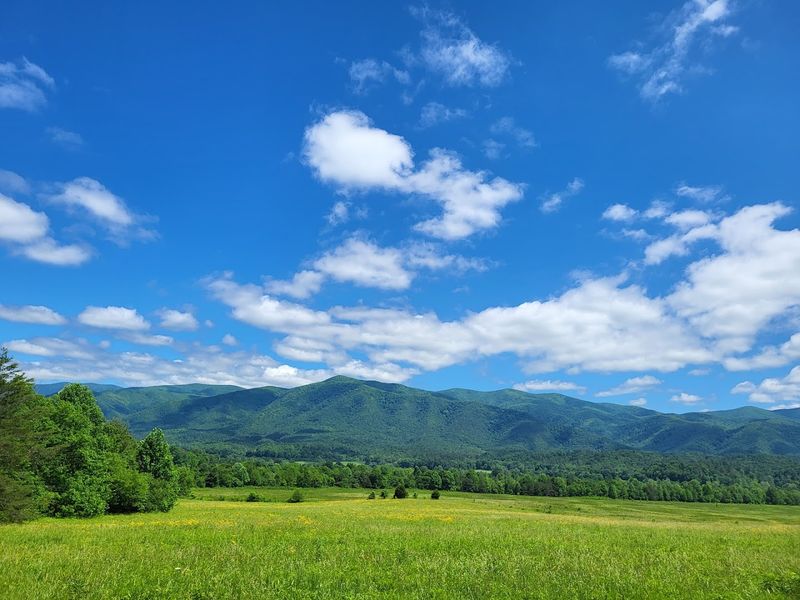
This broad mountain valley tucked into the Smokies offers one of the most popular scenic drives in the entire national park system. The 11-mile loop road winds through a landscape that looks like it hasn’t changed much since the 1800s, with preserved homesteads, churches, and barns set against a backdrop of mountain peaks that frame the valley on all sides.
Wildlife watching here ranks among the best in the eastern United States. White-tailed deer graze in the open meadows like they own the place, wild turkeys strut across the road without a care, and black bears make regular appearances, especially during early morning and evening hours. Photographers line up before dawn, hoping to catch bears in the soft morning light or deer emerging from the fog that often blankets the valley floor.
The loop road operates as one-way only, which means once you start, you’re committed to the full circuit. On summer weekends, traffic can crawl along at a snail’s pace as visitors stop to photograph every deer and scenic vista. Wednesday and Saturday mornings until 10 AM, the road closes to motor vehicles and opens exclusively to bicycles and pedestrians, offering a completely different experience without engine noise and exhaust fumes.
Historic structures scattered throughout the cove tell stories of the families who farmed this valley before the park displaced them in the 1930s. You can walk through preserved cabins, peek into smokehouses, and imagine what life was like when this isolated community was home to hundreds of people. S
4. Fall Creek Falls State Park
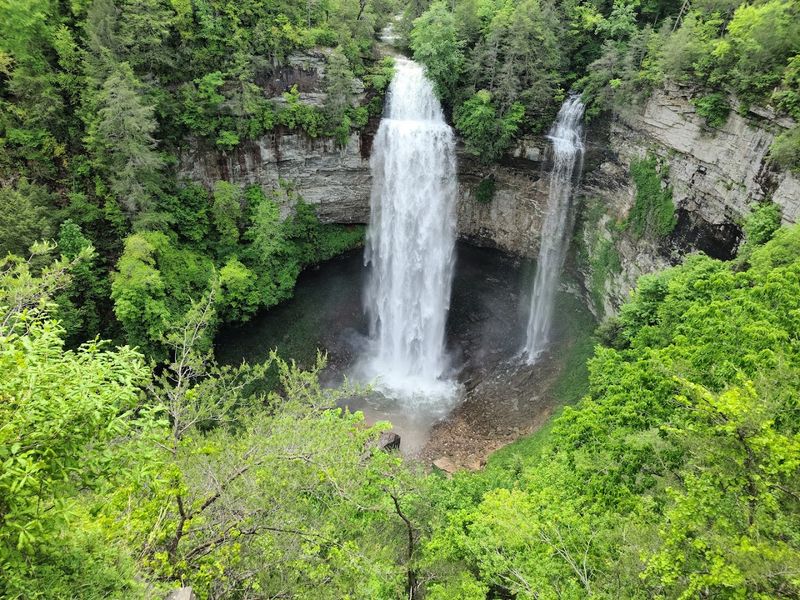
Tennessee’s largest state park sprawls across more than 26,000 acres of Cumberland Plateau wilderness, but the star attraction drops 256 feet in a single plunge that makes it one of the tallest waterfalls east of the Rockies. Fall Creek Falls has been photographed millions of times, yet somehow it still manages to take your breath away when you round the trail and see it thundering into the gorge below.
The park actually protects several spectacular waterfalls beyond the namesake cascade. Cane Creek Falls, Cane Creek Cascades, and Piney Falls all offer different personalities and perspectives, from gentle cascades to dramatic drops. Well-maintained trails connect these features, ranging from easy overlook walks to challenging gorge hikes that require scrambling over rocks and crossing streams.
Beyond waterfalls, the park offers a full resort experience with a lodge, cabins, campgrounds, a golf course, a swimming pool, and enough recreational activities to fill a week-long vacation. Families love the combination of natural beauty and comfortable amenities, while serious hikers appreciate the 30-plus miles of trails that explore every corner of the park. Mountain bikers have their own dedicated trails, and anglers work the lake and streams for bass, bluegill, and trout.
Spring brings the biggest water flows and the most dramatic waterfall displays, though you’ll share the trails with plenty of other visitors. Fall colors transform the gorges into painted canyons, and winter ice formations create frozen sculptures that look like something from a fantasy movie. The suspension bridge over Cane Creek Gorge offers stomach-dropping views straight down to the creek below, and it’s not for anyone with serious height issues.
5. Burgess Falls State Park
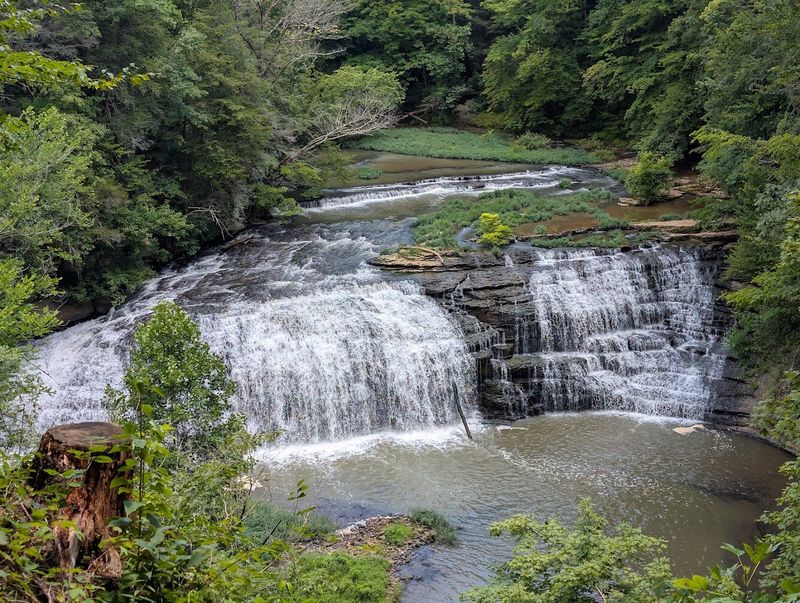
Four distinct waterfalls cascade down the Falling Water River in quick succession, building anticipation as you hike downstream toward the grand finale. The trail follows the river for about a mile and a half, passing each waterfall before arriving at the main event—a thundering 130-foot plunge into a horseshoe-shaped gorge that echoes with the constant roar of falling water.
The hike rates as moderate, with some steep sections and stairs that get slippery when wet. Most visitors can handle it just fine, though the return trip uphill reminds you that gravity exists. Multiple overlooks provide different perspectives on the main falls, and photographers work overtime trying to capture the perfect shot of water, rock, and forest coming together in this dramatic setting.
Unlike some Tennessee waterfalls that slow to a trickle in summer, Burgess Falls maintains impressive flow year-round thanks to the river’s substantial watershed. Spring runoff creates the most powerful displays, with water volume that can double or triple normal flows.
The park sits just outside Cookeville, making it an easy day trip from Nashville or Knoxville. Picnic areas near the trailhead provide spots to eat lunch before or after your hike, and the relatively short trail means you can visit the falls without committing your entire day. Summer weekends see the most crowds, but even then, the trail rarely feels packed compared to more famous waterfall destinations.
6. Cummins Falls State Park
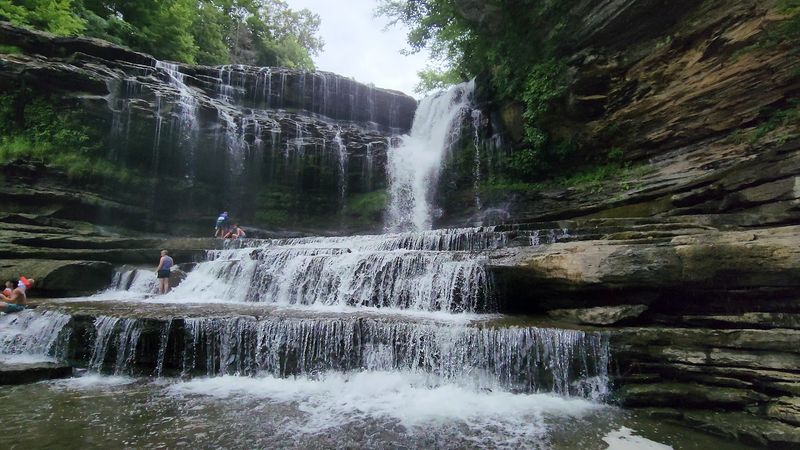
Tennessee’s eighth-largest waterfall by volume attracts adventure-seekers who don’t mind getting wet to reach one of the state’s best natural swimming holes. The 75-foot cascade pours into a wide pool surrounded by rock walls, creating a backcountry swimming experience that feels miles from civilization even though you’re less than two miles from the parking lot.
Here’s the catch—reaching the falls requires wading and rock-hopping up the Blackburn Fork State Scenic River, which means wet feet are guaranteed and water levels determine whether the trek is pleasant or dangerous. The park implements a reservation system during peak season to limit crowds and reduce accidents, because this seemingly innocent hike has resulted in multiple drownings and dozens of rescues over the years.
When conditions are right, the experience is absolutely worth the effort. Cool mountain water tumbles over layers of limestone, creating smaller cascades and pools along the way before reaching the main falls. On hot summer days, the swimming hole fills with families, college students, and anyone looking to escape Tennessee’s brutal humidity.
The water stays cold year-round, fed by springs and shaded by the gorge walls.
Rangers close the gorge trail when water levels rise too high or weather creates dangerous conditions. Flash flooding is a real risk here, and several visitors have been caught by rapidly rising water after thunderstorms upstream. Always check conditions before you go, and don’t attempt the creek crossing if water is flowing over the trail or if storms are forecast.
The park offers an overlook trail for those who want to see the falls without the creek adventure, but honestly, you’re missing the best part if you skip the wade. Wear shoes with good grip that you don’t mind getting soaked, bring a dry bag for phones and valuables, and expect to slip at least once on the algae-covered rocks.
7. Rock Island State Park
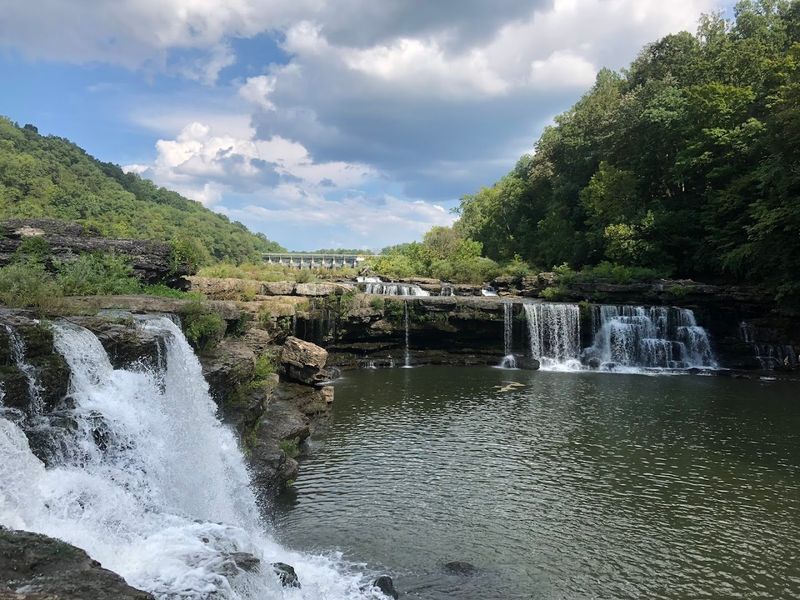
Three rivers—the Caney Fork, Collins, and Rocky—converge at this Cumberland Plateau gem, creating a landscape of waterfalls, cascades, deep pools, and limestone outcrops that have attracted visitors since the 1800s. The Great Falls Dam controls water releases upstream, but the natural features downstream remain wild and beautiful, with white water that kayakers dream about and swimming holes that locals guard like secrets.
The Twin Falls area offers the most accessible waterfall viewing, where two separate cascades plunge side by side into blue-green pools surrounded by smooth rock ledges. People sunbathe on the rocks, jump from designated spots into deep water, and generally enjoy a scene that looks more like a tropical resort than middle Tennessee. Water levels fluctuate based on dam releases, so what you see can vary dramatically from visit to visit.
Hiking trails explore the park’s 883 acres, passing old mill sites, following the river gorge, and climbing to overlooks that reveal the full scope of this unique landscape. The terrain is rugged in places, with steep sections and rocky paths that require decent fitness and proper footwear. Wildflowers blanket the forest floor in spring, and fall colors rival anything you’ll see in the Smokies.
Kayakers and rafters put in below the dam when water releases create class III and IV rapids that challenge even experienced paddlers. The park offers a designated swimming beach for families who prefer calmer water, though most adventurous visitors head straight for the natural pools and waterfalls.
Summer weekends pack the swimming areas with locals who’ve been coming here for generations, creating a party atmosphere that might not appeal to everyone. Visit on weekdays or during shoulder seasons for a more peaceful experience with the same beautiful scenery and fewer crowds fighting for parking spots.
8. Virgin Falls State Natural Area
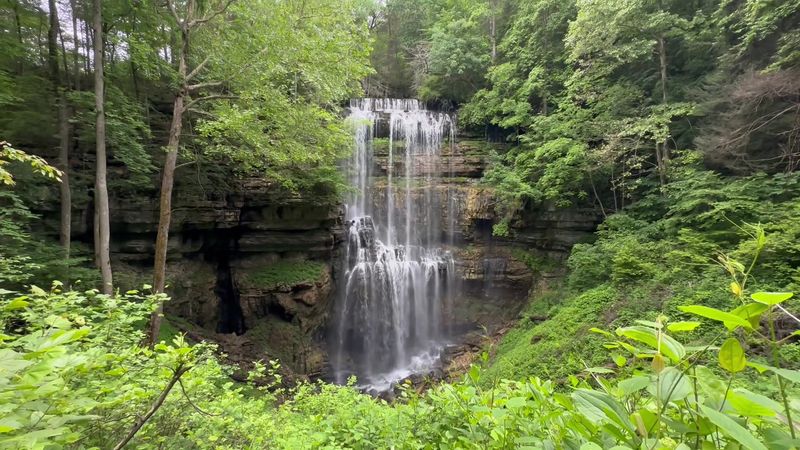
Water appears from nowhere, drops 110 feet through the air, then vanishes into the earth—a geological phenomenon so unusual that Virgin Falls ranks among Tennessee’s most remarkable natural features. An underground stream flows through a cave system, emerges at the top of a cliff, creates a spectacular waterfall, then disappears into another cave at the base, continuing its journey through the mountain without ever seeing daylight except for this brief appearance.
Reaching this wonder requires commitment. The hike covers 8 miles round-trip with significant elevation changes, stream crossings, and rough terrain that challenges casual hikers. Most people need four to six hours to complete the out-and-back journey, and that’s without spending much time at the falls themselves.
But those who make the effort are rewarded with one of the most unique waterfall experiences in the eastern United States.
The trail passes several other waterfalls along the way, including Big Laurel Falls and Sheep Cave, where another stream emerges from underground. These bonus features help break up the hike and provide excuses to rest tired legs. The final descent to Virgin Falls drops steeply through a boulder field before reaching the viewing area where you can watch water materialize from solid rock, fall through space, and disappear again.
The natural area is undeveloped, meaning no facilities, no cell service, and no easy bailout if you get in trouble. Carry plenty of water, pack food for energy, and start early enough to finish before dark. The trail can be muddy and slippery after rain, and stream crossings become impassable when water levels rise.
Several hikers get lost each year despite the trail being relatively well-marked, so download offline maps or bring a GPS device.
9. Big South Fork National River and Recreation Area
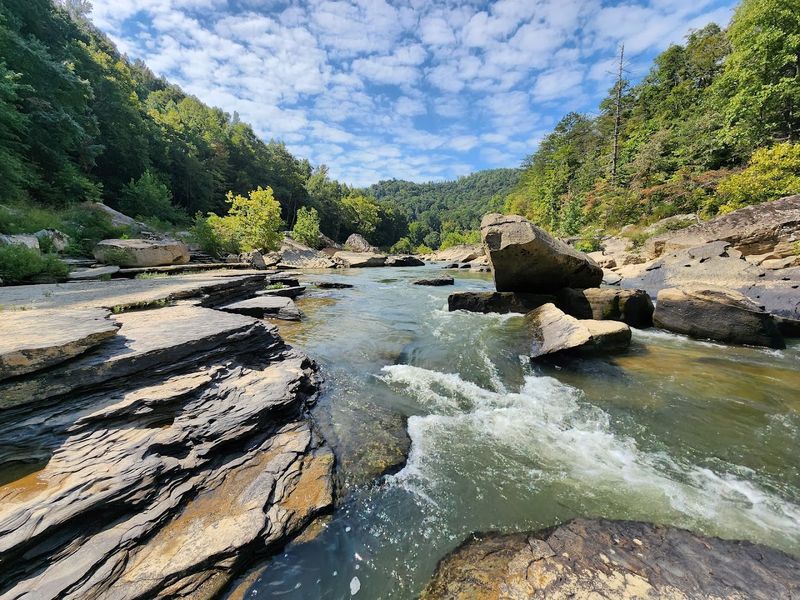
The Big South Fork of the Cumberland River carves through the Cumberland Plateau, creating over 100,000 acres of protected wilderness that straddles the Tennessee-Kentucky border. Sandstone cliffs rise hundreds of feet above the river, natural arches span forest hollows, and a free-flowing river system supports ecosystems that have largely disappeared from the eastern United States.
This isn’t a park for casual sightseeing from your car. The best features require hiking, horseback riding, or paddling to reach, and the rugged terrain means you’ll work for every view. But adventurous visitors find a landscape that feels genuinely wild, with black bears, river otters, and bobcats still roaming the forests and cliffs.
White water enthusiasts tackle class III and IV rapids when spring runoff swells the river, while calmer summer flows allow for multi-day float trips through remote gorges. Rock climbers work the sandstone faces, though the soft stone requires special techniques and can be dangerous for the inexperienced. Mountain bikers have access to miles of trails, including technical singletrack that tests skills and nerve.
Historic sites scattered throughout the area tell stories of coal mining, logging, and subsistence farming that once dominated this region. Abandoned homesteads slowly return to the forest, and old railroad grades now serve as hiking trails. The Blue Heron Mining Community preserves and interprets the coal mining history through outdoor exhibits and restored structures.
Camping options range from developed campgrounds with modern amenities to primitive sites accessible only by foot or horseback. The park’s size means you can find solitude even on busy weekends, though popular areas like Yahoo Falls and the Twin Arches see steady traffic.
10. Twin Arches at Big South Fork
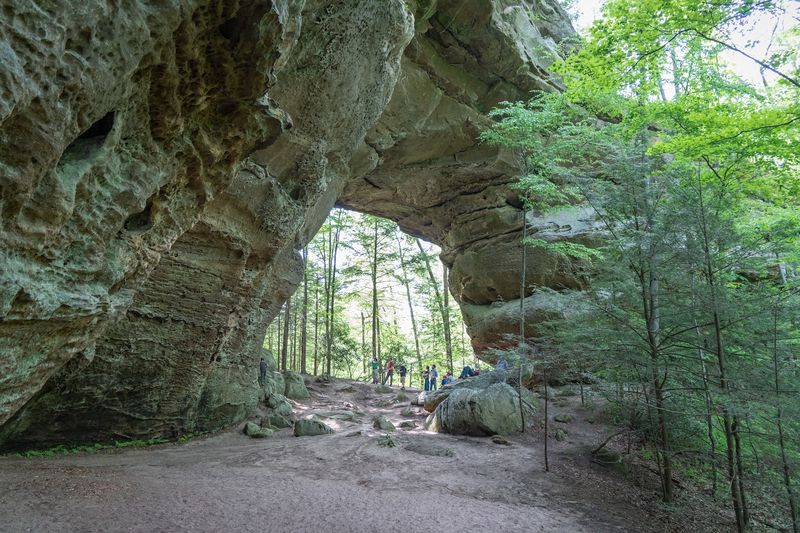
Two of the largest natural arches in the eastern United States sit side by side on a forested ridgetop, creating a geological feature so impressive that it’s become the signature attraction of Big South Fork. The North Arch spans 93 feet with a 62-foot opening, while the South Arch measures 103 feet across with a 70-foot opening—dimensions that rival famous western arches while remaining relatively unknown outside Tennessee hiking circles.
A 1.5-mile trail leads from the trailhead to the arches through mixed hardwood forest that showcases the plateau’s ecological diversity. The hike rates as easy to moderate, with some rocky sections but nothing too challenging for families with older kids. Interpretive signs along the way explain the geology, ecology, and human history of the area, turning the walk into an educational experience.
The arches themselves formed through erosion over millions of years as water and ice worked on weaknesses in the sandstone caprock. Standing beneath these massive spans, you get a visceral sense of geological time and the patient power of natural forces.
Photographers love the way light filters through the openings at different times of day, creating dramatic shadows and highlighting the texture of the rock. Fall foliage frames the arches in brilliant colors, while winter ice formations add sculptural elements to the scene. Spring wildflowers carpet the forest floor, and summer’s green canopy provides shade for the hike.
The Twin Arches Loop Trail extends beyond the main arches to include Charit Creek Lodge, an off-the-grid backcountry accommodation accessible only by foot or horseback, and Jake’s Place, another impressive arch formation. The full loop covers about 4.5 miles and can be completed in a few hours, making it a perfect half-day adventure. Crowds are minimal compared to more famous destinations, even on peak weekends.
11. Reelfoot Lake
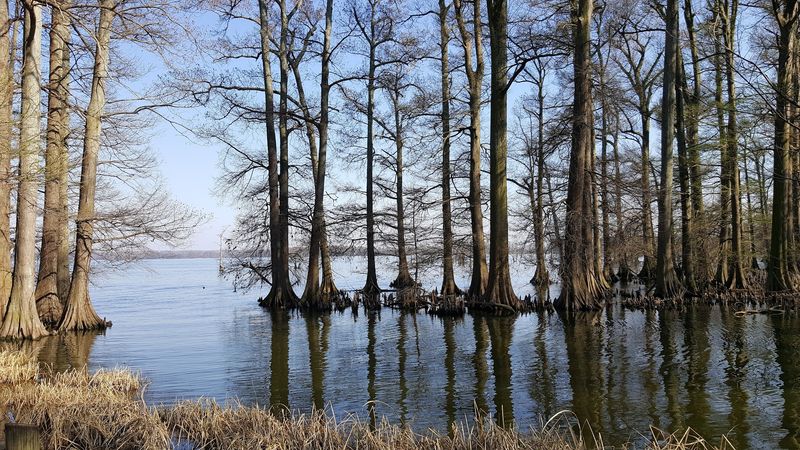
Tennessee’s only large natural lake exists because of catastrophic earthquakes that struck the New Madrid fault zone in 1811 and 1812. The ground literally sank, the Mississippi River temporarily flowed backward, and when the shaking stopped, a shallow lake had formed in northwestern Tennessee. Today, Reelfoot Lake spreads across 15,000 acres of wetlands, cypress forests, and open water that supports one of the most productive ecosystems in the southeastern United States.
Bald cypress trees rise from the water like ancient sentinels, their knobby knees breaking the surface and Spanish moss draping from branches. American bald eagles winter here in numbers that attract birders from across the country, with eagle tours running from December through March to view these magnificent raptors. The lake also hosts incredible fishing for crappie, bass, and catfish, with guides who know every stump and channel.
The lake’s shallow depth—averaging just 5.5 feet—creates perfect conditions for aquatic vegetation that supports fish, turtles, and waterfowl. Great blue herons stalk the shallows, ospreys dive for fish, and during migration seasons, thousands of ducks and geese use the lake as a stopover. Photographers work overtime trying to capture sunrise and sunset scenes that look like paintings, with mist rising from the water and cypress silhouettes creating otherworldly compositions.
Reelfoot Lake State Park protects much of the shoreline and offers boat rentals, guided tours, a visitor center with earthquake exhibits, and camping facilities. The lake’s remote location in Tennessee’s northwestern corner means fewer visitors than more accessible attractions, creating a peaceful atmosphere that feels far removed from modern life.
The area’s earthquake history adds an element of geological drama to your visit, reminding you that the landscape beneath your feet remains active and capable of dramatic change.
12. Ruby Falls
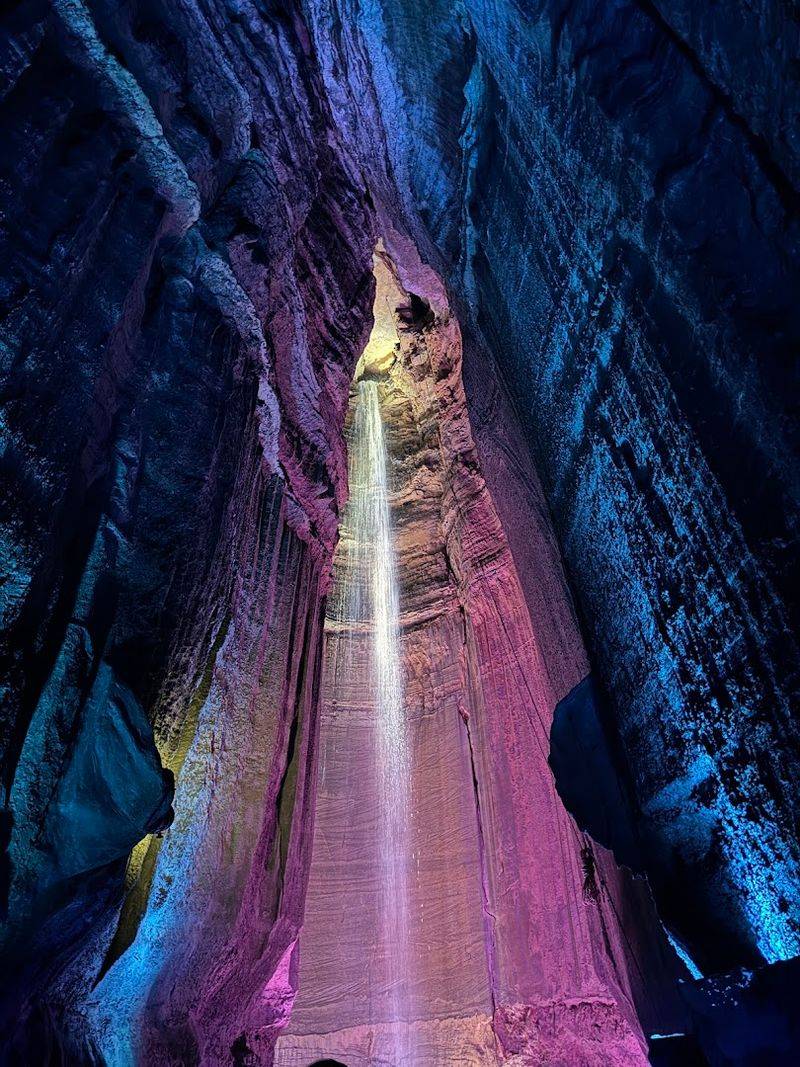
Deep inside Lookout Mountain, 1,120 feet underground, a 145-foot waterfall drops through a limestone cavern in a scene that seems impossible until you’re standing there watching it happen. Ruby Falls has been Chattanooga’s signature attraction since 1928, when cave explorer Leo Lambert discovered the falls and immediately recognized their commercial potential. Today, more than half a million people annually descend into the mountain to witness this underground wonder.
The guided tour leads through a half-mile of cave passages lined with formations that have been growing for millions of years. Stalactites hang from ceilings, stalagmites rise from floors, and flowstone creates frozen waterfalls of rock. Your guide points out formations with names like Dragon’s Foot and Elephant’s Ear, though the anticipation builds with every step closer to the main attraction.
When you finally reach the falls chamber, dramatic lighting transforms the underground cascade into a spectacle that photographs can’t quite capture. Colored lights play across the falling water and surrounding rock, creating an almost theatrical experience that some purists criticize but most visitors find enchanting. The falls thunder into a pool that drains through cracks in the rock, continuing their underground journey toward the Tennessee River.
After viewing the falls, the tour continues to the top of Lookout Mountain, where the Lookout Mountain Tower provides panoramic views across Chattanooga, the Tennessee River, and into Georgia and Alabama. The combination of underground and above-ground attractions makes Ruby Falls a full-experience destination rather than just a single feature.
The temperature inside the cave stays at a constant 60 degrees year-round, making it a perfect escape from summer heat or winter cold. Tours run continuously throughout the day, though busy periods can mean waiting for your scheduled time.
13. The Lost Sea
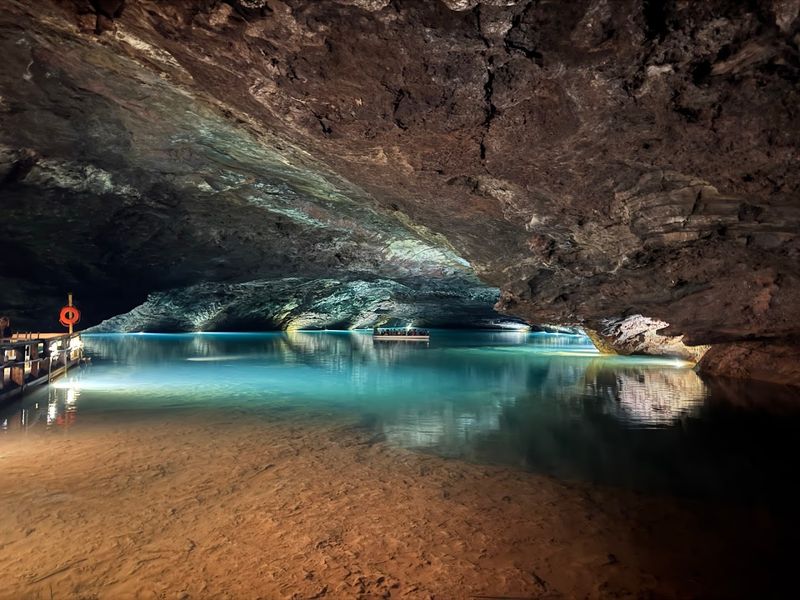
America’s largest underground lake sits hidden inside Craighead Caverns near Sweetwater, where a 4.5-acre lake represents just a fraction of a vast underground water system that extends for miles beneath the Tennessee countryside. Divers have explored more than 13 acres of the lake’s extent, but the full size remains unknown, with passages disappearing into flooded tunnels that may connect to even larger chambers.
Tours descend through passages that Native Americans used thousands of years ago, then Confederate soldiers during the Civil War, and later moonshiners during Prohibition. The cave’s human history adds layers of story to the geological wonders, with artifacts and signatures still visible on the walls from various eras of use and exploration.
The highlight comes when you board a glass-bottom boat for a cruise across the lake’s dark waters. Your guide points out massive columns, delicate formations, and the largest cave-dwelling fish in the world—rainbow trout that somehow ended up in this underground environment and adapted to the perpetual darkness. The water is so clear you can see 30 feet down in places, revealing a landscape of rock formations that continues below the surface.
The lake maintains a constant 58-degree temperature year-round, and the cave stays at a comfortable 58 degrees as well, making it a perfect escape from Tennessee’s temperature extremes. The tour covers about three-quarters of a mile of walking, with 160 feet of elevation change on the return trip. It’s manageable for most fitness levels, though the stairs can challenge those with mobility issues.
Kids love the combination of cave exploration and boat ride, making this a popular family destination. The guides share stories about the cave’s discovery, the various uses throughout history, and the ongoing exploration that continues to reveal new passages and chambers.
14. Roan Mountain
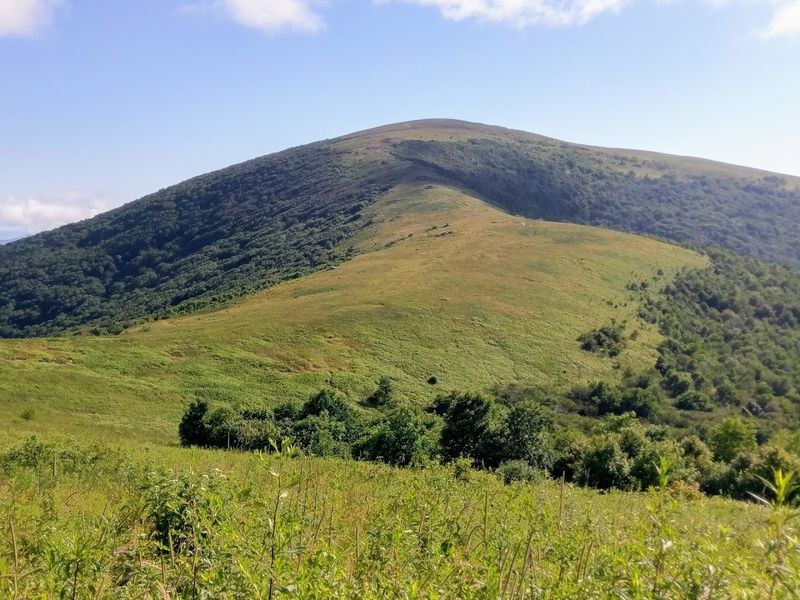
Straddling the Tennessee-North Carolina border at over 6,000 feet elevation, Roan Mountain offers some of the most spectacular high-elevation scenery in the southern Appalachians. The mountain is famous for its grassy balds—treeless areas at high elevation that scientists still debate the origin of—and the largest natural rhododendron gardens in the world, which explode into bloom each June in a display that attracts thousands of visitors.
The Rhododendron Gardens cover over 600 acres of mountainside with Catawba rhododendron that create a purple-pink carpet visible for miles when peak bloom hits. The timing varies slightly year by year, but mid-June typically offers the best show. Trails wind through the gardens, offering close-up views of the blooms and panoramic vistas across mountain ridges that seem to go on forever.
Beyond the rhododendrons, Roan Mountain provides year-round outdoor recreation. The Appalachian Trail crosses the massif, passing through spruce-fir forests that feel more like New England than Tennessee. Cloudland Trail leads to observation platforms with 360-degree views, and the Roan High Bluff offers sunset vistas that rival anything in the East.
Roan Mountain State Park sits at the base of the mountain, offering camping, cabins, and a visitor center that explains the unique ecology and history of the area. The park protects over 2,000 acres of mountain landscape, with trails ranging from easy nature walks to challenging climbs to the highlands. Cool temperatures make summer visits pleasant even when lowland Tennessee swelters, and the elevation means fall colors arrive weeks earlier than in the valleys.
The mountain’s position along the Tennessee-North Carolina border creates interesting jurisdictional quirks, and you can literally stand in two states at once at various points. This geographic complexity adds to the sense of being in a special place that doesn’t quite fit normal categories.