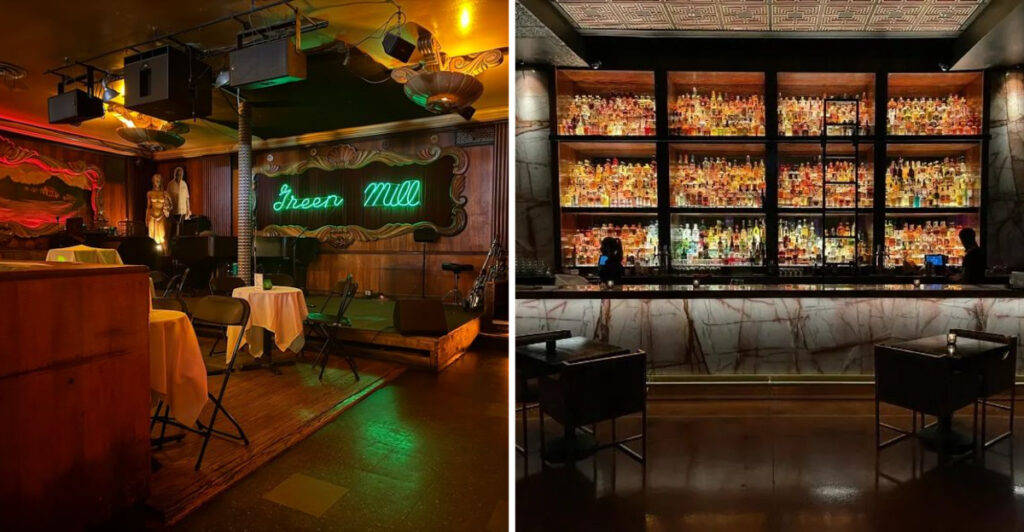
Some bars pour drinks. Others preserve a piece of Chicago history. The Green Mill in Uptown has spent decades earning a reputation as one of Illinois’ most legendary nightlife destinations, thanks to its world-class jazz, vintage atmosphere, and famous connection to Al Capone.
What began as a neighborhood club became one of the city’s most enduring landmarks, attracting everyone from music lovers to history enthusiasts. Step inside today and you’ll find dim lighting, live performances, and a room that still feels remarkably connected to Chicago’s Prohibition-era past. For visitors looking to experience a different side of the city, few places deliver a more memorable night out.
A Room That Refuses to Modernize
On a stretch of Broadway where storefronts and traffic move at a modern Chicago pace, The Green Mill announces itself with vintage confidence.
The glowing sign, dark facade, and old-fashioned entrance signal that this place never chased sleek redesigns or minimalist trends. That visual stubbornness matters, because the club’s identity starts before the first note hits the room.
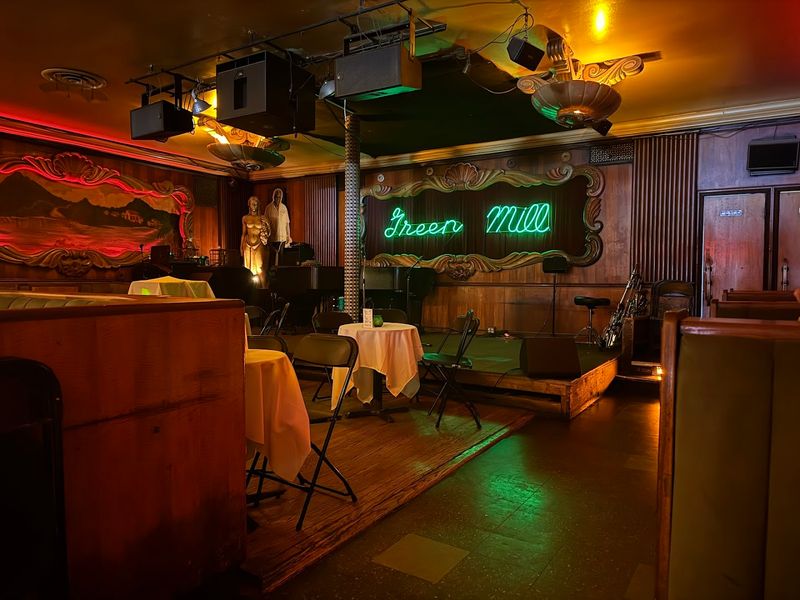
Inside, the look stays faithful to another era. Booths hug the walls, the bar carries the kind of weight newer cocktail rooms try to imitate, and the lighting stays low enough to sharpen every green and amber detail.
Nothing appears arranged for social media first, which gives the space a rare kind of authority. You are not entering a themed replica of old Chicago nightlife. You are entering a place that still behaves like it belongs to it.
The layout also shapes the evening in practical ways. Seating can be limited, sightlines vary, and the room fills with a density that adds energy even before the band starts.
That tightness is part of the design language here, not a flaw hidden under marketing copy. It creates a sense of proximity between strangers, servers, musicians, and regulars that larger venues simply cannot produce.
The Green Mill’s strongest visual trick is that it never overexplains itself. There is no need for flashy storytelling when the booth backs, mirrored surfaces, and stage placement already carry enough evidence.
In a city full of places trying to look historic by borrowing old fonts and antique fixtures, this one has the harder-to-fake advantage of actual age, actual wear, and actual presence.
Why the Music Runs the Night
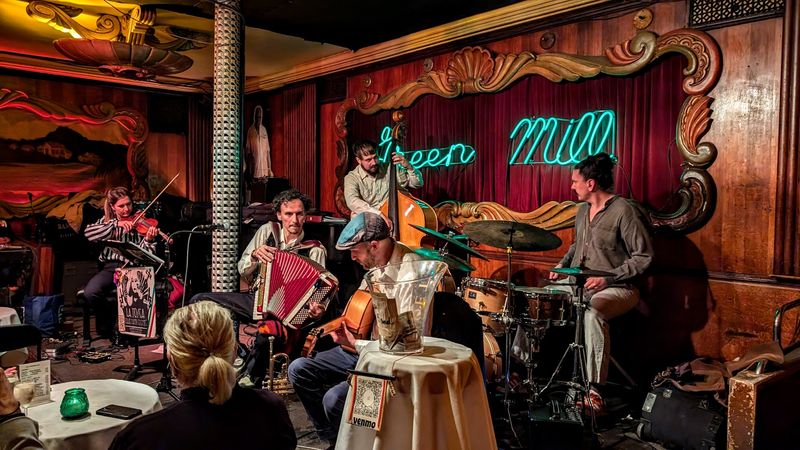
The Green Mill is a bar, but the music clearly outranks the drinking. That distinction changes the entire mood of the room.
Instead of treating live performance as background texture for conversation, the club organizes attention around the stage, which is why even a simple weeknight can carry the charge of an event.
Jazz is the core draw, and the programming has enough range to keep the room from turning into a museum piece. Some nights lean toward tightly arranged swing, others toward looser late-night sets, and the calendar has long supported performers with real local credibility.
The sound is not incidental decoration here. It is the main reason chairs turn toward the bandstand and side chatter gets checked when a set begins.
That seriousness gives the experience unusual clarity. If you want to hear how a small room can shape a horn line, a piano phrase, or the pulse of a rhythm section, this club makes the lesson immediate.
The crowd may be packed, the drinks may be straightforward, and the tables may sit close together, but the room knows exactly where its center is. Every design choice seems built around hearing the band properly rather than maximizing comfort.
For anyone deciding whether The Green Mill is more about history or performance, the answer arrives quickly once the musicians start.
History may get people through the door, especially with the Al Capone connection hovering over the place, but live jazz is what gives the night its structure. Without the music, it would be a relic. With the music, it remains an active piece of Chicago nightlife.
The Al Capone Connection
The Green Mill’s most repeated story is its connection to Al Capone, and that association is a major reason the club holds such a grip on Chicago’s imagination.
Mob history has a way of turning ordinary bars into caricatures, but this room avoids that trap. The legend adds weight without swallowing the place whole.
Capone’s name fits here because the building already carries the right kind of visual tension. The booths feel private, the room has corners that invite speculation, and the old architecture naturally encourages stories about exits, routines, and power.
Even when details remain in the realm of local lore, the club’s age and survival make that lore believable enough to intensify the setting. You do not need a guided speech to understand why this address became linked to one of Chicago’s most durable underworld myths.
What makes the history effective is that it stays secondary to the living room in front of you. The Green Mill does not rely on novelty gangster branding, costume energy, or wink-at-the-camera crime nostalgia.
Instead, the past settles into the background like a low brass note. It sharpens the way you notice the booth lines, the bar placement, and the sense that this place was built for discretion long before nightlife became content.
That historical gravity separates The Green Mill from bars that merely trade on an old date in the corner of the menu. Here, the age of the space has consequences you can actually perceive.
The room is shaped by continuity, not re-creation. In Illinois, plenty of places advertise history as decoration. This one lets history sit still, dimly lit, and deeply embedded in the architecture of the night.
Cash, Crowds, and the Rules That Keep It Authentic
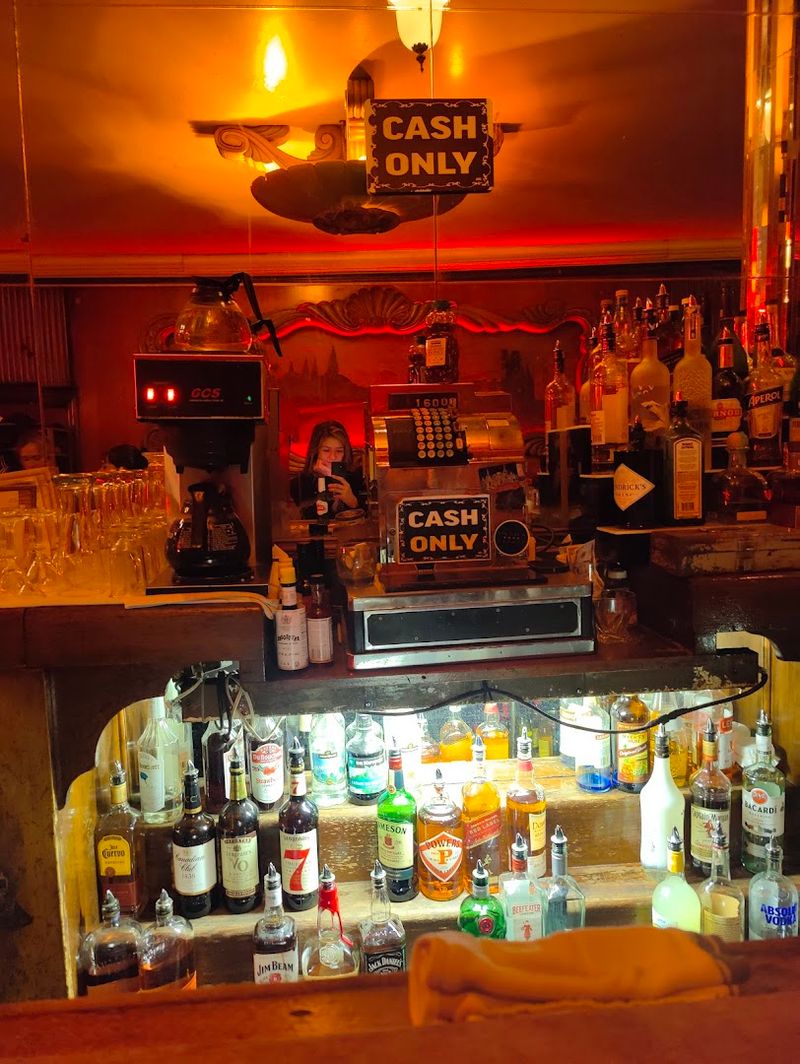
Part of what makes The Green Mill memorable is that it has never fully adapted itself to modern expectations. The club still operates with an old-school mindset that feels increasingly rare in an era of streamlined nightlife experiences.
Visitors quickly discover that some of the venue’s most important details are also part of its character. The most famous example is the cash-only policy.
While many historic venues have gradually modernized every corner of their operation, The Green Mill has kept certain traditions intact. That approach can surprise first-time guests, but it also reinforces the feeling that the club follows its own rhythm rather than chasing convenience trends.
Bringing cash and arriving prepared simply becomes part of the experience. Space is another defining feature. The room was never designed to accommodate huge crowds with generous personal space, and that intimacy remains central to its appeal.
Booths fill quickly, tables sit close together, and popular nights can leave late arrivals searching for whatever seating remains.
Yet that same closeness creates an atmosphere that larger venues struggle to replicate. When the music begins, the audience feels connected to the performers in a way that would be impossible in a sprawling concert hall.
There is also an unwritten rule that regulars understand immediately: the music comes first. Conversations naturally quiet when a set begins, and attention shifts toward the stage.
That respect for live performance helps preserve the club’s identity and reminds visitors why The Green Mill has remained relevant for so long. The house rules may seem simple, but together they create a room that feels authentic, focused, and remarkably unchanged by time.
When the Green Mill Is at Its Best
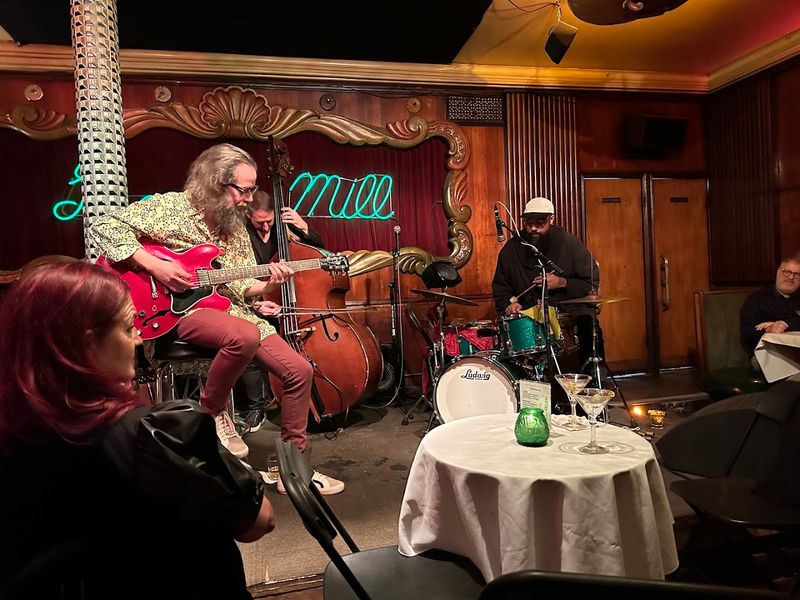
Timing changes everything at The Green Mill. Show up too late on a busy night and the experience can turn into a battle for sightlines and elbow room.
Arrive with intention, though, and the same room becomes far easier to read, enjoy, and settle into before the crowd thickens around the stage.
Weekdays offer one kind of rhythm, weekends another. Tuesday through Thursday nights can be especially appealing for anyone who wants strong music without the full weekend surge, while Friday and Saturday naturally pull larger crowds and a louder sense of occasion.
The club opens at 4 PM on weekdays and at 12 PM on Saturdays and Sundays, which gives you useful flexibility if you prefer easing into the space before prime performance hours. That early window can make a huge difference if a booth matters to you.
Different events also shape the room in distinct ways. Jazz remains the central identity, but The Green Mill has long hosted programming that expands its personality beyond a single type of night.
Depending on the schedule, you might catch swing-oriented sets, a late-night jam, comedy, or poetry programming tied to the club’s long cultural role in Uptown.
That variety means the best visit is not only about crowd size. It is about matching the room’s mood to the kind of evening you actually want.
If your ideal night involves listening closely, getting a decent seat, and watching the room build gradually, earlier is better. If you want the packed-house charge of a legendary Chicago club firing on all cylinders, lean into the busiest hours and accept the squeeze.
The Green Mill can handle both versions. You just have to choose yours before the neon starts pulling everyone in.
A True Uptown Institution
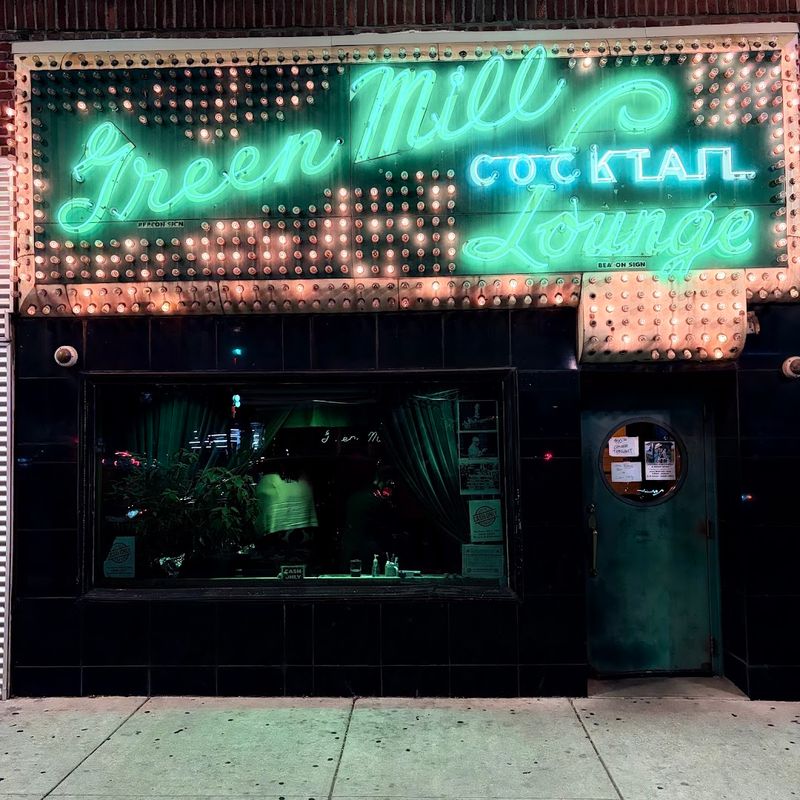
Part of The Green Mill’s staying power comes from where it sits. Uptown gives the club a different energy than a polished downtown nightlife district would.
The neighborhood context matters because the bar reads less like a packaged attraction and more like a long-running piece of the street around it.
That distinction becomes clearer once you think about how many famous venues lose texture after decades of attention. Some become little more than photo stops with a drink menu attached.
The Green Mill avoids that flattening because it still functions as a working local institution with its own codes, regulars, and performance culture.
Its address on North Broadway keeps it anchored in a part of Chicago that has long carried entertainment history, immigrant layers, old theaters, and a slightly rougher edge than the city’s more curated visitor zones. The effect is subtle but important. A night here feels connected to Chicago rather than sealed off from it.
You notice the neighborhood before entering, you notice it again when the set breaks and the door opens, and that outside world gives the interior more contrast.
The club’s old glamour lands harder because it is not isolated inside a stage-set version of urban nostalgia. It shares a block with present-day life, and that friction keeps it from becoming precious.
For anyone hunting the city’s most polished cocktail experience, Uptown is not offering that script here. The Green Mill’s appeal is rougher, richer, and more specific.
It belongs to local geography as much as local legend. In practical terms, that means your night is shaped by more than the drink in your hand or the song on stage. It is shaped by a neighborhood that still lets the club remain exactly what it is.
Why This Illinois Legend Endures
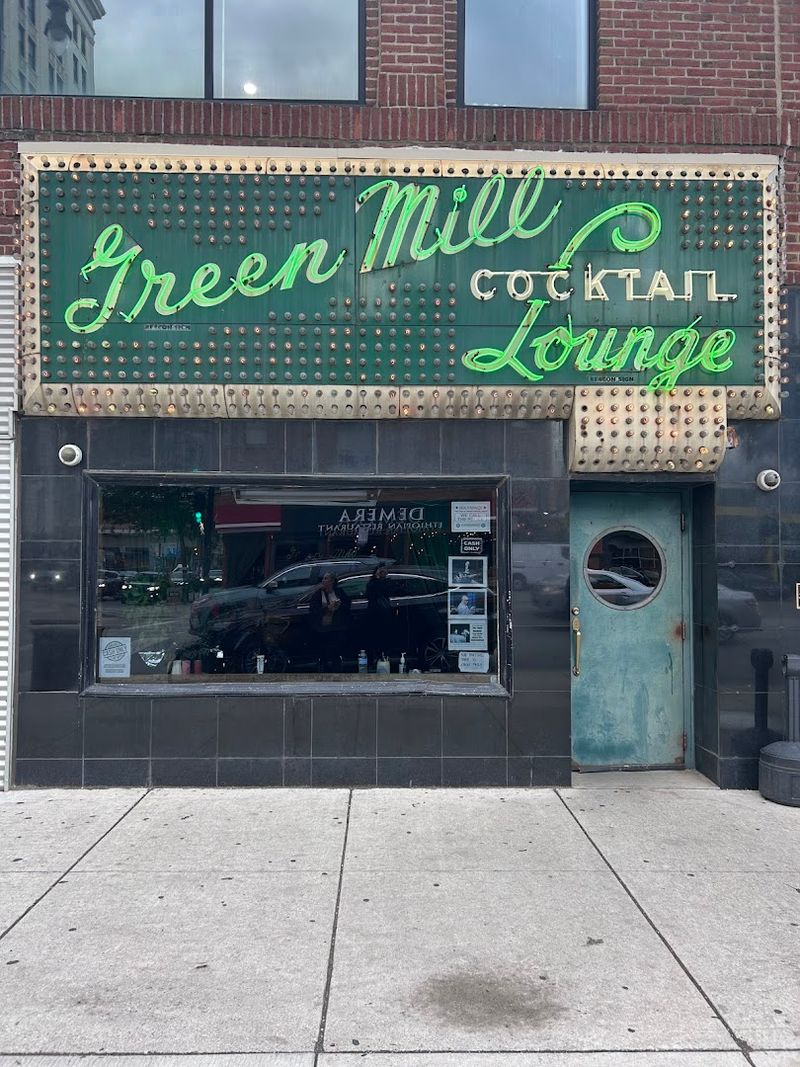
The Green Mill stands out because it offers a version of nightlife that is increasingly hard to find. It does not promise luxury, perfect ease, or carefully softened edges.
Instead, it gives you a historic Chicago room where music leads, the past remains visible, and the experience depends on surrendering to the place rather than trying to bend it to your preferences.
That is why the club works best for a specific kind of evening. Come here for a pristine cocktail laboratory or abundant personal space, and the bar may test your patience.
Come here ready for a cash-only ritual, a snug seat if you are lucky, and a room that treats jazz with unusual seriousness, and the rewards sharpen fast. The Green Mill is not interested in being all things to all people. It succeeds by knowing exactly what it is.
Even the imperfections contribute to the club’s identity. The crowd density, the no-frills drink setup, the blunt efficiency of a busy historic venue, and the insistence on listening all build a setting that feels intact rather than overmanaged.
In a city crowded with venues competing to appear distinctive, this one barely needs to advertise its difference. The difference is embedded in the booth lines, the stage focus, the Uptown address, and the stories that still cling to the walls.
If the idea of Al Capone’s favorite drinking spot sounds like a gimmick, The Green Mill quickly proves there is more here than a famous name. The legend gets your attention, but the room keeps it.
By the end of the night, the strongest memory is usually not the mob mythology at all. It is the sound of a live band taking over a century-old Chicago bar that still knows exactly how to listen.
Share this story