Tennessee gets millions of visitors every year, but most of them stick to the same handful of spots. They hit Nashville, Gatlinburg, maybe Memphis, and then head home thinking they have seen it all.
What they miss are the smaller towns, hidden state parks, underground lakes, and scenic back roads that make Tennessee truly special and unforgettable.
1. Jonesborough
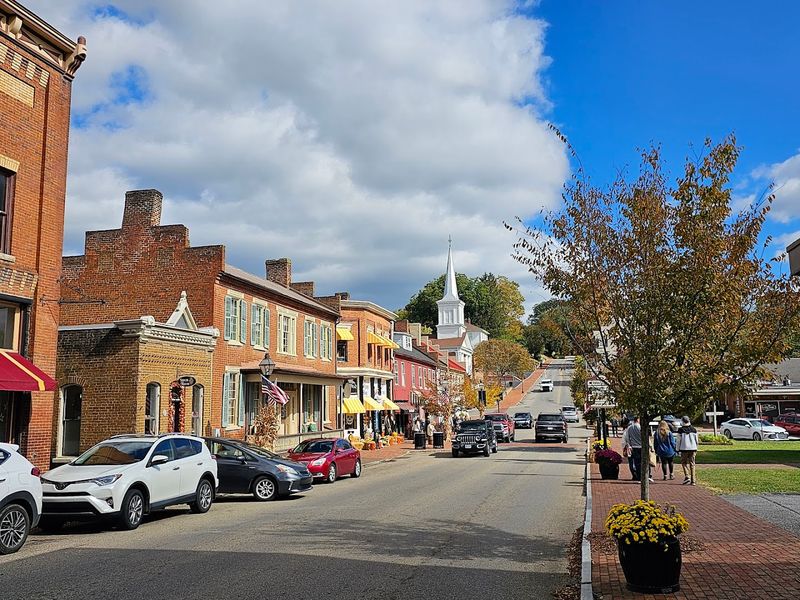
Walking through Jonesborough feels like stepping into a postcard from another era. The brick sidewalks are uneven in that charming way that makes you slow down and notice things. Historic buildings line the streets, painted in soft colors and filled with local shops, galleries, and cafes that actually feel authentic.
This is Tennessee’s oldest town, established in 1779, and it wears that title with pride. But it is not stuffy or museum-like. Instead, Jonesborough has a living, breathing personality built around storytelling festivals, craft fairs, and weekend foot traffic from locals who genuinely love the place.
Visitors racing toward the Smoky Mountains often blow right past it on the highway. That is a shame because this little town offers exactly what people claim they want: small-town charm without the tourist traps. You can browse antique stores, grab lunch at a family-run diner, and chat with shop owners who remember your face.
The National Storytelling Festival happens here every October, drawing crowds from all over the country. Even if you miss the festival, the town keeps that storytelling spirit alive year-round. Street corners have plaques with local legends, and the visitor center is staffed by people who love sharing tales about the area.
Jonesborough is not flashy, and that is exactly why it works. It rewards slow exploration and curiosity. You will not find neon lights or chain restaurants here, just brick, history, and a pace that reminds you why small towns matter.
2. Burgess Falls State Park
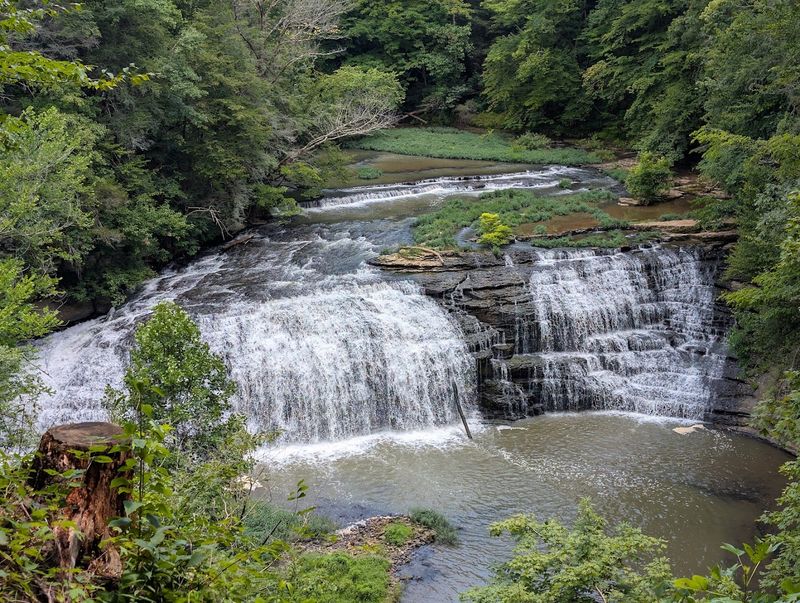
Burgess Falls delivers one of those rare outdoor experiences where the payoff matches the hype. The main waterfall drops 136 feet into a gorge, and when you finally reach the overlook after hiking the trail, the view stops you in your tracks. Water crashes over layered rock, mist rises from the pool below, and the sound alone makes the trek worthwhile.
The hike to the falls is about a mile and a half, mostly downhill on the way there. It winds along the Falling Water River, passing smaller cascades and rocky outcrops that keep things interesting. The trail is well-maintained but still feels wild enough to make you forget you are only a short drive from suburbia.
What makes Burgess Falls special is how under-the-radar it remains. While other Tennessee waterfalls get swarmed with selfie sticks and traffic jams, this park stays relatively peaceful. You might share the overlook with a handful of other hikers, but it rarely feels crowded or chaotic.
Spring and fall are the best times to visit. Spring brings higher water flow and wildflowers along the trail. Fall turns the surrounding forest into a patchwork of reds, oranges, and yellows that frame the falls perfectly.
Summer works too, though the heat can make the uphill return hike a bit of a grind.
The park also has picnic areas and a shorter, easier trail if you are traveling with kids or anyone who is not up for the full hike. But honestly, the main falls are worth every step.
3. The Lost Sea Adventure in Sweetwater
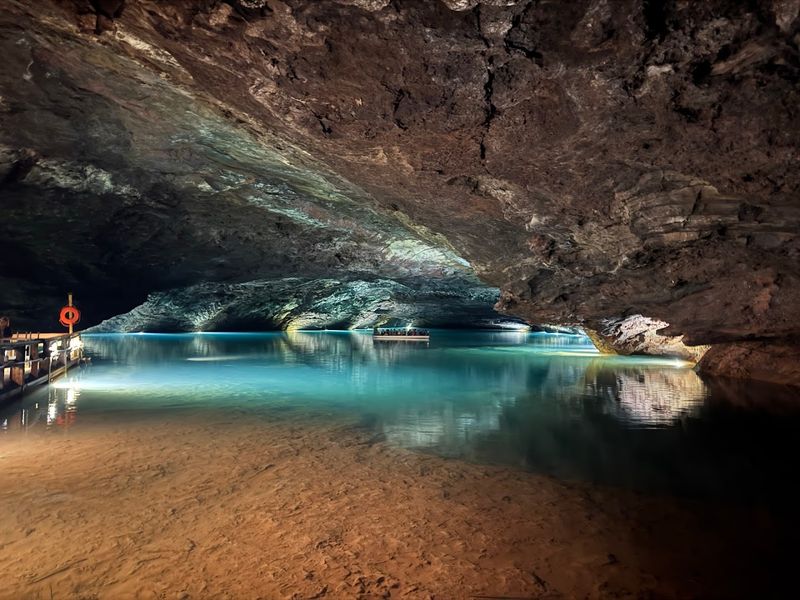
An underground lake inside a mountain is not something you stumble across every day. The Lost Sea is exactly that: a massive subterranean lake hidden inside Craighead Caverns, and it holds the title of America’s largest underground lake. Visiting it feels like stepping into a Jules Verne novel, minus the fictional drama.
The tour starts with a walk through cavern passages filled with stalactites, flowstones, and rock formations that took thousands of years to develop. Your guide shares stories about the cave’s history, including its use by Cherokee tribes and Civil War soldiers. Then you reach the lake itself, dark and still, stretching farther than any light can reach.
You board a glass-bottom boat and glide across the water while your guide points out rainbow trout swimming below. The lake is stocked with fish, and they thrive in the cold, mineral-rich water. The cavern ceiling disappears into darkness above you, and the whole experience feels surreal in the best way possible.
This is not a quick roadside stop. The full tour takes about an hour and fifteen minutes, and it is worth every minute. The temperature inside stays around 58 degrees year-round, so bring a light jacket even if it is sweltering outside.
The Lost Sea sits between Knoxville and Chattanooga, making it an easy detour on a Tennessee road trip. Yet plenty of visitors skip it because it does not fit the typical Nashville-Gatlinburg-Memphis triangle. That is their loss.
This place is weird, fascinating, and completely memorable in ways that most tourist attractions just are not.
4. Leiper’s Fork
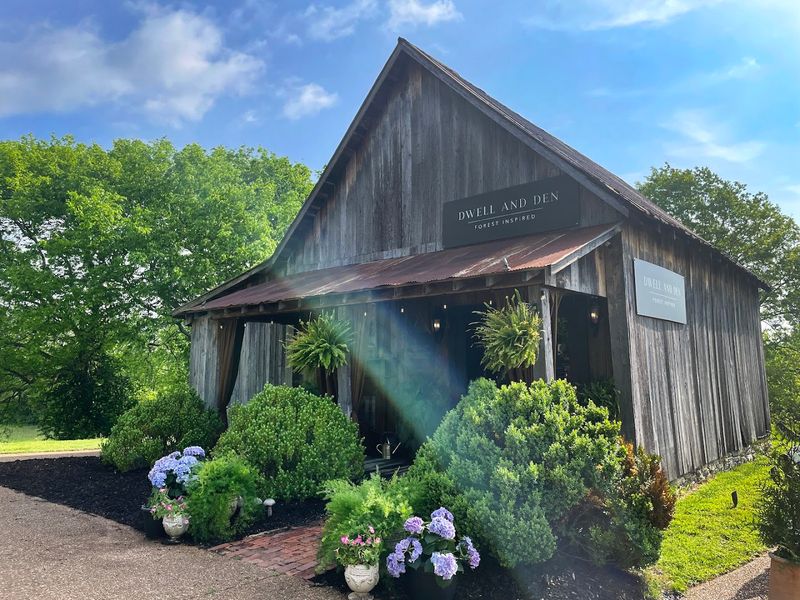
Leiper’s Fork is the kind of village that makes you wonder why anyone bothers with crowded tourist strips. It sits just outside Franklin, tucked into rolling countryside, and it packs more personality per square foot than towns ten times its size. Art galleries, antique shops, live music venues, and farm-to-table restaurants line the main drag, and everything feels intentional rather than manufactured.
The village started as a stagecoach stop in the 1700s and has kept its rural charm intact despite being close to Nashville’s sprawl. Local artists have claimed it as a creative hub, and their influence shows. You will find paintings, sculptures, handmade jewelry, and folk art in shops that actually curate their collections instead of just stocking souvenirs.
Live music is a big deal here too. It is casual, authentic, and exactly what people imagine when they think of Tennessee music culture, minus the Broadway honky-tonk chaos.
The surrounding countryside is perfect for a scenic drive or bike ride. Natchez Trace Parkway runs nearby, offering quiet roads and beautiful landscapes without the usual highway stress. You can spend a morning exploring Leiper’s Fork, grab lunch, and still have time to wander the Trace or visit nearby Franklin.
Leiper’s Fork does not try too hard, and that is its secret. There are no billboards screaming for your attention or gimmicky attractions begging for selfies. Just a small town that figured out how to stay charming, creative, and worth the detour.
5. Big South Fork National River and Recreation Area
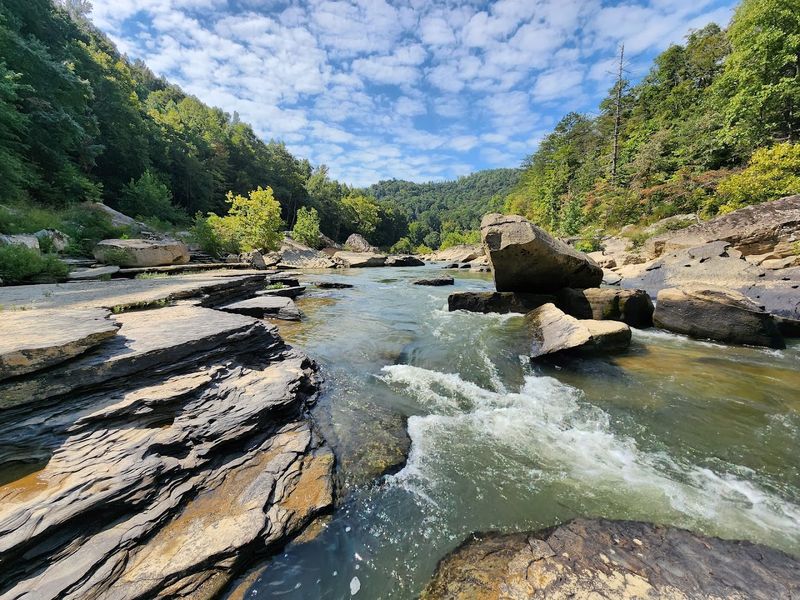
Big South Fork is where Tennessee keeps its wild side. This national river and recreation area sprawls across the Cumberland Plateau, offering gorges, sandstone arches, river bluffs, and miles of trails that feel worlds away from the tourist-heavy Smokies. It is rugged, beautiful, and criminally underrated by visitors who think Tennessee outdoor adventure begins and ends with Cades Cove.
The landscape here is dramatic in a way that surprises people. Sheer rock walls drop into tree-filled valleys, and the Big South Fork River carves through it all, creating whitewater rapids and calm pools depending on the season. Overlooks like East Rim and Honey Creek offer views that stretch for miles, especially stunning during fall when the forest explodes in color.
Hiking options range from easy strolls to challenging backcountry treks. The Twin Arches Trail takes you to two massive natural sandstone bridges, both worth the moderate effort to reach. Yahoo Falls, Tennessee’s tallest waterfall, sits on the Kentucky side of the park but is accessible from Tennessee trails.
The variety means you can tailor your visit to your energy level and interests.
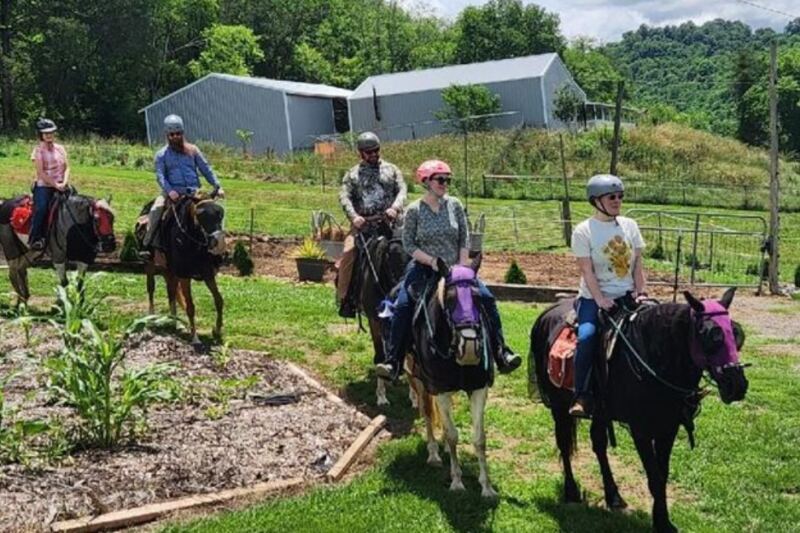
Horseback riding is huge here too. The park maintains over 150 miles of equestrian trails, and you will often see riders exploring the backcountry. If you do not have your own horse, local outfitters offer guided rides through the gorges and along the river.
It is a great way to cover more ground and see the landscape from a different perspective.
6. Savage Gulf State Park
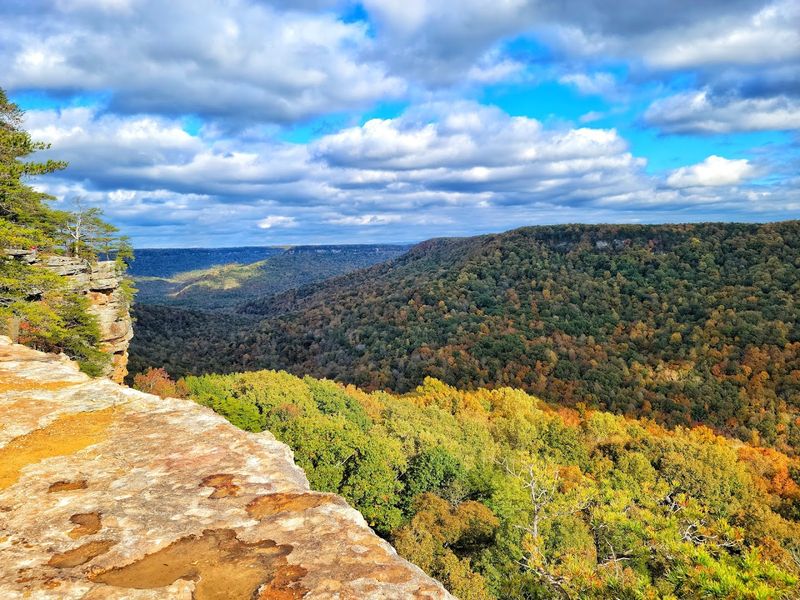
Savage Gulf State Park is not for people who want easy, Instagram-friendly nature. This is a place that rewards effort with jaw-dropping overlooks, hidden waterfalls, swinging bridges, and trails that make your legs remember they did something. It sits on the Cumberland Plateau, and the landscape is as wild as the name suggests.
The park’s highlight is the Savage Gulf itself, a deep gorge carved by centuries of water and weather. Several trails lead to overlooks where you can stare into the chasm and watch hawks circle below you. Greeter Falls and Boardtree Falls are both accessible via moderate hikes, and both are worth the sweat.
The swinging bridge near Greeter Falls adds a fun, slightly nerve-wracking element to the experience.
Stone Door is another must-see feature. It is a massive crack in the rock that forms a natural passageway down into the gulf. The trail descends through the crevice, which feels like walking through a secret entrance into another world.
Once you are inside the gulf, the landscape shifts from open plateau to dense forest and rocky stream beds.
Backcountry camping is allowed here, making it a solid choice for overnight adventures. The park has primitive campsites scattered throughout, and the remoteness means you will likely have the place mostly to yourself. Just be prepared: this is not a manicured state park with visitor centers and paved paths.
It is raw, rugged, and occasionally challenging.
7. Bell Buckle
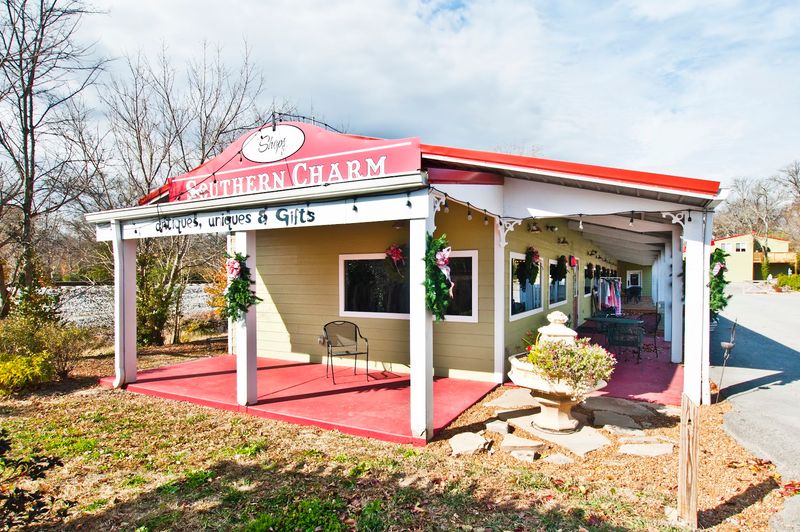
Bell Buckle is tiny, quirky, and absolutely packed with personality. This little town sits in the rolling hills of middle Tennessee, and it has leaned hard into its small-town charm without turning into a tourist trap. Antique shops, cafes, and local boutiques line the main street, and everything feels authentic rather than staged for visitors.
The town’s name supposedly comes from a bell-shaped creek and a belt buckle found nearby, though locals have plenty of other stories about its origin. Regardless of how it got the name, Bell Buckle has embraced its oddball identity. The annual RC Cola and Moon Pie Festival is a perfect example: a celebration of two Southern staples that draws crowds for live music, crafts, and plenty of Moon Pies.
Antique hunting is the main draw here. Shops are crammed with vintage furniture, old signs, glassware, and the kind of random treasures that make browsing an adventure. Even if you are not buying, wandering through these stores feels like exploring someone’s attic, minus the dust and guilt about snooping.
Bell Buckle Cafe is a local institution, serving Southern comfort food in a cozy setting that feels like eating at a friend’s house. The menu includes fried chicken, meatloaf, casseroles, and desserts that will make you reconsider your stance on calorie counting. It is the kind of place where regulars know each other by name, but visitors are welcomed just as warmly.
The town is small enough to explore in an hour or two, making it a perfect road trip stop. It sits between Nashville and Chattanooga, so it is easy to add to almost any Tennessee itinerary. Skipping Bell Buckle means missing out on the kind of town that reminds you why small-town America still matters.
8. Cumberland Gap National Historical Park
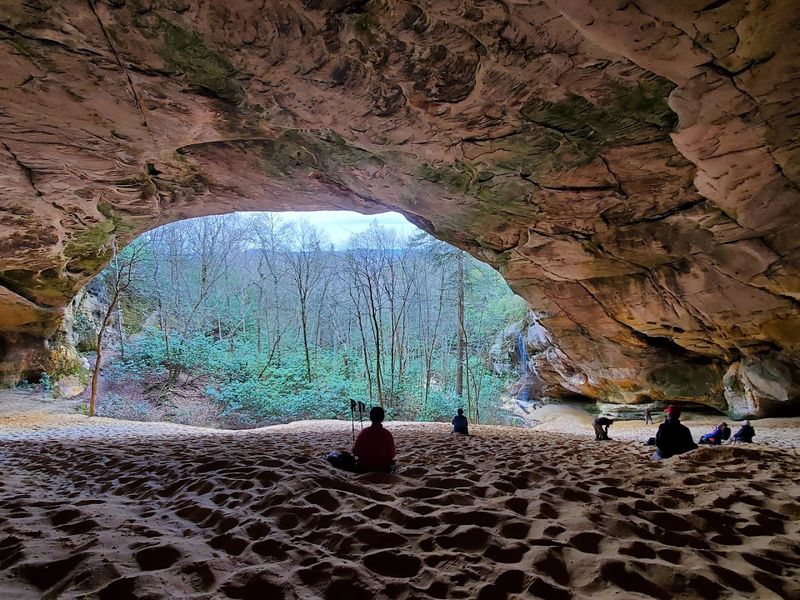
Cumberland Gap is where geography and history collide in the best way possible. This mountain pass sits at the junction of Tennessee, Kentucky, and Virginia, and for centuries it served as the gateway through the Appalachian Mountains. Native American tribes used it, Daniel Boone blazed a trail through it, and thousands of settlers followed, heading west into what would become Tennessee and Kentucky.
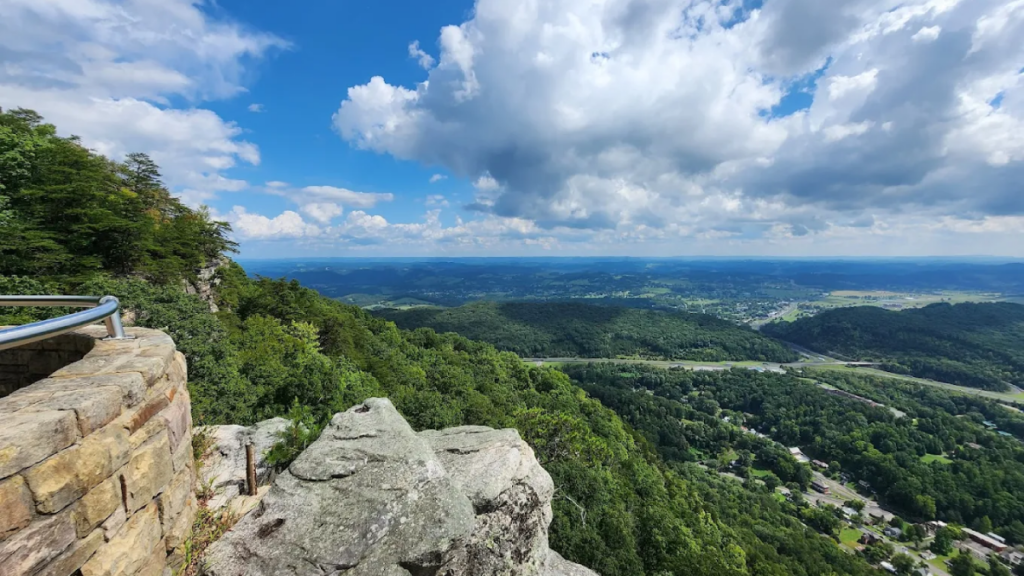
Today, the national historical park preserves that legacy while offering some seriously beautiful mountain scenery. The Pinnacle Overlook is the crown jewel, accessible via a short hike or a longer scenic drive. From the top, you can see three states at once, with mountain ridges stretching into the distance like waves on a green ocean.
The park has over 85 miles of trails ranging from easy walks to challenging backcountry routes. Hensley Settlement is a restored mountain community accessible via a rugged hike or a shuttle ride. Walking through the old cabins and farmsteads gives you a tangible sense of what frontier life looked like in the early 1900s.
It is history you can touch, not just read about on a plaque.
Gap Cave is another highlight, though tours are seasonal and require reservations. The cave was used as a hospital during the Civil War, and exploring it adds a layer of intrigue to the visit. The temperature inside stays cool year-round, making it a nice break during hot summer hikes.
9. Fall Creek Falls State Park
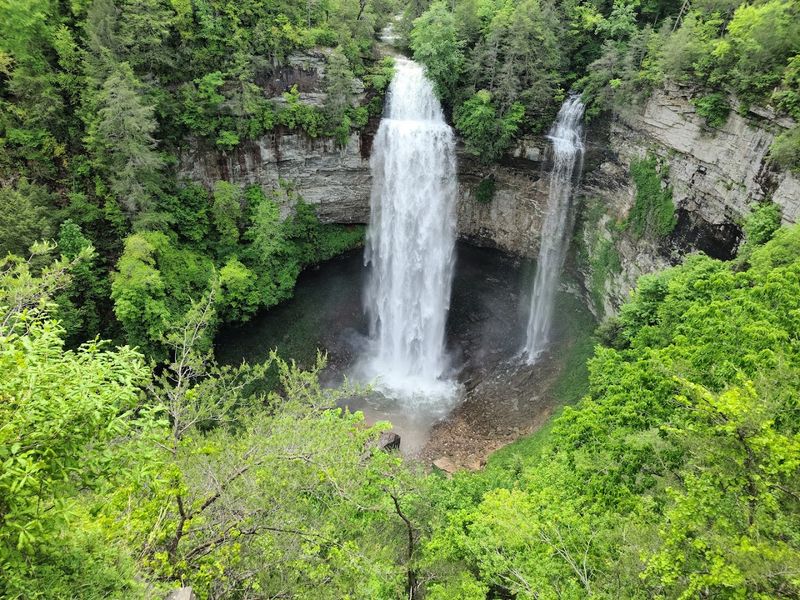
Fall Creek Falls is one of those places that makes you wonder how it is not more famous. The park’s namesake waterfall plunges 256 feet into a rocky gorge, making it one of the tallest waterfalls east of the Mississippi. The overlook platform gives you a perfect view of the entire drop, and the sheer scale of it is humbling in person.
But the park is not just about one waterfall. Cane Creek Falls, Cane Creek Cascades, and Piney Falls all sit within the park’s boundaries, each offering its own unique scenery. You can spend a full day hiking from waterfall to waterfall, and the variety keeps things interesting.
Some are accessible via short, easy trails, while others require more effort and reward you with fewer crowds.
The gorge overlooks are equally impressive. Several trails lead to cliff edges where you can stare into the deep valleys carved by centuries of water. The park sits on the Cumberland Plateau, and the landscape reflects that rugged, layered geology.
Rock formations, dense forests, and clear streams create a backdrop that feels both wild and accessible.
Fall Creek Falls has solid amenities too. There is a lodge, cabins, campgrounds, a swimming pool, and even a golf course if you are into that. It is a rare combination of serious natural beauty and family-friendly infrastructure, making it work for both hardcore hikers and casual visitors.
Despite being one of Tennessee’s premier state parks, Fall Creek Falls still flies under the radar for many out-of-state visitors. They hit the Smokies and call it done, missing this incredible park in the process. That is a mistake.
10. Townsend
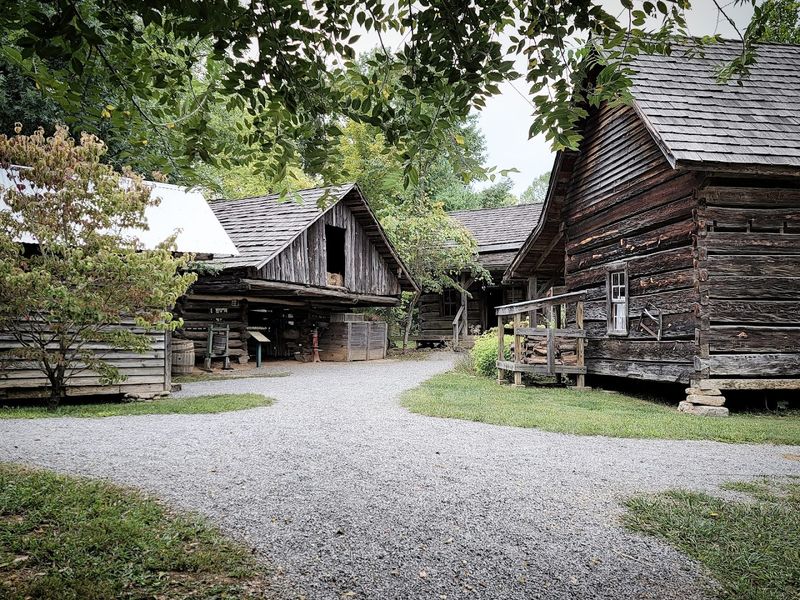
Townsend calls itself the peaceful side of the Smokies, and that is not just marketing talk. This small town sits at the entrance to Great Smoky Mountains National Park, but it feels like the opposite of Gatlinburg and Pigeon Forge. No traffic jams, no neon lights, no pancake houses shaped like log cabins.
Just mountain views, quiet roads, and a pace that lets you actually relax.
The Little River runs right through town, offering excellent trout fishing and tubing opportunities. Local outfitters rent tubes and provide shuttle services, making it easy to float downstream without worrying about logistics. The water is cold and clear, fed by mountain streams, and on a hot summer day, it is exactly what you want.
Cades Cove, one of the Smokies’ most popular destinations, is a short drive from Townsend. But instead of entering through the crowded Gatlinburg side, you come in through the back entrance, often avoiding the worst of the traffic. You still get the same stunning loop drive, historic cabins, and wildlife sightings, just with less hassle getting there.
Townsend has a handful of local restaurants, craft shops, and outdoor gear stores, all low-key and locally owned. The town does not try to be a destination itself; it is more of a base camp for exploring the Smokies without the tourist strip chaos. That makes it perfect for visitors who want mountain access without the sensory overload.
Fall is especially beautiful here. The mountains light up with color, the air turns crisp, and the town stays blissfully uncrowded compared to its neighbors.
11. Reelfoot Lake
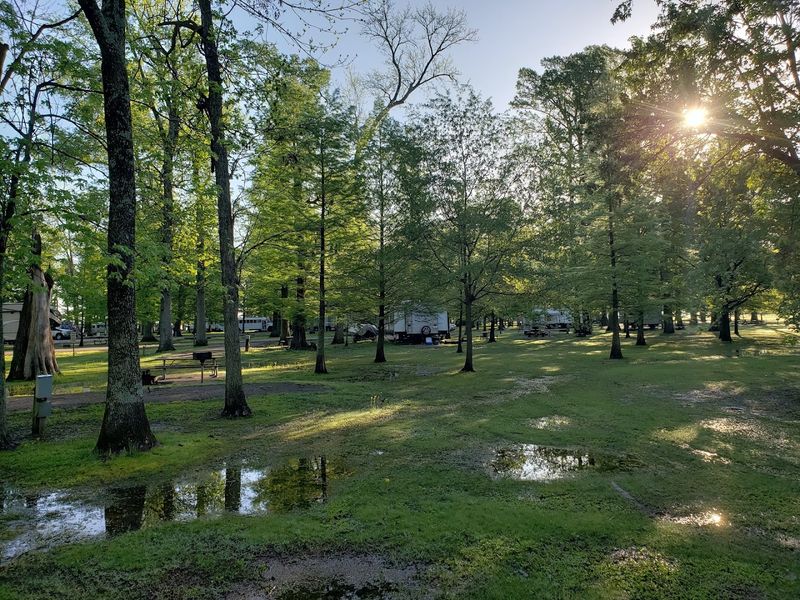
Reelfoot Lake does not look like the rest of Tennessee. Instead of mountains or rolling hills, you get a shallow, cypress-filled lake that feels more like Louisiana than the Volunteer State. Spanish moss hangs from the trees, bald eagles nest in the branches, and the whole place has a haunting, otherworldly beauty that sticks with you.
The lake was formed by a series of earthquakes in 1811 and 1812, which caused the Mississippi River to flow backward temporarily and flood the area. The result is a shallow, swampy lake filled with stumps, cypress trees, and an ecosystem unlike anywhere else in Tennessee. It is a haven for wildlife, especially birds, and birdwatchers come from all over to spot bald eagles, herons, egrets, and pelicans.
Fishing is huge here. Reelfoot Lake is famous for crappie, and anglers flock to the area year-round. Local guides offer boat tours and fishing trips, and they know exactly where the fish are hiding.
Even if you are not into fishing, a boat tour through the cypress forest is worth it. Gliding through the trees while a guide points out eagles and explains the lake’s history is a surreal, peaceful experience.
The lake sits in the northwest corner of Tennessee, far from the state’s main tourist routes. That remoteness keeps it off most itineraries, which is a shame because it offers a completely different side of Tennessee. Visitors who only see the Smokies or Nashville miss this weird, beautiful, and utterly unique landscape.
Reelfoot Lake State Park has cabins, campgrounds, and a visitor center that explains the lake’s geology and ecology.
12. Greeneville
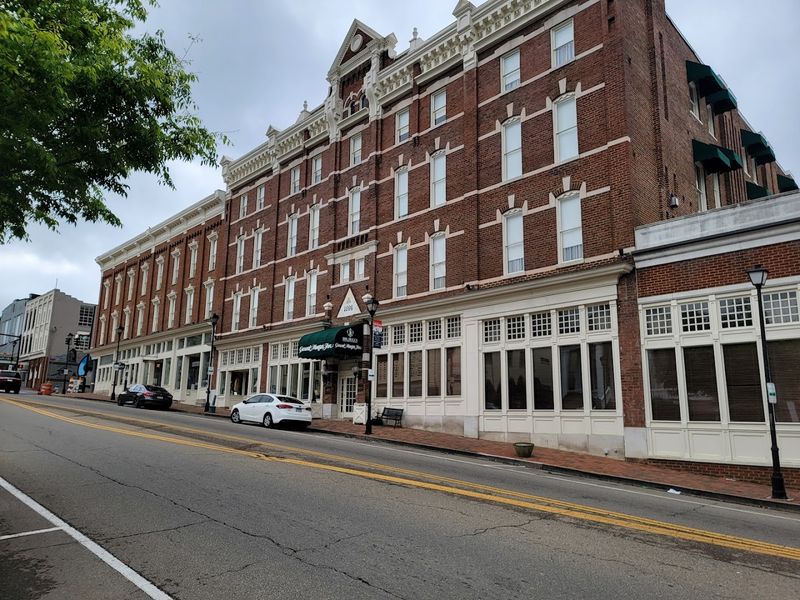
Greeneville does not shout for attention, and that is probably why so many visitors drive right past it. This small town in northeast Tennessee has a solid dose of history, mountain access, and a slower pace that makes it easy to underestimate. But if you like history mixed with small-town exploring, Greeneville deserves a stop.
Andrew Johnson, the 17th president, lived here, and his home and tailor shop are now a national historic site. The site includes a museum, Johnson’s preserved home, and his tailor shop where he worked before entering politics. It is a fascinating look at a president who often gets overlooked in history classes, and the site does a good job telling his complicated story.
Downtown Greeneville has a charming main street with local shops, cafes, and historic buildings. It is not a tourist hub, so everything feels genuine rather than staged. You can grab coffee, browse antique stores, and chat with locals who are happy to share recommendations without trying to sell you something.
The town sits near the Cherokee National Forest, making it a solid base for hiking, fishing, and exploring the mountains without the crowds of the Smokies. Nolichucky River runs nearby, offering excellent whitewater rafting and kayaking. Several outfitters operate in the area, and the river is a hidden gem for outdoor enthusiasts.
Greeneville also has a strong connection to Davy Crockett, who spent part of his childhood in the area. The Davy Crockett Birthplace State Park is a short drive away, offering a small museum and a replica cabin. It is not a major attraction, but it adds another layer of history to the region.
13. Natchez Trace Parkway
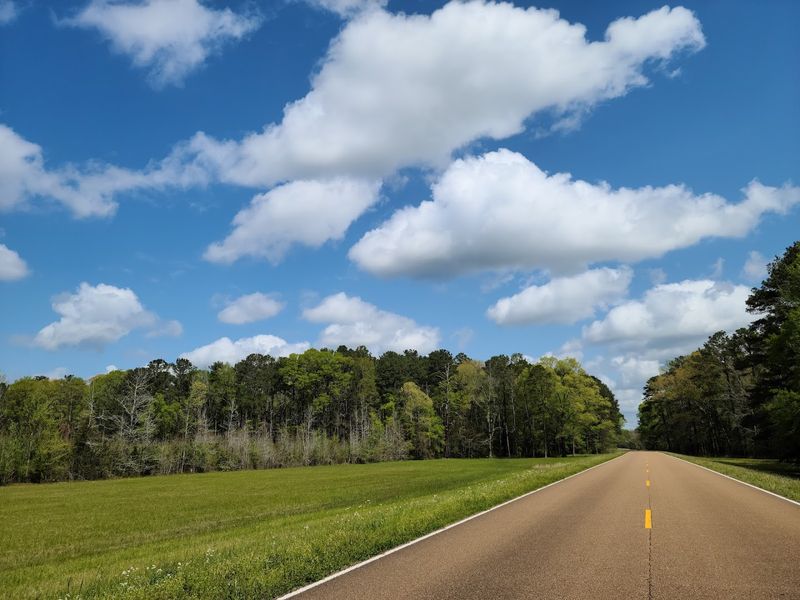
The Natchez Trace Parkway is the antidote to interstate highway stress. This 444-mile scenic road stretches from Nashville to Natchez, Mississippi, and it is designed for slow, relaxed travel. No billboards, no trucks, no gas stations cluttering the view.
Just rolling hills, forests, historic sites, and pull-offs that invite you to stop and explore.
Tennessee’s section of the Trace runs through the state’s midsection, passing through forests, farmland, and small towns. The speed limit is 50 mph, which sounds slow until you realize that is exactly the point. This is not a road for getting somewhere fast; it is for enjoying the journey and noticing details you would miss at highway speed.
Historic sites dot the parkway, marking spots where travelers once stopped on the original Natchez Trace trail. Meriwether Lewis’s grave and monument sit along the route, commemorating the explorer’s mysterious death in 1809. Old inns, Native American mounds, and interpretive signs provide context and history without overwhelming the experience.
You can stop at as many or as few as you like.
The Trace is especially beautiful in spring and fall. Spring brings wildflowers and dogwood blooms that turn the roadside into a garden. Fall delivers the full Tennessee color show, with maples, oaks, and hickories lighting up in reds, oranges, and yellows.
Even summer has its charm, with thick green canopy providing shade and a sense of seclusion.
Biking the Trace is popular too. The smooth pavement, low traffic, and scenic views make it ideal for long rides. You will see cyclists covering serious miles, especially in cooler months.
The parkway has several access points, so you can ride a section without committing to the full length.
14. Rock Island State Park
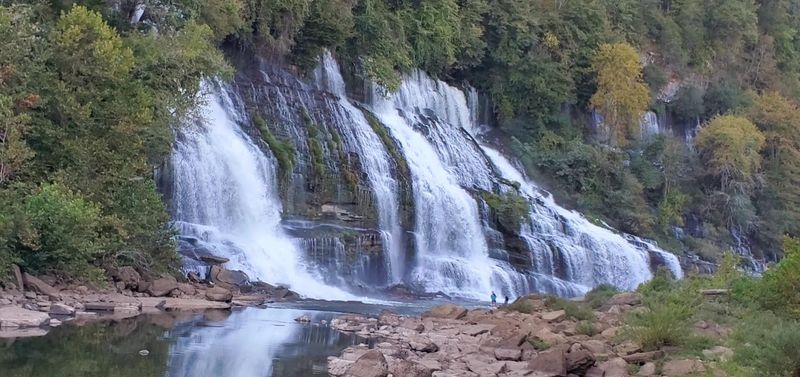
Rock Island State Park is one of those places that makes you stop and stare. The Caney Fork River crashes through a rocky gorge, creating waterfalls, pools of impossibly blue-green water, and dramatic scenery that feels almost unreal. It is one of Tennessee’s most visually stunning state parks, and yet it still gets overlooked by visitors chasing bigger names.
The Twin Falls overlook is the park’s star attraction. Two waterfalls converge in a rocky chasm, and the viewing platform gives you a front-row seat to the action. The water is powerful, especially after rain, and the sound alone is worth the visit.
The color of the water, a striking turquoise, comes from the limestone and minerals in the riverbed.
Great Falls Dam sits upstream, and the controlled water releases create whitewater rapids that attract kayakers and rafters. On summer weekends, you will see paddlers navigating the churning water below the dam. If you are into whitewater sports, local outfitters offer guided trips and kayak rentals.
It is challenging water, so experience helps, but watching from the shore is entertaining too.
The park has several hiking trails that take you along the river and up to overlooks. The trails are not overly difficult, but they do require some scrambling over rocks and roots. The effort is worth it for the views and the chance to explore different angles of the gorge.
Swimming is allowed in designated areas, though the currents can be strong, so caution is necessary.
Rock Island sits between Nashville and Chattanooga, making it an easy detour on a road trip. Despite its beauty, it stays relatively uncrowded, especially on weekdays. If your Tennessee itinerary skips this park, you are missing one of the state’s most rewarding natural attractions.
The waterfalls, the blue water, the gorge—it all adds up to something special.
Share this story