Colorado is filled with historic landmarks, but few tell the story of the American West as vividly as Bent’s Old Fort National Historic Site. Located near La Junta, this remarkable reconstructed trading post once stood at the center of commerce, culture, and travel on the frontier.
During the 1800s, traders, trappers, Native American tribes, soldiers, and settlers all passed through its gates, making it one of the most important crossroads in the region. Today, visitors can step inside a carefully recreated fort and experience a fascinating chapter of Western history. It’s a destination that brings the frontier to life.
A Fort Appearing Out of the Prairie
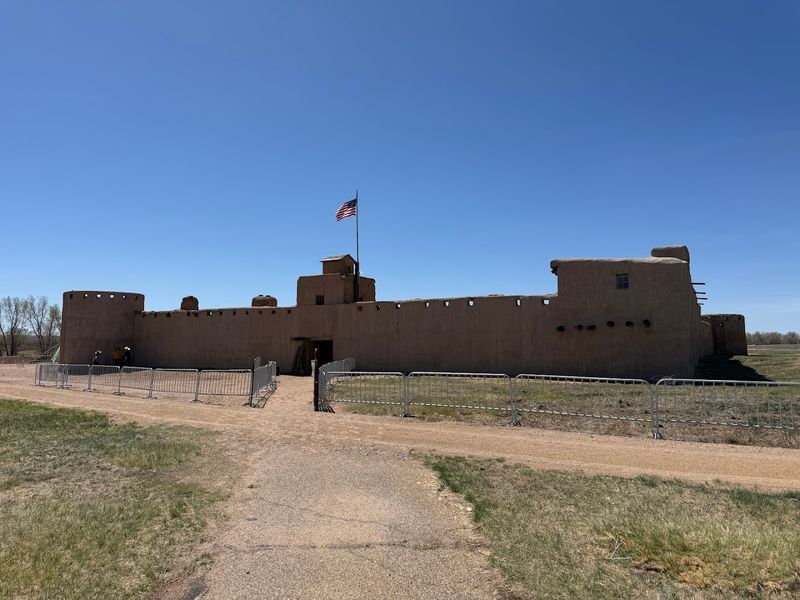
The approach to Bent’s Old Fort does not build drama with busy streets or a packed gateway. Instead, the site sits out in broad southeastern Colorado country where farmland, grass, and sky do most of the scene-setting.
That openness matters, because it lets the fort arrive visually the way a frontier outpost should: suddenly, solidly, and a little improbably against the plains.
From the parking area, the walk toward the reconstruction creates useful distance between the present and the 1830s story being told here. You are not stepping straight from your car into an exhibit hall.
You are moving across exposed ground toward thick adobe walls, corner bastions, and a long rectangular mass that looks purpose-built for trade, shelter, and watchfulness.
The fort’s size is one of the first surprises. Photos rarely prepare you for the scale of the courtyard complex or for how substantial the walls appear once you are close enough to see their texture.
This was not a tiny cabin dressed up as history. It reads as infrastructure, a place built for traffic, inventory, negotiation, and long stretches of hard weather.
Even before the details begin, the landscape does a lot of interpretive work. The Arkansas River corridor nearby helped make this location useful, while the surrounding emptiness clarifies why a fortified trading post mattered so much.
This was a practical anchor in a huge region where movement depended on distance, water, animals, and trust. That first view sets the tone for everything that follows. Bent’s Old Fort is visually striking, but not in a polished museum way.
It grabs attention because it looks like a working answer to the demands of the plains, planted exactly where many paths once crossed.
Why This Place Mattered to the Entire West
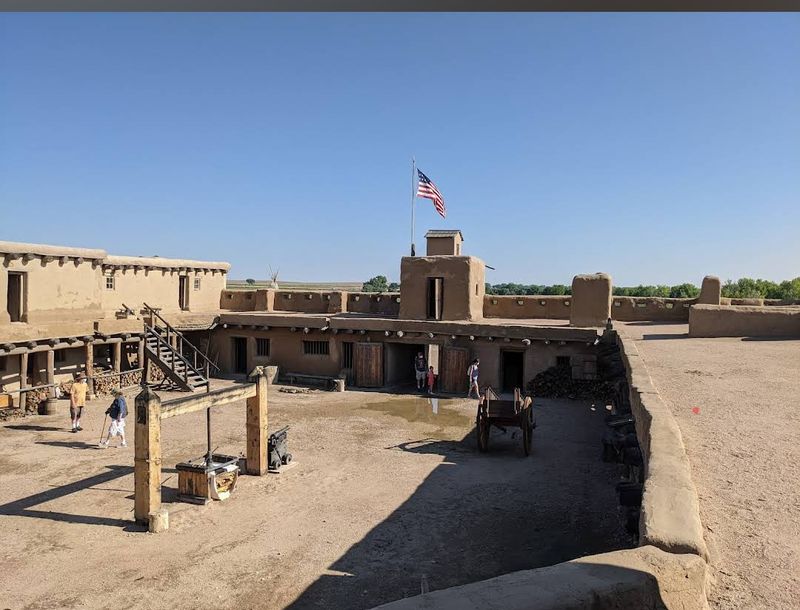
Bent’s Old Fort becomes much more compelling once you understand that it was never just a defensive structure. It operated as a major trading post, and that difference changes how you read every wall, room, and gate.
This was a business center on the plains, one positioned to connect mountain trappers, overland travelers, Native nations, and traders tied to Mexican and American markets.
The phrase crossroads of the American West fits because so many routes and relationships converged here. Goods moved through the fort, but so did news, languages, customs, and negotiations.
Instead of picturing a lonely outpost at the edge of nowhere, it helps to picture a place where exchange was constant and where success depended on understanding multiple worlds at once.
That broader story gives the reconstruction unusual weight. The site is not simply preserving walls for their own sake.
It is interpreting a commercial and cultural meeting ground that reveals how the West functioned before railroads and modern towns tightened the map. Trade in buffalo robes helped drive the fort’s importance, yet the larger significance came from the human network built around that commerce.
Inside the fort’s footprint, the scale starts making sense in practical terms. Storage, lodging, work areas, and circulation routes all point back to a place designed to handle movement and dealmaking.
Even if certain spaces are occasionally limited by preservation needs, the overall layout still communicates that this was a hub, not an isolated curiosity.
That is the key to appreciating Bent’s Old Fort. It explains the West through contact rather than myth, through exchange rather than simple conquest, and through a physical setting where many communities once met on consequential ground.
Colorado Adobe With Serious Detail
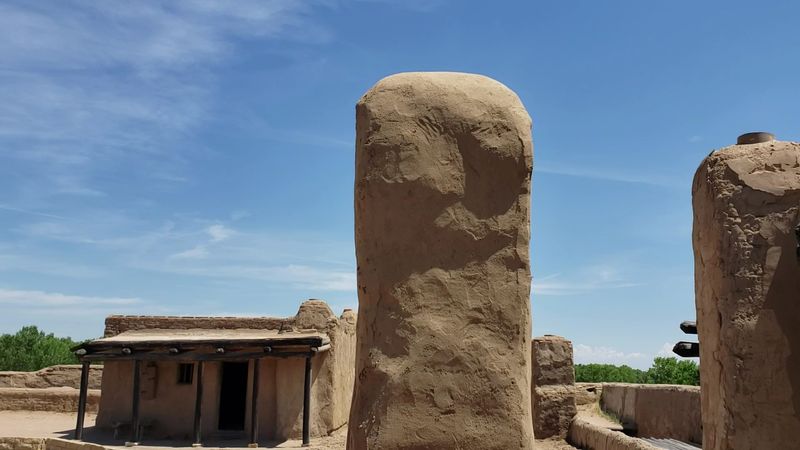
One of the most impressive things about Bent’s Old Fort is how convincing the reconstruction looks at human scale.
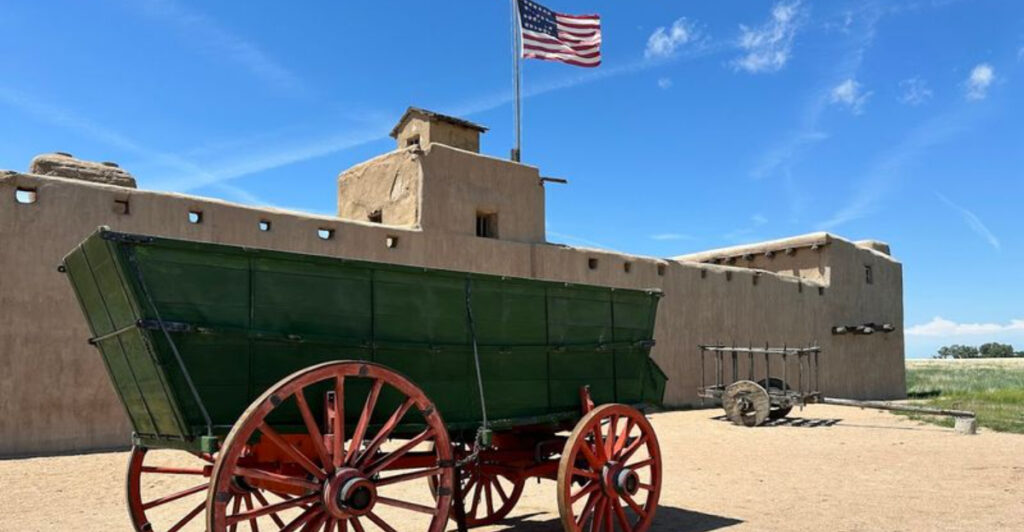
Adobe surfaces catch light softly, wood beams cut strong horizontal lines across the walls, and the whole structure has the heavy, workmanlike presence of a place built to endure seasons of dust, heat, and traffic. It does not read like a themed attraction trying to imitate history from a distance.
The fort’s architecture tells its own story once you slow down. Exterior walls feel defensive and spare, while interior spaces open into a courtyard plan that supports activity rather than spectacle.
Balconies, doors, storage areas, and room arrangements reveal a compound organized for trade, administration, domestic life, and the constant practical demands of a remote post.
That balance is part of why the site stands out among reconstructed landmarks. The building is dramatic, but it is also legible.
You can follow how supplies would move, where people might gather, and how enclosed spaces offered relief from wind and sun without losing the fort’s larger sense of exposure to the plains.
Preservation realities also shape the visit, and it helps to arrive knowing that some rooms or upper areas may be restricted during restoration or structural work. Rather than diminishing the place, those limitations underline that adobe architecture requires serious ongoing care.
This is not frozen scenery. It is a large earthen structure that demands maintenance to keep the historical experience available.
Even with occasional closures, the fort retains a remarkable amount of visual authority. The textures, proportions, and layout do the hard work of interpretation before a single sign is read.
In Colorado, very few historical sites communicate built environment this clearly, especially in such an open and geographically fitting setting.
Courtyard Life, Rooms, and Small Surprises
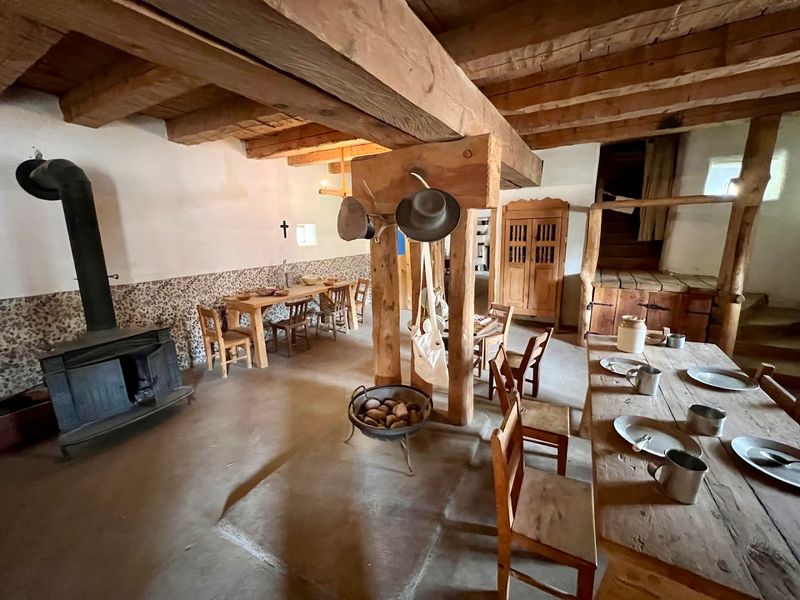
After the exterior makes its point, the courtyard shifts the experience from impressive to intimate. Enclosed space changes the sound, the light, and the pace, replacing prairie scale with a more contained rhythm of doors, shaded edges, and second-story walkways.
The fort starts reading less like a landmark from afar and more like a place where daily routines once overlapped constantly.
This is where smaller details begin carrying real weight. Furnished or interpreted rooms help explain domestic labor, trade operations, and the practical realities of staying supplied in a remote location.
Instead of broad frontier mythology, the site steers attention toward beds, workspaces, cooking areas, storage, and circulation – the nuts and bolts that made the whole enterprise function.
That grounded quality is one of the fort’s best strengths. A trading post can sound abstract until you see how many physical systems had to work at once.
Space had to be managed, goods had to be protected, animals had to be handled, and people from different backgrounds had to share a controlled environment built for business first.
Some visitors arrive expecting a military fort and end up finding a more interesting story. Bent’s Old Fort was privately operated, and that distinction gives the site a different texture.
The rooms suggest commerce, negotiation, lodging, and adaptation rather than barracks-centered routine, which makes the place feel more socially layered than many frontier reconstructions.
Even little moments add personality. A stair, a thick doorway, a balcony view across the courtyard, or a shadow line against adobe can sharpen your sense of how the compound worked hour by hour. The site rewards scanning the big picture, then narrowing down to the material details tucked inside the walls.
The Human Story Is Bigger Than One Fort
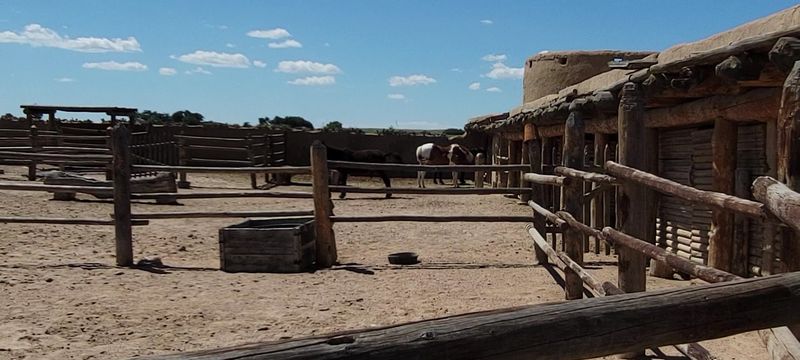
The most important story at Bent’s Old Fort is not the adobe itself. It is the concentration of different communities and interests that met here under one roofline and around one trading economy.
The site opens a window onto a West shaped by exchange among Native nations, traders from the United States, travelers heading across the plains, and connections reaching into Mexico and the mountain fur country.
That mix is what gives the fort depth beyond architecture. This was a place where language skills, alliances, cultural knowledge, and diplomacy mattered as much as inventory.
Life at the fort depended on relationships, and the interpretive value of the site comes partly from showing that frontier history was never a single-track story told by one group alone.
Ranger interpretation often helps bring that complexity into focus. When tours are available, they can add useful context to the spaces and explain why certain rooms, trade goods, or routines mattered.
On self-guided days, signage, films, and printed materials still help connect the fort’s layout to the larger networks moving through the Arkansas River corridor.
That educational layer is where Bent’s Old Fort becomes more than photogenic. It clarifies that the American West ran on contact zones – places where cooperation, friction, opportunity, and adaptation lived side by side.
The site does not need exaggerated legend because the documented role of the fort is already strong enough to hold attention.
It also helps that the fort is reconstructed rather than reduced to fragments. Visitors can step into a full spatial argument about how this crossroads worked.
Instead of imagining a vanished world from foundations alone, you can track how people might have moved, traded, rested, argued, and negotiated within a real-looking built environment.
Walking Through the Same Gateway Thousands Once Used
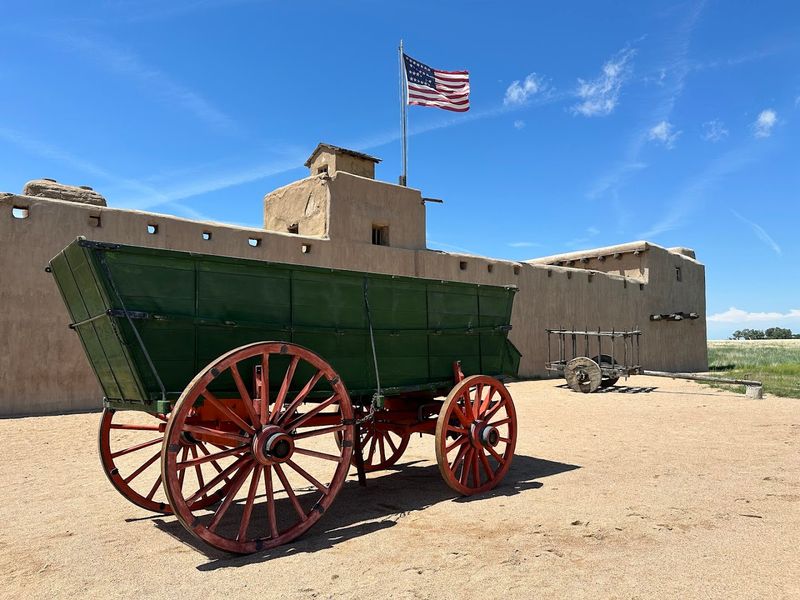
One of the most powerful moments at Bent’s Old Fort is surprisingly simple. It happens when you pass through the main gateway and step into the courtyard.
For a brief moment, the distance between modern Colorado and the frontier era feels much smaller than expected.
The entrance was once crossed by traders hauling goods, Native American visitors, military officers carrying messages, and travelers moving between distant settlements.
Standing in that same space today creates a connection that photographs alone cannot fully capture. The fort stops feeling like a historical subject and starts feeling like a place where decisions shaped lives and livelihoods.
That sense of continuity is strengthened by the reconstruction itself. Because visitors can move through rooms, courtyards, walkways, and workspaces, the site offers a rare opportunity to understand history spatially.
Distances between rooms matter. Sightlines matter. The arrangement of doors, storage areas, and gathering places helps explain how daily life operated on the frontier. The experience also reveals how interconnected the West was.
A visitor standing in the courtyard is not simply looking at a Colorado landmark. They are standing at a former meeting point for cultures, economies, and transportation routes that stretched across North America.
Few places communicate that reality as clearly. Small details often leave the strongest impression. Adobe walls, wooden balconies, storage rooms, and living quarters show how people adapted to life on the plains.
These features transform historical facts into something tangible, making it easier to picture the challenges and opportunities.
That is why Bent’s Old Fort stays with people long after the visit ends. The structures may be reconstructed, but the sense of place feels remarkably authentic.
Walking through the gates turns history into something physical and immediate. Rather than simply observing the past, visitors feel connected to it, making the experience memorable.
Why Bent’s Old Fort Still Hits So Hard
Plenty of historic sites ask you to admire what used to be there. Bent’s Old Fort does something stronger.
It gives you a large, inhabitable reconstruction in the right landscape, then uses that setting to show how trade, geography, and human contact shaped the West long before modern Colorado settled into highways and town grids.
The site’s power comes from that combination of scale and specificity. You are not looking at a vague frontier symbol.
You are looking at a recreated post with enough physical presence to explain why it mattered and enough historical framing to keep the story from collapsing into costume-drama shorthand. The fort holds attention because it is both concrete and connective.
It also helps that the visit is not overproduced. There is room for quiet, room for wind, room for the plain geometry of adobe against sky.
Even when restoration limits access to some spaces, the fort still communicates a lot through its massing, courtyard organization, and relationship to the surrounding land.
In editorial terms, this is the rare historical landmark that delivers both a strong image and a strong argument. The image is obvious: a giant adobe trading fort on the prairie.
The argument arrives a few minutes later: the West was built through exchange, negotiation, and movement across shared spaces like this one, not through isolated myth alone.
That is why the place stands out after the drive back toward La Junta. Bent’s Old Fort is visually memorable, historically substantial, and unusually clear about its own reason for existing.
If one stop in southeastern Colorado needs to earn the phrase crossroads of the American West, this reconstruction makes the case with walls, space, and context.
Share this story