Most visitors experience Colorado through its famous national parks, ski resorts, and postcard-perfect mountain towns. But some of the state’s most unforgettable destinations are the ones that rarely make the front page of travel guides.
Hidden among canyons, deserts, forests, and remote backroads are places filled with dramatic landscapes, fascinating history, unusual geology, and unexpected discoveries. From ancient ruins and towering rock formations to secluded waterfalls and overlooked natural wonders, these destinations offer a different side of Colorado. If you’re ready to venture beyond the usual tourist stops, these 12 hidden gems deserve a place on your travel list.
1. Paint Mines Interpretive Park
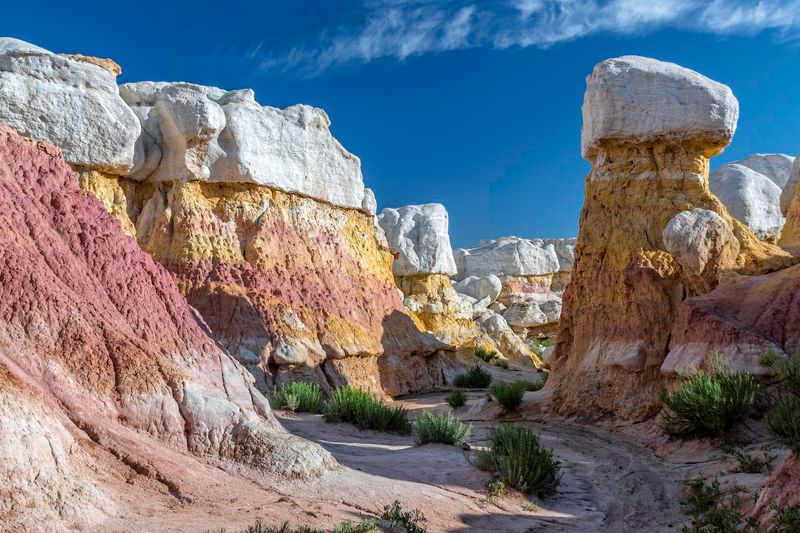
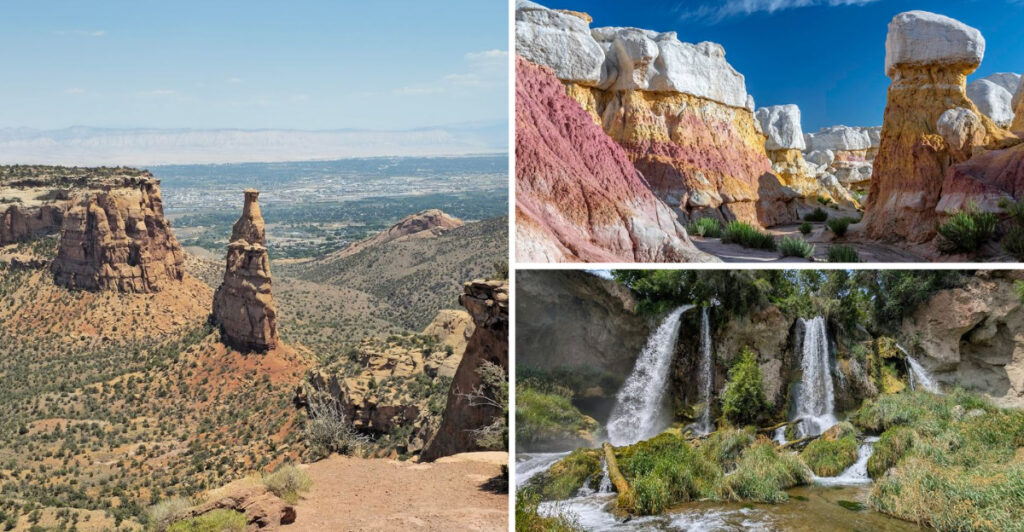
Out on the eastern plains, Paint Mines Interpretive Park delivers a shock of color you probably do not expect from this part of Colorado. The landscape shifts from open grassland to rippled gullies packed with clay in pink, peach, gold, and chalky white.
Instead of alpine drama, you get sculpted earth, narrow passages, and formations that look sketched by an overactive fantasy illustrator.
The walking experience is part of the fun because the terrain keeps changing as you move deeper into the park. One minute you are on a broad path with prairie views, and the next you are threading through hoodoos and delicate spires where every curve catches light differently.
Early or late in the day, the colors look richer, and the shadows sharpen the shapes in a way that makes every turn photo-worthy.
There is also a deeper layer here that gives the place more weight than a pretty viewpoint. People have long valued these mineral-rich clays, and that history adds context without taking away from the visual punch.
You do not need a huge hike or technical route to enjoy it either, which makes it an easy addition for travelers who want scenery with personality instead of another standard overlook.
Bring water, keep your pace relaxed, and pay attention to the quieter details underfoot and along the walls. The clay bands, small ridges, and unexpected color blends are often more interesting up close than from a distance.
Paint Mines is the kind of stop that resets your idea of Colorado and proves the plains can be every bit as strange and memorable as the mountains.
2. Rifle Falls State Park
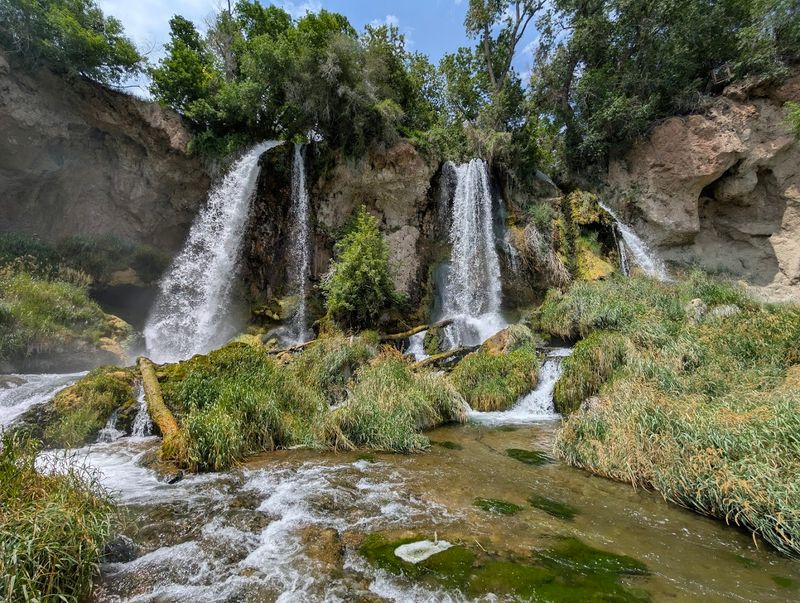
Rifle Falls State Park is the kind of place that catches you off guard in the best way. Colorado trains you to expect granite peaks, dry slopes, and wide-open vistas, then suddenly this lush canyon appears with a three-part waterfall pouring over a limestone wall.
Ferns cling to the rock, mist hangs in the air, and the whole setting leans more oasis than rugged mountain postcard.
The main draw is obvious the second you hear the water. That triple cascade drops with enough force to cool the area around it, and the green canyon walls make the scene look especially vivid against western Colorado’s drier surroundings.
Short paths keep the park accessible, so you can spend more time exploring and less time grinding through a long approach just to earn the view.
Then the details start to take over. Small caves tucked behind and near the falls add a bit of adventure, especially if you like poking around unusual rock features and finding different angles.
Families, photographers, and road-trippers all get something useful here because the park offers quick payoff, but it never feels flat or one-note once you start wandering the trails.
A slower visit works best, especially if you circle around and notice how the canyon changes with light and spray. Midday brings sparkle, while morning and evening can soften the whole scene and make the greens stand out even more.
Rifle Falls does not need a giant build-up to impress you – it simply delivers an unexpectedly lush pocket of Colorado that looks and sounds completely different from the state’s usual greatest hits.
3. Zapata Falls
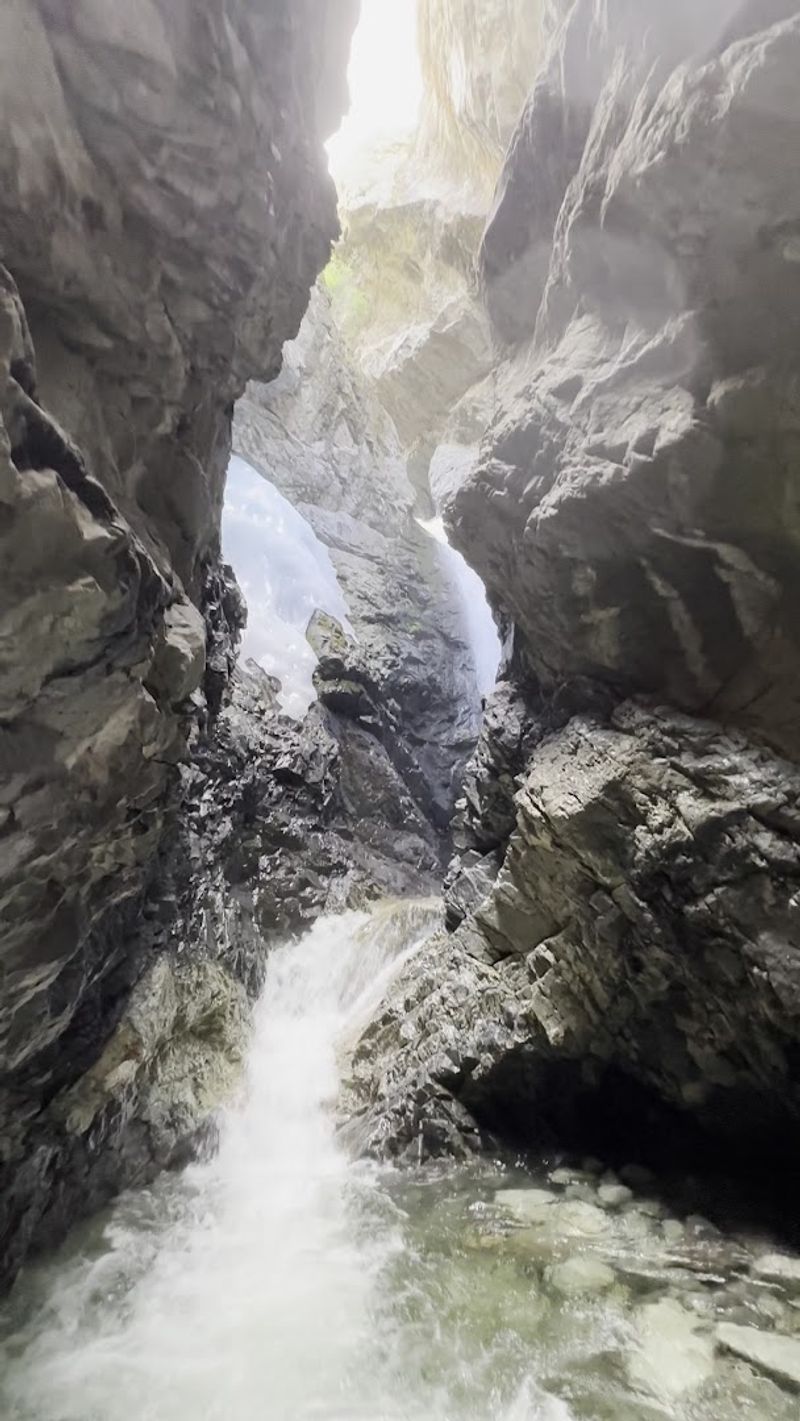
Zapata Falls starts with a bit of a tease. You drive toward the foothills near Great Sand Dunes, see the broad San Luis Valley spread out below, and might assume the best part is the view from the trailhead.
Then the short hike pulls you into a tight rocky canyon where the route gets wetter, cooler, and much more interesting than a simple viewpoint stop.
The approach is not long, but it asks for more attention than many casual waterfall walks. You follow a creek into a narrowing gap, stepping over stones and through shallow water as the rock walls close in around you.
By the time you reach the final chamber, the reveal lands perfectly: a waterfall tucked inside stone, partly concealed until you are practically standing beneath it.
That setup is what makes Zapata memorable. Instead of admiring water from a distant railing, you move into the landscape and earn the scene through a little splashy effort and a small sense of discovery.
It is especially satisfying after visiting the dunes, since the contrast between massive sand slopes and a hidden canyon waterfall gives the area a much wider personality than many travelers expect.
Footwear matters here, and so does being okay with a little cold water around your ankles. The final stretch can be slick, but that edge of adventure is exactly why people talk about this place with a grin.
Zapata Falls packs surprise, scenery, and a touch of fun challenge into one compact outing, making it one of the smartest side trips in southern Colorado when you want more than another scenic pullout.
4. Wheeler Geologic Area
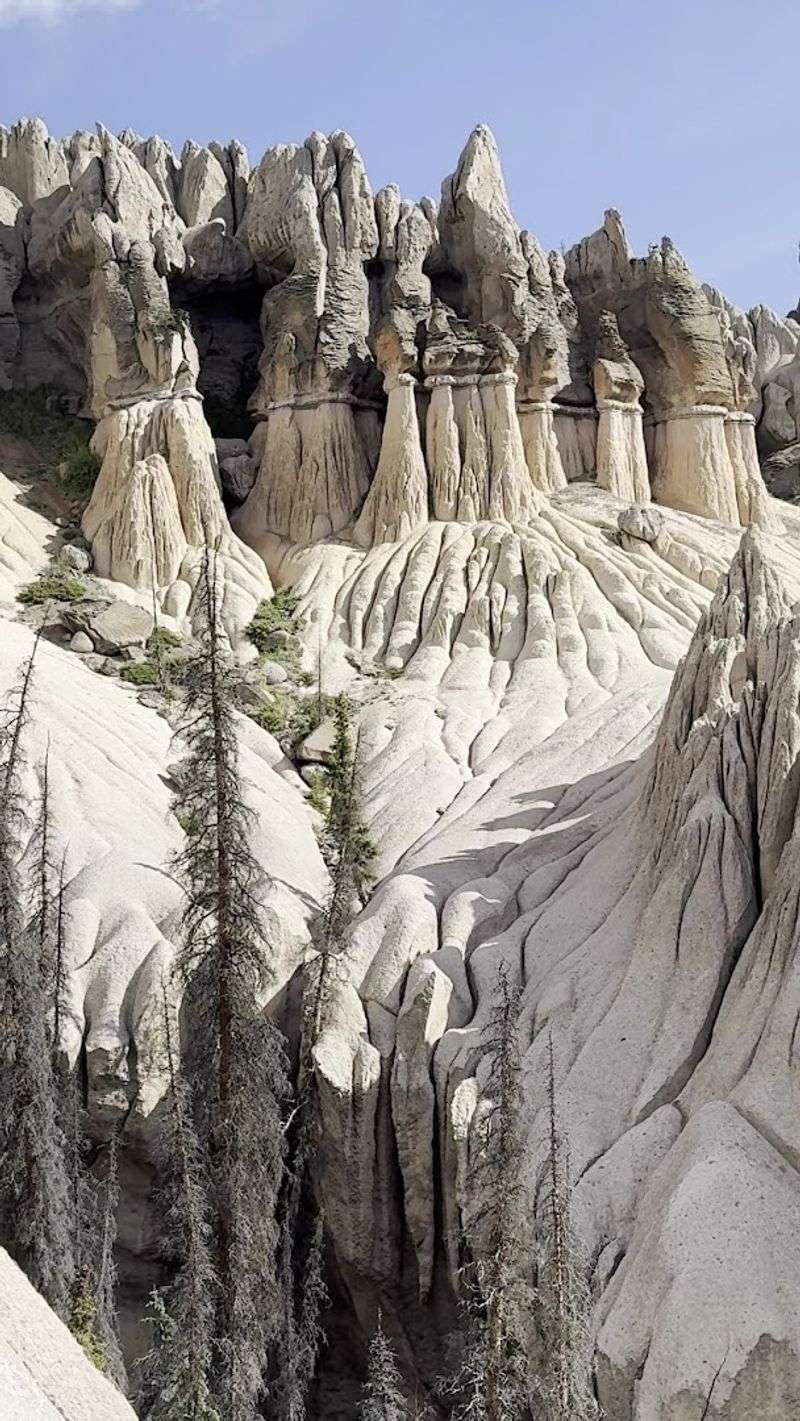
Wheeler Geologic Area does not ease you in. Its remote location near Creede, the rough access, and the effort needed to reach it all act as a filter, which only adds to the payoff once those strange volcanic formations finally appear.
The scene looks wildly out of step with the surrounding Rockies, with pale spires, crumbling towers, and bulky shapes that resemble ruined stone fortresses.
This is Colorado at its most eccentric and least polished. Instead of polished overlooks and easy access roads, Wheeler offers a raw encounter with a landscape that seems assembled from ash, erosion, and a very active imagination.
The formations rise in clusters and ridges, and the farther you look, the more the area starts reading like a miniature kingdom of weathered castles and broken battlements.
Because the trip takes planning, the experience carries a stronger sense of commitment than many scenic stops. That commitment works in your favor, since the area feels quieter and more personal once you arrive.
You are not racing through a checklist here – you are reading the land, tracing odd silhouettes, and noticing how light shifts across soft volcanic textures that change color through the day.
Preparation matters, and this is not the place to wing it with low fuel, weak directions, or a rushed schedule. But for travelers who enjoy unusual geology and a little isolation, Wheeler Geologic Area can be the standout story of an entire Colorado trip.
It replaces easy convenience with rare terrain, and that trade feels pretty convincing when you are standing among stone forms that seem impossible to have been made by ordinary weather.
5. Canyons of the Ancients National Monument
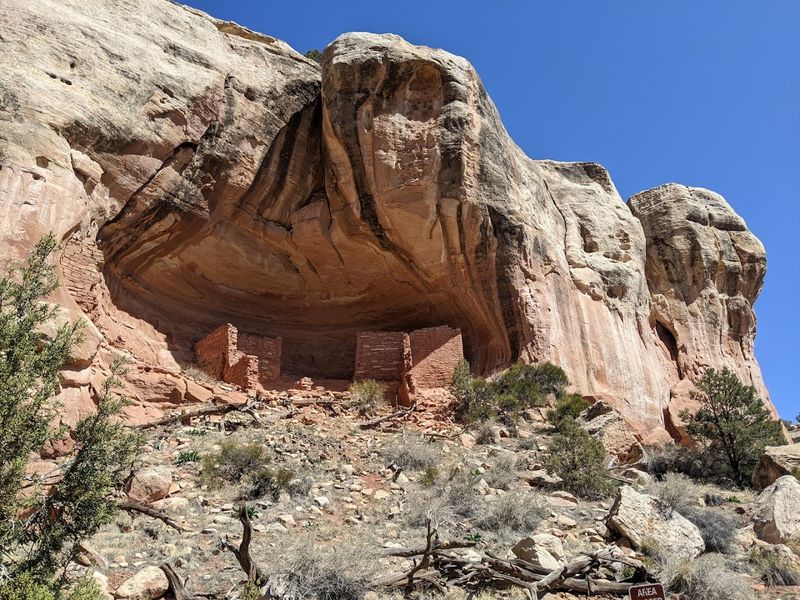
Canyons of the Ancients National Monument trades flashy branding for depth, scale, and an enormous amount of human history spread across the high desert.
Out near Dolores and Cortez, the landscape opens into mesas, canyons, and quiet stretches of country that hold traces of ancient Puebloan life in astonishing concentration. It is the kind of place that asks you to slow down, look carefully, and let the land reveal itself piece by piece.
You might spot masonry tucked into rock, room blocks rising from the earth, or site remnants that completely reframe the terrain around you. Instead of seeing empty desert, you start reading a lived-in landscape shaped by movement, settlement, farming, and community across centuries.
That shift is one of the monument’s strongest qualities, because each canyon and overlook starts carrying more meaning than its surface beauty alone.
The scale can be hard to grasp at first. This is not one single ruin or one famous cliff dwelling with all the attention focused in a single spot.
It is a vast region with countless points of interest, which makes route planning useful and curiosity essential. Museums and interpretive stops can help provide context, but the biggest impression often comes from driving, walking, and absorbing how much history sits quietly across the terrain.
Respect matters here, and so does a patient mindset. You are visiting places tied to real communities and long cultural continuity, not just scenic backdrops for quick photos.
Canyons of the Ancients rewards travelers who enjoy thoughtful exploration, and it stands apart by offering something rare: a Colorado destination where archaeology, landscape, and silence combine into a day that stays in your head long after the dust is gone.
6. Picketwire Canyonlands Dinosaur Tracksite
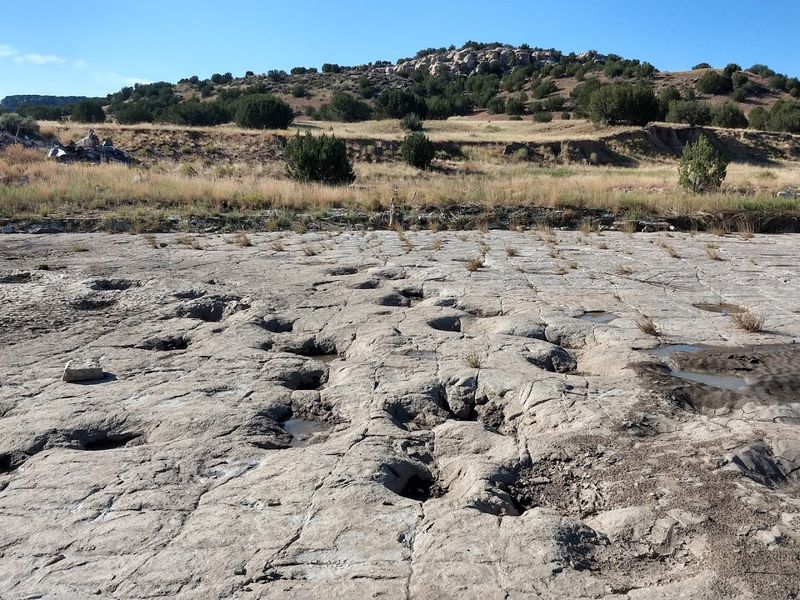
Picketwire Canyonlands Dinosaur Tracksite offers one of those travel experiences that instantly makes the timeline of Earth feel less abstract.
Out in southeastern Colorado near La Junta, the canyon holds a remarkable spread of fossilized footprints pressed into stone, turning a hike or bike ride into a direct encounter with the prehistoric world.
It is not a museum display behind glass – the tracks are out there in the landscape where you can see scale, spacing, and movement for yourself.
The journey in is part of the appeal. Reaching the tracksite takes some effort, which gives the outing more of an expedition vibe than a quick roadside stop.
As you move through the canyon, the setting starts doing two jobs at once: it provides scenic desert beauty and builds anticipation for the moment the stone underfoot shifts from ordinary rock to preserved evidence of ancient life.
When the tracks come into view, the effect is immediate. Hundreds of prints spread across the rock, and each one pulls your attention toward questions about size, direction, and what the area may have looked like when dinosaurs crossed it.
Even without deep scientific knowledge, you can appreciate the sheer oddness of standing where those impressions have endured for ages in a place that still feels open and untamed.
This site works especially well for travelers who like scenery with a strong story attached. You get exercise, big views, and a destination that sparks curiosity without needing a lot of embellishment.
Picketwire Canyonlands is unusual in a very satisfying way – part outdoor adventure, part natural history field lesson, and fully memorable once you realize you are looking at real footprints left by creatures that once moved across what is now quiet Colorado canyon country.
7. Bishop Castle
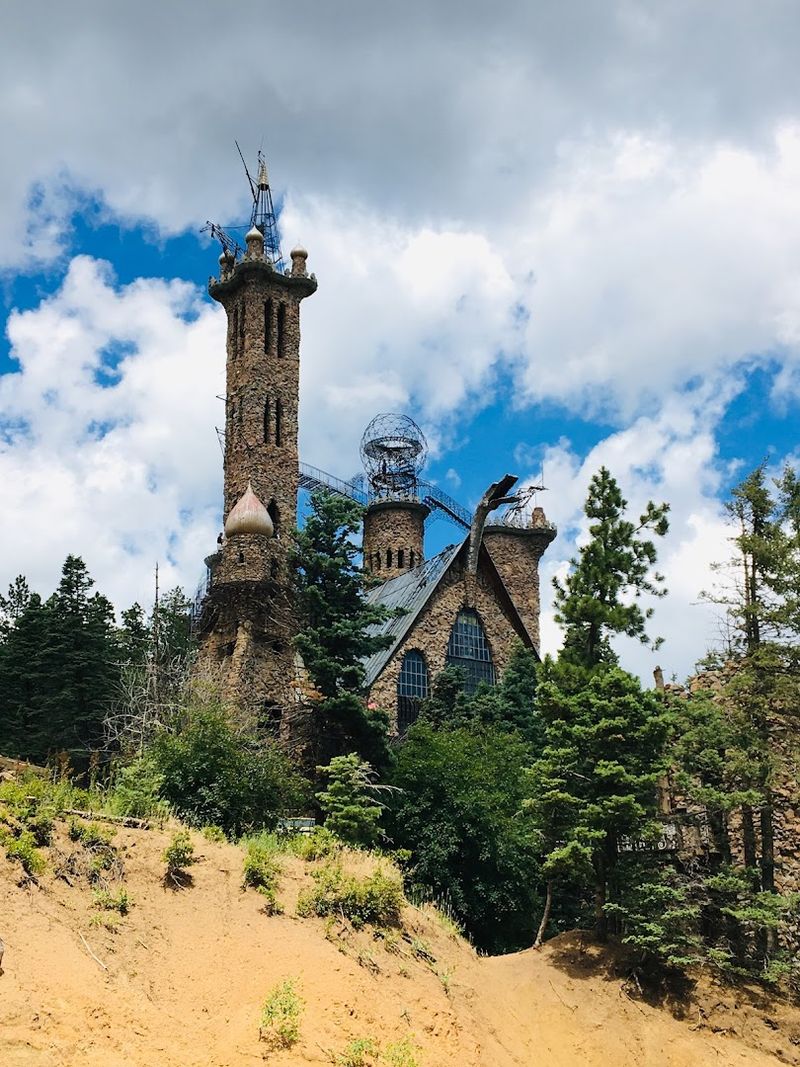
Bishop Castle is the rare attraction that looks unbelievable even when you are standing right in front of it. Rising in the hills near Rye, this hand-built stone structure stacks towers, arched windows, twisting stairways, ironwork, and elevated walkways into a creation that sits somewhere between medieval fantasy and determined folk art.
It is bold, strange, and impossible to confuse with anything else in Colorado. The castle’s appeal starts with its sheer improbability.
You can walk through spaces that seem to have grown piece by piece from one person’s vision, and that handmade quality gives the whole place an energy polished attractions rarely have.
Nothing feels generic or overly managed. Instead, every corner suggests persistence, experimentation, and a refusal to keep the scale small just because common sense might have suggested it.
Then there are the details that push it further into legend territory. Bridges connect sections overhead, stained glass adds color, and the famous dragon sculpture brings a theatrical edge that fits the setting perfectly.
Whether you are into architecture, roadside oddities, outsider art, or simply places with strong personality, Bishop Castle keeps your attention because it never settles into one category for very long.
You will want to look up, around, and under everything, since the structure reveals new angles constantly. The mountain backdrop only makes the castle appear more surreal, as though a private daydream was dropped into the forest and then expanded over decades.
Bishop Castle is not subtle, and that is exactly the point. In a state full of scenic superstars, this place wins on originality and nerve, offering a stop that is as memorable for its spirit as for its stone walls.
8. Colorado Gators Reptile Park
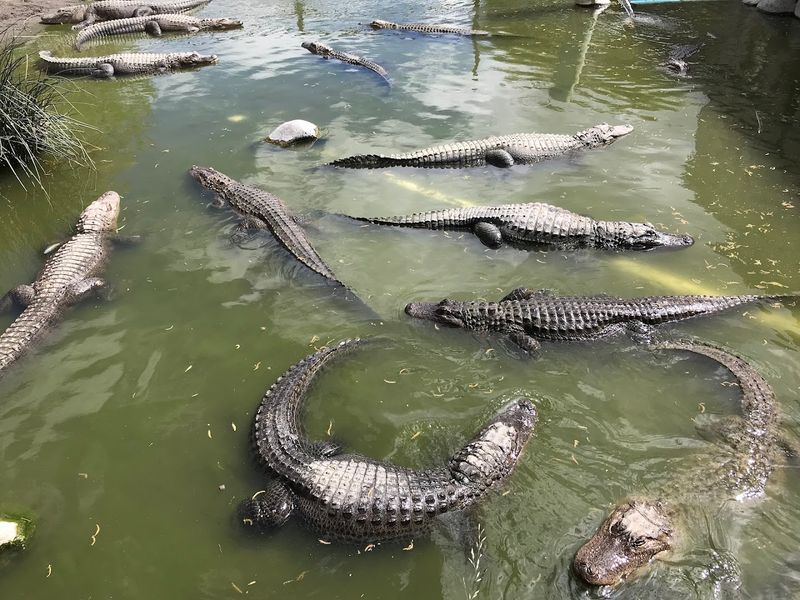
Colorado Gators Reptile Park sounds like the setup to a joke until you actually pull in and realize it is very real. Near Mosca, with the Sangre de Cristo Mountains not far away, this quirky attraction places alligators, reptiles, and other exotic animals in a setting that seems almost comically unexpected.
That contrast is exactly why the place works – part curiosity stop, part animal encounter, and part classic roadside surprise.
The backstory adds to the appeal because the site did not begin as some polished, theme-heavy attraction. Its roots in a fish farm operation give the place an offbeat practicality that still lingers in its identity today.
You are not getting a generic, copy-and-paste experience here. Instead, the park leans into its unusual history and ends up with a personality that is both slightly scrappy and very memorable.
Walking through, you get the fun of seeing creatures that feel wildly out of context in southern Colorado. Alligators naturally steal attention, but the broader reptile collection keeps things interesting, especially for families and travelers who enjoy attractions that do not follow the usual state tourism script.
It is educational in a casual, approachable way, with enough novelty built in to keep even skeptical visitors engaged.
This stop makes the most sense when you embrace the weirdness and stop expecting everything to fit a neat mountain-town mold. Colorado Gators succeeds because it offers a different kind of travel memory, one built on surprise and conversation rather than grand scenery alone.
In a region already known for sand dunes and dramatic peaks, a reptile park should not work this well – yet somehow it adds another layer of odd, delightful range to southern Colorado.
9. Last Chance Mine
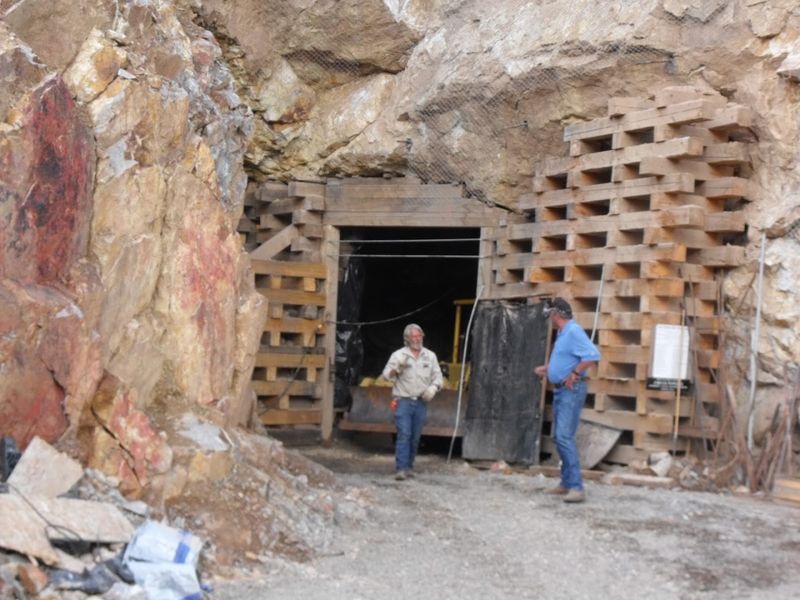
Last Chance Mine gives you a more tactile route into Colorado history than any textbook summary ever could. Near Creede, this historic silver mine lets you step underground and move through the kind of tight, shadowy passages that defined the state’s boomtown years.
It is one thing to read about mining camps and ore strikes, and another to stand inside the tunnels where that labor actually happened.
The underground setting does most of the work immediately. Narrow walls, old equipment, rails, and rough supports create a direct sense of scale and effort, reminding you that mining was physically intense, noisy, and risky long before it became a heritage stop.
Guided tours help stitch the details together, turning scattered tools and dark corridors into a more vivid picture of how the operation functioned and what daily work might have demanded.
Creede already has a strong historic personality above ground, so the mine experience deepens what you see around town. Streets, buildings, and mountain scenery start connecting to the industry that shaped them, and that connection makes the visit more than a novelty tunnel walk.
You are not simply peeking into an old hole in the mountain – you are stepping into one of the forces that built entire communities across Colorado.
Wear practical layers, listen closely, and let the physical environment do its job on your imagination. The cool air, dim spaces, and preserved machinery create a grounded, specific sense of place that many history attractions struggle to deliver.
Last Chance Mine stands out because it is immersive without being theatrical, and informative without feeling stiff. By the time you emerge back into daylight, Colorado’s silver-mining legacy usually looks sharper, heavier, and much more real.
10. Betty Ford Alpine Gardens
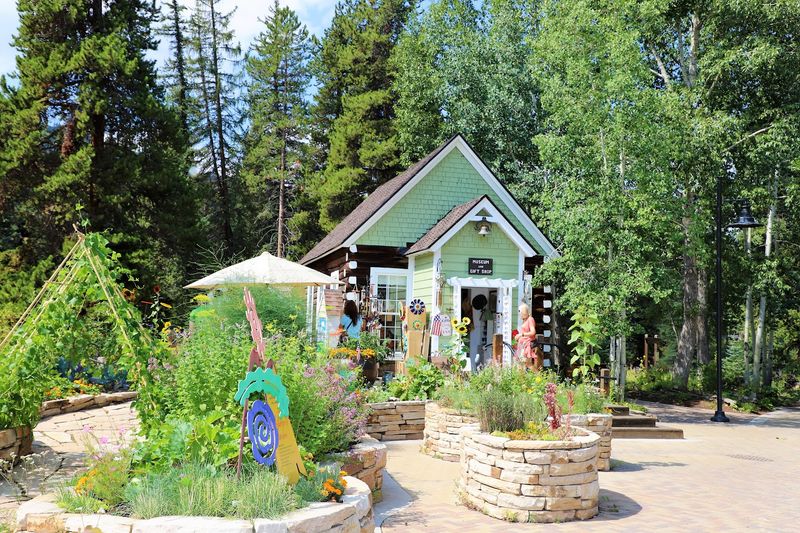
Betty Ford Alpine Gardens is a smart reset button if Vail’s busier energy starts to wear thin. Tucked beside Gore Creek, this high-elevation garden replaces ski-town buzz with winding paths, water, rockwork, and a surprisingly rich collection of alpine plants.
The setting is polished without being stuffy, and the mountain backdrop gives every bed and border a little extra drama.
What stands out most is how specific the garden feels to its environment. These are not generic ornamental displays dropped into a resort town.
The focus on alpine flora gives the place a clear identity, and it invites closer looking at textures, shapes, and blooms that might otherwise get overlooked on a trip dominated by big scenery. Even if you are not a dedicated gardener, the design makes browsing easy and rewarding.
The experience is peaceful, but not bland. Different sections create changes in pace, with creekside moments, tucked-away corners, and open views that let the garden unfold gradually instead of all at once.
It works well as a solo wander, a relaxed couple’s stop, or a low-key family break between more active outings. In every version, the calm comes from strong details rather than empty quiet.
Timing helps, especially in warmer months when color is strongest and the paths are inviting for a longer stroll. Because the garden sits in such a well-known destination, it can surprise travelers who assume Vail is all slopes, shopping, and winter branding.
Betty Ford Alpine Gardens offers a different side of the town – lighter, greener, and more observant. When you want beauty without crowds competing for your attention, this is one of the most satisfying places to slow down.
11. Fort Garland Museum & Cultural Center
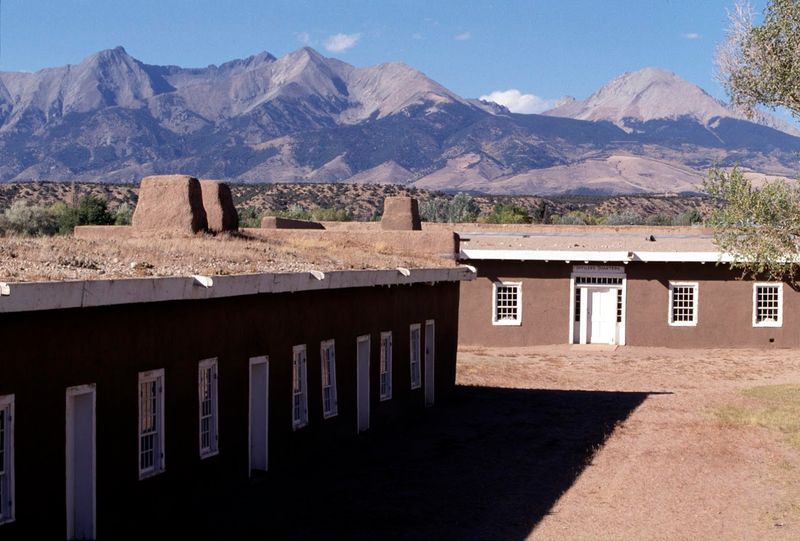
Fort Garland Museum & Cultural Center brings Colorado’s frontier era into focus without relying on oversized myths or dusty nostalgia.
Set against broad mountain views in the San Luis Valley, the preserved fort combines sturdy historic buildings with exhibits that help place soldiers, settlers, and Native communities within a more layered regional story.
The setting alone is strong, but the context is what gives the visit real substance. Walking the grounds, you get a clear sense of how the fort functioned as both structure and outpost.
The architecture is straightforward and practical, which makes it easier to imagine the rhythms of daily life rather than treating the place as a frozen movie set.
Rooms, courtyards, and displays build the picture gradually, letting you connect geography, conflict, movement, and survival in ways that feel grounded rather than theatrical.
The museum component adds range by broadening the story beyond one narrow perspective. That matters here, since the fort sits within a region shaped by overlapping cultures, competing goals, and changing power over time.
Good interpretation can turn a quick walk-through into a much more thoughtful stop, especially when the surrounding landscape reminds you how strategic and exposed this location must have been.
Fort Garland works especially well for travelers who like history tied tightly to place. You can look at the mountains, the valley, and the fort together and understand that none of them are separate from the story being told.
It is an easy site to pair with other southern Colorado stops, but it deserves your full attention while you are there. Expect character, strong scenery, and a sharper understanding of a region that often gets overshadowed by louder destinations.
12. Colorado National Monument
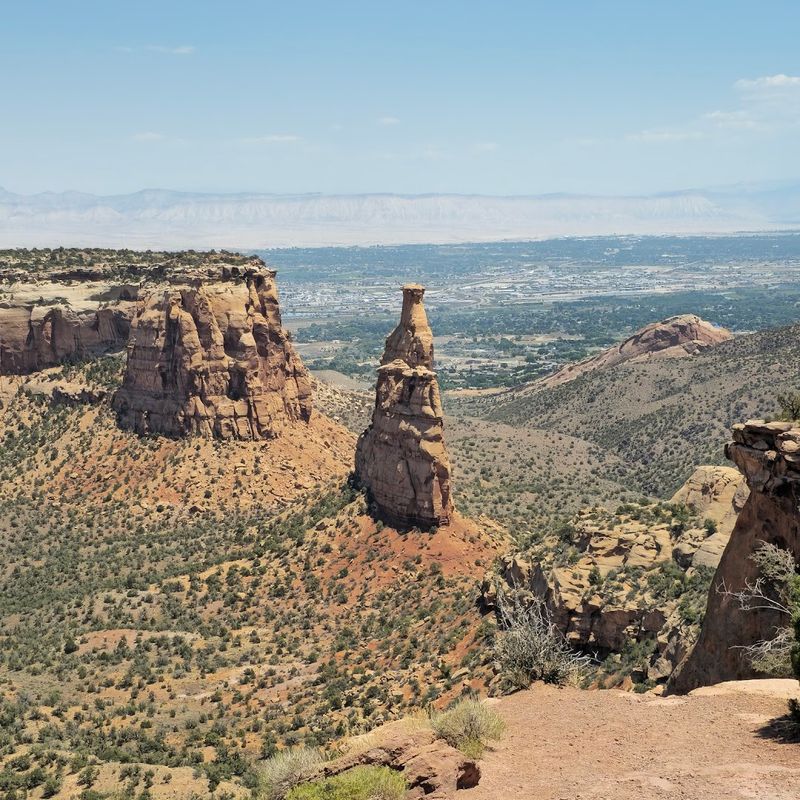
Colorado National Monument has the unfair job of existing in a state packed with famous landscapes, yet it handles that competition extremely well.
Near Grand Junction, the monument spreads out in a sweep of red-rock canyons, sheer walls, and massive monoliths that deliver classic American West scenery with very little filler.
One glance across the cliffs and spires is usually enough to wonder why more travelers do not build entire trips around this place.
Rim Rock Drive is the star route, and it earns the hype. The road threads through the monument with one dramatic overlook after another, turning a scenic drive into a running argument for pulling over constantly.
Each bend reveals another arrangement of towers, depths, and color, while landmarks such as Independence Monument give the terrain a bold, sculptural identity that sticks in your memory long after the visit.
There is also a satisfying contrast here between grandeur and accessibility. You can get big scenery quickly from the road, but hiking deeper into the monument adds desert textures, quiet side views, and a closer look at the plants and wildlife adapted to this drier corner of Colorado.
The result is a landscape that works for fast scanners and slow explorers without losing its impact for either one. Light changes everything, so sunrise, sunset, and even late afternoon can transform the stone from flat red to a layered mix of rust, gold, and shadow.
Compared with some of Colorado’s marquee destinations, the monument often feels less crowded, which lets the scenery breathe a little more.
Colorado National Monument is not a backup option or an afterthought. It is one of the state’s strongest scenic experiences, and a very convincing reminder that desert Colorado deserves top billing.
Share this story