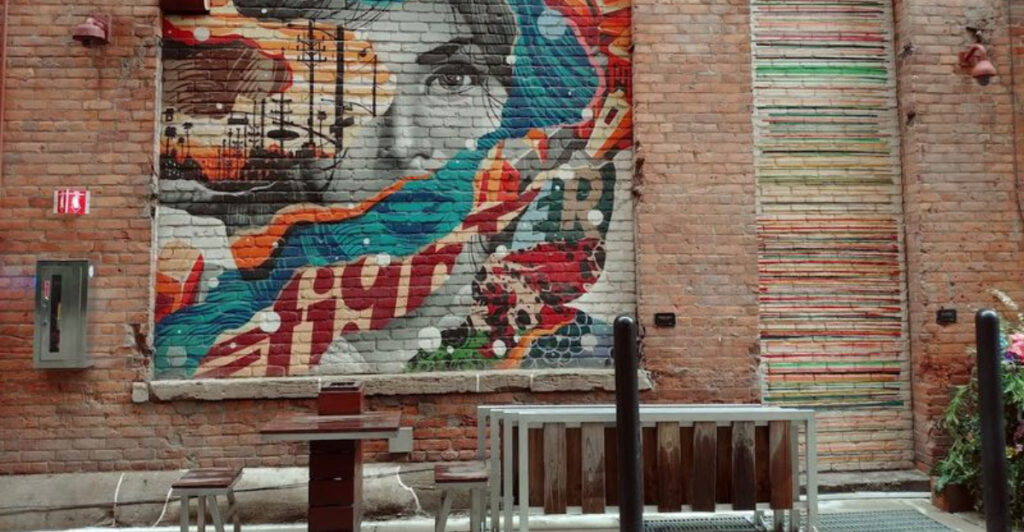
Tucked between Library Street and Broadway in the heart of downtown Detroit, The Belt is an open-air alley that somehow packs the energy of an entire neighborhood into one narrow corridor. Walls covered in bold murals, string lights overhead, and the faint sound of music spilling from hidden bar doors make this place feel like a city secret that everyone already knows about.
Whether you show up at noon with a camera or at midnight looking for a good drink, The Belt delivers something different every single time. It is one of those rare spots in Detroit where art, food, nightlife, and raw urban character all collide in the most natural way possible.
The Street Art That Covers Every Inch of the Alley
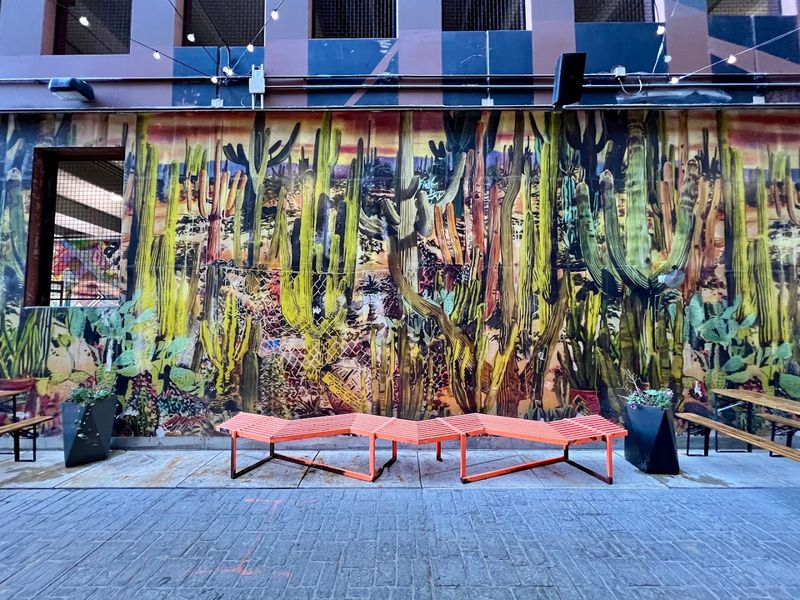
Walking into The Belt for the first time, the walls hit you before anything else does. From ground level to roofline, nearly every surface is painted.
Not tagged or scrawled, but carefully composed works from artists who clearly had something to say and enough wall to say it on.
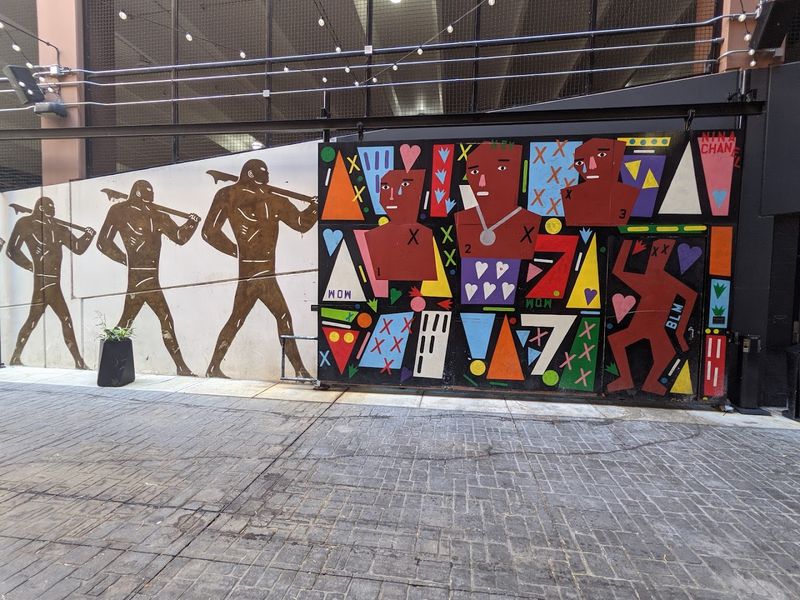
The styles shift dramatically from one section to the next. One wall might carry a hyper-realistic portrait with deep shadows and careful linework.
The next could be a geometric explosion of color that almost vibrates when the light catches it just right. A few pieces lean abstract, letting the viewer figure out the meaning on their own.
Both local Detroit artists and international names have contributed work here, which gives the alley a layered, almost global feel without losing its Motor City roots. You can sense the different hands behind each piece, the different intentions, the different conversations each artist was trying to start.
Daytime is the move if you want to actually see everything. Natural light picks up details that artificial lighting tends to flatten out, and you can take your time moving wall to wall without a crowd pressing you forward.
That said, some visitors swear the art looks better at night when the overhead string lights cast warm tones across the paint.
A few pieces are interactive or three-dimensional in small ways, designed to reward the people who stop and look closely rather than just snapping a quick photo. The Belt is technically open around the clock, so there is no wrong hour to show up.
But slow down. Walk the length of it twice.
The second pass always reveals something the first one missed.
The Hidden Bar Doors That Reward the Curious
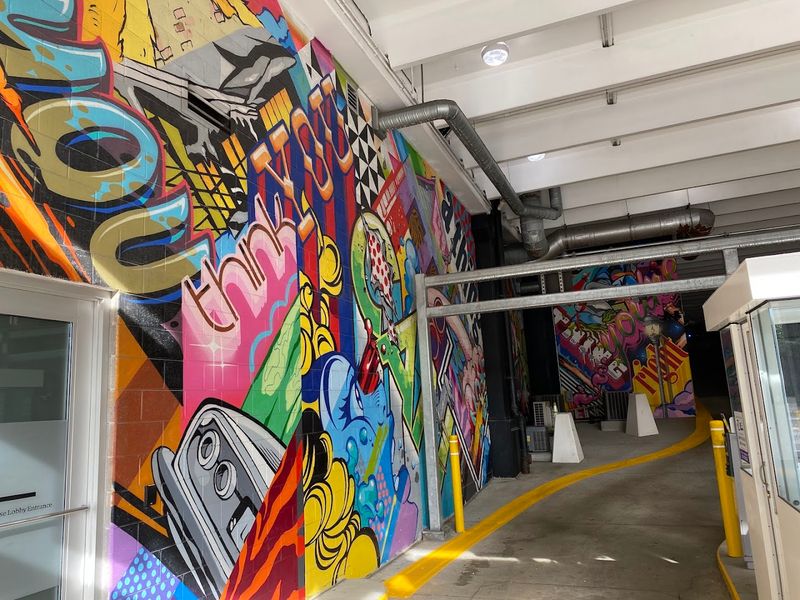
Part of what makes The Belt feel like more than just a walkthrough is the way certain doors seem to appear out of nowhere. Painted to blend into the surrounding murals or marked with nothing more than a subtle sign, the bars tucked into this alley operate almost like an inside joke for people who pay attention.
Standby is one of the most talked-about spots in the corridor. The entrance is understated, which is kind of the whole point.
Step inside and the vibe shifts completely from the open alley outside. Low lighting, a thoughtful cocktail list, and the kind of crowd that showed up because they actually wanted to be there rather than just because it was the obvious choice.
The Skip is another bar along the alley that carries a similar energy. Compact, intentional, and easy to miss if you are walking too fast.
Locals tend to know exactly which door to push, while first-timers sometimes walk past twice before spotting the entrance.
What makes these bars work as part of The Belt is that they do not try to dominate the space. They exist alongside the art rather than competing with it.
You can grab a drink and wander back outside, standing in the alley with your glass while looking at a mural. That combination is genuinely rare in any city.
The cocktail programs tend to lean creative rather than predictable, which fits the overall character of the corridor. Nobody comes to The Belt looking for a standard bar night.
They come because the whole package, the art, the hidden doors, the string lights above, adds up to something that feels specific to Detroit and nowhere else.
Deluxx Fluxx and the Live Music Energy
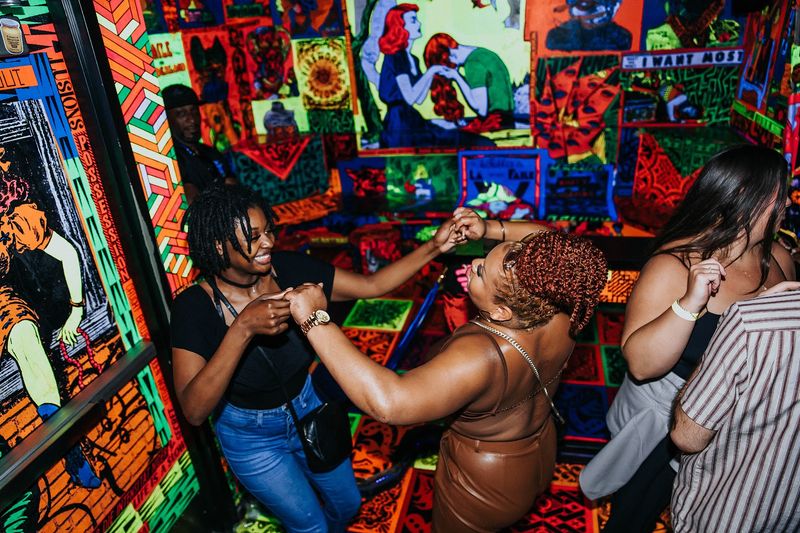
If the murals outside are the visual heartbeat of The Belt, then Deluxx Fluxx is the audio equivalent. This bar and live music venue sits within the alley’s orbit and brings a completely different kind of energy to the space.
Loud, playful, and unapologetically over the top in the best possible way.
The interior design leans into pop art and neon in a way that feels intentional rather than gimmicky. Pinball machines, bold graphics, and an overall aesthetic that seems designed to make you feel like you walked into someone’s very specific creative vision.
It is a sharp contrast to the more stripped-down cocktail bars nearby, and that contrast is exactly what makes the whole strip interesting.
Live events and DJ nights happen regularly, drawing crowds that tend to be younger and energetic. The music skews toward hip-hop and R&B on certain nights, which aligns with what several visitors have noted about the vibe feeling especially right for fans of those genres.
Free Wi-Fi, clean restrooms, and attentive security are things that get mentioned often by people who have been, small details that add up to a more comfortable night out.
Even if live music is not the main reason you came to The Belt, walking past Deluxx Fluxx when a set is in full swing has a way of pulling you in. The sound carries into the alley, mixing with the general hum of foot traffic and conversation in a way that feels organic rather than forced.
Events change, so checking what is on before you go is a good call. Some nights are quiet and low-key.
Other nights the place is packed and the energy spills right back out into the corridor where the murals are watching.
The Day-to-Night Transformation of the Corridor
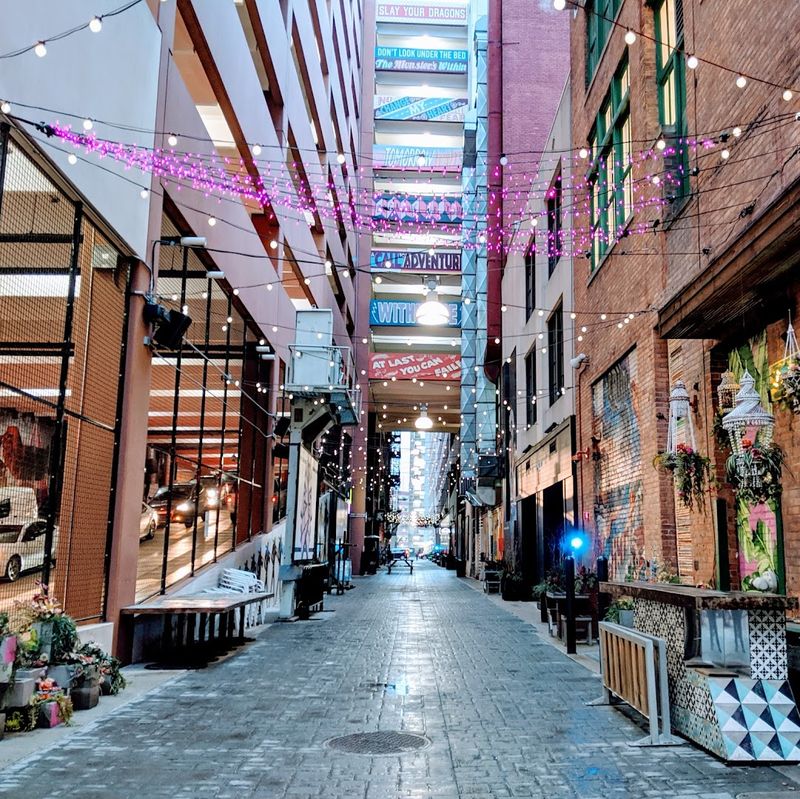
One of the more quietly interesting things about The Belt is how completely different it feels depending on when you show up. The physical space is the same narrow corridor either way, but the mood shifts so dramatically between day and night that it almost reads like two separate places sharing the same address.
During the day, the alley is calm and unhurried. Natural light floods in from above, hitting the painted walls at angles that bring out texture and color in ways that evening lighting simply cannot replicate.
Photographers tend to favor the daytime hours for this reason. The details in the murals are sharper, the colors more saturated, and the space is usually quiet enough to stop and actually study what is in front of you.
As the afternoon fades, The Belt starts warming up in a different way. The string lights strung overhead begin to matter more.
They cast a soft, amber glow across the alley that softens the edges of everything and gives the whole corridor a kind of lived-in warmth. Foot traffic picks up.
Music starts leaking out from the bar doors. Groups gather near the restaurant windows that open directly onto the alley.
By late evening, the energy is fully different. Conversations overlap.
People linger longer. The murals take on a new quality in artificial light, some colors popping more dramatically, others receding into the shadow in ways that create unintentional drama.
Regulars often recommend visiting both times if your schedule allows. An afternoon walk through followed by a return trip after dark gives you a more complete read on what The Belt actually is.
It is not just a photo backdrop or just a nightlife spot. It manages to be both, and neither version cancels the other out.
Food and Drink Options Right Inside the Alley
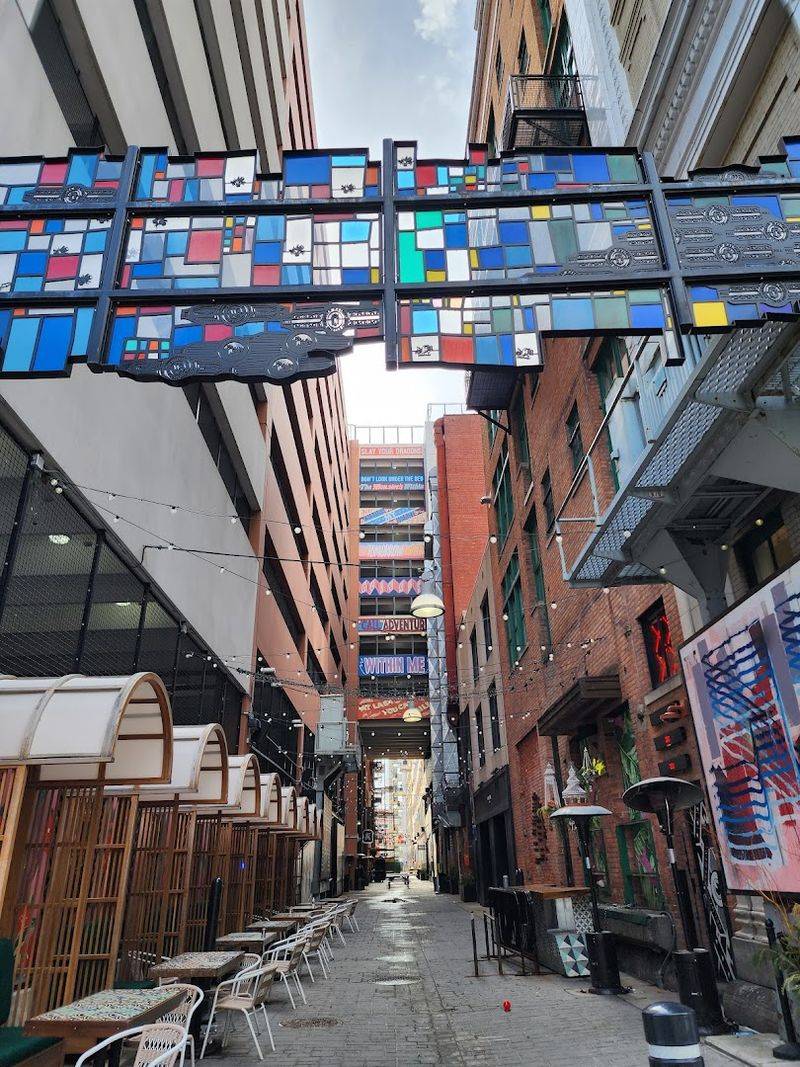
The Belt is not a food destination in the way that a restaurant row would be, but eating and drinking here is still very much part of the package. Several spots along the corridor either face directly into the alley or have windows and doors that open onto it, creating a kind of casual, open-air dining feel that works especially well when the weather cooperates.
On warmer evenings, outdoor seating spills into the alley itself. Tables get pushed close to the painted walls, and people end up eating dinner with a mural as their backdrop.
It is an oddly comfortable setup that feels more European than Midwestern, though the food and the crowd are unmistakably Detroit.
The range of options nearby covers a decent amount of ground. Cuban cuisine, pizza, salads, and bar snacks are all within easy reach either inside the alley or just steps away on the surrounding streets.
None of these spots require a reservation or a formal plan. The general approach at The Belt tends toward showing up, seeing what looks good, and figuring it out from there.
Drinks are easy to come by as well. Beyond the cocktail bars tucked into the corridor, several spots offer beer and casual drinks that you can carry back outside while you walk.
That freedom to wander with a drink while looking at art is part of what gives The Belt its relaxed, unhurried energy even when the alley is busy.
For visitors who are already in the downtown area exploring Campus Martius or Greektown, The Belt makes a natural stop for a mid-afternoon drink or a late dinner. The proximity to other landmarks means you rarely have to go out of your way to work it into a longer day of exploring the city.
What The Belt Says About Detroit’s Comeback Story
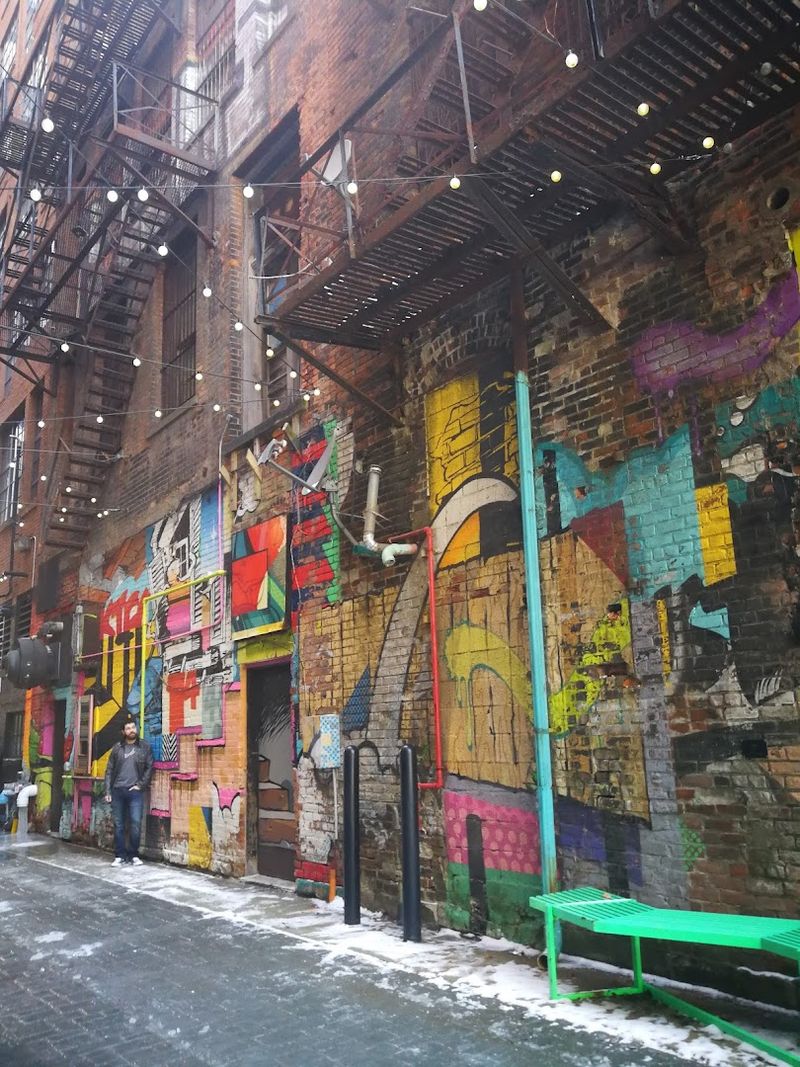
There is a version of Detroit that still lives in the national imagination as a cautionary tale. Empty buildings, cracked streets, a city that time left behind.
The Belt exists in direct conversation with that narrative, not by ignoring it, but by building something colorful and alive right in the middle of downtown.
The alley itself is part of a broader effort to reimagine how urban space can function. Rather than treating a narrow back corridor as dead infrastructure, the people behind The Belt turned it into a canvas, a gathering place, a destination.
That shift in thinking reflects something larger happening across downtown Detroit, where old spaces are being reconsidered and rebuilt with a different kind of ambition.
Visitors who have spent time in the city often note that The Belt feels like evidence rather than argument. You do not need to be told that Detroit is changing.
You can see it on the walls, hear it in the music coming from the bars, and feel it in the foot traffic moving through an alley that was probably ignored for decades before someone decided to cover it in art.
The international artists who have contributed murals alongside local Detroit talent give the space a sense of connection to something beyond the city limits. Detroit is not just talking to itself here.
The Belt signals outward, saying that this city has something worth paying attention to again.
None of this erases the complicated history or the ongoing challenges that still exist in parts of the city. But The Belt does not pretend to be a solution to everything.
It is a single alley, doing one specific thing well. And sometimes that is exactly what a comeback looks like up close, one block at a time, one painted wall at a time.
Tips for Getting the Most Out of Your Visit to The Belt
The Belt sits at 1274 Library Street in downtown Detroit, connecting Gratiot Avenue to Grand River between Broadway and Library Street. It is a short walk from Campus Martius Park, and the surrounding blocks are dense with other things worth seeing, so building a few hours into a downtown afternoon makes a lot of sense.
Getting there is straightforward. Public transportation options run through the downtown core, and the alley is very walkable from most central Detroit locations.
Parking is available nearby if you are driving in, though navigating downtown on foot tends to be more enjoyable than hunting for a spot.
The Belt is open around the clock, which means there is genuinely no wrong time to visit. That said, the experience changes significantly depending on the hour and the day.
Weekday afternoons tend to be quiet and unhurried. Weekend evenings get lively.
If you want the murals to yourself, go early on a weekday morning. If you want the full nightlife energy, Friday or Saturday after dark is when the corridor really comes alive.
Wear comfortable shoes. The alley is short enough that you will walk it more than once, and the surrounding streets are worth exploring on foot as well.
The neighboring parking structures are also covered in murals, which many visitors overlook entirely.
Checking local event listings before you go is a smart move. Pop-up art shows, live performances, and special events happen in and around The Belt with some regularity, and showing up on a night when something is happening adds a whole different layer to the visit.
Admission to walk the alley itself is always free, which makes it one of the more accessible things to do in downtown Detroit regardless of your budget.