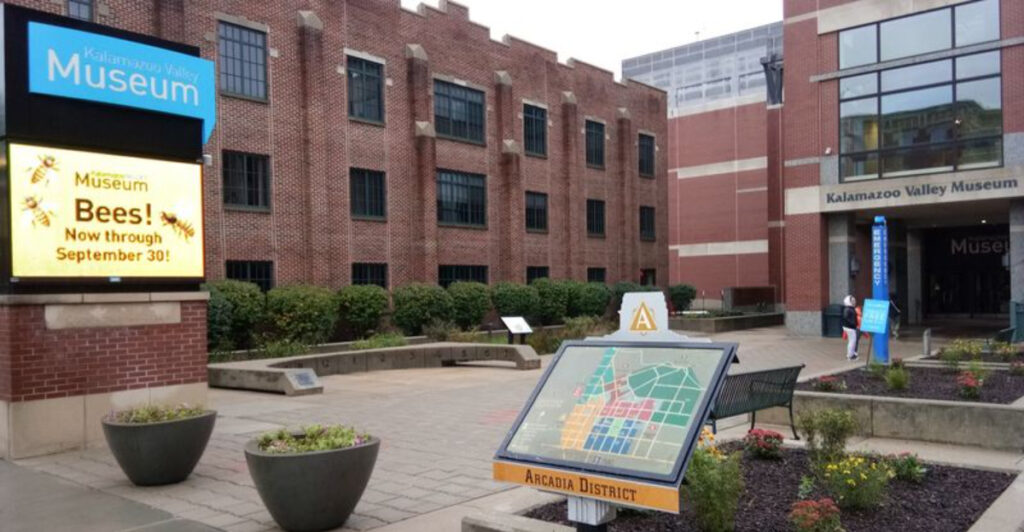
Right in the heart of downtown Kalamazoo, there’s a museum that doesn’t ask you to keep your hands to yourself. The Kalamazoo Valley Museum at 230 N Rose St is the kind of place where kids drag their parents from one exhibit to the next, and adults end up just as absorbed.
With a planetarium, rotating exhibits, deep local history, and free admission, it punches well above its size. Whether you’re a lifelong Kalamazoo resident or just passing through, this place has a way of surprising you.
Free Admission That Actually Means Free

Walk up to the front desk at the Kalamazoo Valley Museum and you’ll notice something refreshingly uncommon: there’s no ticket booth, no entry fee, and no donation guilt trip waiting for you at the door. Admission here is genuinely free, and that changes the whole vibe of a visit.
Families who visit with multiple kids know how fast museum costs can pile up. At most places, you’re budgeting before you even step inside.
Here, that mental math disappears entirely, which means you can show up on a whim, stay for two hours or five, and leave without any financial stress attached to the memory.
Several visitors have mentioned stopping in spontaneously, without any prior planning, and walking away glad they did. One reviewer described killing time before a train departure and being genuinely surprised by how much was packed into the building.
That kind of low-stakes accessibility is rare.
The only real cost tied to a visit is parking, typically in the garage nearby. That’s a small trade-off for everything inside.
The museum sits about a block and a half from the Kalamazoo train and bus station, which makes it easy to work into travel layovers or afternoon errands.
Free doesn’t mean bare-bones here. The building is well-maintained, clean, and clearly cared for.
Staff members are present and approachable, the exhibits are thoughtfully arranged, and nothing about the space feels neglected or underfunded.
There’s something almost counterintuitive about a museum this well-put-together offering no-cost entry. It removes the barrier entirely and lets the content speak for itself.
On rainy days especially, local families treat it like a reliable go-to, and that regularity says more than any review could.
The Planetarium Experience Worth Sitting Still For
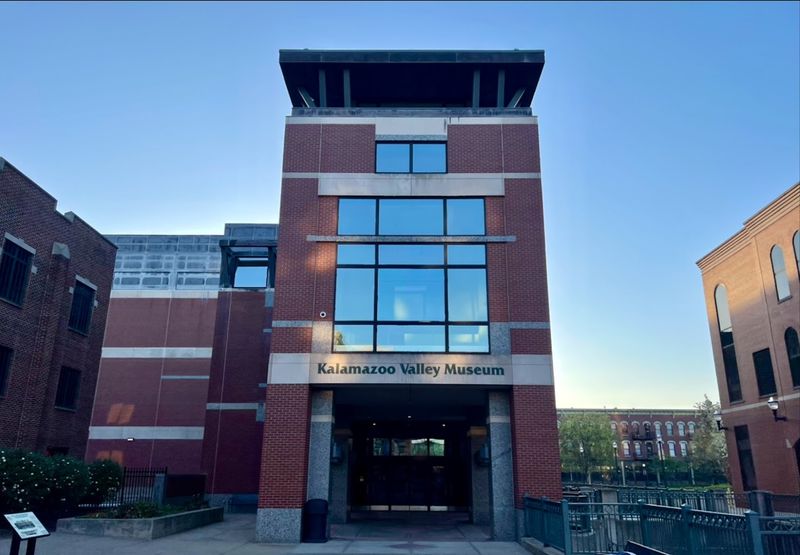
There’s a particular kind of quiet that settles over a room when the planetarium lights go down at the Kalamazoo Valley Museum. The dome overhead fills with stars, and for a few minutes, the noise of everyday life just drops away.
It’s one of those rare situations where both a restless six-year-old and a tired adult can genuinely check out from the world at the same time.
The planetarium hosts a rotation of shows, including programs that cover cosmic exploration and astronomy in ways that feel accessible rather than overwhelming. Sound quality is solid, visuals are clear, and the staff running the shows tend to bring real enthusiasm to the presentation.
One visitor described having a one-on-one conversation with a planetarium worker after a show and getting a thoughtful answer to a question that had been on their mind for years. That kind of personal engagement is hard to plan for but easy to appreciate.
Seating is assigned, which keeps things organized and avoids the scramble for good spots. Booking in advance is a smart move, especially on weekends or during school holiday periods when families tend to fill the schedule quickly.
The shows aren’t exclusively aimed at children. Programs like Cosmos Odyssey have drawn adult visitors who came in with low expectations and left genuinely impressed.
The planetarium holds its own as a standalone reason to visit, not just a bonus feature tucked at the end of a tour.
If you’re planning a trip and haven’t factored in planetarium show timing, it’s worth checking the schedule before you arrive. The shows run on a set timetable, and missing one by fifteen minutes means waiting for the next slot.
A little planning goes a long way here.
Hands-On Exhibits That Keep Kids Moving
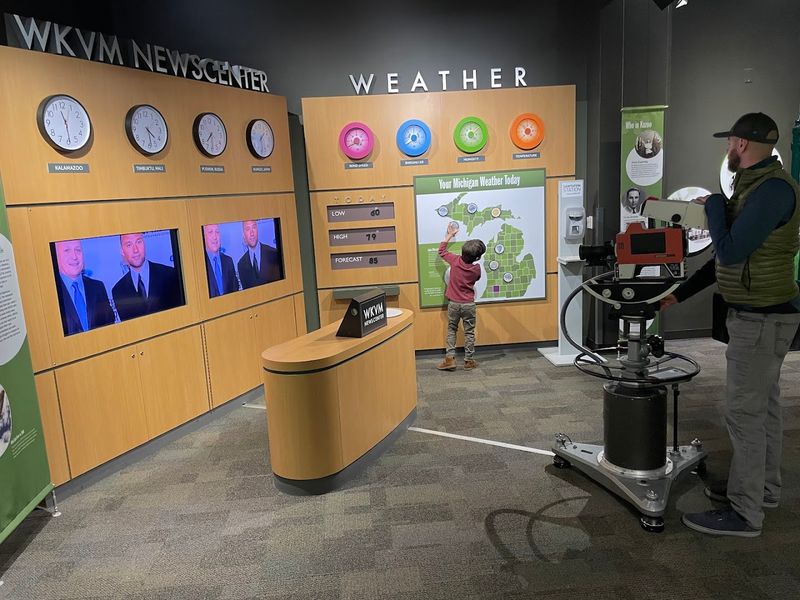
Most museums have a few interactive stations scattered between the glass cases. The Kalamazoo Valley Museum leans the other direction entirely.
Hands-on activities aren’t the exception here, they’re the rhythm of the whole place. Kids move through exhibits touching, pressing, building, and exploring rather than trailing behind adults reading wall text.
Visitors consistently mention how well the interactive elements hold children’s attention. A six-year-old who would normally check out after twenty minutes of a traditional museum can stay engaged here for a couple of hours without any coaxing.
The activities are designed to be physically involved, which matters more than most museum designers seem to realize.
It’s not just younger kids who get pulled in. The exhibits are layered in a way that gives older children and adults something to chew on too.
You’re not just pressing a button to make a light flash. Some displays ask you to think, compare, or make a choice, which keeps the engagement from feeling shallow.
The layout of the building moves across multiple floors, and each level carries a different focus. That variety helps break up the visit naturally.
When one area starts to feel familiar, there’s usually something different waiting one floor up or around the next corner.
Parents who visit on weekdays with younger children often describe the museum as a genuinely useful outlet for energy, especially on days when outdoor options aren’t available. It’s the kind of place that earns its reputation not through marketing but through repeat visits from the same families.
One detail that stands out: the museum stays clean and well-maintained even with high foot traffic from children. That takes real effort, and it shows in how comfortable the space feels to move through.
The Children’s Area For The Youngest Explorers

Tucked inside the museum is a dedicated space built specifically for the smallest visitors, the ones who are still figuring out how doors work and why everything goes in their mouth. The children’s area is aimed at kids roughly five and under, and it’s designed with that age group’s particular brand of chaos in mind.
Parents of toddlers know the challenge of bringing very young children to spaces that weren’t built for them. Here, the environment is scaled and paced appropriately.
There’s room to move, things to touch, and enough visual interest to hold a one-year-old’s attention without overwhelming them. More than one parent has described watching their baby light up in this section in a way that made the whole trip feel worth it.
The area operates on limited hours compared to the rest of the museum, so it’s worth confirming the schedule before building your visit around it. That’s a small but important detail, especially if the children’s room is the main draw for your group.
It’s worth noting that some visitors have had mixed experiences with staff management style in this area. One reviewer felt that the supervision approach felt overly restrictive for what is essentially a play space.
That kind of feedback is worth keeping in mind, though most reviews of the section are positive.
For families with children who aren’t quite old enough to engage with the main exhibits, this room provides something genuinely useful. It means the whole family can visit together without the younger kids being left out or dragged along disinterestedly through galleries built for older ages.
The rest of the museum doesn’t disappear while you’re in here. It’s waiting just outside when your little one is ready for more.
Kalamazoo History Preserved In Unexpected Ways
Before visiting the Kalamazoo Valley Museum, plenty of people don’t realize how much history this city has quietly accumulated. The museum does a solid job of surfacing stories that don’t always make it into mainstream Michigan narratives.
One of the more talked-about sections involves the city’s deep connection to Gibson guitars, a relationship that shaped American music in ways most visitors don’t fully appreciate until they’re standing in front of the display.
Kalamazoo was once home to Gibson’s main manufacturing operations, and the museum honors that legacy with a dedicated area. For anyone who plays guitar or follows music history, this section has a pull that’s hard to explain until you’re there.
It’s specific, local, and genuinely interesting rather than a generic nod to a famous name.
Beyond the guitar history, the museum holds artifacts and exhibits covering broader Kalamazoo heritage. One visitor was surprised to learn that Kalamazoo was historically nicknamed Windmill City, a detail that didn’t appear in anything they’d read before the visit.
That’s the kind of small discovery that makes local history museums worth exploring.
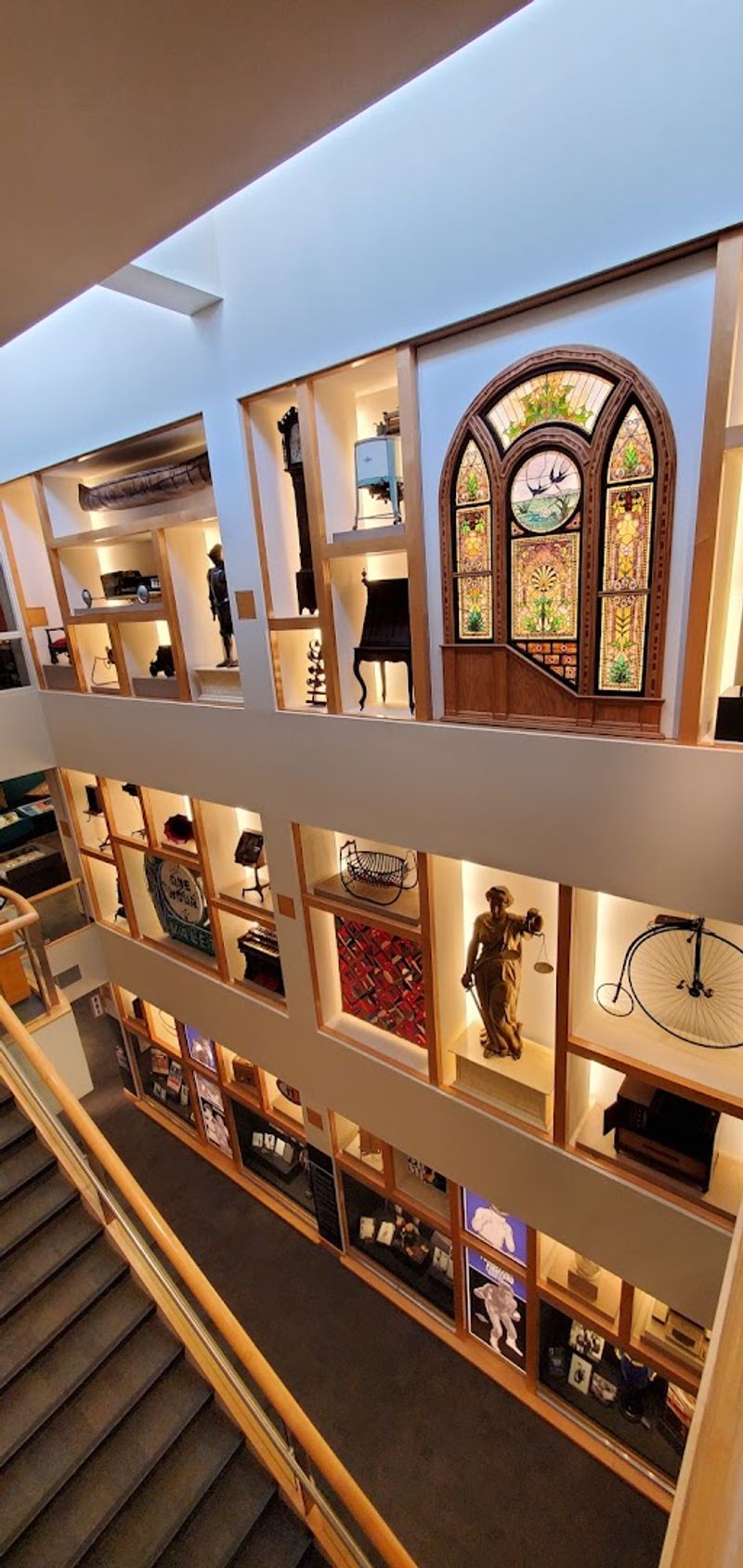
A standout feature mentioned by multiple visitors is a large wall display of old artifacts that can be explored via tablets positioned between floors. The ability to zoom in and learn about individual objects adds a layer of depth that a static display case can’t offer.
It bridges the gap between old-school curation and modern interactivity in a way that feels natural rather than forced.
The history on display here isn’t presented as dusty or distant. It connects to the city you’re standing in, which gives it a grounding quality that more polished exhibits sometimes lose.
Kalamazoo’s story feels lived-in here, not archived.
Rotating Special Exhibits That Give You A Reason To Return

One of the quieter strengths of the Kalamazoo Valley Museum is that it doesn’t stay exactly the same between visits. The upper floor in particular rotates exhibits on a regular basis, which means returning visitors often find something new waiting for them.
That alone changes how the museum sits in your mind: less like a destination you check off and more like a place you circle back to.
Past rotating exhibits have drawn visitors from well outside the immediate area. The Ray Harryhausen exhibit, which featured the work of the legendary stop-motion animator behind classic films like Jason and the Argonauts, brought in fans who made the trip specifically for that show.
The museum handled a traveling exhibition of that caliber with care, and visitors noted that the pieces were well-preserved and thoughtfully presented.
The mummy display is another section that gets mentioned frequently. It’s described as compact but genuinely cool, the kind of exhibit that earns a longer look than you initially planned to give it.
Not every rotating feature needs to be sprawling to leave an impression.
For local families who visit regularly, the changing top floor is a reliable way to keep the museum feeling fresh. A child who explored the building six months ago will find something different waiting on their next visit, which keeps the curiosity alive rather than letting familiarity flatten it.
Checking the museum’s website before a visit is a practical move if you want to know what’s currently on display. The programming calendar tends to reflect genuine variety, mixing science, history, and pop culture in ways that feel considered rather than random.
Some exhibits have limited runs, so timing matters more than it might with the permanent collection.
The Fretboard Festival And Live Music Connection
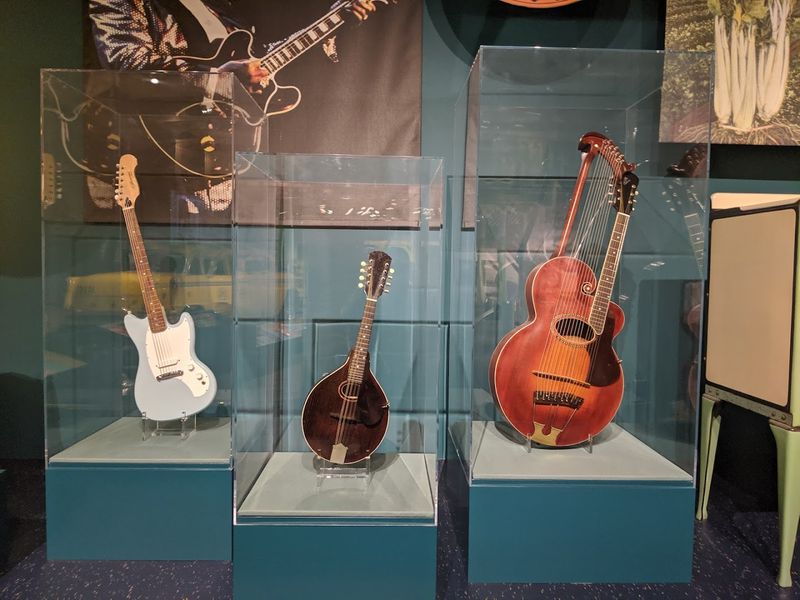
Once a year, the Kalamazoo Valley Museum transforms into something that feels less like a museum visit and more like stumbling into a celebration of everything stringed and handmade. The Fretboard Festival brings luthiers, instrument makers, musicians, and music fans together in a way that takes full advantage of the building’s multiple floors and the adjoining performance space.
Booths line the galleries with handcrafted guitars, basses, and other instruments. Pop-up jam sessions break out across the floors without much warning, which gives the whole event an unscripted energy that planned concerts rarely manage to replicate.
You might turn a corner and find a bluegrass duo playing three feet away from a display of hand-wound pickups. That kind of proximity to live music is genuinely hard to find outside of a festival setting.
The free outdoor performances in the adjoining building add another layer to the day. Visitors have described the lineup as varied and high-quality, with acts covering a range of styles that reflect the broader musical culture of the region.
One reviewer gave a specific shout-out to a performance by Luke Lenhart and The Green Valley Boys featuring Susan Mora, calling it wonderful music in a setting that made it feel even more special.
For anyone with even a passing interest in guitar craft or American music history, the Fretboard Festival is a compelling reason to plan a trip to Kalamazoo. The museum’s connection to Gibson’s legacy gives the event a context that feels earned rather than manufactured.
The festival draws crowds, so arriving early gives you a better shot at unhurried time with the instrument makers and a good spot for the performances. It’s a different kind of museum day entirely, and one that’s hard to replicate anywhere else in the state.