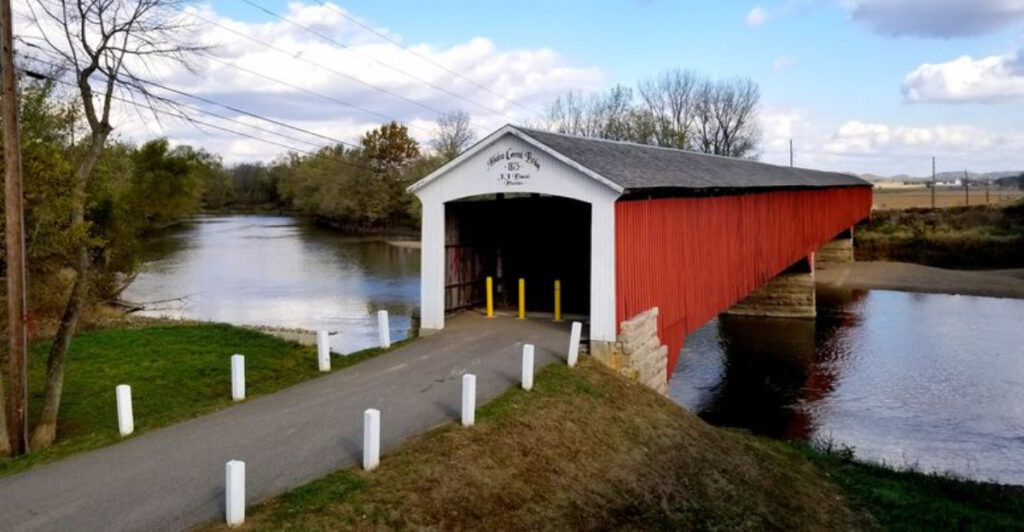
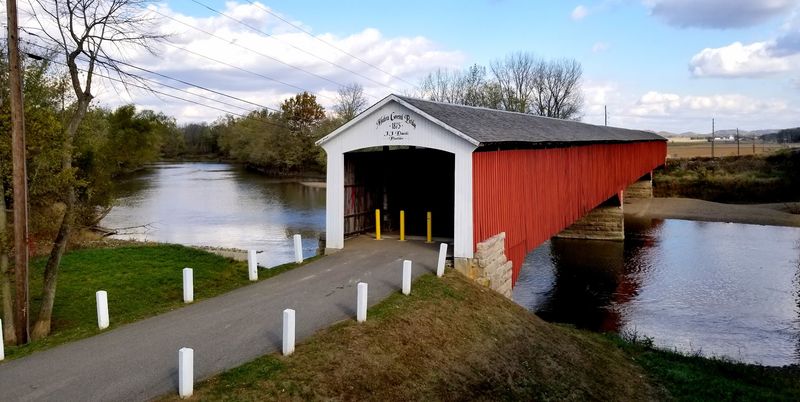
Indiana is home to many historic landmarks, but few are as impressive as the Medora Covered Bridge. Spanning the East Fork White River near the small community of Medora, this remarkable structure holds the distinction of being the longest historic covered bridge in the United States.
Its massive size, picturesque setting, and rich history make it one of Indiana’s most fascinating attractions. Visitors can walk its full length, admire the craftsmanship that has endured for generations, and experience a piece of American engineering history firsthand. For travelers seeking a unique Indiana destination, this iconic bridge is well worth the detour.
A Bridge That Looks Longer Than Your Eyes Expect
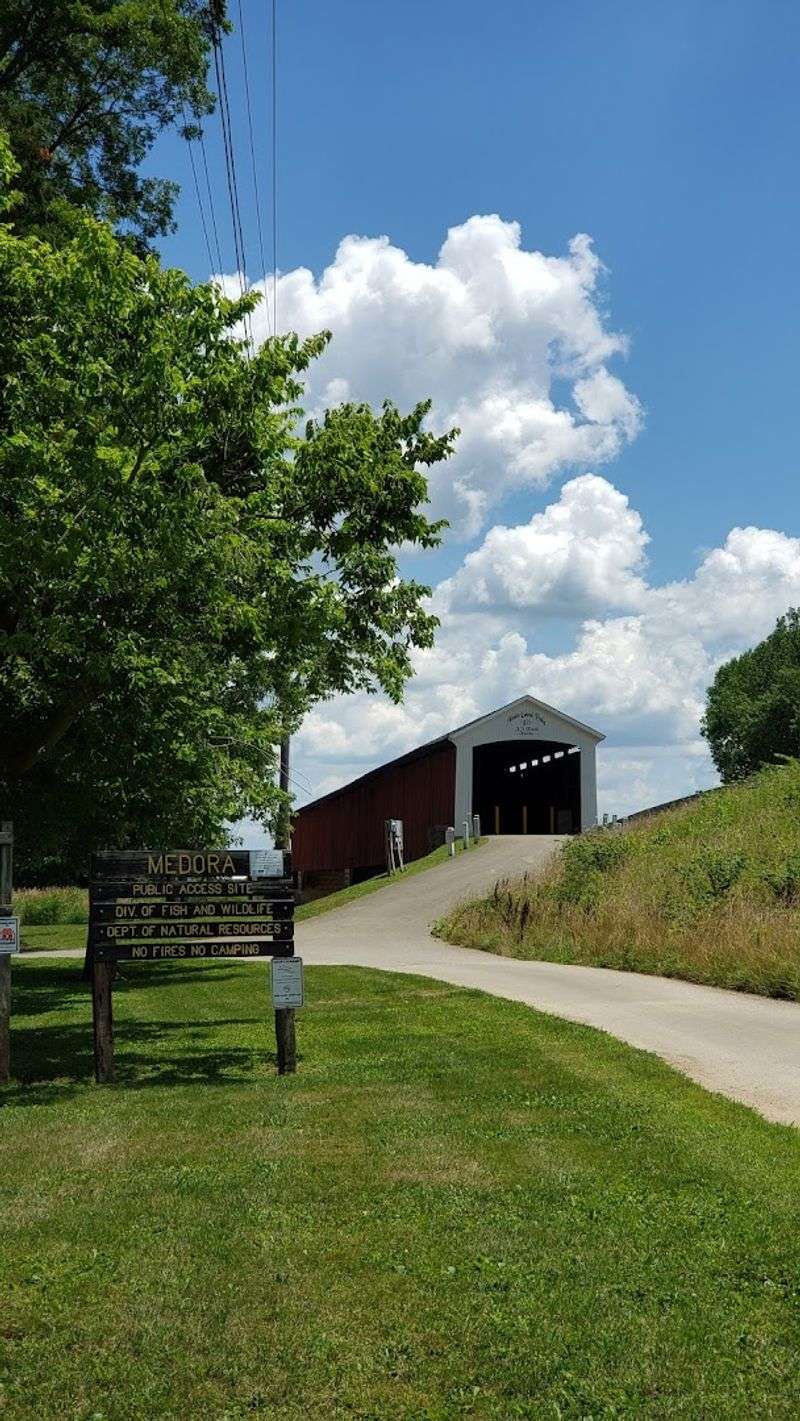
The first surprise at the Historic Medora Covered Bridge is pure scale. Covered bridges usually register as quaint, compact, and postcard friendly, but this one stretches so far that the far end seems to keep backing away as you approach.
Standing near the entrance, you get an immediate sense that this is not a decorative relic dropped into a park, but a serious piece of nineteenth century infrastructure that still dominates its river crossing.
Its long profile is the headline, yet the proportions matter just as much. The structure does not look bulky or clumsy from the outside, even with its unusual length, because the roofline stays clean and the sides maintain that unmistakable barn red presence so many people associate with classic American covered bridges.
Set against trees, open sky, and water nearby, the bridge reads like a bold horizontal line drawn straight through the landscape.
Walking closer sharpens the effect. The entrance frames a tunnel of timber and shadow, and the repeated geometry inside pulls your eyes forward in a way that makes the distance feel even more dramatic.
That visual rhythm is part of why the bridge photographs so well from both ends, especially when light slices through the openings and catches the wooden members at different angles.
There is also something refreshing about how little clutter competes with the bridge itself. You are not sorting through a dense commercial district or a crowded attraction to understand why this place matters.
In Vallonia, the bridge gets room to be exactly what it is: a massive historic landmark with enough length, structure, and presence to stop conversation for a minute and make you simply stare.
Inside the Timber Tunnel
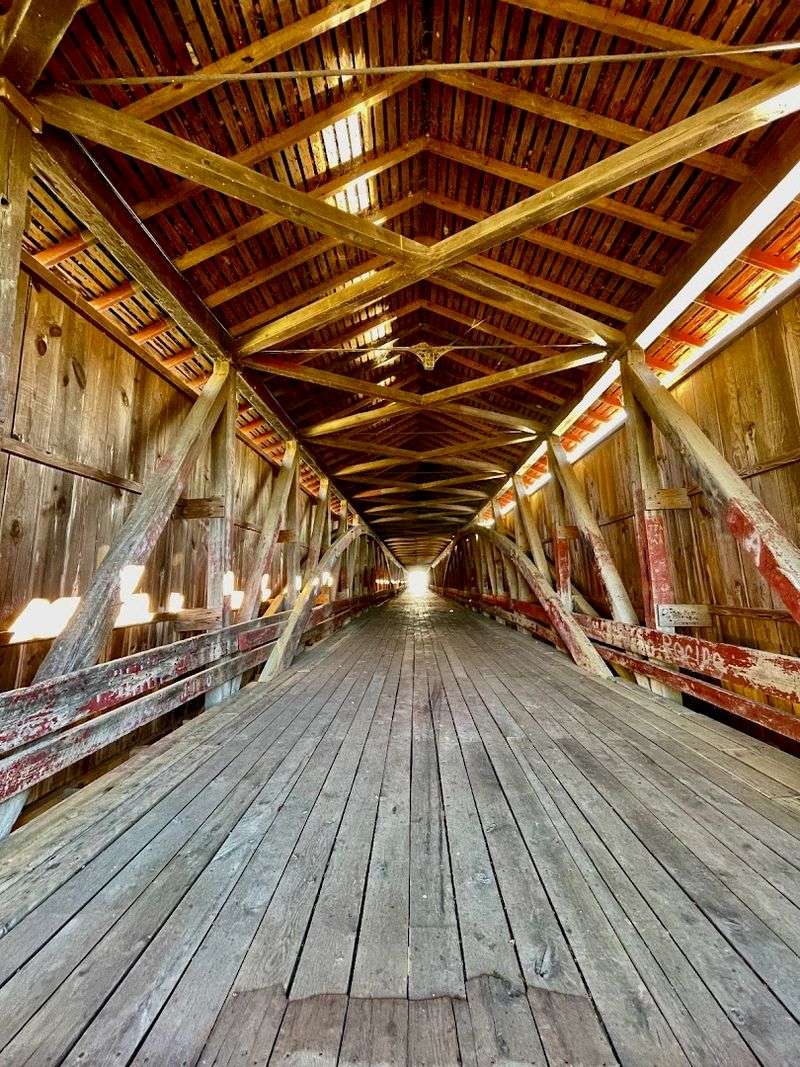
Step inside, and the bridge shifts from scenic object to full architectural experience. The exterior gives you the broad statement, but the interior delivers the detail, with heavy timber members repeating overhead and along the sides in a pattern that feels both practical and unexpectedly elegant.
Instead of a plain passage, you get a long wooden corridor where every brace, joint, and beam contributes to a strong sense of depth.
The length changes how the structure is read from within. On a shorter covered bridge, the eye usually takes in the whole crossing almost instantly, but here the view unfolds in segments, one framed section after another.
Light enters through openings at the sides, creating alternating bands of brightness and shade that pull your attention forward while also revealing the texture of the wood grain, fasteners, and worn surfaces.
Because vehicles no longer roll through, you can focus on the construction without distraction. That pedestrian access matters, since it lets you slow down enough to notice how the bridge was built to endure movement, weather, and time rather than just to look charming in photographs.
The interior woodwork is the real argument for stopping here, and even people who arrive mostly curious about the bridge’s record-setting length often end up talking about the craftsmanship instead.
There is a quiet discipline to the design that becomes clearer the farther you walk. Nothing feels ornamental for the sake of ornament, yet the cumulative effect is striking because repetition, proportion, and natural materials do so much visual work.
By the midpoint, the bridge no longer reads like a simple historic landmark on a map. It reads like a lesson in how beauty can emerge from structural necessity.
Where Indiana History Meets the River
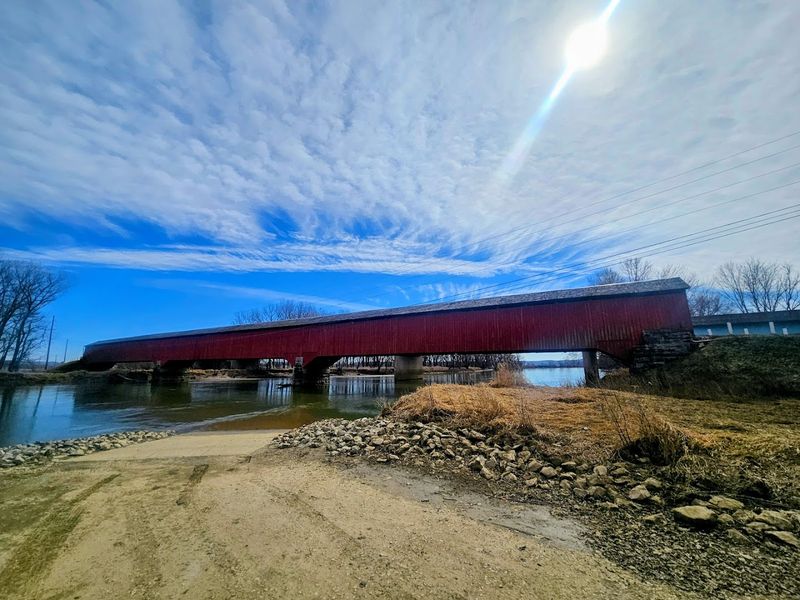
The setting gives the Historic Medora Covered Bridge much of its power. This is not a bridge boxed in by development or reduced to a roadside oddity wedged between traffic and utility poles.
It stands beside the East Fork White River with enough open space around it that you can understand the crossing as part of a real landscape, not just as an isolated artifact preserved for display.
That river connection matters visually and historically. Water, low banks, and broad sky make the bridge appear even longer, while the nearby access area reinforces that this site has always been about movement across and along the river corridor.
When you look from the park side toward the bridge, the relationship between land, timber, and water feels immediate, giving the place a grounded, working character rather than a staged museum mood.
The small park elements help without stealing attention. Picnic tables, open areas, and a boat launch create a simple, useful frame around the landmark, which makes the site easy to enjoy whether you came for photographs, a short stop, or an unhurried lunch by the water.
You can watch the river, glance back toward the bridge, and understand why this location works so well for families, road trippers, and anyone hunting for a scenic detour that does not demand a full day.
It is also one of those places where the surrounding calm improves the structure itself. Wind moving through trees, a bit of river activity, and the absence of heavy commercial noise let the bridge hold the scene naturally.
Instead of competing with the environment, the Medora bridge seems anchored by it, which is exactly why the site reads as both a landmark and a landscape in one stop.
Three Spans, One Remarkable Survivor
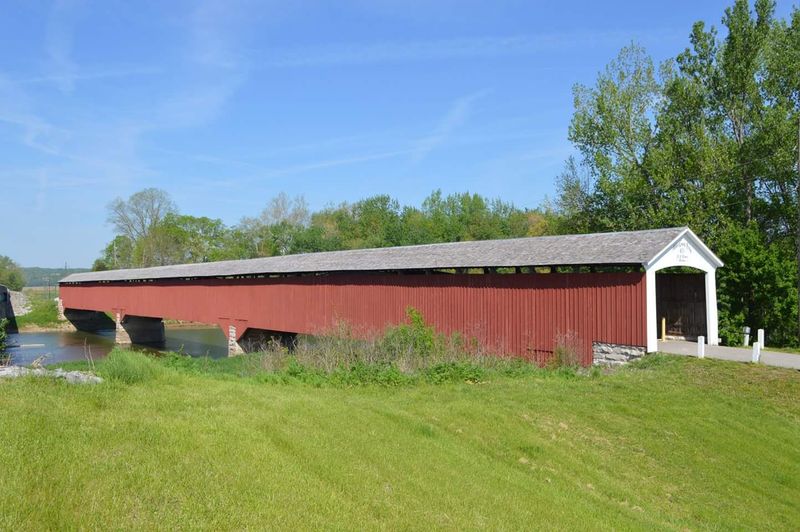
One of the most interesting parts of the Medora bridge is that its size is not a gimmick. The structure is notable because of how it is put together, especially its multi-span form, which gives it a very different presence from the shorter covered bridges scattered around the Midwest.
That design turns the bridge into more than a scenic stop. It becomes an engineering story visible at a glance. Even if you arrive without a technical background, the bridge communicates complexity through repetition and scale.
The long body is broken into sections in a way that keeps it balanced visually, while the interior and side views reveal how much planning went into carrying length across the river without losing stability.
You do not need to read a textbook to see that this was ambitious work, and that ambition is part of the attraction.
Historical landmarks sometimes end up flattened into a single fact, but the Medora bridge resists that. Yes, it is often identified as America’s longest historic covered bridge, and that superlative certainly gets attention.
Once you are on site, though, the headline gives way to a more interesting reaction: how did builders create something this extensive in wood, and how has it retained such commanding character so many years later?
The bridge also benefits from being readable. You can stand outside and appreciate the full silhouette, then walk inside and watch the system of supports reveal itself piece by piece.
That progression keeps the visit engaging because the bridge is not used up in one look. Its length draws you in, its structure keeps you interested, and its survival across generations gives every detail more weight.
The Best Way to Experience the Full Crossing
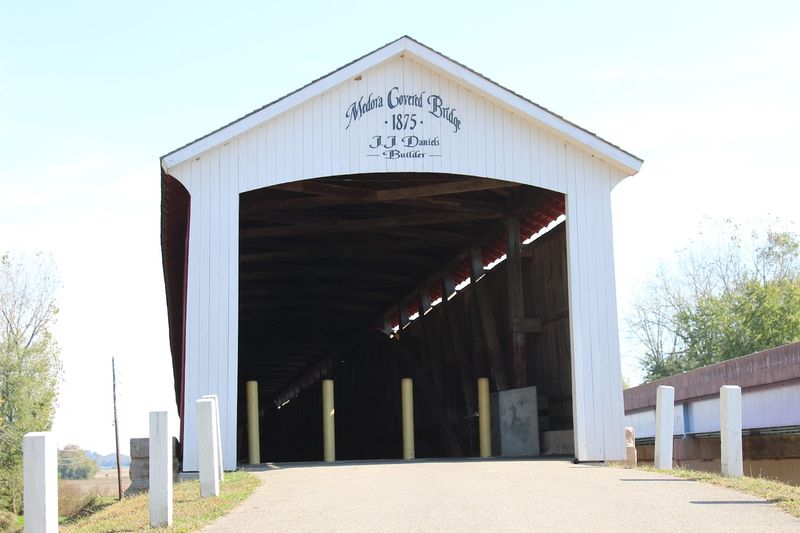
The smartest way to experience the Historic Medora Covered Bridge is simple: park, walk, pause, and then walk it again from the opposite direction.
Because cars no longer cross the bridge, you can take your time and let the structure unfold at a human pace instead of treating it like a background object. That change in speed makes a huge difference, especially on a bridge this long.
Start outside with the broad view, then move into the entrance slowly enough to watch the light change. The first few steps feel compact and enclosed, but as you continue, the rhythm of the framing timbers begins to take over and the length becomes the main event.
Midway through, turning around is worth it, since the perspective back toward the entrance creates an entirely different composition than the one ahead.
Photographers have an easy time here because the bridge supplies strong lines and repeating shapes without much effort. Morning and late day light can sharpen the contrast between shadowed wood and brighter openings, while overcast weather brings out subtler textures in the timber.
Even on a rainy day, the covered interior keeps the visit practical, which is one reason the bridge works well as a stop when conditions elsewhere would cut an outing short.
If you have extra time, pair the crossing with a short stretch by the river or a picnic in the adjacent park. That combination keeps the visit from becoming a quick in and out stop and lets the landmark settle into its surroundings.
The bridge is impressive from a distance, but the full experience comes from movement through it, not just a photo taken beside it.
Easy to Visit, Hard to Forget
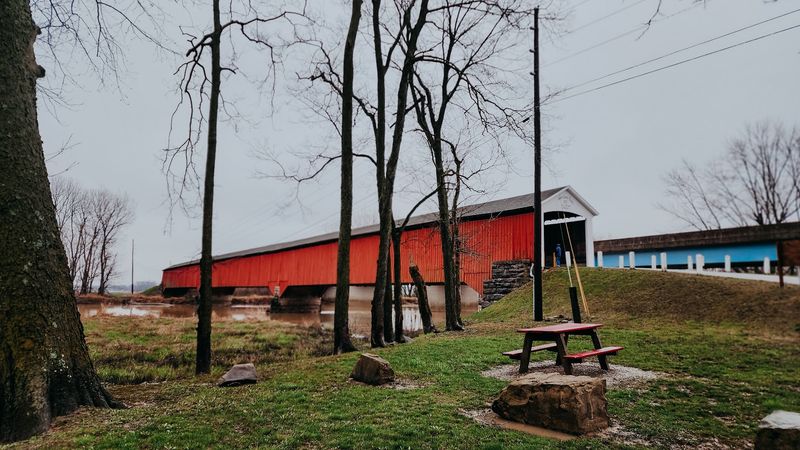
Practical details are refreshingly straightforward here, which adds to the appeal. The Historic Medora Covered Bridge is open all day, and the site is set up in a way that makes a casual stop easy rather than awkward.
There is parking nearby, room to walk, and enough open space around the bridge that you do not spend your visit negotiating crowds, traffic patterns, or a complicated entry process.
That ease makes the landmark especially good for a spontaneous detour. If you are driving through southern Indiana, this is the kind of stop you can fit into a larger day without turning your schedule upside down.
Motorcycle riders, families, history fans, and photographers can all get what they came for without much fuss, which is not always true at historic sites that are visually famous but logistically annoying.
The adjacent park area strengthens the visit because it gives you options. You can stretch your legs, sit at a picnic table, look toward the river, or treat the bridge as one part of a quieter outdoor break instead of a single checkpoint.
For travelers with kids, that flexibility matters. For adults on a road trip, it turns a short historical stop into a more relaxed pause with actual breathing room.
Timing is flexible, but a little strategy helps. Early morning offers softer light and more stillness, while late afternoon tends to flatter the red exterior and deepen the interior shadows.
Even midday works if your goal is simply to walk the span and study the structure. Since the site remains accessible around the clock, you can plan around weather, nearby travel, or whatever kind of pace your day already has.
Why This Vallonia Landmark Earns the Detour
Some landmarks are famous because they are easy to market. The Historic Medora Covered Bridge stands out for a better reason: it offers a genuinely distinctive experience the moment you see its extraordinary length and then changes again once you step inside.
The site combines visual impact, engineering interest, and a peaceful riverside setting in a way that gives you more than one reason to care about it.
That balance is rare. A structure can be historically significant without being especially engaging in person, and a scenic stop can be photogenic without giving you much to explore beyond a single angle.
Medora avoids both problems. The bridge reads well from the outside, rewards close inspection inside, and benefits from surrounding features like the nearby park and river access that make the whole place easier to enjoy.
It also captures a specific Indiana identity without turning into a cliché. Covered bridges belong to the state’s visual vocabulary, but this one pushes beyond nostalgia because the scale is so dramatic and the craftsmanship is so visible.
You are not looking at a small decorative survivor tucked away for enthusiasts only. You are walking through a landmark that still carries the ambition of the era that built it.
If your travel radar favors places with clear character, this bridge deserves space on the map. It works for a fast stop, but it also rewards patience, especially if you walk the full span, study the timber work, and spend a little time by the water afterward.
Long after newer attractions blur together, Vallonia’s great red bridge keeps its edge through size, setting, and the plain fact that almost nothing else looks quite like it.
Share this story