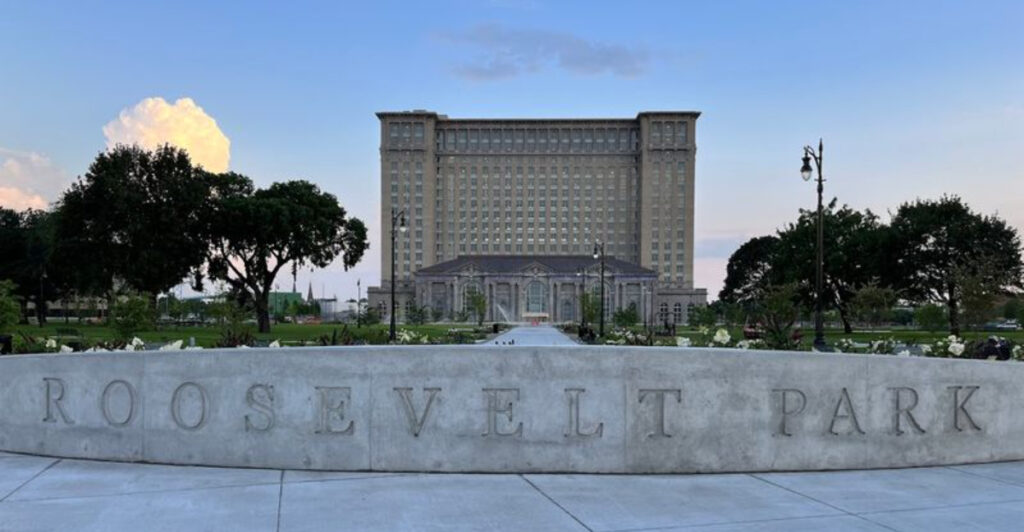
For decades, Michigan Central Station stood as one of Detroit’s most haunting images — a crumbling giant with shattered windows, peeling walls, and a silence that echoed through its once-grand halls. Built in 1913, the Beaux-Arts masterpiece was abandoned in 1988 and left to decay while the city changed around it.
Then Ford Motor Company stepped in, poured years of effort and investment into its bones, and gave it back to Detroit. Today, the station at 2001 15th St in Detroit’s Corktown neighborhood is open, alive, and more stunning than most people imagined possible.
The First Look That Stops You Cold
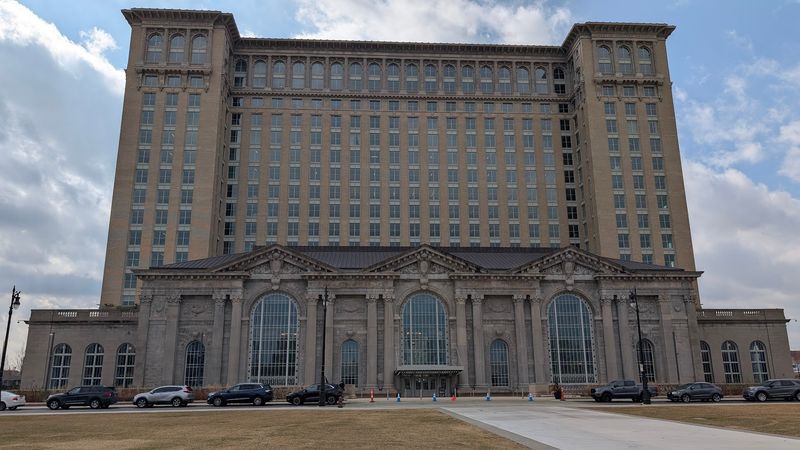
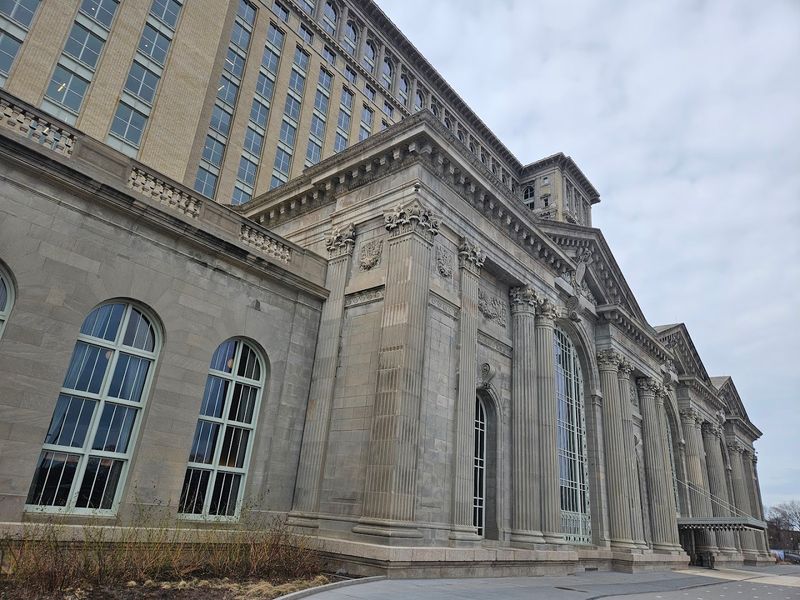
Standing at the corner of 15th Street in Detroit, the sheer size of Michigan Central Station hits before anything else does. The 18-story office tower rising above the main station hall is not subtle.
It commands the skyline of Corktown with the kind of authority that only a century-old stone building can pull off.
The exterior stonework, carved columns, and enormous arched windows along the ground level were designed in the Beaux-Arts style — the same architectural language used for Grand Central Terminal in New York. Up close, the detail is almost overwhelming.
Every carved surface tells you that this building was never meant to be ordinary.
After decades of broken glass and graffiti-covered walls, the restored facade now looks exactly as it was meant to look in 1913. The stone has been cleaned and repaired, the windows replaced with historically accurate designs, and the entrance archways returned to their original grandeur.
People often stop on the sidewalk just to take it in before even walking through the door.
The surrounding area adds to the experience. Roosevelt Park, which sits directly in front of the station, has also been revitalized with winding walking paths, benches, picnic tables, swinging benches, and carefully planted flowers and shrubs.
The park creates a natural frame for the building and gives visitors a place to absorb the full scale of what Ford and its partners pulled off here.
Arriving during morning light, when the sun catches the stone facade at an angle, produces one of the most photogenic moments in all of Detroit. The building practically glows.
For a city that spent years defined by images of urban decay, this view feels like a turning of the page.
Inside the Grand Hall: Where History Meets the Present
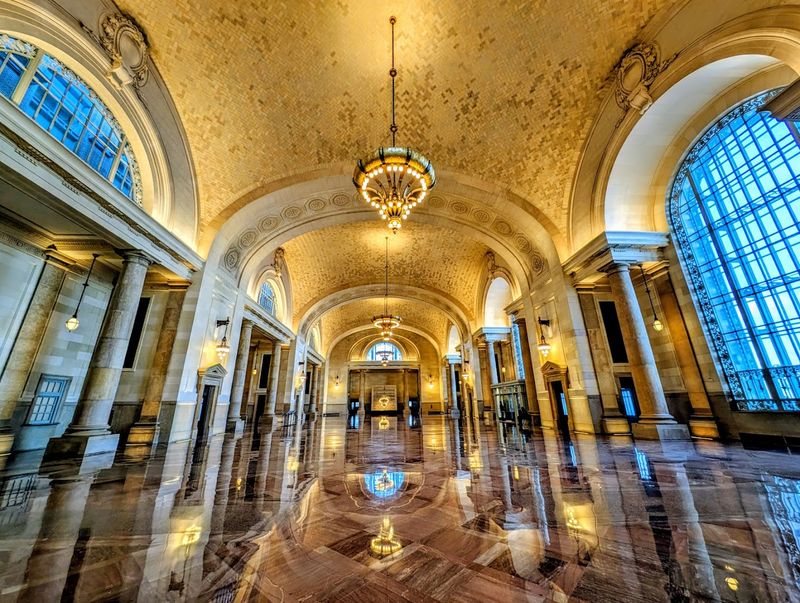
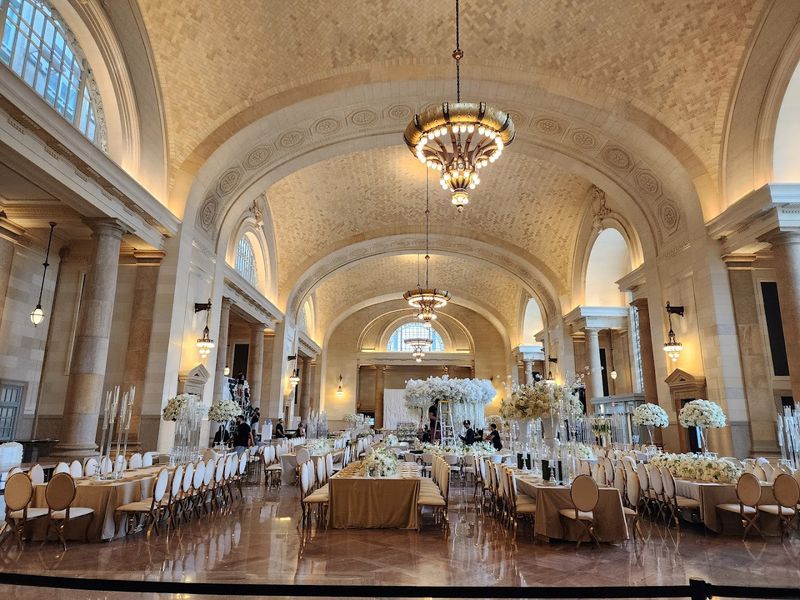
Walking into the main waiting hall for the first time is genuinely disorienting in the best possible way. The ceiling soars nearly 90 feet overhead, covered in restored plasterwork that took skilled craftspeople years to bring back.
Natural light pours through the massive windows, bouncing off polished stone floors that once carried thousands of rail passengers a day.
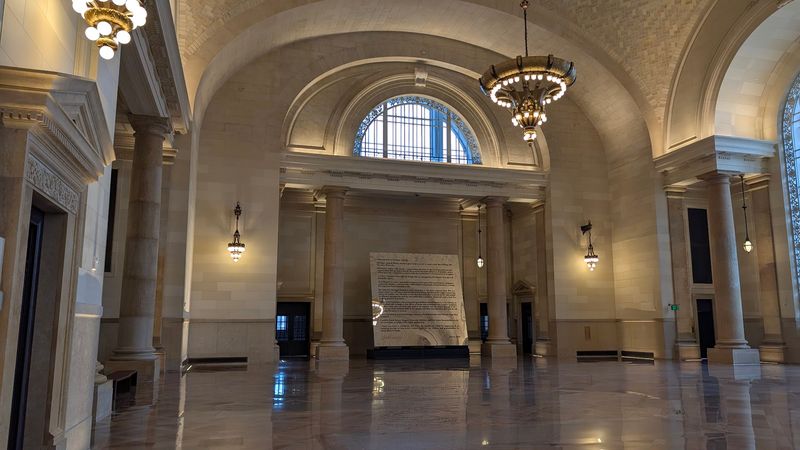
The original stonework and detailed woodwork throughout the hall have been carefully preserved and restored. You can see where old meets new if you look closely — original marble columns standing beside thoughtfully integrated modern lighting, for example.
The design team made a deliberate choice to honor the building’s age rather than disguise it, and that decision pays off at every turn.
Informational displays with photographs and written descriptions are placed throughout the space, giving visitors a self-guided way to understand the station’s history without needing a formal tour. These panels cover everything from the building’s construction and peak years to its long abandonment and the restoration process itself.
People say the photos showing the building mid-decay are some of the most striking parts of the exhibit.
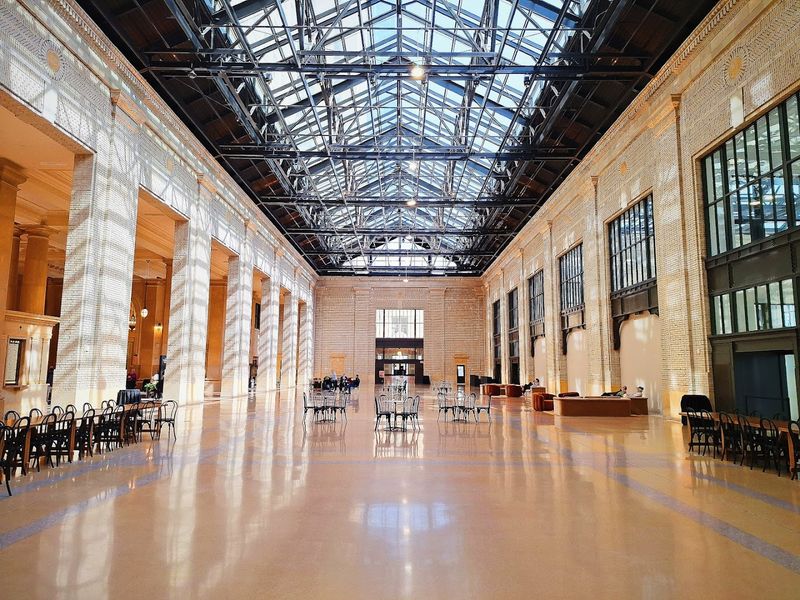
There is a food vendor and cocktail bar operating in the main room, so visitors can grab a drink and simply sit in the hall to absorb the space. A coffee shop is also available for those who prefer something lighter.
The combination of active hospitality and architectural spectacle makes the hall feel inhabited rather than just preserved.
Special events, including candlelight concerts featuring string quartets, have already taken place in the hall. The acoustics carry music beautifully across the open space, filling every corner with sound in a way that smaller venues simply cannot replicate.
The station is a living building now, not a museum piece.
The Ford Motor Company Restoration Story Behind the Comeback
Ford Motor Company purchased Michigan Central Station in 2018, and the announcement sent a jolt of optimism through Detroit. The building had spent 30 years deteriorating under previous ownership, with the Moroun family drawing widespread criticism for allowing such a significant landmark to fall apart.
Ford’s acquisition signaled something different — a commitment backed by real investment and a long-term vision.
The restoration took years and involved hundreds of skilled tradespeople, historians, and architects working to bring the building back without erasing its character. Original materials were sourced and matched wherever possible.
Plaster formulas were recreated to match the original ceiling work. Stone was cleaned using techniques that preserved patina while removing decades of grime.
The level of craft involved is visible in every restored surface.
Ford’s broader plan for the site goes beyond the station building itself. The surrounding Corktown campus is intended to become a hub for mobility innovation, technology, and community programming.
The station serves as the anchor of that vision, connecting Detroit’s industrial past with its ambitions for the future. Several tech and design companies have already established offices within the building.
The transformation since the property changed hands is hard to overstate. Visitors who saw the building in its abandoned state and return today describe the experience as almost surreal.
The same arches that once framed broken windows now frame thriving interior spaces. The same floors that were buried under debris are now polished and welcoming.
Detroit History Tours offers guided tours of the station that go deeper into the restoration story, including access to a staff hallway that once led to the original kitchen. For visitors who want more context than the informational panels provide, the guided experience adds a meaningful layer to the visit.
Michigan’s Most Dramatic Architectural Comeback, Explained
Michigan Central Station opened on December 26, 1913, and was designed by the same architects responsible for Grand Central Terminal — Warren and Wetmore, alongside Reed and Stem. At the time, it was considered one of the finest train stations in the United States.
The main waiting hall, the soaring tower, and the elaborate detailing were all expressions of a city at the peak of its industrial confidence.
Passenger rail traffic through the station peaked during World War II, when troop movements and wartime manufacturing made Detroit a critical hub. After the war, car culture gradually took over, and rail travel declined steadily.
By 1988, Amtrak moved its Detroit operations to a smaller facility, and Michigan Central Station closed its doors for good — or so it seemed.
The building sat empty for 30 years. Nature moved in.
Floors collapsed in sections. Copper was stripped.
Vandals and urban explorers turned the place into an internationally known symbol of Detroit’s struggles. Photographs of the ruined interior circulated widely, making the station one of the most recognizable examples of urban decay anywhere in the world.
That backstory makes the current restoration land with extra weight. The building’s dramatic arc — from gleaming civic landmark to cautionary ruin to fully restored public space — mirrors Detroit’s own complicated journey through the late 20th century and into a more optimistic present.
Visitors who know the history tend to move through the space more slowly, taking in details with an awareness of what almost was lost permanently.
Architectural details that survived the abandonment, including original brass fixtures, carved stone friezes, and sections of the original terrazzo flooring, are highlighted throughout the building. These surviving elements are treated as treasures rather than afterthoughts, which gives the restoration a sense of genuine reverence.
What To Do When You Visit Beyond Just Looking Around
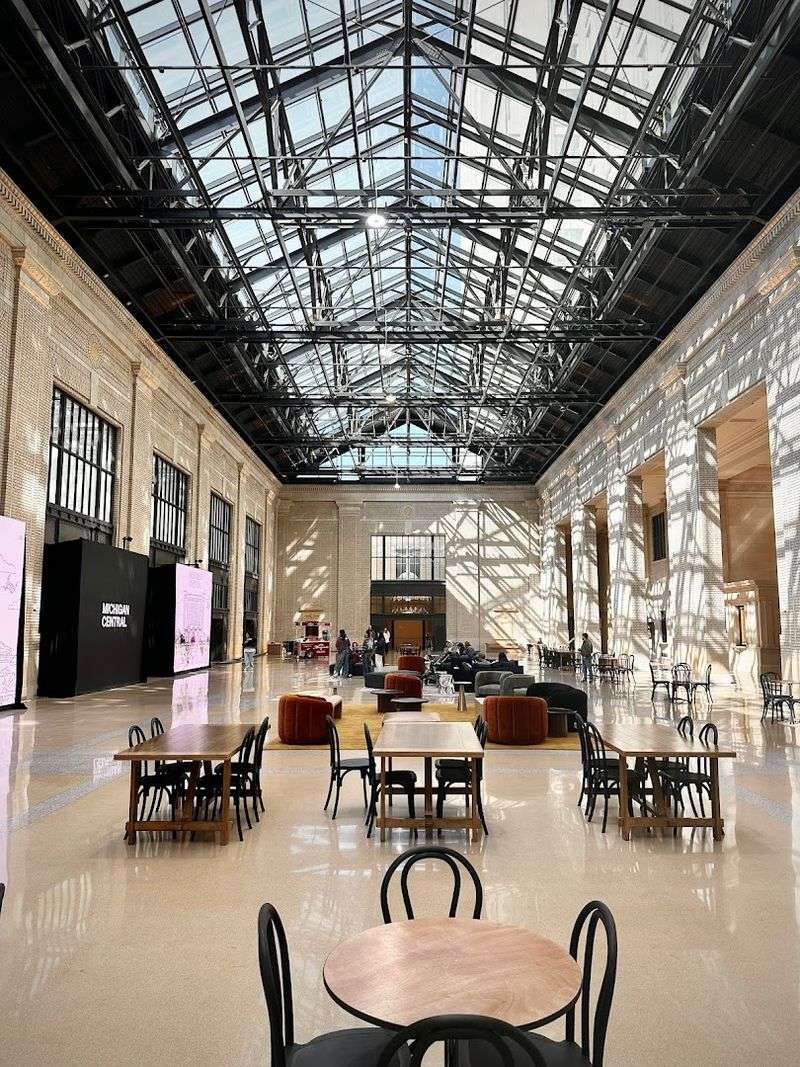
Plenty of historic buildings offer nothing more than a look around, but Michigan Central Station has built out an actual visitor experience. The gift shop carries Michigan-themed merchandise and station-specific items worth browsing even if you are not a big souvenir person.
A second gift shop is also accessible to the public, and both are open during regular station hours.
The coffee shop is a genuine draw on its own. Tucked into the station’s ground floor, it offers a comfortable spot to slow down after walking the main hall.
People say it is the kind of place that encourages lingering, especially when the light coming through the tall windows hits the space just right in the morning hours.
Families with kids will find the station surprisingly welcoming. Activity tables with coloring pages have been set up for younger visitors, giving children something hands-on to engage with while adults take in the architecture.
The space is open enough that kids can move around comfortably without feeling like they are in a strictly hands-off museum environment.
Community programming adds another dimension to the visit. Events like the Neighborhood by Folk Clay Club meetings show that the station is being used as a genuine gathering place for Detroit residents, not just a tourist attraction.
Checking the station’s event calendar before visiting is worth the effort, since live performances, seasonal decorations, and community events can dramatically change the atmosphere.
A larger luxury restaurant is also on the property for visitors looking for a full dining experience. The combination of casual coffee, cocktails, food vendors, and upscale dining means there is a comfortable option regardless of what kind of visit you are planning.
The station functions as a neighborhood destination as much as a landmark.
Planning Your Visit: Timing, Parking, and What To Expect
Michigan Central Station is open seven days a week from 8 AM to 5 PM, which makes it easy to work into almost any schedule. Morning visits tend to offer the best light inside the main hall, and weekday mornings are noticeably quieter than weekend afternoons.
Arriving within the first hour of opening gives visitors more space to move through the hall without crowds.
Parking requires a bit of planning. Street parking is available on the blocks directly surrounding the station and is free, though spots fill up quickly on busy days.
A paid parking lot is located about a block away from the main entrance, and a walking shortcut makes the distance manageable for most visitors. For anyone with mobility challenges, being dropped off at the entrance is the most practical option, since there is no close parking immediately adjacent to the building.
Access inside the station can vary depending on what events or programming are scheduled on a given day. Some areas may be restricted during private events or active work sessions.
The publicly accessible sections — the main hall, the gift shops, the coffee shop, and the informational exhibits — are generally available during all operating hours.
Guided tours are available through Detroit History Tours and require advance booking. The tour lasts approximately 90 minutes and includes areas not accessible to general visitors, such as the former staff hallway near the original kitchen.
The self-guided experience using the informational panels throughout the building is genuinely informative on its own, so the tour is worth adding only if you want deeper historical context.
Pairing the station visit with other nearby Corktown spots makes for a full afternoon. The neighborhood has developed significantly in recent years, with restaurants, bars, and independent shops all within easy walking distance of the station entrance on 15th Street.
Why Detroit Needed This Moment More Than Any Other City
Detroit has carried the weight of its own narrative for a long time. Images of abandoned factories, empty lots, and crumbling buildings defined how the outside world understood the city for decades.
Michigan Central Station was the single most recognizable symbol in that story — the one photograph that showed up in every documentary, every article, every conversation about urban decline in America.
Reclaiming that symbol matters in a way that goes beyond architecture or real estate. When the station reopened to the public, it did not just give Detroit a restored building.
It gave the city a different image to lead with, one that represents recovery, craft, and forward momentum without pretending the hard years never happened. The restoration does not hide the building’s age or its story — it incorporates both into the experience.
Community response has been genuinely enthusiastic. Detroiters who grew up watching the building decay describe visiting the restored station as an emotional experience.
For many, it is the first time they have been able to walk through a space they had only ever seen from the outside or in photographs of its ruined state. The pride visible among local visitors is a distinct part of the atmosphere inside the hall.
The station also represents a model worth paying attention to. Large-scale historic preservation backed by private investment, paired with genuine public access and community programming, is not a common combination.
Michigan Central pulls it off in a way that keeps the space from feeling like a corporate showroom or a closed-off headquarters.
For anyone who cares about cities, history, or architecture, this building is one of the most compelling places to visit in the entire Midwest right now. Detroit built something extraordinary here once, lost it for a generation, and brought it back.
That story deserves to be seen in person.