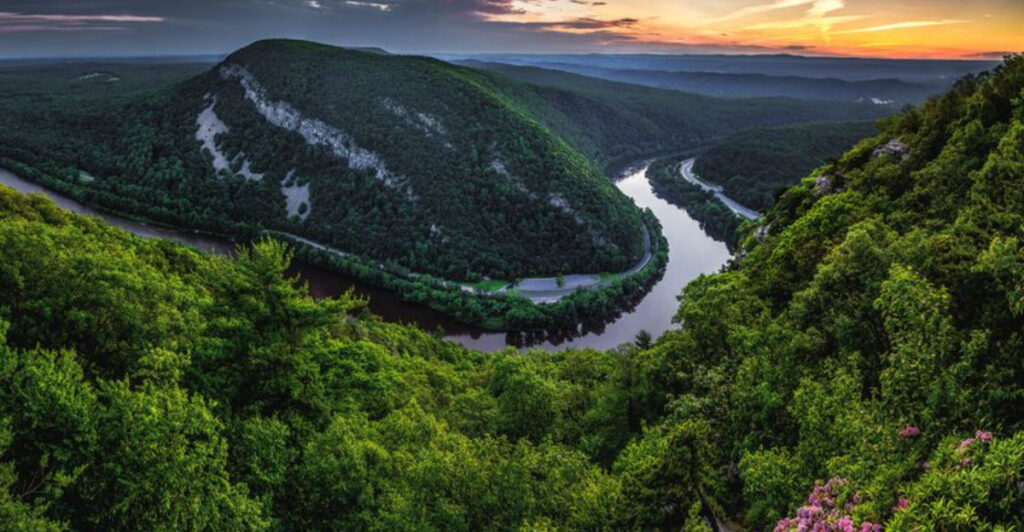
If you want a hike that feels bigger than a typical day on the trail, this Pennsylvania stretch of the Appalachian Trail delivers. The route from Fox Gap to Delaware Water Gap packs in ridgeline miles, rocky viewpoints, deep forest, and a finish that feels genuinely memorable. I love this section because it gives you that borderland thrill while staying rooted in Pennsylvania’s wild beauty—and part of what makes it special is that you’re hiking right along the edge of two states at once, where Pennsylvania meets New Jersey along the Delaware River corridor in the Delaware Water Gap area. Depending on your exact path and viewpoints along the ridgeline, you can catch glimpses into both sides of the borderland landscape, with forested peaks on one side and the river carving its way between states below.
It adds a subtle sense of crossing into something broader than a single trail system, even when your boots stay firmly on the Appalachian Trail. The terrain itself keeps that feeling going, shifting between steady climbs, uneven rock sections, and stretches where the forest opens just enough to remind you how expansive the landscape really is. It never feels repetitive, and there’s a rhythm to it—climb, view, descent, repeat—that builds as you move deeper into the hike. By the time you reach the end, you will feel like you experienced far more than a simple point-to-point walk.
1. Why This Pennsylvania Section Feels So Special
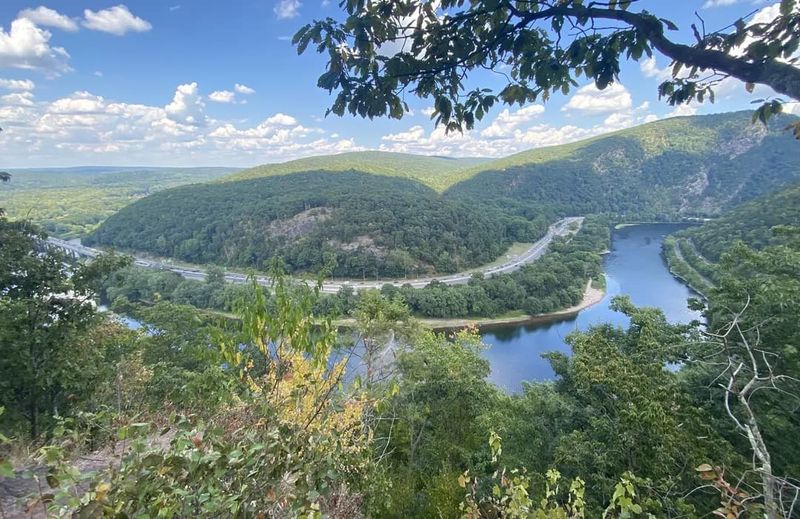
This stretch of the Appalachian Trail in Pennsylvania feels like a full adventure packed into one day, especially because it follows a striking borderland region where Pennsylvania and New Jersey meet around the Delaware Water Gap.
You get long forested miles, rugged rocks underfoot, and sweeping overlooks that make every bit of effort feel earned, with views that occasionally stretch across the Delaware River into New Jersey’s ridgelines on the opposite side.
What makes it stand out is how the landscape keeps shifting without losing its wild Appalachian character—one moment you are moving through quiet woods on the Pennsylvania side, and the next you are standing above the Delaware Water Gap itself, where the river cuts between both states and opens up wide, layered views in every direction.
It is also one of those hikes that feels bigger than the mileage suggests, starting near Fox Gap with a sense of possibility and carrying you through terrain that constantly hints at that Pennsylvania–New Jersey boundary, before finishing near one of Pennsylvania’s most iconic natural landmarks along the Delaware River.
By the end, you have not just gone for a walk—you have followed a memorable piece of Pennsylvania trail history shaped by a truly two-state landscape.
2. Starting Out at Fox Gap
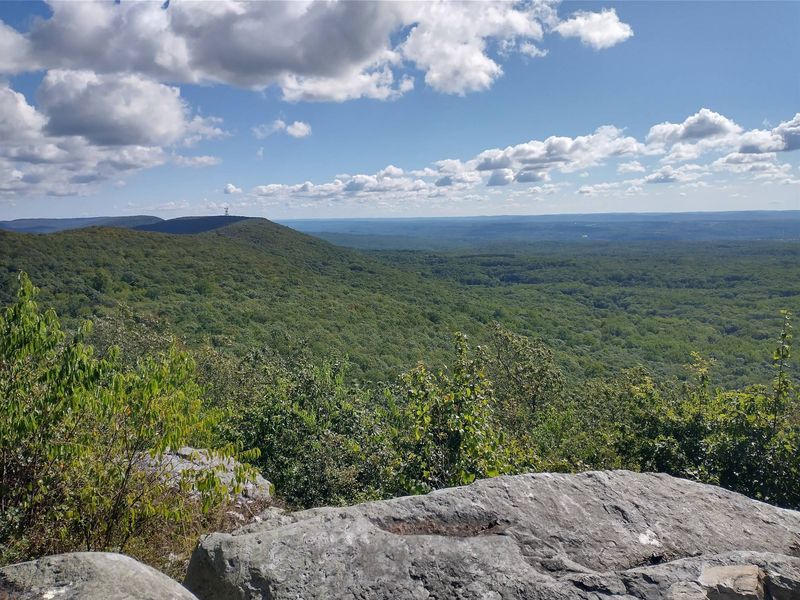
Fox Gap is a strong starting point because it eases you into the day with just enough anticipation.
The trailhead feels tucked into Pennsylvania’s wooded landscape, and there is a quiet energy there before the miles begin.
I always think this kind of start helps set the tone for a more immersive hike.
Once you step onto the trail, you quickly leave road noise behind and settle into the forest.
The path introduces the route with that familiar Pennsylvania mix of packed earth, exposed roots, and the rocky footing the state is known for.
It is a reminder to pace yourself early and save energy for the bigger views ahead.
Fox Gap also works well for hikers who want a point-to-point day instead of a quick out-and-back.
Starting here gives the journey a sense of momentum that builds naturally toward Delaware Water Gap.
That feeling of moving toward something distinct makes the miles easier to appreciate.
3. Settling Into the Forested Ridge
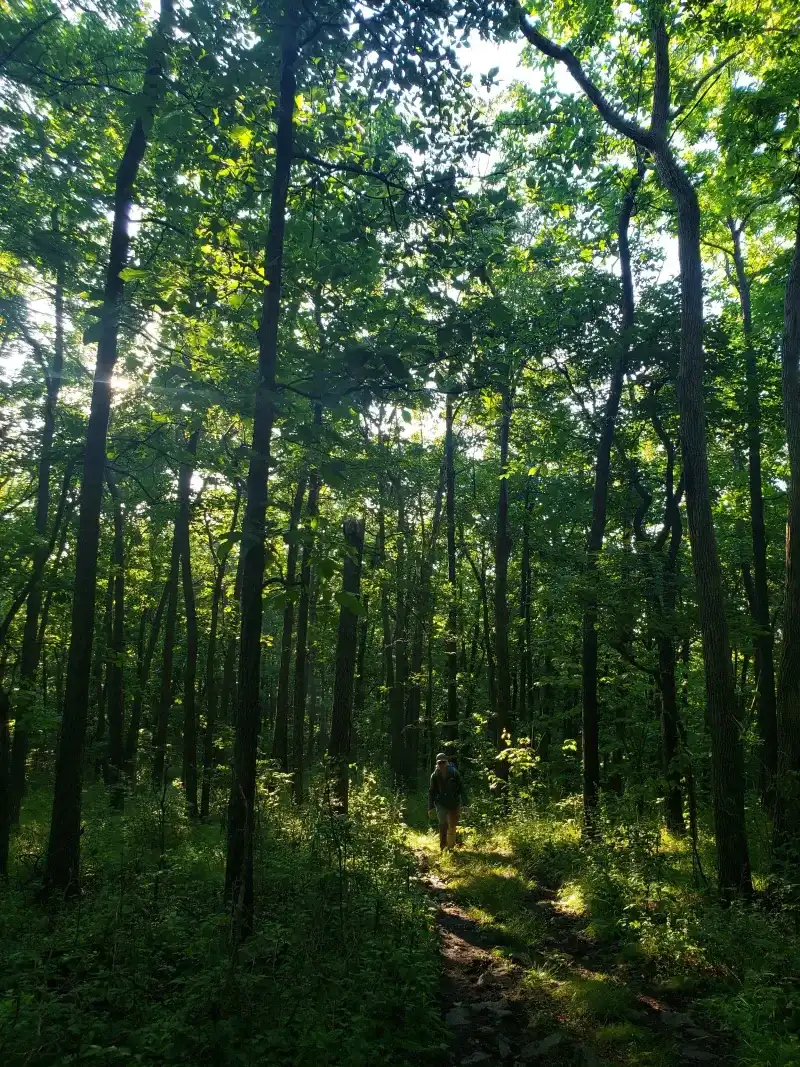
After the first stretch, the trail settles into a rhythm that feels classically Pennsylvanian.
The woods close around you, the ridgeline begins to guide your direction, and the soundscape becomes leaves, birds, and your own footsteps.
If you enjoy that locked-in hiking mindset, this section makes it easy to find.
The terrain here is not gentle, but it is engaging in a way that keeps your attention.
You are watching your footing, stepping over stone, and moving with enough focus that the outside world falls away for a while.
That mental reset is one of my favorite parts of the route.
Even without a major overlook every few minutes, the trail feels scenic because the forest has such a strong presence.
Trunks rise straight and tall, light shifts across the path, and the ridge gives the walk a subtle sense of elevation.
It is the kind of beauty that grows on you mile after mile.
4. Rocky Pennsylvania Footing

You really cannot talk about this hike without talking about the rocks.
Pennsylvania has a reputation on the Appalachian Trail for uneven, ankle-testing footing, and this section gives you a fair sample of that experience.
It is not impossible, but it does demand attention and a little patience.
I think the key is to stop fighting the terrain and move with it instead.
Shorter steps, steady pacing, and good footwear make a huge difference when the trail turns sharp and jagged underfoot.
If you expect a smooth cruise, the route may feel tougher than the mileage suggests.
That said, the rocky tread is part of what gives the hike its identity.
It slows you down just enough to notice the woods, the ridgeline, and the small changes in elevation that shape the day.
By embracing that rugged texture, you end up appreciating Pennsylvania’s trail character much more deeply.
5. A Break at Lunch Rocks
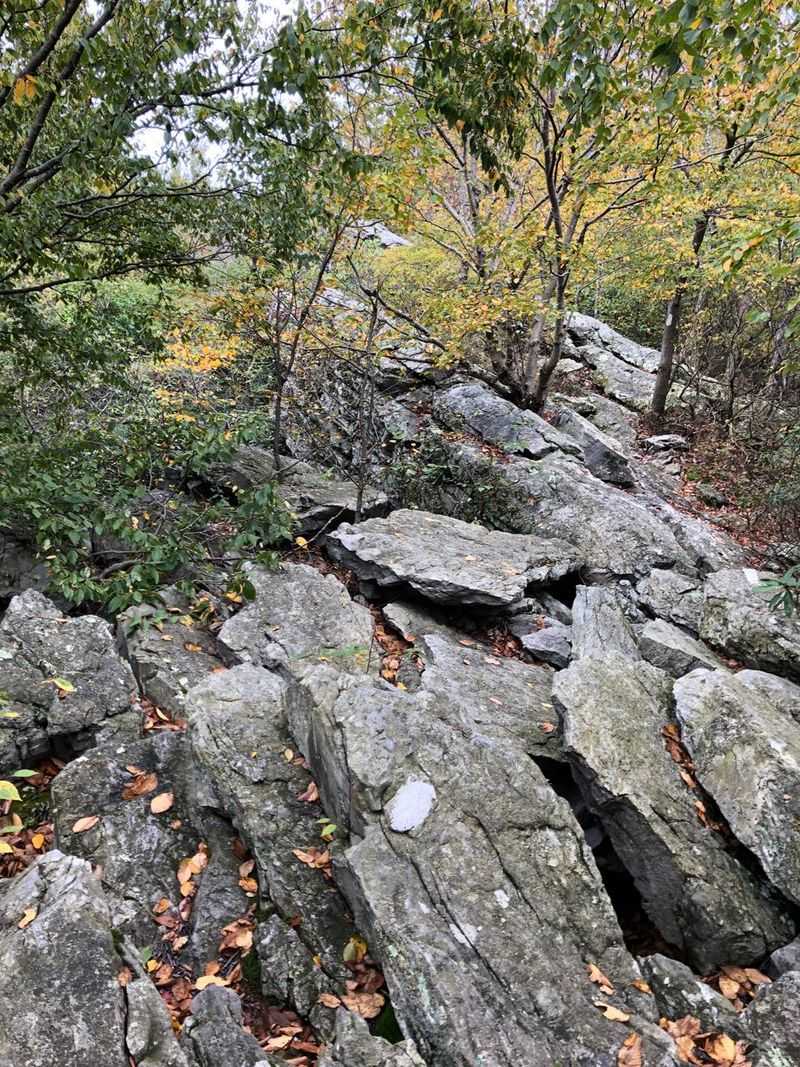
Lunch Rocks is one of those places that feels exactly like its name promises.
After a steady stretch of trail, the broad rock area invites you to stop, drop your pack, and finally give your legs a rest.
It is the kind of natural pause point that can turn a demanding hike into a much more enjoyable day.
I like this spot because it breaks up the route without feeling overly developed or crowded.
You still feel surrounded by Pennsylvania’s rugged landscape, but there is enough open space to breathe, snack, and take in the atmosphere.
Even a short pause here can reset your energy for the miles ahead.
If you are planning this hike, I would absolutely treat Lunch Rocks as more than a quick water break.
It is a good place to check your pace, stretch, and make sure you are still feeling strong for the climb and descent to come.
Thoughtful stops matter on rocky trails like this one.
6. Climbing Toward Mount Minsi
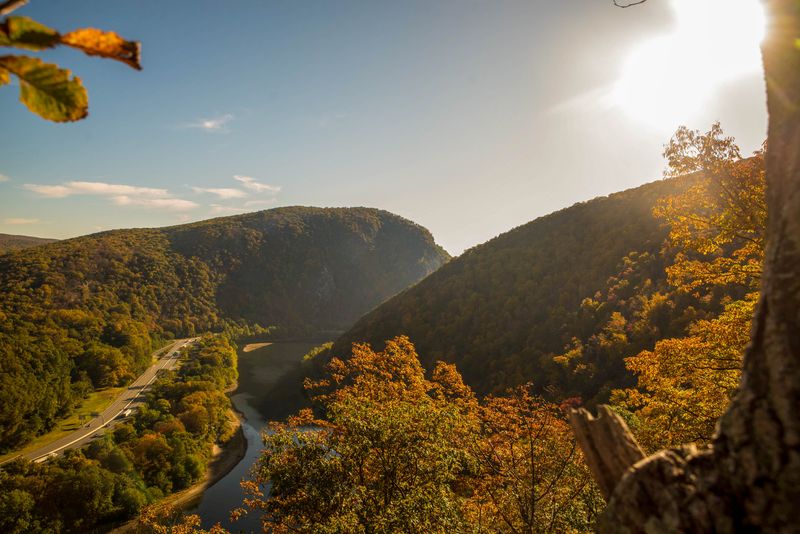
As the route pushes toward Mount Minsi, the hike begins to feel more dramatic.
The climb asks a little more from you, and that rising effort creates a stronger sense of payoff with every higher step.
If you enjoy hikes that build toward a clear highlight, this part delivers beautifully.
The ascent can be demanding, especially if the day is warm or your legs are already feeling the earlier miles.
Still, it is the kind of challenge that stays interesting because the terrain changes often enough to keep you engaged.
You are never just grinding upward without a reason.
Mount Minsi gives this Pennsylvania section much of its personality.
The mountain anchors the route, shapes the final approach, and makes the ending feel earned rather than convenient.
When I think about why this hike stands out, it is this climb that gives the whole day its narrative arc and memorable momentum.
7. The Big View Above Delaware Water Gap
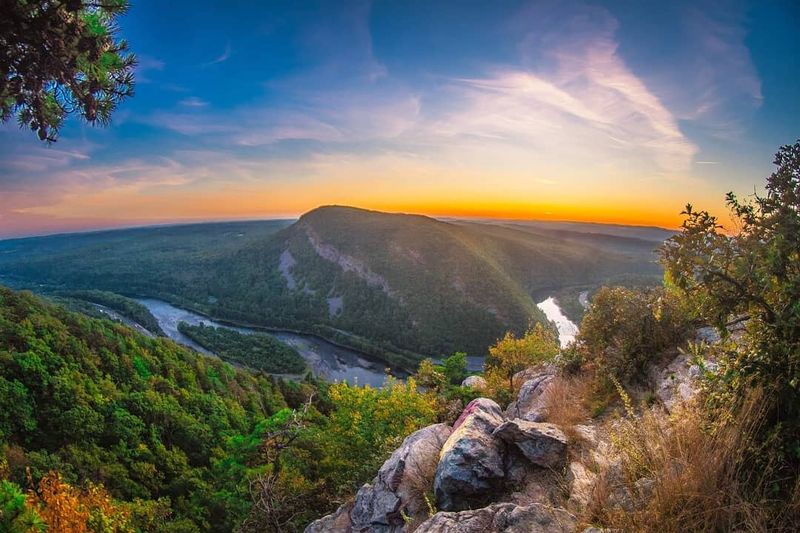
The overlook above Delaware Water Gap is the moment many hikers remember most.
After hours of woods, rocks, and steady movement, the landscape suddenly opens in a way that feels cinematic and deeply rewarding.
Pennsylvania looks bold and expansive from up here, and the view gives real context to everything you just walked.
I love how the overlook balances scale and intimacy at the same time.
You can see the broad shape of the ridge and valley, yet the experience still feels personal because you reached it on foot.
That connection between effort and scenery is what makes Appalachian Trail viewpoints so satisfying.
This is also where the title idea of visiting two states in a day starts to feel real, even while you remain grounded in Pennsylvania’s side of the experience.
The finish is near, but there is no rush to leave immediately.
It is worth lingering, taking photos, and letting the place sink in fully.
8. Finishing the Hike in Delaware Water Gap
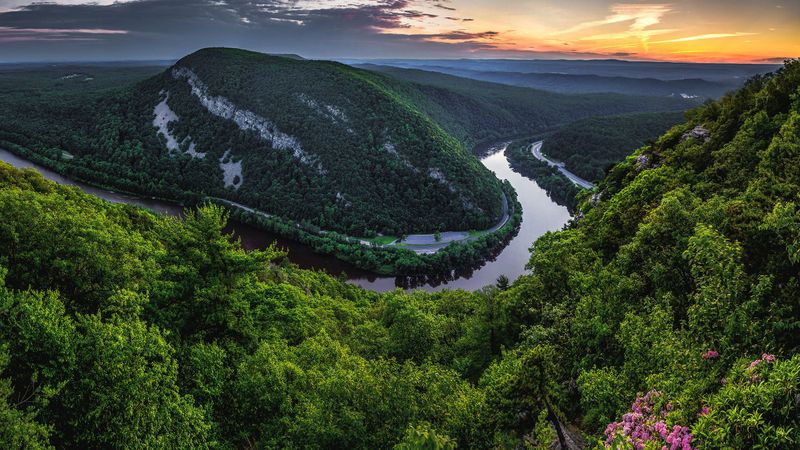
The descent toward Delaware Water Gap gives the day a strong closing chapter.
Your legs may be tired by then, but the sense of approaching a true finish helps pull you forward.
I always appreciate hikes that end with purpose, and this one definitely does.
Coming down from the ridge, you can feel the landscape transition from remote trail to a more recognizable destination.
That contrast makes the journey feel complete, as if Pennsylvania has shown you both its quieter backwoods side and one of its best-known natural gateways.
It is a satisfying emotional shift after a long day outside.
Because this is a point-to-point route, the ending feels earned in a special way.
You are not just returning to where you started and calling it done.
Reaching Delaware Water Gap feels like arriving somewhere, and that arrival gives the whole Pennsylvania hike a memorable, travel-like sense of accomplishment.
9. Best Tips for Hiking It Well
If you are planning to hike from Fox Gap to Delaware Water Gap, preparation matters more than flashy gear.
Good shoes, plenty of water, and a realistic sense of your pace will do more for your day than almost anything else, especially in this Pennsylvania stretch of the Appalachian Trail that leads toward the Delaware Water Gap region where Pennsylvania and New Jersey meet along the river corridor.
Pennsylvania rocks can wear you down if you underestimate them, so pacing early is important.
I would also start early enough to enjoy the route without chasing daylight or rushing through the viewpoints, since this section naturally builds toward that borderland landscape.
Trekking poles can help on both the rocky stretches and the descent, especially if your knees tend to complain on long hikes, and a relaxed schedule makes the experience far more enjoyable than trying to power through it.
The best approach is to treat this route like a full experience, not just a mileage goal—stop at Lunch Rocks, take time at the overlooks, and let the changing terrain shape the day naturally.
When you hike it that way, this Pennsylvania section feels less like a workout and more like a genuinely memorable journey along one of the state’s most distinctive two-state landscapes.
Share this story