When friends or family visit Tennessee, you want to show them the good stuff right away. Not just tourist traps, but the places that actually capture what makes this state special—the mountains, the music, the food, and the stories that shaped America.
These are the spots that turn a weekend visit into memories worth talking about for years.
1. Great Smoky Mountains National Park
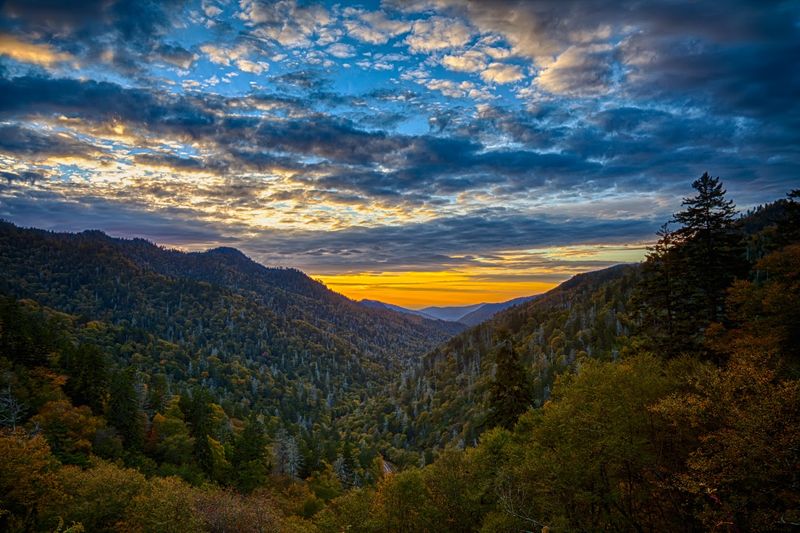
America’s most visited national park sits right in Tennessee’s backyard, and there’s a reason over 13 million people show up every year. The Smokies deliver that jaw-dropping mountain scenery guests expect, with bonus wildlife sightings, thundering waterfalls, and scenic drives that don’t require any hiking boots.
Cades Cove is usually my first stop with visitors because it’s an easy loop drive with historic cabins, open meadows, and black bears that sometimes wander close enough for photos. Newfound Gap Road cuts through the heart of the park and climbs to overlooks where you can see layers of blue-ridged mountains stacking into the distance like a postcard come to life.
If your guests want waterfalls, Laurel Falls and Grotto Falls are both manageable hikes that reward with rushing water and cool mist. For the less outdoorsy crowd, just driving through and stopping at pull-offs works perfectly fine—nobody judges.
The park straddles the Tennessee-North Carolina border, so you’re technically in two states at once up on the ridge. Mornings bring that signature fog rolling through the valleys, which is how the mountains got their smoky nickname in the first place.
Pack snacks because there aren’t restaurants inside the park, and cell service is spotty at best. Spring wildflowers and fall foliage are peak times, but summer and winter have their own charm too. Best part?
Admission is completely free, making this one of the easiest and most impressive first impressions Tennessee can offer.
2. Downtown Nashville
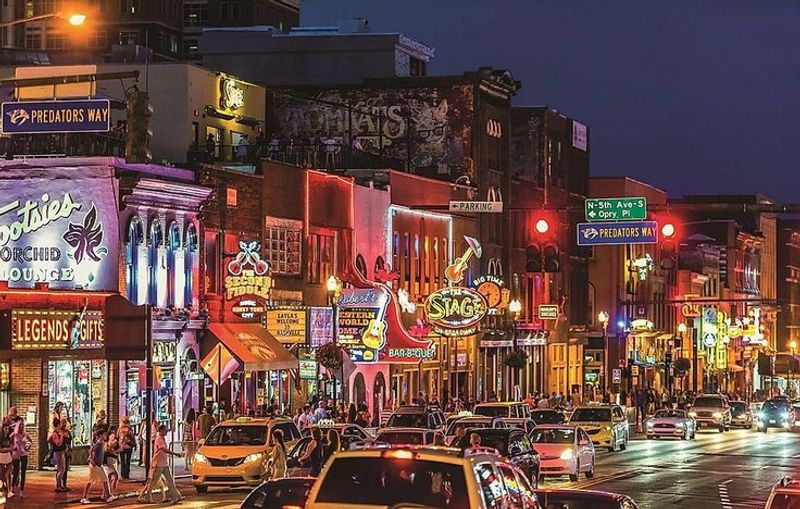
Broadway lights up like a carnival after dark, and that’s exactly when downtown Nashville hits different. Neon signs glow from every honky-tonk, live music pours out of open doorways, and the energy feels like a Saturday night even on Tuesdays.
Your guests probably already have expectations about Music City, and Broadway delivers exactly what they’re picturing. Three-story bars pump out country, rock, and blues from bands that play four-hour sets without taking breaks. Cover charges are rare, tips keep the music going, and you can bar-hop without ever losing the soundtrack.
Beyond the honky-tonks, rooftop bars offer skyline views and a breezier vibe when the street-level crowds get overwhelming. The Gulch neighborhood sits just south of Broadway with trendy restaurants, murals, and a more polished atmosphere if your visitors want Nashville with a side of bougie.
Daytime downtown works too—Broadway Brewhouse for lunch, Hatch Show Print for vintage posters, or just walking past the Country Music Hall of Fame and the Johnny Cash Museum. The Pedestrian Bridge connects downtown to East Nashville and makes for good sunset photo ops over the Cumberland River.
Parking downtown costs a small fortune, so Uber or park once and walk everywhere.
3. Ryman Auditorium in Nashville
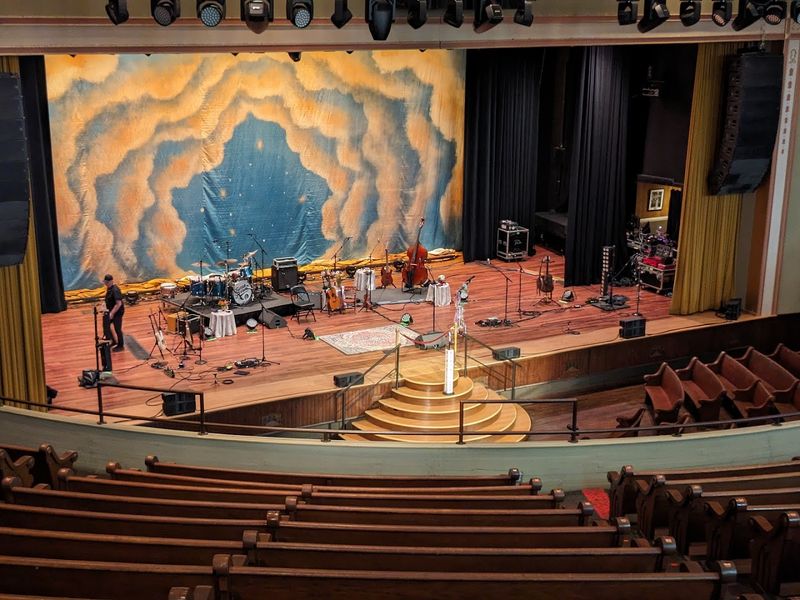
Walking into the Ryman feels like stepping into a time capsule where every country music legend you’ve ever heard of once stood on that same wooden stage. The acoustics are so good they call it the Mother Church of Country Music, and even the self-guided tour gives you chills when you stand at the microphone and hear your voice bounce back perfectly.
Built in 1892 as a gospel revival hall, the Ryman became home to the Grand Ole Opry from 1943 to 1974, cementing its place in music history. Hank Williams, Patsy Cline, Johnny Cash, and Dolly Parton all performed here during the Opry’s golden age. Today it hosts concerts year-round, but the daytime tours let visitors explore without needing tickets to a show.
The wooden church pews are original, and sitting in them while listening to audio clips of historic performances creates an unexpectedly emotional experience. Backstage access shows you the cramped dressing rooms where stars prepared before walking out to crowds that shaped American music culture.
If you can catch a live show here, do it—the venue’s intimacy makes even big-name artists feel close and personal. The building sits right downtown, easy walking distance from Broadway’s chaos, but the vibe inside is reverent and respectful in contrast.
Your music-loving guests will appreciate this stop even if country isn’t their first choice, because the history here transcends genre and connects to something bigger about Tennessee’s cultural impact on America.
4. Graceland in Memphis
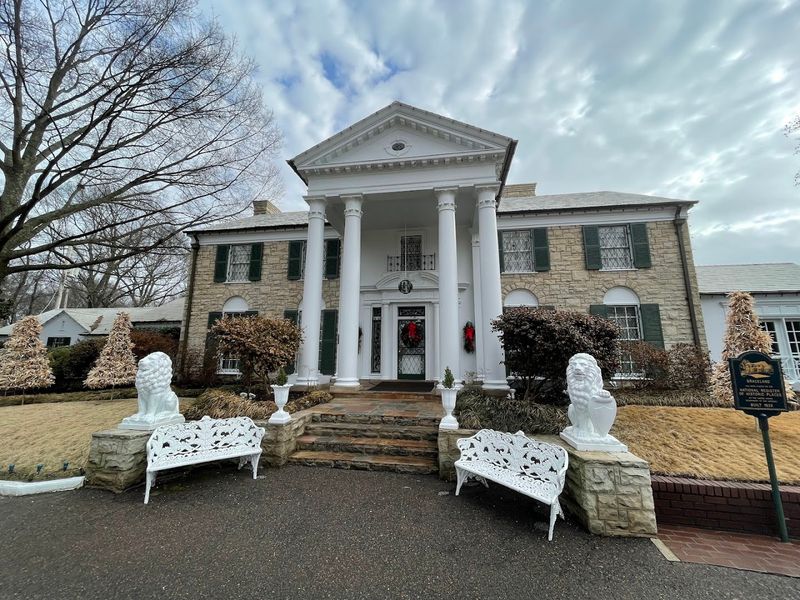
Elvis Presley’s home remains one of Tennessee’s most visited attractions, and honestly, it’s impossible to understand Memphis without stopping here first. Graceland isn’t just a mansion tour—it’s a full immersion into the life, style, and excess of the King of Rock and Roll.
The audio-guided tour walks you through the living room, dining room, kitchen, TV room, pool room, and the famous Jungle Room with its green shag carpet and Polynesian-inspired furniture. You can’t go upstairs where Elvis’s private quarters remain off-limits, but everything else is preserved exactly as it looked during his lifetime.
Across the street, the entertainment complex houses Elvis’s car collection, his custom planes, and rotating exhibits of jumpsuits, gold records, and personal artifacts. The Meditation Garden sits behind the mansion where Elvis, his parents, and his grandmother are buried—a surprisingly peaceful spot that fans visit to pay their respects.
Memphis tourism naturally centers around Graceland because it draws visitors from around the world who then explore Beale Street, barbecue joints, and other city attractions. The tour takes about two hours if you move at a decent pace, longer if your guests want to linger over every detail.
Tickets aren’t cheap, but the experience delivers exactly what first-time visitors expect from a Graceland visit. The mansion itself is smaller than most people anticipate, which somehow makes it more relatable and human-scaled despite all the fame attached to it.
5. Beale Street in Memphis
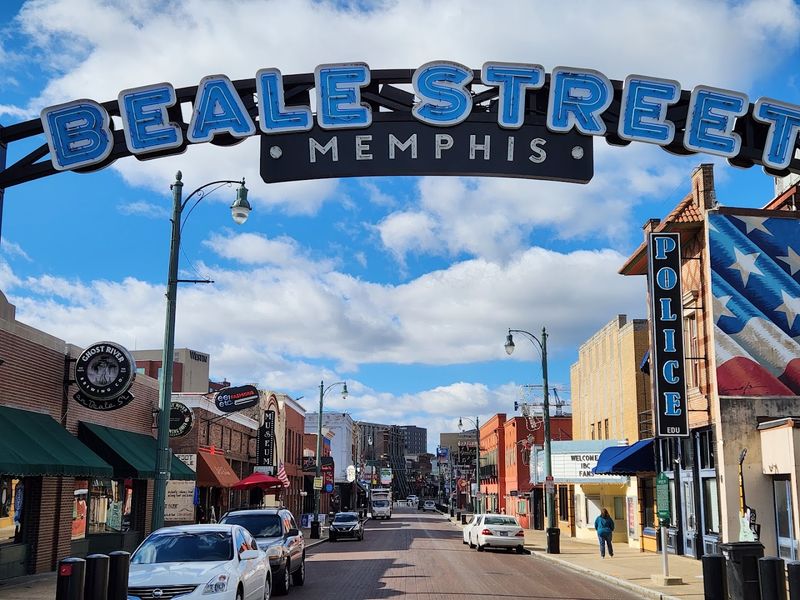
Beale Street pulses with blues music the way Broadway pulses with country—it’s the soul soundtrack of Memphis compressed into three blocks of neon-lit clubs, barbecue smoke, and street performers who’ve been holding down the same corner for decades. This is where W.C. Handy helped birth the blues, and you can still feel that legacy in every guitar riff floating out of open doorways.
Clubs like B.B. King’s and Rum Boogie Cafe pack in crowds nightly with live bands that play until the early morning hours. The street itself becomes a pedestrian zone after dark, so visitors can wander freely with drinks in hand, ducking into whichever venue has the best sound spilling onto the sidewalk.
Daytime Beale Street feels quieter but still worth walking for the history markers, quirky shops, and lunch spots serving Memphis-style barbecue and soul food. A.Schwab’s General Store has been operating since 1876 and sells everything from voodoo potions to overalls to tourist souvenirs in a gloriously cluttered space.
The street connects Memphis’s past to its present in ways that feel authentic rather than manufactured. Yes, it’s touristy, but it’s also genuinely where locals still go for good live music and late-night food. Weekends bring bigger crowds and cover bands mixed in with serious blues musicians, so pick your timing based on your guests’ tolerance for chaos.
6. National Civil Rights Museum in Memphis
Built around the Lorraine Motel where Dr. Martin Luther King Jr. was assassinated in 1968, this museum hits you hard emotionally and doesn’t apologize for it. Standing on the balcony outside Room 306 where King spent his final moments, creates a gut-punch of a connection to history that no textbook can replicate.
The exhibits trace the American civil rights movement from slavery through Reconstruction, Jim Crow, and the pivotal battles of the 1950s and 60s. Interactive displays, video footage, and artifacts tell stories of courage and injustice in ways that feel urgent and relevant regardless of when you visit.
A replica Montgomery bus sits inside where you can board and hear Rosa Parks’s story. Lunch counter stools recreate the Greensboro sit-ins. Freedom Rider buses, voting rights displays, and Memphis sanitation worker strike materials all connect the dots between local and national struggles for equality.
The museum doesn’t shy away from uncomfortable truths about Tennessee’s history or America’s ongoing racial challenges. That honesty makes it one of the most meaningful stops you can share with visitors who want to understand the state beyond barbecue and music.
Plan at least two hours, maybe three if your group reads every exhibit. The museum can feel heavy, which is appropriate given the subject matter, but it’s also inspiring in how it documents ordinary people doing extraordinary things.
Located downtown near the FedExForum and Beale Street, it’s easy to combine with other Memphis stops. This isn’t a lighthearted tourist attraction, but it’s essential for anyone wanting the full picture of what Tennessee represents in American history—the beautiful, the painful, and everything in between.
7. Dollywood in Pigeon Forge
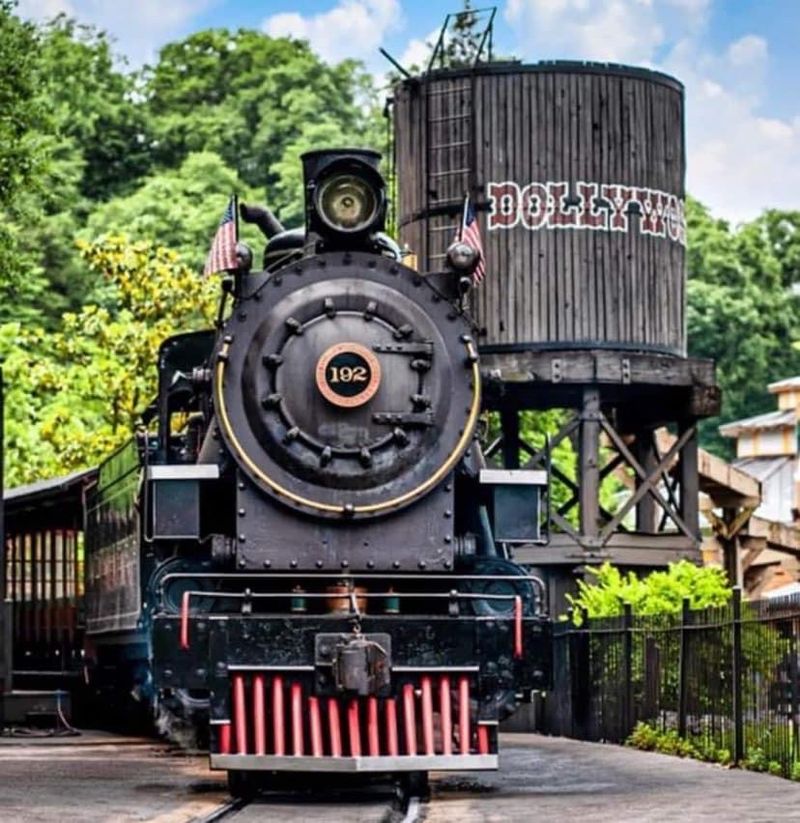
Dolly Parton’s theme park manages to blend Southern charm, world-class roller coasters, and Smoky Mountain scenery into something that works for practically every type of visitor. Families love it, coaster enthusiasts respect it, and anyone who appreciates Dolly’s personality finds it impossible not to smile at the whole operation.
The park sprawls across 160 acres with rides ranging from kiddie attractions to Lightning Rod, a launched wooden coaster that ranks among the best in the country. Craftsmen demonstrate blacksmithing, glassblowing, and woodcarving in the park’s Craftsman’s Valley section, giving it an Appalachian heritage vibe that sets it apart from generic theme parks.
Live shows run throughout the day, featuring gospel, country, and bluegrass music performed by genuinely talented musicians. The food leans heavily into Southern comfort—cinnamon bread, barbecue, funnel cakes—and tastes way better than typical theme park fare.
Dollywood’s festivals change seasonally, so spring brings flower displays, summer adds water rides, fall decorates with pumpkins and leaves, and winter transforms into a Christmas lights spectacular. Each season offers a different reason to visit, which explains why locals buy annual passes and return multiple times.
Lines can get long during peak summer and fall weekends, so arriving early or visiting midweek helps. The park sits just outside Gatlinburg at the foot of the Smokies, making it easy to combine with mountain activities.
Dollywood has become a major tourism anchor for the Pigeon Forge area, and it earns that status by delivering consistent quality and expanding regularly. Whether your guests want thrills, shows, crafts, or just a fun day soaking up Dolly’s infectious optimism, this park checks multiple boxes at once.
8. Anakeesta in Gatlinburg
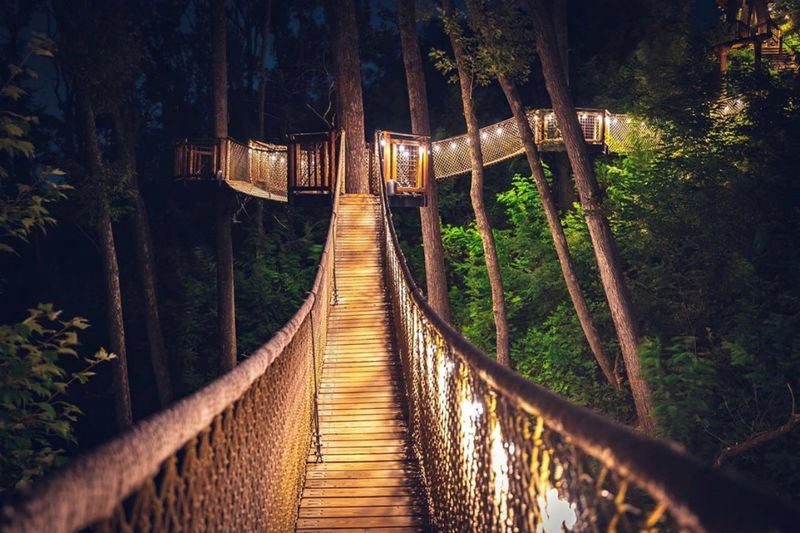
Anakeesta solved the problem of guests who want mountain views without committing to serious hiking boots and trail maps. The Ridge Rambler gondola lifts you 600 feet up to a mountaintop village packed with walkable attractions, dining, and those Instagram-worthy Smoky Mountain vistas everyone’s chasing.
The Treetop Skywalk suspends you 60 feet above the forest floor on bridges that connect through the canopy, offering a bird’s-eye perspective without requiring any climbing skills. Dueling zipline rails let thrill-seekers race side-by-side back down the mountain, while the Rail Runner mountain coaster provides a tamer but still fun downhill ride.
Anakeesta recently added the Crystal Express, an all-glass gondola that gives unobstructed panoramic views during the ride up. On clear days, you can see layer after layer of mountain ridges fading into the horizon, creating that classic Smoky Mountain postcard effect.
The Summit Village at the top features shops, a playground, gem mining, and restaurants where you can grab lunch while overlooking the mountains. AnaVista Tower adds another 60 feet of elevation for guests who want to climb even higher for photos.
Tickets aren’t cheap, but the experience packs multiple activities into one location, making it easier than driving all over the Smokies to different trailheads. Families with young kids appreciate that everything’s accessible without strenuous hiking, while older visitors enjoy the scenic beauty without physical strain.
Located right in downtown Gatlinburg, Anakeesta fits easily into a day of exploring the town’s other attractions. It’s become one of the area’s signature stops because it delivers that mountain experience in a polished, guest-friendly package that works for almost any fitness level or age group.
9. Lookout Mountain in Chattanooga
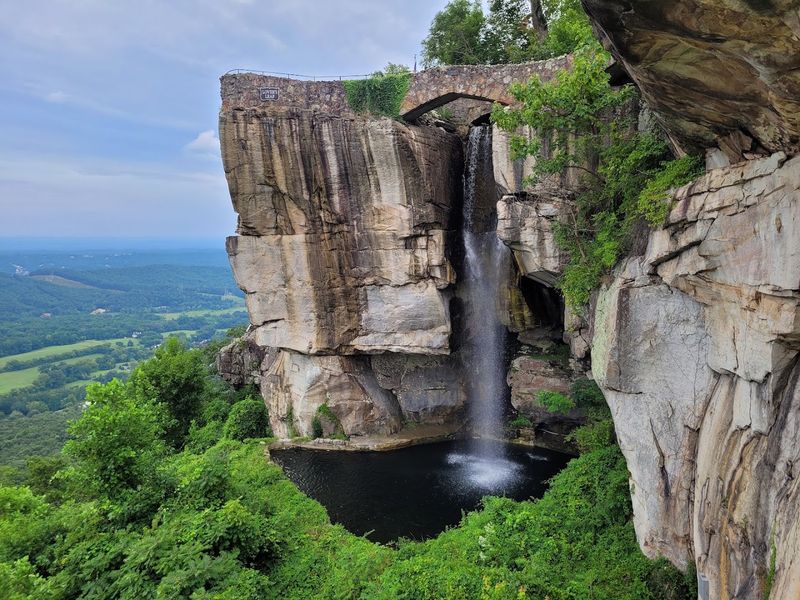
Lookout Mountain delivers three major attractions in one location, making it ridiculously easy to turn into a full-day trip that impresses first-time visitors. Rock City, Ruby Falls, and the Incline Railway all sit within minutes of each other, each offering a different flavor of mountain tourism.
Rock City’s Enchanted Trail winds through massive rock formations, squeeze-through passages, and a 90-foot waterfall, ending at Lover’s Leap, where you can supposedly see seven states on clear days. The gardens are legitimately beautiful, and the whole experience feels like exploring a natural playground designed by someone with a great imagination.
Ruby Falls takes you 1,120 feet underground to a 145-foot waterfall inside the mountain—the tallest underground waterfall open to the public in the United States. The guided tour walks you through cavern passages lit with colorful lights before revealing the falls in a dramatic finale that gets genuine gasps from the crowd.
The Incline Railway climbs at a 72.7% grade, making it one of the steepest passenger railways in the world. The ride up offers expanding views of Chattanooga and the Tennessee River valley below, and it’s a fun novelty experience even for guests who aren’t normally into trains.
You could easily spend a full day doing all three attractions plus lunch at one of the mountaintop restaurants. Each spot operates independently with separate admission, so you can pick and choose based on time and interest.
10. Tennessee Aquarium in Chattanooga

Chattanooga’s aquarium sits right downtown on the riverfront, making it a perfect rainy-day backup or a solid addition to any Chattanooga itinerary. Two buildings—River Journey and Ocean Journey—house thousands of animals in exhibits that flow logically from Appalachian streams down to Caribbean reefs and ocean depths.
River Journey focuses on freshwater ecosystems found in Tennessee and surrounding regions. Otters play in their habitat, alligators lurk in swamp recreations, and massive paddlefish glide through tanks representing the Tennessee River system. The exhibits connect directly to the local environment, which makes it more meaningful than generic aquarium displays.
Ocean Journey shifts to saltwater species with sharks, sea turtles, stingrays, and a butterfly garden that adds unexpected color to the marine life. The Secret Reef touch tank lets kids (and adults) handle horseshoe crabs and sea stars under staff supervision.
The aquarium does an excellent job with educational programming without feeling preachy or boring. Interactive displays, feeding demonstrations, and well-designed exhibits keep things moving so you’re not just staring at fish for three hours straight.
Located near the Walnut Street Bridge and Coolidge Park, the aquarium integrates easily into a walkable downtown day. Families appreciate the air conditioning and bathrooms, while adults who aren’t normally aquarium people find enough variety to stay engaged.
Admission prices are reasonable for the quality and size of the facility. The aquarium has become one of Chattanooga’s anchor attractions, helping transform the city’s downtown into a legitimate tourist destination beyond just Lookout Mountain.
Plan about two to three hours to see both buildings without rushing. It’s polished, professional, and family-friendly in all the right ways, making it an easy recommendation for first-time visitors regardless of age or interest level.
11. Market Square in Knoxville
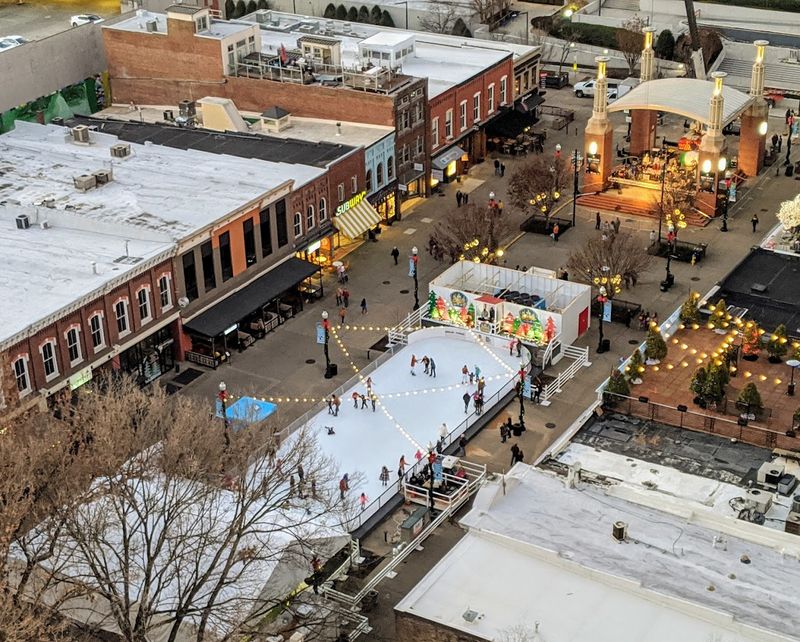
Knoxville’s Market Square gives visitors an easy, walkable introduction to the city’s downtown personality without requiring a detailed itinerary or GPS navigation. The square hosts restaurants, coffee shops, boutiques, and seasonal events in a pedestrian-friendly space that feels genuinely local rather than manufactured for tourists.
Outdoor seating fills the square during nice weather, creating a European plaza vibe where people actually hang out rather than just passing through. The farmers market sets up on Saturdays, bringing local produce, crafts, and food vendors that turn the square into a community gathering spot.
Restaurants around the square range from casual to upscale, covering everything from tacos to sushi to Southern comfort food. Tomato Head serves solid pizza and vegetarian options, while Stock & Barrel does burgers that locals argue about passionately.
The square connects to Gay Street, Knoxville’s main downtown corridor, making it easy to extend your walking tour to other shops, galleries, and the historic Tennessee Theatre. Everything sits close enough together that parking once and walking makes more sense than driving between stops.
Knoxville often gets overshadowed by Nashville, Memphis, and Chattanooga, but Market Square proves the city has its own charm worth showing off. It’s especially good for guests who want a break from heavy tourist attractions and prefer just soaking up the local atmosphere.
12. World’s Fair Park and the Sunsphere in Knoxville
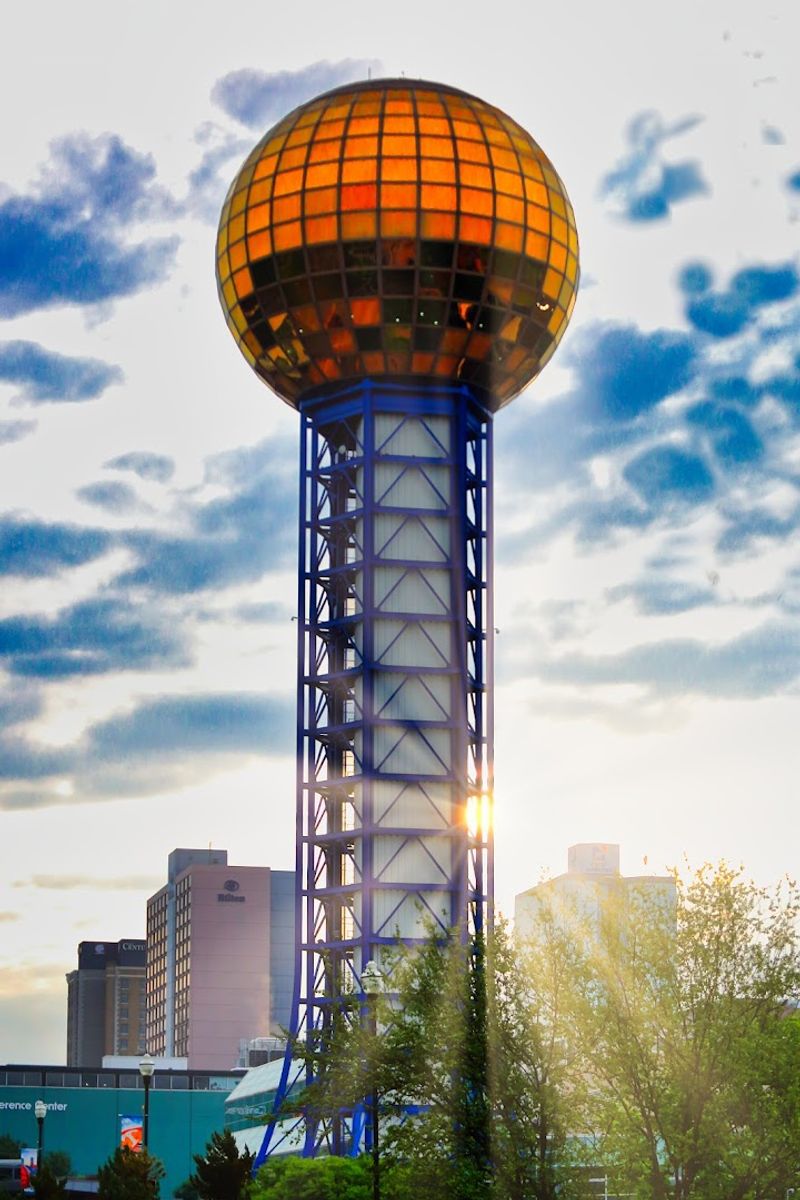
The Sunsphere rises 266 feet above Knoxville as a gleaming gold reminder of the 1982 World’s Fair, and it’s become the city’s most recognizable landmark despite originally being built as a temporary structure. The observation deck offers 360-degree views of downtown Knoxville, the Tennessee River, and the Smoky Mountains in the distance.
World’s Fair Park surrounds the Sunsphere with lawns, fountains, and walking paths that make for pleasant strolling on nice days. The park hosts festivals and concerts throughout the year, transforming the open space into event venues that draw both locals and visitors.
Admission to the Sunsphere observation deck is free, which makes it an easy add-on to any Knoxville visit. The views aren’t as dramatic as mountain overlooks, but they provide a good perspective on the city’s layout and the river valley geography.
The Sunsphere appeared in the 1996 film “The Simpsons” episode “Bart on the Road,” which introduced it to a generation of viewers who had no idea Knoxville hosted a World’s Fair. That pop culture reference gives it a quirky claim to fame beyond just architectural interest.
The park sits within walking distance of Market Square and the University of Tennessee campus, making it easy to combine with other downtown activities. It’s not a full-day destination, but it offers a fun photo op and a bit of Tennessee history wrapped in retro 1980s optimism.
Knoxville positions itself as a gateway to the Smokies, and the Sunsphere gives visitors a quick orientation point before heading into the mountains. For out-of-town guests, it’s one of those “might as well stop and see it” attractions that takes minimal time but adds a memorable Knoxville-specific moment to their trip.
13. Jack Daniel’s Distillery in Lynchburg
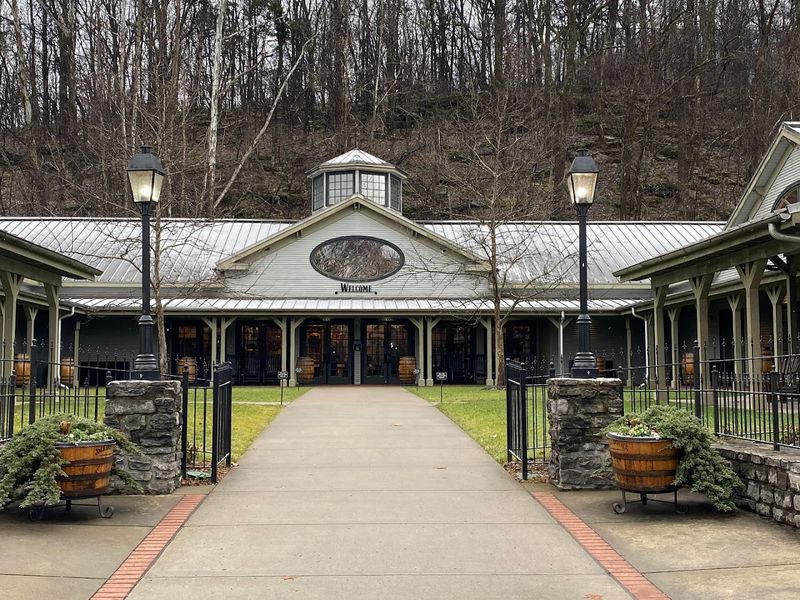
Jack Daniel’s Distillery sits in tiny Lynchburg, Tennessee—a town of about 600 people that produces one of the world’s most famous whiskeys. The irony that Moore County is dry, meaning you can’t buy liquor by the drink, adds to the charm and the stories tour guides tell while walking you through the whiskey-making process.
Tours take you through the rickyard where sugar maple is burned into charcoal, the mellowing vats where whiskey filters through that charcoal, and the barrel houses where the aging happens. The cave spring that provides the iron-free water flows year-round at 56 degrees, and it’s the source Jack Daniel himself chose when he founded the distillery in 1866.
Guides share stories about Jack Daniel’s life, the brand’s history, and the craftsmanship that goes into every bottle. The tours feel genuine rather than overly corporate, probably because the distillery has been operating in this same location for over 150 years.
Tastings are included with some tour packages, letting visitors sample whiskeys they might not buy on their own. The gift shop sells distillery-exclusive bottles, merchandise, and Tennessee souvenirs that make good gifts for the whiskey lovers back home.
Lynchburg itself is worth exploring after the tour—the town square features the old courthouse, antique shops, and Miss Mary Bobo’s Boarding House, which serves family-style Southern lunches by reservation. The whole experience feels like stepping back in time to small-town Tennessee.
Located about 90 minutes from Nashville, the distillery makes a solid day trip for guests who enjoy whiskey culture, history, and charming Southern towns. Reservations are required for tours, so plan ahead rather than showing up hoping to walk on.
14. Fall Creek Falls State Park
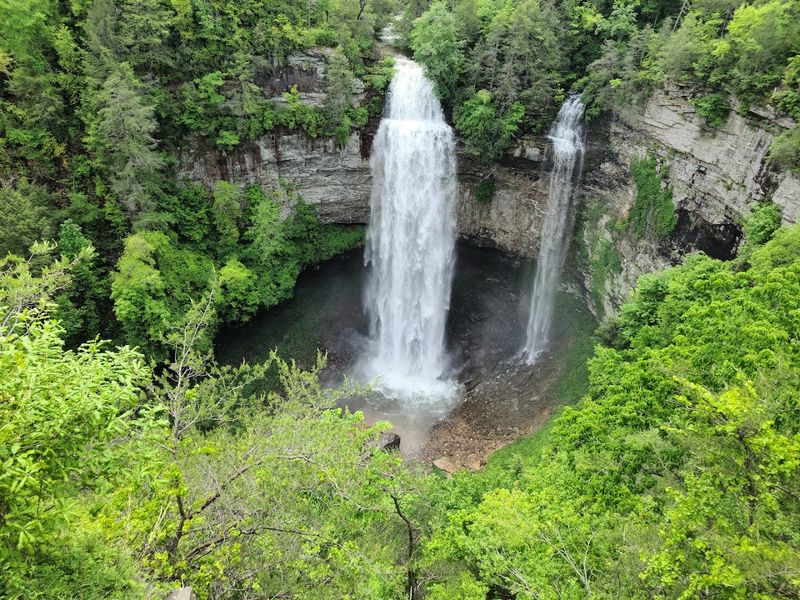
Fall Creek Falls drops 256 feet into a misty gorge, making it one of the tallest waterfalls east of the Mississippi River and the centerpiece of Tennessee’s largest state park. The falls are impressive enough to justify the drive, but the park surrounds them with enough hiking trails, overlooks, and natural beauty to fill a full day.
Multiple overlooks provide different perspectives on the falls—some from above looking down, others from the gorge floor looking up at the cascade thundering overhead. The main overlook requires just a short walk from the parking area, making it accessible for guests who want the payoff without serious hiking.
Beyond the namesake falls, the park contains several other waterfalls including Cane Creek Falls, Piney Falls, and Cane Creek Cascades. Hiking trails range from easy nature walks to more challenging routes that descend into gorges and climb back out through hardwood forests.
The park’s 26,000 acres include a lake, campgrounds, cabins, a golf course, and picnic areas, making it popular with families who want a nature-based vacation without roughing it too much. Wildlife sightings—deer, wild turkeys, occasional black bears—add to the outdoor experience.
Fall Creek Falls sits about 90 minutes from Nashville and two hours from Chattanooga, far enough that it doesn’t get overrun like the Smokies but close enough for a day trip. Spring and fall offer the best waterfall flow and comfortable temperatures, though summer brings swimming opportunities in the lake.
For out-of-town guests who want to see Tennessee’s natural side beyond the Smoky Mountains, Fall Creek Falls delivers scenery that rivals anything in the state. It’s the kind of place that makes people from flat states stand there with their mouths open, which is always satisfying to witness.
15. Franklin’s Main Street and Historic District
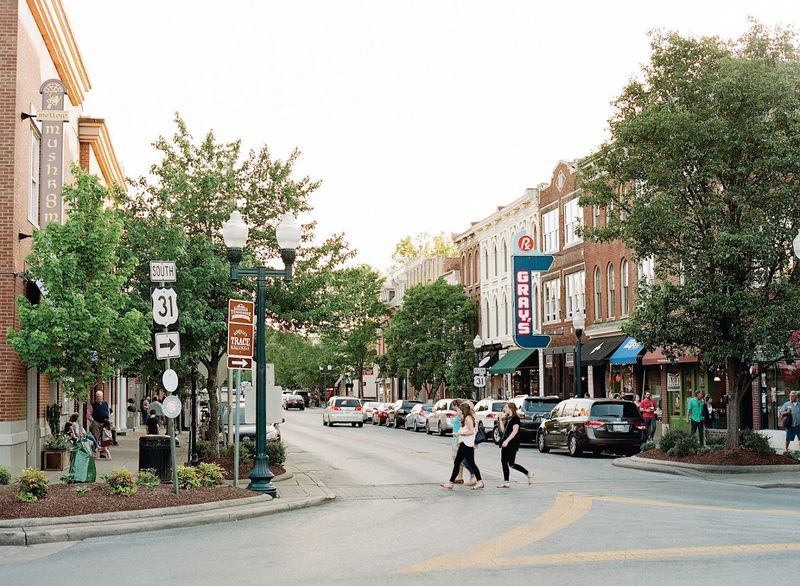
Franklin’s Main Street delivers small-town Tennessee charm at its most polished, with brick sidewalks, restored 19th-century buildings, and enough boutiques and restaurants to keep visitors entertained for hours. It’s pretty without feeling fake, walkable without being touristy, and close enough to Nashville (20 minutes south) to work as an easy day trip.
The downtown district stretches several blocks with independently owned shops selling everything from antiques to high-end clothing to artisan chocolates. Restaurants range from casual cafes to upscale Southern cuisine, with outdoor seating that fills up quickly on nice weekends.
Franklin’s Civil War history runs deep—the Battle of Franklin in 1864 was one of the bloodiest conflicts of the war, and several historic sites preserve that legacy. Carter House and Carnton Plantation offer tours that explain the battle and its devastating impact on both armies and the local community.
The town has become a destination for Nashville-area residents escaping the city for a slower pace, which means the restaurant and shopping quality stays high to compete for those dollars.
For guests who’ve done the Nashville honky-tonks and want something completely different, Franklin offers a palate cleanser that’s still distinctly Tennessee. It’s especially good for visitors who appreciate history, architecture, and charming downtown shopping districts that actually have character rather than just chain stores.