Not every unforgettable place in Michigan comes with crowds, gift shops, or a spot on every travel brochure. Some of the state’s most fascinating destinations are hidden between forests, cliffs, quiet backroads, and corners that most visitors never think to explore.
Beyond the Great Lakes shorelines and busy tourist towns, you will find waterfalls, strange sculptures, ancient pines, glowing springs, and places that feel almost too magical to be real. These 13 spots are for anyone willing to look a little harder and wander a little farther.
Pack your sense of adventure, because Michigan is full of surprises waiting well beyond the usual postcard views.
1. Turnip Rock
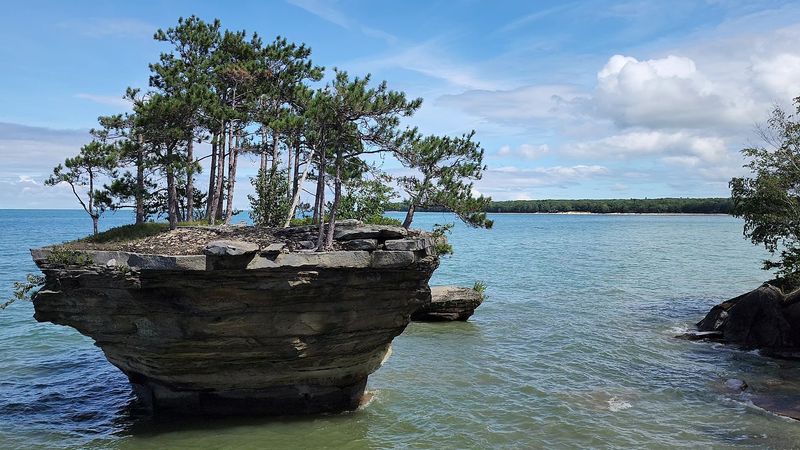
Shaped like something straight out of a fantasy novel, Turnip Rock is one of the most photographed natural formations in Michigan — and yet somehow, most people have never heard of it. Sitting just off the shoreline near Port Austin on the tip of Michigan’s Thumb, this mushroom-shaped rock pillar rises dramatically from the clear waters of Lake Huron.
A thick cap of trees and shrubs crowns its narrow base, making it look almost impossibly top-heavy.
The catch? You can only reach it by water.
There are no trails, no parking lots right next to it, and no tourist infrastructure to speak of. Kayak rentals are available nearby, and the paddle out is genuinely enjoyable — flat water most days, scenic shoreline, and a real sense of discovery as the rock comes into view around a bend.
Most people plan for a two- to three-hour round trip, which gives plenty of time to float, take photos, and soak it all in.
Early morning paddles offer the calmest water and the best light for photography. The surrounding area has a handful of small-town spots worth checking out in Port Austin itself, including local restaurants and a marina with a relaxed, unhurried vibe.
Turnip Rock is the kind of place that makes people genuinely excited to share their photos. You will want to bring a waterproof phone case or a dry bag because the lake can be unpredictable even on calm days.
If you have never kayaked before, guided tours are available and highly recommended for first-timers. This spot earns its reputation not through hype but through sheer visual impact — it is simply unlike anything else in the state.
2. Estivant Pines Nature Sanctuary
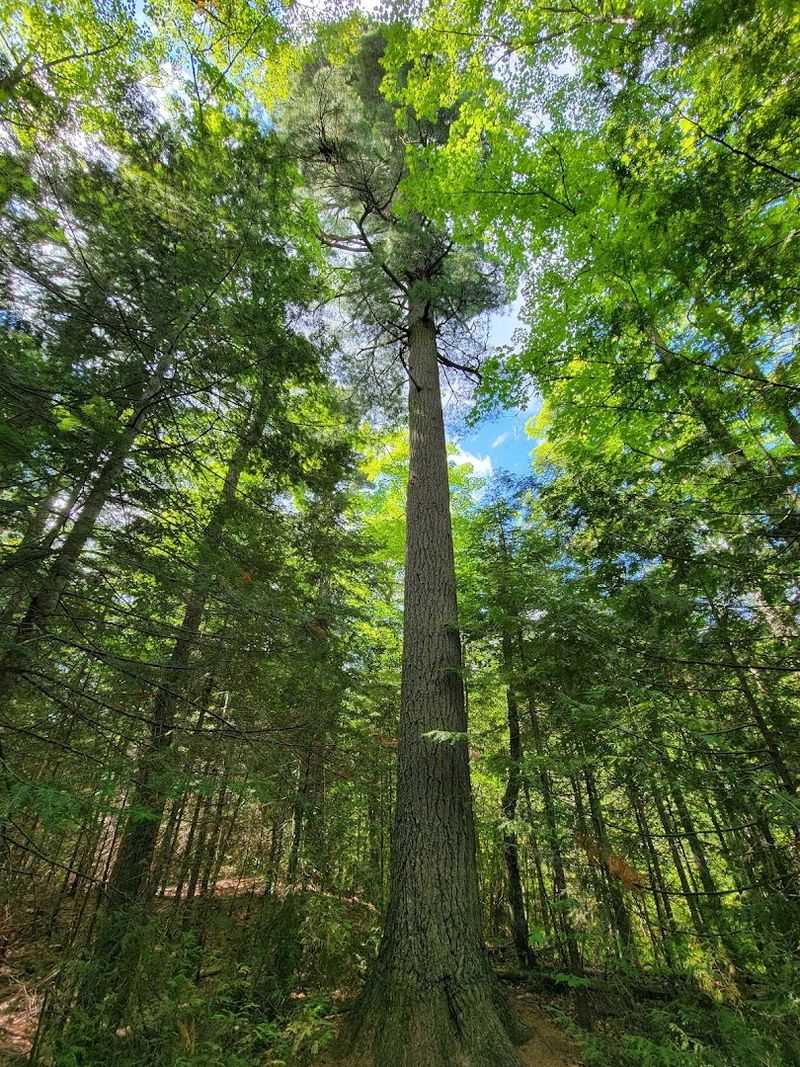
Walking into Estivant Pines feels like stepping into a different century. Located near Copper Harbor at the very tip of Michigan’s Upper Peninsula, this sanctuary protects one of the last remaining stands of old-growth white pines in the entire state.
Some of these trees are over 500 years old, with trunks so wide it would take several people linking hands to wrap around them. Nothing prepares you for the scale of these giants until you are standing right next to one.
The Michigan Nature Association manages the sanctuary, and the trails are intentionally kept simple and low-key. There are no concession stands, no visitor centers, no gift shops.
Just towering trees, a carpet of pine needles, and the kind of silence that feels genuinely rare in the modern world. Two main trail loops wind through the property, and together they cover just a few miles — manageable for most fitness levels, including older kids and casual hikers.
Spring and fall are especially stunning here. In spring, wildflowers push through the forest floor beneath those massive trunks, while autumn wraps the surrounding forest in warm golds and reds that contrast beautifully against the dark green of the pines.
Because Copper Harbor itself is already a bit off the beaten path, Estivant Pines attracts a quieter crowd — mostly nature lovers and people who genuinely appreciate what they are seeing. Cell service is spotty at best, so download your maps ahead of time.
Wear sturdy shoes since some sections of trail can be muddy or uneven. Coming here is less about checking a box and more about genuinely connecting with something ancient, something that has been here long before Michigan was even a state.
3. Lakenenland Sculpture Park
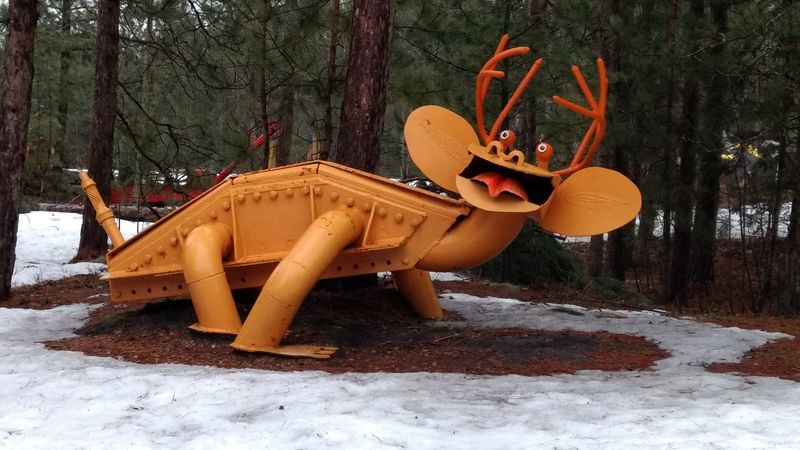
Somewhere between Marquette and Chocolay Township, a retired ironworker named Tom Lakenen has been quietly building one of Michigan’s most joyfully bizarre roadside attractions. Lakenenland Sculpture Park is a free, open-air collection of welded metal sculptures that Tom has created and installed on his own property over the years.
There are dragons, dinosaurs, political figures, pop culture references, and things that defy easy description — all made from scrap metal and assembled with obvious love and a sharp sense of humor.
What makes Lakenenland special is not just the art — it is the spirit behind it. Tom built this place for the community, with no admission fee and no corporate backing.
Visitors are welcome year-round, dawn to dusk, and the collection keeps growing. Walking through the park feels like wandering through someone’s wildly creative backyard, except the backyard stretches across several acres and contains dozens of massive metal creations.
Kids absolutely love it, but so do adults who appreciate outsider art and genuine originality.
The park sits right along County Road 480, making it easy to find and easy to access. There is a donation box on-site, and contributing a few dollars is a great way to support Tom’s ongoing work.
Bring a camera because every corner of the park offers a new photo opportunity — and the lighting in the late afternoon is especially good for capturing the metalwork in warm tones. If you are already visiting Marquette for its trails, waterfalls, or Lake Superior views, adding Lakenenland to the itinerary costs nothing and takes about an hour.
It is genuinely unlike anywhere else in Michigan, and that is not something you can say about many places.
4. Canyon Falls
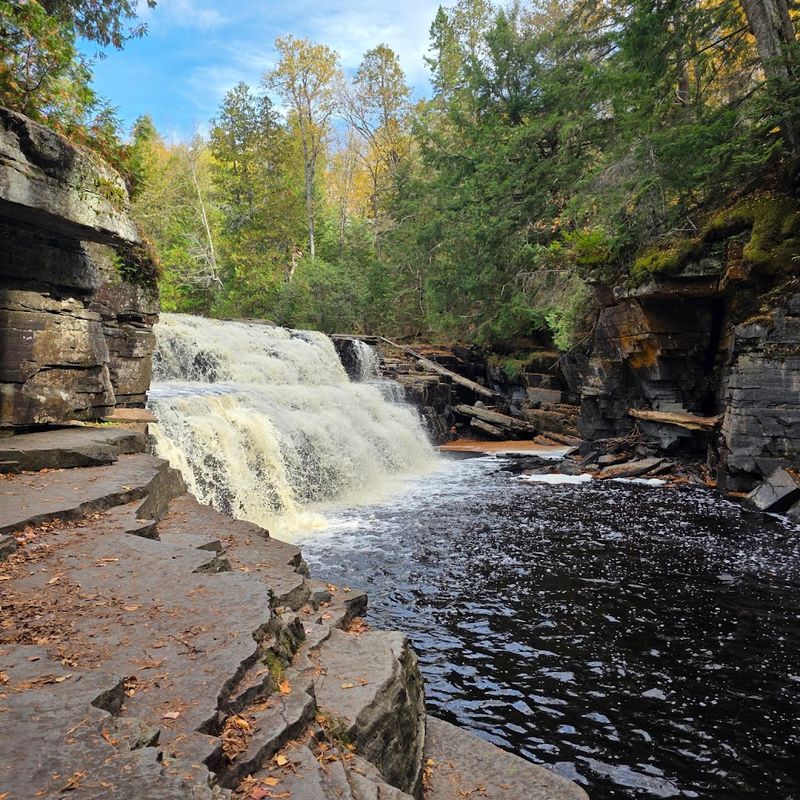
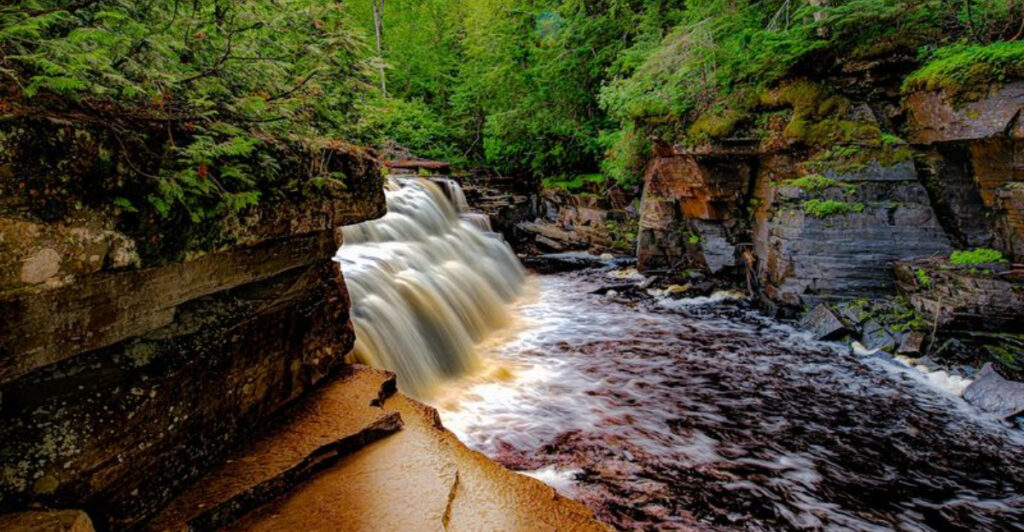
Most Michigan waterfall hunters head straight for Tahquamenon or Pictured Rocks, and while those are absolutely worth seeing, Canyon Falls offers something different — a compact, dramatic gorge experience that feels far more rugged and wild than the drive to get there would suggest. Located along the Sturgeon River near Alberta in the Upper Peninsula, Canyon Falls drops into a narrow slot canyon carved from ancient rock.
The walls close in, the water roars, and the whole scene has an intensity that catches people off guard.
Getting there requires a short hike of less than a mile each way, making it accessible for most visitors without demanding serious athletic ability. The trail follows the Sturgeon River, which is scenic on its own before you even reach the falls.
Once you arrive at the canyon overlook, the view is genuinely jaw-dropping — the gorge is tight and deep, with water churning through at a pace that makes you feel the power of it even from the viewing area above. Some visitors carefully scramble down closer to the water, though caution is strongly advised since the rocks can be slippery.
Fall is an exceptional time to visit because the surrounding hardwood forest turns brilliant shades of orange and red, framing the dark rock walls in a way that looks almost painted. Summer visits are popular too, especially for the cool mist that rises from the falls on hot days.
The site is managed as part of a recreation area, and parking is straightforward. Canyon Falls does not get nearly the attention it deserves, which means you can often experience it without fighting crowds.
That kind of quiet intensity is exactly what makes it a true hidden gem worth the detour.
5. Arcadia Dunes
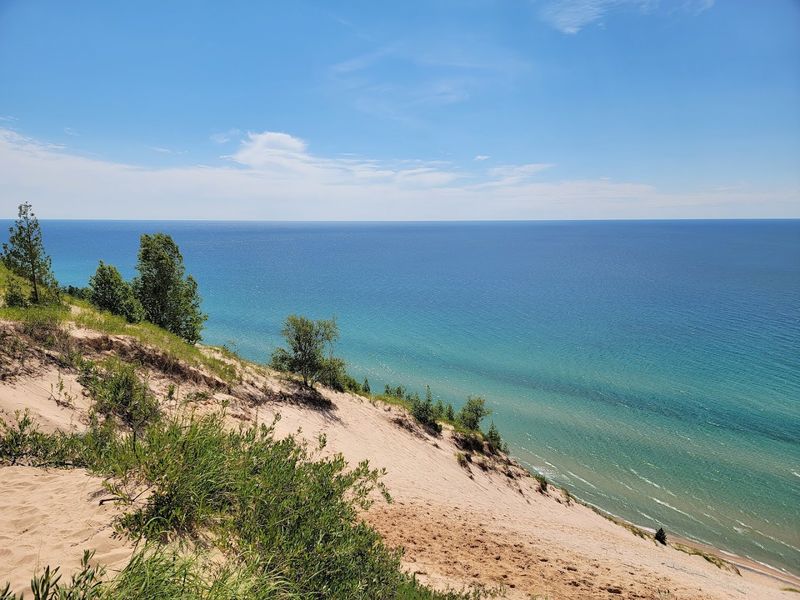
Arcadia Dunes is not trying to compete with Sleeping Bear — and that is honestly part of its charm. Managed by the Land Conservancy of West Michigan, this preserve covers thousands of acres of dunes, forests, and wetlands along the Lake Michigan shoreline near the small town of Arcadia.
The crown jewel of the experience is the hike to the top of the dunes, where a panoramic view of Lake Michigan opens up in a way that genuinely stops people mid-step.
The trail system here is well-maintained but not overcrowded. Hikers climb through a mix of open dune landscape and shaded forest paths before breaking into the open at the top.
The elevation change is real — your legs will know they worked — but the payoff is a view that stretches for miles across the big blue expanse of Lake Michigan. On clear days, you can see the water meeting the sky in a line so sharp it looks almost digital.
Bring water and wear sunscreen because the exposed dune sections offer no shade.
Unlike some of the more famous dune areas in Michigan, Arcadia Dunes has a quieter, more contemplative energy. Families, solo hikers, and photography enthusiasts all find something to love here without the parking lot chaos that plagues busier spots in peak season.
The town of Arcadia itself is tiny and friendly, with a small marina and a relaxed pace that feels genuinely unhurried. Visiting in the golden hour before sunset turns the whole landscape amber and rose, and the view from the top becomes something you will talk about for years.
If you want Lake Michigan dune magic without the shoulder-to-shoulder crowds, Arcadia Dunes is your answer.
6. Oswald’s Bear Ranch
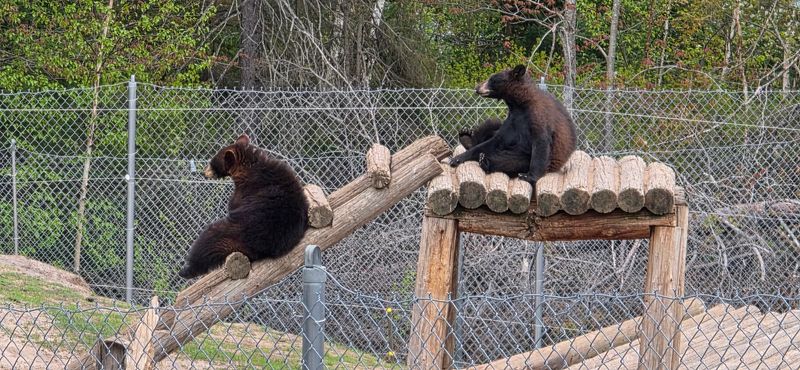
Oswald’s Bear Ranch near Newberry in the Upper Peninsula is exactly what it sounds like — a ranch full of black bears — and it is one of the most genuinely memorable stops in all of Michigan. Founded by Dean Oswald, the ranch is the largest bear ranch in the United States and has been home to dozens of black bears over the decades.
Many of the animals here were rescued as cubs and could not survive in the wild, making this a legitimate sanctuary as much as an attraction.
Visitors can walk through several large outdoor habitats and watch bears play, wrestle, swim in their pools, and lounge around with the kind of unbothered confidence that only a 400-pound animal can pull off. For an additional fee, there is a cub experience where visitors can interact with baby bears under close supervision — and yes, it is as incredible as it sounds.
The staff is knowledgeable and passionate, happy to answer questions and share stories about individual bears and their personalities.
Oswald’s is open seasonally, generally from late May through mid-October, so timing your visit matters. It draws visitors from all over the country, and weekends in summer can get busy, so arriving early in the day gives you more space to move around and better chances of catching active bear behavior.
The ranch is located on a rural road surrounded by UP wilderness, which adds to the whole experience — you really do feel like you have found something special out in the middle of the forest. Kids are absolutely mesmerized, but adults tend to walk away equally impressed.
Few places in Michigan offer the combination of wildlife encounter, conservation story, and sheer wow-factor that Oswald’s delivers so consistently.
7. Cut River Bridge
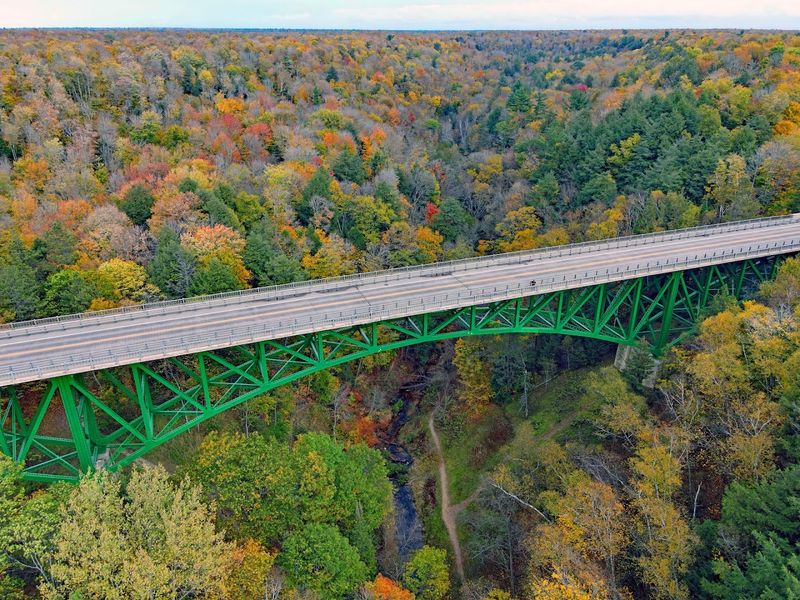
Driving along US-2 in Michigan’s Upper Peninsula, you might cross the Cut River Bridge without fully realizing what you just passed over — and that would be a genuine shame. Pull off at the designated rest area and walk out onto the bridge itself, and the view into the gorge below will make you glad you stopped.
The Cut River Bridge is a historic steel arch structure that carries the highway over a deep, forested ravine carved by the Cut River as it makes its way toward Lake Michigan. The engineering alone is impressive, but the scenery beneath it is what people remember.
A stairway at the rest area descends into the gorge, winding down through the trees to the river below and eventually out to a small beach where the river meets Lake Michigan. The full loop — down one side, along the river, and back up — is a short but rewarding hike that offers several distinct environments in a very small distance.
The gorge is cool and shaded even on warm summer days, and the sound of the river running over rocks is the kind of ambient soundtrack that makes every step feel worthwhile.
The bridge area and trail are well-maintained and free to access, which makes it an easy add-on for anyone driving the UP’s southern shoreline route. Wildflowers bloom along the gorge walls in spring, and fall color here is exceptional — the combination of the bridge, the gorge, and the autumn forest is a photographer’s dream.
Because it sits right off a main highway, the stop feels almost too convenient for something this scenic. Most people who visit say they wish they had known about it sooner, which is exactly the kind of reaction a true hidden gem earns every time.
8. Kitch-iti-kipi
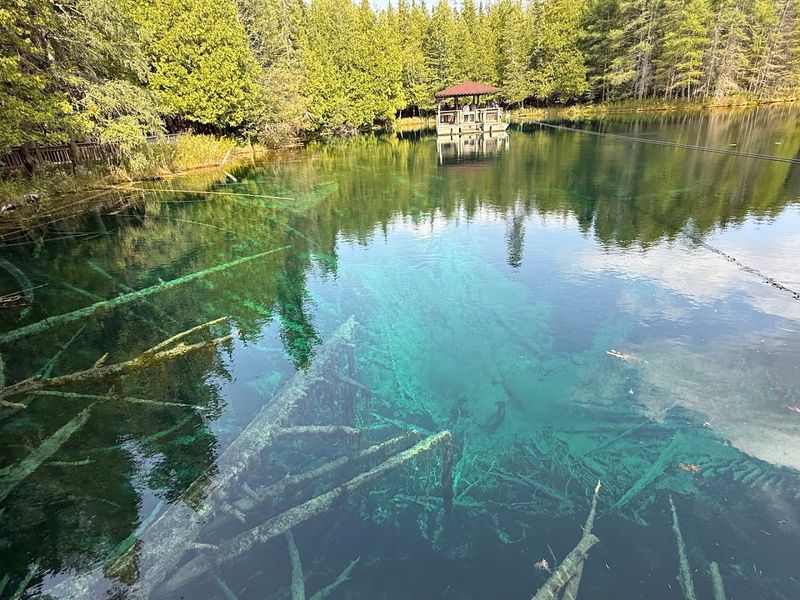
Michigan’s largest freshwater spring has a name that is a little tricky to say and a visual impact that is impossible to forget. Kitch-iti-kipi — sometimes called The Big Spring — sits inside Palms Book State Park near Manistique in the Upper Peninsula, and it pumps out tens of thousands of gallons of 45-degree water every single minute.
The result is a pool so clear and so vividly turquoise that photos of it almost look edited, even when they are completely unfiltered.
The way you experience it is genuinely unique. A large, self-guided observation raft is anchored to a cable that crosses the spring, and visitors pull themselves across the water using a hand-operated wheel.
As you float over the spring, you can look straight down through more than 40 feet of crystal-clear water at the sandy bottom below, watching fish glide through the current and logs preserved by the cold water for what feels like forever. It is one of those experiences where everyone on the raft goes quiet for a moment, just taking it in.
The spring maintains its 45-degree temperature year-round, which means it never freezes in winter and is always flowing. Visiting in winter is actually a special experience — steam rises off the warm-relative-to-the-air water, and the surrounding snow-covered landscape creates a surreal contrast.
The park is open year-round, and the raft operates during daylight hours. There is a vehicle entry fee for the state park, but it is modest.
Kitch-iti-kipi is the kind of place that belongs on every Michigan bucket list, not just the UP one. Once you see it in person, you will completely understand why locals hold it in such high regard.
9. Silver Lake Sand Dunes

Silver Lake Sand Dunes plays by a completely different set of rules than most natural areas in Michigan — and that is exactly the point. Located in Oceana County along the Lake Michigan shoreline, this is one of the very few places in the state where motorized off-road vehicles are permitted on open sand dunes.
The result is a high-energy, adrenaline-forward experience that draws a crowd that might not typically seek out nature destinations. Dune buggy rentals are available nearby, and the sight of vehicles cresting massive sand hills against a blue sky is something you just have to see.
That said, Silver Lake is not only for the off-road crowd. The eastern portion of the dunes is a pedestrian-only zone, offering hiking through a landscape that feels more like the Sahara than the Midwest.
The contrast between the open sand and Silver Lake on one side and Lake Michigan on the other creates a geography that is genuinely rare in the Great Lakes region. Walking to the top of the highest dunes rewards you with a 360-degree view that is hard to match anywhere in the Lower Peninsula.
The town of Silver Lake nearby has all the trappings of a classic Michigan beach town — ice cream shops, mini golf, rental shops, and a laid-back summer energy. Camping is available in the area, and spending a night means you can catch both sunset over the dunes and sunrise over the lake in the same trip.
Visiting on a weekday in midsummer is far more relaxed than a Saturday in July, when the place absolutely buzzes with activity. Whether you come for the horsepower or the hiking, Silver Lake Sand Dunes delivers a completely distinct Michigan experience that earns its place on any adventurous traveler’s list.
10. Eben Ice Caves
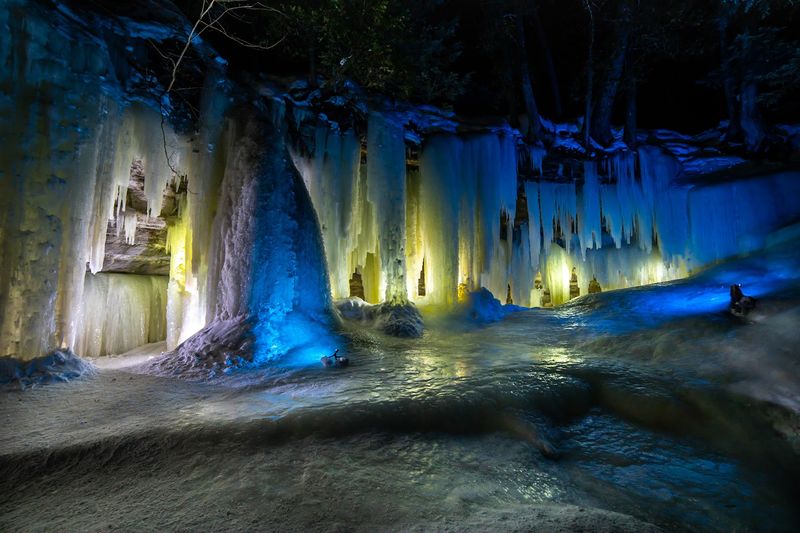
For a few months each winter, a small canyon in Michigan’s Upper Peninsula transforms into one of the most otherworldly sights in the entire Midwest. The Eben Ice Caves, located near Eben Junction in Alger County, are not technically caves in the geological sense — they are a rocky canyon where seeping groundwater freezes into enormous columns, curtains, and cascades of ice that cling to the walls and fill the narrow passages with blue-white light.
The effect is absolutely stunning and unlike anything most people have ever seen in person.
The hike to reach the caves is straightforward — roughly a mile each way through a winter forest — but the conditions require proper preparation. Microspikes or crampons are essential because the trail and the canyon floor can be extremely icy.
Layering up is non-negotiable since temperatures in the canyon are noticeably colder than outside it. Most visitors find the hike takes about an hour round trip, though many linger much longer once they arrive because the ice formations are endlessly photogenic and the light changes beautifully throughout the day.
The caves are only accessible in winter, typically from January through early March depending on the season’s temperatures. Warmer winters can limit the formations, while cold snaps produce the most spectacular results.
Checking recent visitor reports before making the trip is always a smart move. The site is managed informally, with no admission fee and no formal infrastructure — just a parking area and trail markers.
That low-key setup is part of what makes it feel so special. Arriving at the Eben Ice Caves on a still, clear winter day, surrounded by silence and ice glowing in shades of blue and white, is the kind of experience that makes a Michigan winter feel like a genuine privilege rather than something to endure.
11. Fayette Historic State Park
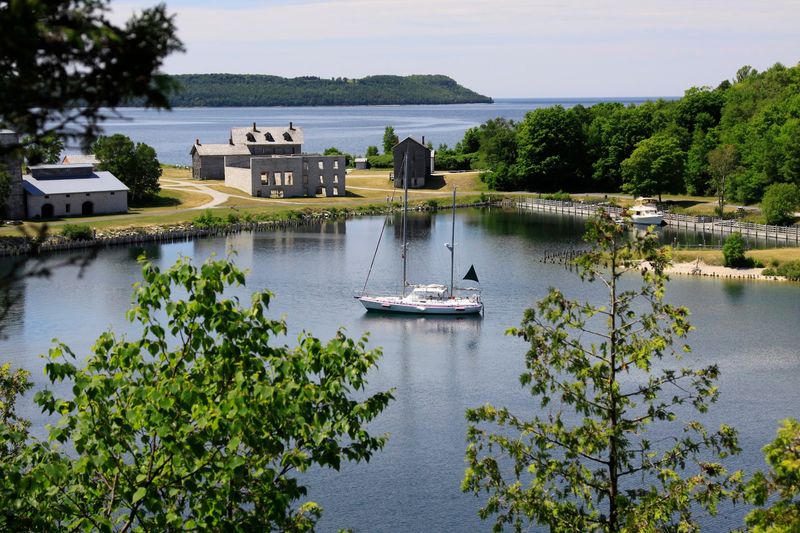
Fayette Historic State Park is Michigan’s answer to a ghost town, and it is far more atmospheric than that description might suggest. Tucked along the shores of Snail Shell Harbor on the Garden Peninsula in the Upper Peninsula, Fayette was a thriving iron smelting community in the late 1800s.
At its peak, it was a full industrial town complete with blast furnaces, worker housing, hotels, and a doctor’s office. Then the iron ran out, the economy collapsed, and the town was simply abandoned — left largely intact for history to preserve.
Today, visitors can walk through the remarkably well-preserved ruins and restored structures of the old townsite while dramatic limestone bluffs rise behind it and impossibly clear green water stretches out in front. The Michigan Department of Natural Resources has done excellent work maintaining the site and providing interpretive information throughout, so the history feels accessible rather than academic.
A small museum on-site adds context and displays artifacts recovered from the area.
The harbor itself is one of the most picturesque spots in the entire Upper Peninsula. Kayakers paddle through the calm water, and the reflection of the limestone cliffs in the green bay is the kind of scene that stops people in their tracks.
Camping is available in the state park, and spending a night means experiencing the site in the early morning when it is completely quiet and the light is golden on the old stone walls. Fayette is the kind of place where history and natural beauty reinforce each other perfectly — neither one would be as powerful without the other.
If you have never made the drive down the Garden Peninsula, Fayette alone makes it worth every mile.
12. Black Rocks at Presque Isle
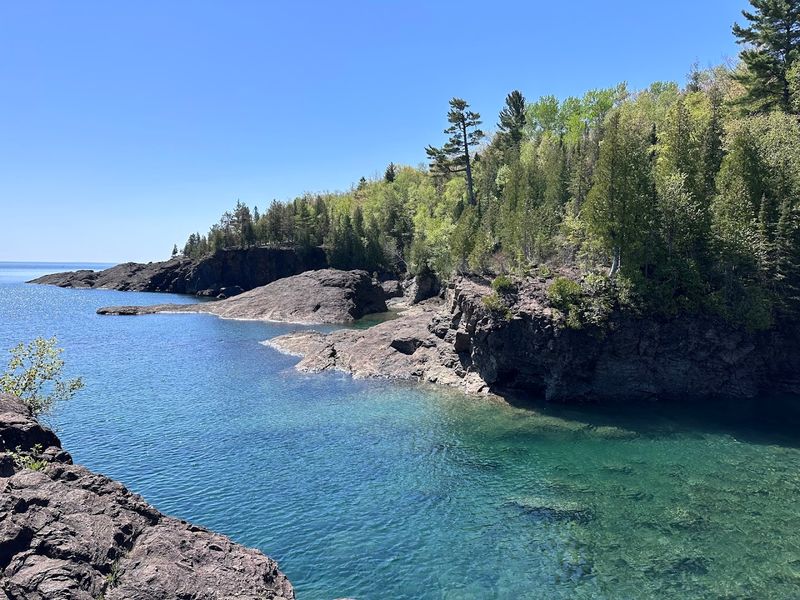
There is a moment at Black Rocks in Marquette where you stand on the edge of a dark volcanic cliff, look down at the cold blue water of Lake Superior below, and make a decision. Jump or don’t jump — but either way, the view from up here is worth every step of the walk to get there.
Black Rocks is a section of Presque Isle Park where ancient dark basalt cliffs jut out over Lake Superior, creating a natural cliff-jumping spot that has become a Marquette rite of passage for locals and a bucket-list moment for visitors who stumble upon it.
Presque Isle Park itself is a gem — a forested peninsula managed by the city of Marquette with walking and biking paths, rocky shorelines, and views of Lake Superior that remind you just how vast and powerful the Great Lakes really are. Black Rocks sits near the northern tip of the park and draws a crowd on warm summer days, with people of all ages lining up to make the leap into the cold, clear water below.
The depth is sufficient for safe jumping, but the water temperature is Lake Superior cold even in August, so be ready for that shock.
Non-jumpers have plenty of reasons to visit too. The rocky shoreline is dramatic for photography, especially during golden hour when the dark basalt glows against the orange and pink sky.
Sunsets at Presque Isle are among the most celebrated in the entire UP, and Black Rocks offers one of the best vantage points. The park is free to enter, and parking is available near the rocky shoreline.
Marquette’s walkable downtown is just minutes away, making Black Rocks an easy addition to any UP itinerary. It is the kind of spot that feels both wild and welcoming at the same time.
13. Grand Island National Recreation Area
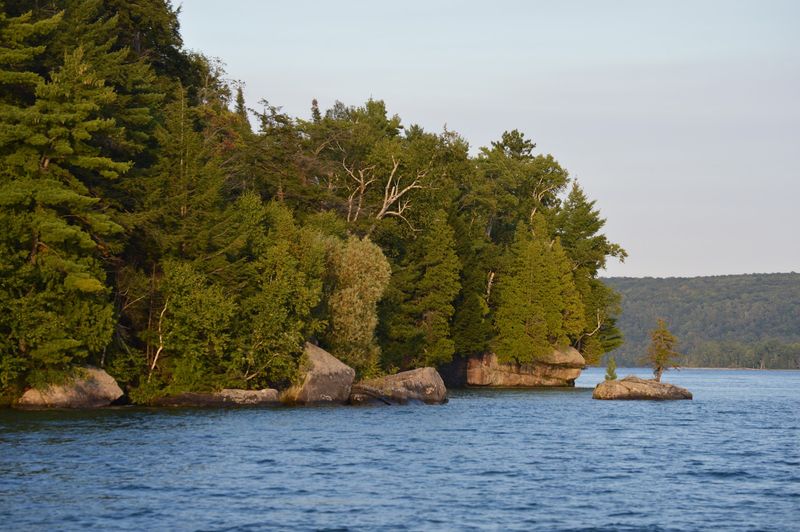
Just a short ferry ride from Munising, Grand Island sits in Lake Superior like a secret that most Pictured Rocks visitors never bother to discover. The island covers over 13,000 acres and is managed by the Hiawatha National Forest as a National Recreation Area, which means it is open to the public but sees a fraction of the traffic that the famous sea caves and cruise boats attract on the mainland nearby.
Getting there requires a quick ferry crossing, which itself offers great views of the surrounding Lake Superior shoreline.
Once on the island, visitors find miles of trails through old-growth forest, historic structures including a lighthouse dating back to the 1800s, and sandstone cliffs that rival anything visible from the Pictured Rocks cruise. The island also has a small beach camping area, and overnight stays are permitted with proper planning.
Biking is one of the most popular ways to explore the island’s trail network, and rentals are available on the mainland before you board the ferry. The combination of forest, cliff, and open lake views makes every mile of riding genuinely rewarding.
Wildlife on the island is abundant and relatively undisturbed — black bears, deer, beavers, and a variety of birds call Grand Island home year-round. The lack of permanent residents means the natural environment has remained largely intact, which gives the whole island a wilder, more untouched feeling than most accessible Michigan destinations.
Day trips are perfectly manageable, but anyone who camps overnight gets to experience the island in a completely different register — quiet, dark, and filled with the sound of Lake Superior lapping against the rocks. Grand Island is the rare place that rewards both the casual visitor and the committed explorer equally well.