Indiana is full of historic sites, but few make the past feel as immediate as Historic Old Fort in Fort Wayne. Surrounded by modern streets and riverfront trails, this reconstructed frontier fortress offers a striking glimpse into life on the American frontier during the late 1700s and early 1800s.
Its towering wooden walls, blockhouses, and period-style buildings create an experience that feels surprisingly immersive, especially during living history events and reenactments. Best of all, visitors can explore this unique landmark without paying an admission fee. For history lovers and curious travelers alike, it is one of Indiana’s most rewarding hidden gems.
A Stockade Skyline Over Spy Run
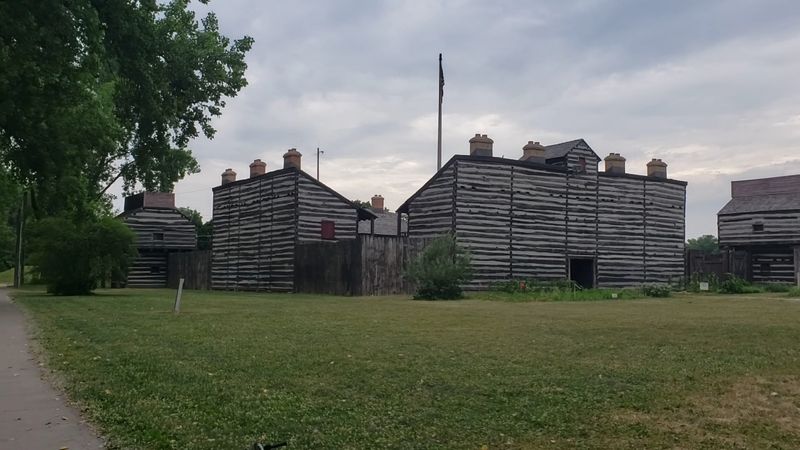
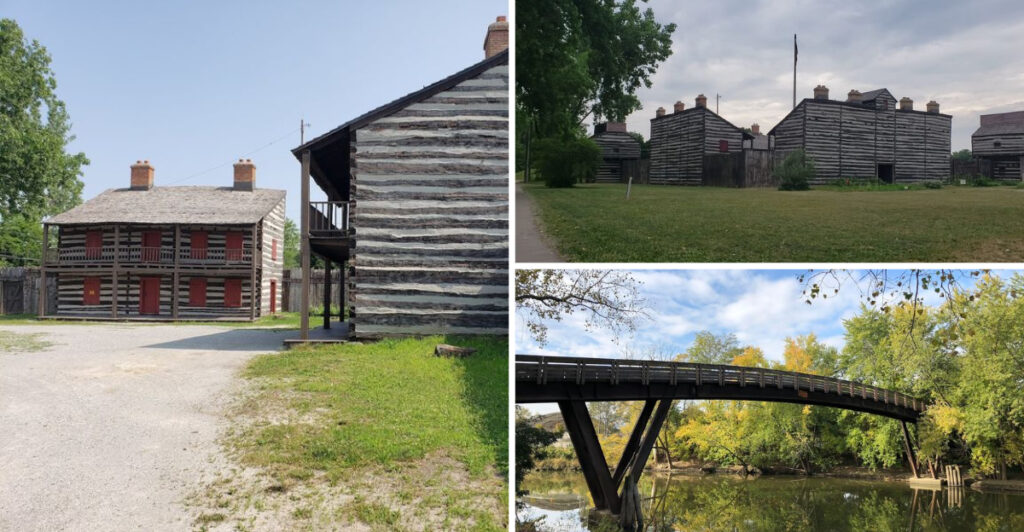
Across Spy Run Avenue, the fort rises with timber walls, squared blockhouses, and a stockade line that changes the whole view.
Downtown Fort Wayne sits nearby, yet this hilltop compound interrupts the grid with rough-hewn geometry, open sky, and frontier scale. Even before you enter, the design announces itself clearly and sets up a very different pace.
This is not a delicate museum facade tucked behind landscaping. The walls look defensive, the corners look watchful, and the gate has the kind of simple drama that makes you stop mid-conversation.
Because the fort stands above surrounding paths and roads, it reads almost like a stage set, except the timber mass gives it real physical weight.
That visual impact matters here. Historic Old Fort works first as a landmark, long before it works as an interpretive site, and that is part of its appeal.
You do not need a guide in the first minute to understand why forts were built around visibility, boundaries, and control of movement.
The setting adds another layer. Riverfront greenery softens the scene, while nearby streets, bridges, and city infrastructure keep modern life firmly in frame.
That old-new contrast is one of the strongest things about visiting, because you can read Fort Wayne’s development almost in one glance.
If you approach on foot, the reveal gets even better. The walls gradually fill your field of vision, details sharpen, and the fort stops looking like a roadside curiosity and starts looking substantial.
For a free attraction, it delivers a surprisingly cinematic entrance, built less on spectacle than on form, placement, and a strong sense of silhouette.
Inside the Gates, the Frontier Layout Clicks
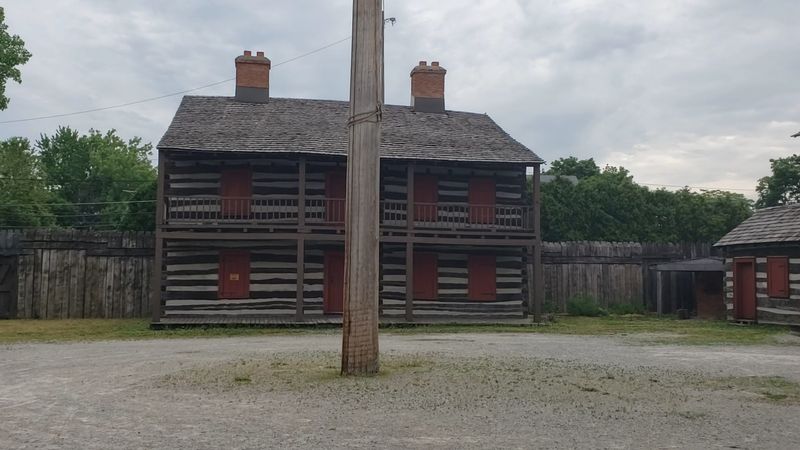
Once the gates are open, the fort makes most sense from the inside looking across the central grounds. Cabins, service structures, and defensive features sit in a compact arrangement that helps you understand daily military life without needing a giant site map.
The layout is practical first, and that practicality becomes the story. Nothing sprawls. Buildings face inward, movement funnels through simple paths, and open space in the middle keeps sightlines clear from several points.
Instead of wandering through a loose collection of replicas, you move through a working pattern of enclosure, shelter, storage, and surveillance. That compact plan gives the fort a satisfying sense of order.
The experience can be brief, but it is not thin. Even a half-hour visit can show how close together people lived, how exposed they still were to weather, and how every structure had a job beyond looking historic.
A modern visitor tends to notice square footage first, and the fort quietly corrects that habit. There is also a physical honesty to timber construction that photographs do not fully capture.
Logs, planks, hinges, and rough surfaces create a setting where little details carry a lot of meaning. You start noticing how doors are placed, how walls meet, and how little ornament exists when defense and utility run the show.
That is why entering the compound matters more than simply admiring it from the road. The fort stops being an object and becomes a system, with each structure supporting the whole.
Historic Old Fort may not be enormous by theme park standards, but its enclosed plan gives you a clearer frontier lesson than many bigger attractions manage.
The Oven, Workshops, and Small Details That Do the Heavy Lifting
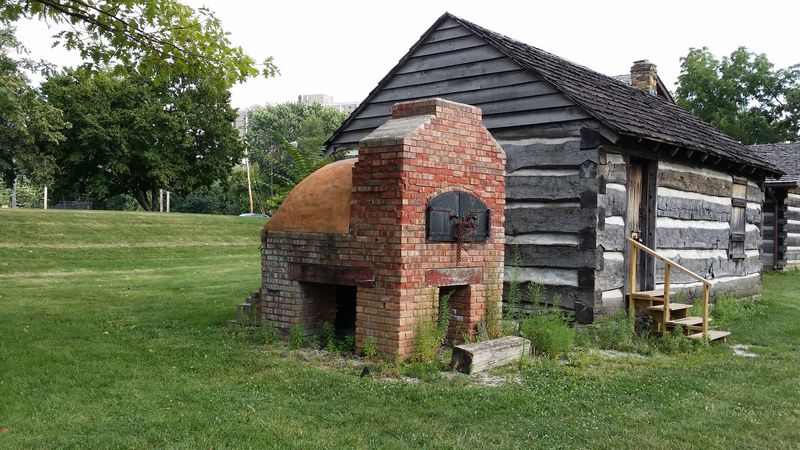
The broad walls get attention first, but smaller features are where the fort starts earning your curiosity. An outdoor oven, work areas, and utility-focused buildings add texture to the experience and keep the site from reading as a single oversized backdrop.
These details suggest routine, labor, and the plain mechanics of getting through a day. That matters because a frontier fort was never only about defense.
It was also about cooking, storing supplies, maintaining tools, and making limited space function for many needs at once.
The most interesting corners are often the ones that look least dramatic at first glance, because they reveal how survival depended on ordinary tasks.
Look closely and the place becomes more legible. Door widths, roof angles, chimney elements, and the spacing between buildings begin to explain weather concerns, fire risk, and the constant tradeoff between access and protection.
The site rewards slow observation more than speed, especially if you enjoy reading architecture as evidence. When demonstrations or living history events are happening, those smaller features become even more useful.
Suddenly an oven is not just a shape in the yard, and a work area is not just empty square footage. The fort turns from static reconstruction into a practical environment, one where chores and craftsmanship help connect the buildings to actual human rhythm.
Even on a quieter day, those spaces keep the visit grounded. They pull your attention away from dramatic walls and toward the humble systems that made enclosed settlements livable.
Historic Old Fort is strongest when you let the little things lead, because they transform the site from a photo stop into a more textured study of frontier logistics.
Why This Fort Matters in Fort Wayne, Indiana
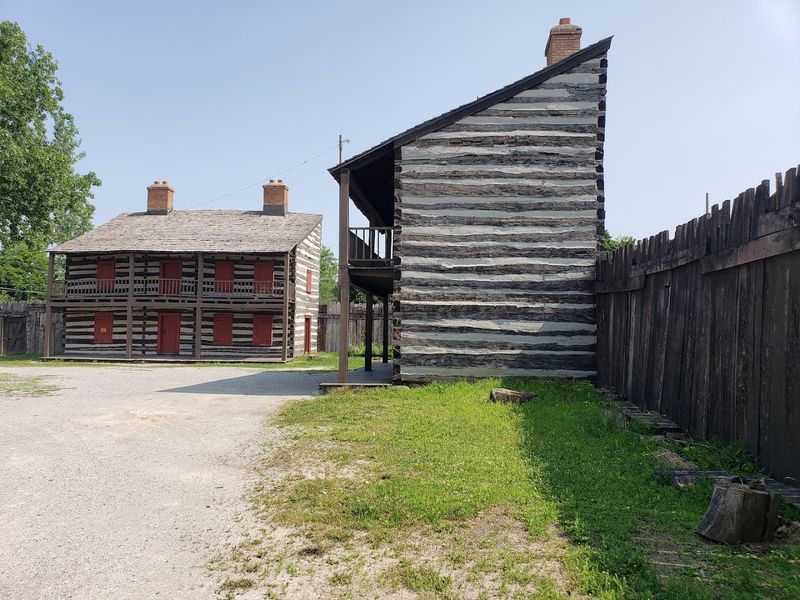
Historic Old Fort carries extra weight because Fort Wayne is not borrowing frontier imagery from somewhere else. The city’s identity is tied to military history, river geography, and early settlement patterns, so this reconstruction lands in the right cultural place.
It connects the local landscape to a period that shaped how the area developed. The site is a reconstructed fort rather than an untouched original, and that is worth understanding upfront.
Instead of pretending to offer pristine relics, it gives you a readable framework for imagining life during the early nineteenth century. Done well, reconstruction can clarify scale and use in ways that fragments alone often cannot.
That clarity is especially helpful for visitors who know the name Fort Wayne but not the reasons behind it. Here, the city’s title stops sounding ceremonial and starts sounding territorial, strategic, and river-driven.
The physical enclosure helps explain why forts mattered in contested, developing places where movement, trade, and defense overlapped constantly.
There is also a strong local-volunteer spirit around the fort, especially during tours, demonstrations, and reenactment programming.
Knowledge here often arrives through conversation, practical explanation, and visible craft rather than through endless wall text. That approach suits the site, because the place itself does much of the interpretive work.
For Indiana travelers, this is one of those stops that sharpens the map. It makes regional history more specific, less abstract, and far easier to picture.
Instead of reading about frontier networks in broad terms, you can stand inside a timber enclosure in Fort Wayne and see how military design, settlement pressure, and local geography once fit together.
Catch It on the Right Day and the Place Changes Completely
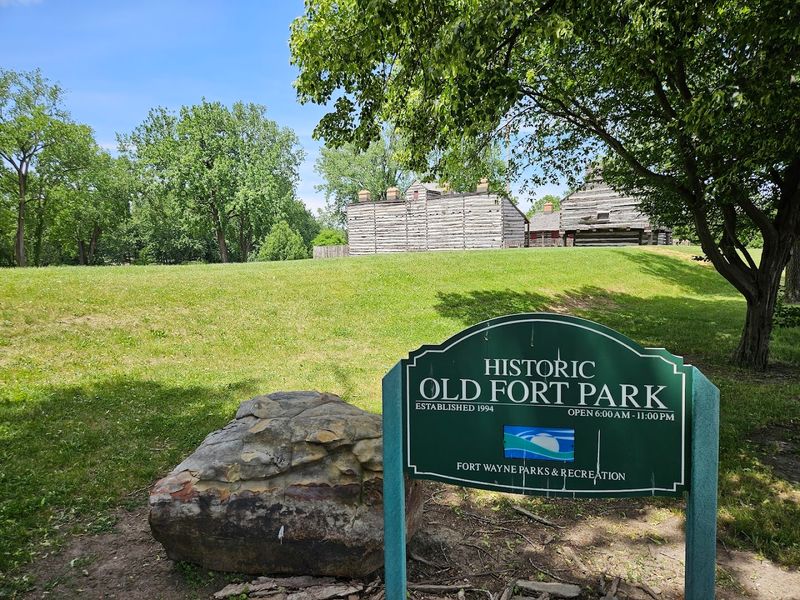
Timing shapes this visit more than many travelers expect. On an active day, the fort can offer tours, interpreters, demonstrations, and a much clearer sense of how the compound functioned.
On a closed or preservation-heavy day, you may only get the exterior, which is still interesting but naturally more limited.
That difference is not a flaw so much as a planning issue. Historic sites with restoration needs, volunteer staffing, and event-based programming often operate unevenly, and this fort is no exception.
If you arrive while the gates are open and staff are available, the place becomes far more legible and rewarding. When activity is happening, static buildings gain momentum.
A guide can explain what a structure was for in seconds, while clothing, tools, and demonstrations help scale the distance between your era and the fort’s.
Suddenly the site is not just architecture to inspect. It becomes a working lesson in routine, hardship, and adaptation.
Even without a major event, the best visits happen when you allow enough flexibility for a short walk, a slow lap, and a few pauses. This is not a marathon attraction.
It is better treated as a focused historical stop that can pair easily with nearby riverfront paths or other downtown Fort Wayne plans.
Think of it as a place that rewards precision rather than sheer duration. Pick an open window, expect a compact experience, and stay alert for special programming that adds human energy to the timber setting.
Historic Old Fort can be a quick look or a richer interpretive stop, and the difference usually comes down to the calendar.
A Better Way to Experience the Fort
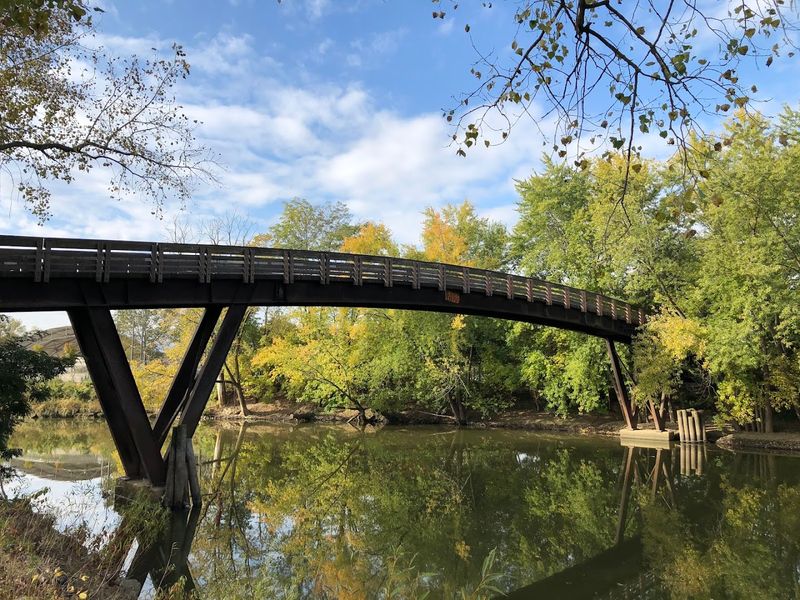
Getting to the fort is part of the experience, and the smartest approach is not always the most obvious one. Because traffic along Spy Run can feel busy, many visitors prefer approaching through the surrounding park and trail areas instead of treating it like a quick roadside stop.
That route builds anticipation and usually offers better views. Walking in along the river corridor changes the pacing immediately. Trees, water, bridges, and open sky create a softer lead-in before the timber walls come into sight.
The fort then appears as a destination within a landscape rather than an isolated object beside asphalt, which is a much stronger introduction.
This approach also helps the site make geographic sense. Forts were never random structures dropped anywhere convenient.
They responded to movement corridors, visibility, and defensible terrain, and arriving on foot lets you absorb those relationships better than a fast car-to-gate transition does.
There is a practical side to this too. A short walk gives you room to gauge whether the gates are open, whether programming is underway, and how much time you want to spend once you arrive.
It also turns a compact attraction into a more rounded outing, especially if you are exploring downtown Fort Wayne on the same trip.
If you only have an hour, this is still a useful strategy. The fort, the path, and the river setting complement each other well, and none of them needs a huge time commitment.
Historic Old Fort becomes most satisfying when the visit includes movement through the surrounding landscape, not just a stop for a single photograph and immediate departure.
Free, Brief, and Surprisingly Distinct
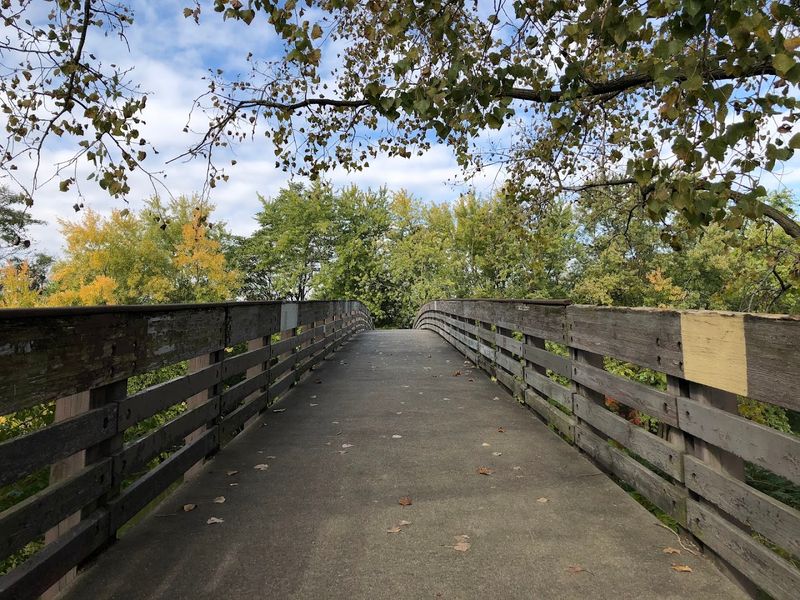
Not every attraction needs to fill an entire afternoon to justify itself. Historic Old Fort is compact, free, and visually distinctive enough to deliver value quickly, especially for travelers who like places with clear character and local context.
It asks for attention more than endurance, which makes it unusually easy to fit into a day. The free admission changes expectations in a good way.
Instead of weighing ticket price against entertainment volume, you can focus on what the site actually offers: a strong sense of place, a reconstructed frontier environment, and a direct connection to Fort Wayne’s historical identity.
That makes even a short visit feel low-risk and worthwhile. It also helps that the fort is specific. This is not a generic village display trying to represent every era at once.
The timber walls, enclosed plan, and military logic create a defined experience, one that stands apart from standard downtown sightseeing or broad local history exhibits.
There are limitations, of course. Access can vary, preservation work can affect what is available, and some days will provide more interpretation than others.
Yet even with those caveats, the fort offers something many free sites do not: an immediate visual world that reorganizes your sense of the city around it.
That is the sharp takeaway. Historic Old Fort is not memorable because it is flashy or oversized by modern attraction standards.
It stands out because a reconstructed nineteenth-century fortress in the middle of Fort Wayne is bold, unusual, and unexpectedly readable. When the gates are open, it is one of Indiana’s simplest and most effective little time shifts.
Share this story