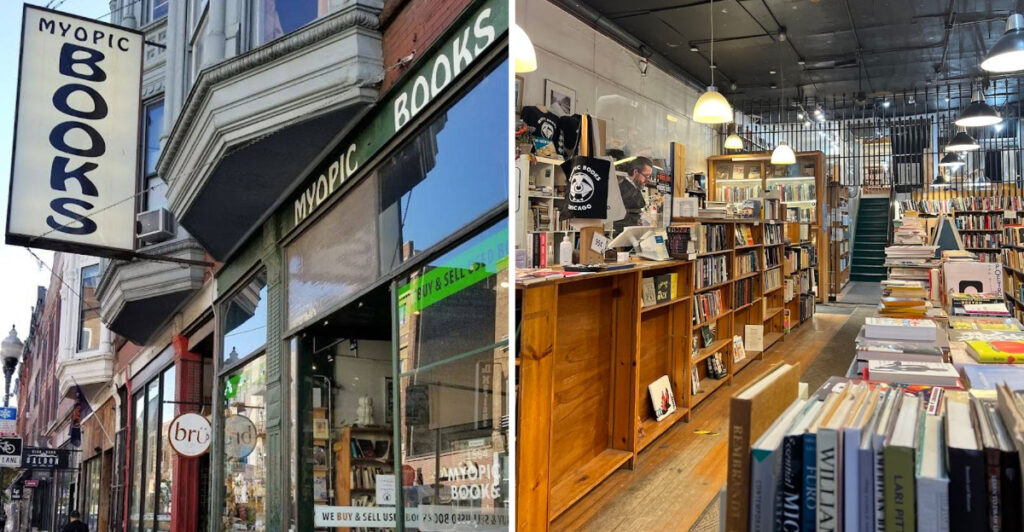
Chicago is home to countless bookstores, but few inspire the kind of devoted following earned by Myopic Books in Wicker Park. Spread across three floors and packed with thousands of titles, this beloved independent bookstore feels less like a retail shop and more like a literary treasure hunt.
Narrow aisles, towering shelves, and room after room of used books invite visitors to slow down, browse, and discover unexpected finds around every corner. Whether you’re searching for a specific title or simply love getting lost among the stacks, Myopic Books offers an experience that can easily fill an entire afternoon.
A Milwaukee Avenue Entrance That Sets the Tone Fast
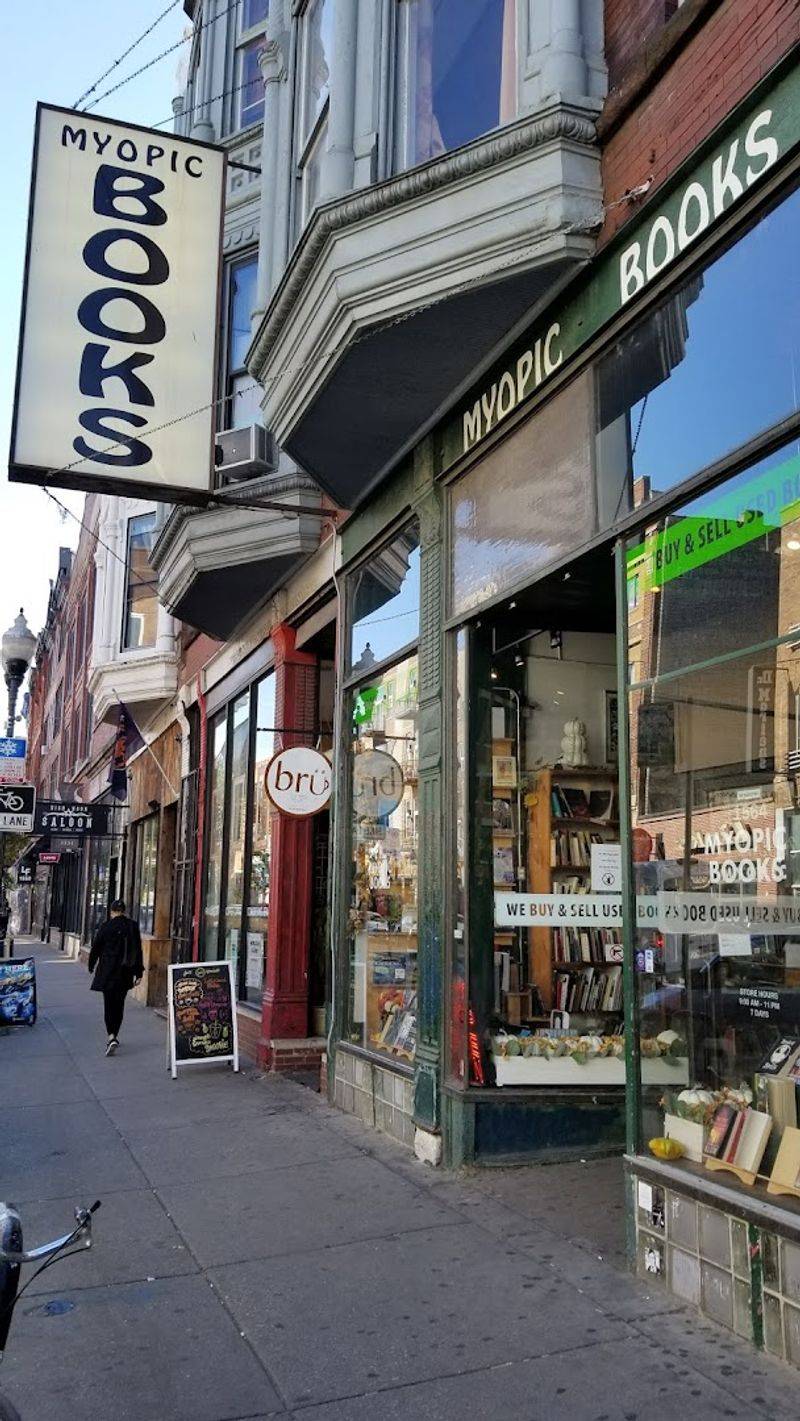
On a busy stretch of Milwaukee Avenue, Myopic Books announces itself less like a polished retail chain and more like an invitation to wander.
The storefront sits right in Wicker Park’s foot traffic, where restaurants, trains, and quick-moving sidewalks create a steady hum outside. Then the door opens, and the pace changes almost immediately.
Inside, the visual signal is clear: this place is built for browsers, not rushed errands. Shelves rise high, aisles narrow, and the inventory appears to continue well beyond the first glance, giving the room a packed, vertical energy that feels older than most modern bookshops.
That density matters, because it tells you this is a store where discovery comes before display. Nothing about the entrance suggests minimalism.
Books stack close together, category signs pull your eyes in different directions, and the layout rewards curiosity more than efficiency, which is part of the appeal if you actually enjoy searching.
Instead of one clean path through the store, you get visual fragments – a staircase, a side room, a shelf that looks promising, another one that looks even better.
That layered first impression explains why people can lose track of time here so easily. Myopic Books does not feel built around a single grand reveal, but around accumulating small ones as you move deeper into the building.
Before reaching the upper floors or the basement, the main level already makes a convincing case: this is the kind of bookstore where browsing is the event, and the event starts within a few steps of the front door.
Three Floors, Countless Detours, Zero Straight Lines
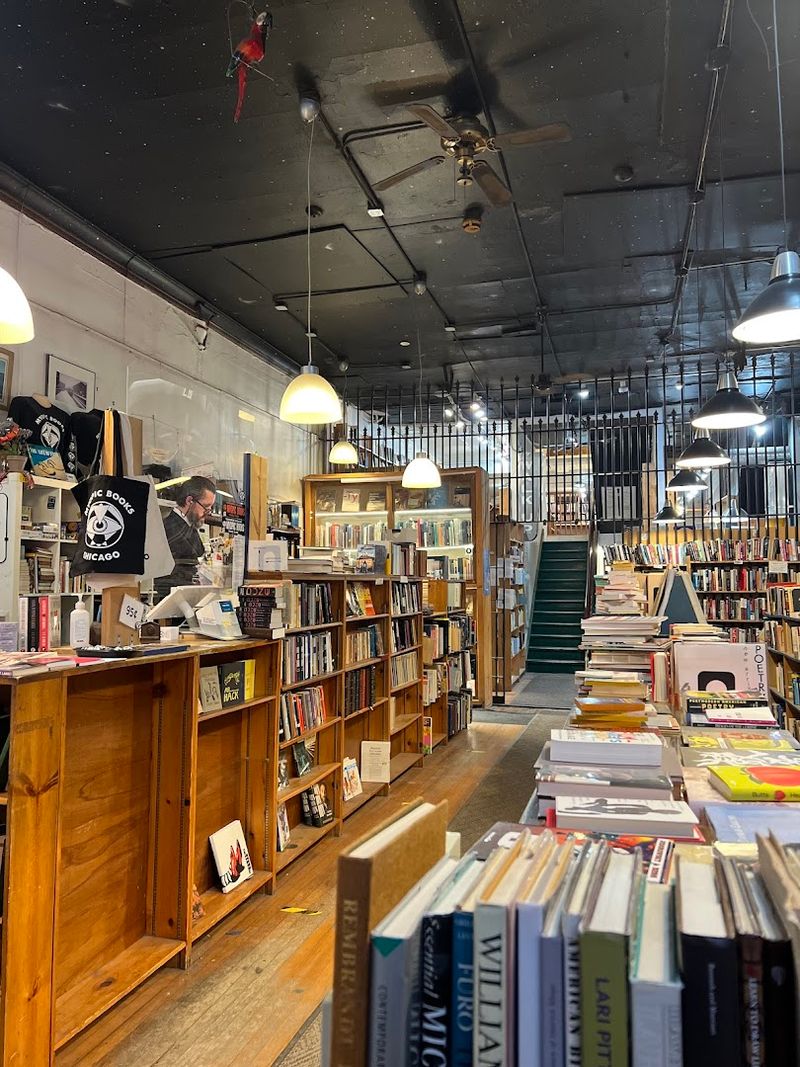
The biggest thrill at Myopic Books is not one display or one rare title. It is the building itself, arranged across three levels in a way that keeps the experience moving vertically as much as horizontally.
You are not simply scanning shelves here; you are navigating a compact little world of stairs, corners, and unexpected continuations.
That tri-level layout changes how you browse. A quick stop can turn into a full circuit through the main floor, then upstairs for quieter pockets and window light, then down to the basement where larger genre sections can feel almost tucked into their own territory.
Every level shifts the mood slightly, which helps the store avoid the flat sameness that bigger, more uniform retailers often have.
The structure also creates a nice rhythm for decision-making. If one section does not deliver exactly what you wanted, the next flight of stairs resets your attention and sends you toward a different category, a different mood, or a different kind of surprise.
That movement keeps the hunt lively, especially if you enjoy bookstores where your original plan gets derailed by a better find.
Just as important, the multi-floor setup supports lingering. There is enough stock, and enough separation between sections, that you can browse with intention or simply drift until a spine catches your eye.
Myopic Books turns square footage into narrative, one floor at a time, so by the time you emerge back onto Milwaukee Avenue, the visit can feel less like shopping and more like having spent an hour inside a paper-built labyrinth that never quite shows all of itself at once.
Where Used Finds and Deep Shelves Beat Algorithm Shopping
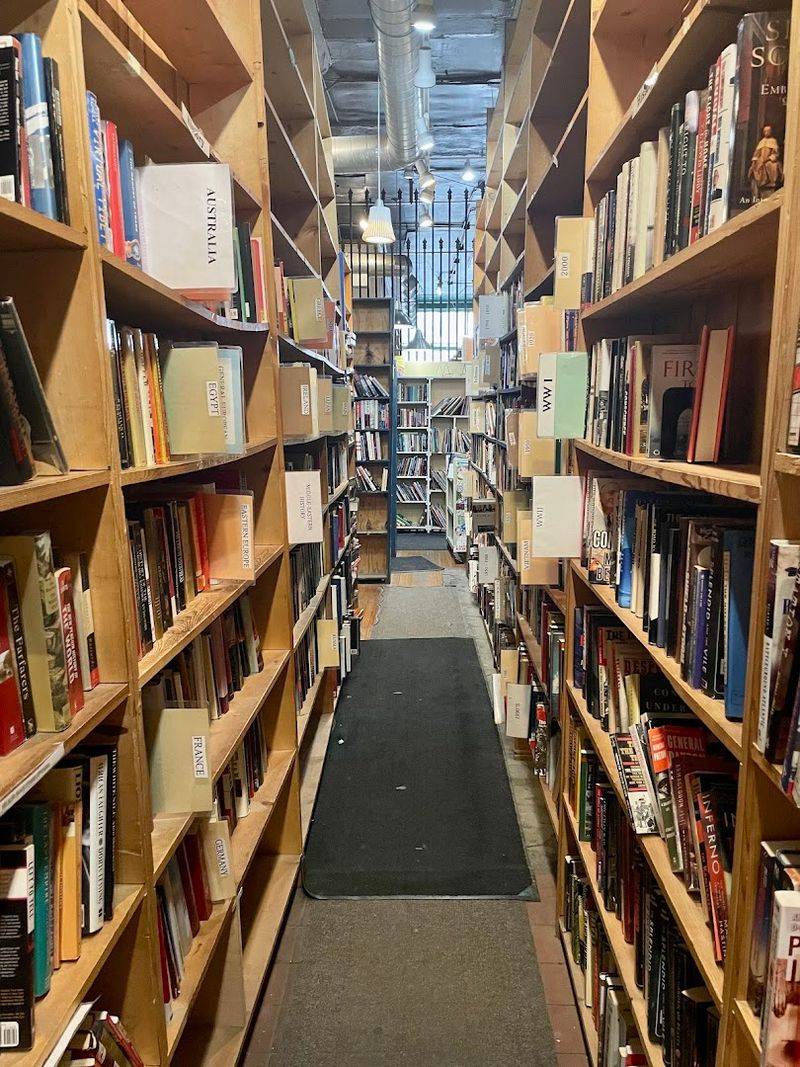
Myopic Books works best for readers who like possibility more than certainty. The stock leans heavily into used books, with some newer titles in the mix, and that combination gives the shelves a lived-in range that feels broader than a tightly curated front-table approach.
You are not being guided toward one trending release so much as dropped into a conversation between decades, genres, and editions.
That matters in a city where plenty of shopping can start to feel optimized beyond enjoyment. Here, browsing still involves chance: a classic paperback with an old price penciled inside, a clean used copy of something already on your list, a subject section that opens into authors you were not planning to read.
The pleasure comes from seeing books as physical objects with histories, not just as identical units sorted by a recommendation engine.
The store’s scale helps that experience feel serious rather than gimmicky. With tens of thousands of books reported in the inventory, sections have enough depth to support actual searching, not just decorative abundance.
If you head for literature, criticism, science fiction, poetry, or offbeat nonfiction, the shelves invite patience, and patience is usually rewarded.
Prices and exact finds will vary, as they do in any used bookstore, but the larger point is stronger than one lucky score. Myopic Books gives you the kind of selection where buying one title can easily turn into carrying out three, because each aisle creates a new argument for staying longer.
In an era of instant results, that slower, tactile style of discovery feels refreshingly stubborn, and for readers who miss the joy of finding the right book by accident, it is the store’s sharpest strength.
Chicago, Illinois Character in the Best Sense of the Word
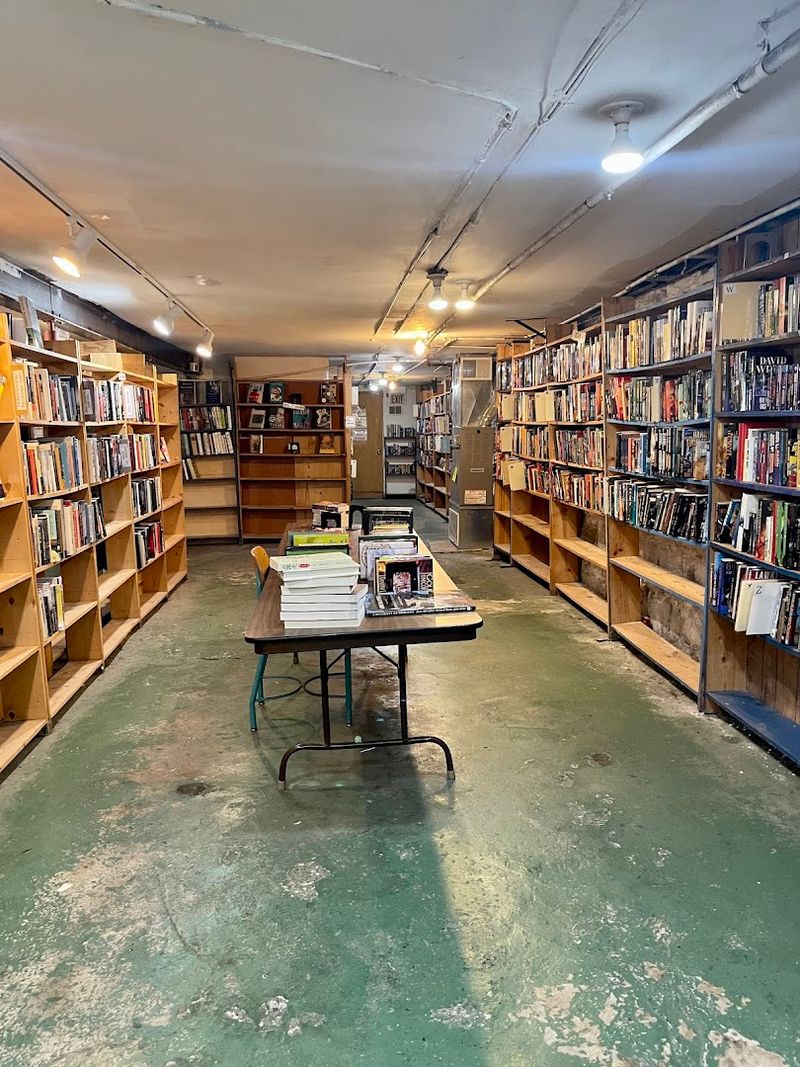
Myopic Books is not trying to look pristine, and that is part of its identity. The store has an unmistakably urban, well-used character, with tightly packed shelves, visible wear, and a little visual roughness that fits the creative energy of Wicker Park better than a spotless showroom ever could.
If you prefer your bookstores polished into lifestyle backdrops, this place may surprise you. What keeps that character from tipping into chaos is the way the inventory still reads as organized rather than random.
Even with so many books crammed into the space, the store operates like a functioning browse machine, where categories lead somewhere and the messiness is more textural than sloppy. That distinction is important, because Myopic’s charm comes from density and age, not from neglect.
There are also building details that deepen the sense of place. Longtime browsers often notice features that hint at earlier uses of the property, including old structural elements that give the rooms a slightly unusual geometry compared with a standard rectangular sales floor.
Combined with narrow passages and high shelving, those details create a physical setting that feels intensely local, shaped by the building rather than imposed on it.
In Chicago terms, the store lands in a sweet spot between literary institution and neighborhood fixture. It has enough grit to feel rooted, enough scale to feel substantial, and enough personality to stay interesting even before you pull a single book from the shelf.
That combination gives Myopic Books an identity stronger than simple nostalgia. It looks and operates like a place that survived by remaining itself, which is far more compelling than trying to imitate a cleaner, softer version of independent retail.
Upstairs Light, Basement Treasure Hunt, and the Quiet Corners Between
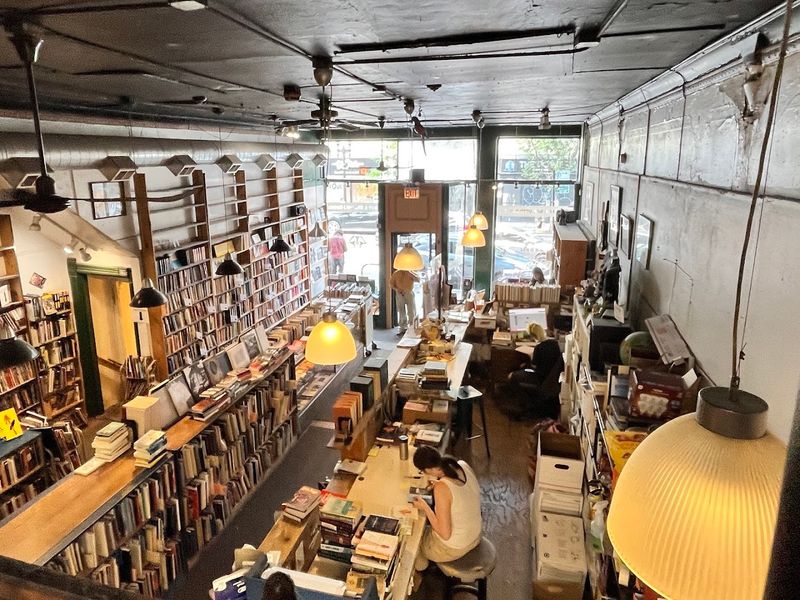
Once the scale of Myopic Books settles in, the mood becomes just as interesting as the inventory. Different parts of the store carry different energy, and those subtle shifts help explain why people stay longer than planned.
One room feels bright and open, another feels tucked away and almost secretive, and the transition between them keeps the browsing experience from becoming visually repetitive. The upstairs areas often provide the calmest stretches of the store.
Natural light filters through windows, softening the packed shelves and creating pockets where readers can pause with a potential purchase before moving on.
It is not a reading lounge, yet there are moments when the atmosphere encourages you to slow down and spend a little extra time with a book before committing to it.
Elsewhere, the feeling changes. Certain corners seem built for wandering rather than destination shopping, where overlooked titles, older editions, and unexpected subjects quietly compete for attention.
The appeal comes from never feeling entirely certain what is around the next shelf. Instead of guiding visitors through a carefully controlled sequence, Myopic allows the store’s personality to emerge gradually through exploration.
That unpredictability becomes one of the bookstore’s greatest strengths. Every visit unfolds a little differently depending on where you linger, what catches your eye, and how much time you are willing to give the process.
Some people arrive looking for a specific author and leave with something entirely unrelated. Others come back repeatedly because they know the experience never feels exactly the same twice.
At Myopic Books, the real reward is not simply finding a book. It is discovering a corner of the store that somehow feels like it was waiting for you all along.
More Than Retail: A Bookstore That Behaves Like a Cultural Room
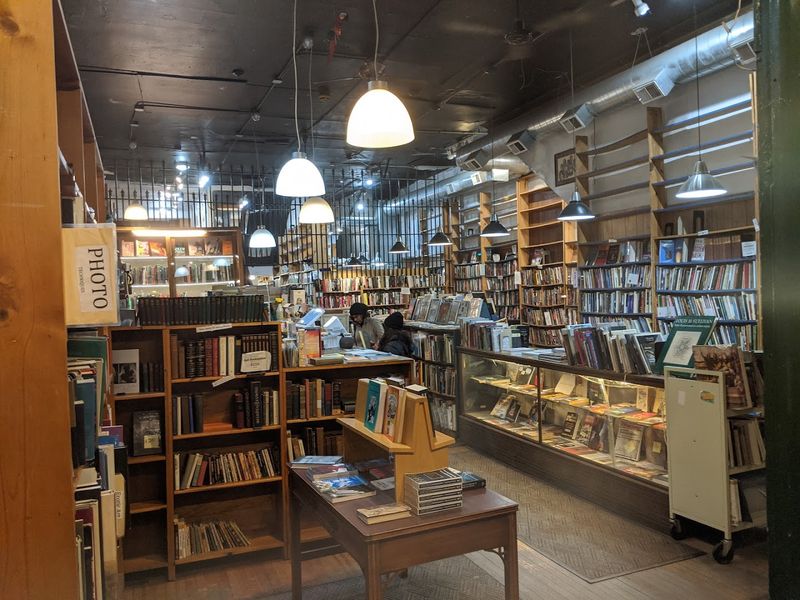
Myopic Books is not only a place to buy used books. It has also been known to host periodic concerts and poetry nights, which adds another layer to how the space functions within the neighborhood.
That detail matters because it frames the store less as a passive inventory warehouse and more as an active room where literary and creative life can keep unfolding after regular browsing hours.
Even when no event is happening, that possibility changes the energy of the place. Shelves stop reading as mere storage and start feeling like the walls of a small cultural venue, the kind of setting where a reading, a performance, or a conversation can fit naturally without the need for theatrical staging.
In a district like Wicker Park, that crossover between bookstore and gathering spot makes sense. The store’s endurance also says something about its role.
Independent used bookstores do not remain fixtures in high-traffic neighborhoods by accident, especially not ones this large, this specific, and this committed to physical browsing.
A place like Myopic survives because it serves several habits at once: shopping, wandering, selling books, attending events, and participating in a local rhythm that chain retail rarely replicates.
That local function gives the visit a wider context without turning it into a history lecture. You can walk in simply wanting a novel for the train ride home and still sense that the store occupies a meaningful niche in Chicago’s cultural geography.
It sells books, yes, but it also preserves a certain public intimacy: strangers quietly searching nearby, staff handling the flow, and the occasional reminder that literature is not only consumed in private. At Myopic Books, the shelves are the draw, yet the larger point is community shaped through paper, space, and repeat visits.
How to Browse Myopic Without Rushing the Good Part
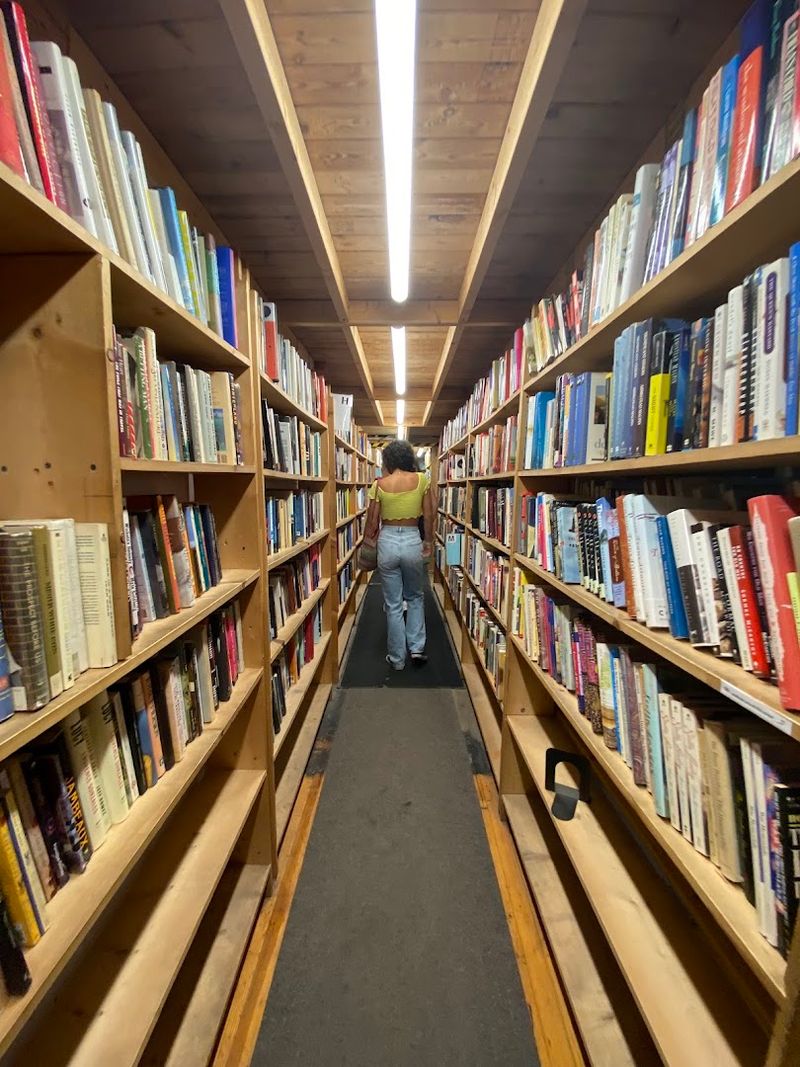
The smartest way to visit Myopic Books is to treat it like an unhurried errand, not a quick transaction. The store opens daily at noon and runs into the evening, which gives you a generous window, but the real strategy is mental: arrive expecting to browse longer than planned.
A place this dense rewards patience far more than speed. If you have a target title, start with that section and then deliberately allow for drift.
The inventory is broad enough that side discoveries are practically built into the experience, and the multi-level layout makes it easy to keep extending the search by floor, by genre, or simply by instinct.
Carrying a small stack as you explore is almost part of the ritual. Because aisles can be tight and the store can draw a crowd, pacing matters.
If you dislike confined browsing, choosing a calmer moment may improve the visit, while readers who enjoy close-packed shelves will probably embrace the hunt regardless.
Either way, this is not the kind of shop where you want one eye on the clock the entire time. It also helps to pair the bookstore with the surrounding neighborhood rather than treating it as an isolated stop.
Wicker Park makes a good backdrop for a slow afternoon, and Myopic fits naturally into that rhythm, whether you are arriving by train, walking the corridor, or building a longer day around independent businesses.
The practical takeaway is simple: give the store at least an hour, more if you love used books, and enough bag space for the purchase that was not on your list. At Myopic Books, the best part of the visit usually begins right after your original plan falls apart.
Why This Wicker Park Bookstore Earns an Afternoon, Not a Quick Stop
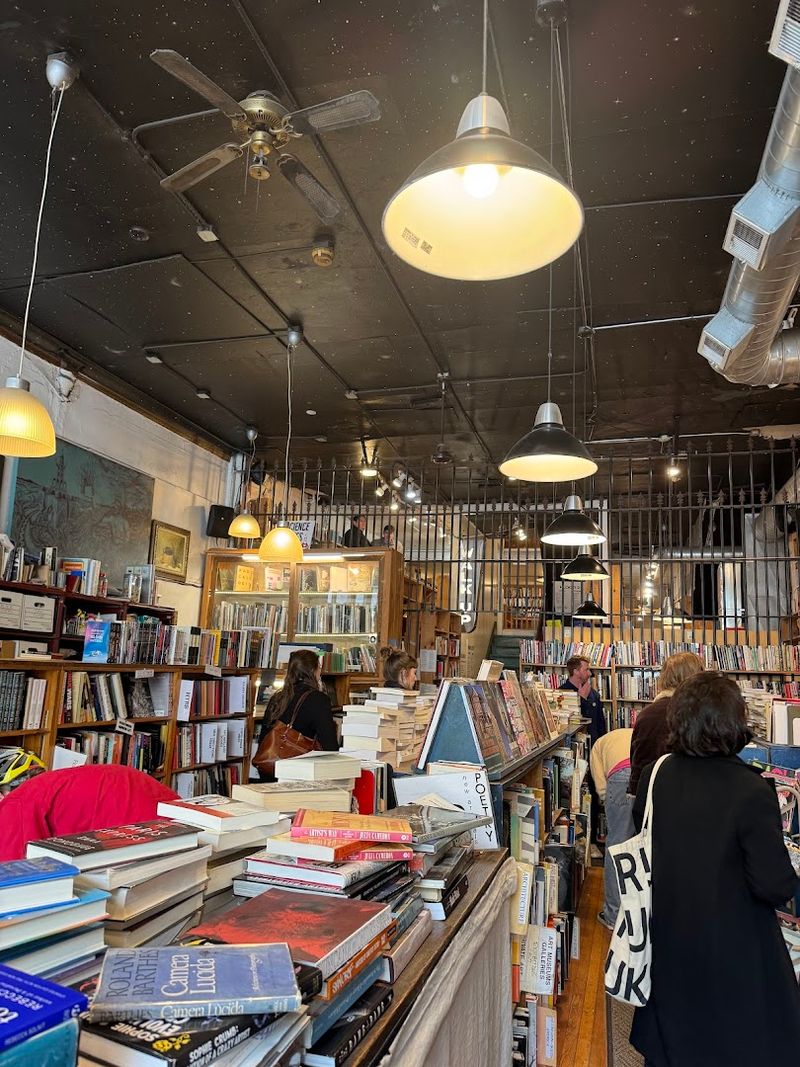
Some bookstores are memorable because they are curated with surgical precision. Myopic Books stands out for the opposite reason: abundance, complexity, and a willingness to let the search stay messy in productive ways.
That is a harder experience to fake, and it is exactly why the store commands attention in a city full of places competing for your afternoon.
The three-story setup gives it scale, but scale alone would mean little without usable depth. Here, the sheer number of books is matched by a layout that keeps feeding your curiosity, whether you are chasing literature, genre fiction, poetry, criticism, or some wonderfully random subject you did not expect to carry home.
The store understands that serious browsers do not want friction removed entirely; they want the right amount of it.
Its personality matters too. Myopic Books has edges, narrow spots, visual clutter, and the kind of lived-in character that instantly separates it from cleaner but flatter retail spaces.
That identity will not suit every shopper equally, yet for readers who value selection, surprise, and a strong sense of place, those details are features rather than flaws.
In practical terms, the address places it squarely within one of Chicago’s most walkable, browse-friendly neighborhoods, and the daily noon-to-evening schedule makes it easy to fit into a weekend or weekday plan. In experiential terms, it offers something rarer: a bookstore visit that still feels open-ended.
You can enter with one title in mind and leave with a stack, a new section to care about, or a stronger appreciation for stores that trust books to sell themselves through proximity and patience.
If your ideal afternoon involves stairs, shelf after shelf, and the constant possibility of a better find around the next corner, Myopic Books makes an excellent case for lingering.
Share this story