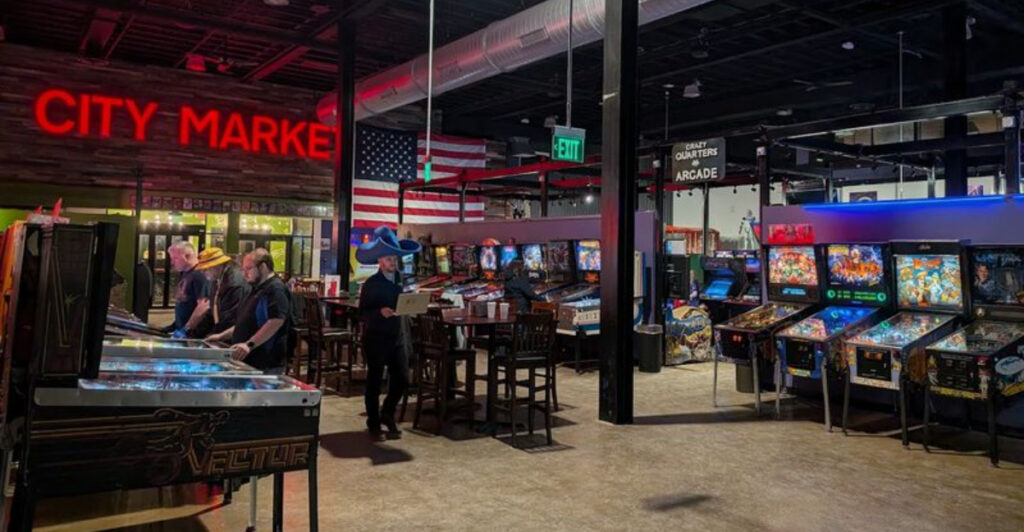
On Bay City’s historic Center Avenue, Crazy Quarters Arcade brings back the simple thrill of dropping a coin into a machine and waiting for the game to come alive. Inside, flashing screens, pinball bells, button mashing, and old-school cabinet art create the kind of atmosphere that feels instantly nostalgic.
It is a place for longtime gamers who remember the arcade era firsthand, but also for kids discovering that fun does not always need a touchscreen. Here, the experience is physical, noisy, colorful, and refreshingly real.
The Pinball Room That Deserves Its Own Fan Club
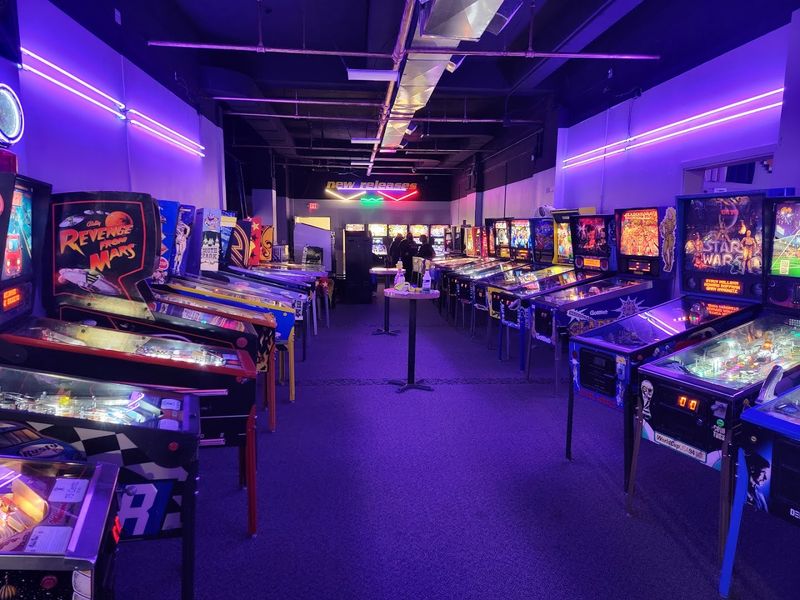
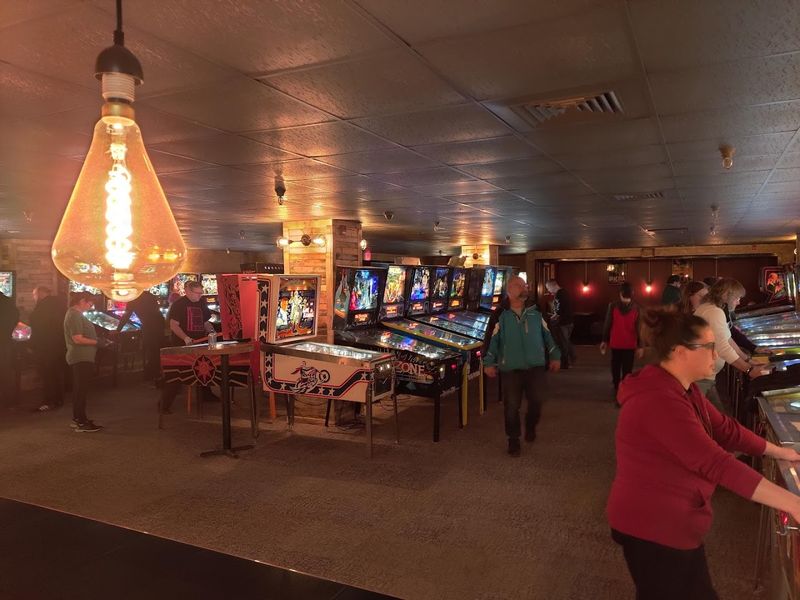
Walk past the main floor and keep going. There is a whole separate room dedicated entirely to pinball machines, and it stops people mid-step every single time.
It is not just a handful of machines pushed against a wall — it is a proper collection, spanning decades of design, theme, and mechanical ingenuity.
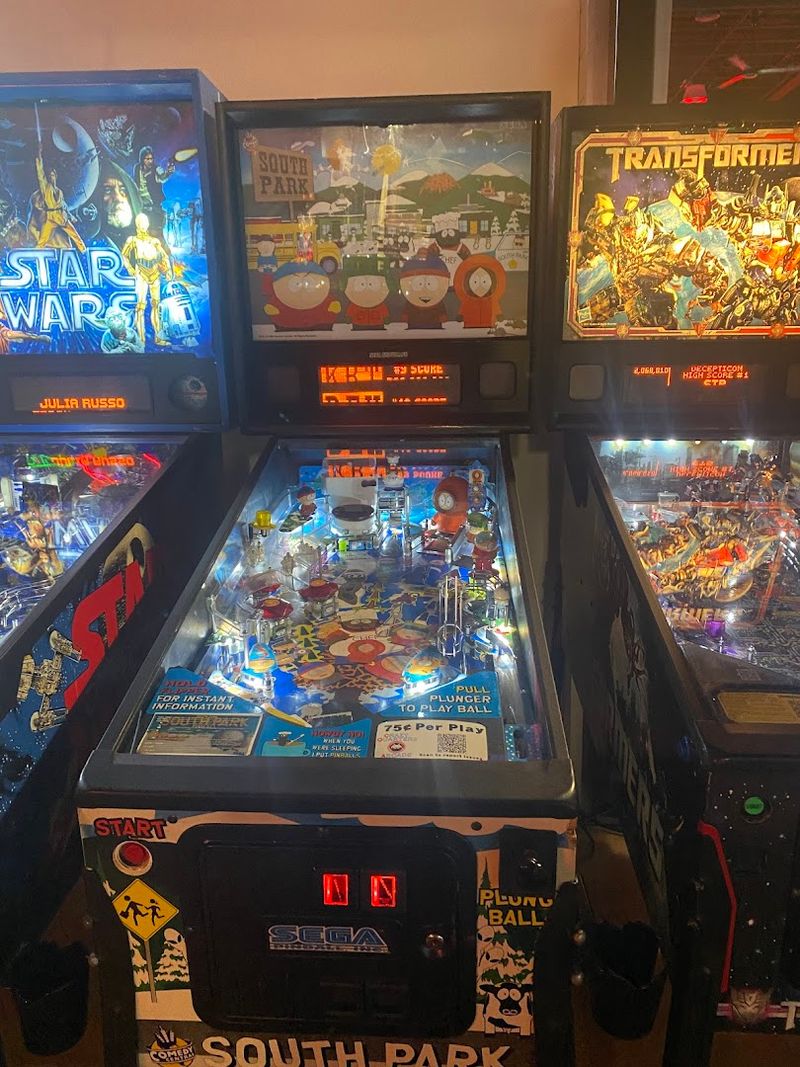
Some of the machines look like they belong behind museum glass. Restored cabinets with hand-painted artwork, intricate mechanical ramps, and multi-ball chaos that will make your palms sweat.
Others are newer releases, packed with digital displays and licensed themes. The contrast between old and new is part of what makes the room feel alive rather than static.
Reviewers consistently point out that nearly all the machines are in solid working order, which matters more than people realize. Nothing kills the mood of a retro arcade faster than feeding quarters into a machine that eats them without giving you a single ball.
The staff at Crazy Quarters takes maintenance seriously, with QR codes on each machine so players can flag issues quickly.
Pricing runs from fifty cents to a dollar for most games, which feels reasonable once you factor in how long a good pinball session actually lasts. A skilled player can stretch a single dollar across several minutes of play.
Even a beginner will find the learning curve part of the appeal — there is a tactile satisfaction to hitting a flipper at just the right moment that no touchscreen has ever replicated.
The room has a particular energy on weekday evenings when it is quieter. You can actually hear the mechanical sounds of each machine without competing noise, which changes the whole feel of playing.
Classic Arcade Cabinets That Bring the 80s and 90s Right Back
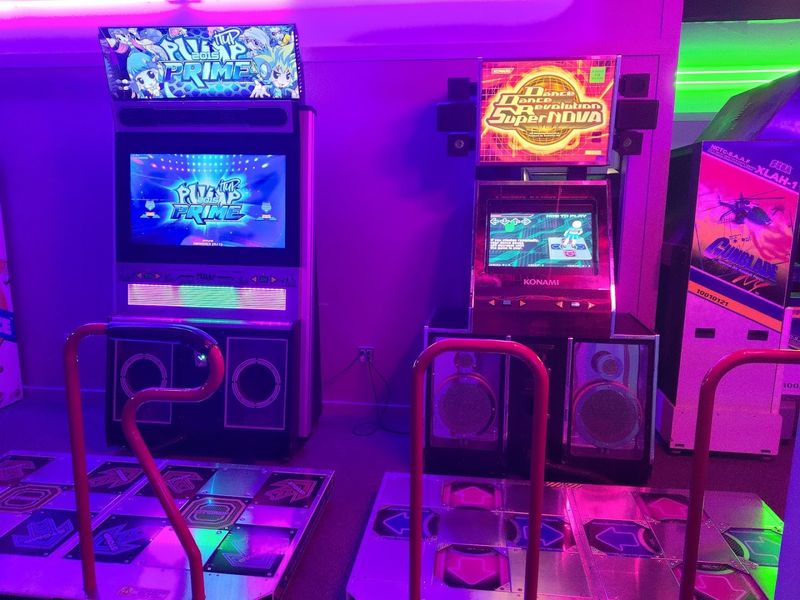
There is something about the silhouette of an upright arcade cabinet that activates a very specific part of the brain. The chunky bezels, the worn joystick grips, the artwork airbrushed down the sides — it all reads as a kind of visual shorthand for a particular era of childhood.
Crazy Quarters stocks a solid lineup of classic arcade titles alongside its pinball collection. Games like Mike Tyson’s Punch Out, The Simpsons arcade cabinet, and various racing and interactive titles show up on the floor with enough variety that different generations of visitors will each find something that registers as familiar.
One reviewer specifically mentioned Guitar Hero, which sits in that interesting middle zone between classic and modern.
The fighting game cabinets draw competitive energy fast. Even strangers end up side by side, trading rounds and trash talk, which is exactly the social dynamic that made arcades culturally significant in the first place.
That kind of spontaneous interaction does not happen in front of a home console the same way.
Dance Dance Revolution pulls in a different crowd entirely. Kids who have never seen the game before figure it out within minutes and then refuse to leave the platform.
Adults who remember it from mall arcades in the late nineties suddenly feel seventeen again, for better or worse.
Not every cabinet will be in flawless condition on every visit — a few reviews have noted occasional button issues on specific machines, and the staff uses a QR-based ticket system to track and address problems. Most visitors find the overall condition of the floor genuinely impressive for a collection this size.
The sheer density of titles in one building is the real draw here, and it delivers on that promise consistently.
Pricing That Actually Makes Sense for a Family Outing
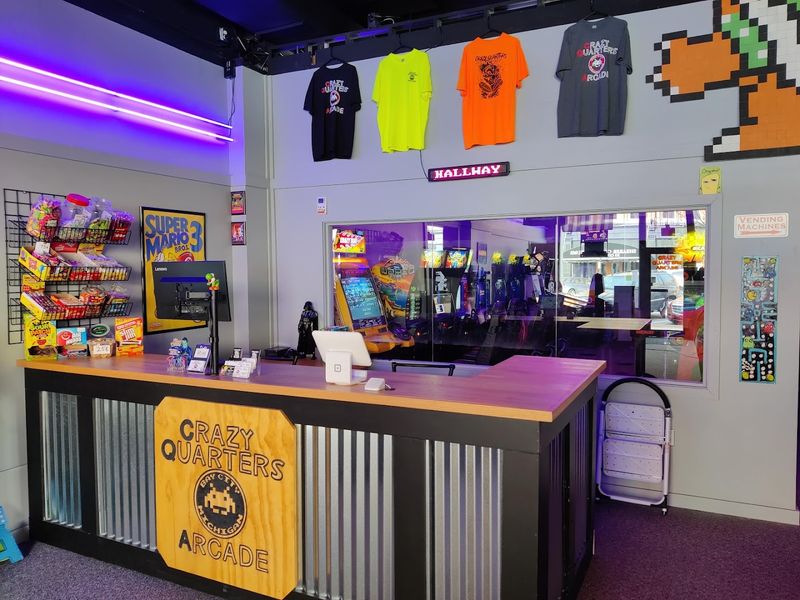
One of the more practical things that comes up repeatedly in visitor accounts is the cost of an afternoon here. Several families have reported spending around ten dollars per child and still having change left over after ninety minutes of play.
That math is hard to argue with, especially for a family of four or five looking for something to do on a weekend.
Most games run between fifty cents and one dollar. Some of the older mechanical pinball machines sit at the lower end of that range, while newer or more complex machines land closer to a dollar per play.
A handful of games fall outside that window, but the majority of the floor is accessible without constantly breaking bills into more quarters.
One parent in a review described sitting in the middle of the floor and being able to watch three kids — aged six, eight, and ten — move freely between machines without needing to hover. The layout of the space makes that kind of relaxed supervision possible, which is not something every arcade gets right.
Sight lines matter when you have young kids who want independence but still need to be within eyeshot.
The pizza kitchen in the back adds another layer of practicality. Grabbing a slice without leaving the building means you can extend the visit without the logistics of finding lunch somewhere else.
It keeps the momentum going rather than breaking the spell of the afternoon.
Compared to bowling, movie tickets, or a trip to a trampoline park, the per-person cost here tends to come out lower — and the engagement level tends to run higher. Kids are not passively watching a screen; they are physically interacting with machines and each other the entire time.
The Retro Kitchen Tucked in the Back
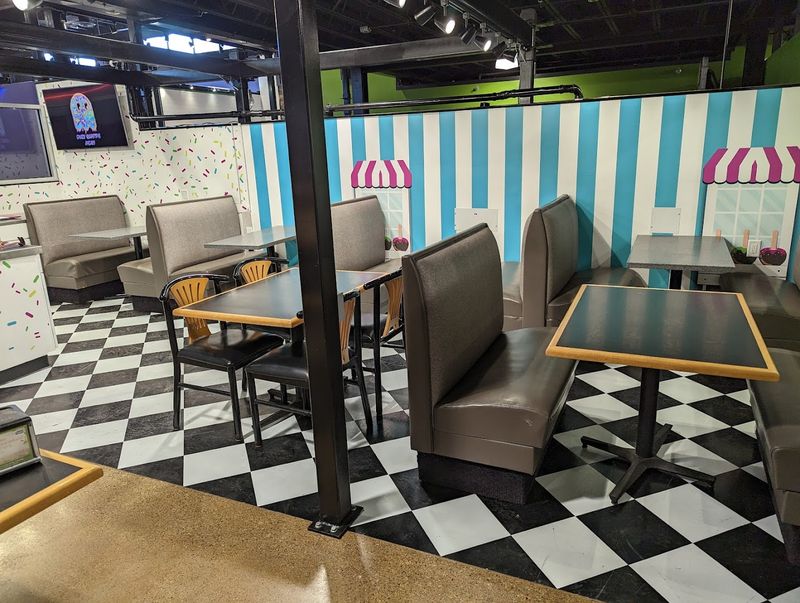
Most arcades treat food as an afterthought — a vending machine in the corner or a concession window selling overpriced nachos. Crazy Quarters went a different direction.
There is an actual kitchen operating in the back of the building, and it serves real food rather than just snacks designed to keep you from leaving.
Pizza and grilled subs are the core of what comes out of that kitchen, and multiple visitors have mentioned the food in the same breath as the games — which is a meaningful detail. When the food is memorable enough to make it into a review about an arcade, something is going right back there.
One review described it as a retro-themed kitchen, which fits the overall visual identity of the building perfectly.
The setup is smart from a practical standpoint. Families can take a break, refuel, and jump back into the games without losing the rhythm of the visit.
Adults who are less interested in gaming can sit with food and a drink while the rest of the group burns through quarters, which keeps everyone reasonably happy.
Pricing on the food side has drawn a mixed comment or two — one reviewer described nearby dining options as pricier, though the in-house kitchen seems to land in a more accessible range based on what families have reported spending overall. Nothing here is positioned as a fine dining situation, and it does not need to be.
The combination of food and games under one roof also makes the space viable for birthday parties, which the business actively accommodates. Having a dedicated party location that includes both entertainment and food simplifies the planning considerably for anyone organizing a group event.
It is a practical detail that a lot of parents notice immediately.
What the Location in Downtown Bay City Adds to the Visit
Center Avenue in Bay City has a particular character that is worth factoring into a visit to Crazy Quarters. The downtown area sits along the Saginaw River and has a walkable stretch of shops, restaurants, and historic architecture that gives the whole outing a different texture than driving to a strip mall destination.
Several reviewers have mentioned walking around the area before or after their time at the arcade, treating the whole block as part of the plan rather than just the building itself. Bay City has a riverfront that is easy to access from the downtown corridor, and on a warm evening the combination of a walk by the water followed by an hour of pinball makes for a genuinely full afternoon.
The building itself sits at 401 Center Ave, which puts it close enough to other downtown businesses that spontaneous decisions are easy. If the arcade is not yet open when you arrive — it opens at 4 PM on weekdays and 11 AM on weekends — there is enough nearby to fill the time without much effort.
For visitors coming from outside Bay City, the drive through mid-Michigan is flat and straightforward. The city itself has the feel of a place with real history rather than a manufactured tourist corridor, and the arcade fits that character.
It does not feel dropped in from somewhere else — it feels like it belongs there.
Parking in the area is generally manageable, which removes one of the common friction points of visiting a downtown location. The whole package — the building, the street, the surrounding blocks — gives the visit a sense of place that a standalone suburban arcade rarely achieves.
Coming back feels natural rather than obligatory.
Skee-Ball, Basketball, and the Games That Round Out the Floor
Pinball gets most of the attention at Crazy Quarters, and rightfully so — the collection is the centerpiece. But the floor also includes games that operate on a completely different rhythm, and those machines tend to attract the visitors who might not connect with flippers and bumpers right away.
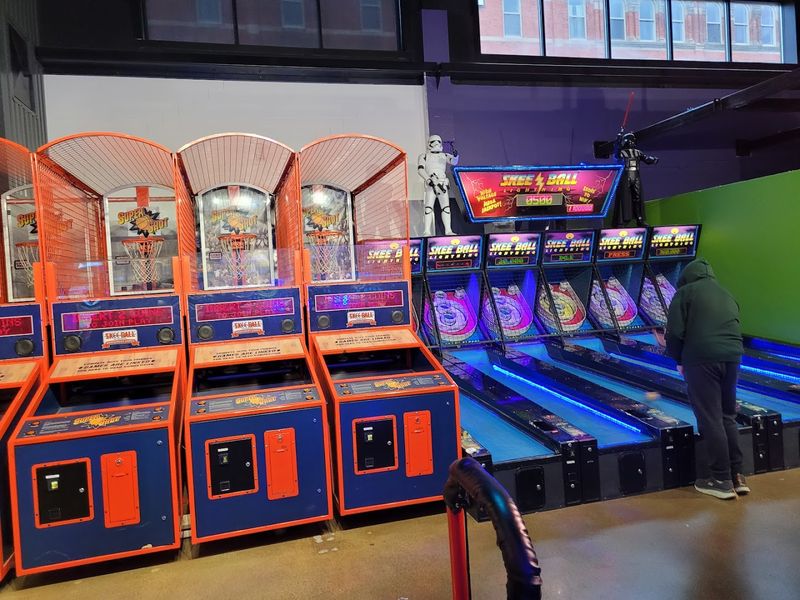
Skee-ball lanes show up in the mix, and they draw a crowd that cuts across age groups almost immediately. There is something deeply satisfying about the arc of a ball rolling up the ramp and dropping into a ring — it is tactile and competitive in a way that feels immediately accessible even to someone who has never played before.
Kids figure it out fast, and adults get weirdly invested in their scores.
Basketball arcade games — the kind where you shoot foam balls at a small hoop while a timer counts down — generate noise and competition that spreads across whoever is nearby. Two people side by side on adjacent machines will almost always end up racing each other without planning to.
That social friction is exactly what arcades used to be built around.
One reviewer specifically mentioned Hot Shot Hoops and noted that the all-time high scores are posted on the machine. That single detail — a public leaderboard — changes how people interact with the game entirely.
Suddenly it is not just about passing time; it is about leaving a mark. Kids especially respond to that kind of tangible challenge.
The variety across the floor means that a group of people with completely different tastes can split off, find their own machine, and reconvene twenty minutes later with stories to trade. That dynamic does not require everyone to agree on what is fun — it just requires enough options.
Crazy Quarters clears that bar without much effort.
The Nostalgia Factor and Why Adults Keep Coming Back Alone
Kids are not the only ones who leave Crazy Quarters talking about it. A notable thread running through the reviews is adults returning by themselves — or with a friend or partner — specifically because the place taps into something that is harder to name than just fun.
One reviewer described the machines as feeling like museum pieces in the best possible sense. Restored cabinets with original artwork, mechanical components that still work the way they were designed to, and a general sense that someone has put real care into maintaining the collection rather than just plugging machines in and hoping for the best.
That level of attention registers even if you cannot articulate exactly why.
The quarter-based payment system is a deliberate choice that several visitors have specifically called out as meaningful. Feeding actual coins into a machine rather than swiping a card or loading a digital wallet changes the relationship to the game in a subtle but real way.
Each quarter represents a small decision, which makes the play feel more intentional and more connected to the way these games were originally experienced.
For people who grew up in the eighties and nineties, the sensory overlap with childhood is immediate. The sounds, the light levels, the particular weight of a joystick — it all adds up to something that does not require explanation.
You either feel it or you watch someone else feel it and understand what is happening.
First dates get mentioned in the reviews more than once, which makes sense. A shared activity that removes the pressure of constant conversation, generates natural moments of competition and laughter, and costs almost nothing is a genuinely good idea.
Crazy Quarters seems to figure that out without trying to market itself that way.