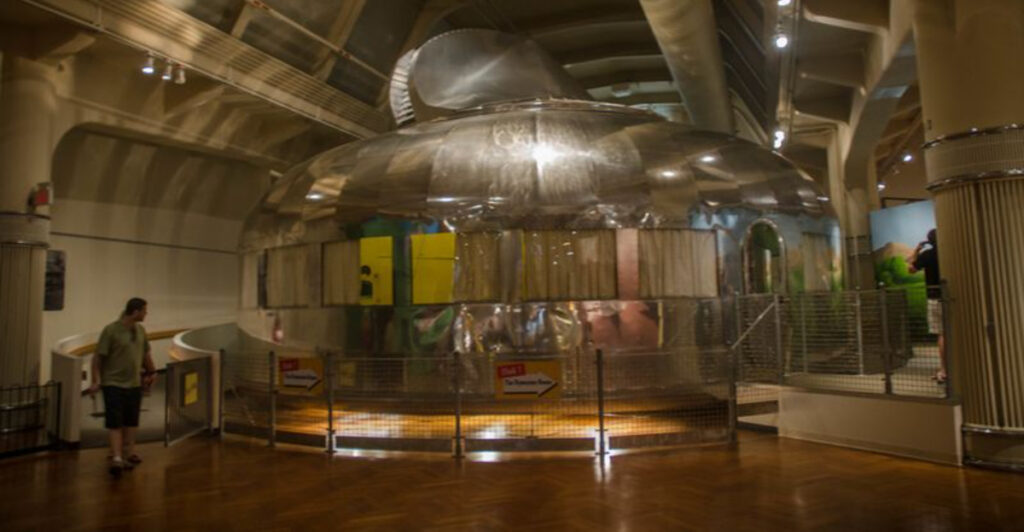
Step inside the Henry Ford Museum in Dearborn, and you will find a house that seems to have arrived from a future that never fully happened. The Dymaxion House, designed by inventor Buckminster Fuller, was his bold attempt to rethink everyday living from the ground up.
Round, efficient, and unlike almost anything built for American families at the time, it feels less like a traditional home and more like a question made physical: what could life look like if we started over? Though it never entered mass production, the fully assembled house remains one of Michigan’s most fascinating glimpses into the tomorrow people once imagined.
The Aluminum Shell That Started Everything
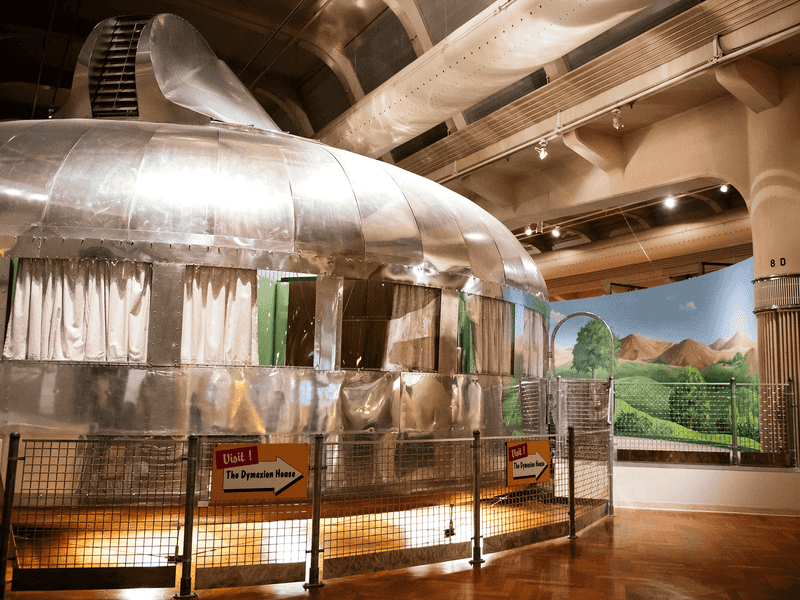
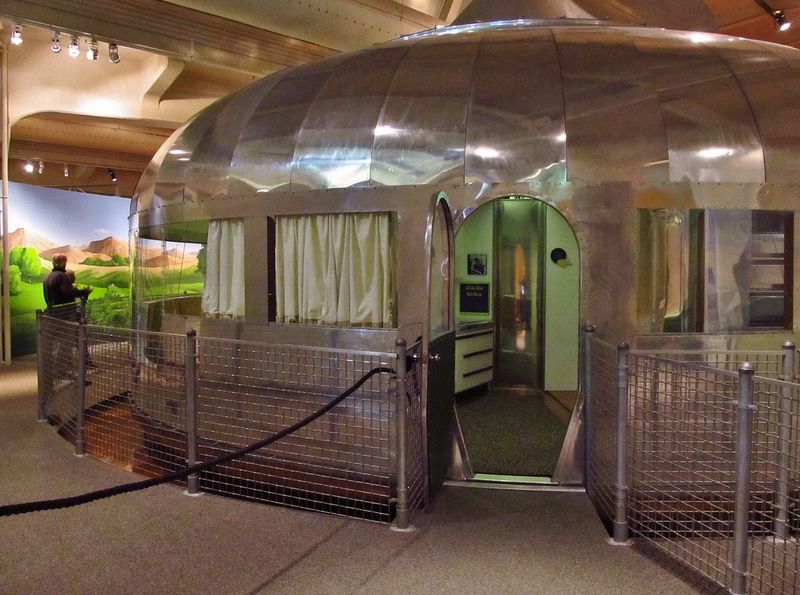
Before you even get close to the Dymaxion House, the aluminum exterior stops you. It does not look like something built from a blueprint.
It looks like something someone imagined while staring at a cloud.
Buckminster Fuller designed this circular, metallic dwelling during the 1940s with one central idea: a house should work as efficiently as a machine. He wanted it lightweight, affordable, and shippable anywhere in the world.
The aluminum body was not just a stylistic choice. It was a direct response to post-World War II material availability, since Fuller believed the aircraft industry could pivot its aluminum production toward housing.
Standing in front of it inside the museum, the first thing most visitors notice is how compact it looks. The circular footprint is roughly the size of a large living room, and yet Fuller claimed the design could comfortably house a small family.
The dome shape was meant to reduce wind resistance and distribute weight evenly, almost like an engineering problem solved with elegance.
The silver surface catches the museum lighting in a way that makes the structure seem almost animated. Walk slowly around the perimeter and you will notice how seamlessly the panels connect.
There are no obvious seams or rough edges. For something built decades ago, the construction precision is genuinely striking.
Visitors often pause here longer than they planned to. Something about the shape pulls at your curiosity before you have even stepped inside.
It occupies its corner of the museum with a quiet confidence, as though it has been patiently waiting for the world to catch up.
The aluminum shell is not just a wall. It is the opening argument of a much bigger conversation about how we build, live, and imagine what home could mean.
Buckminster Fuller’s Big Idea About How People Should Live
Buckminster Fuller was not an architect by training, which might explain why the Dymaxion House looks nothing like what architects were building at the time. He was an inventor, a philosopher, and an obsessive problem-solver who believed that most of the world’s housing was simply inefficient.
Fuller had been sketching versions of this idea since the late 1920s. His core argument was straightforward: why should a home be heavy, expensive, and permanently fixed to one piece of land?
He wanted to create a dwelling that could be mass-produced in a factory, packed into a cylinder, and delivered to a family anywhere on the planet. The goal was not luxury.
It was accessibility.
The name itself carries meaning. Dymaxion was a word Fuller coined by combining dynamic, maximum, and tension.
He used it across several of his projects, including a car and a world map projection. For Fuller, the word represented doing the most with the least, which became his signature approach to nearly everything he touched.
What makes his vision interesting to think about today is how many of his concerns feel familiar. He was worried about resource waste, housing shortages, and the gap between what technology could do and what everyday people could afford.
Those concerns did not disappear after the 1940s.
Walking through the museum and reading about Fuller’s intentions, you get the sense that he was less interested in selling a product than in proving a point. The Dymaxion House was a prototype for a different way of thinking, not just a different way of building.
Whether or not his specific solutions were practical, the questions he asked were the right ones. That alone makes his work worth understanding.
What the Inside of the House Actually Feels Like
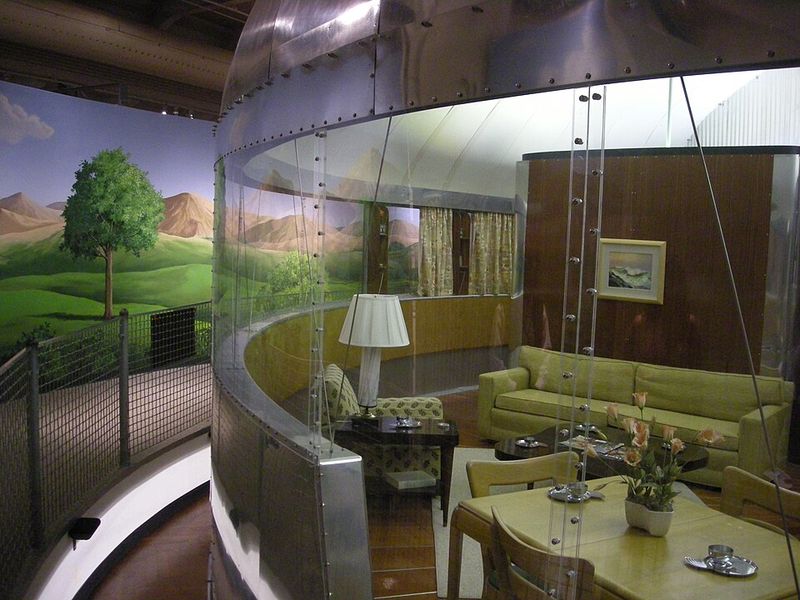
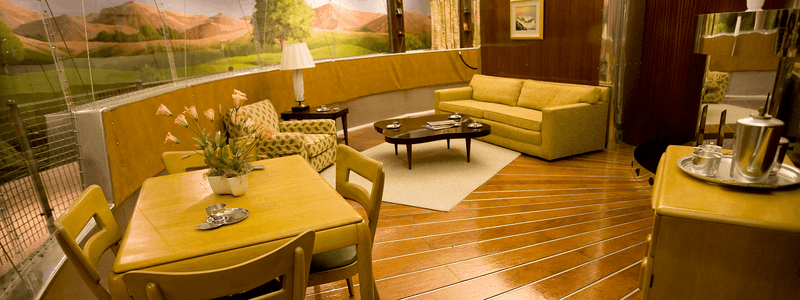
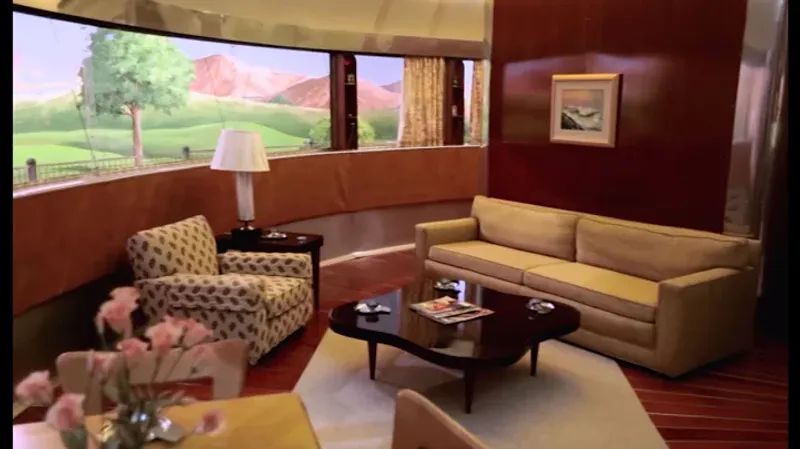
Stepping inside the Dymaxion House is a slightly disorienting moment. The curved walls remove any sense of corners, and your eye keeps traveling around the room without finding a natural stopping point.
It is not uncomfortable, but it does feel different from every other room you have ever stood in.
The interior is organized around a central aluminum mast that carries the structural load of the entire building. Everything radiates outward from that pole, which gives the space a kind of spoke-and-wheel logic.
The rooms are divided by partitions rather than solid walls, which means sound travels freely and the whole structure feels open despite its modest footprint.
Fuller designed the kitchen and bathroom with a focus on reducing cleaning time and water use. The bathroom in particular drew attention during early demonstrations.
He created a fog-gun shower system intended to clean the body using a fine mist rather than a full stream of water. It sounds eccentric, but the reasoning was practical.
Fuller calculated how much water a conventional shower wasted and decided there had to be a better method.
The furnishings inside the museum’s version are period-appropriate and sparse, which actually suits the space well. Nothing feels cluttered.
The rooms have a clarity to them that modern minimalist design would recognize immediately.
Natural light was another priority for Fuller. The windows are positioned to maximize daylight at different times of day, and the circular layout means sunlight moves through the space gradually rather than flooding one side at a time.
After a few minutes inside, the novelty fades and something quieter takes over. You start thinking about what it would actually feel like to live here, to cook in that kitchen or sit by those windows on a winter morning.
The Story of How the House Ended Up in Dearborn
The Dymaxion House has a complicated history that makes its presence in Dearborn feel almost accidental. Fuller built the prototype in Wichita, Kansas, working with the Beech Aircraft Company after World War II.
The idea was to use aircraft manufacturing techniques and materials to produce homes quickly and cheaply for returning veterans.
Interest was high at first. Thousands of people reportedly placed orders before a single production unit had been built.
But the project unraveled. Fuller kept pushing for design changes and refused to approve mass production until he felt the design was truly finished.
His perfectionism, combined with investor impatience, killed the commercial version before it ever launched.
The prototype sat in pieces for decades. A Kansas businessman named William Graham purchased it and had it assembled on his property, where it served as an actual residence for a period of time.
The house was lived in, which is a detail that often surprises visitors. This is not a concept model that sat in a warehouse.
Real people made meals in that kitchen and slept under that aluminum roof.
When the Henry Ford Museum acquired the house, it arrived in pieces and required careful reassembly. Museum staff worked to restore it while preserving its original materials as much as possible.
The process took considerable time and research, and the result is what visitors see today.
Knowing that history changes how you look at the structure. The scuffs and wear patterns on certain surfaces are not flaws.
They are evidence of actual use, of a family moving through rooms that Fuller drew on paper before most of their parents were born.
The Dymaxion House is the only one of its kind left in the world, which gives its Dearborn location a weight that is hard to overstate.
Why the House Never Went Into Mass Production

One of the most interesting conversations you can have after visiting the Dymaxion House is the one about why it never became a real product. The short answer involves money, timing, and Fuller himself.
The longer answer is more complicated.
Fuller genuinely believed that mass production would only be worth doing if the design was perfect. He resisted pressure from investors and manufacturers to finalize the specifications and begin production.
Every time someone pushed him toward a launch date, he found another element that needed refinement. From a business perspective, this was a disaster.
From Fuller’s perspective, releasing a flawed product would have been worse.
There were also structural and regulatory questions that the prototype had not fully resolved. Building codes across the country were written for conventional construction.
A circular aluminum house suspended from a central mast did not fit neatly into any existing category. Getting it approved for residential use in various municipalities would have required significant effort and political will that nobody involved was prepared to sustain.
The economics also shifted after the war. Traditional construction materials became more available, and the urgency around the housing shortage eased enough that investors lost interest in unconventional solutions.
By the time conditions might have favored the Dymaxion House again, the moment had passed.
Fuller moved on to other projects, most famously the geodesic dome, which became his most recognized contribution to architecture and engineering. The Dymaxion House became a footnote in his biography, though a fascinating one.
Standing inside the museum version, it is not hard to imagine a parallel timeline where these homes dotted suburban landscapes. The design holds up surprisingly well.
The reasons it failed say as much about the world as they do about the house itself.
How the Dymaxion House Fits Into the Larger Museum Experience

The Henry Ford Museum is enormous, and first-time visitors often underestimate how much ground there is to cover. The Dymaxion House sits within a broader collection that includes presidential limousines, steam locomotives, vintage aircraft, and the Rosa Parks bus.
Each exhibit pulls at your attention in a different way.
What makes the Dymaxion House stand out in that company is its quietness. The vehicles and machinery around it demand attention through scale and noise, even in stillness.
The house does something different. It asks you to slow down and think rather than just look.
Many visitors encounter it after spending an hour or two with the more famous exhibits and arrive slightly fatigued. That actually works in the house’s favor.
When you are ready to stop moving and start thinking, the Dymaxion House is the right kind of strange to hold your focus.
The museum’s layout puts the house in a position where you can walk completely around it, which is important. The exterior rewards that kind of unhurried observation.
From different angles, the structure reads differently. The dome looks more dramatic from one side, while the entry and window placement become clearer from another.
Museum staff near the exhibit are generally knowledgeable and willing to talk through the history if you have questions. The interpretive signage is thorough without being overwhelming, which is a balance not every large museum manages to strike.
Plan to spend at least thirty minutes here if you want to go inside, read the background material, and give yourself time to actually absorb what you are looking at. Rushing through it is possible, but you will leave with half a story.
The Dymaxion House rewards patience in a way that few museum exhibits do.
What Visiting the Dymaxion House Makes You Think About Today
There is a particular feeling that comes with standing inside a building that was designed to solve problems we are still trying to solve. The Dymaxion House was built around ideas about reducing waste, making homes more affordable, and rethinking how much space a person actually needs.
Those conversations did not end in the 1940s.
Modern tiny house movements, prefabricated housing advocates, and sustainable design researchers are all working in territory that Fuller mapped decades ago. Visiting the house with that context in mind turns a museum stop into something closer to a design seminar.
You start noticing which of Fuller’s ideas became standard practice and which ones still feel ahead of their time.
The central mast structure, for instance, shows up in various forms in contemporary architecture. The emphasis on factory-built components over on-site construction is now a growing sector of the housing industry.
The water-efficient bathroom fixtures Fuller dreamed up have rough equivalents in low-flow technology that most households now use without thinking about it.
At the same time, some of Fuller’s ideas remain genuinely unresolved. The circular floor plan never caught on, and the reasons go beyond aesthetics.
Furniture, appliances, and the basic spatial logic of how most people move through a home were all built around right angles. Changing that would require changing far more than just the walls.
Leaving the Dymaxion House, visitors often carry a slightly different feeling about the present. The gap between what is technically possible and what actually gets built has always been wide.
Fuller knew that. He built the house anyway, and left it for people like you to walk through and wonder.
That wondering is probably the most useful thing the exhibit offers.
Share this story