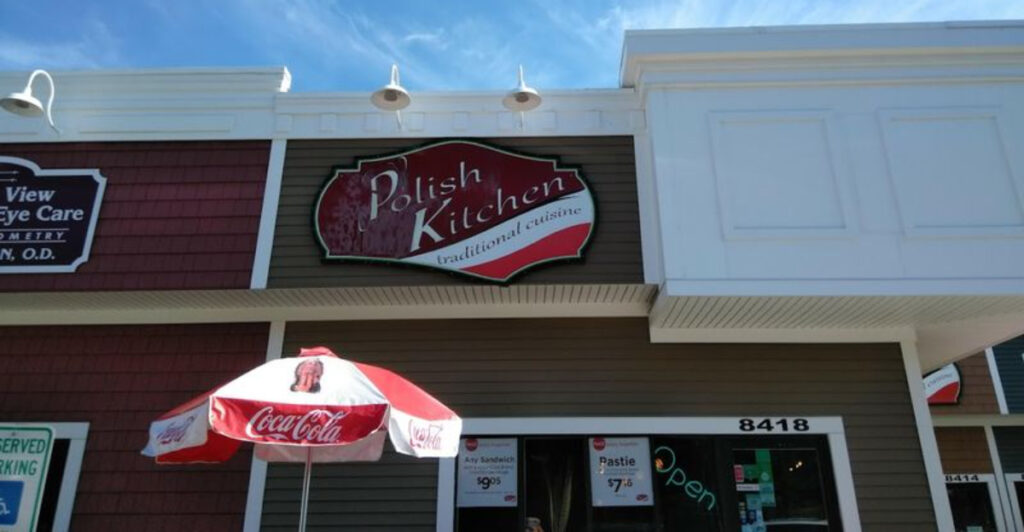
Some restaurants do not need a long menu or a flashy dining room to make a lasting impression. Along M-119 in Harbor Springs, Polish Kitchen has built its reputation on the kind of food that feels hearty, honest, and deeply comforting from the first bite.
Since opening in 2010, this small brick-clad eatery has become a favorite for locals and road-trippers craving traditional Polish dishes made with care — especially the pierogies that keep people coming back. In a part of Michigan better known for lake views and scenic drives, Polish Kitchen offers another reason to pull over: a plate of food that tastes like tradition.
The Look and Feel of Polish Kitchen on M-119
Pull up to Polish Kitchen on M-119 and you’ll notice right away that there’s nothing flashy about it. The brick exterior is modest, the parking lot is tight, and the signage doesn’t shout for attention.
But that understated look is exactly the point — this place earns its reputation through food, not decor.
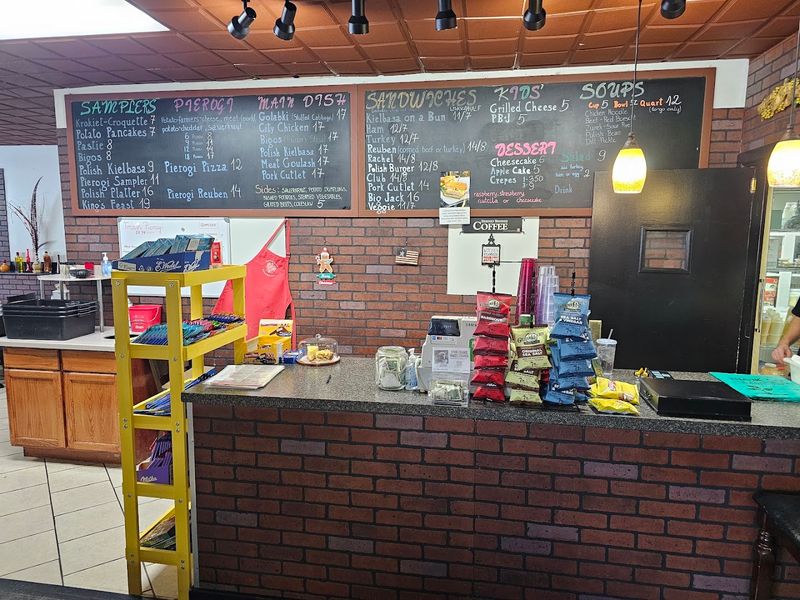
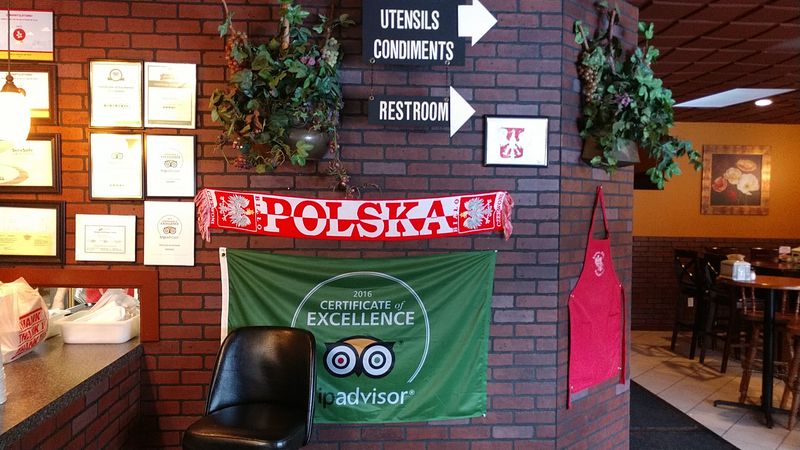
Step inside and the atmosphere is straightforward and comfortable. Customers seat themselves, and the setup leans more toward a casual lunch counter than a polished dining room.
A picture of the Pope hangs on the wall, which, depending on your background, might make you feel right at home. The space runs about 75 percent full on a typical afternoon, with a steady mix of regulars and first-timers.
Orders are placed up front before you find a table, which keeps things moving efficiently. The staff is small — often just a couple of people running the whole show — but the pace stays surprisingly steady even during the lunch rush.
There’s no background music competing with your conversation, no mood lighting to distract from the meal.
What the space does have is a lived-in warmth that comes from years of the same family showing up and doing the work. The dining room isn’t trying to be anything other than a clean, functional place to eat good food.
For people coming off a long drive up from Petoskey or down from Mackinaw City, that simplicity is genuinely refreshing. It signals that the focus here is entirely on what ends up on your plate, not on how the room is staged around you.
That kind of honesty in a restaurant is rarer than it should be, and loyal customers have clearly noticed.
Pierogies That People Drive Miles to Eat
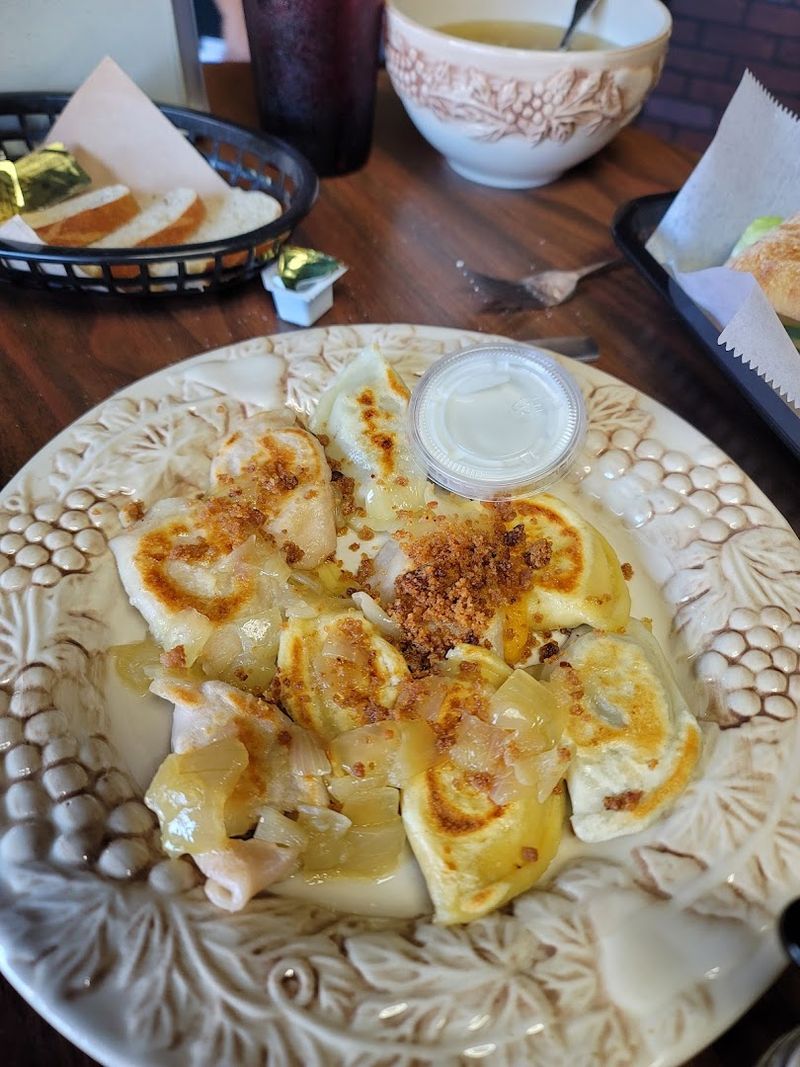
Pierogies are the undisputed centerpiece of the Polish Kitchen menu, and customers talk about them the way people talk about their grandmother’s cooking — with a kind of quiet reverence. The potato-cheese variety draws the most consistent praise, with a filling that manages to be rich without feeling heavy.
The dough has the right amount of chew, and the pan-frying gives each one a golden edge that holds up well from the first bite to the last.
The menu offers several filling options, including sauerkraut and meat varieties, which lets you build a plate that covers multiple flavor profiles in one sitting. Loyal customers often order a nine-count plate split across three styles just to cover all their bases.
The classic farmer’s cheese and potato combo tends to be the crowd favorite, though the sauerkraut version has its own dedicated following among people who grew up eating Polish food.
One customer compared the taste directly to pierogies made by their Polish grandmother — a comparison that doesn’t get thrown around lightly. Another said the potato-cheese version rivals what you’d find in Hamtramck, Michigan, which has long been considered one of the best Polish food destinations in the entire state.
That’s a bold comparison, and Polish Kitchen holds up under it.
Frozen pierogies are also available to take home, which is a smart move for anyone who lives more than a short drive away. People have been known to stock up before heading back downstate.
For a dish that’s so simple in concept — dough, filling, heat — the execution here is precise enough to make a real impression. That consistency, visit after visit, is what keeps the pierogi plates flying out of the kitchen all week long.
Beyond Pierogies: The Rest of the Menu Holds Its Own
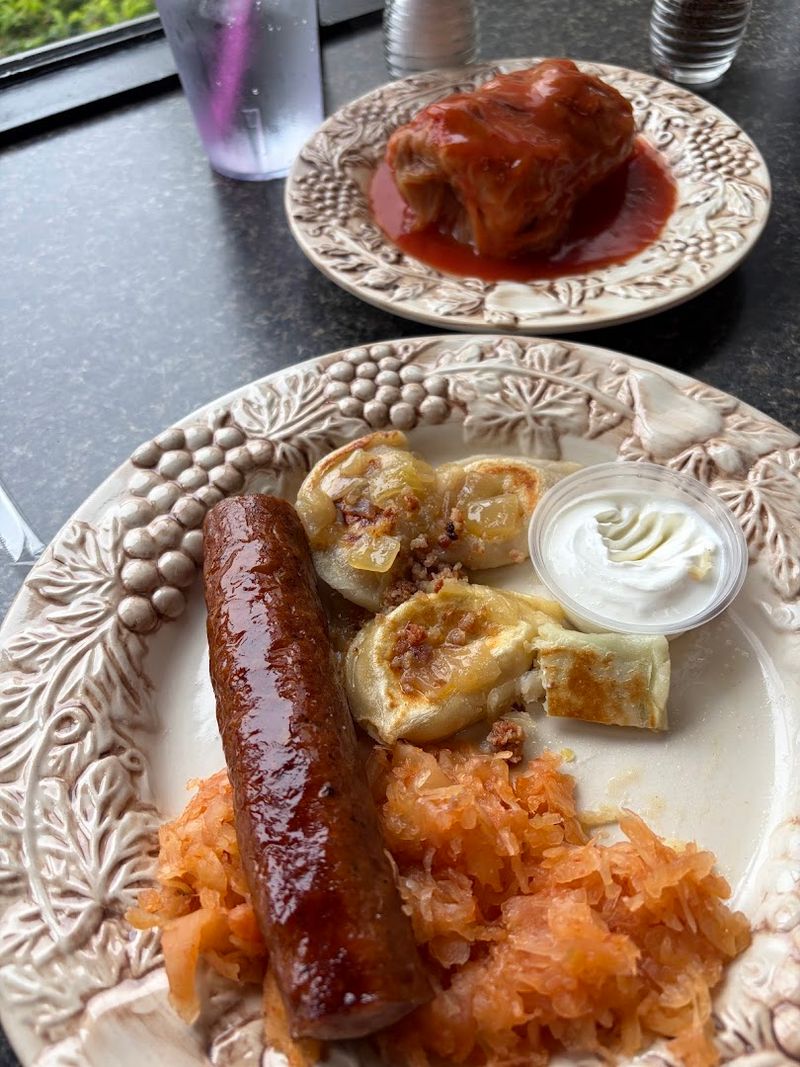
The pierogies get most of the attention, but stopping there would mean missing some genuinely strong dishes. The Kings Feast Platter is one of the smartest ways to eat here for the first time — it covers a wide range of the menu in one order and portions run large enough that two people can share and still leave full.
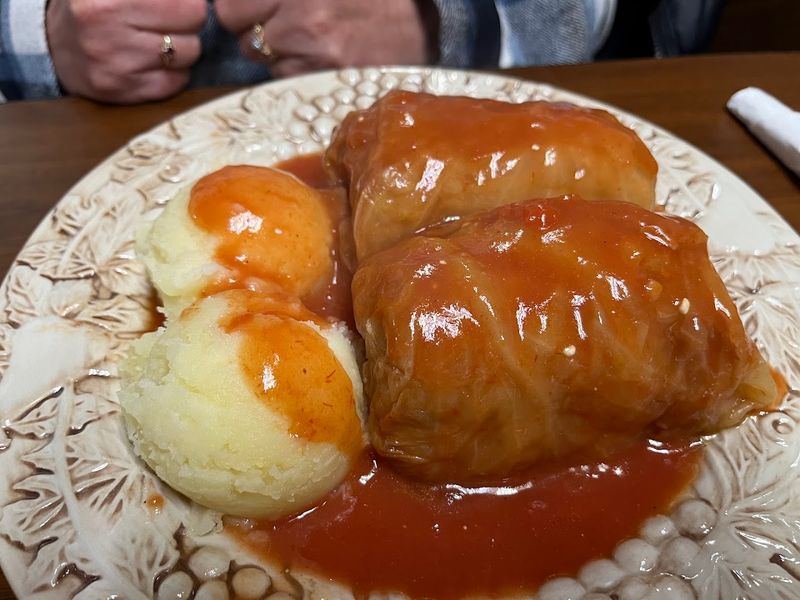
Customers who’ve ordered it consistently mention the stuffed cabbage as a standout, praising both its texture and seasoning.
Bigos, the traditional Polish hunter’s stew, shows up on the menu and earns high marks from people who know what it’s supposed to taste like. The pork schnitzel is another serious contender — pan-fried, fork-tender, and cut thick enough that finishing a full portion in one sitting is more challenge than expectation.
Several customers have mentioned taking half home and being glad they did.
The soups deserve their own moment of recognition. The dill pickle soup is tangy and warming in a way that sounds unusual until you taste it, and the beet soup brings a deep, earthy flavor that pairs well with the heavier main dishes.
Loyal customers recommend ordering at least one soup before moving on to the main plate — the portions are generous enough to count as a real course.
On the sandwich side, the Polish Reuben and the Jack Sandwich both show up repeatedly in customer conversations as favorites. The breaded pork loin topped with sliced kielbasa and cooked cabbage is the kind of construction that sounds almost too much until you’re halfway through it and fully committed.
Crepes and apple cake round out the dessert options, with the strawberry crepe drawing particular praise. The menu is focused without being limiting, and nearly every item on it has at least one loyal champion.
The Family Operation Behind the Food
Polish Kitchen has been open since 2010, and the operation has stayed small by design. It runs as a family business — most often described by customers as a husband-and-wife team — and that shows in the way the place is managed.
The owner is frequently the one taking orders, bringing food to tables, and chatting with regulars who’ve been coming in for years. That personal involvement gives the whole experience a texture that larger restaurants rarely manage to replicate.
The service style is direct and warm rather than performative. Customers consistently describe the staff as genuinely friendly, not in a scripted way, but in the way of people who actually enjoy what they’re doing.
The owner has been spotted greeting locals by name and making first-timers feel like they’ve been coming in for years. For a small operation running a full kitchen during a busy lunch shift, that kind of hospitality takes real effort.
Because the team is small, wait times can stretch a bit during peak hours. Customers who’ve visited multiple times know to build that into their plans — arriving closer to opening or on a quieter weekday tends to move things along faster.
The trade-off is that the food comes from a kitchen where every dish gets attention rather than being rushed out in bulk.
The community connection runs deep here. Regulars describe Polish Kitchen as a northern Michigan staple in the truest sense — a place that has become part of the rhythm of the area rather than just a stop along the highway.
Locals walk in mid-afternoon, exchange a few words with the owner, and leave with exactly what they came for. That kind of steady, reliable presence over more than a decade is built one plate at a time, and the family behind it clearly understands that.
Michigan’s M-119 Corridor and Why This Stop Makes Sense
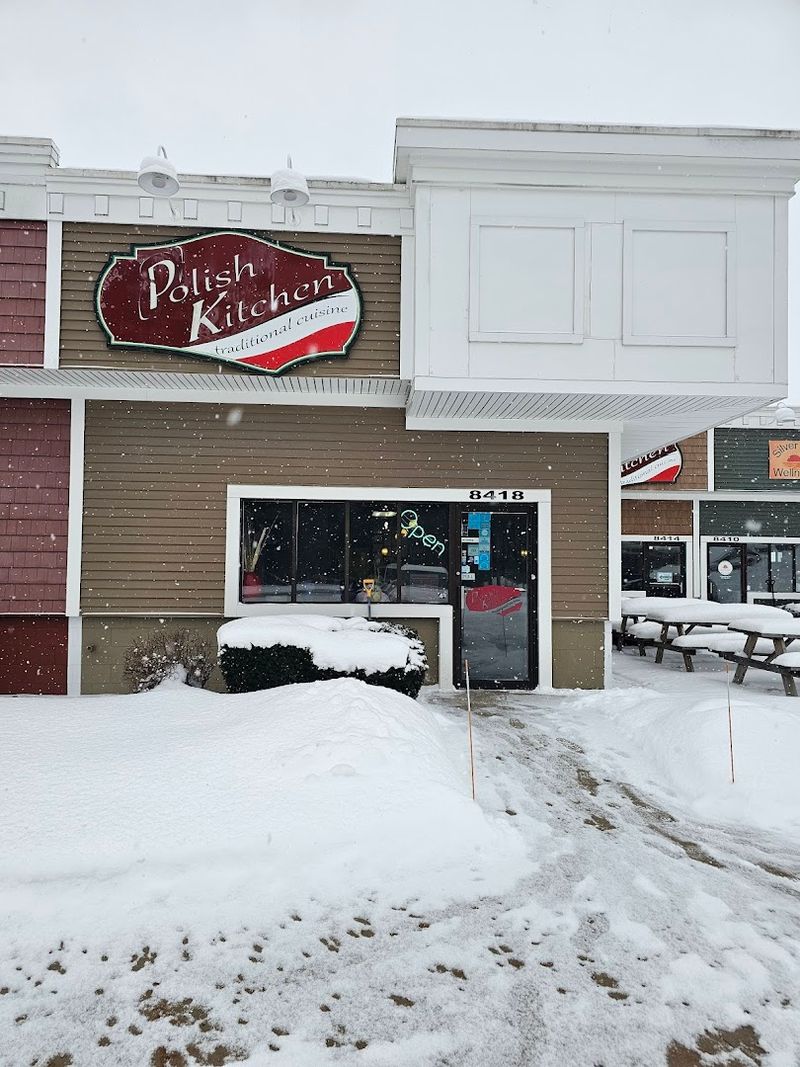
M-119 is one of the more scenic drives in northern Michigan, winding through dense hardwood canopy between Harbor Springs and the Mackinac Bridge area. People use it to connect Petoskey State Park, Cross Village, and points further north, which means there’s a natural flow of travelers passing right by Polish Kitchen’s front door.
The location on that route is not accidental — it sits at a point where a lunch stop makes geographic sense for anyone doing the full corridor.
Harbor Springs itself is a small lakeside town with a strong seasonal tourism pull, drawing visitors from downstate Michigan and beyond during the warmer months. Polish Kitchen operates Tuesday through Friday, 10 AM to 3 PM, which aligns neatly with the lunch window when road-trippers are most likely to be moving through.
The Monday hours match as well, giving the week a solid four-day run that catches both weekend travelers extending their trips and weekday visitors passing through.
The restaurant is closed Saturday and Sunday, which surprises some visitors who assume a tourist-area restaurant would prioritize weekend traffic. That schedule reflects the family-run nature of the place — the hours are built around what the team can sustain with quality rather than what would maximize foot traffic.
People who plan ahead and hit it during the week rarely have trouble getting in.
Nearby Petoskey State Park makes for a natural pairing — spend a morning on the water or hiking the park trails, then head south on M-119 for a Polish lunch before continuing the drive. Customers coming down from Mackinaw City have also made Polish Kitchen a regular detour, treating it as a reliable anchor point on a longer northern Michigan loop.
The location rewards anyone willing to look just slightly off the main tourist path.
How to Get the Most Out of Your Visit
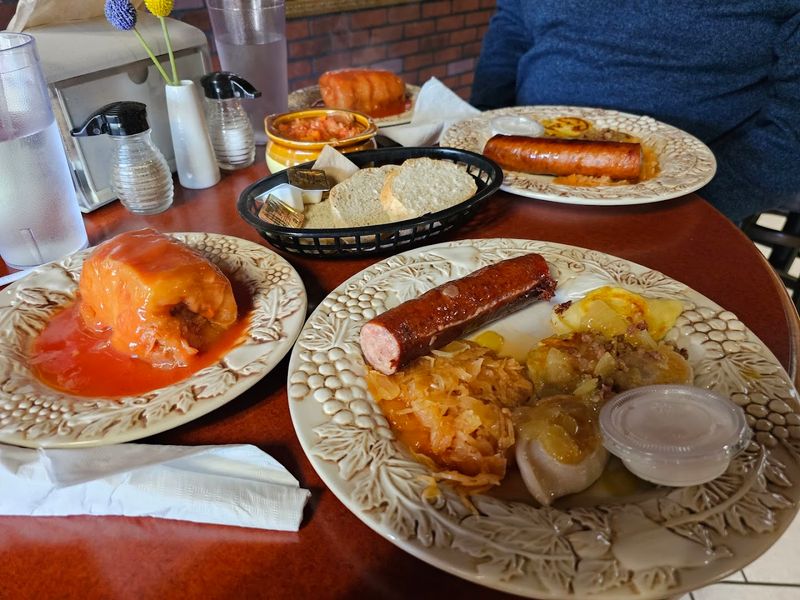
First-time visitors tend to do best by ordering a sampler platter rather than committing to a single dish. The Kings Feast or Polish Platter options are specifically designed to cover the range of the menu, and the portions are large enough that two people sharing one will still leave satisfied.
Loyal customers recommend adding a six-count of extra pierogies on top of the platter, which sounds excessive until the food arrives and the logic becomes clear.
The soups are easy to overlook when scanning the menu for the first time, but skipping them is a mistake most people only make once. The dill pickle soup in particular catches first-timers off guard in the best possible way — it’s tangy and savory in a combination that doesn’t have an obvious American equivalent.
Ordering one soup to share before the main plates arrive is a smart move that sets the meal up well.
Arriving close to the 10 AM opening time on a weekday gives the best chance of a shorter wait and a relaxed pace. Midday on a Thursday or Friday tends to be the busiest window, and with a small kitchen team, the line can build quickly.
Patience pays off here — the food doesn’t suffer from being rushed, and the kitchen clearly prioritizes getting things right over getting them out fast.
Bringing a cooler is worth considering if you’re driving any distance. The frozen pierogies available for takeout travel well and give you a way to extend the Polish Kitchen experience beyond the dining room.
Several customers make it a point to grab a bag on the way out, treating it as a practical souvenir. Cash or card both work fine at the front counter, and tipping the small staff generously is something regulars don’t think twice about.
Why Polish Kitchen Keeps Standing Out in Northern Michigan
A lot of restaurants in tourist corridors coast on location and foot traffic. Polish Kitchen has never needed to.
The food is specific, consistent, and rooted in a culinary tradition that most northern Michigan visitors don’t encounter anywhere else along the M-119 route. That specificity is a real advantage — there’s no other stop on this stretch doing what Polish Kitchen does, and that gap in the market has never been filled by anyone else in over a decade.
The price point adds another layer to the appeal. For the portion sizes involved — platters that regularly send people home with leftovers — the cost is genuinely reasonable.
Customers note that a full meal with a platter, extra pierogies, and a soup still comes in at a price that feels fair for what’s on the table. In a region where seasonal restaurants frequently charge premium prices for average food, Polish Kitchen stands as a clear contrast.
The menu hasn’t chased trends or expanded beyond what the kitchen can execute well. That restraint is noticeable.
Every dish on the menu has a reason to be there, and nothing feels like filler added to pad the options. The stuffed cabbage, the schnitzel, the kielbasa, the crepes — each one reflects a level of care that comes from cooking the same dishes repeatedly until they’re right.
For a restaurant that opened in 2010 and has stayed small and family-run through more than a decade of northern Michigan winters and tourist summers, Polish Kitchen represents something straightforward and durable. People return not because it’s a novelty but because the food delivers every single time.
That track record, built one lunch at a time along a scenic Michigan highway, is ultimately what sets this place apart from everything else on the road.
Share this story