Michigan in July is something special — the days are long, the skies are wide open, and the whole state seems to glow. One of the best ways to soak it all in is from the window of a moving train.
Whether you’re a lifelong rail fan or just looking for a unique summer adventure, Michigan’s train rides deliver scenery, history, and a whole lot of charm. From steam-powered locomotives to historic streetcars, these 11 rides are worth every mile.
1. Greenfield Village’s Weiser Railroad
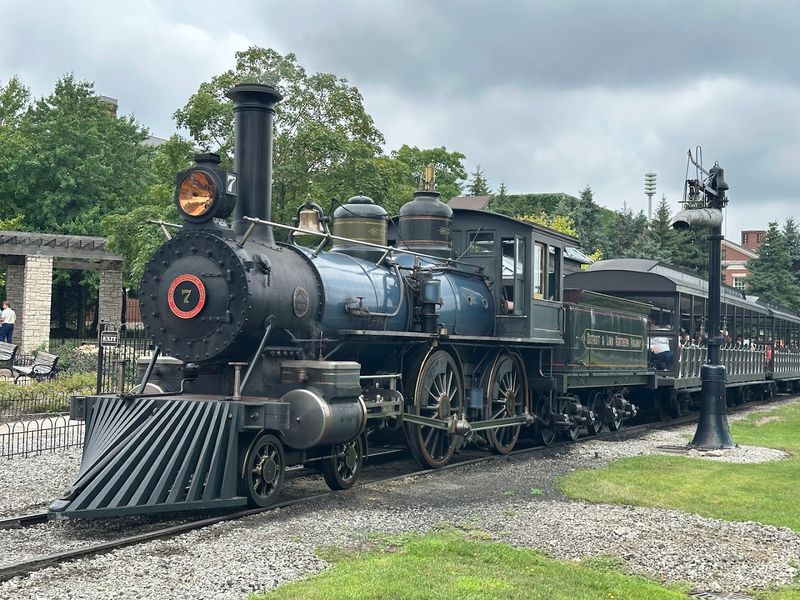
Step back in time the moment you hear that first blast of the steam whistle at Greenfield Village. The Weiser Railroad has been circling this living history museum in Dearborn for decades, and riding it in July feels like flipping through a very well-preserved history book — except you’re actually inside it.
The train loops around the 80-acre village grounds while passengers catch glimpses of historic homes, working mills, and costumed staff going about their daily routines.
The ride itself is about a mile and a half long, which sounds short until you realize how much there is to take in. Towering oak trees line parts of the route, and the summer light filters through the canopy in a way that makes even your phone camera look like a professional setup.
Kids tend to lose their minds over the locomotive up close, and honestly, so do most adults.
Greenfield Village is part of The Henry Ford complex, so your train ticket is included with general admission. That means you’re already getting access to one of the most impressive outdoor history museums in the entire country.
Pair the railroad ride with a stroll through Thomas Edison’s lab or the Wright Brothers’ cycle shop, and you’ve got a full day without even trying.
July is peak season here, so arriving early makes a real difference. Crowds build by mid-morning, and the train line can stretch.
Weekday visits tend to move faster than weekends. The open-air cars are breezy on warm afternoons, which is a nice bonus when Michigan humidity decides to show up.
This is the kind of experience that earns a permanent spot in the family highlight reel.
2. Wheels on Rails Traverse City
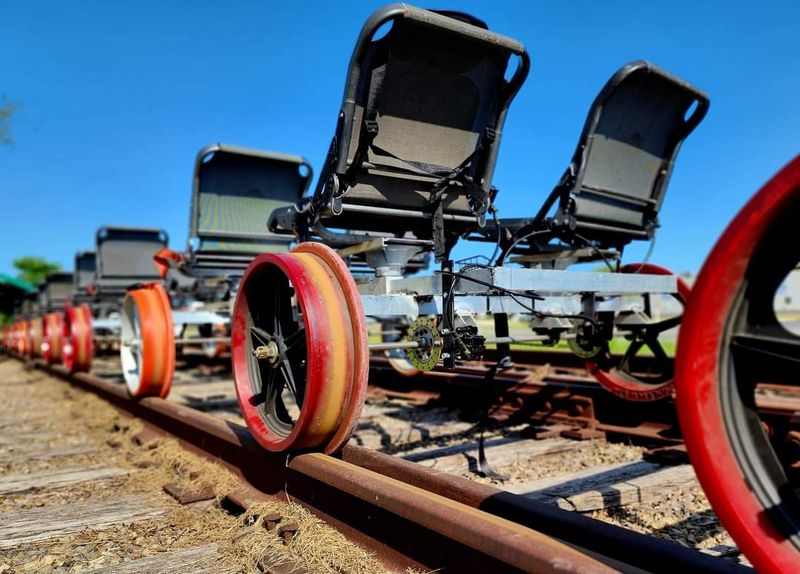
Not every great rail experience involves sitting back and letting the engine do the work. Wheels on Rails in Traverse City flips the whole script by putting you in charge of your own four-wheeled rail bike.
You and your crew pedal your way along a converted rail corridor, moving at whatever pace feels right while the trees and summer air do the rest. It is genuinely one of the more creative outdoor activities happening in northern Michigan right now.
The route runs through forested stretches just outside Traverse City, and in July the greenery is absolutely at its peak. You are not staring at bare branches or muddy shoulders — you get full canopy coverage, wildflowers poking out along the edges, and the occasional critter darting across the tracks.
The whole thing feels less like exercise and more like a slow, joyful cruise through a postcard.
Groups of two or four ride together on a single car, which makes this a natural pick for couples, friend groups, or families with older kids. Reservations fill up fast during summer, especially on weekends, so booking ahead is not optional — it is essential.
The experience typically runs around an hour, which hits that sweet spot of feeling satisfying without wiping anyone out.
Traverse City already pulls people in for its beaches, cherries, and wineries, so adding a rail bike session to the itinerary is an easy win. The staff keeps the whole operation relaxed and friendly, which sets the tone for the ride.
There are no engines, no schedules to stress about, just you, your people, and a set of rails cutting through one of Michigan’s most beautiful corners. Summer does not get much more Michigan than this.
3. Coopersville & Marne Railway
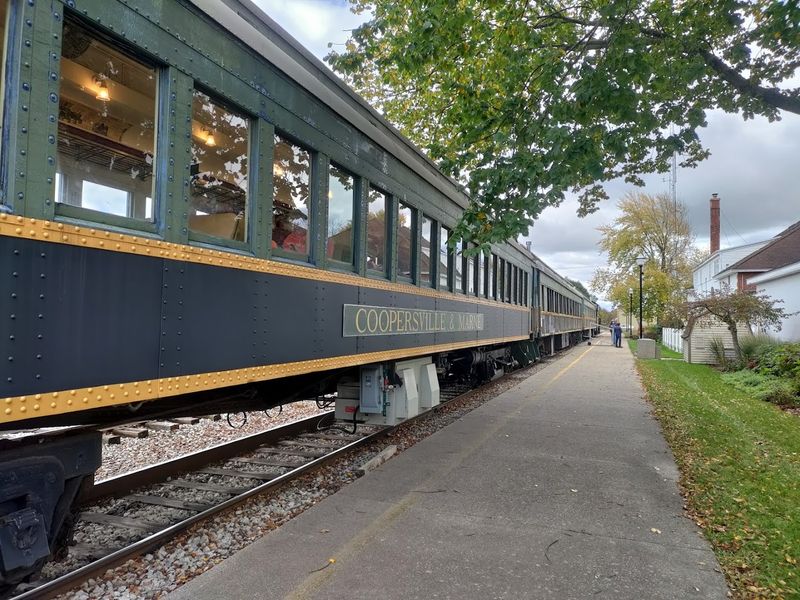
There is something deeply satisfying about a small-town railroad that has refused to disappear. The Coopersville and Marne Railway has been running excursion trains through the flat, fertile landscape of western Michigan since the 1980s, and it has built a loyal following that keeps coming back every season.
The route runs about 14 miles round trip between Coopersville and Marne, crossing through farmland that looks especially lush during July when everything is growing full tilt.
The railway runs a mix of themed excursions throughout the year, but the summer rides have a relaxed, no-frills charm that feels refreshing. You are not trying to beat a crowd or follow a tight schedule — you are just rolling through the Michigan countryside with the windows open and a good view in every direction.
The coaches are vintage, the crew is knowledgeable, and the whole atmosphere leans into its small-town roots without apology.
Families with younger kids tend to love this one because it is genuinely unhurried. There is space to move around, the ride is smooth, and the staff is the kind of friendly that does not feel rehearsed.
Themed seasonal rides like the Pumpkin Train and the Polar Express get most of the attention, but the summer excursions are worth seeking out specifically because they are less hectic and more focused on the actual railroad experience.
Coopersville is about 20 minutes west of Grand Rapids, making this an easy day trip from one of Michigan’s biggest cities. Parking is free and plentiful, which is a small but appreciated detail.
If you have been meaning to explore the western side of the Lower Peninsula and want a ride that feels authentically local rather than touristy, this railway delivers exactly that kind of honest, unhurried Michigan afternoon.
4. Amtrak’s Michigan Routes
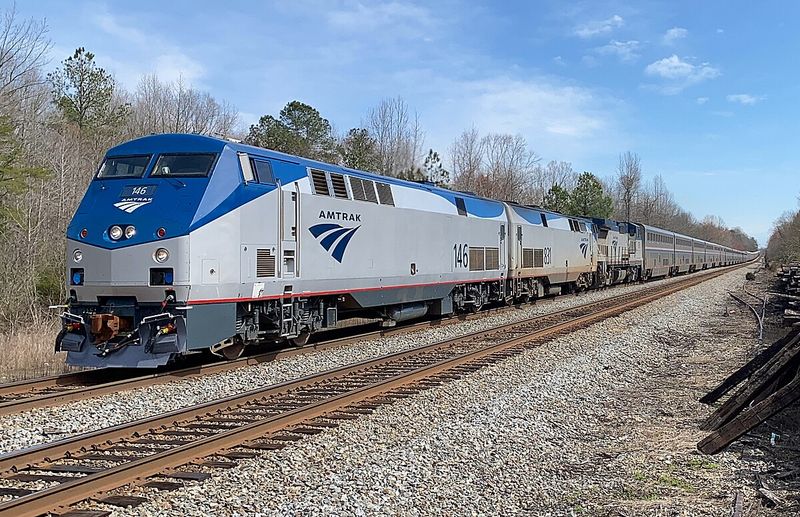
Amtrak’s Michigan routes do not always get the credit they deserve as a scenic travel experience, but July has a way of changing that perception fast. The state is home to several Amtrak corridors, including the Pere Marquette between Chicago and Grand Rapids and the Wolverine and Blue Water lines running from Chicago through Detroit and Port Huron.
When the landscape is at full summer green, these routes become something genuinely worth watching out the window.
Riding Amtrak through Michigan in summer means passing through a rotating gallery of small towns, farmland, wetlands, and river crossings. The Blue Water route, in particular, offers some lovely stretches along Lake Huron’s shoreline near Port Huron.
The Pere Marquette cuts through some surprisingly scenic terrain across the Lower Peninsula, and watching the landscape shift from urban outskirts to open farmland is more engaging than most people expect before they try it.
One practical advantage of the Michigan Amtrak routes is that they connect to Chicago, making them a legitimate option for people who want to travel between states without dealing with traffic or airport headaches. Fares are often competitive, and the trains have comfortable seating, a cafe car, and enough room to stretch out.
Traveling with kids is far less stressful by rail than by car on a hot July weekend.
Booking in advance usually gets you better pricing, and the window seats on the right side of the train heading east from Chicago offer some of the better views along the Pere Marquette route. Amtrak is not a theme-park train ride, but as a legitimate travel experience that also happens to be scenic and low-stress, Michigan’s routes punch well above their reputation.
Sometimes the most underrated ride is the one hiding in plain sight.
5. Lost Railway Museum’s Boland Express
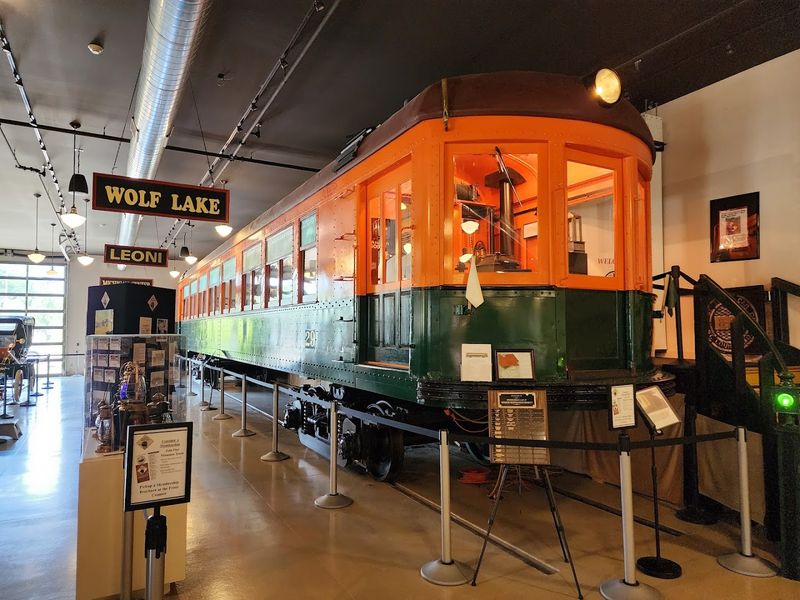
Hidden gems are a Michigan specialty, and the Boland Express at the Lost Railway Museum in Walled Lake is exactly that kind of find. The museum itself is dedicated to preserving Michigan’s rich railroad history, and the Boland Express train ride is the crown jewel of the experience.
Riding it feels like being handed a key to a part of the state’s story that most people have never thought to look for.
The train operates on select days and during special events, so checking the museum’s schedule before you go is a must. When it runs, the ride takes passengers along a short but charming route that gives the whole visit a hands-on quality that static museum displays simply cannot match.
There is a significant difference between reading about old locomotives and actually sitting behind one as it moves.
The museum’s collection is impressive on its own — restored cars, vintage equipment, and exhibits that trace the evolution of rail travel across Michigan. But the Boland Express adds a layer of immersion that makes the whole visit click.
Volunteers who staff the museum tend to be deeply passionate about railroad history, and their enthusiasm is contagious in the best possible way. Ask them questions and you will learn things that are not on any placard.
Walled Lake is in Oakland County, putting it within easy reach of Metro Detroit. Summer visits are especially pleasant because the grounds are well-kept and the weather invites you to linger rather than rush.
This is a great option for anyone who wants more than a passive museum experience. The Boland Express is not just a ride — it is a moving piece of Michigan’s industrial and cultural heritage, and July is a fine time to climb aboard.
6. Huckleberry Railroad
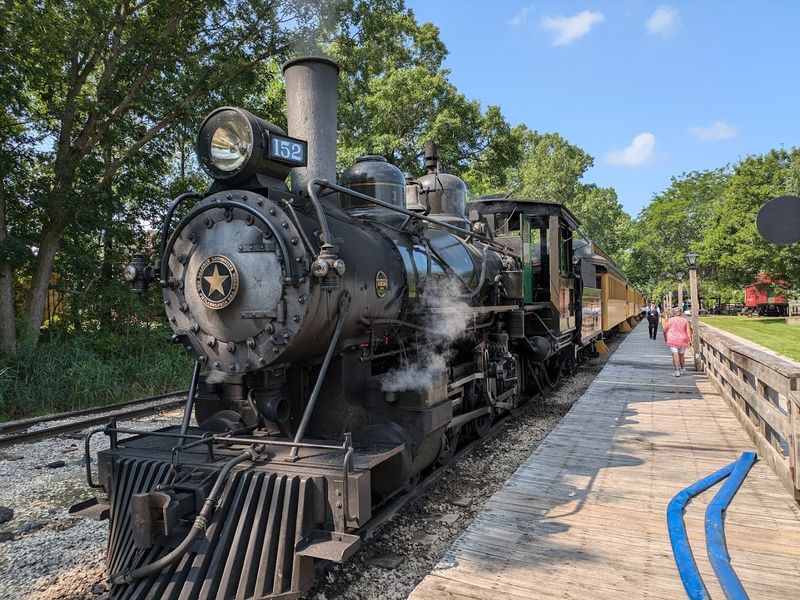
The Huckleberry Railroad at Crossroads Village near Flint has been making summers memorable since the 1970s, and it shows no signs of slowing down. This narrow-gauge steam train circles the perimeter of a beautifully restored 19th-century village, giving riders a front-row seat to one of the most charming living history setups in the entire Midwest.
The name alone — Huckleberry — carries a kind of cheerful, barefoot-summer energy that fits perfectly with a July afternoon.
The locomotive is the real star here. Watching a working steam engine build up pressure and then pull a full train of passengers around the village grounds is the kind of thing that makes people put their phones down, which is saying something.
The route is about a mile and a half, and the open-air cars mean you feel every breeze and catch every smell — including the very satisfying scent of coal smoke drifting back from the engine.
Crossroads Village is a fully functioning recreation of an 1860s Michigan community, with costumed interpreters, working craftspeople, and historic buildings relocated from around the region. The train ride ties it all together by giving visitors a moving overview before they explore on foot.
Kids are particularly captivated by the combination of the village and the railroad, and parents tend to appreciate how much ground the experience covers without anyone getting tired or bored.
The facility is run by Genesee County Parks, which keeps admission prices reasonable compared to larger theme attractions. July weekends can draw solid crowds, but the experience never feels overwhelming because the space is generous.
If you are in the Flint area and looking for a summer activity that earns genuine enthusiasm from everyone in the group, the Huckleberry Railroad is a very reliable answer.
7. QLINE Detroit Streetcar
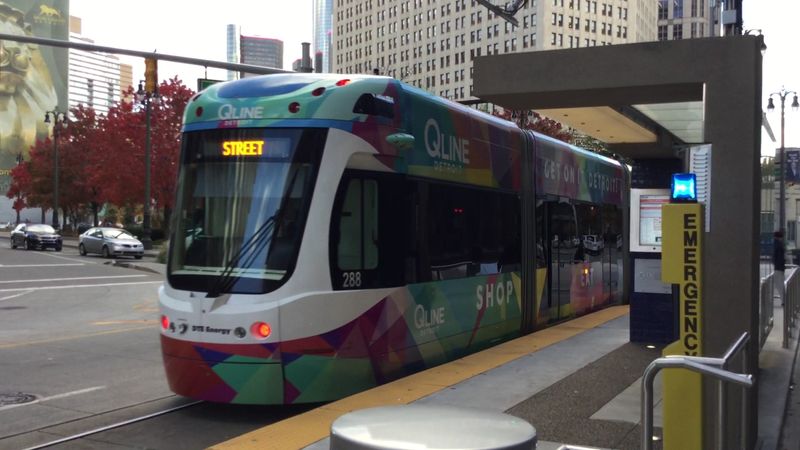
Detroit’s QLINE is a different kind of rail experience — no steam, no countryside, no vintage coaches. What it offers instead is a street-level view of one of America’s most fascinating urban comeback stories, rolling right down Woodward Avenue through the heart of the city.
In July, with outdoor events, murals, patios, and foot traffic filling the corridor, riding the QLINE feels like watching Detroit’s energy in real time.
The line runs 3.3 miles between Congress Street in downtown Detroit and West Grand Boulevard in New Center, passing through Midtown, the Cultural Center, and several neighborhoods that have seen serious investment and transformation over the past decade. For visitors who want to understand modern Detroit rather than just pass through it, the QLINE provides a ground-level orientation that no tour bus can replicate.
You see the DIA, Wayne State University, local restaurants, and street art all within a single ride.
Locals use it for practical transportation, but as a visitor experience it works surprisingly well as a self-guided tour tool. Hop on and off at different stops to explore Midtown galleries, grab food at one of the many restaurants along the corridor, or catch a show at one of the area’s venues.
The fare is minimal, the cars are climate-controlled, and the frequency during busy periods keeps wait times short.
Summer is peak season for Detroit’s outdoor events, and the Woodward corridor tends to be buzzing on weekends in July. Riding the QLINE during a festival or event weekend adds another layer to the experience.
It is not a scenic countryside journey, but as a window into a city actively writing its next chapter, this streetcar delivers a kind of moving postcard that is entirely its own thing.
8. Southern Michigan Railroad Society
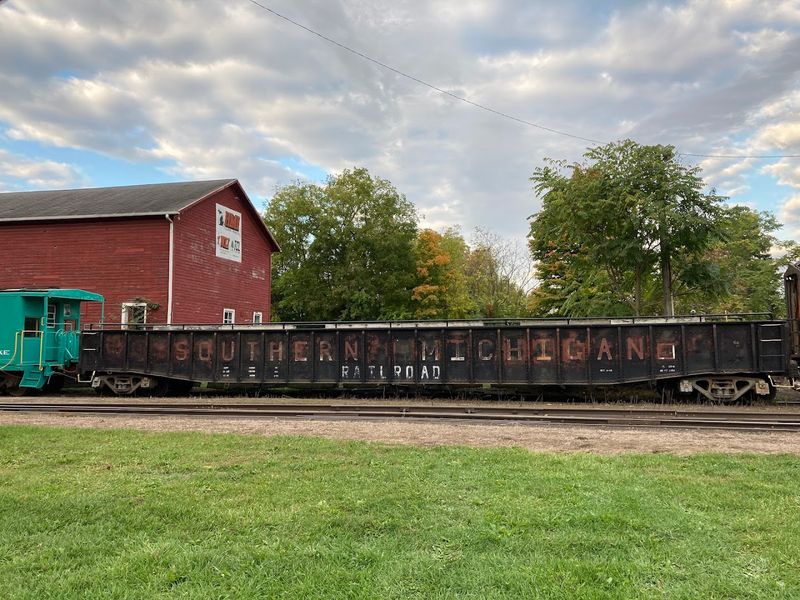
Few organizations in the state care about railroad preservation as deeply as the Southern Michigan Railroad Society, based in Three Rivers. This volunteer-driven group has spent years restoring and maintaining historic equipment, and their excursion trains offer a ride that feels less like a tourist attraction and more like a genuine encounter with working railroad history.
The passion behind the operation comes through in every detail, from the restored coaches to the knowledgeable crew.
Excursion trains run on select weekends throughout the operating season, with July falling right in the sweet spot when the southern Michigan countryside is at its greenest. The route travels through rural stretches of St. Joseph County, where the landscape is a rolling mix of farmland, small woodlots, and quiet crossings.
It is the kind of scenery that does not demand your attention so much as it quietly earns it over the course of the ride.
The society operates out of the historic Three Rivers depot, which is itself worth a visit before or after boarding. The building has genuine character, and the equipment on display around the grounds gives rail enthusiasts plenty to examine.
First-time visitors often end up spending more time at the depot than they planned, which is a reliable sign that a place has something real to offer.
Three Rivers sits in the southwestern corner of the Lower Peninsula, making it an accessible destination from Kalamazoo, South Bend, or even Chicago for a day trip. Special event trains throughout the season attract larger crowds, but a standard summer excursion ride has a quieter, more personal feel that many riders actually prefer.
Supporting the Southern Michigan Railroad Society also means helping keep a piece of the state’s transportation heritage alive, which adds a good layer of meaning to the ticket purchase.
9. Durand Union Station / Michigan Railroad History Museum
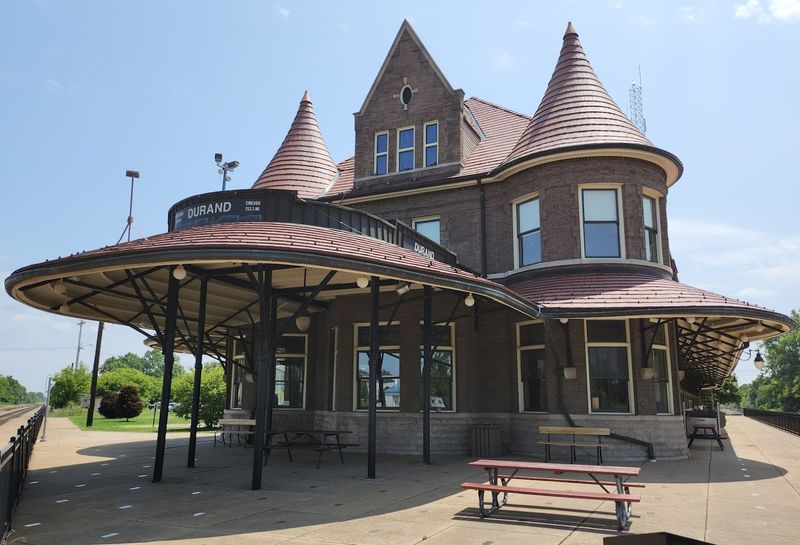
Durand Union Station is one of those places that stops you mid-step the moment you walk in. Built in 1905, this stunning Romanesque Revival depot was once one of the busiest railroad junctions in the Midwest, handling hundreds of trains a day at its peak.
Today it houses the Michigan Railroad History Museum, and while it is primarily a museum destination, the building itself — and its living connection to active rail lines — gives the visit a charge that purely static exhibits rarely achieve.
Watching Amtrak trains still roll through the Durand station is part of what makes this place feel alive rather than archived. The historic platforms remain in use, and there is something genuinely moving about standing where thousands of Michigan residents once passed through during the golden age of American rail travel.
The museum’s exhibits trace that history with real depth, covering everything from the railroad’s impact on Michigan’s economy to the lives of the workers who kept it all running.
The restored waiting rooms and original architectural details are remarkably well-preserved, and the volunteer staff brings a level of enthusiasm that makes the whole visit feel personal rather than institutional. Railroad enthusiasts will find plenty of technical and historical material to dig into, but casual visitors — including kids — respond just as strongly to the sheer scale and beauty of the building.
Durand is a small city in Shiawassee County, about halfway between Flint and Lansing, which puts it within easy reach of a large portion of Michigan’s population. Summer is an ideal time to visit because the grounds are well-maintained and the natural light through those tall depot windows is spectacular.
This is a stop that rewards curiosity and tends to turn casual visitors into repeat ones.
10. Michigan Transit Museum Train Rides
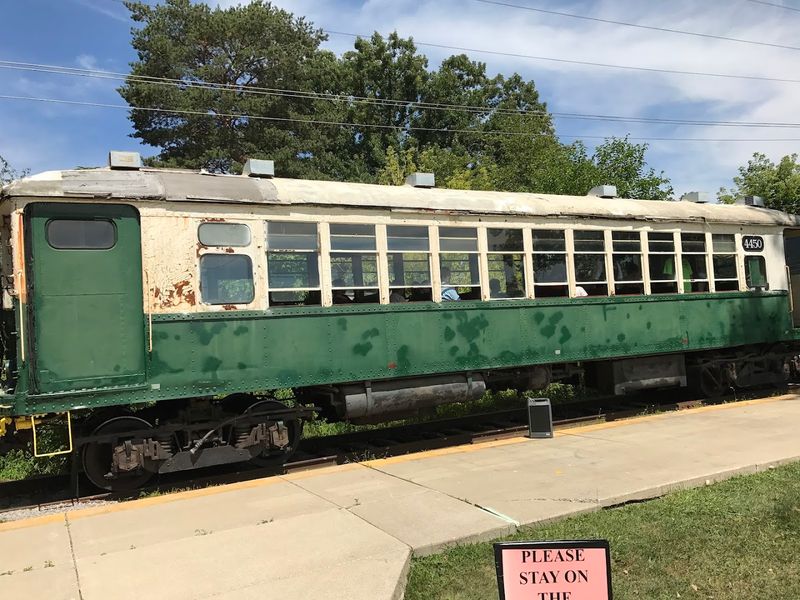
Electric railways once crisscrossed Michigan like a nervous system, connecting towns and cities long before highways took over. The Michigan Transit Museum in Mount Clemens has made it its mission to preserve that legacy, and their operating train rides give visitors a rare chance to experience what interurban travel actually felt like.
Boarding one of their restored electric cars on a July afternoon is like stepping into a chapter of Michigan history that most people did not know they were missing.
The museum operates rides on select days along a segment of preserved track, and the experience is both educational and genuinely enjoyable. The restored equipment has been maintained with obvious care, and the ride gives passengers a real sense of how these electric railways once moved people efficiently across the region.
It is a different kind of rail experience from steam or diesel, quieter and smoother, with its own distinct character.
Mount Clemens is in Macomb County, just north of Detroit, which makes the museum an easy half-day addition to any Metro Detroit itinerary. The surrounding area has its own history and charm, and combining a museum visit with a meal in downtown Mount Clemens makes for a satisfying and well-rounded outing.
The museum’s grounds also include static displays of additional transit equipment worth exploring before or after the ride.
Admission is affordable, and the staff and volunteers are the kind of people who will happily talk your ear off about railroad history in the best possible way. If you bring kids, they tend to be fascinated by the mechanics of the electric cars, especially the overhead wire system that powers them.
The Michigan Transit Museum is not as widely known as some of the state’s bigger rail attractions, but that is exactly what makes it feel like a genuine discovery rather than a scheduled stop.
11. Steam Railroading Institute Summer Caboose Rides
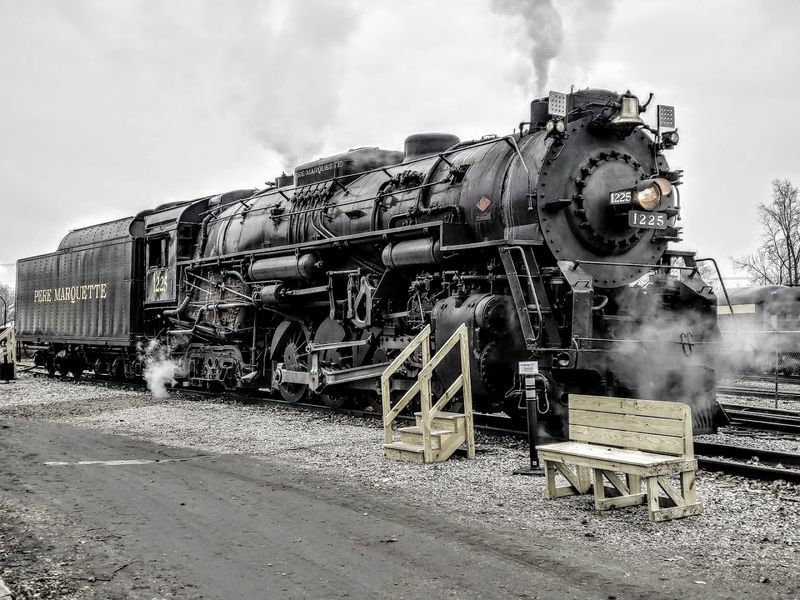
Riding in a caboose is one of those experiences that sounds simple until you actually do it and realize it is completely wonderful. The Steam Railroading Institute in Owosso offers summer caboose rides that combine that old-school charm with the unmistakable presence of real operating steam locomotives.
The institute is home to one of the largest collections of steam equipment in the country, and the energy on the grounds when the engines are running is something you feel before you even see it.
The caboose rides run on select days during the summer season, typically attached to operating steam trains that make the whole experience feel authentic rather than staged. Owosso is the kind of small Michigan city that takes genuine pride in its railroad heritage, and the institute reflects that community investment in a way that is hard to fake.
The volunteers and staff here know their equipment inside and out, and their willingness to explain what everything does makes the visit richer.
July is a particularly good time to visit because the summer operating schedule tends to be at its most active. Special events like the North Pole Express in December get more press, but the summer caboose rides offer something arguably better: a relaxed, unhurried experience without the holiday crowds.
You can actually hear the engine, smell the steam, and take your time appreciating what is happening around you.
Owosso sits in Shiawassee County, making it a natural pairing with a stop at nearby Durand Union Station for a full day of Michigan railroad history. The institute’s grounds are open for exploration beyond the rides, with static displays and restoration work visible throughout the property.
For anyone with even a passing interest in steam-era railroading, this place is the real deal, and the caboose ride seals it perfectly.
Share this story