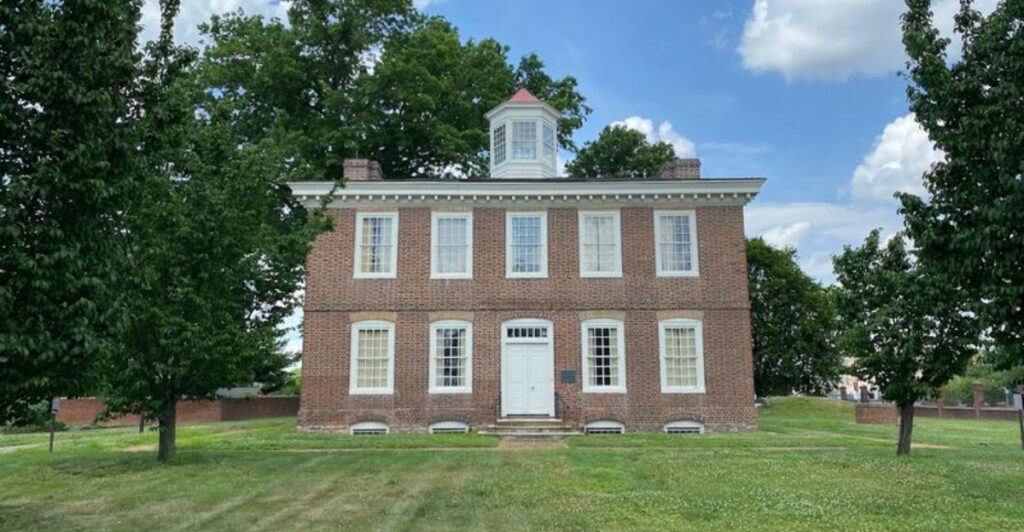
At the Market Street exit off Route 29 in Trenton, traffic does what traffic always does: merges, honks, crawls, and hurries toward somewhere else. Meanwhile, just off the road, a brick house from 1719 sits there like it has all the time in the world.
And, honestly, it does. The William Trent House has watched ferries, carriages, mills, governors, wars, highways, courthouses, and commuters come and go.
It predates the United States by more than half a century, yet it is easy to miss because it does not announce itself with neon or noise. It sits at 15 Market Street, near the Delaware River, surrounded by modern Trenton life that seems determined to move faster than history.
That contrast is exactly what makes the place so interesting. You can drive past it a dozen times before realizing one of New Jersey’s oldest surviving homes has been quietly keeping score.
The 1719 Brick House Most Drivers Never Notice
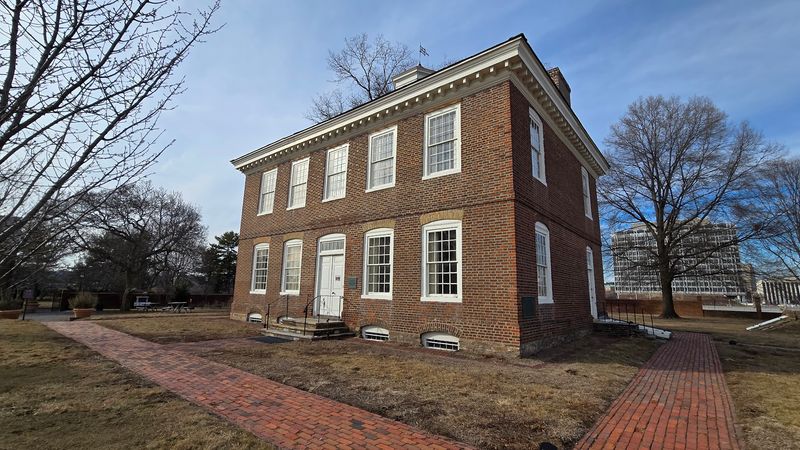
At 15 Market Street, the William Trent House has the unusual problem of being both obvious and overlooked. It is not tucked deep in the woods or hidden at the end of a charming country lane.
It stands in Trenton, at the corner of Market Street and William Trent Place, across from the Hughes Justice Complex, with Route 29 feeding traffic right into the area. That means plenty of people pass near it.
Fewer people actually stop and register what they are seeing: a brick house built in 1719, still standing in the middle of a capital city that has grown up around it in every direction. The house is now a museum, but it does not feel like one of those enormous destination attractions that eats up your whole day.
It is more of a “wait, that has been here this entire time?” kind of place. The grounds offer a little pocket of calm in a part of Trenton better known for government buildings, court traffic, and riverfront roads.
The museum’s current public hours are Wednesday through Sunday, 1:00 p.m. to 4:30 p.m., with admission listed at $5 for adults and $4 for children and seniors, which is refreshingly old-school in the best possible way.
The property is owned and maintained by the City of Trenton and operated by the Trent House Association, and guided tours begin at the visitor center.
That matters because this is not a building where the story is obvious from the sidewalk. From the road, you see brick, windows, fencing, and a neat historic property.
Inside, you get the larger picture: a colonial estate at the Falls of the Delaware that somehow survived long enough to be surrounded by exit ramps, parking lots, and the everyday rush of New Jersey life.
How William Trent’s Estate Helped Give Trenton Its Name
Long before Trenton became the capital of New Jersey, the area was known to European colonists as the Falls of the Delaware, a practical name for a place shaped by the river. Long before that, it was Lenape land, with Native communities connected to the region for thousands of years.
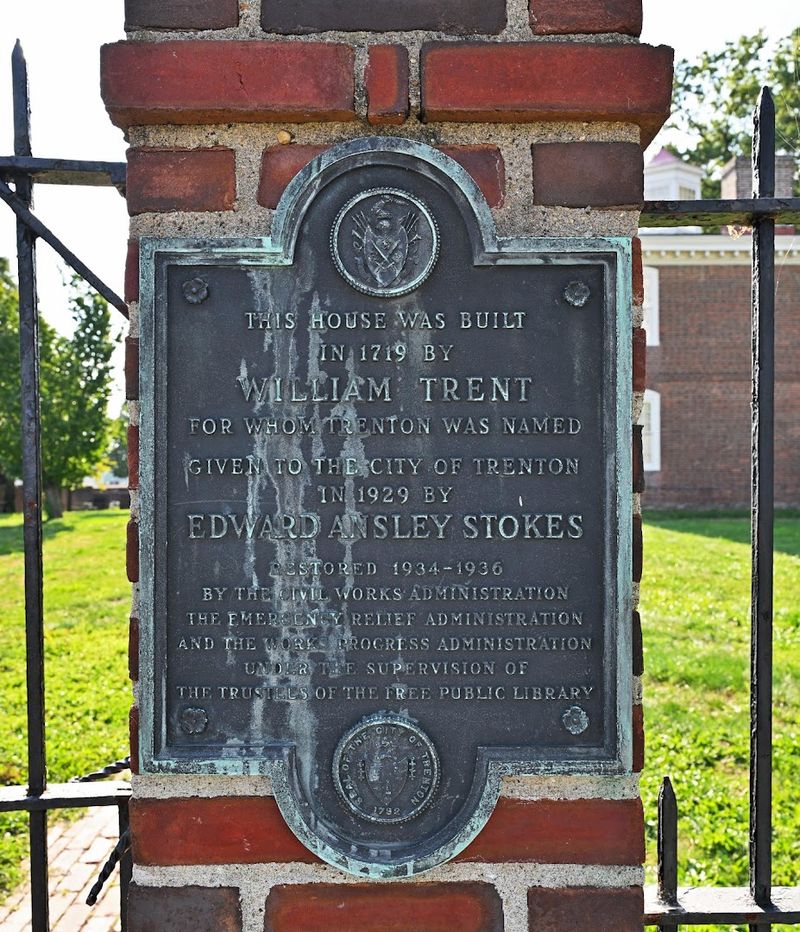
William Trent enters the story in the early 1700s as a wealthy Philadelphia merchant, originally from Scotland, who saw opportunity on the New Jersey side of the Delaware. In 1714, he acquired a large tract from Mahlon Stacy Jr., whose family had been among the area’s early English settlers.
Trent did not just build a weekend place and call it a day. He put up a substantial brick country house around 1719 and began shaping the surrounding settlement.
By 1720, the community was being called Trent’s Town, which eventually became Trenton. So yes, the city name that appears on road signs, government letterhead, sports jerseys, and weather alerts traces back to the man whose house still stands near Market Street.
That is the kind of local-history fact that feels almost too neat, except the building is right there proving the point. Trent moved into the house permanently in 1721 with his second wife, Mary Coddington Trent, their young son William Jr., and the people who labored on the estate.
At the time, this was not downtown in the way we understand it now. It was a plantation-style property in colonial West Jersey, with outbuildings and mills connected to nearby Assunpink Creek.
The Delaware River was not scenery; it was transportation, business, and strategy. Trent’s wealth came from trade, land, and labor, and the house reflected that status.
Three centuries later, the name Trenton is so familiar that it barely invites a second thought. The house reminds you that the name began as something much more personal: one man’s town, built beside a river that was already ancient with stories.
Why This Georgian Home Still Stands Out After Three Centuries
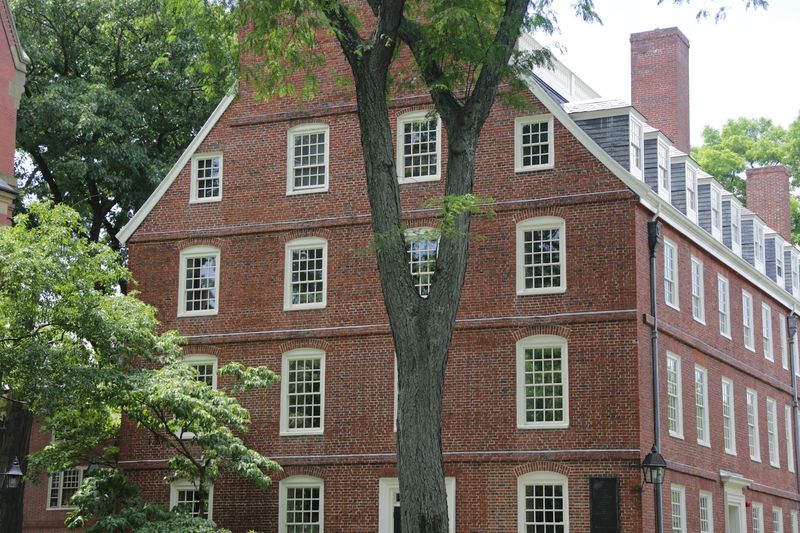
The house does not need to be massive to make its point. Its confidence is in the symmetry.
The William Trent House is a strong example of early Georgian architecture, the kind that valued balance, proportion, and a certain “yes, I meant to look this formal” attitude.
Look at the front and you get the message quickly: a five-bay brick facade, evenly spaced windows, a centered entrance, and a hipped roof topped with a cupola.
It is handsome in a very 18th-century way, like it would not be caught slouching. The building is two and a half stories, and the central-hall plan inside gives it the orderliness that wealthy colonial households liked to project.
Some original features survived, including woodwork, flooring, and the main staircase, which helps the place feel less like a reconstructed idea and more like a stubborn survivor. Over time, the house changed.
Owners added to it, altered it, dressed it up, and by the Gilded Age it had become a much more elaborate mansion than the one William Trent knew. That is normal for old houses.
Buildings are not frozen; people keep messing with them. The unusual part is what happened later.
In 1929, the property was given to the City of Trenton by the Stokes family, with the goal of restoring it and using it for a public purpose. Restoration work in the 1930s returned the building closer to its colonial appearance, and it opened as a museum before World War II.
That restoration choice is why visitors today see the house as an 18th-century brick residence rather than a later mansion with layers of Victorian ambition. It has been polished, repaired, interpreted, and reinterpreted, but the bones are still old.
That is what gives the William Trent House its quiet authority. It does not shout “historic.” It simply stands there with a cupola, brick walls, and 300 years of receipts.
The Complicated History Hidden Behind Its Walls
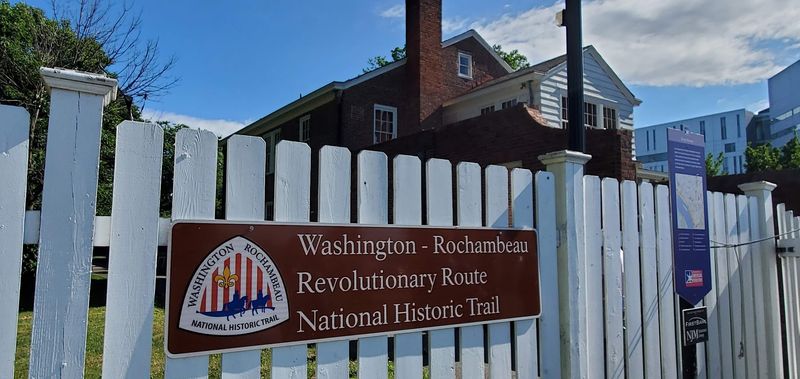
A pretty old mansion is the easy version of the story. The fuller version is harder, and it is also more honest.
William Trent’s household included enslaved people of African descent, and the museum now makes that part of the site’s history impossible to ignore. Trent’s 1726 probate inventory listed eleven enslaved people: Yaff or Yaft, Joan, Bob, Dick, Nanny, Tom, Julius, Bossin, Harry, Cupid, and Pedro.
Seeing names matters. It moves the story away from a vague sentence about “servants” and toward actual people who lived and worked on this property.
They cooked, cleaned, hauled, built, tended, carried, repaired, and made daily life possible for a wealthy colonial family. The house was not just a symbol of one merchant’s success.
It was also part of a system that created comfort for some through forced labor by others. That truth sits right alongside the polished brick, the formal rooms, and the impressive architecture.
The site’s history did not end with Trent either. After his death in 1724, the house passed through multiple owners and tenants.
It later served as a residence connected to three New Jersey governors: Lewis Morris, Philemon Dickerson, and Rodman McCamley Price. During the Revolutionary era, figures such as Dr. William Bryant and Colonel John Cox were associated with the property.
Each new resident added a layer, but the earliest layer remains one of the most important because it shows how colonial wealth worked in New Jersey. This is where the house becomes more than a stop for architecture fans.
It becomes a place that complicates the tidy version of local pride. You can admire the craftsmanship and still sit with the discomfort.
In fact, you should. The best historic sites do not flatten the past into a souvenir. They let the grand rooms and the hard truths occupy the same space.
Inside the Rooms Restored From a 1726 Inventory
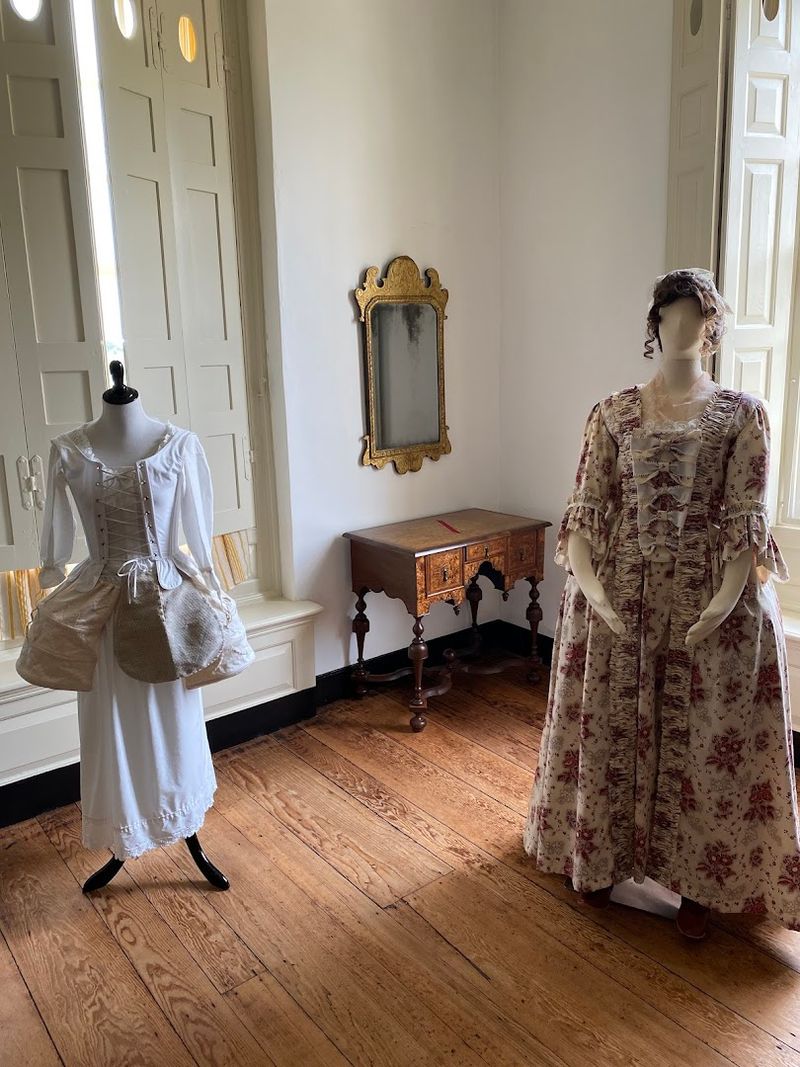
Here is where the museum gets wonderfully nerdy in the way only a good house museum can. After William Trent died on Christmas Day in 1724, an inventory of his estate was taken in April 1726.
That document, formally the kind of “true and perfect inventory” used to assess a deceased person’s property, became an unusually useful guide for interpreting the house. For visitors, that means the rooms are not furnished only by guesswork or by whatever antiques happened to be available.
The museum has a period shopping list, basically, though one written in the handwriting and priorities of the 18th century. Inventories like this can reveal where objects were located, what kinds of furniture the household owned, and how rooms were used.
That is a big deal because old houses often survive with very little evidence about their daily life. A chair is nice.
A chair connected to a specific room and a specific household is better. The Trent inventory helps make the place feel inhabited rather than staged.
You start thinking about rooms as working spaces instead of pretty boxes: where food was prepared, where guests were received, where family business happened, where labor was visible and where it was deliberately kept out of sight.
It also reveals the moral ugliness of the era because the same inventory that lists household goods also accounts for enslaved people.
That is a brutal reminder of how casually human lives were treated as property in colonial records. The museum’s restoration and interpretation use that document to bring back details, but the document itself brings back questions too.
What did comfort cost? Who made refinement possible?
Whose names were preserved because someone else considered them assets? That tension is part of what makes the William Trent House more memorable than a room full of old furniture.
The inventory does not just furnish the house. It unsettles it.
Why This Quiet Trenton Landmark Is Worth Slowing Down For
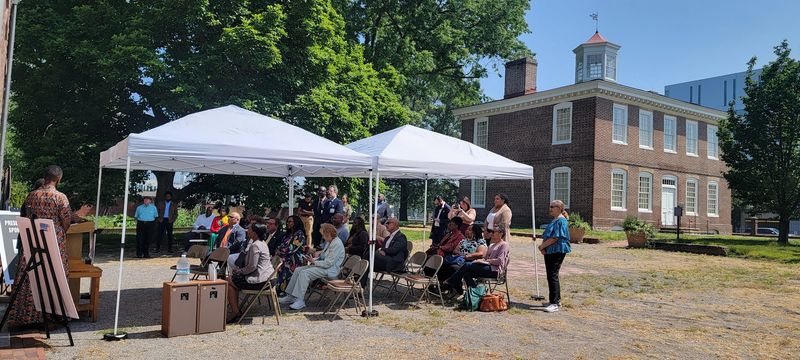
This is not the kind of stop that tries to overwhelm you. The William Trent House works slowly, which may be why it is so easy to underestimate.
You arrive expecting a handsome colonial building, and yes, you get that. You get brickwork, a cupola, restored rooms, and a setting close enough to the Delaware River to understand why the location mattered.
But the longer you pay attention, the more the house starts connecting pieces of New Jersey that usually get treated separately. There is Indigenous history in the land itself.
There is river commerce in Trent’s rise. There is colonial architecture in the walls. There is slavery in the inventory. There is Revolutionary-era history in later residents.
There is civic history in the way the house moved from private ownership to a public museum. There is even modern Trenton in the surrounding roads, courts, parking lots, and weekday traffic.
It is all there, compressed into one property that many drivers barely notice. Practical details help too.
The museum is small enough to fit into an afternoon, the admission price is modest, and the location is easy to pair with other Trenton stops. But the real reason to slow down is not convenience.
It is perspective. New Jersey can be loud about diners, beaches, malls, and highways, and fair enough, we do all of those well.
Still, tucked near the Delaware is a house that was already old before America was America. It has survived because different generations kept deciding it was worth saving, even as the city changed around it.
That is a pretty good reason to give it more than a glance from the road.