Indiana has plenty of excellent steakhouses, but few combine outstanding food with as much history and mystery as J. Miller Steak Company in Aurora. Housed inside a beautifully restored historic building, this longtime favorite is known for its wood-fired steaks, warm atmosphere, and ghost stories that have become part of the restaurant’s identity.
Guests come for perfectly cooked ribeyes, fresh seafood, and handcrafted cocktails, then stay to hear tales of unexplained happenings that have fascinated locals for years. Whether you believe in ghosts or not, this unique Indiana steakhouse delivers an unforgettable dining experience that goes far beyond the menu.
A Historic Aurora Entrance Full of Character
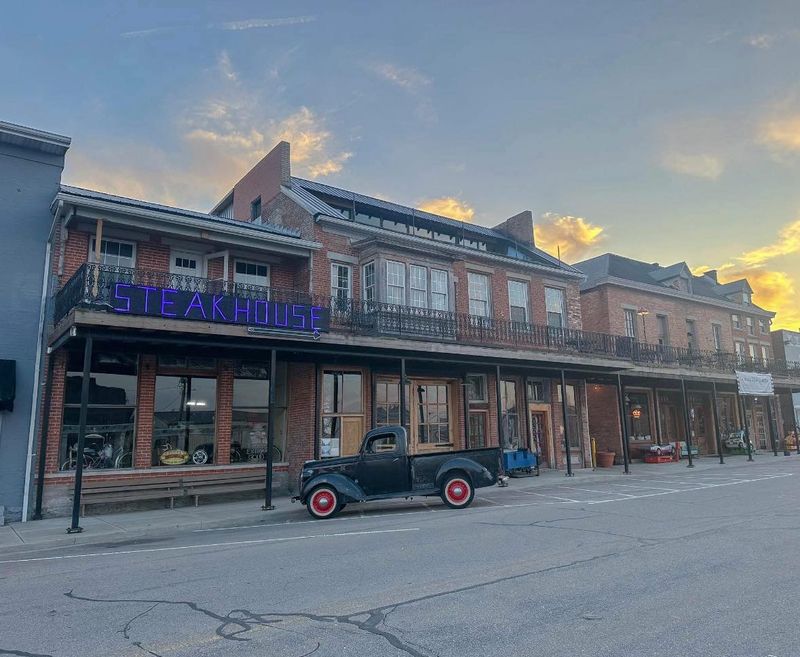
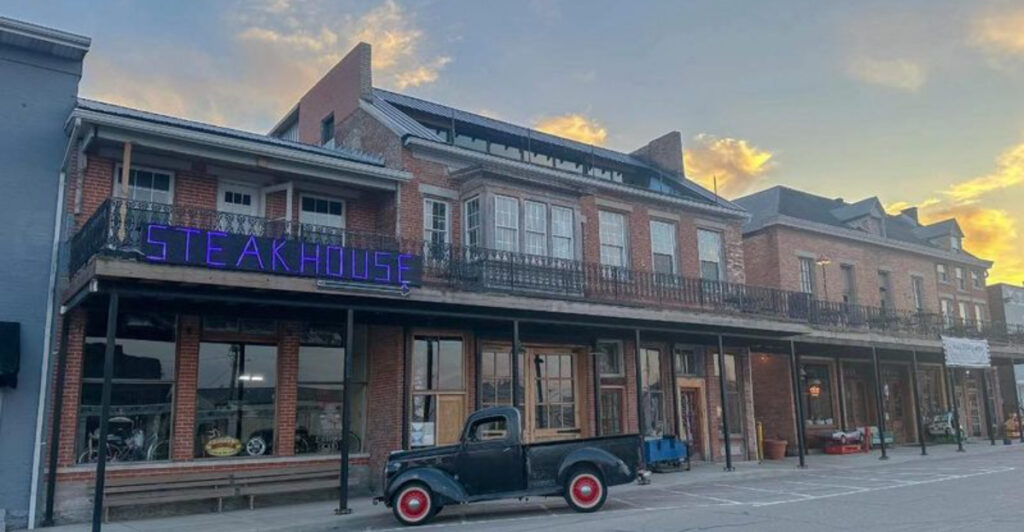
J. Miller Steak Company sits in the kind of building that instantly does half the talking. On Aurora’s Second Street, the facade folds into the historic rhythm of downtown, and once you step inside, the old brick, wood, and metal details take over.
Nothing about the room reads slick or overdesigned, which is exactly why it lands so well for a steakhouse built around character instead of polish.
The dining room leans rustic without drifting into theme-park territory. Exposed masonry, substantial furniture, and a warm, low-lit palette give the place a grounded look that suits both a casual weekend meal and a dressier anniversary dinner.
Even smaller details matter here, including the distinctive restroom design that has drawn attention for its tin finishes and loft-style sink, proof that the owners cared about the visual experience beyond the table.
Aurora itself helps frame the visit. This is a river town with old-building texture, and the restaurant makes that context part of the meal instead of trying to block it out with generic steakhouse styling.
You notice that especially if you arrive near dusk, when the street outside softens and the interior starts glowing against the brick, giving dinner a stronger sense of place than most suburban dining rooms ever manage.
That physical setting changes how the food arrives, too. A wood-fired steak brought into a room like this makes sense in a way it would not under bright chain-restaurant lighting and television screens.
Before the first bite lands, J. Miller has already made a clear argument for itself: if you are driving to Aurora for dinner, you are not just chasing beef, you are stepping into one of the town’s more visually textured rooms.
Why the Wood-Fired Ribeye Steals the Show
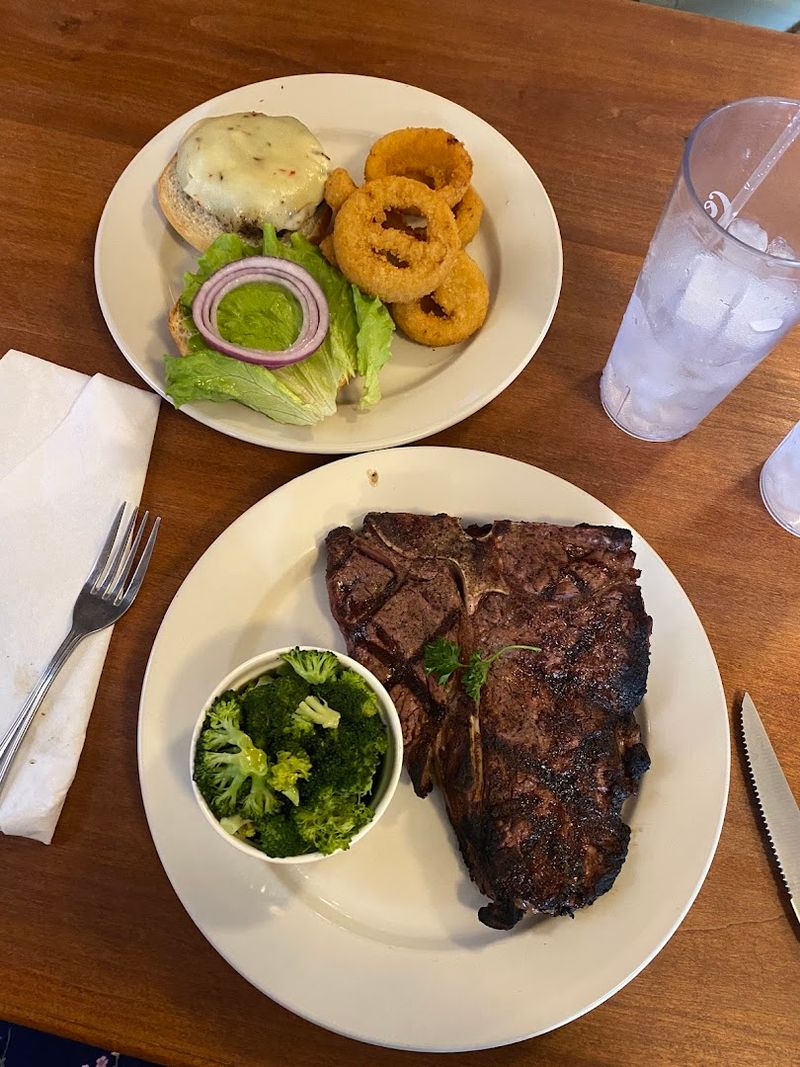
The headline plate here is the wood-fired steak, and the ribeye carries that reputation with the most force. Fire-cooked beef can go wrong when smoke overwhelms the meat or when the char turns harsh, but J. Miller’s best version sounds built around a more balanced target: a smoky edge, a seared crust, and a center that still delivers richness instead of tasting dried out.
That combination is why the ribeye keeps surfacing as the order that defines the room. Wood fire changes more than flavor. It gives the steak visual drama, those darker edges and ember-kissed surfaces that announce themselves before the knife ever comes down.
At J. Miller, that rustic finish fits the old-building setting perfectly, so the plate reads as part of the house style rather than a generic steak dropped onto a white dish under dim lights.
There is also an important nuance here if you are ordering carefully. Several diners have noted inconsistency with doneness on some steaks, which makes a clear temperature request and a quick table check worth your attention, especially if precision matters to you.
That does not erase the praise the steaks get at their best, but it does make the wood-fired approach feel more handcrafted than automatic, with results tied closely to execution on a given night.
When everything lines up, the payoff is easy to understand. A ribeye already brings marbling and richness, and wood fire gives it an extra layer that standard flat-top cooking cannot fake.
If you are choosing one dish that best explains why this Aurora steakhouse has become a destination dinner for date nights, anniversaries, and celebratory meals, the ribeye is the clearest place to start.
The Sides Worth Saving Room For
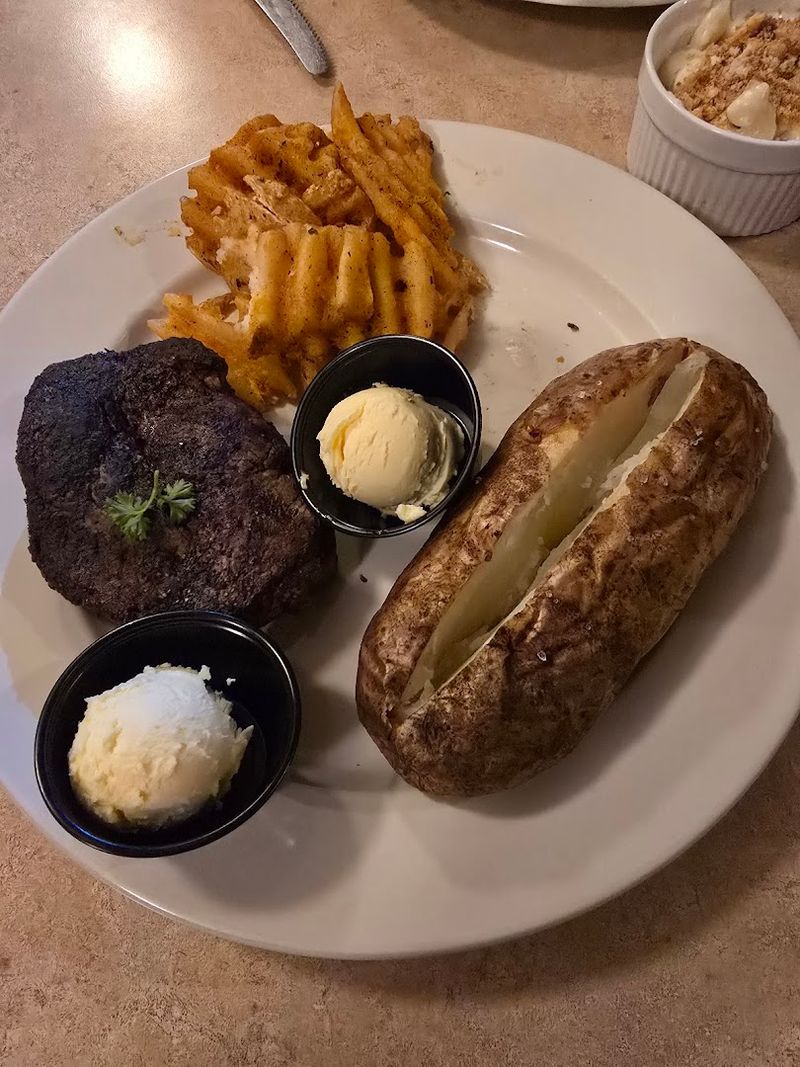
A steakhouse earns repeat visits when the extras stop feeling like filler, and J. Miller has several sidekicks that deserve real attention.
White cheddar mac and cheese, seasoned fries, seasoned waffle fries, spicy cheese curds, onion rings, shrimp cocktail, and cinnamon honey butter with bread all show up as dishes that can redirect your focus even when beef is supposed to be the center. That matters because a place with narrow hours needs more than one reliable hook once you finally get a seat.
The mac and cheese sounds especially central to the experience. Creamy, rich, and upgraded enough to become part of the conversation, it works as exactly the kind of indulgent side you want next to a smoke-marked steak.
The bread with cinnamon honey butter pushes in a different direction, adding sweetness and softness that contrast nicely with charred meat and salty fries, so the table gains range instead of tasting heavy from first bite to last.
Dessert also punches above routine restaurant expectations here. Cheesecake gets singled out with unusual enthusiasm, and molten lava cake has enough curiosity around it to feel like a smart closing move if you are stretching dinner into a full evening.
Those choices matter in a room that attracts celebration meals, because a restaurant built for anniversaries and rehearsal dinners needs a finish that does not fade after the entrees.
There are practical details to watch, especially around side upgrades and menu clarity, since some diners have flagged confusion on added charges.
Still, the broader picture is strong: J. Miller is not depending on one famous steak to carry the entire meal. If you order thoughtfully, the table can move from smoky to creamy to crisp to sweet without losing the old-school steakhouse thread that ties everything together.
The Ghost Stories That Made This Indiana Steakhouse Famous
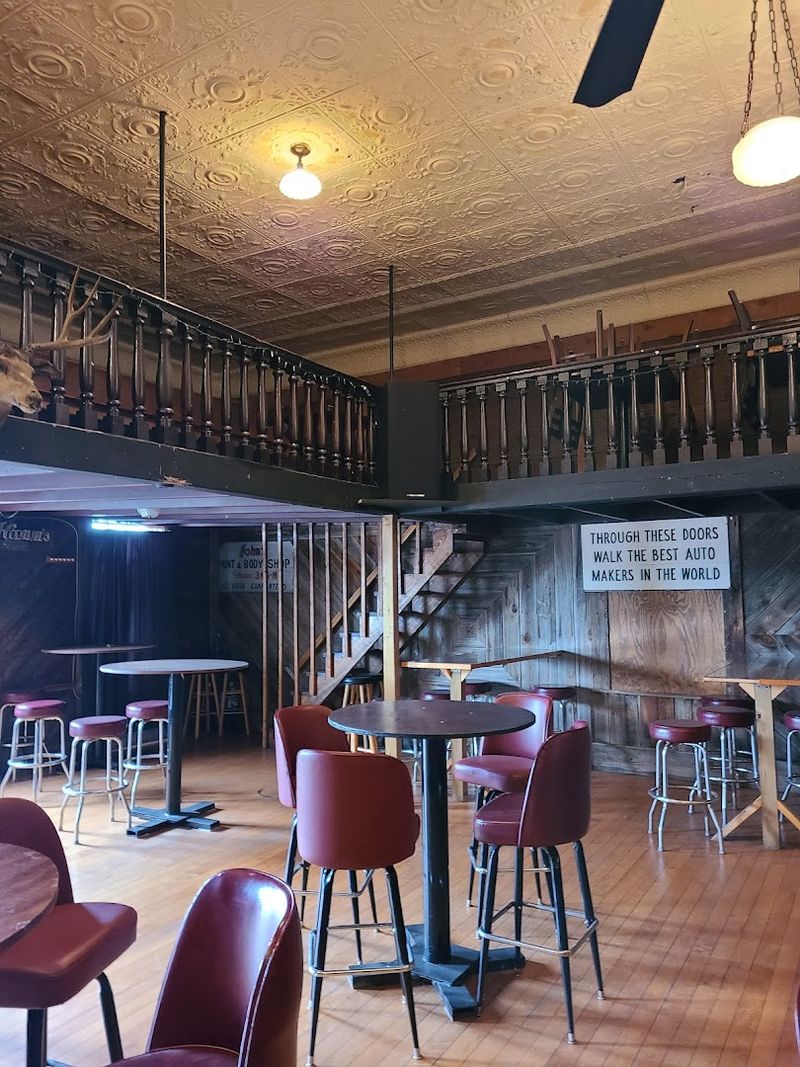
The haunted angle is part of J. Miller’s appeal, but it works best when treated as local flavor rather than carnival bait. In a building with age, creaking materials, upstairs history, and the layered mood of an old river town, you do not need theatrical gimmicks to make a ghost story sound plausible.
Even the title-making image of brochures getting tossed around lands because the setting already primes you for odd little moments that feel just slightly off.
That kind of lore fits Aurora better than a loud jump-scare version ever could. This is the sort of town where history stays visible in brick facades, street lines, and reused interiors, so a steakhouse inside an older structure naturally collects stories along with dinner reservations.
If you hear someone mention unexplained movement, a strange upstairs energy, or a room that shifts mood after dark, it folds neatly into the building instead of distracting from it.
Crucially, the ghost talk does not replace the restaurant’s identity. J. Miller is still a functioning steakhouse first, not a novelty stop where the paranormal gimmick outmuscles the menu.
That balance helps, because you can lean into the spooky side if you want a more atmospheric night, or ignore it entirely and focus on ribeye, cheesecake, and the way the brick walls hold the evening light.
The smartest way to experience that side of the place is simply to stay observant. Arrive when daylight is fading, settle into the room, and let the old-building details do their work while service and dinner unfold.
If a brochure shifts, if an upstairs corner seems unusually watchful, or if nothing at all happens beyond a good meal, J. Miller still wins by giving Aurora a steakhouse with a built-in story.
Why This Indiana Steakhouse Feels One of a Kind
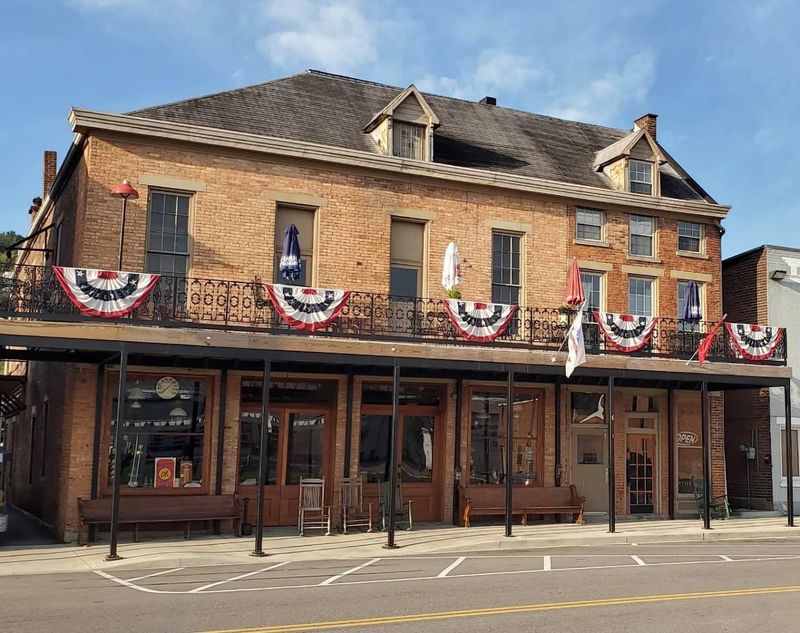
Some restaurants could be dropped into any highway interchange and remain exactly the same. J. Miller would lose too much if you lifted it out of Aurora, Indiana, because the restaurant depends on local context almost as much as it depends on its grill.
The old-town street grid, the nearby river setting, and the weathered architecture all sharpen the experience before you even reach the host stand.
That connection to place gives the meal better pacing. Dinner here works nicely as the anchor of a small-town evening, not just a quick stop wedged between errands.
You can spend time looking around Aurora first, absorb the river-town scale and older storefronts, then slip into J. Miller once the light starts to change, which makes the restaurant feel less like an isolated reservation and more like the payoff to the setting around it.
The building also appears to support larger life events in a way that suits the town. Rehearsal dinners, anniversary meals, family celebrations, and group gatherings all make sense in a room that blends familiarity with a little occasion-worthy polish.
There is mention of an upstairs saloon space in the property’s broader story, which hints at a venue with more personality than a standard dining room, even when the downstairs steak service remains the main draw.
That local fit shapes expectations in a useful way. You are not coming for flashy urban steakhouse spectacle, towering seafood displays, or corporate consistency engineered down to the second.
You are coming for a meal that belongs to Aurora, with wood-fired meat, historic surfaces, and enough town character around it to make dinner feel rooted. In a travel landscape crowded with interchangeable places, that specificity gives J. Miller much of its edge.
How to Time Your Visit to J. Miller Steak Company
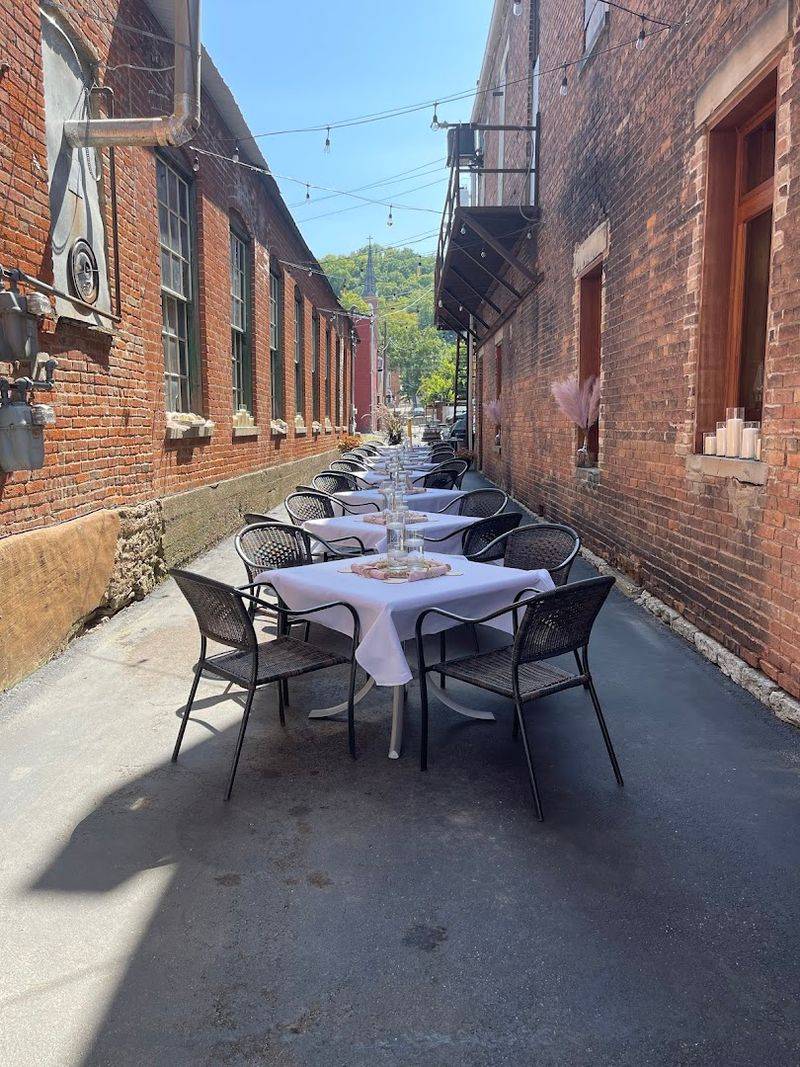
J. Miller is not an anytime restaurant, and that limited schedule shapes the whole strategy of going. The place operates only Thursday through Sunday, with evening hours and a notably early close compared with big-city steakhouses, which means dinner here requires a little planning instead of spontaneous late-night wandering.
If you treat it like a casual drop-in after nine, you are setting yourself up for disappointment before the host can even greet you. The most useful move is to lean into the timing rather than fight it.
Thursday offers a quieter-feeling start to the weekend, Friday and Saturday bring the strongest classic steakhouse energy, and Sunday can work well if you want a more relaxed finish to the week without pushing too late into the evening.
Because the room has visual warmth and the town itself benefits from softer light, arriving around dusk makes especially good sense.
There is another advantage to treating this as a planned outing: you can build the rest of the evening around it. Aurora is compact enough that dinner does not need to stand alone as the entire event, and the restaurant’s historic setting rewards a slower approach.
A short walk before your reservation or a few minutes outside afterward helps the experience breathe, especially if you are visiting for a date night or celebration rather than simply trying to clear a hunger emergency.
Practical expectations matter here, too. Service often earns strong marks for attentiveness and friendliness, but with a destination-style dinner spot in a smaller town, patience and clarity on your order go a long way.
J. Miller works best when you arrive ready for a real evening meal, not a rushed transaction. Match your timing to the house, and the restaurant has a much better chance to show you exactly why people make the drive.
Where Great Service Meets Historic Charm
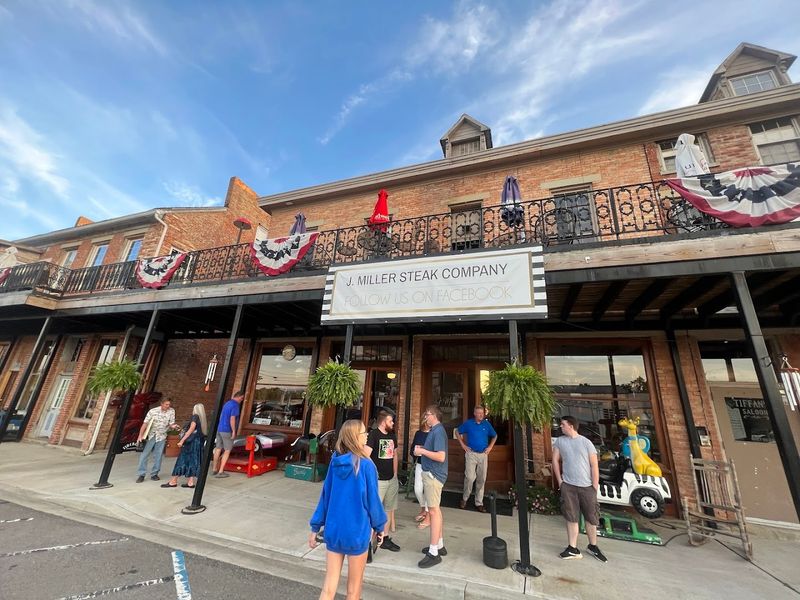
J. Miller gets interesting once you move beyond surface charm and look at how the place handles actual dining room pressure.
The strongest pattern is clear: when the restaurant is clicking, service adds a lot to the night, especially for dates, anniversaries, larger family dinners, and milestone gatherings.
Servers are often described as attentive, professional, and quick to check in, which matters in a restaurant where the mood depends heavily on hospitality matching the old-building warmth.
That event-friendly side appears to be one of the business’s real strengths. A rehearsal dinner, a fiftieth anniversary, and smaller romantic occasions all fit naturally here because the room already carries a little ceremony without becoming stiff.
You can imagine why people choose it for those moments – the wood-fired food is substantial, the setting has personality, and the space projects a dressed-up comfort that works better than a bright casual chain ever could.
At the same time, this is not a fantasy version of a steakhouse untouched by friction. A handful of complaints point to inconsistent steak temperatures, portion concerns for the price, and occasional confusion around menu upgrades or discounts.
Those details are worth knowing, not to cancel the visit, but to help you approach the meal with eyes open and communicate clearly if exact doneness or billing transparency is especially important to you.
That mix of upside and imperfection makes J. Miller easier to understand. It reads less like a factory-precise steak brand and more like a character restaurant trying to deliver a memorable evening in a historic space, with all the human variability that can bring.
If you value texture, setting, and the possibility of a standout wood-fired dinner over sterile predictability, the tradeoff may be exactly the point.
Come for Steak, Stay for the Story
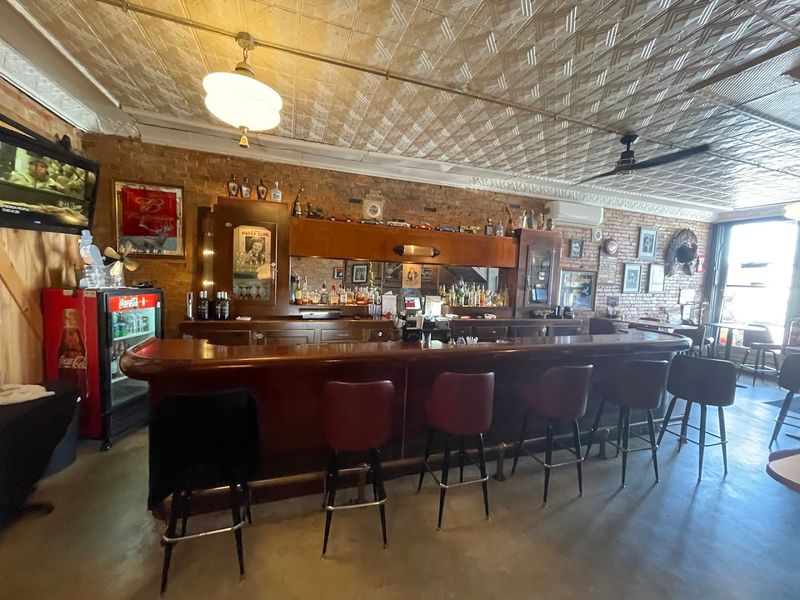
J. Miller Steak Company stands out because it combines three things that rarely line up in one small-town address: a historic room with texture, a wood-fired steak identity, and just enough haunted lore to make dinner more cinematic.
Plenty of places can offer one of those elements. Very few can serve all three at once without turning into a gimmick or flattening into nostalgia with a menu attached.
If you are deciding whether the drive to Aurora makes sense, the clearest answer is to think in terms of experience, not just value math. This is a place to choose when you want a meal with setting, timing, and atmosphere built into it, especially for date nights, celebrations, or evenings when a standard restaurant would feel forgettable.
The ribeye is the strongest draw, the side dishes and dessert can deepen the table, and the building itself keeps adding context all night. It also helps to know what J. Miller is not.
This is not a polished metropolitan steak temple with endless hours, flawless uniformity, and anonymous luxury touches.
It is more specific than that, more rooted, and sometimes more uneven, which is why the best version of the visit depends on ordering smartly, arriving at the right time, and appreciating the character of the place as part of the package.
For the right diner, that trade makes total sense. You get exposed brick, old-town Aurora outside the door, a steakhouse schedule that makes dinner feel intentional, and a room where ghost stories can share space with cheesecake and charred ribeye.
That is a much better hook than generic excellence. In southeastern Indiana, J. Miller offers the kind of night you can actually picture before you return, right down to the brochures.
Share this story