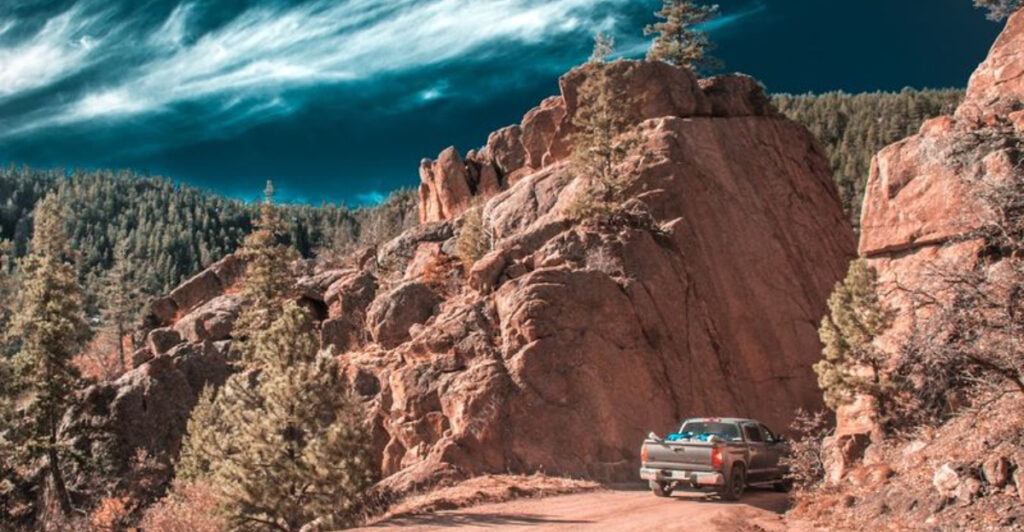
Colorado is filled with scenic drives, but few combine breathtaking landscapes with as much history and mystery as Phantom Canyon Road. Following the route of a former railroad through towering cliffs, narrow canyons, and rugged mountain terrain, this unforgettable drive has earned a reputation for both its spectacular scenery and the ghostly legends tied to its past.
Historic tunnels, abandoned rail grades, and dramatic rock formations add to the atmosphere, making every mile feel like a journey into another era. Whether you’re drawn by the views, the history, or the local folklore, Phantom Canyon Road offers one of Colorado’s most memorable road trips.
A Canyon Entrance That Changes the Mood Fast
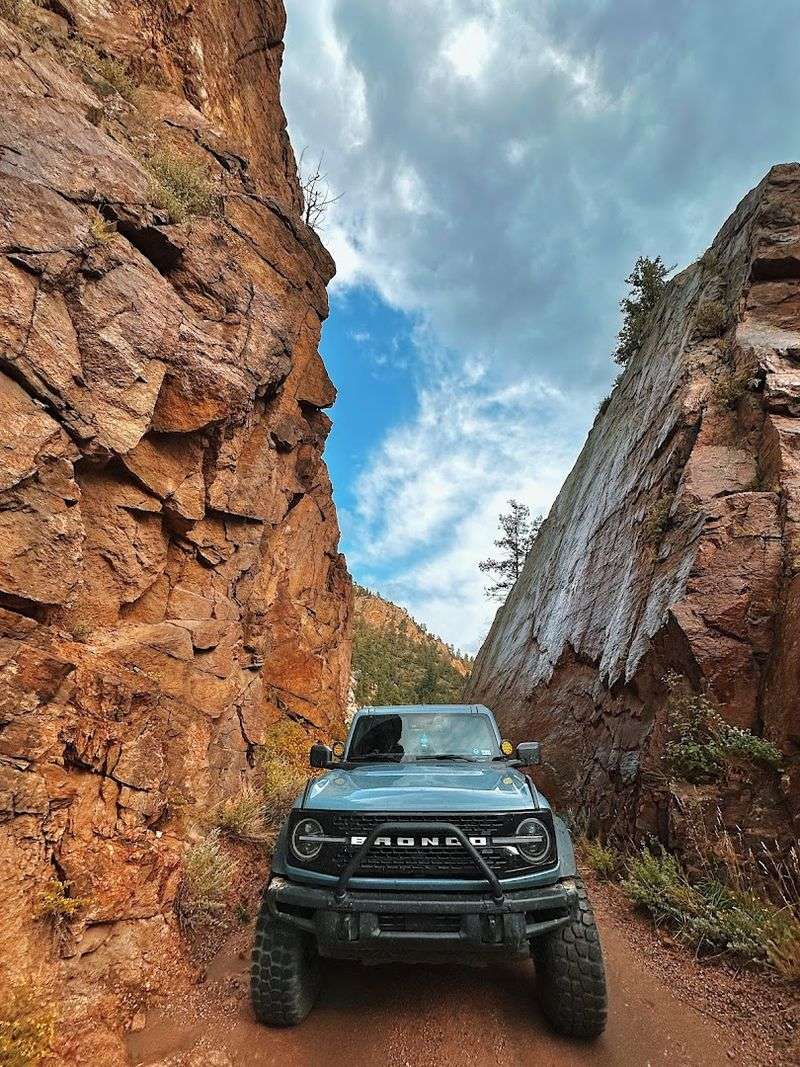
The opening miles of Phantom Canyon Road waste no time. You leave broader country behind and enter a tighter world of stone, shadow, and sudden vertical scale, where the walls begin to crowd the road and the light starts behaving differently.
Sun reaches in at sharp angles, dust hangs low over the gravel, and every bend feels like a threshold rather than a simple turn.
That visual compression is a big part of the route’s power. On wider scenic byways, you can glance around casually and keep moving, but here the canyon directs your attention forward, upward, and into every notch carved by water and time.
The road itself, unpaved and narrow, reinforces that focus by slowing your pace and making each curve feel earned.
Phantom Canyon Road is not wilderness in the abstract. It is specific, textured, and close enough to study, with fractured rock faces, scattered timber, and pockets of shade that can turn a warm afternoon into something almost theatrical.
Even before the ghost stories enter the conversation, the landscape sets up a mood that is more suspenseful than postcard pretty.
That is where the drive gets interesting for you as a traveler. Instead of offering one grand overlook and a quick photo stop, it builds atmosphere through movement, confinement, and contrast.
Open sky appears, disappears, then returns in brief slivers, and those shifts make the canyon seem restless even when the air is completely still.
By the time you are fully inside the route, the name no longer sounds like marketing. It sounds descriptive. Phantom Canyon feels like a place where history, geology, and imagination have been sharing the same narrow corridor for a very long time, and the entrance is your first clear warning that this drive plays by its own rules.
Built on a Railroad Past You Can Still Trace
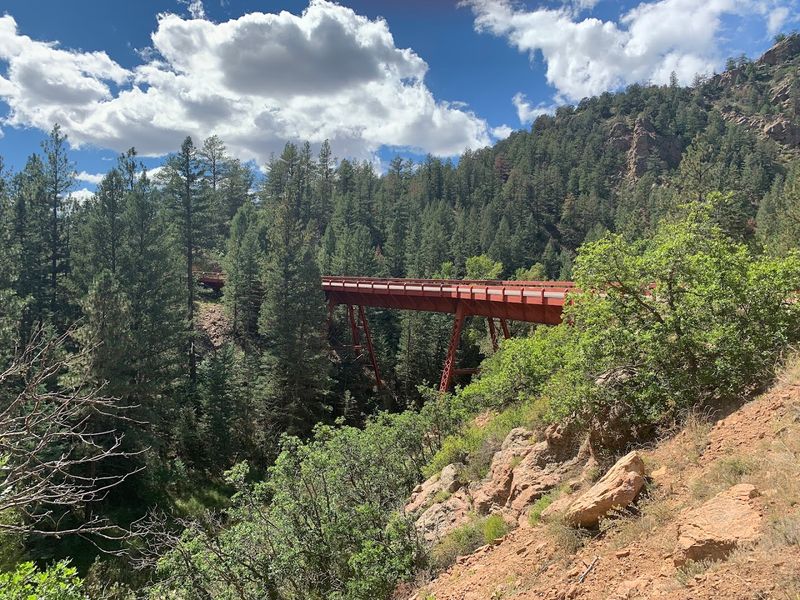
Phantom Canyon Road carries more than traffic. Its path follows the corridor of the old Florence and Cripple Creek Railroad, and that backstory gives the drive a structure you can actually read in the landscape.
The grades feel deliberate, the turns often appear engineered rather than accidental, and the canyon starts looking less like an isolated back road and more like a former transportation lifeline threaded through difficult terrain.
That railroad history matters because it changes how you see the route. Instead of viewing the canyon as untouched scenery, you begin noticing the human ambition built into it – cuts through rock, shelf-like alignments, and passages that suggest the practical logic of moving freight, ore, and people between rough mountain communities.
The road becomes a surviving line of effort, adapted for drivers but still carrying the shape of another era. Phantom Canyon Road is especially compelling on that level because the historical layer is not abstract museum information. It is embedded in the drive itself.
You are not reading about a vanished route from a distance; you are moving through the same narrow geography that demanded careful planning, labor, and a tolerance for risk long before modern vehicles arrived.
The old railroad also helps explain why the canyon can feel strangely inhabited even when no one else is around. Infrastructure leaves a trace.
Once you know trains once worked through these walls, hauling the business of Colorado’s mining years across this route, every curve gains a faint echo of industry beneath the quiet.
That tension between silence and former activity gives Phantom Canyon Road much of its personality. It is scenic, yes, but it is also legible history.
The more closely you pay attention to the route’s shape and purpose, the more the drive reveals itself as a preserved corridor where Colorado’s railroad age is still visible under your tires.
The One-Lane Tunnel That Steals the Show
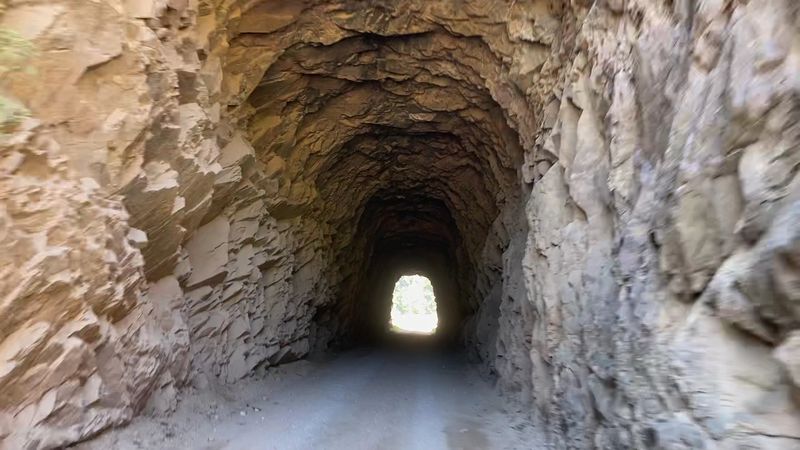
If Phantom Canyon Road has a signature scene, it is the tunnel. The route narrows, rock closes in, and the approach alone raises the pulse because the landscape suddenly looks engineered and improvised at the same time.
On a road already defined by tight margins, a one-lane tunnel turns movement into a small, memorable event. The appeal is not only visual. It is tactile and spatial.
You feel the constriction more intensely here, where the rough canyon setting meets a precise passage through stone, and that contrast makes the tunnel far more dramatic than a quick roadside curiosity.
Even drivers who came mostly for scenery tend to slow down and treat this section like the centerpiece. Part of the thrill comes from scale. The tunnel is modest compared with major highway infrastructure, yet that modesty is exactly why it works so well in Phantom Canyon.
It belongs to the route. Instead of overpowering the setting, it reinforces the canyon’s intimate, hand-built character and keeps the old railroad-and-mining context close to the surface.
This is also where the road’s haunted reputation gets easier to understand. A shadowed opening in rock, limited visibility, and the quiet hush that settles around narrow passages create a naturally eerie frame even in bright daylight.
No elaborate storytelling is required. The tunnel supplies enough suspense on its own, especially when you pause before entering and listen to how quickly sound disappears against the canyon walls.
For many drives, the most famous feature can end up feeling overhyped. Here, the opposite happens. The tunnel works because it condenses everything Phantom Canyon Road does well – geology, history, tension, and visual drama – into one compact moment.
You pass through in seconds, but the buildup, the silence, and the hard stone edges give that short stretch lasting weight.
Why the Ghost Stories Fit This Colorado Road So Well
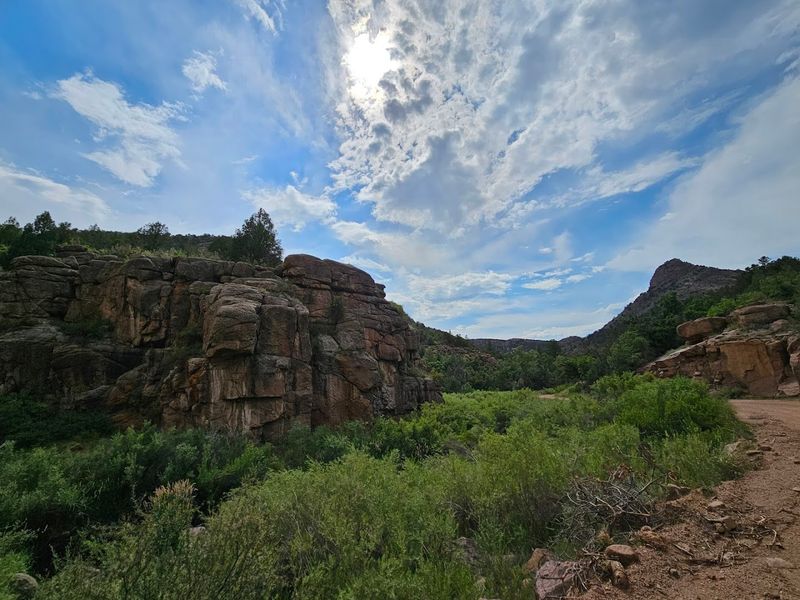
Phantom Canyon Road did not earn its name by accident, and the ghostly reputation attached to it makes sense even if you approach local lore with a healthy dose of skepticism. This is a road where atmosphere does real work.
The canyon is narrow, the walls cut off long sightlines, and stretches of quiet can feel so complete that ordinary sounds – gravel shifting, wind brushing timber, a distant engine – seem amplified and strangely detached.
That setting gives every old story room to breathe. Mining corridors, railroad history, remote terrain, and a route that still asks for steady attention combine into the perfect backdrop for tales that pass from driver to driver.
You do not need a catalog of paranormal claims to understand the appeal. The environment already creates uncertainty, and uncertainty is where legends tend to grow.
What makes the haunted angle effective here is that it does not overwhelm the place. Phantom Canyon Road is not a staged attraction with props or forced theatrics.
It remains a functioning scenic route first, which allows the eerie reputation to hover in the background rather than take over the whole experience. That subtlety is stronger than any exaggerated ghost-tour script could be.
Light plays a major role too. Afternoon brightness can make the canyon look bold and geological, while evening softens edges and deepens shadows until every cut in the rock appears more mysterious than it did an hour earlier.
You notice how quickly visibility changes, how pockets of darkness collect, and how a silent bend ahead can start reading like a question mark. That is why the folklore sticks to this road so naturally. The stories are not competing against the setting.
They are reinforced by it. Phantom Canyon Road gives you enough beauty to keep driving and just enough unease to make the next corner feel slightly unpredictable, which is exactly how a good haunting should work.
How to Drive It Without Missing the Good Parts
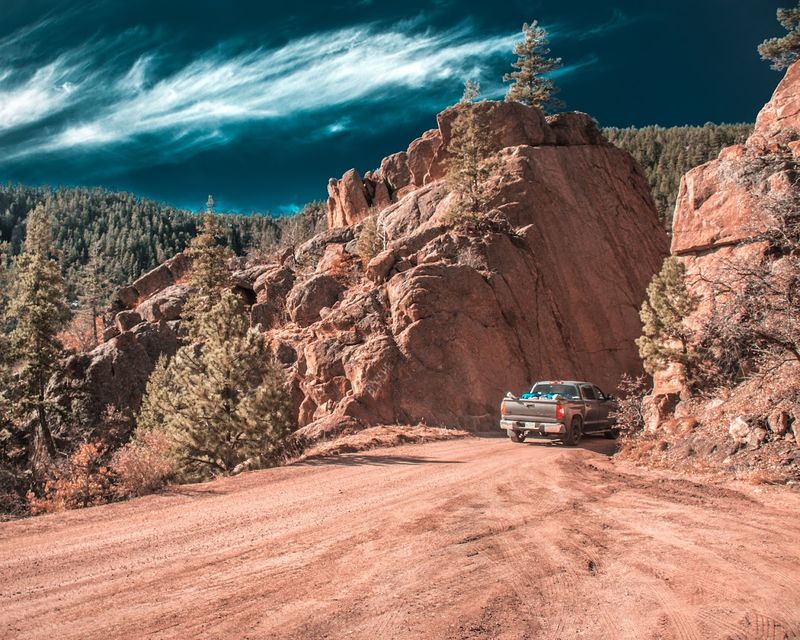
Phantom Canyon Road is best experienced slowly, and that is not a poetic recommendation. It is practical. The unpaved surface, narrow sections, and blind curves reward patience, especially if you want to notice the route’s details instead of treating the canyon as a quick connector between points on a map.
A measured pace gives the drive its proper rhythm. You have time to read the rock layers, spot the shifts in vegetation, and catch how the road alternates between enclosed passages and brief openings that widen your perspective.
Those changes are central to the route’s character, and rushing through them flattens the experience into little more than dust and steering corrections.
Because the road is scenic and somewhat intimate, situational awareness matters as much as enthusiasm. Watch for oncoming vehicles around tighter bends, leave space, and use pullouts thoughtfully when they appear.
The route is more enjoyable when everyone on it accepts the same basic rule: this is a place for calm, observant driving rather than aggressive hurry.
Timing can shape the experience too. Earlier or later light usually brings out stronger contrast on the canyon walls and can make the rock color look richer, while the middle of the day tends to emphasize brightness over drama.
Weather also changes the road’s personality. Dry conditions highlight dust and texture; unsettled conditions demand extra caution and can make an already remote-feeling drive more serious.
If you want the most from Phantom Canyon Road, treat it like a route you are inhabiting, not merely crossing. Keep your speed comfortable, your camera ready when safe, and your attention on the road’s changing geometry.
The drive reveals its best moments gradually – a tunnel ahead, a narrowing wall, a sudden pocket of shade, a bend that opens just enough to pull the canyon into focus.
The Small Details That Make the Route More Than a Shortcut
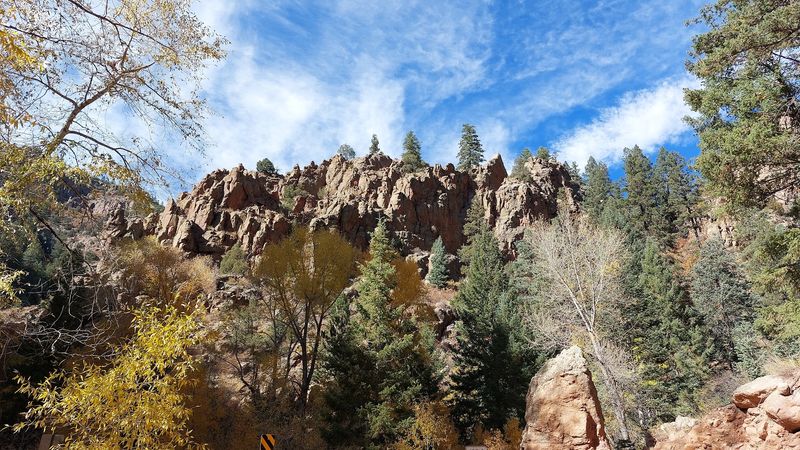
Phantom Canyon Road works best when you stop looking for one giant payoff and start noticing the smaller details that accumulate into character.
The road surface crunches differently as conditions change, the canyon walls shift from broad weathered faces to tighter sculpted sections, and scattered vegetation softens the hard stone just enough to keep the scenery from turning monochrome.
Those subtleties are easy to miss if you only chase the most photographed spots. One of the route’s strengths is texture. Rock here is not a distant backdrop.
It is immediate, fractured, layered, and often close enough to study from a turnout, with colors that move between dusty tan, muted red, and shadow-dark gray depending on the hour.
The gravel, timber, and occasional signs of earlier engineering add another visual register, giving the canyon a worked-in quality instead of an untouched-polish look.
The soundscape deserves attention too. On busier paved scenic roads, traffic noise often lingers in the background, but Phantom Canyon can drop into remarkable quiet between vehicles.
That quiet is part of why the place reads as eerie to so many drivers. When a gust of wind, a tire on loose stone, or a bird call cuts through the stillness, the canyon seems to sharpen around it.
You also notice how narrowness changes judgment. Distances look shorter, bends seem tighter, and ordinary movement becomes more deliberate.
That practical effect deepens the visual experience because the road never lets the scenery become passive. You are participating in it, constantly adjusting to the shape of the corridor.
All of those smaller elements give Phantom Canyon Road depth. It is not merely a line through attractive terrain. It is a route where material, sound, scale, and motion are tightly linked, and that combination makes even the quieter stretches surprisingly rich.
Why Phantom Canyon Road Still Stands Out at the End
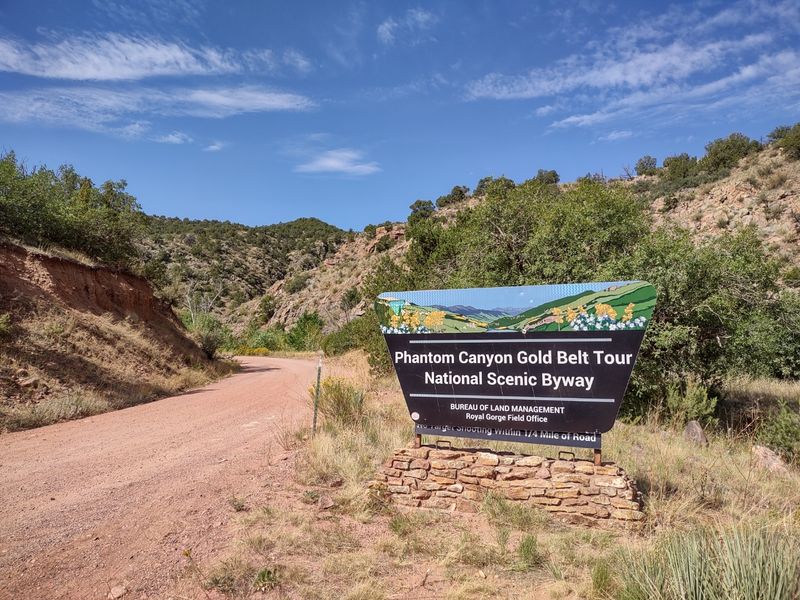
Some scenic drives blur together once the day is over. Phantom Canyon Road resists that. Its combination of old railroad alignment, raw canyon geometry, narrow travel lanes, and a reputation for ghostly tales gives it a sharper identity than many routes that are technically smoother or more famous.
The road’s staying power comes from contrast. It is visually dramatic without becoming grand in a distant, detached way. It is historical without feeling static. It is eerie without needing a haunted-house performance.
Those balances keep the experience active in your mind because the route keeps shifting between categories instead of settling into one familiar travel label.
Colorado has no shortage of mountain scenery, which makes distinctiveness harder to achieve than standard travel writing often admits. Phantom Canyon Road stands apart by offering a scenic drive that is also a physical encounter with former railroad infrastructure and canyon confinement.
You are not simply looking outward at views. You are moving inside a corridor shaped by geology and human effort, where the setting directly influences speed, attention, and mood.
That gives the drive an editorial kind of interest beyond pretty photographs. There is a built narrative in the road itself: approach, compression, passage, release, and the recurring suggestion that the canyon still holds traces of earlier movement.
Add the shadow-heavy atmosphere and the famous tunnel, and the route gathers enough personality to feel unusually complete for a relatively compact adventure.
In the end, Phantom Canyon Road stands out because it does several jobs at once and does them cleanly. It delivers scenery, history, tension, and a sense of place without overexplaining any of them.
You finish the drive with dust on the vehicle, sharper attention than when you began, and a clear understanding of why this Colorado road keeps attracting curious travelers who like their landscapes with a little edge.