Tennessee doesn’t just do normal tourist attractions. Scattered across the state are places so unusual that even locals have trouble explaining them to visitors. From underground waterfalls to a full-sized Greek temple in Nashville, these spots challenge everything you thought you knew about the Volunteer State.
Get ready to add some seriously strange destinations to your Tennessee bucket list.
1. The Lost Sea — Sweetwater
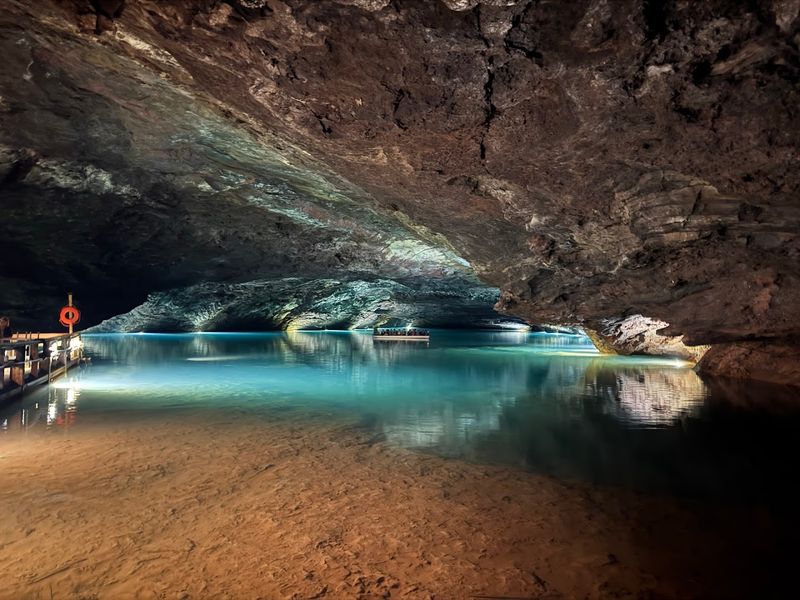
Most people think of lakes as outdoor spaces with sunshine and shorelines. The Lost Sea flips that idea completely upside down by existing entirely underground, hidden deep inside Craighead Caverns where sunlight never reaches.
Visitors descend into the earth and board glass-bottom boats to glide across water that stays a constant 58 degrees year-round. The cavern ceiling stretches high above while rock formations jut from the water’s surface in strange, ancient shapes. Rainbow trout actually live down here, stocked decades ago and now thriving in this bizarre ecosystem.
The lake earned its name honestly—early explorers truly didn’t know how far it extended into the darkness. Even today, divers have mapped over 13 acres of underwater passages, but nobody knows the lake’s true size. What makes this place extra weird is that it was used for everything from a Civil War saltpeter mine to a dance hall before anyone realized how massive the water system really was.
The temperature underground never changes, making it an equally strange visit whether you’re escaping summer heat or winter cold. Tour guides share stories about the cavern’s history while you float past limestone walls that took millions of years to form. The whole experience feels like exploring an alien planet without leaving Tennessee.
You can’t swim in the Lost Sea, but honestly, floating across it in near-silence while surrounded by ancient rock is strange enough. The journey down into the cavern and back up makes you realize just how much wild geology exists beneath Tennessee’s surface. It’s the kind of place that rewires your brain about what’s possible underground.
2. Bell Witch Cave — Adams
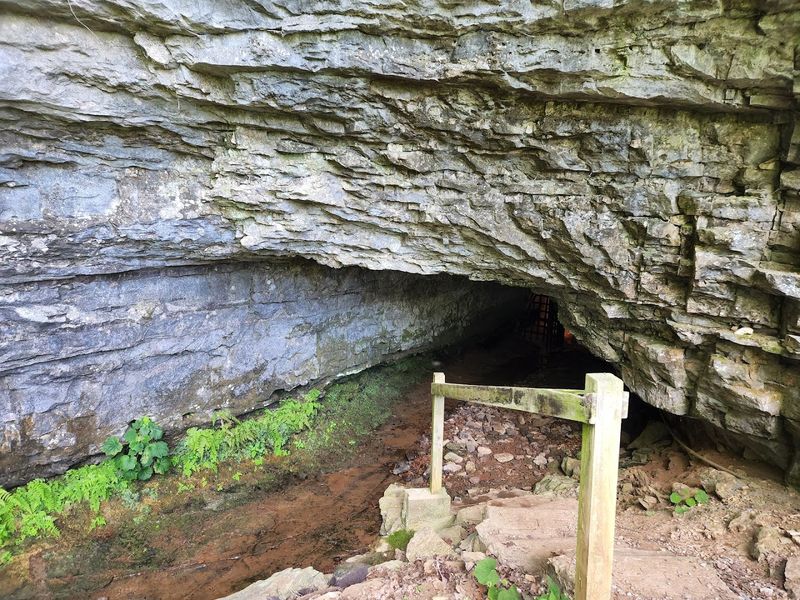
Ghost stories usually involve old houses or graveyards, but Tennessee’s most famous haunting centers around a cave that still gives visitors the creeps two centuries later. The Bell Witch legend isn’t just local folklore—it’s one of America’s most documented supernatural cases, and this cave sits right at the heart of it.
Back in the early 1800s, the Bell family reported being tormented by an entity that could speak, move objects, and apparently had a serious grudge against patriarch John Bell. The spirit, dubbed the Bell Witch, became so notorious that even Andrew Jackson allegedly investigated. The cave on the property became central to the legend when people claimed the witch resided there between her visits to terrorize the family.
Today, you can tour the cave and decide for yourself whether something strange lingers in the darkness. The rock formations are genuinely impressive, with tight passages and underground chambers that would be interesting even without the ghost story. But knowing the history makes every shadow and unexplained sound feel more significant.
Visitors report odd experiences—cameras malfunctioning, strange temperature drops, and that uncomfortable feeling of being watched from the darkness. Whether you believe in spirits or not, the cave’s atmosphere is undeniably eerie. The combination of natural cave features and centuries of folklore creates something uniquely unsettling.
The property includes a small museum with historical artifacts and documentation about the Bell Witch events. Reading witness accounts from the 1800s while standing near the cave entrance adds layers of weirdness to the experience. Some folks leave convinced they encountered something paranormal; others just appreciate the bizarre piece of Tennessee history.
Either way, it’s definitely not your average cave tour.
3. Salt & Pepper Shaker Museum — Gatlinburg
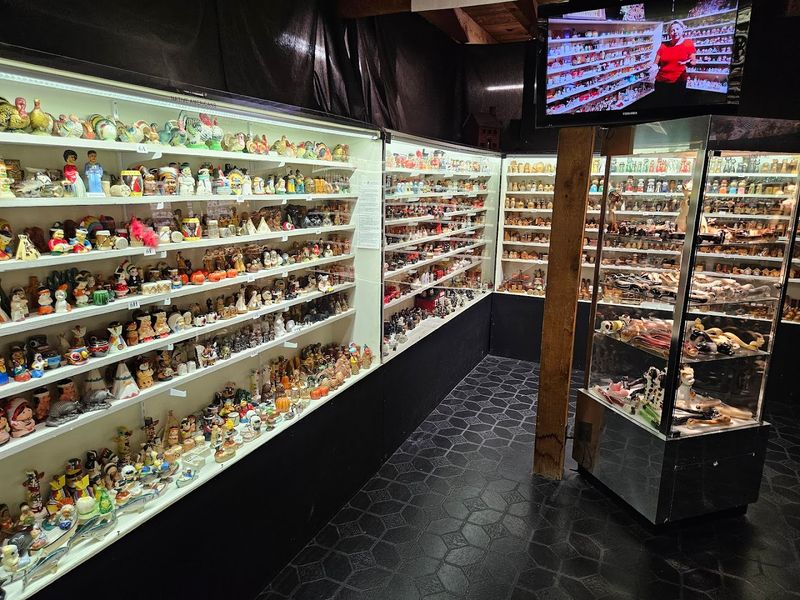
When someone says they’re opening a museum, you probably picture art, history, or science exhibits. You definitely don’t imagine over 20,000 salt and pepper shakers crammed into a small Gatlinburg space, yet that’s exactly what exists here. This place takes collecting to a level that borders on beautiful insanity.
The museum started as one woman’s personal collection that spiraled wonderfully out of control. Now the walls are covered floor-to-ceiling with shakers in every imaginable form—animals, celebrities, vehicles, food items, and designs so weird you can’t believe someone manufactured them. There are shakers shaped like outhouses, cartoon characters, and things you can’t quite identify.
What makes this place fascinating isn’t just the quantity but the sheer variety. You’ll spot shakers from different decades showing how design trends evolved, plus international pieces that reveal how other cultures approached this mundane kitchen item. Some are genuinely beautiful pieces of craftsmanship; others are so ugly they circle back to charming.
The museum is small enough to tour in 30 minutes, but most people end up staying longer because they keep spotting new details. Each section reveals another category you never knew existed—holiday-themed shakers, advertising shakers, shakers that don’t even look like shakers until you read the label. It’s overwhelming in the best possible way.
Entry is cheap, and the experience delivers exactly what it promises: an absolutely ridiculous number of salt and pepper shakers. There’s something refreshingly honest about a museum that knows it’s weird and leans into that identity completely. You leave questioning why this exists but also kind of grateful that it does.
4. Ellie the Pink Elephant — Cookeville
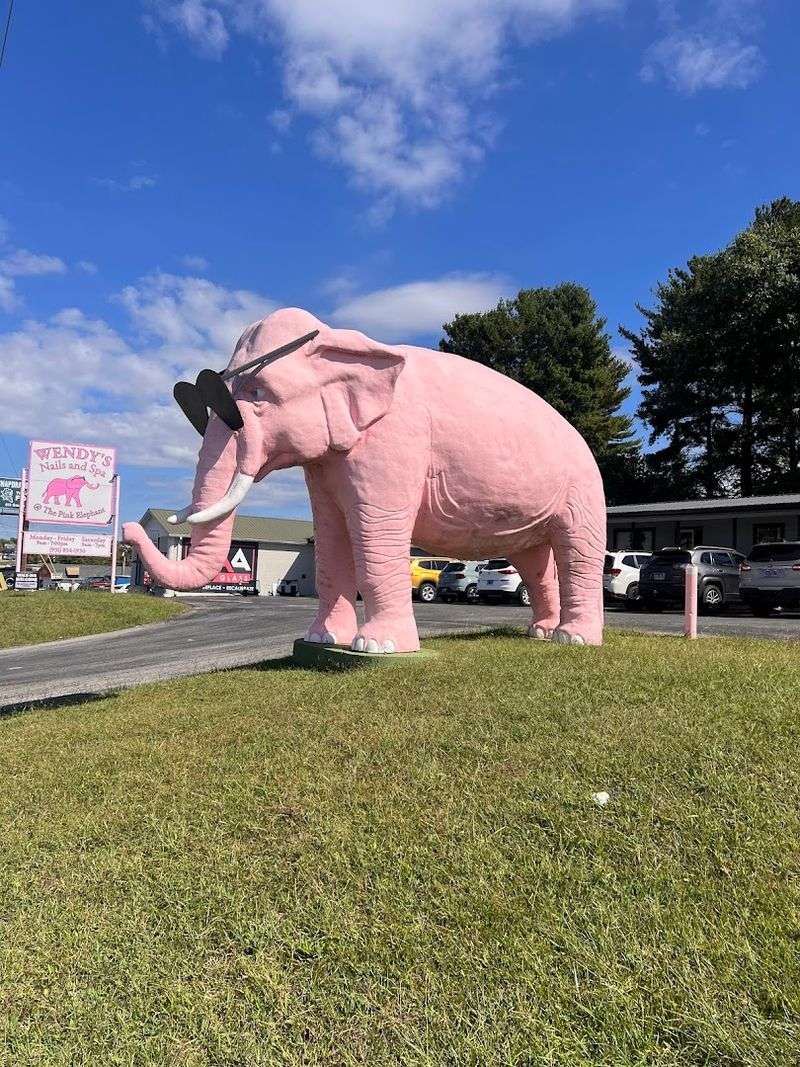
Driving along Interstate 40 near Cookeville, you might think you’re hallucinating when a massive pink elephant suddenly appears beside the road. Nope, your eyes work fine—that’s Ellie, and she’s been confusing drivers and delighting kids for years. She’s exactly the kind of wonderfully pointless landmark that makes Tennessee road trips memorable.
Ellie stands outside what was originally a furniture store, though her purpose has always been simple: catch attention and make people smile. Mission accomplished. The elephant is impossible to miss with her bright pink paint job and considerable size.
She’s become such a local icon that people give directions based on her location.
What’s particularly Tennessee about Ellie is that nobody really questions her existence anymore. She’s just part of the landscape now, as normal as any other roadside fixture. Travelers stop for photos, families use her as a meeting point, and locals barely register her presence because she’s always been there.
That’s how you know something has achieved true landmark status—when it stops being weird and starts being home.
The elephant has weathered storms, changing ownership of the property, and countless repaints to maintain her signature pink color. She’s not historically significant or architecturally important, but she matters to people who’ve grown up seeing her or who remember stopping there on childhood road trips. Sometimes the best landmarks are the ones that exist purely for joy.
Ellie represents a particular kind of American roadside culture that’s slowly disappearing as everything becomes more corporate and uniform. Giant animals, oversized objects, and weird statues used to dot highways everywhere, each one a small business’s attempt to stand out. Most are gone now, making survivors like Ellie even more precious.
She’s strange, she’s pink, and she’s thoroughly Tennessee in her refusal to be anything other than exactly what she is.
5. World’s Largest Cedar Bucket — Murfreesboro
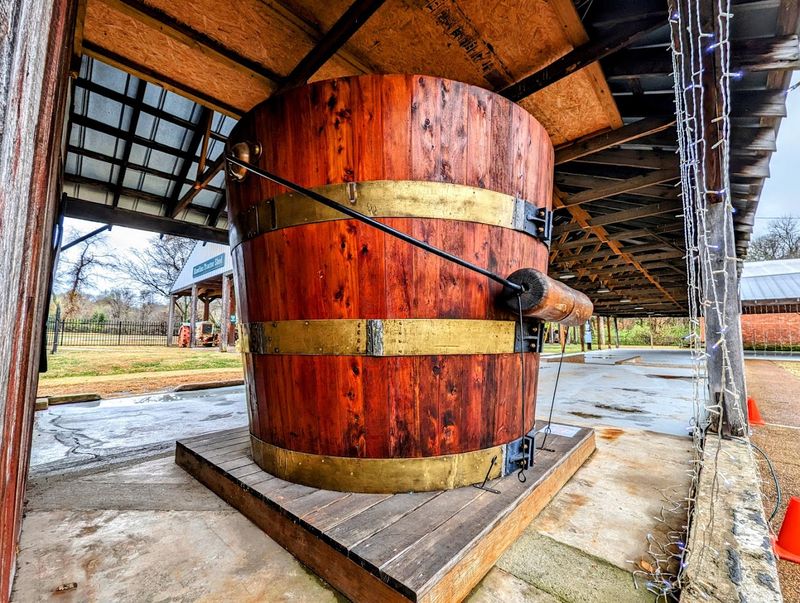
Tennessee decided it needed the world’s largest cedar bucket, and honestly, who’s going to argue with that logic? Sitting in Murfreesboro, this massive wooden bucket serves no practical purpose whatsoever, which somehow makes it more delightful. It’s big enough that you could probably fit a car inside if anyone felt like testing that theory.
The bucket was built as a promotional tool for a business, because, apparently, normal advertising wasn’t enough. Someone looked at a regular bucket and thought, “What if we made this absolutely gigantic?” Then they actually did it. The result is a perfectly functional bucket scaled up to absurd proportions, complete with metal bands and handles that would require a crane to lift.
Roadside America has documented this bucket extensively, cementing its place in the pantheon of American oddities. It’s the kind of thing you don’t realize you needed to see until you’re standing next to it, craning your neck to take in the full height. The craftsmanship is actually impressive—this isn’t a cheap fiberglass mockup but a real wooden structure built to last.
Visitors stop for photos where they pose next to the bucket, trying to convey its scale through creative angles. Some people drive past and do double-takes, certain they imagined what they just saw. Others plan specific stops to see it because they collect weird roadside attractions like some people collect baseball cards.
The bucket doesn’t do anything. It doesn’t educate, inspire, or serve any higher purpose. It’s just really, really big.
And somehow that’s enough. In a world that often takes itself too seriously, there’s something refreshing about a community that maintains a giant bucket simply because it’s there and it’s weird. Murfreesboro could have torn it down years ago, but instead, they kept it, silently agreeing that Tennessee is better with oversized buckets than without them.
6. Backyard Terrors Dinosaur Park — Bluff City
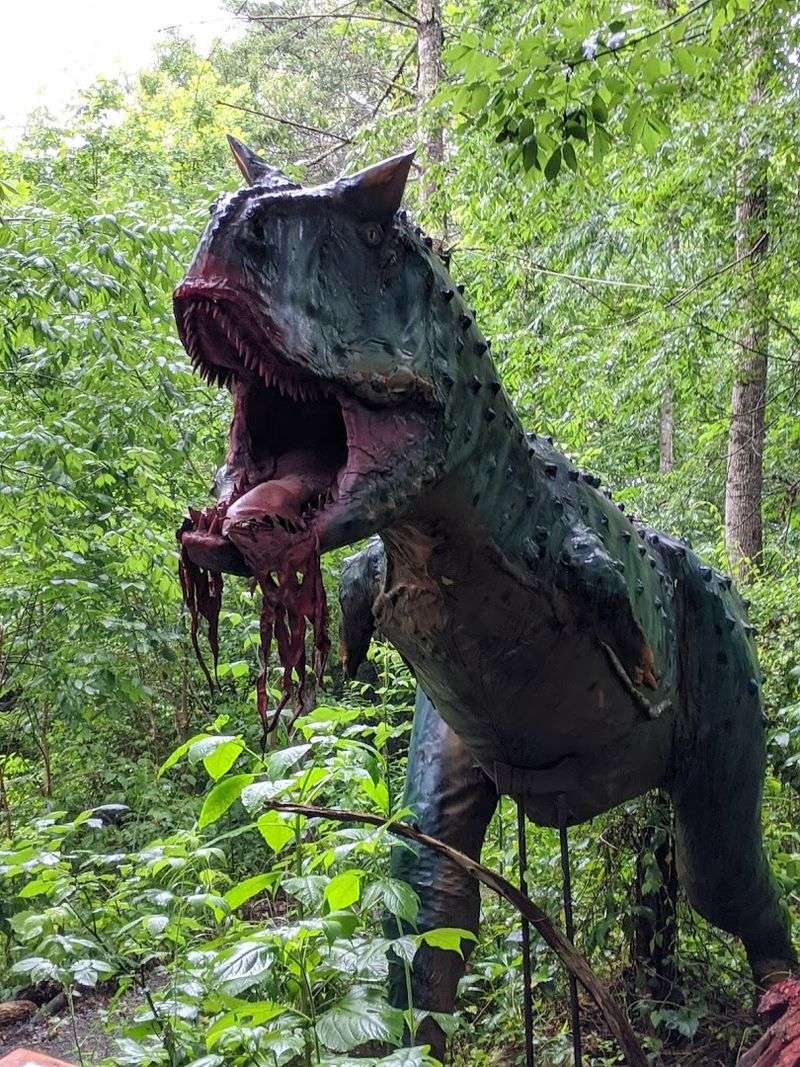
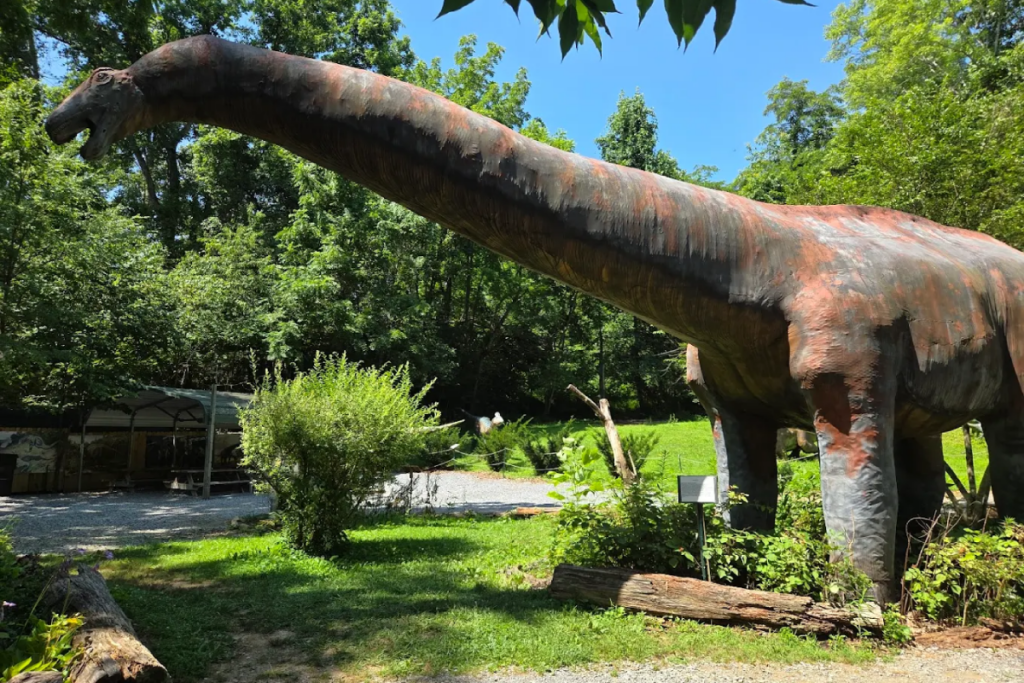
Someone in Bluff City decided their backyard needed dinosaurs—not toy dinosaurs, but massive homemade sculptures lurking among the trees. Backyard Terrors delivers exactly what the name promises: a collection of prehistoric creatures built from scratch and scattered through the woods like a fever dream come to life.
These are folk art dinosaurs created with passion, imagination, and whatever materials were available. Some are painted in bright, unrealistic colors. Others have googly eyes or expressions that range from fierce to oddly friendly. The whole park feels like someone’s creative vision exploded across their property, and they generously decided to share it with the world.
Walking through the park, you’ll round a corner and suddenly face a T-Rex, then spot a stegosaurus partially hidden behind trees. The element of surprise adds to the fun—you never know what prehistoric beast will appear next. Kids absolutely love it because it feels like a treasure hunt where the treasure is always another weird dinosaur.
The homemade quality is part of the charm. These aren’t Disney-level animatronics, and that’s the point. They’re proof that you don’t need a massive budget or corporate backing to create something memorable.
One person with determination and creativity built an entire dinosaur park in their backyard, and people actually come to see it.
Backyard Terrors represents a particular strain of Tennessee weirdness where someone follows their passion to its logical (or illogical) conclusion without worrying whether it makes sense. The result is a dinosaur park that shouldn’t exist but absolutely does, hiding in Bluff City and waiting for visitors who appreciate the stranger side of roadside attractions. It’s quirky, it’s homemade, and it’s thoroughly Tennessee in its embrace of the unconventional.
7. Ruby Falls — Chattanooga
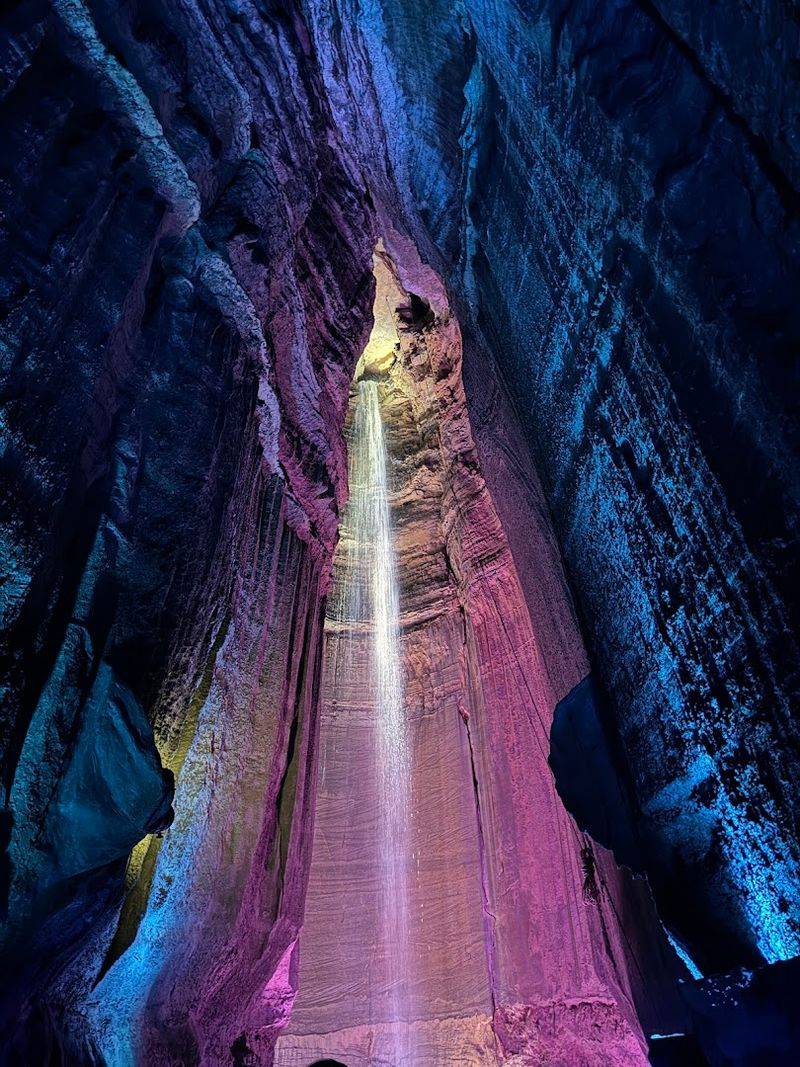
Waterfalls typically require mountains, rivers, and open sky. Ruby Falls said “no thanks” to all that and decided to exist 1,120 feet underground inside Lookout Mountain instead. The result is one of Tennessee’s most surreal natural attractions—a 145-foot waterfall that plunges through darkness deep beneath the earth’s surface.
The falls were discovered in 1928 when Leo Lambert was exploring Lookout Mountain Cave and broke through a rock wall into a previously unknown cavern. He named the waterfall after his wife Ruby, because apparently, finding a massive underground waterfall makes you romantic. The cavern had been sealed off for centuries, preserving formations and creating an ecosystem that existed in complete darkness until humans arrived with lights.
Today’s tour takes you down via elevator, then guides you through narrow passages and large chambers decorated with stalactites, stalagmites, and other formations that took millennia to develop. The path winds deeper into the mountain, building anticipation until you finally reach the main chamber where Ruby Falls cascades from the ceiling in a dramatic plunge.
The experience of standing underground while water thunders down from above messes with your sense of reality. Your brain knows waterfalls shouldn’t exist here, yet there it is, fed by rainwater that seeps through limestone and collects in underground streams. The acoustics in the cavern amplify the sound, surrounding you with rushing water in total darkness beyond the lights.
Ruby Falls isn’t just weird—it’s genuinely beautiful in an alien way. The combination of natural wonder and the strangeness of its location creates something that feels more like fantasy than reality. Chattanooga has plenty of attractions, but few can match the pure novelty of descending into a mountain to watch water fall through the darkness.
8. Raccoon Mountain Caverns — Chattanooga
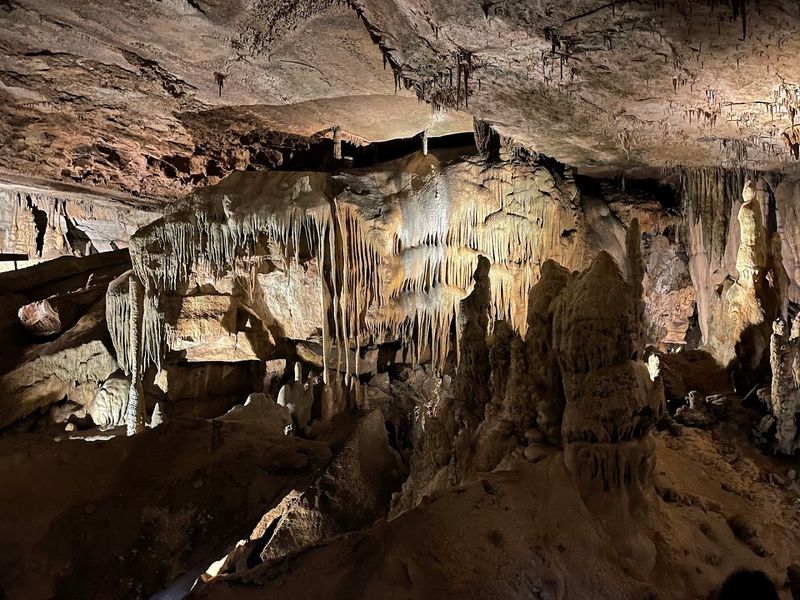
Chattanooga apparently decided one underground attraction wasn’t enough, so Raccoon Mountain adds another layer of subterranean weirdness to the city’s offerings. These caverns twist through the mountain in passages that range from spacious chambers to spots where you’re practically crawling through the rock. It’s the kind of place that makes you wonder what else might be hidden beneath Tennessee’s surface.
The cavern system features formations with names like “The Crystal Palace” and “The Underground Waterfall,” though honestly, the weird shapes need no names to be impressive. Centuries of water dripping through limestone created sculptures that look deliberately artistic, as if someone carefully designed each column and curtain of stone.
The reality is even stranger—these formed molecule by molecule over thousands of years with no plan or purpose.
Tours come in different difficulty levels, from easy walks to “wild cave” experiences where you’re crawling through tight spaces with only a headlamp. The wild tours reveal parts of the cave system that most people never see, including areas where you’re squeezing through openings and navigating underground streams.
What makes Raccoon Mountain particularly interesting is how it demonstrates the sheer amount of empty space beneath solid-looking mountains. The caverns honeycomb through the rock in a complex network that took decades to fully map. Standing in a large chamber, you’re surrounded by tons of mountain pressing in from all sides, held up by limestone that’s both incredibly strong and surprisingly fragile.
The temperature underground stays cool year-round, making the caverns a natural air conditioner in summer and a relatively warm refuge in winter. That consistent environment supports unique ecosystems, including cave-adapted creatures that never see daylight. Raccoon Mountain proves that Tennessee’s weirdness extends in all directions—not just across the landscape but deep into the earth beneath your feet.
9. The Parthenon — Nashville
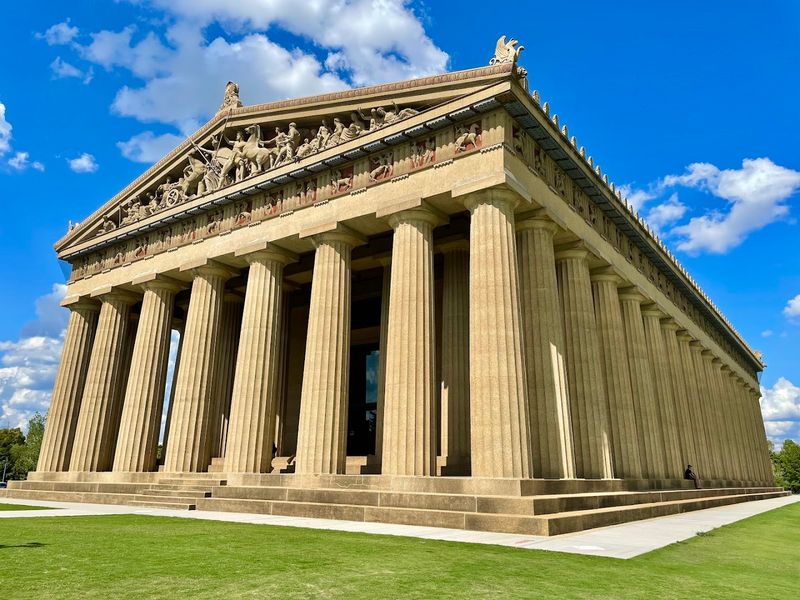
Athens, Greece has the original Parthenon. Nashville, Tennessee has a full-scale concrete replica sitting in Centennial Park, because apparently Music City thought, “You know what would really complete our vibe? Ancient Greek architecture.” The result is one of America’s most delightfully strange cultural landmarks—a perfect recreation of classical antiquity plopped in the middle of Tennessee.
The Parthenon was built in 1897 for Tennessee’s Centennial Exposition, originally constructed from temporary materials. When the exposition ended, Nashville looked at its fake Greek temple and decided it was too good to tear down. They rebuilt it in permanent materials, creating what’s now the world’s only full-scale Parthenon replica.
Inside stands a 42-foot statue of Athena covered in gold leaf, because if you’re going to do weird, you might as well commit completely.
Walking up to the Parthenon feels like a glitch in reality. The architecture is unmistakably ancient Greek, but you’re surrounded by Nashville parks, modern buildings, and tourists taking selfies.
The building functions as an art museum, housing a collection of 63 paintings by 19th and 20th-century American artists. So you can appreciate both the architecture and actual art, making it more than just a novelty. The east and west pediment sculptures are recreations of the original Parthenon’s decorations, giving visitors a sense of what the ancient temple looked like when it was new.
10. Millennium Manor Castle — Alcoa
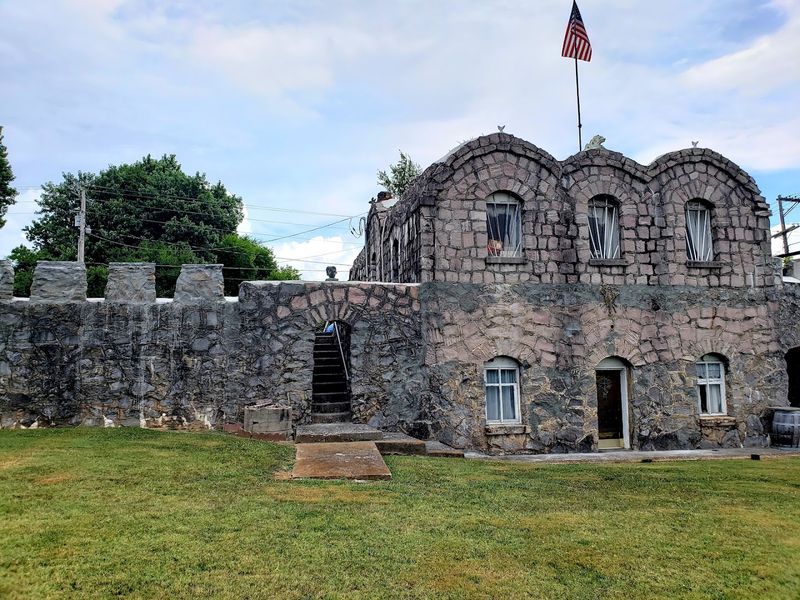
Most people prepare for emergencies with canned goods and bottled water. One person in Alcoa built an entire stone castle designed to survive the apocalypse, because why plan small when you can go full medieval fortress? Millennium Manor stands as Tennessee’s answer to the question nobody asked: “What if we combined Y2K paranoia with castle architecture?”
The house was constructed in the late 1990s when Y2K fears had people worried about societal collapse. Rather than building a bunker, the owner created a stone structure that looks like it belongs in medieval Europe but includes modern amenities. The walls are thick stone, the design emphasizes defensibility, and the whole thing screams “I’m ready for anything” in the most dramatic way possible.
From the outside, Millennium Manor looks genuinely impressive—not a cheap imitation but a serious stone structure built with real craftsmanship. The architecture mixes practical defensive features with aesthetic choices that make it look properly castle-like. It’s the kind of building that makes neighbors either jealous or concerned, with little middle ground between those reactions.
Roadside America includes Millennium Manor in its Tennessee oddities index, recognizing it as the kind of wonderfully excessive project that defines American eccentricity. The castle represents someone taking an idea to its absolute conclusion without letting practicality or normalcy interfere. Most people build houses; this person built a statement.
Whether the apocalypse ever arrives or not, the owner has a really cool house. That’s the beauty of over-preparing—even if the worst never happens, you still get to live in a castle. The manor has become a local landmark, the kind of place people point out to visitors as evidence of Tennessee’s embrace of the unconventional.
Millennium Manor proves that Tennessee weird isn’t just about roadside attractions and natural oddities. Sometimes it’s about people who decide conventional housing isn’t dramatic enough and build stone fortresses in Alcoa instead. The castle stands as a monument to imagination, paranoia, and the freedom to build whatever you want on your own property.
11. The Crystal Shrine Grotto — Memphis
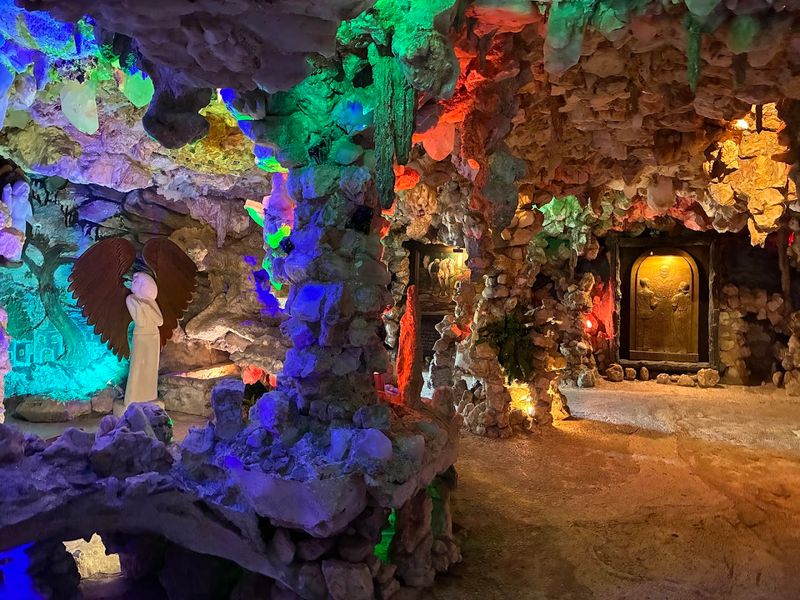
Behind a regular Memphis church sits something completely unexpected—a grotto covered in crystals and depicting biblical scenes through folk art. The Crystal Shrine Grotto is what happens when religious devotion meets artistic vision and an apparent abundance of quartz crystals. It’s beautiful, it’s strange, and it’s unmistakably Tennessee.
The grotto was built by artist Dionicio Rodriguez in the 1930s using a technique that made concrete look like natural rock formations. He then covered surfaces with crystals, creating a shimmering underground shrine that catches light in unexpected ways. The space depicts various biblical scenes, including the life of Christ, all rendered in Rodriguez’s unique style that blends folk art with religious iconography.
Walking through the grotto feels like entering a different world. The crystal-covered walls sparkle in the dim light while handmade sculptures tell religious stories through form and color. Rodriguez’s technique created textures that look genuinely natural despite being entirely human-made.
The effect is both reverent and surreal, a space that invites contemplation while simultaneously making you wonder how anyone conceived of building this.
The grotto isn’t huge, but it’s densely packed with detail. Every surface has been considered, every corner holds another scene or decorative element. It’s the work of someone who had a complete vision and the skill to execute it, creating something that has lasted decades and continues to impress visitors.
Memphis has plenty of famous attractions, but the Crystal Shrine Grotto operates on a different wavelength. It’s not trying to be a major tourist draw; it simply exists as one person’s artistic offering to their faith. That authenticity gives it power that slicker attractions can’t match.
The grotto represents Tennessee’s capacity for unexpected beauty hiding in plain sight, waiting for people curious enough to look behind the obvious.
12. The Ghost Town of Elkmont — Great Smoky Mountains National Park
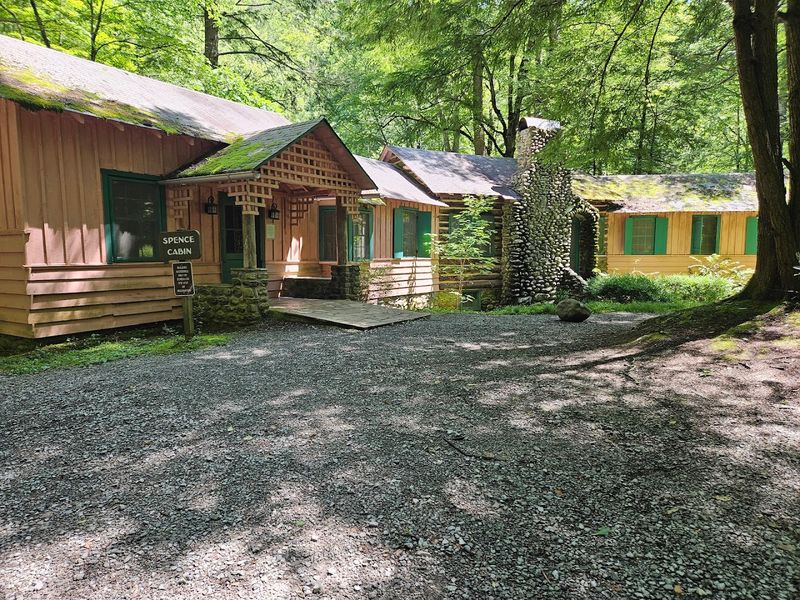
Deep in the Smokies sits a community frozen in time—or more accurately, slowly decaying back into the forest. Elkmont was once a thriving logging town and later a vacation community for wealthy families. Now it’s a collection of abandoned buildings being gradually reclaimed by nature, creating an atmosphere that’s equal parts beautiful and eerie.
The town’s history is layered and complex. It started as a logging camp in the early 1900s, then transformed into an exclusive resort community when the logging ended. Families built vacation cabins and formed a tight-knit seasonal community that lasted for decades.
When the national park was established, the land was absorbed, and residents eventually had to leave. Some buildings were preserved; others were left to decay naturally.
Walking through Elkmont today feels like exploring a post-apocalyptic movie set. Wooden structures sag under years of weather damage. Porches collapse slowly while vines creep through broken windows.
Nature is winning the battle, but the buildings haven’t surrendered yet. Each structure tells stories about the people who once gathered here for summer vacations and weekend escapes.
The most famous building is the Wonderland Hotel, a large structure that once hosted guests seeking mountain retreats. It stands empty now, windows dark and wood weathered gray. Park service signs explain the history, but there’s something about seeing the physical decay that makes the past feel more real than any plaque could.
Elkmont demonstrates how quickly nature reclaims human spaces when we stop maintaining them. The forest is patient, slowly pulling buildings back into the earth through rot, root systems, and weather. In another few decades, some of these structures will be gone completely, their materials scattered and absorbed into the mountain ecosystem.
The ghost town isn’t spooky in a horror movie way—it’s melancholy and thought-provoking. Elkmont reminds visitors that nothing is permanent, that even beloved places eventually fade. It’s weird to find an abandoned town in a national park, but that weirdness creates something memorable and moving.
13. Forbidden Caverns — Sevierville
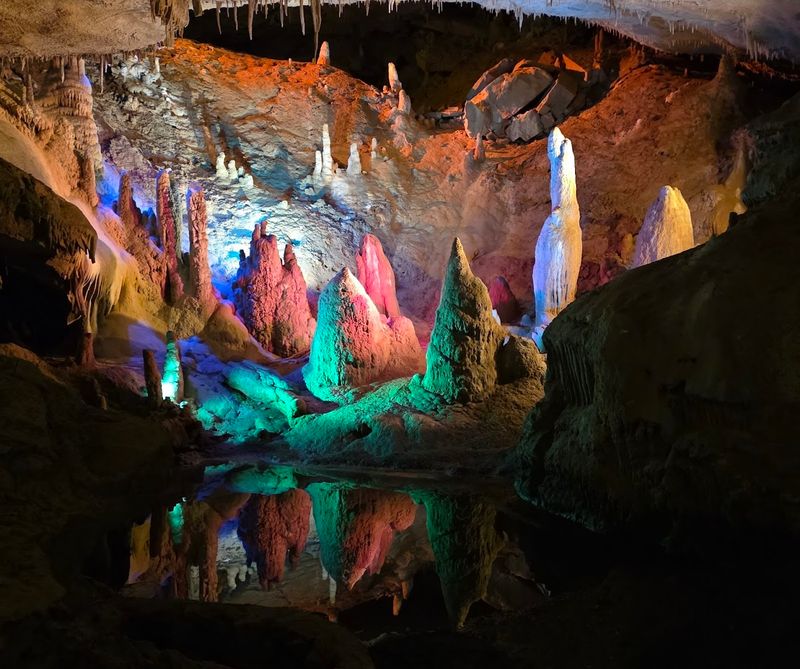
The name “Forbidden Caverns” sounds like something from a fantasy novel, which is appropriate because walking through these caves feels like entering another world. Located in Sevierville, these caverns offer that perfect mix of natural beauty and the kind of weirdness that makes you question what else might be hiding underground in Tennessee.
The caverns got their name from a local legend claiming Native Americans considered the caves forbidden ground, though the truth of that story is debatable. What’s not debatable is that the cave system is genuinely impressive, featuring formations that took thousands of years to create. Stalactites hang from ceilings like stone icicles while stalagmites rise from the floor, and in some places they’ve met in the middle to form complete columns.
Tours guide visitors through chambers with names like “The Waterfall Room” and “The Dungeon,” each space offering different geological features. Underground streams flow through sections of the cave, their constant presence responsible for carving out the passages and creating the formations that now define the space. The water’s mineral content leaves deposits that build structures molecule by molecule over centuries.
What makes Forbidden Caverns particularly interesting is how it demonstrates the active nature of cave systems. These aren’t dead formations preserved in stasis—they’re still growing, still changing, just at a pace too slow for humans to perceive. Every drip of water potentially adds another microscopic layer to existing formations.
In ten thousand years, the caverns will look different from the way they do today.
The cave stays at a constant cool temperature, making it a natural escape from Tennessee’s summer heat. That stable environment also supports unique cave-adapted life forms, including creatures that have lost their pigmentation and eyesight after generations of living in complete darkness. The ecosystem exists entirely without sunlight, operating on different rules than the surface world just above.
14. The Titanic Museum Attraction — Pigeon Forge
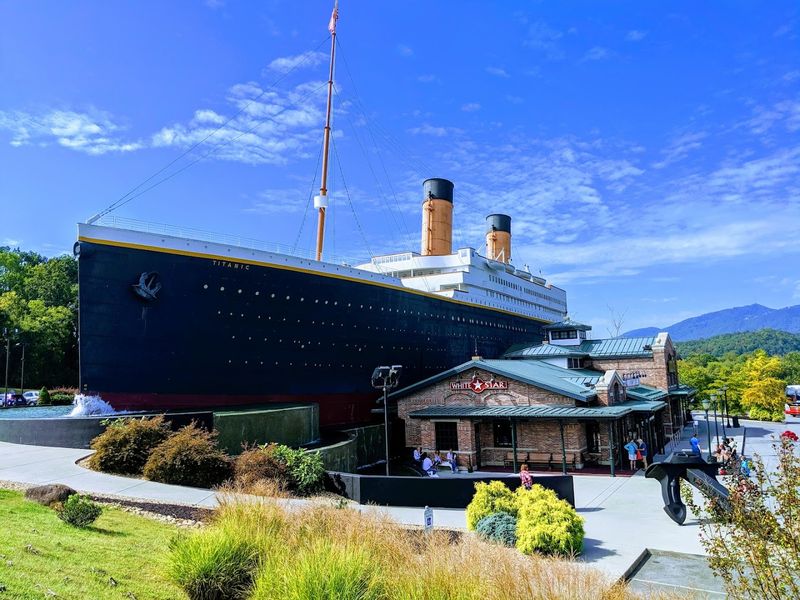
Pigeon Forge is hundreds of miles from any ocean, which makes the massive ship-shaped building housing the Titanic Museum even stranger than it would be elsewhere. The museum is built as a half-scale replica of the Titanic’s exterior, creating the surreal experience of seeing a famous ocean liner landlocked in the Smoky Mountains.
From the outside, the museum is pure spectacle—a ship that will never sail, frozen permanently in Tennessee mountain country. The building’s design recreates the Titanic’s profile, complete with smokestacks and the distinctive bow. It’s the kind of bold architectural choice that either works brilliantly or fails completely, and somehow Pigeon Forge pulls it off.
Inside, the museum takes its subject seriously despite the unusual location. Visitors receive boarding passes with actual passenger names, then follow that person’s story throughout the tour. The exhibits include recreations of ship interiors, artifacts recovered from the wreck site, and detailed information about the disaster.
The grand staircase replica is particularly impressive, showing the luxury that first-class passengers experienced.
What makes the museum weird isn’t the quality—it’s actually well-done and educational. It’s the sheer strangeness of encountering this specific museum in this specific location. The Titanic has no connection to Tennessee, yet here stands a major attraction dedicated to the ship, drawing visitors who could be learning about Smoky Mountain history but instead are exploring a maritime disaster.
The museum includes interactive elements where you can touch an iceberg, feel how cold the water was, and try to stand on slanted decks like passengers experienced as the ship sank. These hands-on features make the history more immediate and real, especially for younger visitors who know the Titanic more from movies than history books.
Pigeon Forge specializes in attractions that have nothing to do with the local area—dinner theaters, wax museums, and now a landlocked ocean liner. The Titanic Museum fits perfectly into that ecosystem of cheerful geographical incongruity. It’s strange, it’s educational, and it’s exactly the kind of unexpected experience that defines Tennessee tourism.
Share this story