The first thing you notice is the tower. Right there in downtown Madison, where Main Street traffic hums past storefronts and the train station sits just a couple of blocks away, this heavy stone building rises with the confidence of a tiny castle that wandered into Morris County and decided to stay.
It has arched windows, rough-cut stone, old-world details, and the kind of entrance that makes you slow down before you even know what is inside. For decades, this was the James Library, Madison’s first public library, built for books, quiet study, and civic pride.
Today, it houses the Museum of Early Trades & Crafts, where the shelves have given way to tools, trade stories, farm life, workshops, and artifacts that make New Jersey’s working past feel surprisingly close. It is not a huge museum, and that is part of the appeal.
It feels personal, local, and full of little discoveries.
A Former Library With Storybook Castle Energy
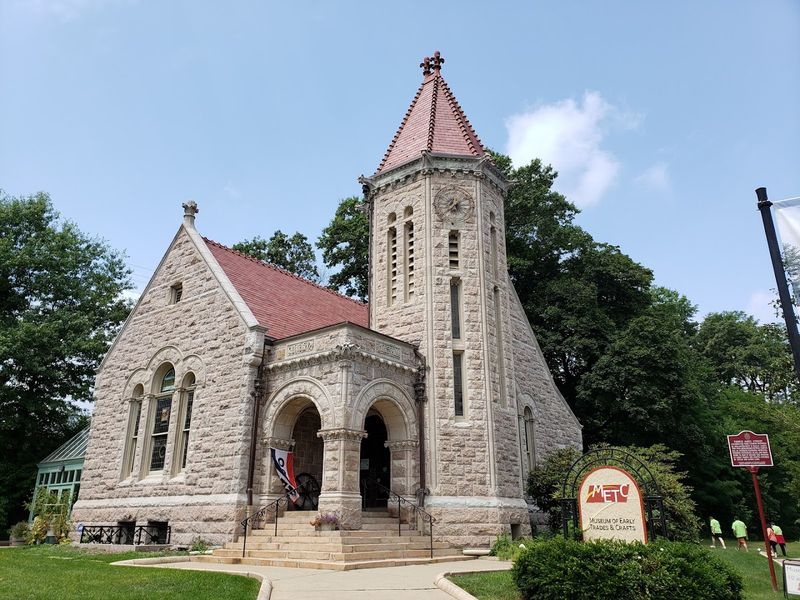
Stand near the corner of Main Street and Green Village Road and the building does not whisper for attention. It practically raises a stone eyebrow.
The Museum of Early Trades & Crafts sits inside the former James Library, a Richardsonian Romanesque Revival building that looks more like something from an old illustrated book than a small-town museum in New Jersey.
The exterior has real heft, with granite and limestone giving it that sturdy, built-to-last presence you do not get from modern glass boxes.
Add the clock tower, rounded arches, and deep-set windows, and the whole thing feels a little theatrical without trying too hard. That is the fun of it.
Madison’s downtown is already polished and walkable, with cafés, shops, and the train close by, but this building brings a different flavor to the block. It feels civic, grand, and slightly mysterious, the way a library probably should have felt in 1900.
Inside, the mood shifts from street-corner landmark to time capsule. The museum is not just using an old building as a shell; the building is part of the experience.
You notice the craftsmanship before you even get to the exhibits, which is fitting for a museum devoted to early trades and handwork. There is something satisfying about learning about blacksmiths, cabinetmakers, printers, shoemakers, farmers, and other makers inside a place that was itself built with such obvious skill.
Nothing about the James Library feels disposable. The stonework, the arches, the tower, the wood, the glass, and the carefully restored interior all seem to be making the same quiet point: good work lasts.
For a museum about tools and trades, that is about as perfect a first impression as you could ask for.
How Madison’s First Public Library Became A Local Landmark
Madison’s first public library opened on Memorial Day in 1900, and it arrived with serious backing. The building was a gift from philanthropist D.
Willis James, whose name still clings to the place more than a century later. He did not simply hand the town a handsome building and call it done.
He also stocked the library with thousands of books and funded the commercial James Building across the street to help generate income for the library’s upkeep. That detail says a lot about the ambition behind the project.
This was not just a nice room for books. It was a civic investment meant to keep serving the town long after the ribbon-cutting.
The library remained in use until 1969, when Madison’s needs had outgrown the original space and the building began its second life as the home of the Museum of Early Trades & Crafts. That transition could have gone badly in another town.
Plenty of old buildings lose their personality when they get repurposed. Here, the opposite happened.
The museum gave the structure a reason to keep telling stories. Instead of tearing out the past, it layered one kind of public education on top of another.
Where residents once came to borrow books, visitors now come to understand how New Jerseyans worked, made, repaired, farmed, printed, stitched, built, cooked, and traded before industrial life changed everything. The location helps, too.
The museum stands at 9 Main Street, right in the heart of Madison, about two blocks from the Madison train station and surrounded by the daily rhythm of downtown. It is not isolated on a distant historic site where you have to squint to imagine community life.
It is still part of the town’s routine, which makes its survival feel less like a museum-piece miracle and more like good local stewardship.
The Stone Arches And Stained Glass Make The Building Feel Magical
The architects, Willard Adden and Charles Brigham, knew how to make a public building feel important without making it feel cold. That is the trick here.
The James Library has the drama of a small castle, but the details keep it warm. The rounded arches soften the stone.
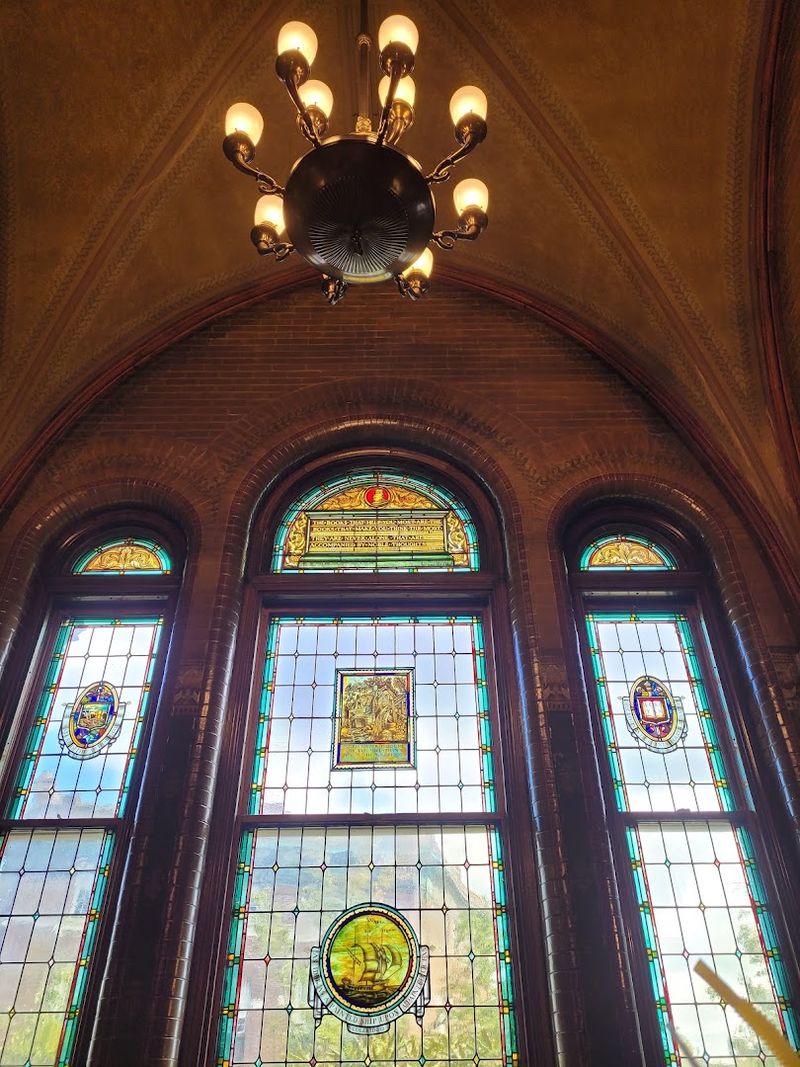
The stained glass adds color without turning the place into a cathedral. The woodwork frames the interior in a way that makes you look up, look around, and then look again.
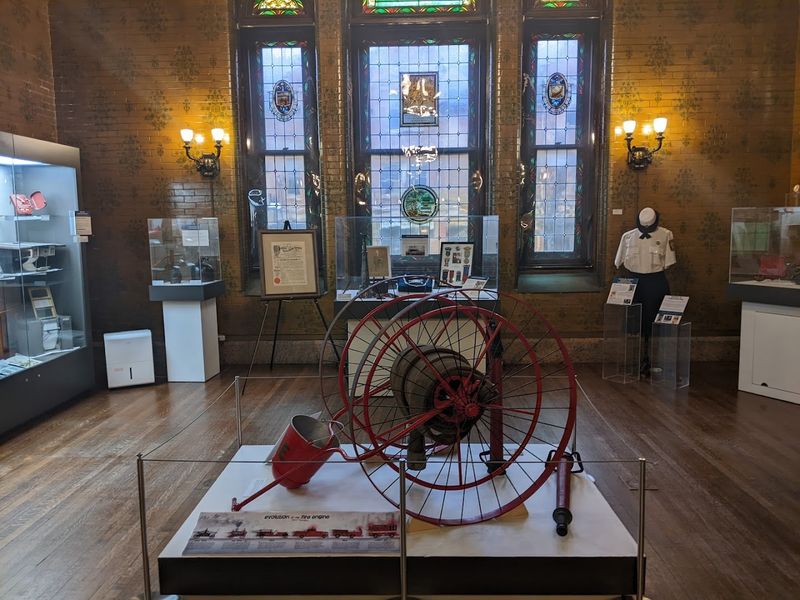
During major restoration work in the 1990s, some of the building’s most striking features were brought back into focus, including decorative stained glass, stenciling, fireplaces, light fixtures, intricate woodwork, and groined vaulting. Those are not throwaway details.
They are the kind of features that remind you this building was designed for pride as much as practicality. You can feel the old library personality in the bones of the place.
It is easy to imagine Madison residents entering with that slightly hushed feeling people used to have around books and beautifully made public rooms. The museum’s exhibits do not fight that mood.
They sit inside it. The result is a rare balance: the building gives you visual drama, while the collection gives you everyday texture.
One minute you are noticing the sweep of an arch or the glow from a stained-glass window; the next, you are looking at a tool that once belonged to someone whose workday was measured in muscle, patience, and skill. That contrast is what makes the place stick.
Grand architecture can sometimes make history feel distant, but here it does the opposite. The building draws you in with beauty, then the exhibits bring the story down to human scale.
A hammer, a loom, a farm implement, or a shoemaker’s tool suddenly feels right at home beneath those handsome old ceilings.
Inside The Museum Where Old New Jersey Trades Come Back To Life
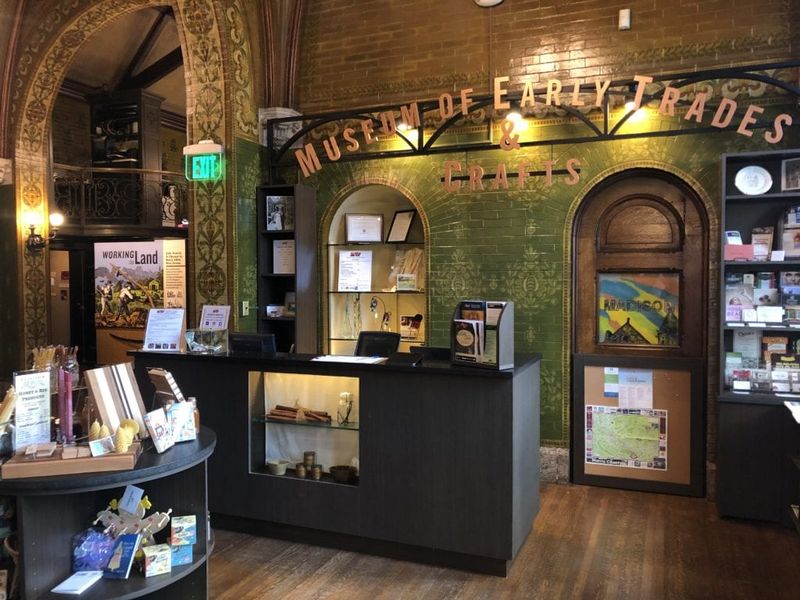
This is where the museum earns its name. The Museum of Early Trades & Crafts focuses on the people who lived and worked in New Jersey from the colonial era through the age of industrialization, and the galleries are built around the practical business of daily life.
That may sound simple until you start thinking about how many skills it once took to keep a household, farm, shop, or village running. The permanent exhibits include “Working the Land,” which looks at life, family, change, and labor in early 1800s New Jersey.
It is not just a parade of old objects behind glass. The story is about adaptation: new tools, new methods, hard work, family labor, and the moments when technology began changing how people survived and made a living.
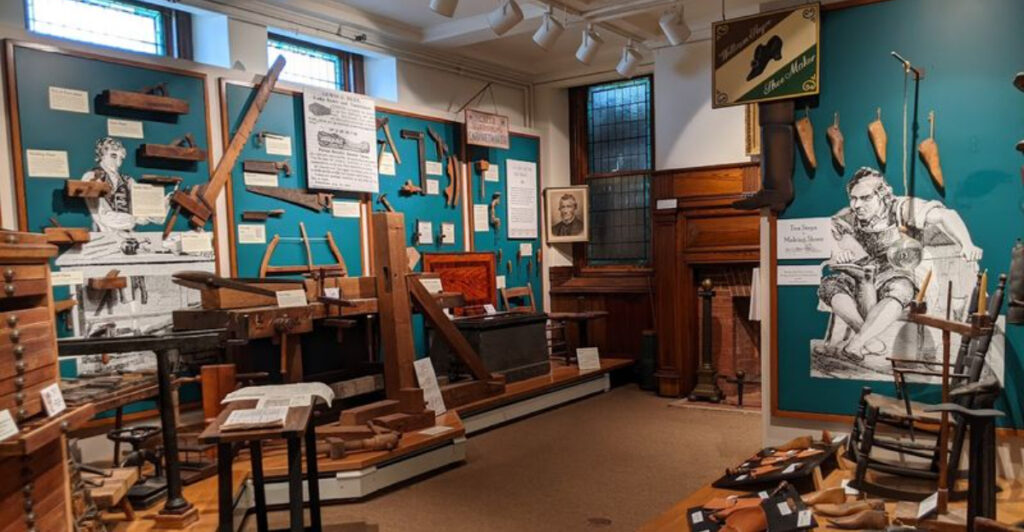
Downstairs, the museum explores local community trades, with displays tied to coopers, distillers, cabinetmakers, shoemakers, printers, and blacksmiths. Those occupations may sound quaint now, but they were essential.
A cooper made barrels because goods needed to be stored and shipped. A printer helped information move.
A blacksmith kept equipment, horses, farms, and businesses functioning. A shoemaker made something every person needed, one careful piece at a time.
The museum does a nice job of making those jobs feel less like vocabulary words from a history worksheet and more like real work done by real people with tired hands and sharp eyes. Families will appreciate that it is manageable in size, not one of those museums where everyone gets exhausted before the second floor.
Adults can linger over the craftsmanship, kids can connect with the tools and textures, and the building itself keeps adding atmosphere in the background. It is history with splinters, soot, leather, iron, and a little Main Street polish.
Why The Collection Turns Everyday Tools Into Time Machines
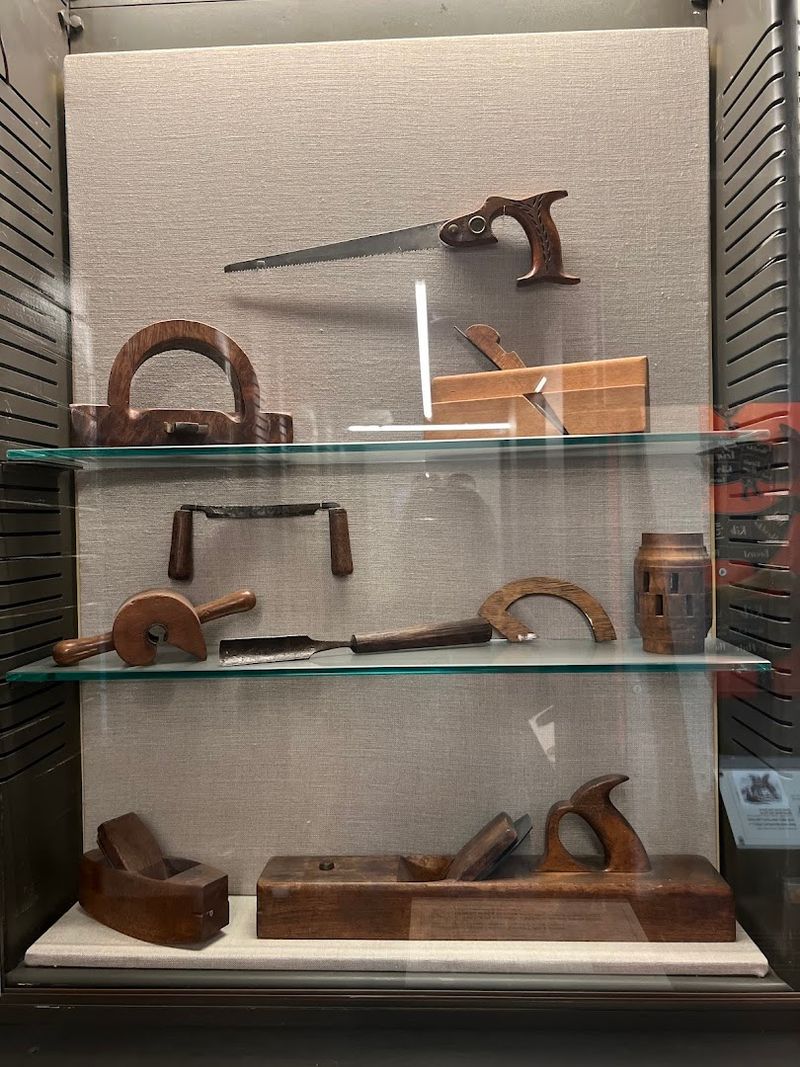
The collection is the museum’s quiet superpower. METC has more than 8,000 artifacts, archival materials, and library holdings tied to home, shop, and farm trades from the 18th and 19th centuries, with objects made or used in New Jersey and nearby states.
That means the museum is not simply collecting “old stuff.” It is collecting evidence of how people worked. Tools are especially good at this because they do not let history get too fancy.
A plane, a chisel, a last, a spinning tool, a farm implement, or a piece of kitchenware tells you what someone had to know, what materials were available, what problems had to be solved, and how much effort went into things modern life tends to hide.
The museum’s strengths include woodworking, metalworking, shoemaking, farming, and textile-making, which gives the collection a satisfying range.
You can move from the workshop to the field to the home and start to understand how connected those worlds were. The archives add another layer, with records such as account books, letters, deeds, contracts, receipts, advertisements, maps, and photographs.
That paper trail matters because it puts names, transactions, and communities behind the objects. A tool without context can be interesting.
A tool connected to a trade, a town, a family, or a working routine becomes much more alive. The museum has also invested in a viewable storage facility, completed in 2024, that gives the public a window into how collections are cared for rather than pretending museum work happens by magic in some locked back room.
That is a smart fit for this place. A museum about making should also show the work of preserving.
Even the behind-the-scenes labor becomes part of the story.
This Downtown Madison Treasure Is More Than A Pretty Building
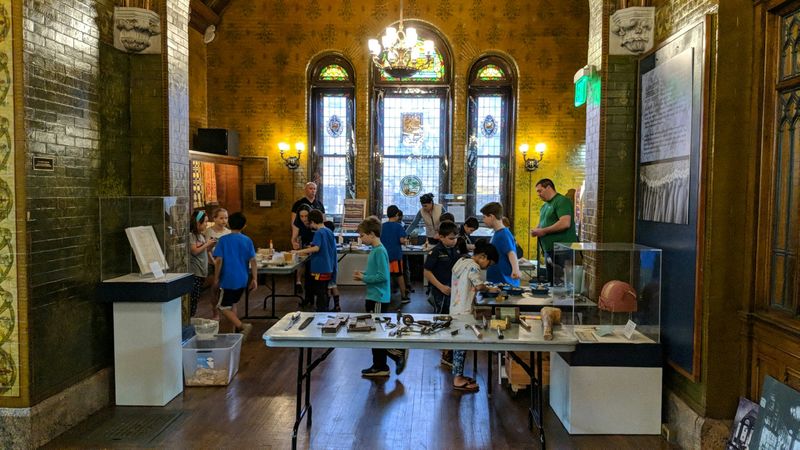
Practical details make this one easy to fold into a Madison day. The museum is located at 9 Main Street, near Route 124 and Green Village Road, with public parking lots behind shops on both sides of Main Street and street parking on nearby Kings Road and Green Village Road.
It is also close enough to the Madison train station that you can pair it with a downtown stroll without needing an elaborate plan. Current regular hours run Tuesday through Saturday from 10 a.m. to 4 p.m. and Sunday from noon to 5 p.m., with Monday closures and Sunday closures in July and August.
Standard admission is modest, with adult admission listed at $5, reduced rates for students, children, and adults 62 and older, and free admission for members and children under 6; during lower-level construction and viewable storage work, the museum has also used donation-based admission with a suggested group donation.
That low-key accessibility suits the place.
It is not trying to be a blockbuster attraction with flashing screens and a giant parking complex. It is a local museum in the best sense: specific, rooted, and full of character.
The Education Annex across the street at 23 Main Street gives METC more room for school programs, workshops, and community events, which helps the museum stay active beyond the gallery floor. That matters because the subject here is not frozen history.
Trades and crafts are about knowledge passed from hand to hand, teacher to learner, generation to generation. The former James Library still feels like a building dedicated to learning, even though the books have moved elsewhere.
It began as a place where Madison came to read, and now it helps visitors understand the work that shaped ordinary life in New Jersey long before ordinary life became so easy to take for granted.