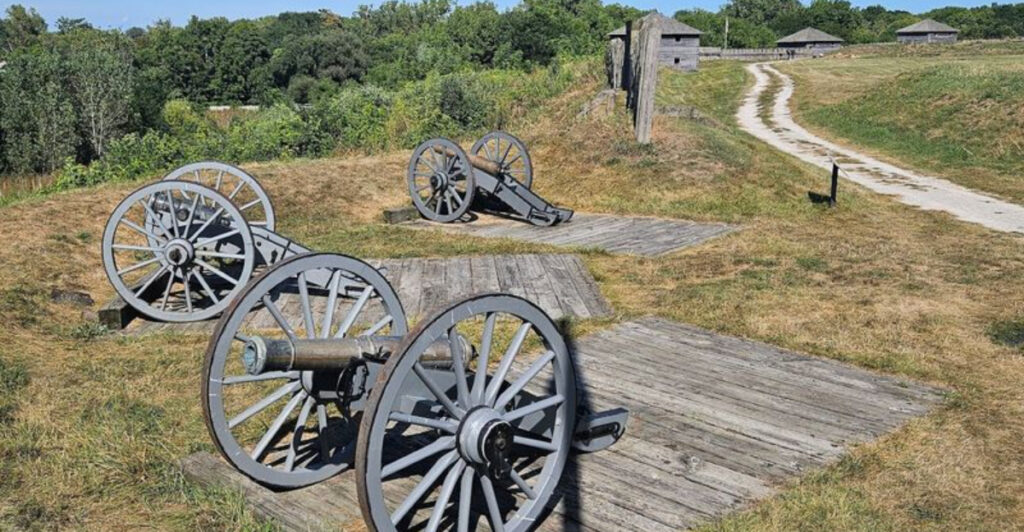
If you think most historic sites are little more than a plaque and a quick photo stop, Fort Meigs is here to prove you wrong. This reconstructed stronghold in Perrysburg turns the War of 1812 into something you can actually walk through, hear about, and feel.
Between the massive fort, the excellent museum, and the living history programs, the experience is far more vivid than many travelers expect. It is the kind of place that makes Ohio history feel immediate, dramatic, and surprisingly personal.
1. A Fort That Feels Immediately Real
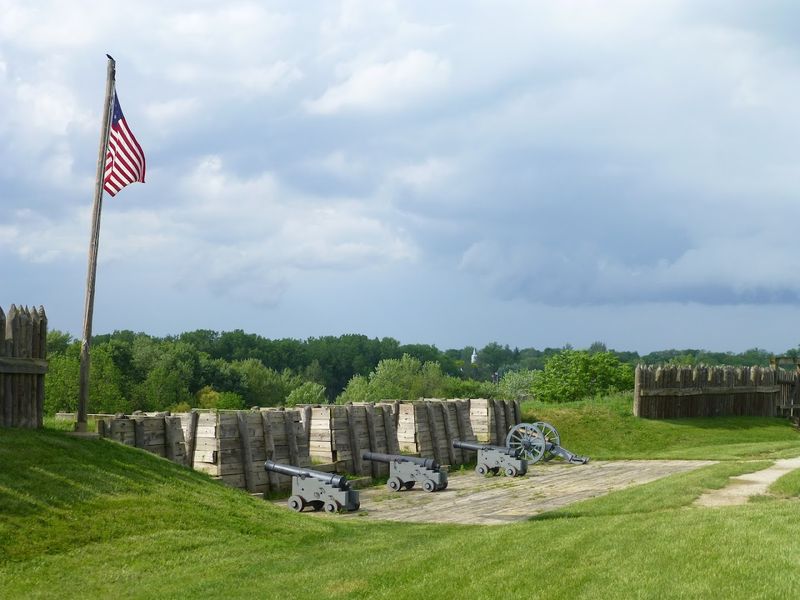
If you want a place where early American history stops feeling distant, Fort Meigs delivers that almost immediately. Standing on the grounds in Perrysburg, you are not looking at a tiny symbolic marker or a few leftover stones.
You are stepping into a full reconstructed world that gives the War of 1812 real physical scale.
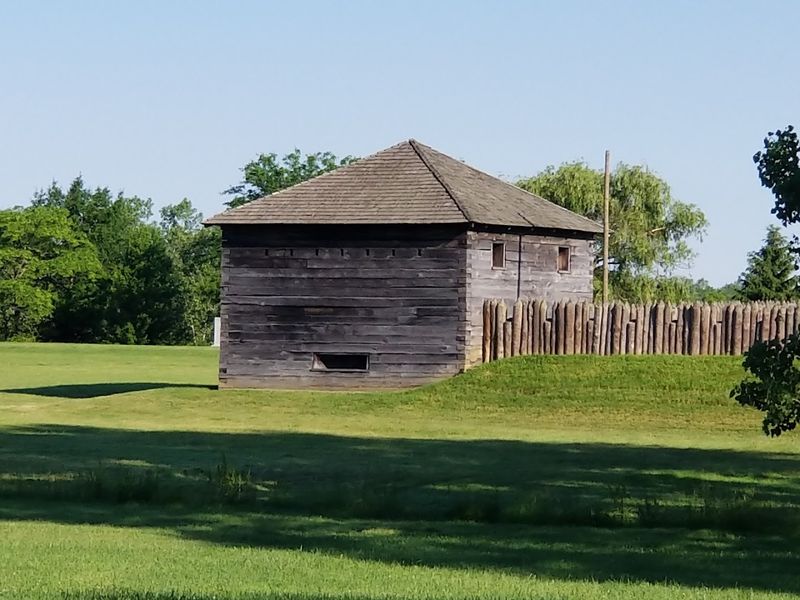
The timber walls, blockhouses, and wide open interior make it easy to picture soldiers, supplies, and tension before battle. I love how the site feels big enough to wander, yet focused enough that you never lose the story.
Every turn helps connect military strategy with the human experience behind it.
That combination is what makes Fort Meigs special. Instead of reading one plaque and moving on, you keep layering details as you walk, watch, and listen.
By the time your visit gets going, the fort has already turned a chapter from a textbook into something vivid and surprisingly personal.
2. The Visitor Center Sets Up The Story Beautifully
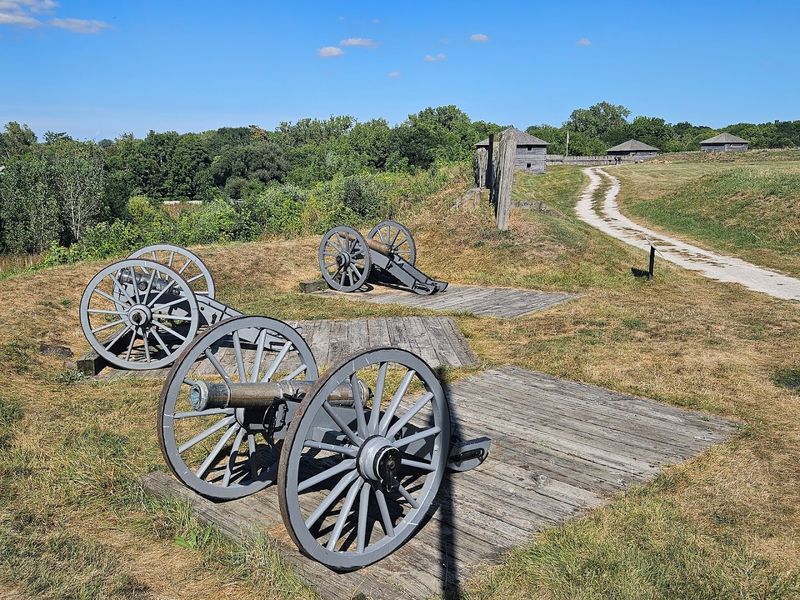
Before you even reach the fort itself, the visitor center does an excellent job setting the stakes. The introductory film gives you a quick, useful overview of the War of 1812, the leadership involved, and why this position mattered on the northwestern frontier.
That context makes everything outside feel sharper and easier to understand.
Inside the museum, artifacts, panels, and well organized displays fill in the bigger picture without overwhelming you. I appreciate that the interpretation feels serious but still approachable, so you do not need to arrive as an expert.
You can move at your own pace and still come away with a solid grasp of the fort’s story.
For many visitors, this indoor section becomes the foundation for the whole experience. Once you have names, timelines, and artifacts in mind, the reconstructed walls outside mean much more.
It turns a walk through the grounds into a mental map of events, people, and consequences.
3. The Scale Of The Reconstruction Is A Huge Part Of The Impact
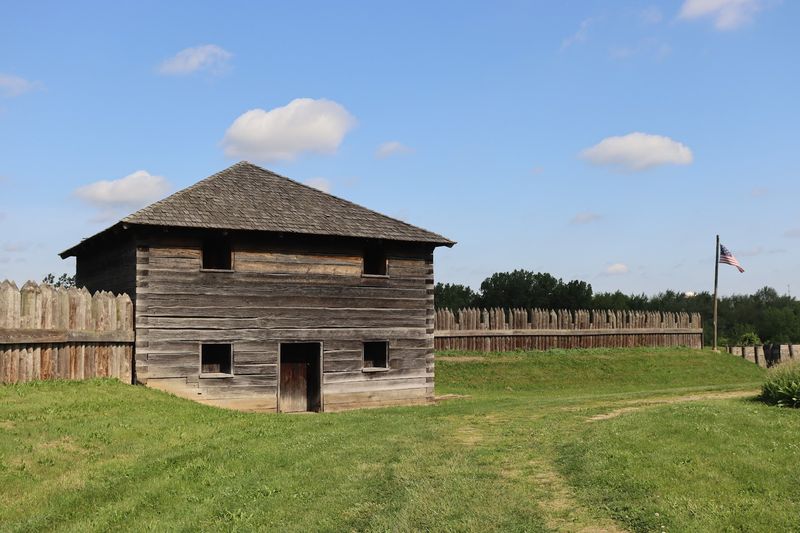
One reason Fort Meigs feels so immersive is its sheer size. This was the largest timber fort built in North America, and the reconstruction helps you sense that ambition in a way books rarely can.
The long walls and broad footprint make military engineering feel less abstract and much more urgent.
As you walk the grounds, you start noticing how the fort’s design served defense, visibility, and movement. The blockhouses are not just attractive features for photos.
They help explain how soldiers watched approaches, responded to attacks, and tried to survive sieges along this critical stretch of the Maumee River.
I think that physical scale changes the emotional experience of a visit. You do not just learn that a fort existed here.
You feel how much labor, planning, and pressure were packed into this landscape. That makes Fort Meigs more than a reconstruction.
It feels like an argument for why the site still matters.
4. Living Historians Make The Past Feel Close
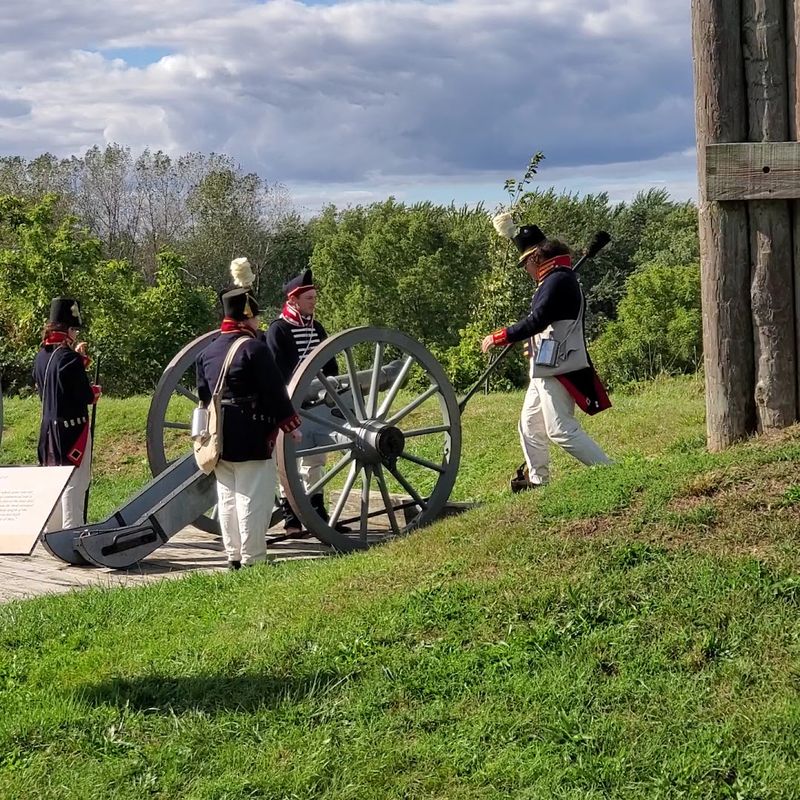
What really brings Fort Meigs to life is the people interpreting it. Staff, guides, and volunteers in period clothing and military uniforms add warmth and personality to a place that could otherwise feel static.
When you can ask questions face to face, history stops sounding memorized and starts feeling lived.
Visitors consistently mention how knowledgeable and approachable the interpreters are, and that rings true with the site’s reputation. A musket or cannon demonstration is impressive on its own, but the explanation around it is what sticks.
You begin to understand not just what happened, but how dangerous, noisy, and coordinated battlefield action really was.
That human connection is the secret ingredient here. Instead of passively looking at a reconstruction, you are drawn into conversations about daily life, clothing, tools, and command decisions.
Those details make the fort memorable for adults, engaging for kids, and surprisingly moving for anyone who wants history to feel immediate.
5. You Can Explore With A Tour Or At Your Own Pace
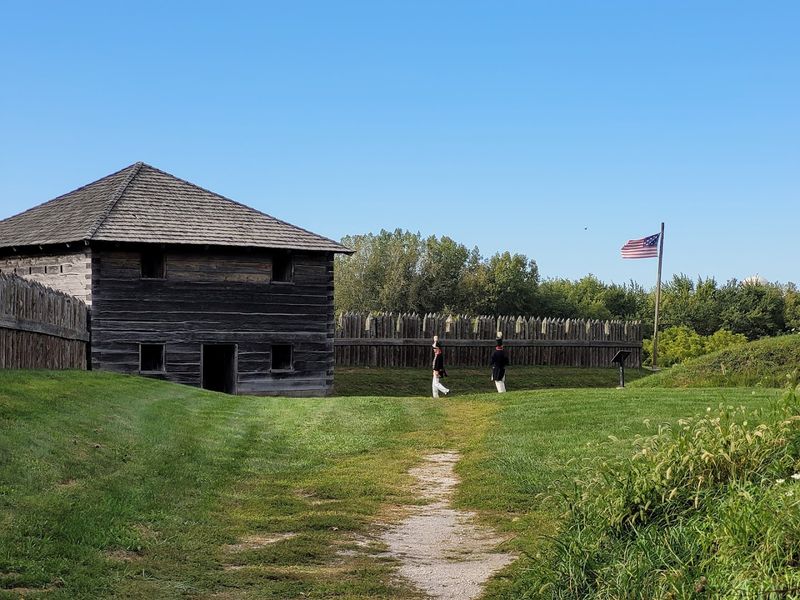
Fort Meigs works well whether you prefer a structured tour or a self guided visit. Guided tours add depth through storytelling about military leaders, battle plans, and fort construction, and many visitors single them out as a highlight.
If you like asking follow up questions, this is where the site becomes especially rewarding.
At the same time, the signage inside the fort and in the visitor areas helps you learn independently without feeling lost. You can pause at exhibits, linger in blockhouses, or walk the perimeter at your own speed.
That flexibility is great if your group includes serious history lovers, curious kids, or someone mainly there for the scenery.
I like that Fort Meigs never forces one way of experiencing the site. You can follow a guide, build your route, or mix both approaches in an afternoon.
Either way, the information feels accessible, thoughtful, and tied to what you are seeing there.
6. It Is Surprisingly Good For Families And First Time Visitors
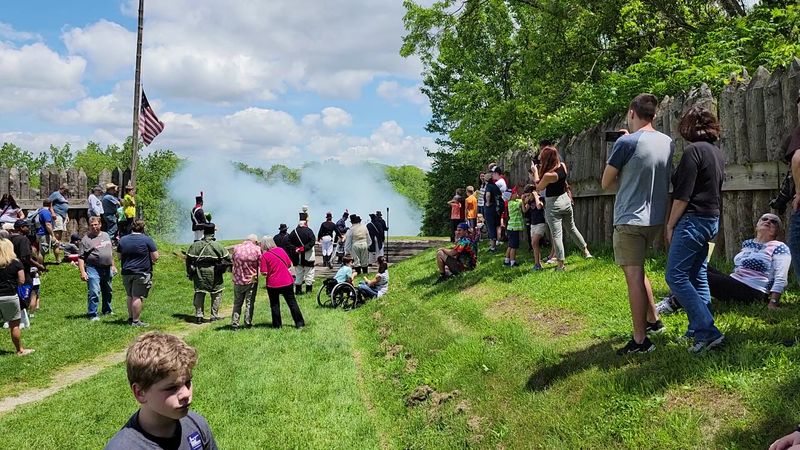
For a historic site, Fort Meigs is impressively friendly to families and casual visitors. The grounds are large enough to feel adventurous, but manageable enough that you can comfortably see the major highlights in one visit.
Reviews often mention kids staying engaged, which says a lot for a place centered on early nineteenth century history.
There are hands on elements during some programs, open space for walking, and plenty of visual variety between the museum and the fort. Practical details matter too, and visitors appreciate the parking, bathrooms, and straightforward layout.
The surrounding paths and scenic setting also make the experience pleasant even for people who are not deep history buffs.
That balance is part of the appeal. You can come for serious learning, for a day trip with the family, or simply for a walk through a well interpreted landscape.
Fort Meigs meets you where you are, then gives you more than you expected.
7. Special Events Turn A Great Site Into An Unforgettable One
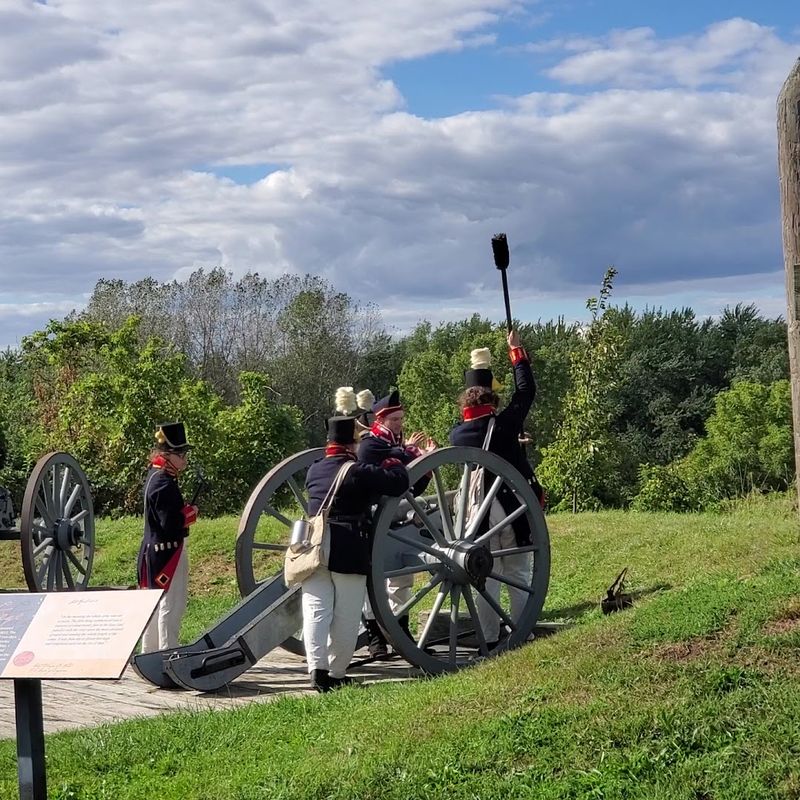
If you can time your visit around a special event, Fort Meigs becomes even more immersive. Reenactments, memorial programs, and seasonal demonstrations add motion, sound, and conversation to a site that already feels vivid on an ordinary day.
For many families, these events are the moment history suddenly clicks.
Visitors rave about being able to walk through camps, talk with reenactors, and see details like clothing, tinsmithing, and military drill up close. Those encounters make the War of 1812 feel textured instead of simplified.
Rather than watching history from a distance, you get to stand inside an interpretation of everyday life and wartime preparation.
Even if you are not usually drawn to living history weekends, this is a strong place to try one. The setting is large, the staff is knowledgeable, and the atmosphere stays educational instead of theatrical.
You leave with stories, not just facts, and that is what makes a site worth remembering.
8. Plan Enough Time Because This Place Rewards A Slow Visit
Fort Meigs is easy to recommend as a half day or longer stop if you are exploring northwest Ohio. Many visitors spend several hours between the film, museum exhibits, guided interpretation, and outdoor walking.
Because there is so much to absorb, rushing through would undersell one of the site’s biggest strengths.
Current hours generally run from 9:30 AM to 5 PM Wednesday through Saturday, with shorter Sunday hours and closures on Monday and Tuesday, so planning ahead matters. The site has strong reviews, a helpful reputation, and a setting along West River Road that feels scenic without being remote.
Checking the official website before you go is smart, especially for event weekends.
In the end, what stays with you is how the experience feels. Fort Meigs teaches and grounds the War of 1812 in a landscape you can walk at your pace.
If you want history that feels immediate, this place is worth it.